
必选消费

Search documents
年节消费洞察和前瞻:从“量”的恢复,转向“质”的升级与“趣”的探索
Xin Lang Cai Jing· 2026-02-25 09:24
Core Insights - The consumption data for the 2026 Spring Festival is better than market expectations, showing a mild recovery in essential consumption and a booming service consumption sector [3][10] - The market has shifted from a simple recovery in quantity to an upgrade in quality and exploration of enjoyment [11] Consumption Trends - Essential consumption shows recovery with leading liquor brands and frozen seasoning products experiencing significant sales growth, while restaurant chains achieved their best turnover rates in two years during the holiday [3][10] - Travel service consumption has accelerated due to supportive policies, with increased visitor numbers to popular scenic spots and a moderate rise in domestic airline passenger flow and ticket prices [10] - The travel data indicates a rise in interest for destinations beyond major cities, with cultural confidence driving spending on local customs and traditions [11] - Ice and snow tourism remains popular, with significant increases in visitor numbers to winter sports destinations [11] - Gift consumption has shifted from traditional items to health management products, with notable sales growth in smart wearables and high-quality health supplements [11] Investment Opportunities - Focus on service consumption supported by policies, including social services and transportation sectors [12] - Attention to industry leaders with overseas capabilities, as some companies establish brand recognition abroad [12] - Investment in technology-enabled consumer products, particularly those utilizing AI to enhance sales or operational efficiency [12] - High-dividend stocks with potential for fundamental recovery, including traditional liquor, food, and home appliance companies [12] Company Performance - As of December 2025, the company has an asset management total of 193.4 billion yuan, generating an investment return of 31.2 billion yuan and distributing 13.3 billion yuan in dividends [12]


华泰证券:防御配置价值显现
Sou Hu Cai Jing· 2026-02-02 23:54
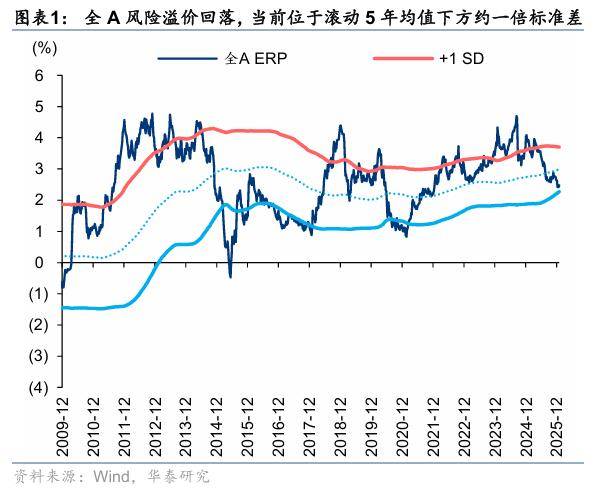
Core Viewpoint - The high dividend sector showed signs of recovery in January, driven by strong demand for dividend assets from insurance companies and the performance of cyclical high dividend stocks like oil, petrochemicals, and steel [2][4]. Market Overview - The overall market risk appetite continued to decline in January, with the full A ERP falling below one standard deviation of the past five-year average, indicating a challenging environment for market risk premium recovery [1][3]. - The volatility in cyclical stocks has impacted the market's profit-making ability, leading to a potential "small plateau" in investor risk appetite [3]. High Dividend Strategy - The configuration value of high dividend stocks has marginally increased compared to the previous month, suggesting a focus on stable high dividend stocks with defensive attributes and some potential high dividend varieties [1][3]. - The high dividend strategy's cost-effectiveness has improved, with the current full A ERP positioned at a historically significant level, requiring fundamental recovery or strong capital support for a breakthrough [3]. Sector Investment Opportunities - **Insurance**: The market sentiment remains strong, with expectations for continued positive performance in the insurance sector [5]. - **Oil and Petrochemicals**: Geopolitical tensions have raised concerns about global oil supply risks, leading to a rebound in oil prices. The Brent crude oil price forecast for 2026 has been raised to $65 per barrel [5]. - **Construction Materials**: The construction sector is expected to improve post-Spring Festival, with price increases in fiberglass, waterproof materials, and gypsum boards anticipated [5]. - **Utilities**: The electricity supply side is expected to stabilize, with coal prices remaining steady, indicating a bottoming out of electricity stock valuations [6]. - **Transportation**: The logistics sector is seeing a slight uptick in activity, particularly in road freight, as the Spring Festival travel season approaches [6]. - **Banking**: Banks are actively increasing lending, with profit margins expected to improve, particularly in light of a manageable impact from the real estate sector [7]. - **Real Estate**: The Hong Kong residential market has seen significant growth, with transaction volumes and prices rebounding, indicating a recovery trend [7]. - **Consumer Staples**: Leading companies in the consumer staples sector are expected to maintain stable cash flows and increase dividend payouts, benefiting from structural upgrades and international expansion opportunities [8].

方正证券:港股市场将迎风险偏好修复 建议关注高景气新兴产业补涨机会
Zhi Tong Cai Jing· 2026-01-03 12:58
A-share Market Insights - The market is expected to transition from "consolidation" to "spring rally" as the year-end approaches, with high-quality A-share assets offering attractive value globally [1][2] - Key investment directions include: 1) long-term opportunities in technology growth assets, 2) cyclical sectors with strong pricing power driven by supply-demand imbalances, and 3) blue-chip assets favored by long-term institutional investors [2] Hong Kong Market Insights - The influx of southbound capital is accelerating, providing solid financial support for the Hong Kong market [2] - The easing of US-China trade tensions is likely to boost market risk appetite, while the anticipated December interest rate cut and balance sheet expansion by the Federal Reserve will enhance global liquidity, benefiting Hong Kong stocks [2] US Market Insights - Despite stable earnings projections for US stocks in 2025, valuation and market concentration have returned to historical highs, indicating potential for increased volatility [2] - Earnings growth in 2026 is expected to continue, driven by sustained AI demand, reduced tariff risks, and accommodative monetary and fiscal policies [2] - Investment strategies may focus on two main themes: 1) ongoing narratives in technology stocks, particularly in AI, and 2) recovery opportunities in cyclical sectors, especially in midstream manufacturing and essential consumer goods [2] Domestic Bond Market Insights - The domestic bond market is entering a phase characterized by "weak economic recovery, stable yet easing policies, and central bank caution against excessive moves" [3] - The central bank's commitment to maintaining stable interest rates will limit the downward movement of long-term rates, leading to a range-bound market [3] - Investors are advised to shift focus from capital gains to coupon income and liquidity management, while closely monitoring potential signals from the central bank regarding long-term yield guidance [3] Commodity Market Insights - The ongoing anti-involution policies warrant attention to the actual implementation of capacity reduction measures [4] - Oil prices are under short-term pressure due to geopolitical tensions easing and OPEC+ shifting towards supply expansion [4] - Industrial metals are expected to see demand recovery driven by improved global economic growth forecasts, with supply-side disruptions likely to reshape the supply-demand landscape [4] - Gold's monetary attributes may continue to be favorable amid ongoing government leverage, particularly in the US, where long-term deficit rates are challenging to reduce [4]

轻工制造行业2026年投资策略:适应新变局
GF SECURITIES· 2025-12-30 23:30
Group 1: Core Insights - The light industry manufacturing sector is expected to experience a recovery in 2026, driven by external macroeconomic stabilization and internal demand adjustments, although the recovery will show differentiation among companies [5][6] - Investment strategies should focus on growth-oriented companies that are expanding overseas, as well as on the supply-side changes in the paper packaging sector and new consumer brands showing marginal improvements [5][6] Group 2: Home Furnishing Sector - The home furnishing industry is currently facing a downturn, with ongoing pressures from consumption and housing handovers, and limited benefits from national subsidies [13][19] - The market environment is expected to remain stable in 2026, with a focus on individual company performance, as the sector is significantly influenced by consumer sentiment and real estate policies [34][40] - The expected decline in new housing completions in 2026 is projected at 21%, which will continue to impact demand for home furnishings [34][40] Group 3: Essential Consumer Goods - The essential consumer goods market is adapting to new dynamics, with established brands facing challenges from evolving channels and increased competition [52] - The growth potential in mature markets remains stable, but the overall consumption environment has weakened, leading to increased competition among leading brands [52][53] - New consumption trends are emerging from changes in consumer sentiment and technological innovations, which are reshaping market dynamics [52][53] Group 4: Light Industry Exports - The light industry export sector has shown strong growth among leading companies, despite fluctuations due to economic cycles and inventory levels [5][6] - The outlook for 2026 suggests continued growth for top companies, supported by stable macroeconomic conditions and ongoing trends such as capacity relocation and cost reduction [5][6] - The overall recovery in the light industry export sector is anticipated to stabilize, with a focus on expanding product categories and niche markets [5][6] Group 5: Paper Packaging Sector - The paper packaging sector is expected to see a gradual recovery, with stable pricing anticipated for cultural paper and improved profitability driven by demand from the consumer electronics and AI sectors [5][6] - The profitability of the paper industry is projected to stabilize, with key factors including supply-demand dynamics and cost efficiencies playing a crucial role [5][6] - Leading companies in the metal packaging sector are expected to benefit from increased market concentration and enhanced pricing power [5][6]



创纪录!南向资金,爆买!
证券时报· 2025-12-16 12:42
Core Viewpoint - The Hong Kong stock market has shown strong performance in 2023, with the Hang Seng Index rising over 20% year-to-date, but has entered a correction phase since mid-October, with increased volatility and a significant adjustment in December [1] Group 1: Market Performance and Trends - The Hong Kong stock market is significantly influenced by overseas liquidity and closely tied to the mainland economy, with liquidity having a more immediate impact on market performance than fundamentals [1] - Multiple factors, including valuation advantages, improved asset quality, and market ecosystem restructuring, are expected to drive valuation recovery in the Hong Kong market [1] - Several brokerage firms predict that the Hong Kong market will experience a second round of valuation recovery and performance rebound by 2026, as fundamentals are expected to bottom out [1] Group 2: Southbound Capital Inflows - Southbound capital has been a key driver of the Hong Kong market's strong performance in 2025, with net inflows reaching a record 1.39 trillion HKD by December 15, 2025, significantly surpassing the total for 2024 [3] - The cumulative net inflow through the Stock Connect has reached 5.09 trillion HKD, nearing the 5.10 trillion HKD mark, providing substantial liquidity to the market and enhancing the pricing power of mainland investors [3] - The total trading volume in the Hong Kong market exceeded 57.5 trillion HKD in the first 11 months of 2025, marking a historical high and a 94.5% increase year-on-year [4] Group 3: Future Projections for Southbound Capital - Future inflows of southbound capital are expected to continue, with estimates suggesting an additional 600 billion HKD from public funds and insurance capital in 2026 [4] - If the proportion of Hong Kong stocks in new funds increases from 30.8% to 35%, there could be an additional inflow of 1 to 1.5 billion HKD [4] - Individual investors are projected to contribute significantly to the inflow, with potential purchases of 2.5 billion to 5 billion HKD in the coming year [5] Group 4: Share Buyback Trends - The enthusiasm for share buybacks in the Hong Kong market has increased, with total buyback amounts reaching 169.35 billion HKD in 2025, despite a decline from 2024 [8] - Monthly buyback amounts have surged since October, with 93.72 billion HKD in October, 117.42 billion HKD in November, and 115.24 billion HKD in the first half of December [8][10] - Major companies like Xiaomi and Tencent have contributed to the rising buyback trend, enhancing earnings per share and market confidence [9][10] Group 5: Foreign Capital Inflows - In 2025, foreign capital has stopped flowing out of the Hong Kong market, with inflows of 13.44 billion USD reported [12] - The demand for foreign capital in Chinese assets remains optimistic, driven by expectations of a stable or appreciating RMB and positive domestic fundamentals [12] - The inflow of foreign capital is expected to be slightly lower in 2026 compared to 2025, but remains strong compared to southbound capital inflows [12] Group 6: Outlook for 2026 - The Hong Kong market is anticipated to benefit from internal catalysts and external monetary easing policies, particularly from the US and Japan [14] - The market is expected to see a rebound in corporate earnings and continued inflows from southbound and foreign capital, driven by a "money-making effect" [15] - Key investment directions for 2026 include technology sectors, healthcare, resources benefiting from inflation, essential consumer goods, and industries benefiting from RMB appreciation [14][15]

中信证券徐广鸿:估值修复与结构重塑共振 2026年港股锚定四大核心赛道
Zhong Guo Zheng Quan Bao· 2025-12-09 22:44
Core Viewpoint - The Hong Kong stock market is entering a phase of valuation repair and structural reshaping, characterized by undervaluation, capital misalignment, and performance differentiation, with significant net inflows from southbound funds and a shift in foreign capital [1][2]. Valuation and Market Trends - The Hang Seng Index has experienced a cumulative decline of over 50% from early 2021 to January 2024, leading to a significant valuation gap [2]. - As of December 9, 2023, the Hang Seng Index, Hang Seng China Enterprises Index, and Hang Seng Technology Index have recorded cumulative gains of 49.20%, 22.59%, and 24.32%, respectively [2]. - By the end of 2025, the expected EPS growth for the Hang Seng Index in 2026 is projected to be 8%, with a dynamic P/E ratio of only 12 times, indicating a notable valuation gap compared to major global markets [2]. Capital Flow Dynamics - Southbound funds have seen a record net inflow of nearly 1.4 trillion HKD by the end of November 2023, marking a new high since the launch of the mutual market access mechanism [3]. - The inflow of ETFs surged to 51.3% from June to October, with August reaching 88%, indicating strong enthusiasm among domestic individual investors [3]. - Institutional investors favor sectors like non-bank themes and precious metals, while individual investors focus on growth sectors such as automotive, pharmaceuticals, and consumer goods [3]. Sector Performance and Investment Opportunities - The technology sector is expected to see significant profit growth in 2025, contrasting with traditional sectors like finance and real estate [4]. - The AI industry chain in Hong Kong is strengthening, with a positive correlation between the Hang Seng Technology Index and the USD/JPY exchange rate [4]. - For 2026, investment opportunities should focus on sectors with performance certainty and valuation elasticity, particularly technology, pharmaceuticals, resource products, and essential consumer goods [8]. Long-term Market Outlook - The market is anticipated to experience a second round of valuation repair driven by internal and external factors, including the implementation of the "14th Five-Year Plan" and easing monetary policies globally [6][5]. - The potential for external capital inflow is expected to increase as the risk premium decreases due to improved Sino-U.S. relations [6]. Specific Sector Insights - The technology sector, especially the AI industry, is expected to benefit from a virtuous cycle of investment and revenue growth, with a focus on leading companies and quality players in the computing power supply chain [8]. - The pharmaceutical sector is entering a growth phase supported by policy and industry developments, with a focus on innovative companies and those benefiting from domestic market reforms [8]. - The resource sector is supported by supply-demand mismatches and liquidity drivers, with companies in precious metals and rare earths likely to benefit from rising commodity prices [9]. - The essential consumer goods sector is poised for valuation recovery as domestic policies stimulate consumption and improve income expectations [9].

12月A股:政策+资金双轮驱动,震荡中孕育结构性机会
Sou Hu Cai Jing· 2025-12-08 00:26
Market Overview - The market has shown a "first decline then rise" trend since December, with the Shanghai Composite Index rebounding strongly on December 5, recovering the 3900-point mark, and significant gains in the Shenzhen and ChiNext indices [1] - The trading volume on December 5 reached 1.73 trillion yuan, an increase of 176.8 billion yuan from the previous day, indicating a return of bullish sentiment [1] Monetary Policy and Financial Regulation - The central bank's report emphasizes maintaining "reasonable liquidity" and has initiated 300 billion yuan in 7-day reverse repos in December to stabilize market funding costs [4] - The financial regulatory authority's notification adjusts investment risk factors for certain stocks, potentially releasing over 500 billion yuan in incremental funds into the market [4] Sector Analysis Technology Sector - The AI chip sector's current PE ratio is 42.6, below the historical average of 51.3, indicating a potential for valuation recovery [5] - The domestic substitution process is accelerating, with significant improvements in production efficiency for companies like SMIC [5] High-end Manufacturing - The industrial robot sector's PE ratio is 38.2, lower than the historical average of 45.7, suggesting room for growth as automation subsidies increase [6] Consumer Sector - The essential consumer sector's PE ratio is 25.3, below the historical average of 29.8, while the discretionary consumer sector's PE ratio is 28.7, also below its historical average [6] New Energy Sector - The photovoltaic sector's PE ratio is 18.6, significantly lower than the historical average of 26.3, indicating a recovery trend as silicon material prices stabilize [6] Core Assets - The PE ratio for the CSI 300 index is 10.8, and the PB ratio is 1.2, both below the historical averages, making them attractive for long-term investment [7] Technical Analysis - The Shanghai Composite Index is at a critical breakout point, with potential upward movement if it can maintain above 3900 points [7] - The ChiNext index has shown strong performance, breaking through key resistance levels, indicating further upward momentum [7]

华泰证券:预计2026年必选消费温和复苏 把握底部布局机会
Zheng Quan Shi Bao Wang· 2025-11-28 00:07
Group 1 - The core viewpoint is that the real estate cycle, particularly changes in real estate prices, will be crucial in determining the strength and speed of consumer recovery in 2026 [1] - It is anticipated that structural stabilization of housing prices in 2026 will lead to improvements in household balance sheets, thereby enhancing consumer willingness to spend [1] - Potential supply and demand policy stimuli are expected to boost consumer sentiment [1] Group 2 - The essential consumer sector is undergoing structural upgrades domestically and has significant opportunities for expansion abroad [1] - Leading companies in the essential consumer sector have been increasing their dividend payout ratios, providing a triple advantage of dividend yield support, long-term growth potential, and low valuation elasticity in a low-interest-rate environment [1] - Current allocation ratios and valuation percentiles in the essential consumer industry are at historical lows, indicating a high probability of being in a favorable left-side bottom range for investment opportunities [1]
华泰证券:预计2026年必选消费温和复苏 把握左侧底部布局机会
Di Yi Cai Jing· 2025-11-27 23:54
Core Viewpoint - The report from Huatai Securities indicates that with the expectation of structural stabilization in housing prices by 2026, the recovery of household balance sheets is likely to lead to a marginal improvement in consumer inclination [1] Group 1: Consumer Behavior - Potential supply and demand policy stimuli are expected to boost residents' willingness to consume [1] - The domestic structural upgrade and overseas expansion opportunities for essential consumer companies remain broad [1] Group 2: Investment Opportunities - Leading companies have been increasing their dividend payout ratios, providing a triple advantage of dividend yield support in a low-interest environment, high long-term growth potential, and resilient undervaluation [1] - The current allocation ratio and valuation percentiles in the essential consumer sector are at historical lows, indicating a high probability of being in a favorable left-side bottom range for investment [1] - It is recommended to actively seize opportunities for sector allocation [1]
华泰证券:预计2026年必选消费温和复苏,把握左侧底部布局机会
Mei Ri Jing Ji Xin Wen· 2025-11-27 23:50
Core Viewpoint - The report from Huatai Securities indicates that the expectation of structural stabilization in housing prices by 2026 is likely to lead to a marginal improvement in consumer sentiment due to the recovery of household balance sheets [1] Group 1: Consumer Sentiment and Policy Impact - The anticipated recovery of household balance sheets is expected to enhance consumer willingness to spend [1] - Potential supply and demand policy stimuli may further boost consumer consumption intentions [1] Group 2: Essential Consumer Sector Outlook - The essential consumer sector is projected to experience structural upgrades domestically and has significant opportunities for expansion overseas [1] - Leading companies in this sector have been increasing their dividend payout ratios, which provides a solid foundation for dividend yield, long-term growth potential, and valuation resilience in a low-interest-rate environment [1] Group 3: Investment Strategy - The current allocation ratio and valuation percentiles for the essential consumer industry are at historical lows, indicating a high probability of being in a favorable left-side bottom range for investment [1] - It is recommended to actively seize opportunities for sector allocation [1]