
零食量贩

Search documents
鸣鸣很忙20260226
2026-02-27 04:00
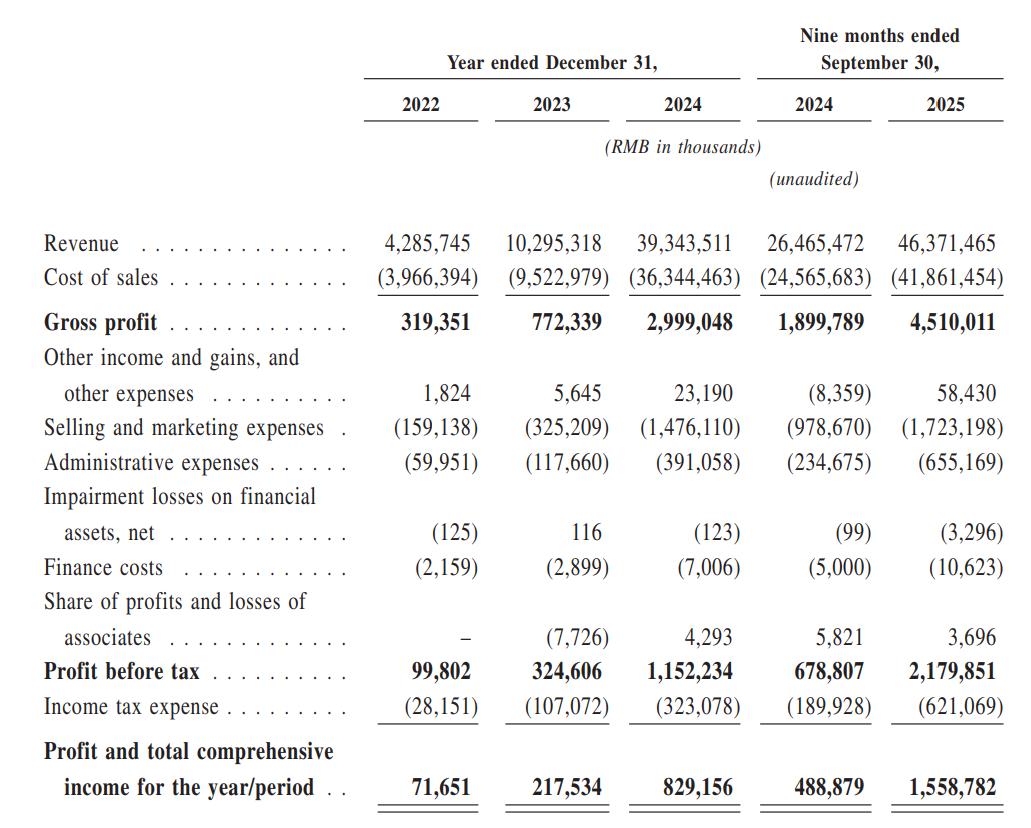
Q&A 鸣鸣很忙的门店规模、区域覆盖和渠道结构目前处于什么水平? 鸣鸣很忙 20260226 摘要 鸣鸣很忙主要依赖加盟体系,约 99%收入来自向加盟商销售商品,门店 主要分布在县城和乡镇。2025 年前三季度营收超 460 亿,全年预计 500-600 亿,净利率近 4%。2022-2024 年门店数量翻倍增长,2025 年增速放缓但仍有数千家净增长。 2023-2024 年单店营收提升,受益于赵一鸣并入,2025 年前三季度因 门店扩张分流略有下滑,但下半年已改善。2025 年单店营收超 350 万, 高于万辰的 300 多万。闭店率低于 2%,维持健康水平。 鸣鸣很忙毛利率低于万辰,接近 10%,万辰超 10%。鸣鸣很忙费用率 略低,销售费用率稳定在 3%-3.5%,主要为人才梯队和仓储物流建设。 管理费用率下降,但 2025 年因上市费用增加。运营效率高,存货周转 率高于同行。 零食量贩属于"硬折扣"模型,通过提升运营效率实现低价。减少流通 环节、精简管理、简化装修以节省成本,通过低价和销量提升实现高周 转。2020 年后消费趋势偏向性价比,供给端产能过剩,大型 KA 渠道走 弱,为零食量贩发展提供条 ...
港股异动 | 鸣鸣很忙(01768)涨近9% 机构看好零食量贩行业高景气
智通财经网· 2026-02-25 07:18
中信建投证券认为,26 年处在格局改善+同店修复+利润快速释放期。公司深耕广阔下沉市场,开店天 花板至少可达3-3.5 万家,并通过快速跑马圈地实现规模壁垒,打造极致高效的供应链体系,在公司良 好管理下的老店生命力旺盛,稳态同店仍有小幅增长,龙头地位强者恒强。 智通财经APP获悉,鸣鸣很忙(01768)涨近9%,截至发稿,涨8.8%,报437.6港元,成交额1.75亿港元。 东吴证券指出,零食量贩高景气,公司龙头地位确立。该行指出,行业市场规模从2019年73亿元快速增 长至2024年1297亿元,5年间CAGR达到77.8%,增速领跑硬折扣零售细分赛道。此外,行业已形成高度 集中的双寡头竞争格局。按照GMV计算,2024年公司与万辰集团合计占据零食量贩行业约75.6%市场份 额,门店数量合计占比达到75.2%,市场头部集聚效应显著,行业进入壁垒提高。 ...
鸣鸣很忙涨近9% 机构看好零食量贩行业高景气
Zhi Tong Cai Jing· 2026-02-25 07:17
鸣鸣很忙(01768)涨近9%,截至发稿,涨8.8%,报437.6港元,成交额1.75亿港元。 中信建投(601066)证券认为,26年处在格局改善+同店修复+利润快速释放期。公司深耕广阔下沉市 场,开店天花板至少可达3-3.5万家,并通过快速跑马圈地实现规模壁垒,打造极致高效的供应链体 系,在公司良好管理下的老店生命力旺盛,稳态同店仍有小幅增长,龙头地位强者恒强。 东吴证券指出,零食量贩高景气,公司龙头地位确立。该行指出,行业市场规模从2019年73亿元快速增 长至2024年1297亿元,5年间CAGR达到77.8%,增速领跑硬折扣零售细分赛道。此外,行业已形成高度 集中的双寡头竞争格局。按照GMV计算,2024年公司与万辰集团(300972)合计占据零食量贩行业约 75.6%市场份额,门店数量合计占比达到75.2%,市场头部集聚效应显著,行业进入壁垒提高。 ...
研报掘金丨中邮证券:维持万辰集团“买入”评级,认为Q1业绩有望实现超预期增长
Ge Long Hui A P P· 2026-02-24 06:13
中邮证券研报指出,结合调研感受及业绩考量,认为万辰集团作为头部零食量贩品牌具备龙头效应及业 绩弹性,在此重申推荐逻辑。经过2024年至2025年的密集开店与市场培育,万辰集团量贩零食业务已迎 来关键经营拐点。从单店趋势看,老店业绩企稳、新店爬坡完成,叠加升级店型对单店GMV的提振作 用逐步显现;从外部催化看,2026年春节时点靠后带来的消费集中效应,有望在1-2月形成显著旺季脉 冲。2026年Q1,公司将迎来单店拐点确认、春节旺季催化、升级店型放量三大积极因素的共振。老店 业绩企稳与新店爬坡完成奠定增长基础,春节时点靠后带来的消费集中效应形成显著增量,升级店型对 单店GMV的持续提振则提供了结构性改善动能。认为Q1业绩有望实现超预期增长,单店预期拐点向 上。维持"买入"评级。 ...
未知机构:华泰必选春节一站式调研大众品行业跟踪要点260222调味-20260224
未知机构· 2026-02-24 04:50
【华泰必选】春节一站式调研-大众品行业跟踪要点 260222 调味品: #春节动销:26年1-2月餐饮板块生意近年最好,销售额同比增长约20%,农贸批发渠道销售额下滑;海天、李锦记 同比增长15%+,厨邦无增长;春节备货量按平均用量的1.5倍准备(往年为1.2倍),备货周期从10天延长至近半 个月;正月初四即被客户要求开工补货(为近年来首次)。 #驱动因素:增长由量(人流)驱动,1-2月 【华泰必选】春节一站式调研-大众品行业跟踪要点 260222 调味品: #春节动销:26年1-2月餐饮板块生意近年最好,销售额同比增长约20%,农贸批发渠道销售额下滑;海天、李锦记 同比增长15%+,厨邦无增长;春节备货量按平均用量的1.5倍准备(往年为1.2倍),备货周期从10天延长至近半 个月;正月初四即被客户要求开工补货(为近年来首次)。 #驱动因素:增长由量(人流)驱动,1-2月中型/大型餐饮的团拜、宴席、年夜饭等场景需求显著增加,核心商 区、步行街餐饮区人流密集,人均100元以上(家庭/商务消费)及人均30-60元的餐饮生意较好。 #费用投放:各品牌在春节期间同比未明显增投,海天搭赠+出货总费用5%-6%,25年费 ...
万辰集团:门店模型持续优化,Q1业绩增长有望超预期-20260224
China Post Securities· 2026-02-24 01:25
证券研究报告:食品饮料 | 公司深度报告 发布时间:2026-02-23 股票投资评级 资料来源:聚源,中邮证券研究所 公司基本情况 ⚫ 投资要点 节前我们集中性进行了量贩零售业态实地调研,本次调研覆盖石 家庄、成都、郑州、长沙、汕头等地核心商圈的好想来、零食很忙、 零食有鸣等竞品门店进行对比观察。调研时间集中于 2026 年 1-2 月, 正值春节消费旺季,能够充分反映各品牌的实际运营状态和消费者行 为特征。我们认为未来行业将呈现以鸣鸣很忙、好想来引领的全国性 量贩巨头+区域性品牌+传统零售跨界融合长期并存的割据格局。 结合调研感受及业绩考量,我们认为万辰集团作为头部零食量贩 品牌具备龙头效应及业绩弹性,在此重申推荐逻辑。经过 2024 年至 2025 年的密集开店与市场培育,万辰集团量贩零食业务已迎来关键经 营拐点。从单店趋势看,老店业绩企稳、新店爬坡完成,叠加升级店 型对单店 GMV 的提振作用逐步显现;从外部催化看,2026 年春节时点 靠后带来的消费集中效应,有望在 1-2 月形成显著旺季脉冲。 1)驱动因素一:老店企稳、新店爬坡,开店节奏有序提升。24H2 集中开设的新店(尤其是两湖两广新市场门店 ...
是时候该重估零食量贩店的投资价值
3 6 Ke· 2026-02-13 13:12
Core Viewpoint - The rapid growth of the snack retail sector, particularly the bulk snack stores represented by "Ming Ming Hen Mang," indicates a shift in consumer habits and market dynamics, positioning these stores as sustainable retail models rather than short-lived trends [2][19]. Group 1: Market Performance - "Ming Ming Hen Mang" experienced a significant IPO, with the Hong Kong public offering oversubscribed by approximately 1,899 times, raising over 500 billion HKD in frozen funds [3] - On its first trading day, the stock opened at 445 HKD, reflecting an 88.08% increase from the issue price of 236.6 HKD, and closed at 400 HKD, a 69.06% rise [3] - As of February 3, the stock price stabilized between 405 and 408 HKD, maintaining a market capitalization of around 870 to 880 billion HKD [3] Group 2: Financial Health - For the nine months ending September 30, 2025, "Ming Ming Hen Mang" reported revenue of 46.37 billion RMB, a year-on-year increase of 75.2%, with adjusted net profit soaring by 240.8% to 1.81 billion RMB [5] - The gross profit margin improved from approximately 7.5% in 2022 to 9.7% in 2023, while the net profit margin increased from 1.8% to 3.3% [6][7] - The company is transitioning from a "thin profit" model to a "thicker profit" approach, indicating a shift towards sustainable profitability [7] Group 3: Market Dynamics - The bulk snack retail sector has seen explosive growth, with the number of stores reaching approximately 45,000 by the end of 2025, a significant increase from about 1,800 in 2020 [16][17] - The market size for bulk snacks is projected to exceed 140 billion RMB in GMV by 2024, with the sector's share of the overall snack retail market rising from 7.6% in 2019 to 14% in 2024 [16] - "Ming Ming Hen Mang" and its competitor "Hao Xiang Lai" together hold over 70% of the market share, establishing a stable duopoly in the sector [18] Group 4: Competitive Landscape - Both "Ming Ming Hen Mang" and "Hao Xiang Lai" are expanding rapidly, with "Ming Ming Hen Mang" surpassing 21,000 stores and "Hao Xiang Lai" exceeding 15,000 stores, covering extensive geographic areas [17][9] - The two companies are well-positioned to capture the growing demand in lower-tier markets, which are expected to account for a significant portion of consumer spending growth by 2030 [18] Group 5: Strategic Insights - The operational model of "Ming Ming Hen Mang" emphasizes high inventory turnover and cost control through a flexible supply chain, which has led to improved gross margins [8] - The company is focusing on expanding its store network and enhancing its product offerings to meet evolving consumer preferences, particularly in lower-tier markets [8][27]

食品饮料行业:2026量贩零食市场简析报告
Jia Shi Zi Xun· 2026-02-10 14:23
Investment Rating - The report does not explicitly state an investment rating for the snack retail industry Core Insights - The snack retail industry is characterized as a "hard discount" retail format that significantly reduces prices compared to traditional supermarkets, achieving approximately 25% lower prices through direct sourcing and streamlined supply chains [4][6] - The industry is rapidly penetrating lower-tier markets, capturing market share from traditional small stores and outdated supermarkets, driven by a flat supply chain and digital management capabilities [4][41] - Future developments in the industry will see the evolution from single snack stores to comprehensive "community discount supermarkets," expanding product categories to include daily necessities and providing a one-stop shopping experience [4][42] Summary by Sections Industry Definition - The snack retail industry is defined as a vertical "hard discount" retail format that separates and revolutionizes traditional supermarket snack sales through concentrated procurement and operational efficiency [5][7] Business Model - The core business model of the snack retail industry is based on "high turnover, low margin," creating a win-win ecosystem through operational efficiency [12][13] Industry History - The development of the snack retail industry can be divided into four stages: exploration (2010-2020), expansion (2021-2022), integration (2023-2024), and quality and efficiency (2025-present) [10][11] Demand Analysis - The Chinese snack and beverage retail market is projected to grow from CNY 3,171.2 billion in 2019 to CNY 4,044.9 billion by 2024, with the snack retail channel being one of the fastest-growing segments [32][34] - Lower-tier cities are expected to be the main growth drivers for the snack retail market, contributing 62% of the GMV by 2024 [34] Competitive Landscape - The industry has formed a dual oligopoly with major players like "Mingming Hen Mang" and "Wancheng Group" controlling over 70% of the market share [23][24] - The competitive focus has shifted from store quantity to supply chain efficiency and brand development [29][30] Future Opportunities - The industry is expected to continue its deep penetration into lower-tier markets, leveraging the combination of brand and low prices to capture market share from traditional stores [41] - The transition to "community discount supermarkets" will create new growth opportunities by expanding product offerings [42][44] Supply Chain Efficiency - The industry's competitive advantage lies in its streamlined supply chain, which significantly reduces markup rates compared to traditional retail formats [45]
2026零食行业专题报告:鸣鸣很忙港股上市,关注产业链投资新趋势
Sou Hu Cai Jing· 2026-02-07 02:11
Group 1 - The core event is the planned IPO of the snack brand "Ming Ming Hen Mang" on January 28, 2026, which will become the first stock of its kind in the Hong Kong market, with a global offering of 14.1 million shares and expected net fundraising of over HKD 3 billion, leading to a market capitalization of approximately HKD 50 billion [1][8] - The market response has been enthusiastic, with a subscription rate exceeding 1500 times during the offering phase, and major cornerstone investors including Tencent, Temasek, and BlackRock collectively subscribing for HKD 1.5 billion [1][8] - This IPO marks a significant milestone in the snack retail industry, indicating a shift from rapid expansion to a focus on quality improvement and operational efficiency [1][4] Group 2 - The snack retail industry has experienced rapid growth, with the number of traditional snack retail stores increasing from about 8,000 in 2022 to over 45,000 by mid-2025, indicating a potential long-term opening space of approximately 74,000 stores nationwide, with about 20,000 additional stores possible [2][9] - As the market matures, companies are transitioning from merely increasing store numbers to enhancing operational efficiency and profitability, entering a phase of "high-quality growth" [2][4] - Leading companies like "Ming Ming Hen Mang" have improved their adjusted net profit margins from 2.3% in 2023 to 3.9% in the first three quarters of 2025, driven by reduced subsidies to franchisees and ongoing optimization of product categories [2][12] Group 3 - Developing proprietary products is becoming a key strategy for companies to enhance gross margins and brand differentiation, with over 30% of SKUs at "Ming Ming Hen Mang" being custom products developed in collaboration with suppliers [3][23] - Both "Ming Ming Hen Mang" and Wanchen Group have launched their own brand product lines, although the current sales proportion of these brands remains in the single digits, indicating significant room for growth compared to leading retailers in domestic and international markets [3][23] - Post-IPO, companies plan to allocate part of the raised funds towards product development and supply chain enhancement to further build their proprietary product systems [3][25] Group 4 - The structural changes in the industry are positively impacting upstream supply chain companies, as snack retail stores expand their offerings to include dairy, baked goods, and frozen foods, creating new growth opportunities for related suppliers [3][27] - The shift towards proprietary product development among downstream companies is leading to a more collaborative relationship with suppliers, moving from traditional trade procurement to joint product development and customization [3][27] - Manufacturers with strong R&D capabilities and the ability to respond flexibly to channel customization demands are expected to gain more orders and market share as the industry evolves [3][27]
鸣鸣很忙(01768)首次覆盖报告:精耕细作,引领渠道变革
东方财富· 2026-02-07 00:25
Investment Rating - The report initiates coverage with a "Buy" rating for the company [2][56]. Core Insights - The company is a leading player in the snack retail industry, with significant growth in revenue and profit projected for the coming years. Revenue is expected to reach RMB 656.97 billion in 2025, RMB 837.49 billion in 2026, and RMB 925.80 billion in 2027, with corresponding growth rates of 66.98%, 27.48%, and 10.54% respectively. Net profit is forecasted to be RMB 23.01 billion, RMB 34.23 billion, and RMB 42.85 billion for the same years, reflecting growth rates of 176.05%, 48.73%, and 25.19% respectively [2][56]. Summary by Sections Company Overview - The company, founded in 2016, has rapidly expanded its store count to 21,041 by November 2025, with 59% of stores located in county and town areas. The company achieved a GMV of RMB 555 billion in 2024 and RMB 661 billion in the first three quarters of 2025, marking year-on-year increases of 262% and 74% respectively [7][15]. Store Expansion and Performance - The company has seen a continuous increase in store numbers, from 1,902 in 2022 to 21,041 by November 2025. The average daily order volume per store has also risen from 385 to 481 orders during the same period, with a year-on-year increase of 4.1% [15][21]. Financial Performance - The company reported revenues of RMB 393.4 billion and RMB 463.7 billion for 2024 and the first three quarters of 2025, respectively, with year-on-year growth of 282% and 75%. Net profits for the same periods were RMB 8.29 billion and RMB 15.59 billion, reflecting growth rates of 281% and 219% [43][44]. Profitability Metrics - The company's net profit margin improved from 1.67% in 2022 to 3.36% in the first three quarters of 2025. The adjusted net profit margin also increased from 1.90% to 3.90% during the same period, indicating enhanced profitability [44][56]. Future Projections - The report forecasts significant revenue and profit growth for the company, with expected revenues of RMB 656.97 billion, RMB 837.49 billion, and RMB 925.80 billion for 2025, 2026, and 2027, respectively. The corresponding net profits are projected to be RMB 23.01 billion, RMB 34.23 billion, and RMB 42.85 billion [2][56].