PC

Search documents
“AI平民化”拖累 联想被杀个措手不及
BambooWorks· 2026-02-13 11:43
Core Insights - Lenovo Group's profit declined by 21% in the fiscal quarter ending December, primarily due to significant restructuring costs related to the shift in the AI computing market [1][8] - The company's gross margin fell by 0.6 percentage points year-on-year, largely due to soaring memory prices impacting profitability [1][7] Group 1: AI Market Shift - The trend of "democratizing AI" and rising memory prices are the two main factors affecting Lenovo's latest quarterly performance, leading to a $285 million restructuring charge in its Infrastructure Solutions Group (ISG) [2][4] - This restructuring reflects Lenovo's acknowledgment of its failure to timely recognize the rapid shift of AI from large data centers to on-premises deployments in enterprises [2][4] Group 2: Infrastructure Business Performance - Lenovo's infrastructure business revenue grew by 31% year-on-year to $5.2 billion, with a potential order backlog of $15.5 billion, although this growth rate has slowed compared to the previous year's 59% [5] - The infrastructure segment recorded an operating loss of $11 million in the latest quarter, but improvements were noted compared to the previous quarter, with expectations to return to breakeven by the end of the fiscal year [5][8] Group 3: Market Reaction and Valuation - Following the earnings announcement, Lenovo's stock dropped by 4.6%, reflecting investor concerns over the company's missteps in the critical AI infrastructure market [6] - Despite being the largest PC manufacturer globally, Lenovo's market perception remains primarily focused on its PC business rather than its potential in AI [6] Group 4: Cost Pressures and Profitability - The surge in memory prices, a key component for PCs and servers, led to a 19.6% increase in sales costs, outpacing the 18.1% revenue growth, resulting in a decline in gross margin to 15.1% [7] - The combination of high restructuring costs and declining gross margins resulted in a 21% drop in quarterly profit to $546 million, although adjusted earnings increased by 36% year-on-year [8] Group 5: Future Outlook - Lenovo indicated that 32% of its revenue is now AI-related, but much of this includes AI models from its PC business, which have yet to prove their core value in next-generation computing [8] - The company aims to streamline its product offerings and increase investment in AI inference products, projecting annual cost savings of approximately $200 million by the fiscal year ending March 2029 [6][8]


Lenovo Warns Memory Chip Disturbance to Last Entire Year
Yahoo Finance· 2026-02-12 08:27
Lenovo Group Ltd. expects the memory crunch to affect the global hardware industry for the rest of the year, Chief Executive Officer Yang Yuanqing said on Thursday. The company earlier reported a 21% decline in net income over the December quarter, pushing its shares down 4.7% and underscoring concern about the pressure on margins from rising memory costs that have hit every corner of the electronics industry. That overshadowed a better-than-expected rise in revenue to $22.2 billion. Most Read from Bloo ...

2.9犀牛财经晚报:交易所宣布优化再融资一揽子措施
Xi Niu Cai Jing· 2026-02-09 10:26
Group 1: Financing Measures and Market Reactions - The Shanghai and Shenzhen Stock Exchanges announced a package of measures to optimize refinancing, aiming to support high-quality listed companies and improve refinancing efficiency [1] - The domestic gold jewelry prices have rebounded, with prices reaching 1555-1560 RMB per gram [1] - The lithium carbonate market saw a rebound with prices increasing by over 5% due to improved market sentiment [1] Group 2: Price Adjustments and Market Trends - Major global PC manufacturers, including Lenovo and HP, have initiated price increases due to rising upstream storage costs, with some products seeing price hikes of over 600 RMB in a single day [2] - The storage industry is projected to see significant growth, with its value expected to reach 551.6 billion USD, surpassing that of the wafer foundry sector [2] Group 3: Corporate Developments - The company Dingxin Communications faced penalties for short-term trading by its executive, resulting in a fine of 120,000 RMB [7] - Sanbo Brain Science announced the lifting of a supervisory order against its chairman, allowing normal operations to resume [8] - Jinwei Co. plans to acquire 100% of Fusheng Mining for 210 million RMB, expanding its mining operations [10] Group 4: Project Wins and Acquisitions - Yitong Century won a bid for a project worth 107 million RMB to provide comprehensive maintenance services for China Tower [11] - Jida Communication is expected to receive approximately 51 million RMB from a project with China Mobile [12] - Zhongmin Energy intends to acquire 51% of Fujian Yongtai Mintou Pumped Storage Co. for 864 million RMB [13] Group 5: Financial Performance - Qianjin Pharmaceutical reported a slight revenue increase of 0.13% for 2025, with a net profit growth of 24.74% [17] - Dongwei Technology achieved a significant net profit growth of 86.81% for 2025, with total revenue increasing by 47.65% [18] Group 6: Market Performance - The market saw a strong performance with the ChiNext Index rising nearly 3%, driven by AI applications and other sectors [20]


音频 | 格隆汇2.6盘前要点—港A美股你需要关注的大事都在这
Ge Long Hui A P P· 2026-02-05 23:12
Group 1 - U.S. stock indices fell over 1.2%, with AMD and Qualcomm dropping more than 8%, while the Chinese concept index rose by 0.9% [1] - Bitcoin dropped below $65,000 [1] - Silver prices plummeted by 19.5%, and gold fell by 4% [1] - U.S. crude oil futures closed down over 2.8%, at $63.29 per barrel [1] - UBS and Goldman Sachs warned about volatility and liquidity issues in the silver market [1] - HP and Dell are reportedly researching the use of mainland China's memory chips [1] - South Korean stocks fell by 3.86%, with foreign investors recording a record high net sell-off [1] - JPMorgan stated that strong demand from central banks could push gold prices to $6,300 per ounce by the end of 2026 [1] - In January, the number of layoffs by Challenger companies in the U.S. rose to 108,000, the highest for the same period since 2009 [1] - Nvidia delayed the release of new gaming chips due to a shortage of memory chips [1] - Amazon's stock dropped by 11% after hours, with expected annual capital expenditures of approximately $200 billion [1] Group 2 - Meituan plans to acquire Dingdong for $717 million [2] - Multiple foreign institutions continue to increase their investment willingness in China [2] - China Telecom and China Unicom have initiated trial commercial use of Beidou SMS [2] - AUX announced a price increase of 6%-10% for all central air conditioning products starting March 1 [2] - Hong Kong Stock Exchange reported that the amount raised from IPOs in January was HKD 39.3 billion, a year-on-year increase of 555% [2] - The silicon industry association indicated that the silicon wafer market is expected to remain stable due to adjustments in battery production and expectations of declining silicon prices [2] - NIO expects adjusted operating profit to be between 700 million and 1.2 billion yuan in Q4 2025 [2] - The Bank of England maintained its current policy as expected [2] - Muyuan Foods saw a 1.9% increase in dark trading, earning HKD 74 per lot [2] - Dazhu CNC experienced a 21.71% increase in dark trading, earning HKD 2,080 per lot [2] Group 3 - Hong Kong stocks of Zhuozheng Medical, Dazhu CNC, and Muyuan Foods were listed [3] - Significant accumulation of Tencent shares occurred, with southbound funds net buying a total of HKD 11 billion over four consecutive days [3] - Announcement highlights include Revotek planning a 1 billion yuan investment in a synthetic biology manufacturing project in Xinjiang, and GCL-Poly has not yet received relevant orders in the "space photovoltaic" sector [3] - In A-shares, Beiliang's major shareholder Ma Xuejun is under investigation by the CSRC for alleged market manipulation [3]




AI虹吸效应造就内存“超级牛市”,雷神科技等前瞻布局厂商赢得先手
Cai Fu Zai Xian· 2026-01-23 08:42
Group 1: Market Dynamics - The ongoing "memory shortage" driven by the AI wave is causing significant price increases in DRAM, with Samsung and SK Hynix notifying clients of a 60% to 70% rise in contract prices for the first quarter of 2026 compared to the previous quarter [1] - The AI industry's demand for high-capacity and high-speed memory chips, particularly High Bandwidth Memory (HBM), is creating a "super bull market" in the memory sector, with HBM gross margins reaching 50%-60%, significantly higher than traditional DRAM margins of about 30% [2] - The memory market is expected to enter a "super bull market," surpassing the 2018 peak, with DRAM prices projected to increase by 40%-50% in Q1 2026 and an additional 20% in Q2 2026 [4] Group 2: Impact on PC Industry - The sharp rise in memory prices is exerting new pressure on the recovering global PC market, with a projected year-on-year increase of 3.47% in global PC shipments for 2024 and 9.52% for Q3 2025, although rising memory costs are disrupting this growth [4] - Major PC manufacturers have begun to raise prices, with some products seeing increases of up to 20%, as companies like HP and Lenovo adjust their pricing strategies in response to rising costs [5][6] - The share of DRAM in the overall cost of PC systems is expected to rise to between 15% and 24.3% in the medium term, further squeezing profit margins for PC manufacturers [4] Group 3: Company Strategies - Companies like Thunderobot have demonstrated strong risk management and growth resilience by increasing their inventory of key components, such as CPUs and memory, in anticipation of price hikes, resulting in a 105.29% increase in inventory year-on-year [7] - Thunderobot's proactive inventory strategy has allowed it to maintain steady growth, with a 13.9% increase in revenue and a 10.36% increase in net profit for the first nine months of 2025 [7] - The company is also optimizing its product structure and sales channels, with overseas revenue growing from 107 million yuan in 2021 to 1.15 billion yuan in 2024, achieving a compound annual growth rate of 120.7% [9]
美股集体高开纳指涨近1%,半导体板块领涨,台积电涨4.5%
Feng Huang Wang Cai Jing· 2026-01-15 14:41
科技股普涨,台积电涨4.5%,第四季度利润同比增长35%,超出预期并创下新高,连续第八个季度实现 利润同比增长。 1月15日,美股开盘,三大股指集体高开,道指涨0.21%,纳指涨0.95%,标普500指数涨0.65%。纳斯达 克金龙中国指数盘初跌0.7%。 戴尔科涨逾2.5%,四季度PC出货量同比增速达26%。闪迪涨近3%,伯恩斯坦将其目标股价从300美元上 调至580美元。 ...

联想集团(00992):穿越周期波动
citic securities· 2026-01-15 07:06
Investment Rating - The report maintains a positive outlook on Lenovo Group, with expectations of net profit growth in the third quarter of fiscal year 2026, driven by robust PC shipments and stable profit margins [4]. Core Insights - Lenovo's PC business is expected to remain resilient, with a projected year-on-year revenue increase in the third quarter of fiscal year 2026, despite rising memory prices impacting profit margins [4][5]. - The Infrastructure Solutions Group (ISG) is anticipated to approach breakeven in operating profit margins, with profitability expected in the fourth quarter of fiscal year 2026 due to product mix optimization and sales team restructuring [4]. - Lenovo's strong bargaining power and large-scale procurement capabilities position it favorably against competitors, allowing it to better manage cost pressures and transition towards the high-end market [4]. Summary by Relevant Sections Company Overview - Lenovo is the largest PC brand globally, holding a 24% market share in sales. The company has expanded its global footprint through acquisitions and joint ventures in the PC, smartphone, enterprise server, and cloud service sectors [8]. - Approximately 80% of Lenovo's revenue comes from laptops and desktops, while 10% is derived from smartphones and another 10% from servers, services, and software [8]. Revenue Breakdown - The revenue distribution by product category is as follows: Intelligent Devices Group (73.1%), Infrastructure Solutions Group (14.6%), and Solutions and Services Group (12.3%) [9]. - The revenue distribution by region is: Asia (39.8%), Americas (34.5%), Europe (17.3%), and Middle East & Africa (8.5%) [9]. Catalysts - Key catalysts for Lenovo's growth include a rebound in global PC shipments, continuous market share expansion in the PC segment, AI PC launches boosting shipments and profit margins, and improved profitability prospects in the server business [6].
财信证券晨会纪要-20260114
Caixin Securities· 2026-01-13 23:30
Market Strategy - The market is experiencing a downward adjustment, with the commercial aerospace sector leading the decline [5] - The overall A-share market index fell by 1.18%, with the Shanghai Composite Index down 0.64% and the ChiNext Index down 1.96% [8] - The healthcare sector showed resilience, with notable performance from leading pharmaceutical companies [10] Industry Dynamics - The Ministry of Commerce announced anti-dumping duties on imported solar-grade polysilicon from the US and South Korea, effective January 14, 2026, for five years [27] - Star Ring Fusion completed a record A-round financing of 1 billion yuan, marking the largest financing in China's private fusion sector [29] - Omdia forecasts that global PC shipments will reach 279.5 million units in 2025, a 9.2% increase year-on-year [31] - Counterpoint reports a 2% year-on-year growth in global smartphone shipments for 2025, driven by high-end market trends and increased 5G device adoption in emerging markets [33] Company Tracking - Dize Pharmaceutical (688192.SH) expects a revenue of 800 million yuan in 2025, a 122.28% increase year-on-year, driven by the inclusion of two products in the national medical insurance directory [41] - JA Solar Technology (002459) anticipates a net loss of 4.5 to 4.8 billion yuan for 2025, attributed to intensified competition and price pressures in the solar industry [43] - Huitian Technology plans to establish a new technology incubation platform for advanced PCB processes, with a total investment of 300 million USD [46] - Huatai Securities (600909.SH) intends to increase its stake in Huafu Fund to 51%, enhancing its control over the fund [48]
存储短缺,日本人开始求购二手电脑了
芯世相· 2026-01-09 06:18
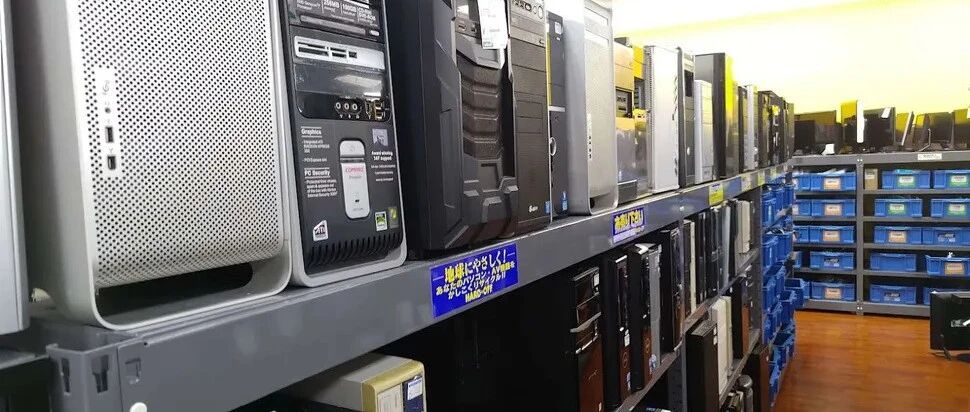
Core Viewpoint - The article discusses the current shortage of PC components, particularly memory, and how this has led to a surge in demand for second-hand computers and components in Japan, highlighting the challenges faced by retailers in meeting consumer needs [3][5][7]. Group 1: Current Market Situation - A major PC and electronics retailer in Japan, Sofmap, is urging customers to sell their old computers due to a severe shortage of second-hand gaming PCs [3][5]. - The retailer's shelves are nearly empty, indicating a significant supply issue in the market [3][5]. - The shortage is attributed to the high demand for memory from AI data center manufacturers, which has caused price fluctuations in the PC memory market [7]. Group 2: Price Changes and Consumer Impact - The price of DDR5 memory has skyrocketed, with a specific example showing a 3.5 times increase from $66 to $235 for a 16GB kit over the past year [7]. - Despite the high prices for DDR5, DDR4 memory may provide some relief for PC assembly due to existing stock and upgrades from users [7]. - The overall price of complete PCs is expected to rise as GPU supply tightens, with reports of delays in the release of new generation GPUs [7]. Group 3: Second-hand Market Dynamics - Retailers like Sofmap are primarily interested in acquiring DDR4 platform devices that meet minimum hardware specifications for resale [8]. - There is a niche market for vintage computers, which have seen price increases over time, indicating a different demand dynamic compared to modern PCs [8][10]. - The article expresses hope that vintage computers will remain affordable and available for collectors and DIY enthusiasts [10].
Dell's Underperforming PC Business Seeks a Comeback
WSJ· 2026-01-05 23:00
Core Insights - Dell's Chief Operating Officer, Jeff Clarke, indicated that the company has deviated from its strategic path by concentrating excessively on premium product tiers while neglecting other market segments [1] Company Focus - The current strategy has led to a misalignment with market demands, suggesting a need for Dell to reassess its product offerings to include a broader range of segments beyond just premium [1]