YYTH(600096)

Search documents
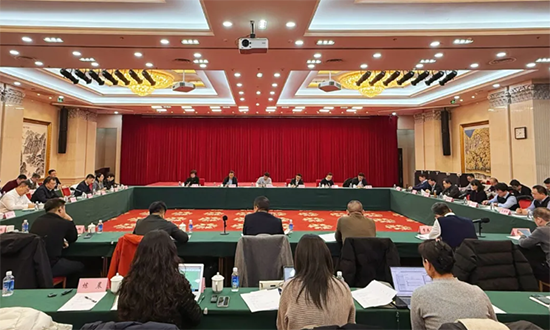
硫酸磷肥行业多举措调控保供稳价
Zhong Guo Hua Gong Bao· 2025-12-22 03:04
Core Viewpoint - The meeting held by the China Sulfuric Acid Industry Association and the China Phosphate Fertilizer Industry Association focuses on stabilizing supply and prices in the sulfuric acid and phosphate fertilizer industries to ensure stable fertilizer supply and pricing before the spring farming season, thereby reinforcing the agricultural input security for national food safety [1][2]. Group 1: Current Market Situation - Global sulfur resource supply is tight, leading to a significant price increase, with imported sulfur prices rising over 230% this year, reaching over 4100 yuan/ton at one point [1]. - As of December 11, the average domestic sulfur price hit a yearly high, with solid sulfur averaging 3936.88 yuan/ton (up 169.59% year-on-year) and liquid sulfur at 3992.75 yuan/ton (up 161.61% year-on-year) [1]. Group 2: Regulatory Measures - Export control measures require sulfuric acid exporters to prioritize domestic market needs and reduce export volumes, with any necessary exports priced no lower than domestic prices [2]. - Price control measures set December 11 prices as a baseline, prohibiting smelting acid producers from raising prices arbitrarily to ensure market stability [2]. - Sulfur companies are encouraged to establish an independent pricing system based on the domestic market to avoid significant fluctuations tied to international market prices [2]. Group 3: Industry Responsibilities - The sulfuric acid and phosphate fertilizer industries are urged to recognize the importance of food security and fertilizer supply, enhancing their sense of responsibility and prioritizing supply stabilization efforts [2]. - The China Sulfuric Acid Industry Association and the China Phosphate Fertilizer Industry Association are tasked with industry self-regulation, monitoring, and implementing supply stabilization measures, including promoting long-term purchase agreements between upstream and downstream companies [2]. Group 4: Technological Development - To alleviate sulfur resource supply pressure, the meeting discussed promoting phosphogypsum-based sulfuric acid production technology and coordinating supportive policies [3]. - Approximately 90 million tons of phosphogypsum are produced annually in China, with 1 ton of phosphogypsum capable of producing 0.45 tons of sulfuric acid, which could significantly supplement domestic sulfur supply if scaled effectively [3]. - Leading companies like Guizhou Phosphate Group and Yunnan Yuntianhua Co., Ltd. are advancing the application of phosphogypsum-based sulfuric acid technology, with some projects already operating stably for years [3].

硫磺价格狂飙,下游行业急了
Xin Lang Cai Jing· 2025-12-20 00:09
Core Viewpoint - The sulfur price surge has prompted the phosphate fertilizer and sulfuric acid industries to collaborate on supply stabilization and price control in preparation for the upcoming spring farming season [1][2]. Group 1: Industry Response - On December 18, a special meeting was held by the China Sulfuric Acid Industry Association and the China Phosphate Fertilizer Industry Association to stabilize the fertilizer supply chain [2]. - The meeting called for sulfuric acid export companies to reduce export volumes and set export prices no lower than domestic prices [2]. - The meeting was guided by the National Development and Reform Commission and involved all sulfuric acid, sulfur, sulfur iron ore production companies, and phosphate fertilizer producers [2]. Group 2: Price Trends - As of December 11, the domestic prices for sulfuric acid ranged from 850 to 1000 CNY/ton in Central China, 820 to 880 CNY/ton in Southwest China, and 940 to 1010 CNY/ton in East China [2]. - Following the meeting, some sulfuric acid producers began to lower their prices, with Shandong Shenchi Chemical Co. reducing its price by 10 CNY/ton to 913 CNY/ton [3]. - The price of sulfur has recently exceeded 4000 CNY/ton, marking a historical high compared to a low of less than 1000 CNY/ton in the second half of last year [4]. Group 3: Cost Implications - The rising sulfur prices have significantly increased production costs for phosphate fertilizers, with estimates indicating that every 100 CNY/ton increase in sulfur price raises phosphate fertilizer production costs by approximately 45 CNY/ton [8]. - Leading phosphate fertilizer company Yuntianhua reported that the cost of producing one ton of phosphate fertilizer has risen by around 1000 CNY due to the increase in sulfur prices, leading to thin profits or even losses for some companies [8]. Group 4: Supply Chain Dynamics - China relies on imports for over 50% of its sulfur, making domestic prices closely tied to international market trends [7]. - The global supply of sulfur is tightening due to production cuts in major oil-producing regions and a shift of Russia from an exporter to a net importer of sulfur [10]. - The Chinese government is implementing policies to prioritize domestic supply of sulfuric acid to support the phosphate fertilizer industry, which is crucial for agricultural stability [14]. Group 5: Industry Initiatives - Several phosphate fertilizer companies, including Yuntianhua and Xiangyun Co., have initiated supply and price stabilization proposals since December 9 [16]. - The China Agricultural Production Materials Circulation Association and the China Phosphate Fertilizer Industry Association have recommended maintaining high operating rates for phosphate fertilizer producers and have advised against exports until August 2026 [16]. - China accounts for 30% of global phosphate fertilizer production, maintaining its position as the largest producer [16].

趋势研判!2025年中国缓控释复合肥行业政策、产业链图谱、行业产量、企业布局及未来发展趋势分析:政策需求双轮驱动,缓控释肥产量有望突破540万吨[图]
Chan Ye Xin Xi Wang· 2025-12-19 01:09
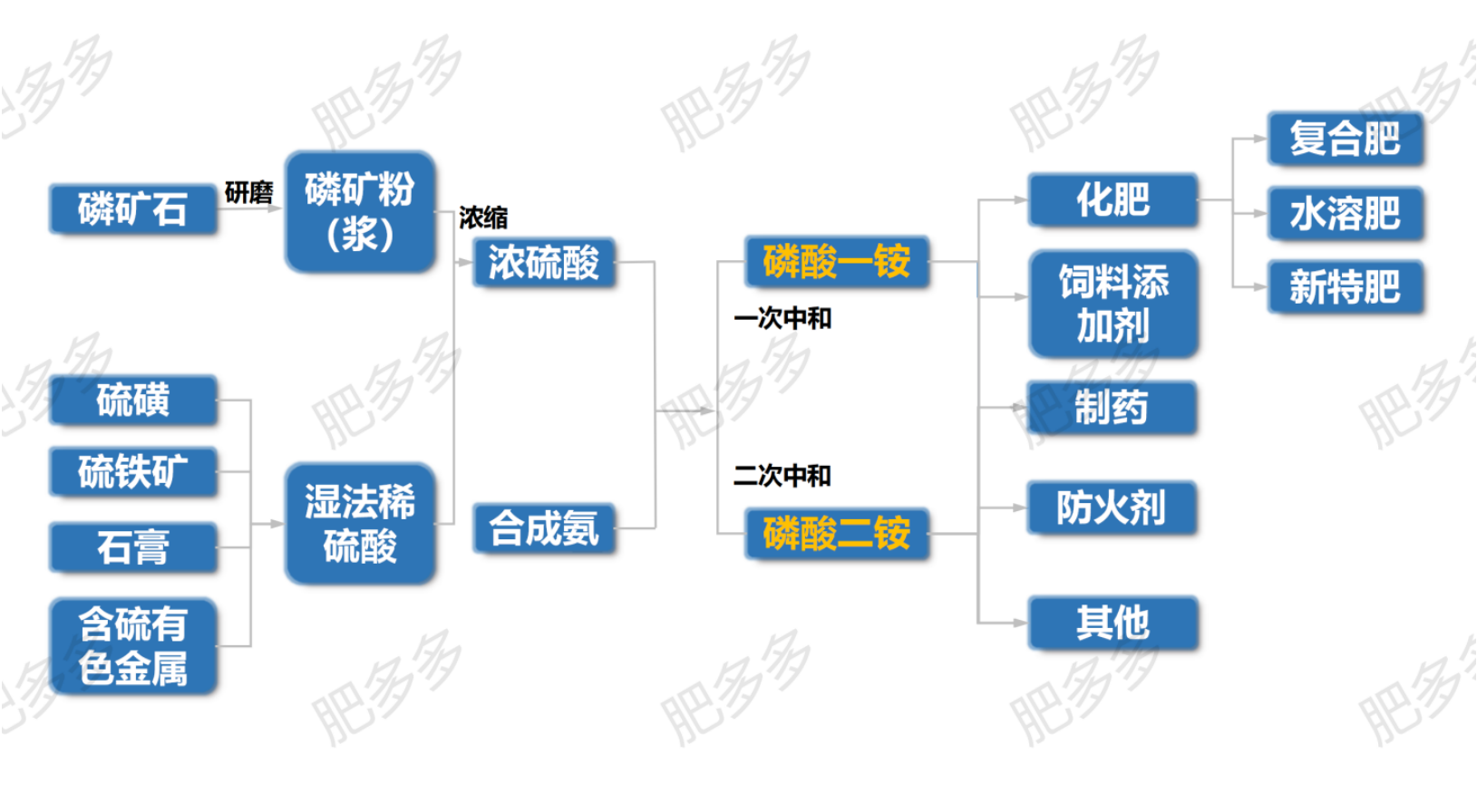
Core Viewpoint - The slow-release compound fertilizer industry is experiencing significant growth driven by government policies promoting efficient and environmentally friendly fertilizers, with a projected market size of 312.7 billion yuan in China by 2024, and a compound annual growth rate (CAGR) of over 5% expected for production by 2025 [1][10]. Group 1: Industry Overview - Slow-release compound fertilizers utilize physical, chemical, or biological technologies to precisely control nutrient release, matching crop needs and improving nutrient utilization rates by 30%-50% [1][2]. - The industry is transitioning from economic crops to field crops, with the market for slow-release fertilizers expected to expand significantly due to their comprehensive advantages [1][10]. - The Chinese fertilizer market is projected to reach 312.7 billion yuan in 2024, with compound fertilizers accounting for nearly 50% of the application volume, solidifying their role as a market core [1][10]. Group 2: Policy Environment - The Chinese government has implemented multiple policies to encourage the development of efficient and environmentally friendly fertilizers, positioning slow-release compound fertilizers as a key component in promoting agricultural green development [1][6]. - Key policy documents include the "Action Plan for Reducing Chemical Fertilizer Use by 2025" and the "Guidelines for Promoting Agricultural Modernization," which collectively support the growth of the slow-release fertilizer sector [1][6]. Group 3: Industry Chain - The industry chain consists of upstream suppliers of nitrogen, phosphorus, potassium fertilizers, and coating materials, with midstream production focused on slow-release fertilizer manufacturers utilizing various technologies [1][8]. - The downstream application primarily serves agriculture, with nearly half of the demand coming from economic crops, while non-agricultural sectors like landscaping are also emerging [1][8]. Group 4: Competitive Landscape - The industry is characterized by a competitive landscape dominated by leading companies such as Kingenta, Stanley, and Ba Tian, which leverage technology and scale to establish market barriers [1][11]. - These leading firms are innovating in areas such as biodegradable coating technology and specialized fertilizers tailored to crop growth stages, enhancing their competitive edge [1][11]. Group 5: Future Trends - The slow-release compound fertilizer industry is expected to evolve towards precision technology, market structure optimization, and global collaboration, focusing on biodegradable materials and smart technology integration [1][12]. - The dual drive of policy and market demand will continue to shape the industry, leading to increased concentration and a shift towards specialized and functional products [1][14]. - Companies are likely to expand their applications beyond traditional agriculture into areas like ecological restoration, enhancing growth opportunities [1][15].


云天化(600096) - 云天化2025年第八次临时股东会会议资料
2025-12-18 08:15
2025 年第八次临时股东会 会议资料 云南云天化股份有限公司 YUNNAN YUNTIANHUA CO.,LTD 2025 年第八次临时股东会会议资料 目录 | | 会议议程 | 3 | | --- | --- | --- | | 议案一 | 关于修订公司独立董事工作制度的议案 | 5 | | 议案二 | 关于修订公司关联交易管理制度的议案 | 19 | | 议案三 | 关于修订公司对外担保管理制度的议案 | 33 | | 议案四 | 关于制定公司董事、高级管理人员薪酬管理制度的议案...42 | | | 议案五 | 关于公司 年度对外担保额度的议案 2026 | 48 | 2 2025 年第八次临时股东会会议资料 会议议程 一、参会股东资格审查 公司股权登记日登记在册的所有股东或其代理人,均有权出席股 东会。股东应当持身份证或其他能够表明其身份的有效证件或证明出 席股东会。代理人还应当提交股东授权委托书和本人有效身份证件。 二、会议签到 三、主持人宣布会议开始 (一)介绍参加会议的公司股东和股东代表及所代表的股份总数, 介绍参加会议的公司董事、高级管理人员等。 (二)介绍会议议题、表决方式。 (三)推选表 ...
【行业分析】中国黄磷行业政策汇总、发展现状及投资前景预测报告——智研咨询发布
Sou Hu Cai Jing· 2025-12-18 02:29
Core Viewpoint - The global yellow phosphorus (P4) supply is dominated by China, Vietnam, and Kazakhstan, with China contributing 82.6% of the total production capacity in 2024, amounting to 1.45 million tons [2][9]. Group 1: Yellow Phosphorus Production - Yellow phosphorus is primarily produced using electric furnace and blast furnace methods, with electric furnace being the dominant method in China due to its high yield and product purity [2][4]. - In 2024, global yellow phosphorus production capacity is projected to reach 1.755 million tons, with China accounting for 1.45 million tons [2][9]. - China's yellow phosphorus production has seen significant growth since the reform and opening up, reaching a production peak of 1.025 million tons in 2014 [2][9]. - Environmental policies have led to a decline in China's yellow phosphorus production since 2016, with production expected to fluctuate between 2020 and 2025 [2][9]. Group 2: Regional Production and Demand - The main production regions in China are Yunnan, Guizhou, Sichuan, and Hubei, with Yunnan being the largest producer, contributing 44.4% of the global total in 2024 [2][9]. - In 2024, China's yellow phosphorus production is expected to reach 857,100 tons, a 16.5% increase from the previous year [2][9]. - The domestic demand for yellow phosphorus is relatively stable, with a projected apparent demand of 741,000 tons in 2024, indicating a self-sufficient state [2][9]. Group 3: Application and Industry Structure - The primary applications of yellow phosphorus include phosphoric acid and glyphosate, which account for 35% and 31% of the total usage, respectively [2][9]. - The top five yellow phosphorus producers in China contribute to 29% of the national capacity, including companies like Guizhou Wengfu and Yunnan Xuanwei Phosphate [2][3]. - The yellow phosphorus industry is crucial for various sectors, including agriculture, industrial manufacturing, and new energy, impacting global supply chain stability [6][9].


云天化:磷肥产品出口按照行业政策执行
Zheng Quan Ri Bao· 2025-12-16 08:39
Core Viewpoint - The company has completed the export customs clearance for monoammonium phosphate and diammonium phosphate products for the year, with no further exports planned for these products in November and December. The focus will shift to ensuring domestic fertilizer supply for spring farming needs until next spring [2] Group 1 - The company stated that its phosphate fertilizer exports are in accordance with industry policies [2] - The company completed the export customs clearance for monoammonium phosphate and diammonium phosphate in October [2] - There will be no exports of monoammonium phosphate and diammonium phosphate products in November and December [2] Group 2 - The company will prioritize meeting domestic fertilizer demand for spring farming from now until next spring [2]
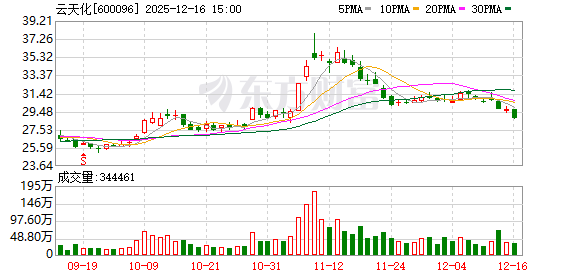
云天化:公司磷肥产品出口按照行业政策执行,10月份已完成今年磷酸一铵、磷酸二铵产品出口报关收尾工作
Mei Ri Jing Ji Xin Wen· 2025-12-15 08:44
Group 1 - The company has completed the export customs clearance for monoammonium phosphate and diammonium phosphate products in October, with no exports planned for November and December [2] - The company will focus on ensuring the domestic demand for fertilizers for spring farming until the spring season next year [2]
国际油价、蛋氨酸价格下跌,TDI价格上涨 | 投研报告
Zhong Guo Neng Yuan Wang· 2025-12-15 02:01
Core Insights - The chemical industry report indicates a mixed performance in chemical product prices, with 42 products increasing in price, 37 decreasing, and 21 remaining stable during the week of December 8-14 [1][2] - The report suggests focusing on undervalued leading companies, the impact of "anti-involution" on supply in related sub-industries, and the importance of self-sufficiency in electronic materials and certain new energy materials amid price increases [1][6] Industry Dynamics - In the week of December 8-14, 47% of tracked chemical products saw a month-on-month price increase, while 44% experienced a decrease, and 9% remained unchanged [2] - The top price increases were noted in nitric acid, sulfuric acid, raw salt, bisphenol A, and TDI, while the largest declines were in PVA, LLDPE, trichloroethylene, and NYMEX natural gas [2] Oil Market Overview - International oil prices fell, with WTI crude oil futures closing at $57.44 per barrel (down 2.45%) and Brent crude at $61.12 per barrel (down 2.19%) [3] - The U.S. oil production averaged 13.853 million barrels per day, an increase of 38,000 barrels from the previous week and 222,000 barrels from the same period last year [3] - U.S. oil demand rose to an average of 21.082 million barrels per day, with gasoline demand increasing to 8.456 million barrels per day [3] TDI Market Analysis - TDI prices increased to an average of 14,713 yuan/ton, up 2.49% week-on-week and 5.51% month-on-month [4] - TDI production decreased, with an overall operating rate of approximately 58.55%, and various factories experiencing operational issues [4] - Average costs for TDI were 11,819 yuan/ton, down 0.92% week-on-week, while average gross profit rose by 31.79% week-on-week [4] Methionine Market Analysis - Methionine prices decreased to an average of 17,900 yuan/ton, down 2.45% week-on-week and 9.14% month-on-month [5] - The production remained stable at 18,350 tons, with an operating rate of 89.42% [5] - The cost of methionine was 13,853.73 yuan/ton, with a gross profit margin of 23.67% [5] Valuation Metrics - As of December 12, the TTM price-to-earnings ratio for the SW basic chemical sector was 24.14, and the price-to-book ratio was 2.19 [6] - The SW oil and petrochemical sector had a TTM price-to-earnings ratio of 12.85 and a price-to-book ratio of 1.24 [6] Investment Recommendations - The report recommends focusing on undervalued leading companies, sectors benefiting from policy support, and emerging fields such as semiconductor materials and new energy materials [6] - Specific companies highlighted for investment include Wanhua Chemical, Hualu Hengsheng, and others [6][7]




基础化工行业:中央经济工作会议部署26年工作,MDI价格持续强势
Orient Securities· 2025-12-14 12:47
Investment Rating - The industry investment rating is maintained as "Positive" [5] Core Insights - The central economic work conference has outlined key tasks for 2026, emphasizing high-quality development and green transformation, which will drive optimization in the chemical industry [8] - MDI prices have shown strong resilience, influenced by unexpected production halts in major facilities, leading to a favorable supply-demand situation [8] Summary by Sections Industry Overview - The chemical industry is expected to recover, with specific focus on MDI, PVC, and phosphate chemicals due to strong demand from energy storage growth [3][8] Investment Recommendations - Companies with potential for recovery in the PVC sector include: Zhongtai Chemical, Xinjiang Tianye, Chlor-alkali Chemical, and Tianyuan Co., all currently unrated [3] - MDI leader: Wanhua Chemical is rated as "Buy" [3] - In the phosphate chemical sector, companies to watch include: Chuanheng Co. and Yuntianhua, both currently unrated [3] - In the oxalic acid industry, recommended stocks include: Hualu Hengsheng, Huayi Group, and Wankai New Materials, all rated as "Buy" [3]



硫磺价格走高,磷复肥工业协会:为保供春耕,磷肥2026年8月前不安排出口
Guan Cha Zhe Wang· 2025-12-13 02:19
Group 1 - The current spring plowing preparation for fertilizers is at a critical stage, with a focus on stabilizing the supply and price of phosphate fertilizers [1] - A meeting was held to analyze the phosphate fertilizer market situation and discuss measures for supply assurance and price stabilization [1][3] - There is a consensus among key phosphate fertilizer production and circulation enterprises on the need for enhanced supply and price control measures [3] Group 2 - Recent fluctuations in the phosphate fertilizer market have negatively impacted winter storage and spring plowing preparations, attributed to rising production costs and increased short-term demand [3] - Recommendations include maintaining high production rates without reducing output, avoiding exports until August 2026, and ensuring domestic market supply [3] - Industry associations are urged to guide enterprises in conducting sales at reasonable prices and to prevent hoarding and price gouging [3] Group 3 - Sulfur prices have surged significantly, reaching a near ten-year high of 4115 yuan/ton, with a year-on-year increase of nearly 200% [4] - China is the largest sulfur importer, with approximately 50% of its consumption relying on imports, and the sulfur production for 2024 is projected at 11.07 million tons [4] - The rise in sulfur prices poses challenges for the stability of the domestic fertilizer market, especially as the spring plowing season approaches [4][5] Group 4 - The recent spike in sulfur prices is primarily due to global supply shortages and rising external prices, with Russia's production being significantly affected [5] - The average import price of sulfur in China increased from $175.79/ton in January to $314.94/ton in October, marking a 79.21% increase [5] - The increase in sulfur prices has led to a rise in industrial-grade monoammonium phosphate prices, which saw a monthly increase of approximately 500 yuan/ton [5]