China Spacesat(600118)

Search documents
载人月球探测重要进展 长征十号火箭与梦舟飞船完成关键试验
Yang Shi Xin Wen· 2026-02-11 06:50
Core Viewpoint - China's successful implementation of the Long March 10 rocket system low-altitude demonstration test and the maximum dynamic pressure escape flight test for the Mengtian crewed spacecraft marks a significant breakthrough in the country's crewed lunar exploration program [1] Group 1: Test Overview - The Long March 10 rocket, carrying the Mengtian crewed spacecraft, conducted its first flight test at the Wenchang Space Launch Site [1] - The rocket's first stage ignited five out of seven engines, initiating the low-altitude demonstration verification [1] Group 2: Low-Altitude Flight Explanation - The term "low-altitude flight" refers to the test's lack of a second stage, resulting in a maximum altitude of approximately 105 kilometers, which is consistent with normal flight missions [2] Group 3: Engine Ignition Details - Two engines were not ignited to maintain consistent acceleration during the ascent due to the rocket's lighter weight without the second stage [3] Group 4: Maximum Dynamic Pressure - The maximum dynamic pressure occurs when the rocket experiences peak aerodynamic resistance during ascent, which is influenced by increasing speed and altitude [4] Group 5: Purpose of Maximum Dynamic Pressure Escape Test - The test aims to evaluate the spacecraft's ability to escape safely in the event of an emergency near the maximum dynamic pressure point during ascent, focusing on three main challenges: safe separation during high-speed ascent, stability during the escape phase, and precise program matching throughout the flight [5] Group 6: Technological Breakthroughs and Significance - The successful test assessed the reliability of multiple engine ignitions and high-altitude ignition, as well as high-precision navigation control during re-entry, marking a key breakthrough in China's reusable rocket technology [6]

非常罕见!黑洞“干饭”现场,被中国卫星捕捉
Ke Ji Ri Bao· 2026-02-11 03:50
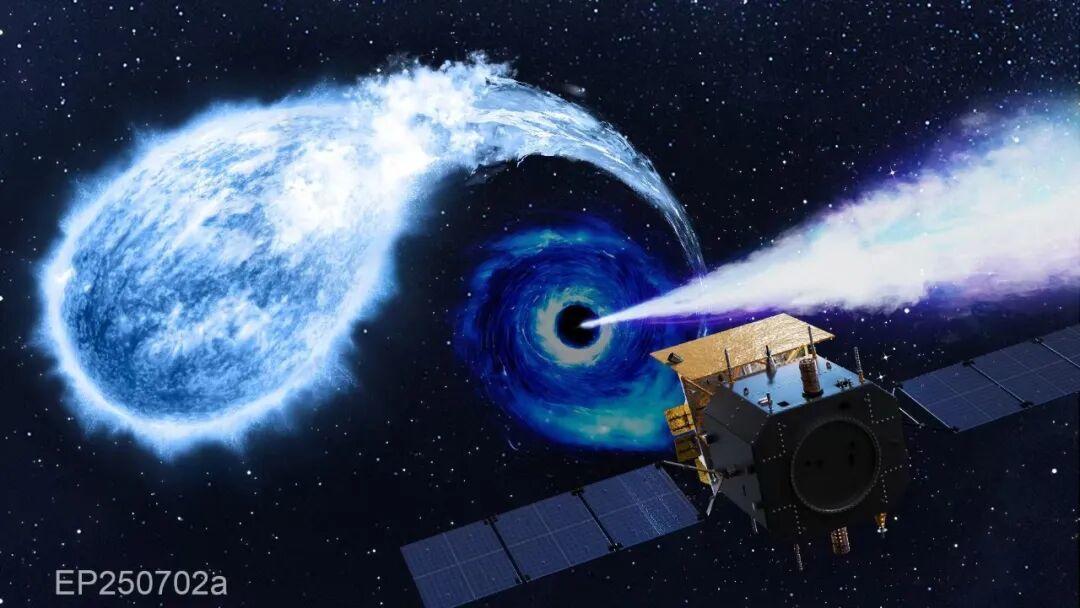
Core Insights - The "Tian Guan" satellite may have captured a rare event of a medium-mass black hole tearing apart and consuming a white dwarf star, which, if confirmed, would be the first clear observation of such an extreme cosmic phenomenon, significantly enhancing the understanding of black hole activity and high-energy astrophysical mechanisms [1][3] Group 1 - The "Tian Guan" satellite's wide-field X-ray telescope, "Wan Xing Tong," discovered an exceptionally bright and rapidly changing X-ray source, designated EP250702a, on July 2, 2025, in the outskirts of a distant galaxy [1] - Observations indicated that X-ray radiation was present at the location approximately one day before a significant gamma-ray burst, suggesting that the physical engine of the explosion was activated much earlier than traditional gamma-ray bursts [1] - The characteristics of the event, including its high brightness and rapid evolution, could not be explained by common astrophysical explosion models, leading the scientific team to propose that a medium-mass black hole was involved in the disruption of a white dwarf star [1][3] Group 2 - The research team noted that the rapid decay and high brightness of the event imply that the consumed celestial body had a very high density, which aligns with the characteristics of a white dwarf star [3] - The estimated mass of the black hole involved is less than approximately 75,000 times that of the Sun, based on gamma-ray data from the Fermi satellite, and the event's location in the outskirts of the galaxy rules out the possibility of a supermassive black hole [3] - Only a medium-mass black hole would possess the capability to tear apart a dense body like a white dwarf, resulting in the observed brief, intense, and high-energy jets [3]

AI与机器人深度结合,太空探索:进入无人化时代
Tou Bao Yan Jiu Yuan· 2026-02-10 13:41
Investment Rating - The report indicates a positive investment outlook for the aerospace robotics industry, highlighting its transition from auxiliary exploration to core support in space missions [17]. Core Insights - The aerospace robotics sector is experiencing significant growth, with the global market projected to expand from approximately $5 billion in 2023 to $10.9 billion by 2033, reflecting a compound annual growth rate (CAGR) of 8.10% from 2024 to 2030 [21]. - The report emphasizes the increasing role of autonomous and semi-autonomous robots in space exploration, capable of performing complex tasks in extreme conditions, thereby reducing risks and costs associated with human astronauts [8][9]. - Key technological advancements such as AI integration, autonomous navigation, and edge computing are driving the evolution of space robots, enabling them to operate independently and efficiently in space environments [4][14]. Summary by Sections Industry Overview - Aerospace robots are designed for tasks in space environments, including satellite maintenance, space station construction, and planetary exploration [4][8]. - These robots exhibit strong environmental adaptability, capable of withstanding extreme temperatures and radiation, and are equipped with advanced sensors and AI for autonomous decision-making [9][10]. Market Dynamics - The global aerospace robotics market is transitioning towards a more integral role in space missions, with increasing demand for automation and intelligent equipment [21]. - The report forecasts a robust growth trajectory for the market, driven by the rising number of space exploration missions and the need for automated solutions in satellite servicing and space debris management [22]. Technological Trends - Key technological trends include enhanced autonomy through AI, modular designs for flexible task execution, and collaborative capabilities among multiple robots to tackle complex missions [27][26]. - The report highlights the importance of advancements in materials and sensor technologies to improve the reliability and efficiency of space robots [14][29]. Future Directions - Future developments in the aerospace robotics industry will focus on deep space exploration, in-orbit servicing, and the construction of space infrastructure, which will require high-performance, multifunctional robots [22][24]. - The report outlines a roadmap for the evolution of space robots, emphasizing the shift from mechanical assistance to intelligent, autonomous partners in space missions [25][24].

宇航机器人行业创新发展:行业洞察-AI与机器人深度结合,太空探索进入无人化时代
Tou Bao Yan Jiu Yuan· 2026-02-10 12:24
Investment Rating - The report does not explicitly state an investment rating for the aerospace robotics industry Core Insights - The aerospace robotics industry is transitioning from "auxiliary exploration" to "core support," driven by increasing demand for automation and intelligent equipment in space exploration tasks [17][21] - The global market for aerospace robots is projected to grow from approximately $5 billion in 2023 to $10.9 billion by 2033, with a compound annual growth rate (CAGR) of 8.10% from 2024 to 2030, indicating strong growth potential [21][22] - The report highlights the critical role of aerospace robots in various applications, including satellite maintenance, space exploration, and in-orbit services, emphasizing their ability to operate in high-risk environments [21][23] Summary by Sections Industry Overview - Aerospace robots are designed for tasks in space environments, capable of performing complex operations such as satellite maintenance, space station construction, and planetary exploration [4][8] - These robots exhibit strong environmental adaptability, able to withstand extreme temperatures ranging from -150°C to +120°C, vacuum conditions, and high radiation levels [9][10] Technological Advancements - Key technologies in aerospace robotics include autonomous navigation, edge computing, computer vision, reinforcement learning, and remote operation, which enhance the robots' capabilities in space [4][9] - The integration of AI technologies allows for improved decision-making and operational efficiency, enabling robots to adapt to dynamic space environments [14][26] Market Trends - The aerospace robotics market is expected to expand significantly, with a focus on deep space exploration, in-orbit services, and space manufacturing, which will require high-performance, multifunctional robots [22][24] - The report identifies three main growth areas: ongoing deep space exploration missions, the rapid rise of in-orbit service markets, and the emergence of orbital construction and space manufacturing applications [22][24] Development Path - The evolution of aerospace robots is characterized by a shift from "mechanical arm assistance" to "intelligent exploration" and "human-robot collaboration," positioning them as core components in space operations [24][26] - Future developments will focus on enhancing autonomy, modular design, and collaborative capabilities among multiple robots to tackle complex space tasks [27][28]


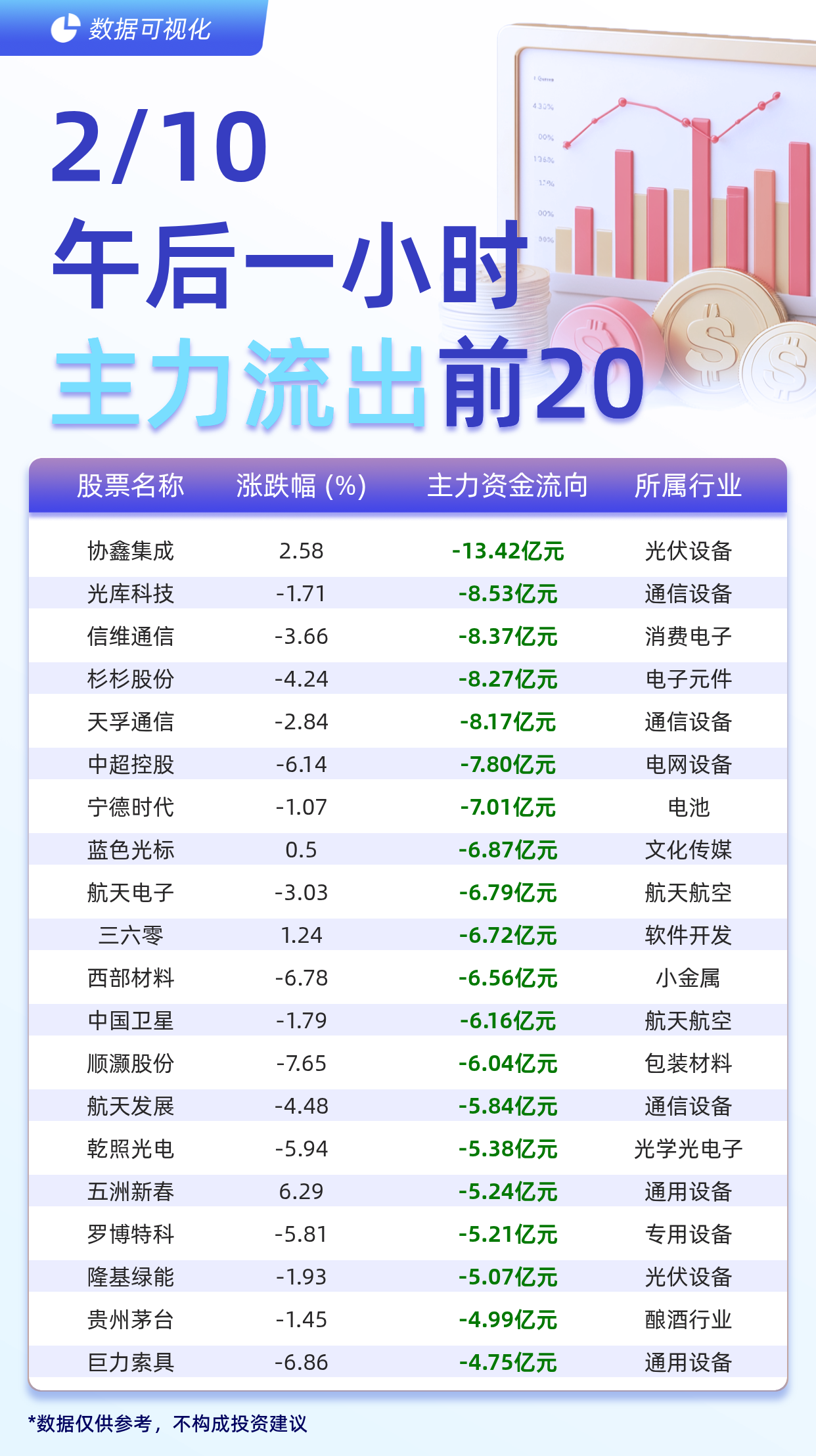
主力个股资金流出前20:协鑫集成流出13.42亿元、光库科技流出8.53亿元
Jin Rong Jie· 2026-02-10 06:35
Core Viewpoint - The data indicates significant outflows of capital from various stocks, with the top 20 stocks experiencing substantial withdrawals, highlighting potential concerns in the respective sectors [1][2][3] Group 1: Stock Performance and Capital Outflow - GCL-Poly Energy saw a capital outflow of 1.342 billion yuan, despite a price increase of 2.58% [2] - Lightway Technology experienced a capital outflow of 853 million yuan, with a decline of 1.71% [2] - Xinwei Communication had a capital outflow of 837 million yuan, with a drop of 3.66% [2] - Shanshan Co. faced an outflow of 827 million yuan, down 4.24% [2] - Tianfu Communication saw an outflow of 817 million yuan, with a decrease of 2.84% [2] - Zhongchao Holdings had a significant outflow of 780 million yuan, down 6.14% [2] - Contemporary Amperex Technology experienced a capital outflow of 701 million yuan, with a slight decline of 1.07% [2] - BlueFocus Communication saw an outflow of 687 million yuan, with a minor increase of 0.5% [2] - Aerospace Electronics faced an outflow of 679 million yuan, down 3.03% [2] - 360 Security Technology had a capital outflow of 672 million yuan, with a rise of 1.24% [2] - Western Materials experienced an outflow of 656 million yuan, down 6.78% [3] Group 2: Additional Stock Details - China Satellite had a capital outflow of 616 million yuan, with a decline of 1.79% [3] - Shunhao Co. faced an outflow of 604 million yuan, down 7.65% [3] - Aerospace Development saw an outflow of 584 million yuan, with a decrease of 4.48% [3] - Qianzhao Optoelectronics experienced an outflow of 538 million yuan, down 5.94% [3] - Wuzhou New Spring had a capital outflow of 524 million yuan, with an increase of 6.29% [3] - Robot Technology faced an outflow of 521 million yuan, down 5.81% [3] - Longi Green Energy saw an outflow of 507 million yuan, with a decline of 1.93% [3] - Kweichow Moutai experienced a capital outflow of 499 million yuan, down 1.45% [3] - JuLi Rigging faced an outflow of 475 million yuan, down 6.86% [3]




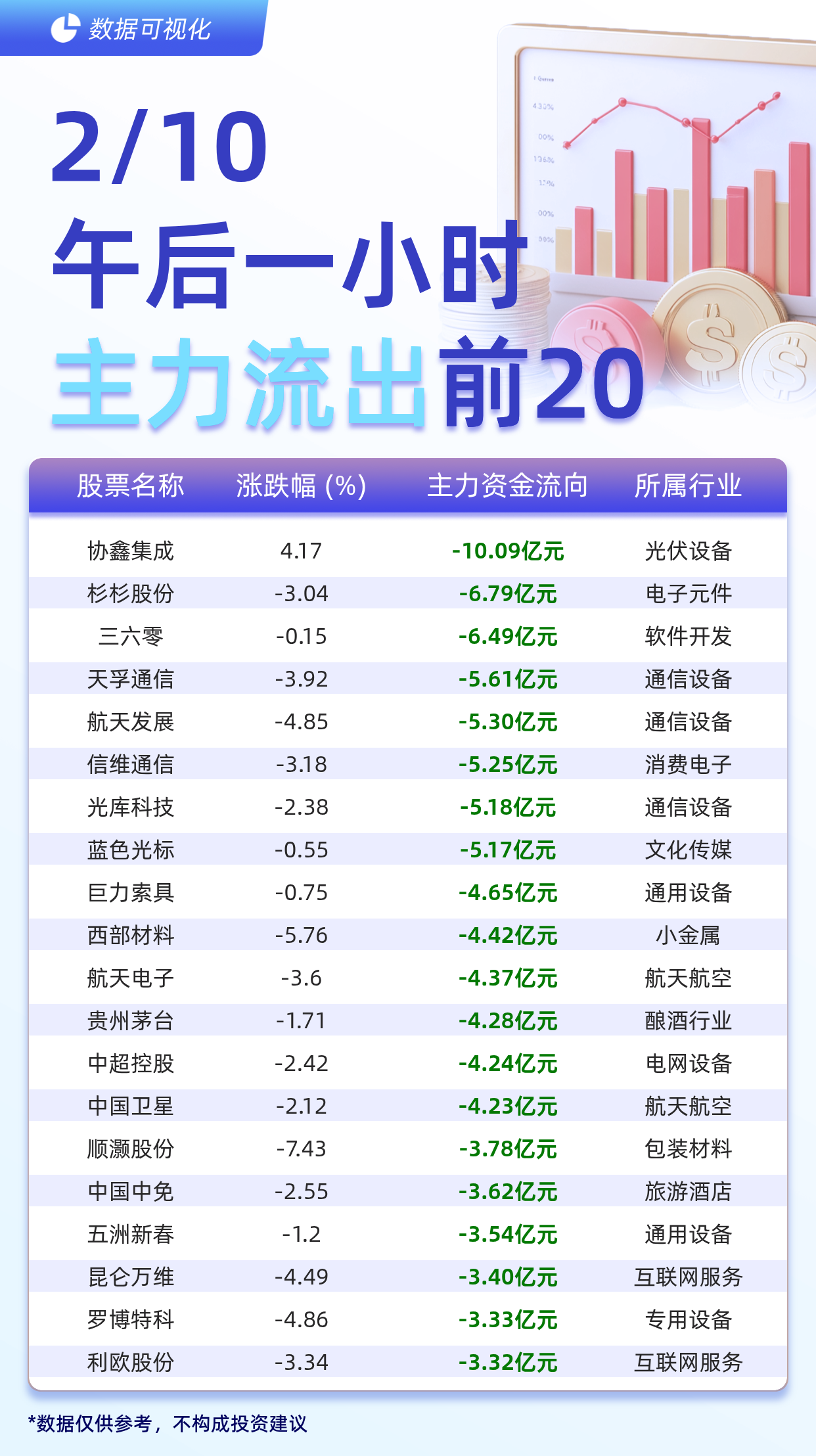
主力个股资金流出前20:协鑫集成流出10.09亿元、杉杉股份流出6.79亿元
Jin Rong Jie· 2026-02-10 06:35
Core Viewpoint - The data indicates significant outflows of capital from various stocks, with the top 20 stocks experiencing substantial withdrawals, highlighting potential concerns in investor sentiment and market dynamics [1][2][3] Group 1: Major Stocks with Capital Outflows - GCL-Poly Energy saw the largest outflow of -1.009 billion yuan, indicating a negative trend in the photovoltaic equipment sector [1][2] - Soshine Technology experienced an outflow of -679 million yuan, reflecting challenges in the electronic components industry [1][2] - 360 Security Technology had a capital outflow of -649 million yuan, suggesting potential issues in the software development sector [1][2] Group 2: Additional Stocks with Notable Withdrawals - Tianfu Communication faced an outflow of -561 million yuan, indicating pressures in the communication equipment sector [1][2] - Aerospace Development reported a capital outflow of -530 million yuan, which may reflect broader concerns in the aerospace and defense industry [1][2] - Kweichow Moutai experienced an outflow of -428 million yuan, raising questions about the performance in the liquor industry [1][3]




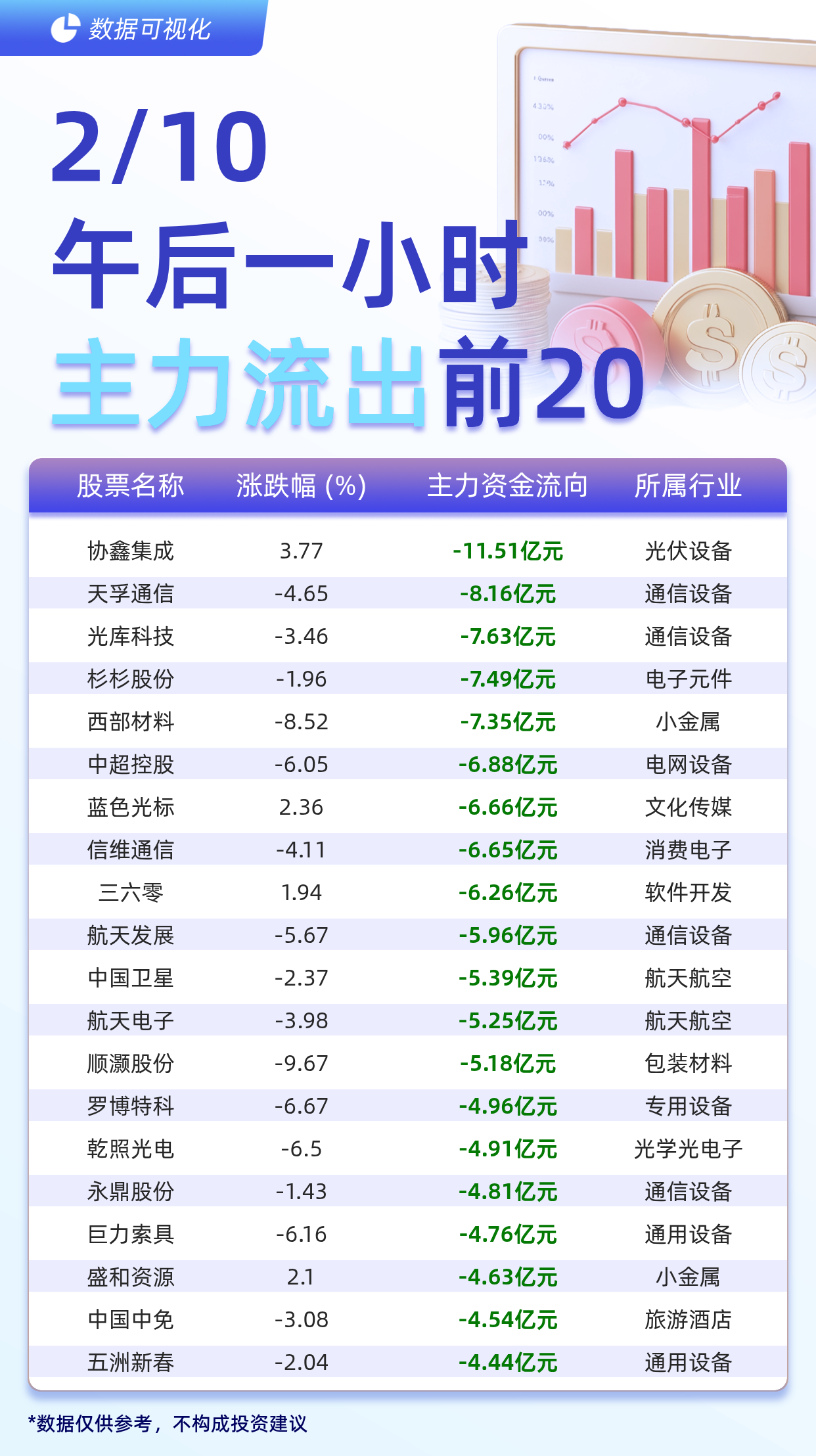
主力个股资金流出前20:协鑫集成流出11.51亿元、天孚通信流出8.16亿元
Jin Rong Jie· 2026-02-10 06:35
Core Viewpoint - The data indicates significant outflows of main funds from various stocks, highlighting potential concerns in specific sectors and companies [1][2][3] Group 1: Stock Performance and Fund Flow - GCL-Poly Energy experienced a fund outflow of 1.151 billion yuan with a price increase of 3.77% [2] - Tianshu Communication saw a fund outflow of 816 million yuan with a price decrease of 4.65% [2] - Guangku Technology had a fund outflow of 763 million yuan and a price drop of 3.46% [2] - Shanshan Co. faced a fund outflow of 749 million yuan with a decline of 1.96% [2] - Western Materials reported a significant fund outflow of 735 million yuan and a price decrease of 8.52% [2] - Zhongchao Holdings had a fund outflow of 688 million yuan with a price drop of 6.05% [2] - BlueFocus Communication experienced a fund outflow of 666 million yuan and a price increase of 2.36% [2] - XW Communications saw a fund outflow of 665 million yuan with a price decrease of 4.11% [2] - 360 Security Technology had a fund outflow of 626 million yuan and a price increase of 1.94% [2] - Aerospace Development faced a fund outflow of 596 million yuan with a price drop of 5.67% [2] - China Satellite experienced a fund outflow of 539 million yuan with a price decrease of 2.37% [3] Group 2: Additional Stock Details - Aerospace Electronics had a fund outflow of 525 million yuan with a price drop of 3.98% [3] - Shunhao Co. reported a fund outflow of 518 million yuan and a significant decline of 9.67% [3] - Robot Technology faced a fund outflow of 496 million yuan with a price decrease of 6.67% [3] - Qianzhao Optoelectronics had a fund outflow of 491 million yuan and a price drop of 6.5% [3] - Yongding Co. experienced a fund outflow of 481 million yuan with a price decrease of 1.43% [3] - Julite Equipment reported a fund outflow of 476 million yuan and a price drop of 6.16% [3] - Shenghe Resources had a fund outflow of 463 million yuan with a price increase of 2.1% [3] - China Duty Free Group faced a fund outflow of 454 million yuan with a price decrease of 3.08% [3] - Wuzhou New Spring reported a fund outflow of 444 million yuan with a price drop of 2.04% [3]



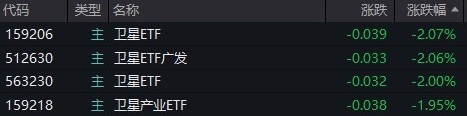
卫星概念股走低,相关ETF跌约2%
Mei Ri Jing Ji Xin Wen· 2026-02-10 05:42
Group 1 - Satellite concept stocks declined, with XW Communication falling over 4%, Aerospace Electronics down over 3%, and China Satellite, Shanghai Hanxun, and Zhenlei Technology each dropping over 2% [1] - Satellite-related ETFs experienced a decline of approximately 2% [1] Group 2 - Several brokerages indicated that during the 14th Five-Year Plan period, commercial aerospace will become a key driver for high-quality development of new productive forces and technology in China [2] - To secure valuable orbital and frequency resources, the number of satellite launches in China is expected to accelerate further by 2026, with private commercial rocket companies likely to play a significant role [2] - The investment opportunities in China's satellite internet industry chain are anticipated to grow by 2026 [2]


通用航空ETF(159378)跌0.62%,半日成交额2013.11万元
Xin Lang Cai Jing· 2026-02-10 03:43
Group 1 - The General Aviation ETF (159378) closed down 0.62% at 1.448 yuan with a trading volume of 20.13 million yuan [1] - Key holdings in the General Aviation ETF include Wan Feng Ao Wei down 0.45%, Aerospace Rainbow down 1.26%, and China Satellite down 2.37% [1] - The ETF's performance benchmark is the National General Aviation Industry Index return rate, managed by Yongying Fund Management Company [1] Group 2 - Since its inception on January 2, 2025, the General Aviation ETF has returned 45.48%, while its return over the past month is -5.56% [1]


上周A股融资余额小幅回落 5股获融资客大手笔买入
Sou Hu Cai Jing· 2026-02-08 23:44
Core Viewpoint - The financing balance of A-shares has been declining, with a latest figure of 26,640.67 billion yuan as of February 5, indicating a net repayment trend in financing funds totaling 42.915 billion yuan for the week [1] Industry Summary - The electronic sector led the net repayment of financing, amounting to 10.55 billion yuan [1] - The non-ferrous metals sector followed with a net repayment of 8.421 billion yuan [1] - The communication, banking, and food & beverage sectors also experienced net repayments exceeding 2 billion yuan each [1] Company Summary - The construction and decoration sector saw net purchases of financing, totaling 319 million yuan [1] - The comprehensive sector recorded net purchases of 80.9149 million yuan [1] - A total of 58 stocks had net financing purchases exceeding 100 million yuan, with the top five being Zhongji Xuchuang, SMIC, Jiejia Weichuang, China Satellite, and Hengtong Optic-Electric, each with net purchases over 400 million yuan [1]