
China Spacesat(600118)

Search documents
多枚可重复使用火箭今年有望首飞
Zheng Quan Ri Bao· 2026-01-29 17:29
Core Viewpoint - The Chinese commercial rocket industry is poised for significant advancements in reusable rocket technology, with multiple launches and recovery attempts expected in 2026, marking a critical year for the sector [1][4]. Group 1: Company Developments - China Aerospace Science and Technology Corporation (CASC) emphasizes the importance of 2026 as a foundational year for the commercial rocket sector, focusing on resource integration and successful launches and recoveries [1]. - The successful launch of the Zhuque-3 rocket by private company Landspace and the Long March 12 rocket by CASC highlights the collaborative efforts between state-owned and private enterprises in advancing reusable rocket technology [2][3]. - The Long March 12 rocket, measuring approximately 70.4 meters in length and weighing about 437 tons, aims for "first-stage reuse" as a core feature, although it did not achieve the recovery goal during its recent flight [2]. Group 2: Industry Trends - The collaboration between state-owned and private enterprises is fostering a strong synergy in the development of reusable rockets, combining the technical expertise of state firms with the agility of private companies [3]. - The anticipated launches of multiple domestic reusable rockets, including the Hyperbola-3 and Xingyun-1, are expected to occur in 2026, further pushing the boundaries of China's capabilities in this field [4]. - The breakthrough in reusable rocket technology is seen as a key factor in reducing launch costs, which could lead to new opportunities in satellite networking and space infrastructure [5]. Group 3: Future Opportunities - The successful recovery of reusable rockets is expected to open up new avenues in the commercial space sector, with companies actively preparing for developments such as space tourism [5][6]. - The Lihong-2 vehicle is set to conduct a 100-kilometer recovery technology verification in 2026, aiming to significantly lower launch costs and validate recovery technologies [6]. - Ongoing research and development in commercial space technology will require substantial investment and collaboration among government, local authorities, and private capital to achieve breakthroughs in core technologies [6].

我国将布局更多“太空+”未来产业
第一财经· 2026-01-29 11:45
Core Viewpoint - China is set to expand its "Space+" future industries, focusing on commercial aerospace and its application, with the China Aerospace Science and Technology Corporation leading the initiative during the 14th Five-Year Plan period [1][2]. Group 1: Future Industry Development - The initiative includes five major projects aimed at fostering new developments and capabilities in the commercial aerospace sector [1]. - Key areas of focus include the development of space digital infrastructure, space resource development, space traffic management, and space tourism [1]. Group 2: Space Digital Infrastructure - Plans are in place to build gigawatt-level space digital infrastructure, creating a new integrated space system architecture that combines cloud, edge, and terminal capabilities [1]. - The goal is to achieve deep integration of computing power, storage, and transportation, enabling advanced computational capabilities in space [1]. Group 3: Space Resource Development - A major project titled "Heavenly Work and Material" will be launched to explore space resource development, including the establishment of a comprehensive experimental and ground support system [1]. - The focus will be on breakthroughs in key technologies such as small celestial body resource exploration, intelligent autonomous mining, low-cost transfer and transportation, and in-orbit processing [1]. Group 4: Space Traffic Management - Efforts will be made to develop key technologies for monitoring, warning, and clearing space debris, which will lay a solid foundation for China's active role in establishing international regulations for space traffic management [1]. - This initiative aims to ensure the safe operation of space infrastructure [1]. Group 5: Space Tourism - The development of suborbital and orbital space tourism vehicles will be accelerated, with plans for both unmanned and manned flight verification [2]. - A comprehensive operational system for space tourism will be established, aiming for regular suborbital space tourism flights and gradual development of orbital space tourism [2].


我国将布局更多“太空+”未来产业
财联社· 2026-01-29 11:13
Core Viewpoint - China is set to expand its "Space+" future industries, focusing on the development of commercial aerospace and related applications during the 14th Five-Year Plan period [1][2]. Group 1: Future Industry Development - The China Aerospace Science and Technology Corporation will lead the development of commercial aerospace, aiming to enhance the entire industry chain by fostering collaboration among upstream and downstream enterprises [1]. - Five major projects will be implemented, including the cultivation of future industry development, which encompasses areas such as space digital infrastructure, space resource development, space traffic management, and space tourism [1]. Group 2: Space Digital Infrastructure - A gigawatt-level space digital infrastructure will be constructed, creating a new type of space system architecture that integrates cloud, edge, and terminal computing [1]. - The goal is to achieve deep integration of computing power, storage capacity, and transportation capabilities, enabling "sky computing" and "earth-sky computing" [1]. Group 3: Space Resource Development - A major project named "Heavenly Work and Material" will be initiated to develop a comprehensive experimental and ground support system for space resource development [1]. - Key technologies to be focused on include the exploration of small celestial body resources, intelligent autonomous mining, low-cost transfer and transportation, and in-orbit processing [1]. Group 4: Space Traffic Management - Key technological breakthroughs will be pursued in space debris monitoring, early warning, and removal, laying a solid foundation for China's proactive role in establishing international rules for space traffic management [1]. - This initiative aims to ensure the safe operation of space infrastructure [1]. Group 5: Space Tourism - The development of suborbital and orbital space tourism vehicles will be accelerated, with plans for both unmanned and manned flight verification [2]. - A comprehensive operational system for space tourism will be established, aiming for regular suborbital space tourism flights and gradual development of orbital space tourism [2].

中国商业航天将实施“155”战略,布局“太空+”未来产业
Nan Fang Du Shi Bao· 2026-01-29 10:56
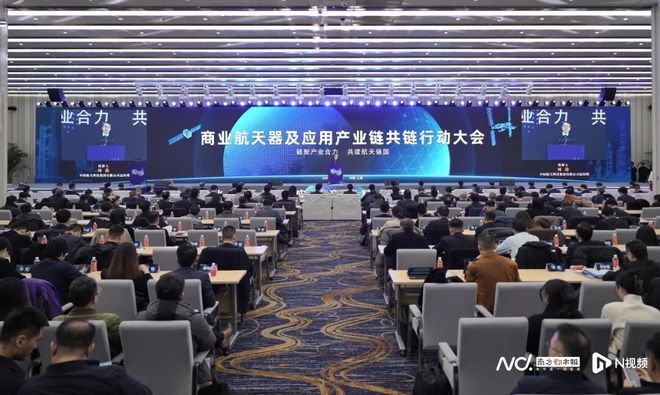
一流安全,建立覆盖产品研制、试验、总装、测试、发射、在轨、离轨和数据应用全过程的安全保证体 系。 1月29日,南都湾财社记者从中国宇航学会方面获悉,以"链聚产业合力 共建航天强国"为主题的商业航 天器及应用产业链共链行动大会在上海召开。大会围绕发展商业航天国家战略部署,发挥中央企业战略 引领、生态构建等职能,带动产业链上中下游企业共谋新发展、共建新能力、共筑新生态。 会上,中国航天科技集团党组副书记、总经理周劼表示,我国商业航天将全面实施"155"战略。其 中,"1"是锚定一流目标,以"五个一流"为标准,建成技术先进、产品卓越、供给强健、服务优质的商 业航天器及应用产业链。 五个一流具体包括: 一流技术,核心技术指标达到世界一流水平。 一流产品,航天运输系统、空间基础设施能力水平显著增强,火箭发射次数、航天器入轨重量和在轨数 量迈上新台阶。 一流供给,生产制造能力大幅提升,实现大规模、低成本、高可靠、高韧性的产品供给。 一流服务,建成"感通算用"融合应用服务体系,实现"千行百业,赋能万物"。 此外,两个"5"分别是实施主体支撑的五大工程,和系统推进融通带动的五大任务。 其中,"五大工程"一是商业运载能力提升工 ...
我国将布局更多“太空+”未来产业
Xin Hua Wang· 2026-01-29 10:43
Core Viewpoint - China is set to expand its "Space+" future industry layout, focusing on the development of commercial aerospace and related applications during the 14th Five-Year Plan period [1][2]. Group 1: Strategic Initiatives - China Aerospace Science and Technology Corporation will act as the "chain leader" for the commercial aerospace industry, driving collaboration among upstream and downstream enterprises to foster new development and capabilities [1]. - Five major projects will be implemented, including the cultivation of future industry development, promoting new fields such as space digital infrastructure, space resource development, space traffic management, and space tourism [1]. Group 2: Space Digital Infrastructure - Plans include the construction of gigawatt-level space digital infrastructure, creating a new type of space system architecture that integrates cloud, edge, and terminal computing [1]. - The goal is to achieve deep integration of computing power, storage capacity, and transportation capabilities, enabling "sky computing" and "earth-sky computing" [1]. Group 3: Space Resource Development - A major project called "Tian Gong Kai Wu" will be launched to develop comprehensive experimental and ground support systems for space resource development [1]. - Key technologies to be focused on include small celestial body resource exploration, intelligent autonomous mining, low-cost transfer and transportation, and in-orbit processing [1]. Group 4: Space Traffic Management - Efforts will be made to tackle key technologies for space debris monitoring, early warning, and removal, establishing a solid foundation for China's active role in international space traffic management regulations [1]. - This initiative aims to ensure the safe operation of space infrastructure [1]. Group 5: Space Tourism - The development of suborbital and orbital space tourism vehicles will be accelerated, with plans for both unmanned and manned flight verification [2]. - A comprehensive operational system for space tourism will be established, aiming for regular suborbital space tourism flights and gradual development of orbital space tourism [2].
航天装备板块1月29日跌0.94%,理工导航领跌,主力资金净流出12.49亿元
Zheng Xing Xing Ye Ri Bao· 2026-01-29 09:03
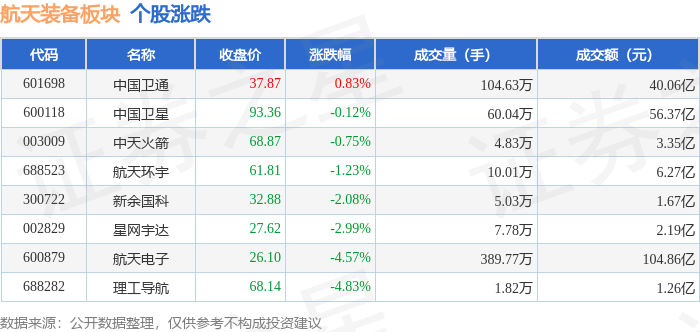
Group 1 - The aerospace equipment sector experienced a decline of 0.94% on January 29, with the leading stock being Ligong Navigation [1] - The Shanghai Composite Index closed at 4157.98, up 0.16%, while the Shenzhen Component Index closed at 14300.08, down 0.3% [1] - Major stocks in the aerospace equipment sector showed varied performance, with China Satellite down 0.12% and Ligong Navigation down 4.83% [1] Group 2 - The net outflow of main funds in the aerospace equipment sector was 1.249 billion yuan, while retail investors saw a net inflow of 1.113 billion yuan [1] - Detailed fund flow data indicates that Ligong Navigation had a significant net outflow of 23.45 million yuan from main funds, but a net inflow of 18.127 million yuan from retail investors [2] - China Satellite experienced a net outflow of 116 million yuan from main funds, with a smaller net inflow of 15.979 million yuan from retail investors [2]





商业航天器及应用产业链共链行动大会举办
Xin Lang Cai Jing· 2026-01-29 08:27
Core Insights - The conference themed "Linking Industry Forces to Build a Strong Space Nation" was held in Shanghai, focusing on the development of the commercial space industry in China [1][2] - The event aimed to foster collaboration among upstream and downstream enterprises in the industry chain, enhancing innovation and promoting high-quality and safe development of commercial space [1][2] Group 1: Government and Regulatory Support - The State-owned Assets Supervision and Administration Commission (SASAC) emphasized its ongoing support for central enterprises to engage in comprehensive cooperation across various fields, aiming to enhance the development level of the industry chain [1] - The National Space Administration (CNSA) highlighted its commitment to innovation-driven, collaborative, and safe development, focusing on building core competitiveness within the industry chain [1] Group 2: Industry Initiatives and Reports - The China Aerospace Science and Technology Corporation (CASC) announced its role as the "chain leader" in the commercial space industry, aiming to establish a regular supply-demand matching mechanism and promote the formation of a China Commercial Space Industry Innovation Development Alliance [2] - The conference released several key documents, including the "14th Five-Year Plan" vision report for the commercial space industry, major supply-demand information, and a standard system for the industry chain [2]
中国准备太空采矿
第一财经· 2026-01-29 04:53
Core Viewpoint - The China Aerospace Science and Technology Corporation plans to promote the development of new fields such as space tourism, space digital infrastructure, space resource development, and space traffic management during the 14th Five-Year Plan period [3]. Space Tourism - The company aims to accelerate the iteration of suborbital and orbital space tourism vehicles, complete relevant unmanned or manned flight verification, and establish a comprehensive space tourism operation system to achieve regular suborbital space tourism flights and gradually develop orbital space tourism [5]. Space Digital Infrastructure - The goal is to build gigawatt-level space digital infrastructure, creating a new type of space system architecture that integrates cloud, edge, and terminal, achieving deep integration of computing power, storage capacity, and transportation capacity, enabling "sky computing," "ground computing," and "joint computing" [6]. Space Resource Development - The company will conduct major project demonstrations for "Heavenly Works and Material," establishing a comprehensive experimental and ground support system for space resource development, focusing on breakthroughs in key technologies such as small celestial body resource exploration, intelligent autonomous mining, low-cost transfer and transportation, and in-orbit processing [8]. Space Traffic Management - Efforts will be made to develop key technologies for monitoring, early warning, and removal of space debris, laying a solid foundation for China to gain initiative in the formulation of international rules for space traffic management and ensuring the safe operation of space infrastructure [10].
中国商业航天火箭卫星,将加速升级
Zhong Guo Zheng Quan Bao· 2026-01-29 04:30
中国商业航天火箭卫星将加速升级 开发更多应用场景 太空旅游 记者今天(29日)从中国航天科技集团获悉,未来集团将实施商业运载能力提升工程,就是要研制具备 国际竞争力的商业运载火箭,实现航班化运输。可重复使用商业火箭方面,形成近地轨道20吨级重复使 用状态运载能力,实现重复使用火箭规模化、商业化成熟应用。重型运载火箭方面,完成重型运载火箭 研制和相关重复使用试验,具备近地轨道百吨级入轨能力。 同时还将实施商业卫星效能跃升工程,研制新型卫星及先进载荷,开展卫星星座建设。星座建设方面, 开展国家卫星互联网星座、千帆星座、各类新型应用卫星星座建设。新型卫星研制方面,研发一批世界 一流的标志性载荷产品,发展新一代平板卫星、软件定义卫星、算力卫星、超低轨卫星等新型卫星。先 进制造能力建设方面,推进增材制造、超精密加工、一体化成型等先进制造技术应用,提升柔性化、智 能化、规模化生产水平,全面满足大规模星座建设需要。 中国商业航天将实施产业基础设施补强工程。补齐发射、回收、测运控等环节的短板。开展海南、东部 沿海、酒泉等地商业发射新工位或新发射场建设,形成互补协同的商业发射场体系。建设智能化陆上、 海上着陆场和搜救回收力量。 ...
中国准备太空采矿
Xin Lang Cai Jing· 2026-01-29 04:20
Group 1 - The core viewpoint of the article highlights that China Aerospace Science and Technology Corporation plans to initiate the "Tiangong Kaiwu" major project during the 14th Five-Year Plan period, focusing on the development of a comprehensive experimental system for space resource exploitation and ground support systems [1] - The project will emphasize breakthroughs in key technologies such as small celestial body resource exploration, intelligent autonomous mining, low-cost transfer and transportation, and in-orbit processing [1]