
NJEC(600699)

Search documents
2026年中国集成式域控解决方案行业发展全景分析研判:市场发展迅猛,市场规模将达到667.8亿元[图]
Chan Ye Xin Xi Wang· 2026-01-04 01:23
Core Insights - The integrated domain control solution is a core technology for the development of intelligent and connected vehicles, widely implemented in both passenger and commercial vehicles [1][5] - The global market for integrated domain control solutions is expected to grow rapidly, with projections of approximately 85.16 billion yuan in 2025 and 132.46 billion yuan in 2026 [5] - In China, the market size for integrated domain control solutions is projected to reach about 44.14 billion yuan in 2025 and 66.78 billion yuan in 2026, driven by rising consumer demand for smart experiences and supportive national policies [5] Industry Definition - The term "domain" refers to a collection of electronic and electrical architectures that control major functional modules of a vehicle, typically divided into five domains: intelligent driving, entertainment (cockpit), chassis, power, and body [2] - The trend towards integration in the vehicle's electronic and electrical architecture is driven by the increasing number of electronic control units and the shift towards centralized E/E architectures [2][4] Market Overview - The integrated domain control solution market is experiencing rapid growth due to the shift towards centralized E/E architectures and the increasing demand for integrated computing capabilities in smart vehicles [5] - The market is supported by rising consumer spending and the importance of smart experiences in vehicle purchasing decisions, particularly among younger consumers [5] Industry Chain - The upstream of the integrated domain control solution industry includes core components such as domain control SoCs, vehicle networking, and other embedded computing modules, as well as related software like operating systems and application software [5] - The midstream involves system integration and services for integrated domain control solutions, while the downstream includes traditional domestic manufacturers, foreign manufacturers, joint ventures, and new forces in the automotive industry [5] Competitive Landscape - The competition in the Chinese integrated domain control market is characterized by a transition from separate intelligent driving and cockpit domain controls to integrated solutions, with key players including Desay SV, Jingwei Hirain, and Joyson Electronics [7] - Companies are focusing on developing higher computing power solutions and integrated cockpit and driving domain control solutions [7] Company Highlights - Megvii Technology is a leading automotive technology company focusing on AI-driven integrated domain control solutions, aiming to reshape the next generation of smart vehicles [8] - Desay SV is a global leader in mobile travel technology, focusing on the integration of intelligent cockpit, intelligent driving, and connected services, with significant revenue from its smart cockpit segment [9] Industry Trends - The integrated domain control solution industry is entering a high-growth phase, driven by the electrification, intelligence, and connectivity of the automotive industry [10] - The industry is evolving towards functional integration, AI fusion, and higher safety standards, with an emphasis on cost reduction and domestic substitution [10]




均胜电子20251231
2025-12-31 16:02
Summary of Junsheng Electronics Conference Call Company Overview - **Company**: Junsheng Electronics - **Industry**: Automotive Electronics and Robotics Key Points Product Development and Customer Feedback - Junsheng Electronics is modifying materials, electronic architecture, and thermal products for head assembly to enhance interactivity, with customer feedback expected after the Christmas and New Year holidays [2][4] - Updates to the body structure are being made to meet requirements for drop resistance and weatherproofing, which will enhance product value [2][4] Production Capacity - The current production capacity supports over 30,000 humanoid robots per month without additional reserves [2][6] - Plans to increase capacity will be based on assembly line automation and material scheduling to ensure smooth production [2][6] Smart Driving Sector - The company has entered a scale effect phase in advanced smart driving, with orders totaling at least 20 billion RMB announced in September and October [2][7] - Collaborations with Qualcomm and Momenta are aimed at providing integrated smart driving solutions for domestic and international brands, with significant revenue and profit expected in 2026 and 2027 [2][8] Chip Solutions and Market Expansion - Junsheng has secured chip solutions for multiple sub-brands of SAIC, with overseas models expected to begin production in 2025 [2][9] - The overseas market is primarily focused on collaboration with Qualcomm, emphasizing competitive pricing and cost efficiency [2][10] Financial Performance and Projections - The company anticipates a net profit exceeding 1.5 billion RMB in 2025, with expectations for over 10% revenue growth and over 20% net profit recovery in automotive electronics and safety sectors by 2026 [2][3][11] - The company has improved from a loss to a projected profit, with a goal of doubling overall profit margins in the next three years [2][11] Market Dynamics and Pricing Strategy - Annual price reduction pressures from automakers are manageable, with the Chinese market contributing approximately 25% to global revenue [2][12] - The company has implemented a pricing reassessment and cost transfer mechanism in overseas markets since 2022, leading to improved cost structures [2][12] Collaborations and Future Directions - Successful collaboration with Zhiyuan Robotics includes products like AI head assemblies and energy management systems [2][13] - Junsheng's subsidiary, Xiangshan, is focused on humanoid robot R&D, maintaining close cooperation and resource sharing with Junsheng [2][14] - Future product expansions with Tesla include battery management and joints, with plans for further diversification [2][15] Regulatory Impact - The L3 regulations are seen as a pivotal point for smart driving commercialization, with plans to expand cooperation with domestic automakers [2][16] Additional Insights - The company’s accounts receivable period is approximately 55 days, providing a significant advantage over competitors [2][12]
创富・新能源:第九届 “意见领袖” 活动在京举行
Zhong Guo Qi Che Bao Wang· 2025-12-31 10:28
Core Insights - The event "China Truck Customer Operation Survey Opinion Leader" focuses on user operations, product performance, and quality, reflecting industry opinions and voices [1] - The event has been held annually since 2017, accumulating thousands of user voices through extensive surveys across the country [1] Industry Trends - The evaluation emphasizes the core track of new energy, focusing on key models such as electric heavy trucks, light trucks, micro trucks, VANs, and pickups [3] - The survey targets regions with high concentrations of heavy trucks and mainstream markets for new energy light trucks, including Beijing-Tianjin-Hebei, Yangtze River Delta, and Greater Bay Area [3] - Five major industry trends identified include: 1. Continuous improvement of policy support, with benefits like charging subsidies and road rights stimulating market potential [3] 2. More affordable prices for new energy trucks and lower entry barriers promoting green transportation [3] 3. Maturing battery technology leading to lightweight and high-capacity solutions, significantly increasing customer acceptance [3] 4. Highlighting operational cost advantages as key to driver profitability under pressure on freight rates, driving green transformation in the industry [3] 5. Upgraded adaptability for specific scenarios, with customized models emerging and steadily increasing penetration rates [3] Market Dynamics - The sales and penetration rates of new energy commercial vehicles in China are on the rise, with diverse categories developing simultaneously and regional advantages becoming more pronounced [5] - The future focus should be on "improving quality, reducing costs, and increasing efficiency" to explore development potential [5] Technological Innovations - Insights from industry leaders highlight how electric light trucks can overcome scenario limitations through technological innovation, and how open-source batteries can empower green upgrades in heavy truck logistics [6] Industry Participation - The event saw active participation from leading companies such as China National Heavy Duty Truck Group, Foton Motor, Dongfeng Liuzhou Motor, BYD Commercial Vehicles, and others, showcasing the vitality of high-quality development in the truck industry [8] - The current market exhibits a symbiotic relationship between traditional and new energy vehicles, with traditional fuel vehicles still playing an irreplaceable role in key areas like long-haul and specialized operation vehicles [8] Future Outlook - As the event approaches its 10th anniversary in 2026, the organizing team plans to comprehensively analyze ten years of survey data and release the "China Truck User Operation White Paper," focusing on core topics such as cost control, fleet management, low-carbon transformation, and value-added services [8]


站在机器人风口,为何均胜电子仍是“价值洼地”?
Quan Jing Wang· 2025-12-30 08:56
Core Viewpoint - The value of Junsheng Electronics (600699), a global leader in automotive electronics and safety, is significantly underestimated despite its ability to provide system-level solutions and hold bulk orders from top clients both domestically and internationally. The company is quietly completing key positioning with a dual-track strategy of "Automotive + Robotics Tier 1" [1] Group 1: Business Breakthroughs - In 2025, Junsheng Electronics' robotics business achieved a critical leap from strategic layout to commercial realization, forming a complete product matrix covering "brain" (AI domain controller), "cerebellum" (joint control), and "limbs" (structural assembly) with considerable value per unit [2] - The company has begun bulk deliveries of various key structural components for a leading international robotics company, upgrading from component supplier to high-value assembly segments, capturing over half of the market share with another major North American client [2] - Junsheng Electronics has established strategic partnerships with leading domestic companies like Zhiyuan Robotics, preparing for mass production orders from projects such as Xiaopeng Robotics, entering a phase of continuous monthly shipments [2] Group 2: Unique Value in the Industry - Unlike most companies in the robotics supply chain that focus on single components like screws and motors, Junsheng Electronics possesses unique advantages in system integration and the ability to leverage automotive industry experience [3] - The high technical migration barriers stem from the interactive capabilities of its AI head assembly, derived from smart cockpit technology, and the engineering experience from large-scale automotive manufacturing, which new startups find difficult to replicate in the short term [3] - The company has solidified its position with both overseas and domestic leading clients (Zhiyuan, Xiaopeng) and formed ecological partnerships with firms like NVIDIA and Heishima (000716), ensuring technological leadership [3] Group 3: Value Recognition and Valuation Discrepancy - The market continues to perceive Junsheng Electronics as a traditional automotive parts company, leading to significant undervaluation compared to comparable companies like Top Group (601689) and Sanhua Intelligent Control (002050) that are also involved in robotics [4] - This "cognitive gap" is being challenged by the reality that Junsheng's robotics business is no longer just a concept but has clear orders and is entering the shipment phase, representing a second growth curve [4] - The stable cash flow from its automotive main business and real industrial scenario data provide a unique safety net and evolutionary advantage, highlighting a stark divergence between current stock prices and the systematic progress and certainty of orders achieved in the robotics field [4]
均胜电子涨2.05%,成交额10.52亿元,主力资金净流入13.87万元
Xin Lang Zheng Quan· 2025-12-30 05:26
Group 1 - The core viewpoint of the news is that Junsheng Electronics has shown significant stock performance and financial growth in 2023, with a notable increase in share price and market capitalization [1][3]. - As of December 30, Junsheng Electronics' stock price increased by 2.05% to 30.34 CNY per share, with a total market capitalization of 47.05 billion CNY [1]. - The company has experienced a year-to-date stock price increase of 96.83%, with a recent 3.94% rise over the last five trading days [1]. Group 2 - Junsheng Electronics, established on August 7, 1992, and listed on December 6, 1993, specializes in providing smart automotive technology solutions, operating in five business segments [2]. - The main revenue sources for Junsheng Electronics are automotive safety systems (62.53%), automotive electronic systems (27.53%), and other segments [2]. - As of September 30, the company reported a revenue of 45.84 billion CNY for the first nine months of 2025, reflecting a year-on-year growth of 11.45% [3]. Group 3 - The company has distributed a total of 1.53 billion CNY in dividends since its A-share listing, with 862 million CNY distributed over the past three years [4]. - As of September 30, 2025, the number of shareholders increased by 38.21% to 126,500, while the average circulating shares per person decreased by 28.33% [3][4]. - Major shareholders include Hong Kong Central Clearing Limited, which increased its holdings by 26.29 million shares, and Southern CSI 500 ETF, which reduced its holdings by 307,400 shares [4].
港股机器人概念股午后持续拉升,越疆涨超10%
Xin Lang Cai Jing· 2025-12-30 05:26
港股机器人概念股午后持续拉升,越疆涨超10%,优必选涨超8%,均胜电子、中集集团、中创智领跟 涨。 ...


均胜电子(600699) - 均胜电子关于与子公司签署附生效条件的股份认购协议之补充协议的公告
2025-12-29 11:31
鉴于:(1)控股子公司香山股份于 2025 年 5 月 6 日实施了现金分红(向全 体股东每 10 股派 1 元人民币现金),(2)香山股份将本次向均胜电子发行股票 拟募集资金中扣减其前次募集资金中用于补充流动资金金额超出前次募集资金 总额 30%的部分,经双方友好协商,2025 年 12 月 29 日,公司与香山股份签署 了《附生效条件的股份认购协议之补充协议》,将原发行方案核心条款调整为: 香山股份本次拟向公司发行境内上市人民币普通股(A 股)不超过 26,242,401 股 (含 26,242,401 股),公司拟认购本次发行的全部股份 26,242,401 股,发行价格 为 24.59 元/股,认购金额约为 64,530.06 万元,除上述调整外,原发行方案的其 他条款内容不变(以下简称"调整后的发行方案")。调整后的发行方案尚需履 行的程序包括但不限于行经深圳证券交易所审核通过并取得中国证券监督管理 1 / 2 证券代码:600699 证券简称:均胜电子 公告编号:临 2025-083 宁波均胜电子股份有限公司 关于与子公司签署附生效条件的股份认购协议 之补充协议的公告 本公司董事会及全体董事保证本 ...
汽车行业点评报告:百度无人车布局英国,看好2026年产业爆发
CHINA DRAGON SECURITIES· 2025-12-29 09:12
Investment Rating - The report maintains an investment rating of "Recommended" for the automotive industry [2]. Core Insights - Baidu's collaboration with Uber and Lyft to launch a Robotaxi pilot project in the UK in 2026 is a significant development, indicating a global expansion strategy for domestic Robotaxi operators [3][4]. - The report highlights that leading domestic Robotaxi operators are achieving positive unit economics (UE) per vehicle, driven by fleet expansion and reduced vehicle costs, with expectations for rapid growth in fleet size in 2026 [4]. - The report emphasizes the potential for improved operational performance and market expansion for Robotaxi operators, particularly in regions where traditional ride-hailing costs are significantly higher than in China [4]. Summary by Sections Industry Overview - The report discusses the strategic importance of partnerships with international ride-hailing platforms for domestic Robotaxi operators, facilitating their global market expansion [4]. - It notes that the first L3 level vehicles have received approval for mass production, marking a significant step towards the widespread application of autonomous driving technology [2]. Market Dynamics - The report indicates that leading players in the Robotaxi sector are achieving profitability on a per-vehicle basis, with companies like Luobo Kuaipao and Xiaoma Zhixing reporting positive unit economics in specific cities [4]. - The cost of autonomous driving kits has decreased significantly, with Xiaoma Zhixing reporting a reduction of over 70% compared to previous generations, further supporting profitability [4]. Investment Recommendations - The report suggests focusing on key companies such as XPeng Motors, Desay SV, Huayang Group, Bertel, Junsheng Electronics, Xiaoma Zhixing, Horizon Robotics, Nexperia, and Top Group, as they are expected to perform well in the growing Robotaxi market [4][6].


“ 汽车人,变形出发!”——浙江汽配企业转型布局人形机器人样本调查
Xin Hua She· 2025-12-29 06:20
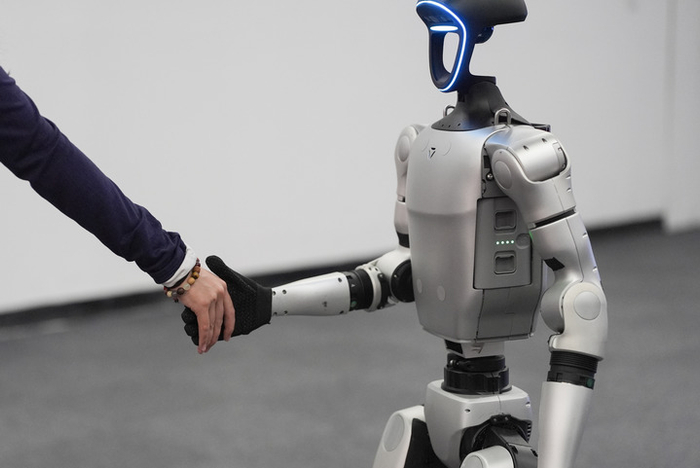
Core Viewpoint - The article discusses the transformation of Zhejiang's automotive parts companies into the humanoid robot industry, highlighting the collective effort to create a "second growth curve" in response to market opportunities in humanoid robotics [1][3][4]. Group 1: Industry Trends - The humanoid robot market is projected to reach a sales volume of 12,400 units and a market size of 6.339 billion yuan by 2025, with expectations to exceed 5 million units and 400 billion yuan by 2035 [4]. - The automotive parts industry in Zhejiang has seen a revenue growth of 19.5% in 2024, surpassing 1 trillion yuan, prompting companies to seek new opportunities in humanoid robotics as the next "trillion-dollar blue ocean" [4][5]. Group 2: Company Initiatives - Junsheng Electronics has initiated its transformation by establishing a robotics company, forming specialized teams, launching core products, and signing strategic partnerships to enhance its market presence [3][4]. - Over 100 humanoid robot-related companies exist in Zhejiang, with more than 40 listed on the A-share market, indicating a significant industry shift among traditional automotive parts manufacturers [3][4]. Group 3: Cost Reduction and Technological Advancements - The cost of humanoid robots has decreased significantly, with products like the Walker series seeing a 25% reduction in costs compared to 2024, driven by increased domestic production of core components [5][6]. - The collaboration between existing automotive supply chains and new humanoid robot production is enhancing cost efficiency and production capabilities, allowing companies to leverage their established infrastructure [6][9]. Group 4: Technological Synergy - The transition to humanoid robotics is facilitated by the technological similarities between automotive components and robotics, allowing for a smoother integration of existing technologies into new product lines [8][9]. - Companies like Junsheng Electronics and Shuanglin Co. have successfully utilized their existing technological expertise in automotive parts to develop humanoid robot components, reducing R&D costs and risks [8][9]. Group 5: Strategic Positioning - The collective transformation of Zhejiang's automotive parts companies into the humanoid robot sector is seen as a proactive strategy to adapt to changing market dynamics and technological advancements [7][9]. - The high overlap of customer bases between electric vehicle and humanoid robot sectors allows for streamlined supply chain integration, enhancing market entry for these companies [9].
“ 汽车人,变形出发!”——浙江汽配企业转型 布局人形机器人样本调查
Zhong Guo Zheng Quan Bao· 2025-12-28 23:56
Core Insights - The automotive parts industry in Zhejiang is collectively transforming towards humanoid robotics, viewing it as a significant growth opportunity following the success of electric vehicles and intelligent driving [2][3][7] - The market for humanoid robots is projected to grow substantially, with an expected sales volume of 12,400 units and a market size of 6.339 billion yuan by 2025, and further growth anticipated by 2035 [3][4] Group 1: Industry Transformation - Zhejiang's automotive parts companies are rapidly entering the humanoid robotics sector, with over 100 related companies and more than 40 listed on the A-share market [2][3] - Companies like Junsheng Electronics have upgraded their strategies to "Automotive + Robotics Tier 1," marking the beginning of a new growth phase [2][3] - The collective shift is characterized by strategic partnerships, product launches, and international market expansion [2][3] Group 2: Market Potential - The humanoid robot market is seen as a "potential stock" by Zhejiang automotive parts companies, with a strong belief in its future profitability [3][4] - The commercialization of humanoid robots is accelerating, with significant orders and deliveries reported in 2025 [3][4] Group 3: Cost Reduction and Localization - The rise in domestic production of core components for humanoid robots is driving down costs, with examples showing a 25% reduction in the cost of certain models compared to 2024 [5][6] - Companies are leveraging existing supply chains and production capabilities to reduce investment costs and enhance equipment utilization [6][7] Group 4: Technological Synergy - The transition to humanoid robotics is facilitated by the technological similarities between automotive parts and robotics, allowing for seamless integration and reduced R&D costs [7][8] - The existing expertise in sensors, motors, and mechanical transmission systems within the automotive sector is being effectively transferred to the humanoid robotics field [7][8] Group 5: Collaborative Ecosystem - The high overlap of customers between the automotive and humanoid robotics sectors enhances market entry opportunities for companies [8] - The collaborative nature of the supply chain is enabling companies to tap into existing channels for humanoid robot component procurement [8]


