
GWMOTOR(601633)

Search documents
交银国际:维持长城汽车(02333)“买入”评级 目标价22.50港元
智通财经网· 2026-02-03 07:32
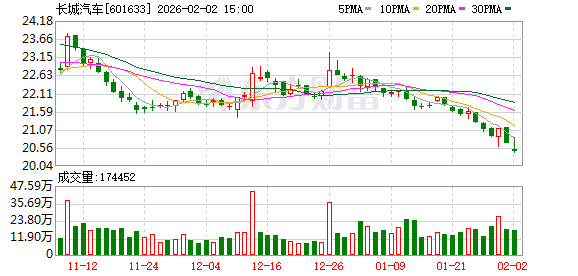
智通财经APP获悉,交银国际发布研报称,认为长城汽车(02333)中期仍受益于"高端化+新能源+出 海"方向,但4Q25已体现投入加大对利润的阶段性挤压。暂维持"买入"评级与目标价22.50港元,待年报 披露后重点跟踪费用结构、单车盈利与渠道效率变化并更新预测。 交银国际主要观点如下: 2026展望:出海上量+直营提效,有望带来利润修复 长城提出2026年海外销量挑战60万台,且4Q25已在多区域加快渠道签约,为2026年增量获取奠定基 础。直营方面,长城预计2026年魏牌将进入"提效+上规模"阶段,并认为规模化后有助将部分渠道利润 回流至企业端;同时管理层亦表示直营费用未来增量不会太大、效率将持续改善。需要关注的风险包括 原材料价格波动及海外政策节奏(如俄罗斯报废税返还确认时点差)。 风险变量方面关注三点 其一,大宗与锂价波动对行业成本的压力仍在,但长城提出2026年直材年化降本目标约5%,并将透过 平台化、规模效应与多维降本对冲原材料上行。其二,俄罗斯"报废税/返还"节奏会带来季度间扰动, 管理层称4Q25收到的是3Q25及以前的综合结算、4Q25当期尚未收到。其三,直营渠道仍处效率爬坡 期,管理层预期2 ...

里昂:下调长城汽车(02333)目标价至15港元 维持“跑赢大市”评级
智通财经网· 2026-02-03 06:10
智通财经APP获悉,里昂发布研报称,长城汽车(02333,601633.SH)公布2025年初步业绩,收入同比增长 10%,但净利润同比下降22%。年终奖金拨备或影响第四季净利润约30亿元人民币,若剔除延迟的俄罗 斯报废车税退税影响,该行估计第四季单车利润可按季上升约2,000元至10,500元。展望2026年,该行预 计长城国内销售将受内需减弱影响,而俄罗斯市场的影响可能持续。因此下调长城汽车2026年及2027年 净利润预测分别为19%及3%,并下调目标市盈率倍数,将H股目标价由21港元下调至15港元,A股目标 价则由36元下调至24元。然而,该行维持"跑赢大市"评级,因预期长城在行业波动中仍将保持韧性。 ...
长城汽车 | 2025年营收稳步增长 战略投入压制利润【国联民生汽车 崔琰团队】
汽车琰究· 2026-02-03 04:59
Event Overview - The company reported its 2025 annual performance, achieving total revenue of 222.79 billion yuan, a year-on-year increase of 10.19%. The net profit attributable to shareholders was 9.91 billion yuan, down 21.71% year-on-year. The net profit excluding non-recurring items was 6.16 billion yuan, down 36.48% year-on-year. Basic earnings per share were 1.16 yuan, down 22.15% year-on-year. As of the end of 2025, total assets were 225.59 billion yuan, up 3.62% year-on-year, and equity attributable to shareholders was 87.93 billion yuan, up 11.32% year-on-year. The total vehicle sales reached 1.32 million units, up 7.33% year-on-year, with new energy vehicle sales at 403,700 units, up 25.44% year-on-year, and overseas sales at 506,000 units, up 11.68% year-on-year, accounting for over 38% of total sales [2]. Revenue and Profit Analysis - Revenue grew steadily, with a 10.19% year-on-year increase, benefiting from sales growth and product structure upgrades. The average revenue per vehicle reached 168,300 yuan, an increase of approximately 4,400 yuan year-on-year, setting a new historical high. However, net profit attributable to shareholders and net profit excluding non-recurring items decreased by 21.71% and 36.48% respectively, primarily due to increased strategic investments in new user channels, new model launches, and brand enhancement, which pressured short-term profits. The total liabilities decreased by 0.76% year-on-year, while equity attributable to shareholders increased by 11.32%, indicating a stable financial condition [3]. Sales and Market Performance - Vehicle sales increased by 7.33% year-on-year, with a well-structured product matrix. The Haval and Ora brands focused on the mainstream price range of 100,000 to 200,000 yuan, while the Tank and Wey brands targeted the mid-to-high-end market, with Tank models above 300,000 yuan accounting for 38.5% of sales. The new energy business became a core growth engine, with global sales up 25.44% and domestic penetration of new energy passenger vehicles reaching 51.5%. The overseas market also saw significant growth of 11.68%, with over 57,000 units sold in December alone. The company is enhancing its global presence with the launch of its Brazil factory and localizing ethanol hybrid models, while the Tank 700 has established a high-value image in the Middle East, with plans to expand into the South American market [4]. Technological Innovation - The company has a strong technological foundation, with its hybrid four-wheel drive intelligent off-road technology awarded a prestigious industry prize. The Super Intelligent HEV is pushing hybrid technology into a new era, achieving a maximum fuel consumption reduction of 14.4%. The world's first native AI all-power platform has been implemented, accommodating various power forms, and high-level intelligent driving will be extended to more models and overseas adaptations. The company emphasizes "testing cars through competitions" to enhance production vehicle quality, laying a solid foundation for long-term high-quality growth [5]. Financial Forecast - The company has adjusted its profit forecast, expecting revenues of 226.78 billion yuan, 289.80 billion yuan, and 318.78 billion yuan for 2025-2027, with net profits attributable to shareholders of 12.67 billion yuan, 17.52 billion yuan, and 19.40 billion yuan for the same period. The corresponding earnings per share are projected to be 1.48 yuan, 2.05 yuan, and 2.27 yuan, with price-to-earnings ratios of 14, 10, and 9 respectively [6][7].

1月车市环比多暴跌,出口成“救命稻草”
Xin Lang Cai Jing· 2026-02-03 04:12
Core Viewpoint - The automotive market in January 2026 showed a slight year-on-year increase but a significant month-on-month decline, primarily due to policy changes and demand exhaustion, with exports becoming a crucial growth driver for companies [1][22]. Group 1: Market Performance - The overall automotive market experienced a year-on-year increase but a month-on-month decline, with some companies facing drastic reductions in sales [1]. - The core reasons for the market's sluggish start include the reduction of the new energy vehicle purchase tax and a mismatch in demand due to the timing of the Spring Festival [1]. - Exports have emerged as a vital growth area for automotive companies, helping to offset domestic market fluctuations [1][6]. Group 2: Company Sales Data - BYD sold 210,100 vehicles in January, a year-on-year decline of 30.11% and a month-on-month decline of 50.04%, heavily impacted by the new energy vehicle tax policy [3][5]. - Geely's sales reached 270,200 units, showing a year-on-year increase of 1.29% and a month-on-month increase of 14.08%, with significant export growth [5][6]. - SAIC Group reported sales of 327,000 units, a year-on-year increase of 23.9%, with a notable increase in overseas sales [8]. Group 3: New Energy Vehicle Trends - The new energy vehicle market is facing challenges due to policy changes, leading to a cautious consumer sentiment [1][3]. - Companies are increasingly relying on exports to sustain growth in the new energy vehicle segment, as domestic competition intensifies [6][22]. Group 4: Competitive Strategies - Companies are engaging in aggressive promotional strategies, including long-term financing options and price reductions, to stimulate sales amid a cooling market [15][17]. - The automotive industry is shifting towards a more competitive landscape, focusing on comprehensive service offerings beyond just product pricing [17][22]. - Traditional luxury brands are facing pressure from the rise of domestic electric vehicle manufacturers, leading to significant price reductions to maintain market share [20][22].





大行评级丨交银国际:维持长城汽车“买入”评级,中期仍受惠于高端化+新能源+出海方向
Ge Long Hui· 2026-02-03 03:28
交银国际发表研报指,长城汽车去年净利润按年跌21.7%至99.12亿元,主要由于销量及收入增长同时, 公司加速构建直连用户的新渠道模式,并加大新车型及新技术上市宣传及品牌提升投入。去年收入按年 升10.2%至2227.9亿元,单车收入按年提升约4500元,至16.83万元,20万元以上车型销量按年增加逾9 万辆,反映高端化与结构升级仍在推进。展望2026年,公司指引海外销量挑战60万辆,且去年第四季已 于多个区域加快渠道签约,为2026年增量奠定基础。该行认为公司中期仍受惠于高端化+新能源+出海 方向,但去年第四季已体现投入加大对利润的阶段性挤压;维持"买入"评级,H股目标价22.5港元。 ...
同比普涨、环比普跌,1月车企销量“开门红”成色不足
Jing Ji Guan Cha Wang· 2026-02-03 02:34
2月1日,各家车企相继发布了1月销量。从整体上看,汽车行业实现2026年"开门红",大多数车企1月销量同比取得正增长,但这一同比增长是由于2025年春 节在1月,去年同期的新车销售基数较低。 环比数据上,大多数车企1月销量下滑明显,主要原因在于2025年12月新能源汽车还享受购置税全额减免政策,同时车企为年底冲量,在12月出台了许多其 他优惠政策。进入2026年1月后,新能源汽车购置税开始减半征收,车企购置税兜底政策也随之结束。另外,1月各地具体的购车补贴细则尚未全部出台,导 致消费者存在观望情绪,影响了车市终端销售情况。 具体来看,问界汽车1月交付约4万辆,同比增长83%,环比下滑30.74%;小米汽车1月交付超3.9万辆,去年同期为超2万辆,去年12月为超5万辆;零跑汽车 1月全系交付达3.21万辆,同比增长27%,环比下滑46.94%。 比亚迪1月销售21.01万辆,其中海外销量表现亮眼,乘用车及皮卡海外销售10万辆,同比增长43.3%。分品牌来看,比亚迪品牌销售17.75万辆;方程豹品牌 销售2.16万辆;腾势品牌销售6002辆;仰望品牌销售413辆。 长城汽车1月销售新车9.03万辆,同比增长11. ...


光大证券晨会速递-20260203
EBSCN· 2026-02-02 23:37
Market Overview - The secondary market prices of publicly listed REITs in China showed a fluctuating upward trend in January 2026, with the CSI REITs closing at 809.56 and the CSI REITs total return index at 1052.42, yielding returns of 3.98% and 4.22% respectively [1] - Compared to other major asset classes, the return rates ranked as follows: Gold > Crude Oil > Convertible Bonds > A-shares > REITs > US Stocks > Pure Bonds [1] Industry Research - SpaceX plans to deploy one million computing satellites, expanding the commercial space demand [2] - The ability to manufacture and launch reusable rockets is fundamental for large-scale constellation construction [2] - Laser communication networks are key for achieving large-scale inter-satellite communication [2] - Recommended companies in the rocket sector include Superjet, Highhua Technology, and Zhongheng Design; in the satellite sector, focus on Shaanxi Huada, Shanghai Port, Shanghai Huanxun, Zhenlei Technology, Changguang Huaxin, Aerospace Electronics, Jiayuan Technology, and Shanghai Huguang [2] Company Research - Baihehua (603823.SH) plans to invest in a 1000-ton PEEK project, enhancing its position in the new materials sector [3] - The forecast for Baihehua's net profit for 2025-2027 is adjusted to 173 million (down 22%), 223 million (down 22%), and 270 million yuan, with corresponding EPS of 0.42, 0.54, and 0.65 yuan [3] - Zhongxin Fluorine Materials (002915.SZ) expects to achieve a net profit of 16-20 million yuan in 2025, benefiting from the recovery in pesticide demand and reduced losses from Fujian Gaobao [4] - The projected net profits for Zhongxin Fluorine Materials for 2025-2027 are 18 million, 75 million, and 110 million yuan [4] - Jiu Ri New Materials (688199.SH) anticipates a net profit of 21-31.5 million yuan in 2025, driven by the price recovery of photoinitiators [6] - The projected net profits for Jiu Ri New Materials for 2025-2027 are 31 million, 78 million, and 136 million yuan [6] - Great Wall Motors (601633.SH, 2333.HK) reported a profit forecast for 2025, with net profits adjusted to 9.9 billion, 12.4 billion, and 15.7 billion yuan for 2025-2027 [7] - Apple (AAPL.O) reported record revenue growth in FY1Q26, driven by strong demand for the iPhone 17 series and the continued penetration of AI features [8] - The company maintained a high gross margin despite rising storage costs, showcasing its pricing power and supply chain management capabilities [8] - Aoyou (1717.HK) expects a revenue growth of 1.1% in 2025, with net profits adjusted to 236 million, 262 million, and 280 million yuan for 2025-2027 [9]


长城汽车财报出炉:营收超2227亿元 单车收入为历史最佳
Zhong Guo Jing Ying Bao· 2026-02-02 23:14
Core Viewpoint - In 2025, the Chinese automotive industry transitions from "price competition" to "value competition," leading to a high-quality development phase, with increased market differentiation and revenue pressure on most automakers. However, Great Wall Motors achieves significant revenue growth through a clear strategic focus on high-end and new energy vehicles, reaching a record revenue of 222.79 billion yuan, a 10.19% year-on-year increase [2][3]. Industry Background - The automotive market in China is undergoing a critical adjustment phase, with lingering effects from previous price wars and accelerated transitions to new energy vehicles, resulting in many automakers facing profitability challenges [3][4]. Revenue Growth Drivers - Great Wall Motors' revenue growth is attributed to a shift from "scale competition" to a "value-driven" business model, enhancing the quality and sustainability of revenue growth. The average vehicle price reached 201,300 yuan in 2025, reflecting a significant increase in product premium capabilities [4][6]. High-End and New Energy Vehicle Growth - In 2025, sales of high-end and new energy vehicles at Great Wall Motors both saw substantial growth, validating the company's strategic focus on brand elevation and energy transition. The high-end brand sales, particularly from the WEY and Tank brands, significantly contributed to revenue growth [5][7]. Product Structure Optimization - Great Wall Motors has established a clear multi-brand matrix, covering price ranges from 100,000 to 450,000 yuan, allowing for differentiated competition and avoiding internal competition. This structure supports the company's transition to high-value and high-quality products [10][11]. Technological Investment - The company has invested heavily in technology and innovation, with a team of 23,000 engineers and significant investments in testing facilities. This focus on technology is expected to enhance product quality and brand value, positioning Great Wall Motors for future growth [12].
1月车市分化加剧:自主品牌座次洗牌 新势力环比普降
Zhong Guo Zheng Quan Bao· 2026-02-02 23:03
Core Insights - The automotive market in January 2026 shows a clear distinction between traditional domestic brands, which are performing strongly, and new energy vehicle (NEV) startups, which are facing challenges [1][5] Traditional Domestic Brands Performance - Major traditional automakers like SAIC, Geely, and Chery reported over 20% year-on-year sales growth in January 2026, with SAIC leading the market [2][3] - SAIC sold 327,400 vehicles in January, a 23.9% increase year-on-year, with 214,000 units from its own brands, marking a 39.6% increase [2] - Geely's sales reached 270,200 units, a 1% year-on-year increase, with NEV sales contributing significantly [2] - Chery's sales totaled 200,300 units, with exports accounting for 119,600 units, a 48.1% increase year-on-year [3] - GAC Group saw a significant increase in sales, reaching 116,600 units, up 18.47% year-on-year, driven by its new energy and overseas sales [3] New Energy Vehicle Startups Challenges - In contrast, nine major NEV startups experienced a collective decline in sales, with month-on-month drops ranging from 21.2% to 47.0% [5][6] - Despite the downturn, some brands like NIO and Zeekr reported year-on-year growth exceeding 95% [6][7] - The decline in NEV sales is attributed to short-term factors such as policy changes and seasonal demand fluctuations [6][7] - The market is expected to stabilize post-policy transition, with a potential recovery in sales anticipated in February and March 2026 [7] Market Dynamics and Future Outlook - The automotive industry is witnessing a restructuring of brand rankings, with traditional brands solidifying their positions while new entrants face increasing competition [1][5] - The long-term growth logic of the NEV sector remains intact, with expectations for a gradual recovery as new products are launched and market conditions improve [7]

1月车市分化加剧: 自主品牌座次洗牌 新势力环比普降
Zhong Guo Zheng Quan Bao· 2026-02-02 20:51
截至2月2日,国内主流车企2026年1月产销数据陆续披露。整体市场呈现"传统自主强势领跑、新势力普 遍承压"的鲜明格局:上汽、吉利、奇瑞等头部车企销量同比多实现20%以上增长,自主品牌座次因新 能源与出口表现差异出现重构。 1月传统自主车企集团凭借完善的产品矩阵与全球化布局,交出亮眼成绩单,头部阵营座次因各板块增 长动能差异出现显著调整。 具体来看,上汽集团(600104)延续领跑态势,1月实现整车批售32.74万辆,同比增长23.9%,终端零 售36.3万辆,批发与零售双双领跑行业。分板块来看,自主品牌表现尤为突出,销量达21.4万辆,同比 增长39.6%,占集团总销量比重升至65.3%。 其中,上汽乘用车销售7.7万辆,同比增幅达53.8%;上汽通用五菱销售10.5万辆,同比增长37%。新能 源与海外市场成为核心增长引擎,1月新能源汽车销量8.5万辆,同比增长39.7%;海外销量10.5万辆, 同比增长51.7%,仅MG品牌在欧洲市场就交付近2.6万辆,同比增长15%。 吉利汽车以27.02万辆的销量位居次席,同比增长1%,环比增长14%,新能源业务成为重要支撑。1月新 能源汽车销量达12.43万辆,同比 ...