
LBX(603883)

Search documents
马鞍街道:城西路焕颜迎新春 老百姓开心过大年
Xin Lang Cai Jing· 2026-02-15 10:37
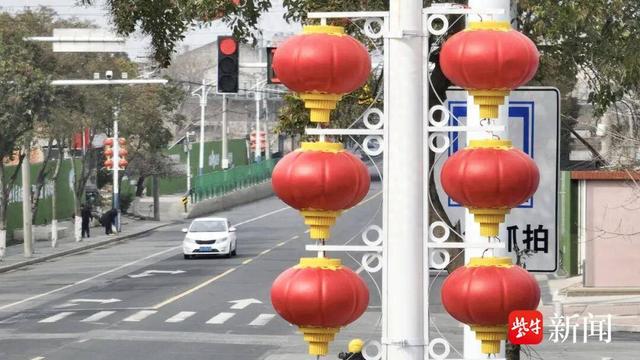
Core Viewpoint - The comprehensive renovation of Chengxi Road in Nanjing's Liuhe District has transformed the area into a more livable space, enhancing both functionality and aesthetics for residents and visitors alike [3][10]. Group 1: Road and Sidewalk Improvements - The renovation included the complete overhaul of over 4,200 square meters of pedestrian pathways, replacing damaged bricks and repairing curbs, resulting in a smoother walking experience for residents [5][6]. - More than 4,000 square meters of concrete road surface were repaired, addressing issues such as aging and damaged manhole covers, which improved traffic flow and safety for drivers [5][6]. - The installation of clear lane markings and pedestrian crossing signs has made vehicle passage more orderly and pedestrian crossings safer [6]. Group 2: Aesthetic Enhancements - Approximately 2,200 square meters of storefront signs were uniformly updated, replacing old, faded advertisements with new, coordinated designs that maintain individual merchant identities while enhancing the street's overall appearance [8][10]. - Over 400 square meters of wall surfaces were repainted, giving the previously worn walls a fresh look that complements the newly renovated sidewalks and tree pits [8]. Group 3: Community Impact - The improvements have positively affected local residents, with testimonials highlighting the ease of walking and commuting, particularly for families with children [8][10]. - The project reflects a commitment to ongoing maintenance and care for the renovated areas, ensuring that the improvements are sustainable and contribute to a higher quality of life for the community [10].


物价要上天?美国老百姓:关税大棒挥下,我们的好日子到头了!
Sou Hu Cai Jing· 2026-02-14 03:56
Core Points - The U.S. House of Representatives rejected a Republican rule aimed at preventing challenges to Trump's tariff policy, marking a significant setback for President Trump and his allies in Congress [1][3] - The vote against the rule was 217 to 214, with all House Democrats and three dissenting Republicans opposing it, indicating growing discontent within the Republican Party regarding Trump's economic policies [1][3] - A report from the nonpartisan Tax Foundation highlighted that tariffs could cost American households $1,000 in 2025 and $1,300 in 2026, emphasizing the negative impact of tariffs on consumers and manufacturers [1][4] Group 1: Political Dynamics - The rejection of the rule reflects a broader trend of congressional members planning to challenge Trump's trade agenda, which has disrupted global trade and contributed to rising U.S. prices [3] - The Democratic Party, led by Congressman Meeks, is preparing to vote on measures to block Trump's tariffs on Canada, showcasing a unified opposition against the administration's trade policies [3][4] - The internal dissent among Republicans, including three members who voted against the rule, suggests increasing dissatisfaction with Trump's economic strategies within his own party [3][4] Group 2: Economic Implications - The rising awareness among Americans regarding the correlation between tariffs and inflation has made affordability a key campaign issue for Democrats in the upcoming midterm elections [4][5] - The average annual cost of tariffs to American households is estimated at $1,400, with the Tax Foundation projecting this cost to rise to $1,300 this year, indicating a significant financial burden on working families [6] - Economic experts estimate that tariffs contribute approximately 0.5 percentage points to inflation, raising concerns about the long-term effects of trade policies on consumer prices [6]

药品零售行业迎转型新机遇
Zhong Guo Zheng Quan Bao· 2026-02-13 20:23
Core Insights - The recent policy initiatives from nine government departments aim to promote high-quality development in the pharmaceutical retail industry, focusing on industry integration, prescription outflow, and commercial insurance [1][2][3] - The pharmaceutical retail market in China is expected to grow from CNY 2.41 trillion in 2020 to CNY 2.95 trillion by 2024, representing a 22.4% increase [2] - The industry is transitioning from traditional drug sales to comprehensive health services, enhancing community health support and resilience in the health security system [2][3] Industry Transformation - The policy encourages horizontal mergers and acquisitions among retail pharmaceutical companies to enhance efficiency and service quality [3][5] - Local governments are optimizing the business environment for retail pharmacies, including streamlining the application process for drug operation licenses [1] - Jiangxi Province has reported an increase in the retail pharmacy chain rate from 50.2% in 2024 to 60.3% in 2025, surpassing the national average [1] Company Responses - Yao Yi Tang is committed to responding to the new policies by enhancing its community health service capabilities and improving consumer access to quality healthcare [3] - Lao Bai Xing is exploring merger and acquisition opportunities while maintaining communication with potential targets to strengthen its alliance business [3] Industry Leaders' Benefits - The policy is expected to provide long-term benefits to leading retail pharmacies, enhancing their ability to manage outpatient prescriptions and increasing their market position [5][6] - The industry is entering a critical phase of structural transformation, characterized by store closures, increased concentration, and a restructured profit model [4][6] - The focus on diverse services such as chronic disease management and medication guidance will create a new profit ecosystem combining drugs, medical devices, and health management [4]
红星亮相隆福寺新春市集 匠心点燃老百姓马年激情
Xin Lang Cai Jing· 2026-02-13 14:17
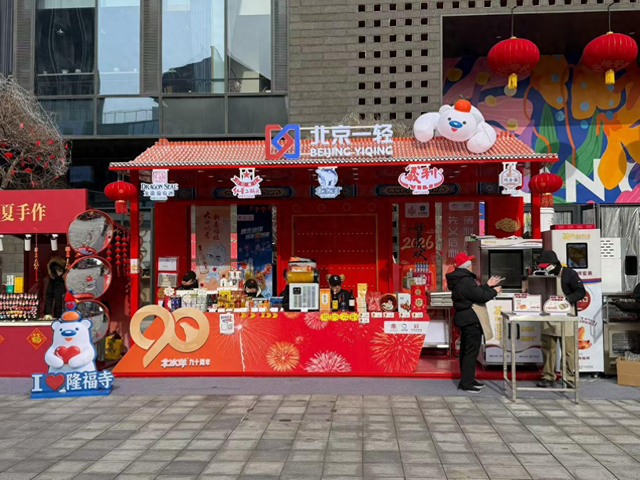
Core Viewpoint - The article highlights the successful participation of Hongxing, a renowned Chinese time-honored brand, in the Longfu Temple Spring Festival Market, showcasing a blend of traditional craftsmanship and modern technology to attract consumers and enhance brand visibility [1][5]. Group 1: Event Overview - The Longfu Temple Spring Festival Market, themed "Unceasingly Gathering at Longfu," took place from February 4 to March 3, featuring a vibrant atmosphere that reflects historical depth and contemporary vitality [1]. - The market served as a significant cultural event for the public, where activities such as shopping for New Year goods and enjoying local delicacies became essential rituals for welcoming the new year [1][8]. Group 2: Company Initiatives - Hongxing presented a comprehensive product matrix at the market, ranging from classic national liquors to high-end creations, effectively meeting diverse consumer needs for the festive season [1][6]. - The introduction of the AI robot bartender, "Hongxing Spirit," represents an innovative approach to engage younger consumers, merging traditional brewing techniques with cutting-edge AI technology [1][3]. Group 3: Cultural Impact - The market featured a variety of activities, including traditional handicraft experiences and modern artistic interactions, contributing to a lively consumer environment and stimulating holiday economic growth [8]. - Hongxing's participation not only aimed to enhance brand recognition but also sought to convey the charm of Chinese liquor culture in a contemporary context, appealing to a broader audience [5][6].
【投资视角】启示2025:中国连锁药店行业投融资及兼并重组分析(附投融资事件、物流中心和兼并重组等)
Qian Zhan Wang· 2026-02-13 03:09
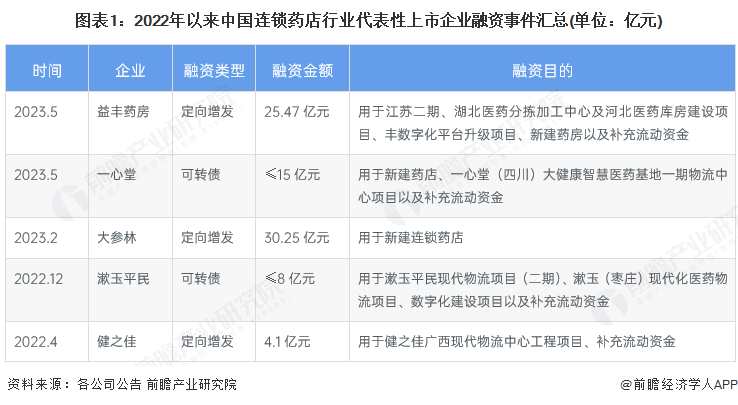
Core Viewpoint - The report highlights the financing, investment, logistics, and merger activities of China's chain pharmacy industry, emphasizing the importance of logistics center construction and the trend of expanding business scale and diversification among leading companies [1][8]. Financing Situation - The primary financing methods for listed companies in the chain pharmacy industry include private placements and convertible bonds, mainly aimed at constructing logistics centers, opening new pharmacies, and supplementing working capital [1]. - Key financing events since 2022 include: - Yifeng Pharmacy raised 2.547 billion yuan for logistics and digital platform upgrades [1]. - Yixin Tang raised up to 1.5 billion yuan for new pharmacies and logistics projects [1]. - Daclin raised 3.025 billion yuan for new chain pharmacies [1]. - Shuyupingmin raised up to 800 million yuan for modern logistics projects [1]. - Jianzhijia raised 410 million yuan for logistics center projects [1]. Investment Activities - From 2020 to 2025, major companies like Daclin, Yifeng Pharmacy, and Laobaixing have been actively investing, with Daclin leading with 36 investment events, followed by Yifeng Pharmacy with 14 and Laobaixing with 13 [5][6]. - The investment purposes include expanding business scale and diversifying operations, with companies investing in subsidiaries across different regions to enhance their market presence [8][10]. Merger and Acquisition Trends - Recent mergers and acquisitions in the chain pharmacy industry are primarily aimed at expanding the scale of midstream enterprises, often involving the acquisition of other pharmacy brands to increase store numbers and improve regional business layouts [11]. - Notable merger events include: - Huaren Health's acquisition of three pharmacy chains in Fujian and Zhejiang to expand its market presence [11]. - Yixin Tang's acquisition of multiple pharmacies in Sichuan to enhance competitiveness [11]. - Laobaixing's acquisition of a pharmacy chain in Anhui to strengthen market position [11]. Logistics Center Development - The construction of logistics centers is identified as a major purpose for financing, with companies focusing on enhancing their supply chain efficiency and operational capabilities [1][8].



深化集中整治 让老百姓可感可及丨守护好学生“舌尖上的安全”
Zhong Yang Ji Wei Guo Jia Jian Wei Wang Zhan· 2026-02-13 00:30
Core Viewpoint - The central government is intensifying efforts to address issues related to "campus meals," emphasizing the importance of food safety for students and the need for accountability in managing school meal programs [2][3]. Group 1: Overview of Actions Taken - The Central Commission for Discipline Inspection and National Supervisory Commission has launched a nationwide campaign to rectify corruption and misconduct in the "campus meal" sector, with significant results reported by 2025, including 61,000 cases investigated and 35,000 disciplinary actions taken [2][3]. - A comprehensive governance framework has been established, involving multiple departments such as the Ministry of Education and the State Administration for Market Regulation, to ensure effective oversight and accountability in the management of school meals [3][4]. Group 2: Regional Initiatives - In Ningxia, the local government has integrated food safety for campus meals into its annual priorities, conducting four rounds of inspections that uncovered 788 issues and prompted the rectification of 6,336 problems [4][5]. - Hubei Province has implemented a dual-leadership mechanism between the provincial disciplinary inspection commission and the education department, resulting in the identification and rectification of 5,992 issues related to campus meals [5][6]. Group 3: Enforcement and Accountability - The campaign has focused on high-risk areas and key personnel, with strict measures taken against corruption, including the investigation of cases involving misappropriation of student meal funds and procurement irregularities [6][7]. - In Qinghai, a comprehensive audit of the nutritional improvement program for rural students led to the identification of 3,960 issues and the recovery of 22.99 million yuan in misappropriated funds [7][8]. Group 4: Systemic Improvements - Efforts are being made to establish regulations and promote transparency in the management of campus meal funds, including the implementation of dedicated accounts for meal fees to prevent misuse [9][10]. - Digital tools are being utilized to enhance oversight of campus meal management, with initiatives in Zhejiang and Hubei aimed at creating regulatory platforms that monitor food safety and financial management [9][10]. Group 5: Ongoing Commitment - The campaign to improve "campus meals" is ongoing, with a commitment to maintaining high standards and rigorous supervision to ensure that students receive safe and reliable meals [10].
美国斩杀线再添新证据,生活电费飙升1400%,老百姓取暖成奢侈品
Sou Hu Cai Jing· 2026-02-11 07:06
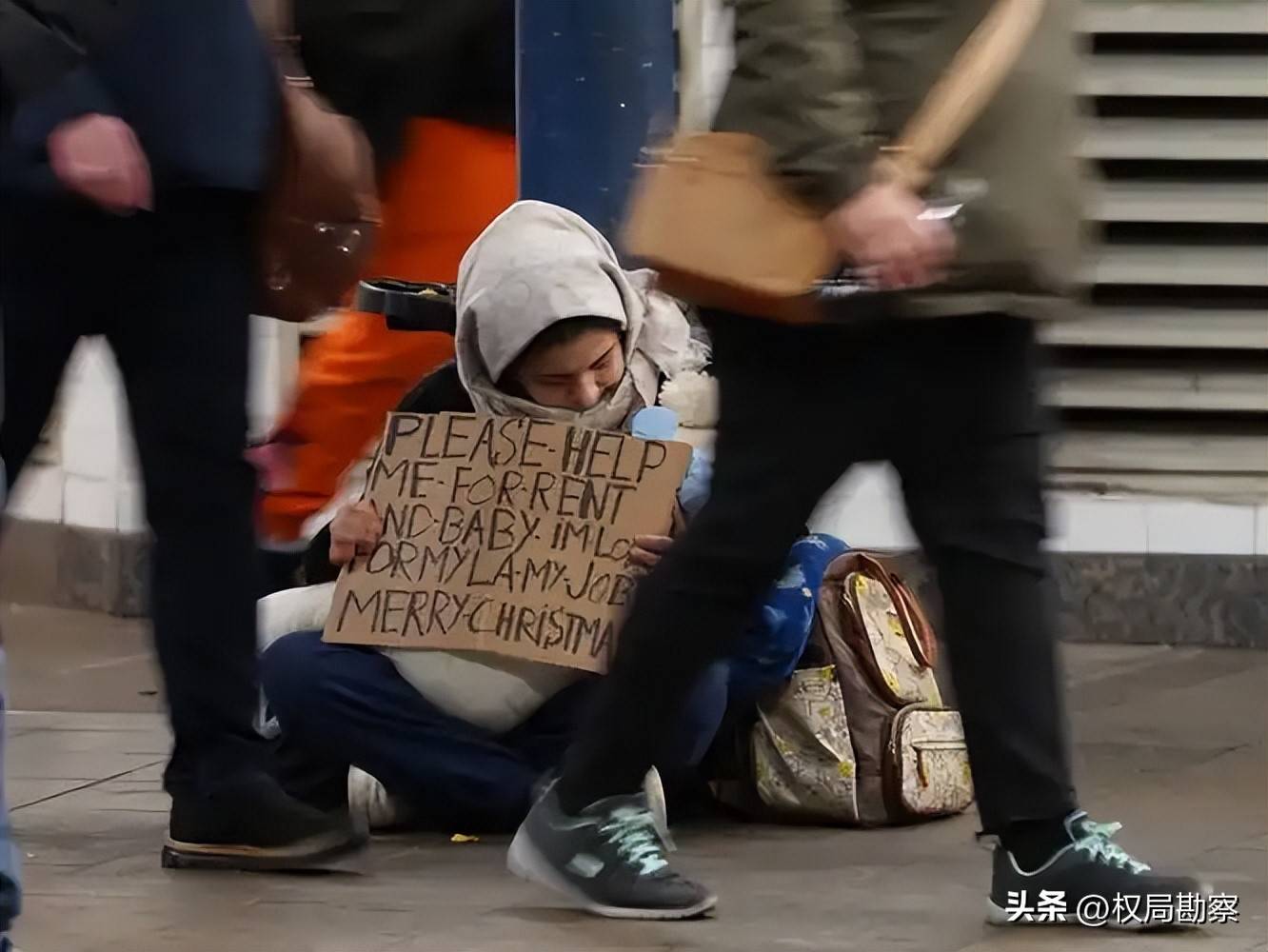
Core Viewpoint - The article highlights the severe electricity pricing crisis in the United States, where residential electricity costs have skyrocketed, leading to significant financial strain on families, particularly during extreme weather conditions [1][3][4]. Group 1: Electricity Pricing Trends - In Texas, the cost of heating for one night can reach $1,400, comparable to a short-haul flight, making it unaffordable for many families [4][6]. - The average electricity price in the U.S. is projected to increase by 6% in the first half of 2025, with annual electricity costs rising from $1,683 to $1,902, adding over $200 to household expenses [8][10]. - Over the past decade, electricity prices have risen in all states, with 39 states experiencing increases of over 20%, and California seeing a staggering increase of nearly 96% [10][12]. Group 2: Impact on Households - Millions of families are forced to forgo basic living necessities due to high electricity costs, with vulnerable populations particularly affected during winter [3][14]. - Approximately 13% of U.S. households are in arrears on their electricity and gas bills, reflecting the financial struggles faced by many [24][40]. - The elderly and children in a Maryland community faced severe heating issues, with the government refusing to repair infrastructure, instead imposing exorbitant repair costs on residents [26][28]. Group 3: Infrastructure and Supply Issues - The aging electricity grid, with many components over 30 years old, contributes to unreliable power supply and frequent outages during extreme weather events [12][16]. - The fragmented nature of the U.S. electricity grid, with three major independent networks, hampers efficient energy distribution and upgrades [16][18]. - The increasing demand for electricity from AI data centers exacerbates the existing supply issues, as these centers consume power equivalent to that of small cities [21][22]. Group 4: Systemic Issues and Comparisons - The article argues that the electricity crisis is not merely a pricing issue but reflects deeper systemic problems where capital interests overshadow public welfare [42][44]. - In contrast, China's electricity pricing and supply system prioritize public welfare, maintaining stable prices and ensuring reliable service even during crises [31][35]. - The disparity in electricity pricing and supply stability between the U.S. and China underscores the importance of a development model that prioritizes the needs of ordinary citizens over capital interests [48].
深化集中整治 让老百姓可感可及丨为人民而战 让群众有感
Zhong Yang Ji Wei Guo Jia Jian Wei Wang Zhan· 2026-02-11 00:54
Core Viewpoint - The central government emphasizes a people-centered approach to governance, focusing on addressing corruption and misconduct that directly affect the public, with a commitment to significant reforms and accountability measures [1][2]. Group 1: Governance and Accountability - The government is intensifying efforts to combat corruption and misconduct, which are seen as critical to maintaining the party's governance foundation [2][3]. - A structured approach is being implemented, where the responsibility is shared among party committees, government departments, and supervisory bodies to ensure effective oversight and action [2][3]. Group 2: Local Government Initiatives - Local governments are increasingly prioritizing anti-corruption measures, integrating them into their operational frameworks and performance evaluations [3][4]. - County-level governance is identified as the frontline in the fight against corruption, with significant emphasis on enhancing support and guidance for local authorities [5]. Group 3: Enforcement and Results - The central disciplinary body has taken decisive action, with over 96,700 cases of misconduct addressed, resulting in the punishment of 627,000 individuals and the referral of 22,000 cases to judicial authorities [7]. - A substantial amount of 77.63 billion yuan has been returned to the public, reflecting the government's commitment to rectifying past injustices and enhancing public trust [8]. Group 4: Specific Initiatives and Impact - Initiatives targeting school meal safety and rural asset management have been launched, with significant improvements reported in food safety and financial oversight [9][10]. - The government is actively addressing social welfare issues, ensuring that vulnerable populations receive timely assistance and support [11][12].
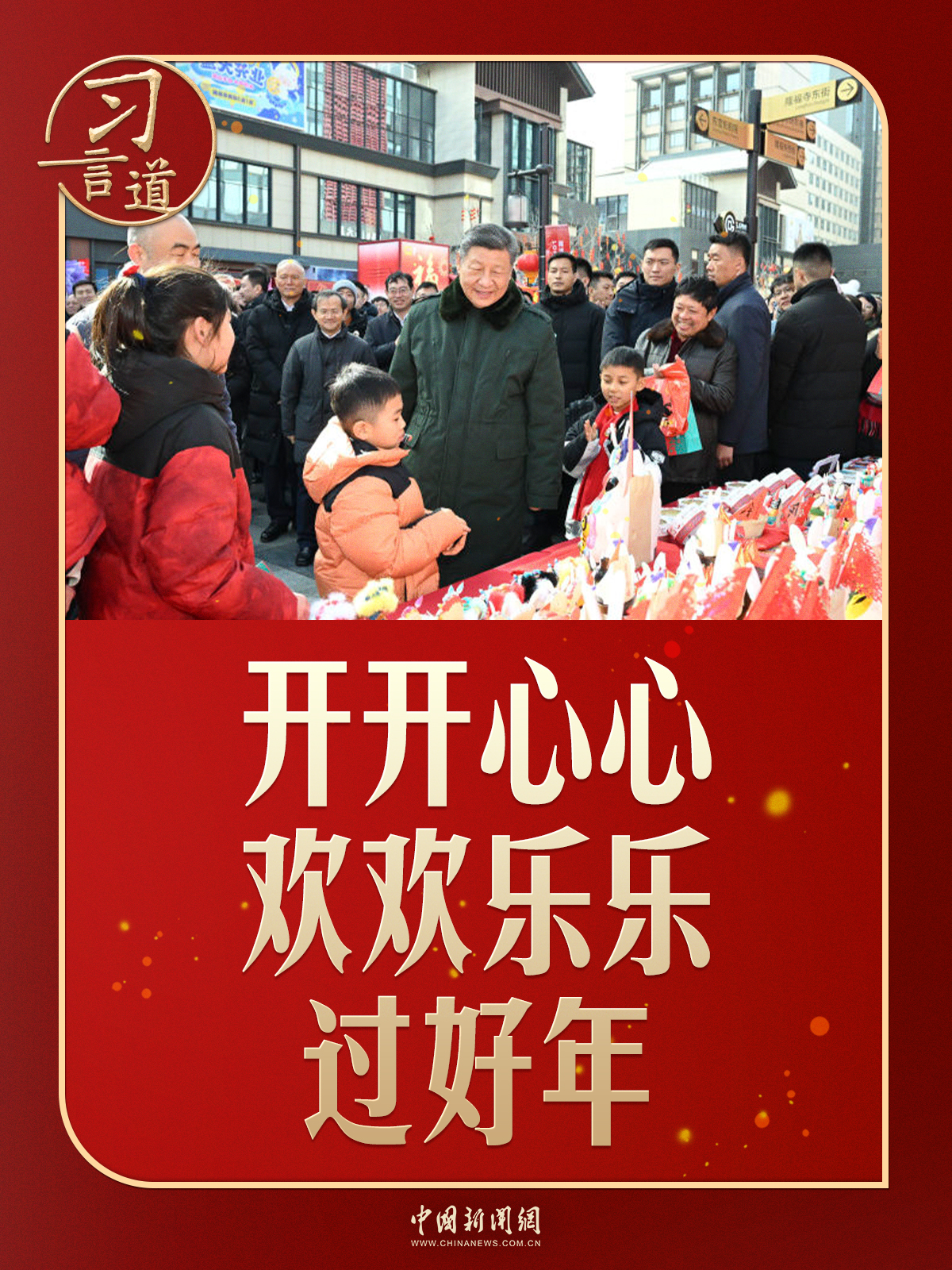
【热气腾腾中国年】习言道|老百姓的年货里,藏着习近平“最大的心愿”
Zhong Guo Xin Wen Wang· 2026-02-11 00:41
Core Viewpoint - The article highlights the importance of traditional Chinese New Year preparations, particularly the purchasing of "year goods," which reflects the government's focus on ensuring the well-being and happiness of the people during the festive season [3][4][9]. Group 1: Government's Focus on People's Well-being - President Xi Jinping emphasizes the significance of ensuring that citizens can celebrate the New Year joyfully, indicating that the availability of year goods is a matter of both personal and national importance [3][8]. - The government is committed to monitoring the supply and prices of essential goods, as demonstrated by Xi's past visits to various markets to assess the situation [3][4]. Group 2: Community Engagement and Support - Xi Jinping actively engages with local communities during his visits, showing concern for their living conditions and the adequacy of their New Year preparations [5][8]. - The President's actions, such as providing year goods to families in need, reflect a hands-on approach to addressing community welfare and enhancing the festive spirit [5][8]. Group 3: Cultural Significance of New Year Preparations - The article underscores that the act of preparing year goods is deeply rooted in Chinese culture, symbolizing family unity and the joy of celebration [3][9]. - The festive atmosphere in markets and communities serves as a barometer for the overall sentiment and economic stability among the populace [3][4].
让优质医疗资源沉到老百姓家门口(落地有声·高质量办理代表建议)
Ren Min Ri Bao· 2026-02-10 22:22
Core Insights - The article highlights the urgent need for improvements in grassroots healthcare facilities in China, emphasizing the importance of both hardware and talent retention to enhance service quality [1][2]. Group 1: Issues Identified - Grassroots healthcare facilities are inadequate, leading to increased patient travel and potential delays in treatment [1]. - The suggestion to improve grassroots healthcare includes not only upgrading physical infrastructure but also retaining skilled professionals [1]. Group 2: Proposed Solutions - The proposal includes policy incentives to encourage experts and key personnel to work in grassroots settings and accelerate the establishment of integrated medical systems [1]. - The use of telemedicine technology is suggested to allow patients in rural areas to consult with specialists remotely [1]. Group 3: Progress and Implementation - There are signs of positive change, with remote medical platforms enabling real-time connections between rural patients and experts, and gradual improvements in the conditions of grassroots medical institutions [2]. - The relevant authorities are actively working on modifying regulations in line with the suggestions made, indicating a commitment to addressing the identified issues [1].