LBX(603883)

Search documents
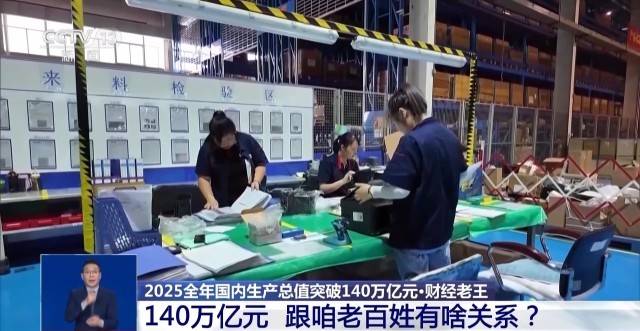
140万亿元 跟咱老百姓有啥关系?
Sou Hu Cai Jing· 2026-01-20 08:35
Group 1 - The core viewpoint is that China's economy is projected to exceed 140 trillion yuan by 2025, which signifies a more stable economic environment that benefits the general public [1] - The increase in economic output is expected to enhance employment stability, with estimates suggesting that a 1% growth in the economy could create approximately 2 million new jobs [3] - The growth in economic output has led to the emergence of new industries and professions, such as AI trainers and aerospace engineers, contributing to job creation and innovation [5][6] Group 2 - The economic total of 140 trillion yuan represents a 5% increase from the previous year, which aligns with a 5% growth in residents' disposable income, indicating synchronized economic and income growth [8] - The current year marks the beginning of the "15th Five-Year Plan," with numerous favorable policies in consumption, investment, industry, and public welfare being implemented [10]


希望自贸港落地更多好政策惠及老百姓
Xin Lang Cai Jing· 2026-01-19 17:09
Core Insights - The Hainan Free Trade Port has been operational for one month, but the prices of imported fruits have not significantly changed, raising concerns among local residents about future price reductions [1][2] - Local markets in Haikou offer a wide variety of fruits, including both local and imported options, with some residents expressing a desire for better policies to lower prices on imported fruits [1] Market Overview - The South-North Fruit Wholesale Market features a range of imported fruits, with prices varying significantly. For example, Malaysian Musang King durian is priced at 27.8 yuan per jin, while Chilean cherries are 65 yuan per bag [2] - Supermarkets in Haikou also stock various imported fruits, with prices such as 19.8 yuan for 3 jin of American "September Red" oranges and 49.8 yuan per jin for Chilean cherries. However, these fruits are primarily sourced through domestic channels, limiting the benefits from tariff reductions [2]
医药行业周报:关注小核酸药物上游配套产业链-20260119
Huaxin Securities· 2026-01-19 07:03
Investment Rating - The report maintains a "Recommended" investment rating for the pharmaceutical industry as of January 19, 2026 [1] Core Insights - 2025 marked a significant year for Chinese innovative drugs going global, with a total transaction amount of $135.655 billion, including $7 billion in upfront payments and 157 deals, setting historical highs. The trend continues into 2026, with notable licensing agreements from companies like Yilian Biotech and Rongchang Biotech, indicating strong global competitiveness for Chinese innovative drugs [2] - Major companies are increasingly investing in the small nucleic acid field, with significant acquisitions and clinical approvals. For instance, China National Pharmaceutical Group acquired Hangzhou Hejiya Biopharmaceutical for 1.2 billion RMB, while international firms like Novartis and GSK are also advancing in this area [3] - The GLP-1 market is expected to grow despite new pricing systems, with ongoing collaborations and new product launches anticipated in 2026. The market for GLP-1 drugs is projected to remain robust due to the large patient population for weight loss and diabetes [4] - The oral autoimmune drug market is gaining attention, with promising results from Takeda's new TYK2 inhibitor for psoriasis. Other domestic companies are also advancing in this space, exploring new targets for oral small molecules [5] - The brain-computer interface sector is poised for industrialization, with companies like Neuralink set to produce devices in 2026. Domestic advancements and regulatory support are enhancing the potential for this technology in medical applications [6] - The ZAP-X radiation therapy device is expected to capture a significant market share in China, with rapid growth projected in non-invasive tumor radiation treatment, driven by increasing clinical recognition and adoption [8] Summary by Sections Industry Trends - The pharmaceutical sector is witnessing a resurgence in interest towards innovative drugs, with a notable increase in the innovative drug index by 8.97% since early January 2026, outperforming the CSI 300 index by 6.77 percentage points [2] Company Recommendations - Recommended companies include: - **Yuekang Pharmaceutical** and **Sunshine Nuohua** in the small nucleic acid space - **Yahong Pharmaceutical** and **Yifang Biotechnology** in the autoimmune sector - **Zhongsheng Pharmaceutical** in the GLP-1 market - **Baiyang Pharmaceutical** for ZAP-X radiation therapy - **Meihao Medical** for brain-computer interface technology [10] Market Opportunities - The non-invasive tumor radiation treatment market is projected to grow from 27.2 billion RMB in 2018 to 59.4 billion RMB by 2024, with a compound annual growth rate of 13.9% [8]




2000亿本币互换续签,中加突然出招,对老百姓有啥新变化
Sou Hu Cai Jing· 2026-01-18 08:20
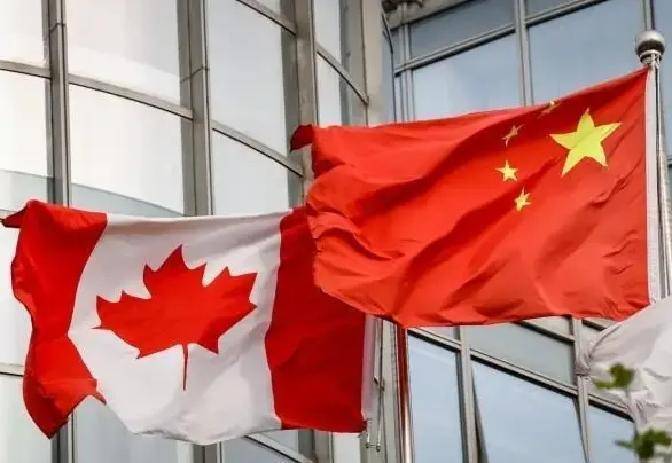
Core Viewpoint - The signing of a bilateral currency swap agreement between the People's Bank of China and the Bank of Canada, with a limit of 200 billion RMB and a validity of five years, is expected to enhance trade efficiency and reduce costs for businesses in both countries, while also contributing to the internationalization of the RMB [1][5][9]. Group 1: Impact on Trade and Business - The currency swap agreement allows companies to settle transactions directly in their respective currencies, eliminating the need for conversion to USD, thus reducing transaction costs and exchange rate risks [3][7]. - This agreement is anticipated to stabilize trade between China and Canada, leading to increased investment activity and supporting foreign trade [5]. - The reduction of USD as an intermediary currency enhances financial autonomy for both countries, allowing for more direct and efficient trade [7]. Group 2: Broader Economic Implications - The agreement is expected to increase the presence of the RMB in North America, potentially leading to its use in local bank accounts and transactions, thereby enhancing its status as an international reserve currency [9][11]. - The expansion of similar agreements with other countries (32 as of last May) may create a network effect, further promoting the use of the RMB in global trade [9]. - The long-term implications may include a gradual reduction in the dominance of the USD in international trade, as more countries adopt direct currency settlements [8][11].
老百姓跌2.05%,成交额1.13亿元,主力资金净流出935.22万元
Xin Lang Cai Jing· 2026-01-16 02:50
Group 1 - The core viewpoint of the news is that the company, 老百姓大药房连锁股份有限公司, is experiencing fluctuations in stock performance and financial metrics, indicating potential challenges in its business operations [1][2][3] Group 2 - As of January 16, the company's stock price decreased by 2.05% to 15.78 CNY per share, with a total market capitalization of 11.975 billion CNY [1] - The company reported a year-to-date stock price increase of 6.62%, but a decline of 5.05% over the past 60 days [1] - The main business revenue composition includes 80.95% from Western and Chinese medicines, 12.11% from non-pharmaceutical products, and 6.94% from traditional Chinese medicine [1] Group 3 - For the period from January to September 2025, the company achieved an operating income of 16.07 billion CNY, a year-on-year decrease of 1.00%, and a net profit attributable to shareholders of 529 million CNY, down 16.11% year-on-year [2] - Cumulative cash dividends since the company's A-share listing amount to 2.175 billion CNY, with 1.097 billion CNY distributed in the last three years [3] Group 4 - As of October 31, the number of shareholders increased to 63,700, while the average circulating shares per person decreased by 1.90% to 11,921 shares [2] - The top ten circulating shareholders include Hong Kong Central Clearing Limited and Southern CSI 1000 ETF, both of which have reduced their holdings compared to the previous period [3]
老百姓1月15日获融资买入3283.17万元,融资余额4.54亿元
Xin Lang Cai Jing· 2026-01-16 01:41
Group 1 - The core viewpoint of the news is that Lao Bai Xing's stock performance shows a mixed trend with a slight increase in stock price but a decrease in financing activities and profitability [1][2] Group 2 - As of January 15, Lao Bai Xing's stock price increased by 0.50%, with a trading volume of 362 million yuan [1] - The financing buy-in amount on January 15 was 32.83 million yuan, while the financing repayment was 35.27 million yuan, resulting in a net financing outflow of 2.43 million yuan [1] - The total financing and securities lending balance for Lao Bai Xing reached 457 million yuan, with the financing balance accounting for 3.72% of the circulating market value, indicating a low level compared to the past year [1] Group 3 - As of October 31, the number of shareholders for Lao Bai Xing increased to 63,700, while the average circulating shares per person decreased by 1.90% to 11,921 shares [2] - For the period from January to September 2025, Lao Bai Xing reported an operating income of 16.07 billion yuan, a year-on-year decrease of 1.00%, and a net profit attributable to shareholders of 529 million yuan, down 16.11% year-on-year [2] - Since its A-share listing, Lao Bai Xing has distributed a total of 2.175 billion yuan in dividends, with 1.097 billion yuan distributed in the last three years [2] Group 4 - As of September 30, 2025, the fifth largest circulating shareholder of Lao Bai Xing was Hong Kong Central Clearing Limited, holding 7.7558 million shares, a decrease of 7.3246 million shares from the previous period [2] - The seventh largest circulating shareholder was Southern CSI 1000 ETF, holding 3.4744 million shares, down by 48,900 shares compared to the previous period [2] - The tenth largest circulating shareholder was Guotai Medical Health Stock A, holding 2.2618 million shares, a decrease of 27,900 shares from the previous period [2]
今明两年,老百姓“买房”好还是“卖房”好?内行人说出实情
Sou Hu Cai Jing· 2026-01-15 13:34
Core Viewpoint - The current real estate market presents a dichotomy where government policies are supportive of home buying, yet many cities, especially lower-tier ones, are experiencing declining property prices, leading to uncertainty among potential buyers and sellers [1][3][5]. Group 1: Suitable for Buying - Individuals with genuine housing needs, such as marriage, childbirth, or school enrollment, are in a favorable position to purchase homes due to low down payment ratios and mortgage rates [7][10]. - Families looking to upgrade from older properties in first and second-tier cities can consider selling their current homes and purchasing better ones, as there is significant room for negotiation in the current market [12][14]. - Investors with ample funds seeking to acquire quality properties in core urban areas for long-term stability should focus on prime locations and avoid low-quality properties [18][20]. Group 2: Suitable for Selling - Families holding multiple properties in third and fourth-tier cities or suburban areas that are not generating rental income should consider selling, as these assets face significant depreciation risks [22][24]. - Households with high leverage and tight cash flow should prioritize selling non-essential properties to reduce debt and improve financial stability [26][28]. - Families with a heavy concentration of assets in real estate should consider diversifying their investments to mitigate risks associated with a downturn in the property market [30][31]. Group 3: Observational Stance - Individuals looking to engage in short-term speculation without taking on significant risks or those with properties in less desirable locations may benefit from a wait-and-see approach [35][37].
宋雪涛提出“投资于人”三路径:让老百姓更有钱、更敢花、有地方花
Xin Lang Cai Jing· 2026-01-15 12:11
Core Viewpoint - The event emphasizes the importance of "investing in people" as a direct way to improve microeconomic conditions, with three main strategies proposed to enhance consumer spending [1][6]. Group 1: Strategies for Consumer Spending - The first strategy is to increase disposable income for citizens through enhanced transfer payments, particularly targeted subsidies for specific groups [3][8]. - The second strategy involves improving public services to encourage consumer confidence, addressing disparities not only between urban and rural areas but also across different industries and income levels [3][8]. - The third strategy focuses on increasing investment in consumer infrastructure and expanding the supply of services to create new consumption scenarios, exemplified by the transformation of the Liangma River area in Beijing, which has generated approximately 8 billion in economic revenue annually [3][8]. Group 2: Economic Reforms - The first arrow of economic reform is aimed at demand-side changes, while the second arrow targets supply-side reforms [3][8]. - A policy change is expected to gradually eliminate export tax rebates for batteries, particularly in the photovoltaic sector, starting April 1. This is seen as a move to allow successful companies to retain profits domestically, which can then be reinvested into the economy and increase household consumption [3][8]. - The third arrow pertains to the transformation of the real estate sector, which has been in a downward cycle since 2021, with second-tier cities experiencing declines since 2018. This adjustment period is viewed as a complete cycle in the international context [3][8]. Group 3: Real Estate Market Insights - Some emerging second-tier cities are showing signs of stabilization, with Urumqi reporting a capital return rate of 4%. As rental yields and mortgage rates rise, a stabilization in the real estate market is anticipated, marking a significant transition for the Chinese economy [4][9].

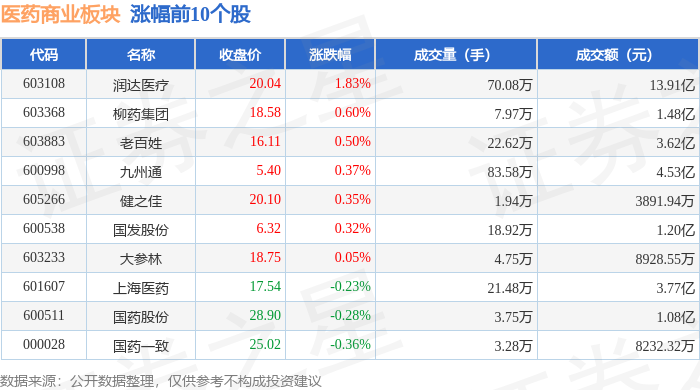
医药商业板块1月15日跌2.19%,华人健康领跌,主力资金净流出9.9亿元
Zheng Xing Xing Ye Ri Bao· 2026-01-15 08:58
Market Overview - The pharmaceutical commercial sector experienced a decline of 2.19% on January 15, with Huaren Health leading the drop [1] - The Shanghai Composite Index closed at 4112.6, down 0.33%, while the Shenzhen Component Index closed at 14306.73, up 0.41% [1] Individual Stock Performance - Notable gainers included: - RunDa Medical (603108) with a closing price of 20.04, up 1.83% and a trading volume of 700,800 shares [1] - LiuYao Group (603368) closed at 18.58, up 0.60% with a trading volume of 79,700 shares [1] - LaoBaiXing (603883) closed at 16.11, up 0.50% with a trading volume of 226,200 shares [1] - Significant decliners included: - Huaren Health (301408) closed at 23.81, down 19.99% with a trading volume of 491,100 shares [2] - ShangYu PingMin (301017) closed at 18.50, down 13.75% with a trading volume of 373,900 shares [2] - YaoYiGou (300937) closed at 37.40, down 11.79% with a trading volume of 121,400 shares [2] Capital Flow Analysis - The pharmaceutical commercial sector saw a net outflow of 990 million yuan from institutional investors, while retail investors had a net inflow of 977 million yuan [2] - The table of capital flow indicates that: - LaoBaiXing (603883) had a net inflow of 46.10 million yuan from institutional investors [3] - JiuZhouTong (600998) had a net inflow of 40.43 million yuan from institutional investors [3] - RunDa Medical (603108) had a net inflow of 37.80 million yuan from institutional investors [3]




全文|刘姝威析股市大涨关键:营商环境重塑,让老百姓敢把钱搬进来
Xin Lang Cai Jing· 2026-01-15 04:58
Core Viewpoint - The Chinese stock market has begun to rise after years of stagnation around the 3000-point mark, driven by economic cycles and anti-corruption efforts [3][4][11] Economic Cycle - The new economic cycle, according to the Kondratiev wave theory, is set to start in 2025, with the new energy sector, particularly the automotive industry, as its driving force [3][9] - In 2025, China's automobile production and sales are projected to be the highest in the world, surpassing Japan [3][9] Anti-Corruption Efforts - Anti-corruption measures have improved the business environment in China, encouraging more enterprises, especially small and medium-sized enterprises, to register and operate [4][10] - The government has emphasized fair and rule-based market operations, with strict penalties for financial fraud, enhancing investor confidence [4][10] Market Sentiment - The public has observed a cleaner stock market environment, leading to increased willingness to invest savings from banks into the stock market [5][10] - The influx of capital into the stock market is attributed to the perception of a recovering Chinese economy, with significant investments from various sectors [4][10] Future Outlook - The "15th Five-Year Plan" period is expected to be driven by advancements in AI and technology, which are anticipated to significantly contribute to economic growth [11] - AI is viewed as a potential catalyst for the next technological revolution, with predictions that 2026 will mark the beginning of Artificial General Intelligence (AGI) [11]