Marubi(603983)

Search documents
化妆品板块1月27日跌1.27%,丸美生物领跌,主力资金净流出4397.95万元
Zheng Xing Xing Ye Ri Bao· 2026-01-27 08:56
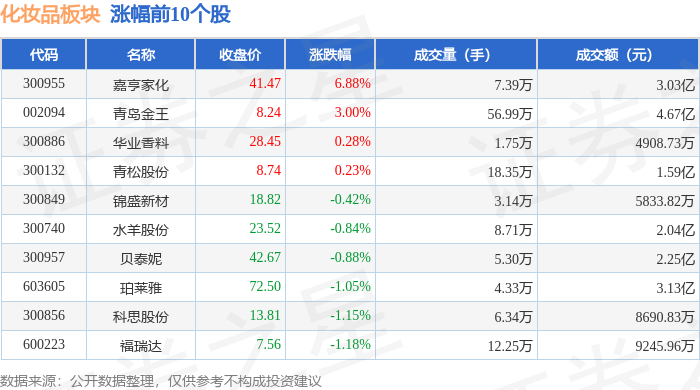
Market Overview - The cosmetics sector experienced a decline of 1.27% on January 27, with Marubi Biotechnology leading the drop [1] - The Shanghai Composite Index closed at 4139.9, up 0.18%, while the Shenzhen Component Index closed at 14329.91, up 0.09% [1] Individual Stock Performance - Key performers in the cosmetics sector included: - Jiahen Home Cosmetics (300955) with a closing price of 41.47, up 6.88% and a trading volume of 73,900 shares, totaling 303 million yuan [1] - Qingdao Kingway (002094) closed at 8.24, up 3.00% with a trading volume of 569,900 shares, totaling 467 million yuan [1] - Conversely, Marubi Biotechnology (603983) closed at 31.84, down 4.47% with a trading volume of 46,400 shares, totaling 149 million yuan [2] Capital Flow Analysis - The cosmetics sector saw a net outflow of 43.98 million yuan from main funds, while retail investors contributed a net inflow of 43.99 million yuan [2] - Notable capital flows included: - Qingdao Kingway (002094) with a net inflow of 22.70 million yuan from main funds [3] - Shanghai Jahwa (600315) with a net inflow of 8.10 million yuan from main funds [3] - Marubi Biotechnology (603983) experienced a slight net outflow of 94,800 yuan from main funds [3]



确定性增量,珀莱雅们“杀回”线下
Xin Lang Cai Jing· 2026-01-27 01:57
Core Insights - The beauty industry is witnessing a shift as leading brands are refocusing on offline channels, which are expected to become a significant growth area by 2026 [1][3] - Major companies like Marubi, Proya, and Shiseido are signaling a strategic pivot towards offline sales, indicating a collective recognition of the potential profitability in this space [1][3][4] Group 1: Market Trends - The past year has seen brands expressing concerns over high competition, expensive traffic, and declining online sales, leading to a reevaluation of growth strategies [1][2] - Data from 2023-2024 shows slight increases in offline revenues for major brands, but their overall contribution to total revenue is declining, highlighting a need for strategic investment in offline channels [3][4] Group 2: Strategic Shifts - Natural堂 has demonstrated the potential of offline channels, with average annual revenues exceeding 1.6 billion yuan over the past three years, indicating that offline can still be a vital growth area [4] - The increasing costs of online traffic and the saturation of online platforms are pushing beauty brands to reconsider their channel strategies, making offline channels a more attractive option for sustainable growth [4][5] Group 3: OTC Channel Opportunities - The OTC (Over-the-Counter) channel is emerging as a key battleground for domestic brands, with over 30% of the top 100 cosmetic brands already having products displayed in pharmacies [6][7] - Major pharmacy chains are actively seeking to expand their beauty product offerings, with plans to introduce personal care items in a significant number of their stores [6][7] Group 4: Brand Strategies - Brands are adopting targeted product strategies for different channels, with Marubi launching new products specifically for offline sales and Proya entering the OTC market with a focus on medical and cosmetic synergy [8][9] - The emphasis is on creating engaging in-store experiences and building emotional connections with consumers to enhance brand loyalty and drive sales [10][11]

化妆品医美行业周报20260125:化妆品12月社零高增,Q4需求端景气度明显提升-20260125
Shenwan Hongyuan Securities· 2026-01-25 14:44
Investment Rating - The report maintains a "Positive" outlook on the cosmetics and medical beauty industry, indicating strong performance compared to the market [2]. Core Insights - The cosmetics and medical beauty sector has outperformed the market recently, with the Shenwan Beauty Care Index rising by 2.0% from January 16 to January 23, 2026, surpassing the Shenwan A Index by 0.8 percentage points [4][5]. - December 2025 saw a significant increase in social retail sales for cosmetics, reaching 38 billion yuan, with a growth rate of 8.8%, indicating robust demand even in the off-season. The overall growth rate for Q4 was 9.9%, significantly higher than the annual growth of 5.1% for 2025, driven by promotional events like Double 11 [10][17]. - The report anticipates continued high consumer demand in Q1 2026, supported by new product launches and regulatory approvals in the medical beauty sector [10]. Summary by Sections Industry Performance - The cosmetics and medical beauty sector has shown strong performance, with the Shenwan Cosmetics Index increasing by 2.6% and the Shenwan Personal Care Index rising by 4.2%, both outperforming the Shenwan A Index [4][5]. Key Company Reviews - Lin Qingxuan (2657HK) is highlighted as a benchmark in the high-end domestic skincare market, with revenue projected to grow from 690 million yuan in 2022 to 1.21 billion yuan in 2024, representing a CAGR of 32.7%. The company is expected to turn a profit of 187 million yuan in 2024, a 120% increase year-on-year [11][12]. - Langzi Co., Ltd. (002612.SZ) forecasts a net profit of 900 million to 1.05 billion yuan for 2025, reflecting a year-on-year growth of 245.25% to 302.80% [4]. - Qingsong Co., Ltd. (300132.SZ) anticipates a net profit of 130 million to 165 million yuan for 2025, with a growth rate of 137.73% to 201.74% [4]. Market Trends - The report notes that the high-end skincare market is expanding, with the market size expected to reach 218.5 billion yuan by 2029. The concept of "oil-based skincare" is becoming mainstream, driving growth in the facial oil segment, which is projected to grow at a CAGR of 42.8% from 2019 to 2024 [12][14]. - E-commerce channels are increasingly important, with Lin Qingxuan achieving a 65.4% online revenue share in H1 2025, leveraging platforms like Douyin and Tmall for growth [13]. Sales Data - In December 2025, the total retail sales of cosmetics reached 38 billion yuan, with a year-on-year growth of 8.8%. The overall retail sales for cosmetics in 2025 were 465.3 billion yuan, reflecting a 5.1% increase [17][21].


化妆品板块1月23日涨1.34%,嘉亨家化领涨,主力资金净流出3535.3万元
Zheng Xing Xing Ye Ri Bao· 2026-01-23 09:07
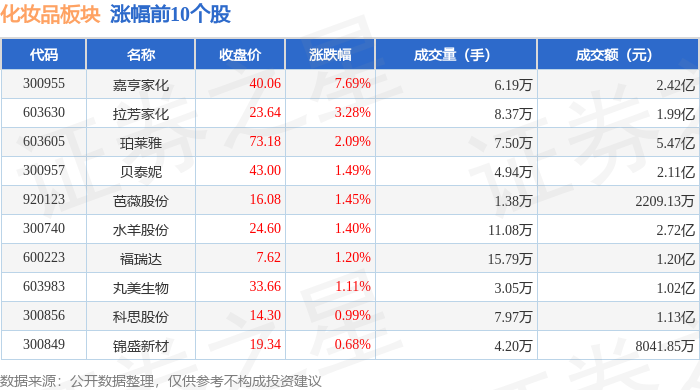
Group 1 - The cosmetics sector experienced a rise of 1.34% on January 23, with Jiaheng Jiahua leading the gains [1] - The Shanghai Composite Index closed at 4136.16, up 0.33%, while the Shenzhen Component Index closed at 14439.66, up 0.79% [1] - Jiaheng Jiahua's stock price increased by 7.69% to 40.06, with a trading volume of 61,900 shares and a transaction value of 242 million yuan [1] Group 2 - The cosmetics sector saw a net outflow of 35.35 million yuan from institutional investors, while retail investors had a net inflow of 31.72 million yuan [2] - Key stocks in the sector included Qingdao Jinwang, which had a net inflow of 13.85 million yuan from institutional investors, but a net outflow of 21.21 million yuan from speculative funds [3] - Jiaheng Jiahua had a net inflow of 11.11 million yuan from institutional investors, but also saw a net outflow of 1.77 million yuan from speculative funds [3]


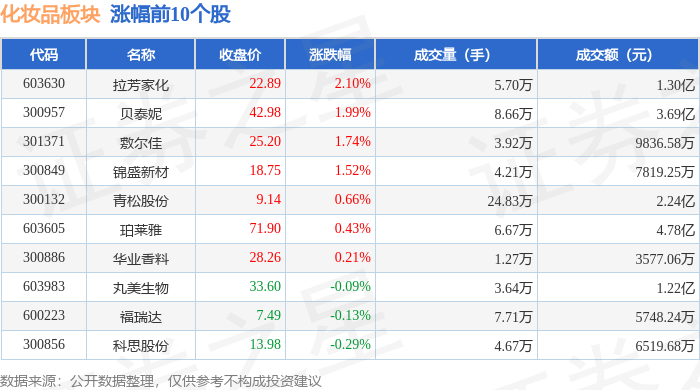
化妆品板块1月21日涨0.25%,拉芳家化领涨,主力资金净流出5552.25万元
Zheng Xing Xing Ye Ri Bao· 2026-01-21 09:08
Group 1 - The cosmetics sector experienced a slight increase of 0.25% on January 21, with Lafang Jiahua leading the gains [1] - The Shanghai Composite Index closed at 4116.94, up 0.08%, while the Shenzhen Component Index closed at 14255.12, up 0.7% [1] - Lafang Jiahua's closing price was 22.89, reflecting a rise of 2.10%, with a trading volume of 57,000 shares and a transaction value of 130 million yuan [1] Group 2 - The cosmetics sector saw a net outflow of 55.52 million yuan from institutional investors, while retail investors had a net inflow of 30.86 million yuan [2] - The trading data for various companies showed mixed performance, with some companies like Betaini and Lafang Jiahua experiencing net outflows from institutional investors [3] - Betaini had a net outflow of 14.09 million yuan from institutional investors, while Lafang Jiahua saw a net inflow of 13.43 million yuan [3]

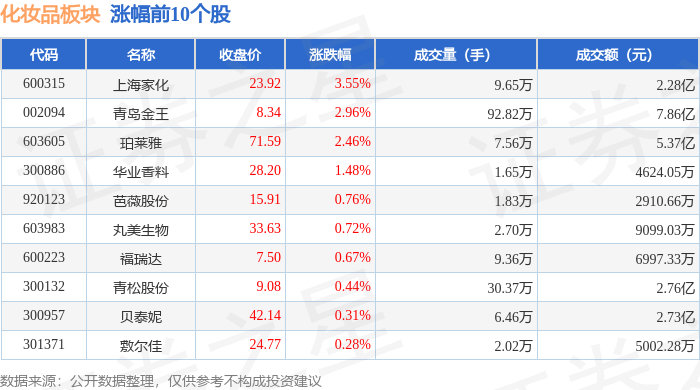
化妆品板块1月20日涨1.11%,上海家化领涨,主力资金净流入3030.2万元
Zheng Xing Xing Ye Ri Bao· 2026-01-20 08:59
Group 1 - The cosmetics sector experienced a rise of 1.11% on January 20, with Shanghai Jahwa leading the gains [1] - The Shanghai Composite Index closed at 4113.65, down 0.01%, while the Shenzhen Component Index closed at 14155.63, down 0.97% [1] - Key stocks in the cosmetics sector showed varied performance, with Shanghai Jahwa closing at 23.92, up 3.55%, and Qingdao Kingking at 8.34, up 2.96% [1] Group 2 - The cosmetics sector saw a net inflow of 30.3 million yuan from institutional investors, while retail investors experienced a net outflow of 54.5 million yuan [2] - Notable individual stock performances included Shanghai Jahwa with a net inflow of 20.5 million yuan from institutional investors, and Qingdao Kingking with a net inflow of 23.3 million yuan [3] - The overall market sentiment reflected a mixed response, with some stocks like Banlaya experiencing significant net outflows from both institutional and retail investors [3]
行业周报:钱大妈递表港交所,“折扣日清”打造模式特色-20260118
KAIYUAN SECURITIES· 2026-01-18 08:43
Investment Rating - The industry investment rating is "Positive" (maintained) [1] Core Views - The report highlights the competitive advantage of Qian Dama through its "community small store + daily clearance mechanism + warehouse and cold chain" model, which enhances supply stability and operational efficiency [3][24][35] - The report emphasizes the importance of emotional consumption themes and identifies high-quality companies in high-growth sectors, recommending specific companies across various segments [6][37] Summary by Sections Industry Overview - The retail and social service indices reported a decline of 1.47% and an increase of 1.53% respectively during the week of January 12-16, 2026 [5][13] - The internet e-commerce sector showed the highest growth, with a year-to-date increase of 11.18% [16][19] Company Highlights - Qian Dama has submitted its IPO application to the Hong Kong Stock Exchange, focusing on fresh food retail in the South China market, with a GMV of 9.8 billion yuan in 2024, significantly outperforming its competitors [24][25] - The company operates 2,983 stores, with 2,898 being franchise stores, contributing over 90% of its revenue [25][31] - The report recommends several companies based on their performance and market positioning, including: - Chaohongji, expected to achieve a net profit of 436-533 million yuan in 2025, driven by brand upgrades and channel expansion [39][43] - Meilitiantian Medical Health, projected to see a revenue increase of 28.2% in FY2025H1 [39] - Zhou Dafu, focusing on product structure optimization and store upgrades [39] Investment Themes - Investment Theme 1: Focus on high-end gold and fashion jewelry brands, recommending Chaohongji and Laopu Gold [6][37] - Investment Theme 2: Emphasize retail companies adapting to trends and AI-enabled cross-border e-commerce leaders, recommending Yonghui Supermarket and Aiyingshi [6][37] - Investment Theme 3: Highlight domestic beauty brands that meet emotional value and safety innovation, recommending Maogeping and Pola [6][37] - Investment Theme 4: Focus on differentiated medical beauty product manufacturers and leading medical beauty institutions, recommending Meilitiantian Medical Health and Aimeike [6][37]


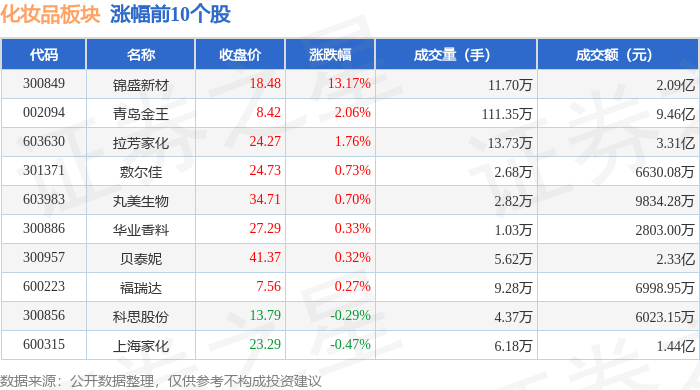
化妆品板块1月15日跌0.36%,水羊股份领跌,主力资金净流出1186.31万元
Zheng Xing Xing Ye Ri Bao· 2026-01-15 08:58
Market Overview - The cosmetics sector experienced a decline of 0.36% on January 15, with Shuiyang Co. leading the drop [1] - The Shanghai Composite Index closed at 4112.6, down 0.33%, while the Shenzhen Component Index closed at 14306.73, up 0.41% [1] Individual Stock Performance - Jinsheng New Material (300849) saw a significant increase of 13.17%, closing at 18.48 with a trading volume of 117,000 shares and a turnover of 209 million yuan [1] - Qingdao Kingway (002094) increased by 2.06%, closing at 8.42 with a trading volume of 1,113,500 shares [1] - Lafang Home (603630) rose by 1.76%, closing at 24.27 with a trading volume of 137,300 shares [1] - Other notable performances include Fulejia (301371) up 0.73%, Marubi Biological (603983) up 0.70%, and Betaini (300957) up 0.32% [1] Capital Flow Analysis - The cosmetics sector saw a net outflow of 11.86 million yuan from institutional investors and 53.27 million yuan from retail investors, while retail investors had a net inflow of 65.13 million yuan [2] - The capital flow for individual stocks indicates that Lafang Home had a net inflow of 77.73 million yuan from institutional investors, while Betaini had a net inflow of 14.81 million yuan [3] - Conversely, Shuiyang Co. experienced a net outflow of 5.39 million yuan from institutional investors [2][3]

“急闯”港股 丸美生物突围还是解困?
Zhong Guo Ji Jin Bao· 2026-01-13 13:56
Core Viewpoint - Marubi Biotechnology is seeking a dual listing on the Hong Kong Stock Exchange to enhance its capital strength and international financing capabilities amid increasing competition in the domestic beauty industry and rising online traffic costs, which have led to a situation of revenue growth without profit increase [2][12]. Financial Status - Marubi plans to issue up to 15% of its total share capital as H-shares in its Hong Kong listing [2]. - The company has faced financial scrutiny due to irregularities in financial accounting and has been ordered to rectify these issues by regulatory authorities [2][12]. - As of the end of 2025, Marubi's short-term borrowings amount to approximately 573 million yuan, with total short-term liabilities around 977 million yuan [8][12]. Dividend Policy - Marubi's dividend payout ratio has surged from 37.77% in 2019 to 202.82% in 2023, with a notable payout ratio of 235.87% in 2024 [7]. - The majority of dividends benefit the founding couple, who hold over 80% of the company's shares, raising concerns among investors about the sustainability of such high payouts amid financial pressures [7][9]. Revenue and Profitability - Marubi reported a revenue of 2.97 billion yuan in 2024, with 2.45 billion yuan generated in the first three quarters of 2025 [12]. - Despite revenue growth, net profit growth has slowed, with a mere 2.13% increase in net profit attributable to shareholders in the first three quarters of 2025, while non-recurring net profit declined by 5.42% [12][11]. Marketing and Sales Strategy - The company's marketing expenses have significantly increased, reaching 1.415 billion yuan in the first three quarters of 2025, with a marketing expense ratio of 57.7% [12]. - A high reliance on online sales channels, which accounted for 87.6% of revenue in the same period, has led to increased operational costs due to platform rules and traffic costs [12]. Research and Development - Marubi is transitioning towards a biotechnology-focused beauty company, with an emphasis on research in areas like recombinant collagen [14]. - However, R&D spending has been insufficient, with only a slight increase in R&D expenses compared to a significant rise in sales expenses [16].
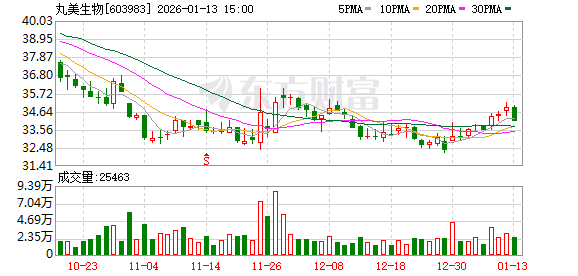
“急闯”港股,丸美生物突围还是解困?
Zhong Guo Ji Jin Bao· 2026-01-13 13:49
Core Viewpoint - Marubi Biotechnology is seeking a dual listing in Hong Kong to enhance its capital strength and international financing capabilities amid increasing competition in the domestic beauty industry and rising online traffic costs, which have led to a situation of revenue growth without profit increase [2][3]. Financial Pressure - Marubi plans to issue up to 15% of its total share capital as H-shares in its Hong Kong listing [3]. - The company reported a net cash outflow of 391 million yuan in Q3 2025, significantly reducing its cash and cash equivalents [5]. - Short-term borrowings reached 573 million yuan, with total short-term liabilities amounting to approximately 977 million yuan [6]. Dividend Policy - Marubi's dividend payout ratio has surged from 37.77% in 2019 to 202.82% in 2023, with a payout ratio of 235.87% in 2024 [10]. - The majority of dividends benefit the founders, who hold over 80% of the shares, raising concerns among investors about the sustainability of high dividends amid financial pressures [10]. Institutional Shareholding - Institutional shareholding has decreased significantly, with the number of shares held by funds dropping from 23.65 million at the end of 2024 to 9.61 million by the end of September 2025 [10][11]. Revenue and Profit Trends - Marubi's revenue grew to 2.97 billion yuan in 2024, with 2.45 billion yuan generated in the first three quarters of 2025 [12]. - However, net profit growth has slowed, with a mere 2.13% increase in net profit attributable to shareholders in the first three quarters of 2025, while non-recurring net profit declined by 5.42% [12]. Marketing Expenses - Marketing expenses for the first three quarters of 2025 reached 1.415 billion yuan, with an expense ratio climbing to 57.7%, primarily due to reliance on online sales channels [12][14]. - The company faced a significant drop in net profit in Q2 2025 despite revenue growth, with sales expense ratios exceeding 60% [14]. Technology Transformation - Marubi officially rebranded to "Marubi Biotechnology" in December 2024, emphasizing its transition to a biotechnology-focused beauty company [18]. - The company has increased its investment in research and development, particularly in recombinant collagen products, which have shown significant market growth potential [18][20]. - However, R&D spending has not kept pace with sales expenses, with only a slight increase in R&D costs compared to a substantial rise in marketing expenses [21].