BeiGene(688235)

Search documents
百济神州:公司会在定期报告中面向所有投资者统一披露截至相应报告期末的股东户数
Zheng Quan Ri Bao Zhi Sheng· 2026-02-09 14:09
Summary of Key Points Core Viewpoint - The company disclosed that as of September 30, 2025, it had a total of 36,172 registered shareholders, which includes 36,008 shareholders of RMB shares, 41 shareholders registered in the Hong Kong stock register, and 115 shareholders in the Swiss stock register [1]. Group 1 - The company reported that there are 36,164 registered shareholders of ordinary shares, which includes 36,008 RMB shares and 164 from other regions [1]. - The total number of registered holders of American Depositary Shares (ADS) is 8, contributing to the overall count of 36,172 [1]. - The company noted that the reported numbers do not include beneficial owners represented by brokers for ordinary shares and ADS held by agents [1].
港股医药板块回暖复苏,恒生医药ETF(159892)涨近2%
Mei Ri Jing Ji Xin Wen· 2026-02-09 02:44
Group 1 - The Hong Kong stock market showed a strong opening on February 9, with the Hang Seng Index rising by 1.59%, the State-owned Enterprises Index increasing by 1.54%, and the Technology Index up by 1.9% [1] - The Hang Seng Biotechnology Index, focusing on innovative drugs, performed robustly, with the largest ETF tracking this index (159892) rising nearly 2% [1] - The innovative drug sector is expected to enter a profit realization acceleration phase by 2025, with companies like Innovent Biologics and Rongchang Biopharmaceuticals turning losses into profits, while companies like 3SBio are significantly increasing their performance [1] Group 2 - The strong performance of the innovative drug sector validates the effectiveness of the domestic innovative drug business model, with core product volume growth supported by medical insurance becoming the foundation for performance growth [1] - External collaborations, such as business development (BD) partnerships, are becoming important drivers for enhancing performance in the innovative drug sector [1] - The Hang Seng Medical ETF (159892) focuses on innovative drugs, CXO, and related industries, benefiting from the advantages of the Hong Kong Stock Exchange's 18A system, covering numerous innovative targets like BeiGene and Innovent Biologics, and is expected to continue its valuation recovery trend under catalysts like overseas expansion of innovative drugs and commercial insurance directories [1]

港股早盘高开,华虹半导体、中芯国际领涨,港股通科技ETF招商(159125)涨超1%
Jin Rong Jie· 2026-02-09 02:31
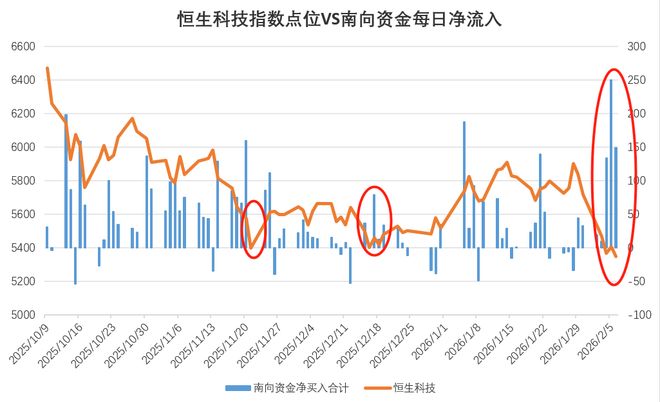
Core Viewpoint - The Hong Kong stock market, particularly the technology sector, is experiencing significant capital inflows despite global risk asset volatility, indicating a potential rebound in the sector's performance [1][2]. Group 1: Capital Inflows - Southbound funds recorded a net inflow of HKD 561 billion (approximately USD 498 million) last week, showing a marked increase compared to the previous week [2]. - Technology ETFs linked to Hong Kong stocks saw a total net inflow of HKD 173.59 billion last week, suggesting strong investor interest [4]. - Foreign capital also flowed into Hong Kong stocks, with a net inflow of USD 1.88 billion as of February 4, down from USD 2.8 billion the previous week, but still maintaining a relatively high level [4]. Group 2: Valuation and Performance - The price-to-earnings (P/E) ratio of the Hong Kong technology index tracked by the Hong Kong Stock Connect Technology ETF is approximately 26 times, which is significantly lower than the A-share ChiNext index (around 42 times) and the US Nasdaq index (around 37 times) [5]. - Since January 2017, the Hong Kong Stock Connect Technology Index has increased by 153.72%, outperforming the Hong Kong Internet Index (0.99%) and the Hang Seng Technology Index (45.74%) [6]. - Analysts suggest that the current valuation levels in the Hong Kong market remain attractive, with key investment opportunities likely to focus on sectors such as technology innovation and new productivity [6].


医药生物行业周报:加速出海叠加商业化兑现,创新药行业持续向上
KAIYUAN SECURITIES· 2026-02-08 12:24
Investment Rating - The industry investment rating is "Positive" (maintained) [1] Core Insights - The Chinese innovative pharmaceutical industry is entering a new phase of development characterized by dual breakthroughs in commercialization and internationalization, with significant growth in License-out transactions from $2.562 billion in 2017 to $140.274 billion in 2025 [5][15] - The industry is transitioning from a phase of pipeline expectations to one of performance realization, with over 70% of companies achieving positive revenue growth in 2025 [6][23] - The innovative drug sector has seen a strong performance in early 2026, with the pharmaceutical and biological sector rising by 0.14%, outperforming the CSI 300 index by 1.47 percentage points [7][29] Summary by Sections Section 1: Breakthroughs in Commercialization and Internationalization - The period from 2017 to 2026 is crucial for the recognition of Chinese pharmaceutical companies in the global market, with a notable increase in License-out transactions [5][15] - In early 2026, significant deals were made, including a $12 billion upfront payment from CSPC to AstraZeneca, indicating the growing international competitiveness of Chinese innovative drugs [16][17] Section 2: Performance of the Pharmaceutical Sector - The pharmaceutical sector has shown robust growth, with companies like BeiGene reporting revenues exceeding 36 billion yuan, reflecting strong commercialization capabilities [6][23] - The overall industry is moving towards profitability, with companies like Innovent Biologics and Rongchang Biopharma achieving breakeven for the first time [6][23] Section 3: Market Trends and Subsector Performance - In the first week of February 2026, the Chinese pharmaceutical sector saw a 0.14% increase, with traditional Chinese medicine leading the gains at 2.56% [7][31] - The medical research outsourcing sector also performed well, increasing by 1.99%, while other subsectors like biological products and vaccines experienced declines [7][31][35]


行业周报:加速出海叠加商业化兑现,创新药行业持续向上-20260208
KAIYUAN SECURITIES· 2026-02-08 11:34
Investment Rating - The industry investment rating is "Positive" (maintained) [1] Core Insights - The Chinese innovative pharmaceutical industry is entering a new phase of development characterized by dual breakthroughs in commercialization and internationalization, with significant increases in License-out transaction values from $2.562 billion in 2017 to $140.274 billion in 2025 [5][15] - The industry is transitioning from a phase of pipeline expectations to one of performance realization, with over 70% of companies achieving positive revenue growth in 2025 [6][23] - The innovative drug sector has seen a strong performance in the first week of February 2026, with a 0.14% increase, outperforming the CSI 300 index by 1.47 percentage points [7][29] Summary by Sections Section 1: Breakthroughs in Commercialization and Internationalization - The period from 2017 to 2026 is crucial for the recognition of Chinese pharmaceutical companies in the global market, with a notable increase in License-out transactions [5][15] - In 2026, the upfront payment for License-out transactions has already exceeded 39% of the total for 2025, indicating improved quality and competitiveness of Chinese innovative drug pipelines [5][15][16] Section 2: Performance of the Pharmaceutical Sector - The innovative drug sector is experiencing rapid revenue growth, with companies like BeiGene achieving over 36 billion yuan in revenue, showcasing strong commercialization capabilities [6][23] - Major companies such as Innovent Biologics and Rongchang Biopharma have maintained robust growth due to their core products, with some companies achieving profitability for the first time [6][23][24] Section 3: Market Trends and Subsector Performance - In the first week of February 2026, the traditional Chinese medicine sector saw the highest increase at 2.56%, while other biopharmaceutical sectors experienced declines [7][31] - The medical research outsourcing sector also performed well, with a 1.99% increase, indicating a positive trend in the pharmaceutical industry overall [7][31][35]
美国医药调研反馈:肿瘤、代谢、自免、中枢神经系统赛道推荐更新
Haitong Securities International· 2026-02-06 11:33
Investment Rating - The report provides an "Outperform" rating for multiple companies in the healthcare sector, including BeiGene, JD Health, WuXi Biologics, and others, indicating a positive outlook for these stocks [1]. Core Insights - The macro and industry environment is improving due to the resolution of policy uncertainties, the release of significant clinical data, and a resurgence in global M&A activity, leading to a notable increase in investor sentiment towards innovative drugs for 2026 [4][11]. - In oncology, the PD-1/VEGF dual antibody approach is transitioning from "mechanism validation" to "clinical and industrial resonance," with multiple global Phase III trials underway, expected to catalyze approvals and data releases within the year [5][17]. - The metabolic sector is seeing growth in the cash-pay market for GLP-1 drugs, driven by limited insurance coverage and high out-of-pocket costs, prompting companies to enhance accessibility through direct sales and pricing adjustments [6][25]. - In the autoimmune space, there is a growing concentration risk among major products from multinational corporations (MNCs), with new antibody platforms expected to yield significant data in 2026, potentially leading to new business development opportunities [7]. - The central nervous system (CNS) investment focus remains on advancing Aβ monoclonal antibody treatments, with key data expected to open up early intervention market opportunities [9]. Summary by Sections Oncology - The PD-1/VEGF dual antibody's clinical and industrial certainty is strengthening, with major companies conducting multiple global Phase III trials across high-value indications [17]. - The Pan-RAS precision therapy is entering a realization phase, with key Phase III data expected in 2026 for pancreatic cancer and NSCLC [22]. Metabolic - The cash-pay market for GLP-1 drugs is expanding due to limited insurance coverage, with companies like Eli Lilly and Novo Nordisk adopting different direct-to-consumer strategies to enhance accessibility [25][26]. - Small nucleic acid therapies are expected to upgrade treatment paradigms, showing competitive data in weight loss and safety profiles when combined with GLP-1 [30]. Autoimmune - MNCs are increasingly reliant on a few blockbuster products, with structural opportunities arising from new antibody platforms expected to report data in 2026 [7]. - The trend towards oral formulations in autoimmune diseases is gaining traction, offering advantages in adherence and competitive differentiation [7]. CNS - The focus in CNS remains on Aβ monoclonal antibody treatments, with advancements expected to shift treatment towards earlier intervention populations [9]. - New delivery methods, such as systemic administration of small nucleic acids, are being explored as complementary approaches [9].

科创板企业扎堆登陆“中国500强”
3 6 Ke· 2026-02-06 10:55
Group 1 - The total value of the top 500 companies in China increased by 21 trillion yuan (38%), reaching 77 trillion yuan, with an average value growth of 41.5 billion yuan, now at 1.53 trillion yuan [1][2] - The entry threshold for the list rose to 34 billion yuan, an increase of 7.5 billion yuan from the previous year, marking a historical high [1][2] - The technology sector continues to be a growth engine, with significant increases in the number and market value of companies in semiconductor, biomedicine, artificial intelligence, and new energy sectors [1][2] Group 2 - Nearly 40% of this year's listed companies were not on the list four years ago, with new entrants primarily from consumer electronics, AI computing, and new energy sectors [2] - The semiconductor industry surpassed the life sciences sector to become the second-largest industry in the list, with TSMC leading the growth [3] - Notable semiconductor companies include TSMC, which saw a value increase of 3.5 trillion yuan, and Cambrian, which grew by 370 billion yuan [3] Group 3 - The new energy sector also performed well, with CATL's value increasing by 690 billion yuan, and other companies like Sungrow and EVE Energy showing significant growth [4] - The Shanghai region had 57 companies on the list, an increase of 7 from the previous year, making it the city with the fastest growth in the number of listed companies [10] - Shanghai is a key research and development hub, with 101 companies establishing their main R&D bases there, reflecting its strong innovation capabilities [10][11] Group 4 - The STAR Market (科创板) has a strong presence in the list, with 45 companies, showcasing the focus on hard technology sectors like semiconductors and biomedicine [6][7] - The semiconductor sector is particularly prominent among STAR Market companies, with many of the highest-valued startups in this field [8] - The overall trend indicates that STAR Market companies are in a high-growth phase, aligning with the broader trend of nearly 40% of this year's companies being new entrants [9]



创新药专题:中国声音响彻2026年JPM大会
Southwest Securities· 2026-02-06 06:37
Group 1: JPM Conference Overview - The J.P. Morgan Healthcare Conference is one of the largest and most influential gatherings in the global healthcare sector, covering pharmaceuticals, biotechnology, medical devices, diagnostics, digital health, and healthcare services [3] - The conference serves as a platform for multinational corporations (MNCs), biotech firms, and investment institutions to connect, providing clear signals for industry development over the coming year [4] - The 2026 JPM Conference will be held from January 12 to 15 in San Francisco, California [5] Group 2: MNC Strategic Positioning and BD Strategies - In 2026, MNCs are focusing on four key areas: neuroscience, immunology, oncology, and cardiovascular diseases [6] - Business development (BD) transactions are becoming a core strategy for MNCs, with a shift towards precision and rationality in BD deals, emphasizing next-generation immunotherapies, cell therapies, and gene therapies [6] - AI is increasingly integrated into drug development, clinical design, and operational management across the industry [6][18] Group 3: Investment Opportunities in Innovative Drugs - The acceleration of BD transactions abroad is expected to inject new performance growth and market value elasticity, with a notable increase in projects and upfront payments in 2025 [8] - Policy support for innovative drugs is improving, with recent measures from health authorities aimed at fostering high-quality development in the sector [8] - Key clinical data releases and commercialization milestones for several innovative drugs are anticipated in 2025, which could significantly impact market valuations [8] Group 4: Key Domestic Companies and Their Focus - Companies like Hengrui Medicine and BeiGene are expected to achieve significant milestones in 2026, including multiple new drug applications and clinical data releases [24][25] - Hengrui Medicine aims to leverage a dual strategy of R&D and BD, with over 25 ongoing Phase III clinical trials and a target of more than 10 new drug approvals [24] - BeiGene is positioned to capitalize on its leading products in the chronic lymphocytic leukemia (CLL) space, with several key regulatory submissions and clinical trials planned for 2026 [29][35]

百济神州(06160.HK)发布2026年1月证券变动月报,期内股份期权变动及公股持股确认
Xin Lang Cai Jing· 2026-02-05 17:29
来源:中访网 根据公司股权激励计划,本月股份期权发生变动。其中,根据2011期权计划,有58份期权被注销;根据 第四版经修订及重列的2016期权及激励计划,新授予了273,442份期权,另有703,456份期权被注销。截 至1月底,根据该计划可能发行的股份总数为29,751,915份。本月内,因行使期权(涉及2016计划)公司 发行了3,179,780股新股,共获得资金约166.37万美元。报告同时确认,本月所有证券发行均获董事会正 式授权,并遵守了相关上市规则与法律。 中访网数据 百济神州有限公司于2026年2月5日向香港联交所提交了截至2026年1月31日的证券变动月报 表。报告显示,公司法定股本上限为231,146.3847美元,每股面值0.0001美元,董事会获授权在2029年4 月前于该区间内增减股本。已发行股份方面,于香港联交所上市的普通股数量为1,425,622,549股,本月 无变动;公司确认该部分股份符合联交所不低于25%的最低公众持股量要求。此外,公司另有 115,055,260股人民币股份于上海证券交易所科创板上市,该部分股份不与港股互通。 ...
国产创新药,正在破局
3 6 Ke· 2026-02-05 11:26
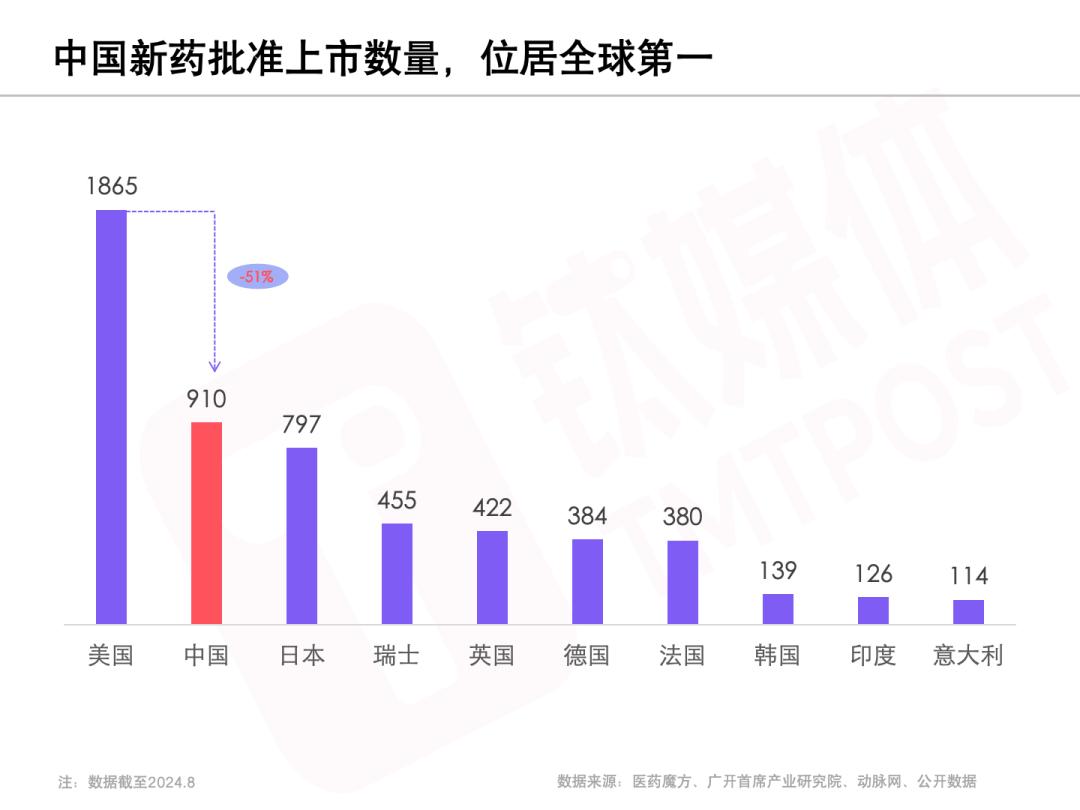
Core Viewpoint - The article discusses the significant progress in China's innovative drug development, highlighting the increase in the number of new drugs approved and the growing competitiveness of Chinese pharmaceutical companies in both domestic and international markets [4][16]. Group 1: Growth of Innovative Drugs - In 2024, the number of domestically developed Class 1 new drugs in China reached 40, a substantial increase from just 9 in 2018 [2][3][4]. - Since the beginning of the 14th Five-Year Plan, 113 innovative drugs have been approved, which is 2.8 times the number approved during the 13th Five-Year Plan [4]. - As of August 2024, there are 910 new drugs available in China, indicating a robust growth in the pharmaceutical market [6]. Group 2: Clinical Trials and Breakthroughs - In a head-to-head clinical trial, the drug Ivoris (依沃西单抗) developed by Kangfang Biopharma outperformed the global best-selling cancer drug, Pembrolizumab (K drug), marking a significant achievement for Chinese innovation [7][9]. - The global sales of Pembrolizumab reached $29.482 billion in 2024, underscoring the competitive landscape [8]. Group 3: Market Dynamics and International Expansion - Chinese innovative drugs are not only performing well domestically but are also gaining traction in international markets, with products like Sidakio (西达基奥仑赛) achieving $1.596 billion in cumulative sales since its launch [12][13]. - The total transaction scale of technology licensing by Chinese pharmaceutical companies exceeded $34 billion in 2024, indicating a shift towards international collaboration [14][15]. Group 4: R&D Landscape and Challenges - As of August 2024, there are 5,380 new drug candidates in development in China, accounting for over one-third of the global pipeline [18]. - The average cost of developing an innovative drug is around $1 billion, with a typical development timeline of 10 years [20][21]. - The efficiency of drug development in China is improving, with preclinical phases taking 12-20 months compared to 24-36 months internationally [23]. Group 5: Policy Support and Ecosystem - The Chinese government has implemented various policies since 2008 to support innovative drug development, including expedited approval processes and financial incentives [28][29]. - The combination of government support, industry collaboration, and technological advancements is creating a conducive environment for innovation in the pharmaceutical sector [41]. Group 6: Future Outlook - The article emphasizes that the development of innovative drugs in China has made significant strides over the past decade, transitioning from imitation to innovation [42]. - The government's continued support for innovative drugs is expected to enhance the industry's growth and provide hope for patients [42].