
Qingdao Gaoce(688556)

Search documents
东吴证券:马斯克规划100GW光伏产能 设备商有望充分受益于海外地面+太空光伏双重机遇
智通财经网· 2026-01-25 23:10
Group 1 - Core viewpoint: Elon Musk announced at the World Economic Forum that Tesla and SpaceX will build 100GW capacity for ground and space photovoltaics, respectively, expected to be completed by the end of 2028 [1] - The demand for space photovoltaics is expected to surge due to the exponential growth in satellite launches, with SpaceX accelerating the construction of its Starlink system [2] - Silicon-based HJT technology is identified as the optimal short-term solution for space photovoltaics due to its lightweight, cost-effectiveness, and lack of raw material constraints [2] Group 2 - The overseas ground photovoltaic market is also experiencing strong demand, with the US solar market projected to grow at a compound annual growth rate of over 20% from 2024 to 2029 [3] - China is expected to dominate the global market in 2024, with over 80% of the production capacity in silicon materials, wafers, cells, and modules [3] - Key equipment manufacturers such as Jing Sheng, Maiwei, and Aotwei are positioned to benefit from this growth, with significant market shares in their respective segments [3]





电力设备与新能源行业周观察:太空光伏开辟增量空间,看好产业链发展机遇
HUAXI Securities· 2026-01-25 12:58
Investment Rating - Industry Rating: Recommended [5] Core Insights - The humanoid robot industry is accelerating towards mass production, driven by cost reduction demands and domestic suppliers' advantages in key components like precision transmission parts and electronic skin [15][16] - The sodium battery released by CATL showcases cost and performance advantages, with significant price increases in lithium carbonate impacting lithium battery costs, while sodium batteries are expected to achieve scale applications [19][20] - Domestic energy storage installations are experiencing substantial growth, with a diverse revenue structure and economic viability, benefiting leading companies in system integration and inverters [23] - The photovoltaic industry is poised for growth due to dual applications in ground and space, with HJT technology becoming a key direction for overseas expansion, enhancing global market potential [26][31] - China's wind power equipment exports are surging, with significant opportunities for leading companies in both domestic and overseas markets, supported by technological parity and cost advantages [27][40] - The electric equipment sector is entering a super boom cycle, driven by overseas demand and advancements in AI and smart grid technologies, with companies that possess strong channel resources and technical capabilities expected to benefit [42][43] Summary by Sections Humanoid Robots - The humanoid robot industry is seeing rapid industrialization, with major tech companies entering the market and expected mass production of Tesla's Optimus robot by the end of next year [15][16] - Key components suppliers in the T-chain are likely to benefit from the anticipated production ramp-up [16][17] Electric Vehicles - CATL's sodium battery demonstrates significant advantages in cost and performance, with the price of lithium carbonate impacting battery costs, while sodium batteries are expected to see widespread adoption [19][20] Renewable Energy - Domestic energy storage installations are on a growth trajectory, with leading companies in system integration and inverters set to benefit from the expanding market [23] - The photovoltaic sector is expected to grow due to advancements in HJT technology and increased global demand for solar installations [26][31] Wind Power - China's wind power equipment exports are increasing, with leading companies poised to capitalize on both domestic and international opportunities [27][40] Electric Equipment & AIDC - The electric equipment sector is entering a favorable cycle, with companies that have strong technical capabilities and market presence expected to benefit from increased overseas demand [42][43]




光伏设备行业点评报告:马斯克规划100GW光伏产能,设备商有望充分受益于海外地面+太空光伏双重机遇
Soochow Securities· 2026-01-24 23:42
Investment Rating - The report maintains an "Overweight" rating for the photovoltaic equipment industry [1] Core Insights - Elon Musk announced plans for 100GW photovoltaic capacity for both terrestrial and space applications, expected to be completed by the end of 2028 [4] - The global satellite launch numbers are expected to grow exponentially, with silicon-based HJT being the optimal solution for space photovoltaics due to its lightweight, cost-effectiveness, and material availability [4] - The demand for terrestrial photovoltaic markets is also strong, with the U.S. market projected to have a compound annual growth rate exceeding 20% from 2024 to 2029, and an installation capacity expected to exceed 60GW in 2025 [4] - Chinese photovoltaic equipment holds a dominant position globally, with over 80% market share in silicon materials, wafers, cells, and modules by 2024 [4] - Key recommended companies include leading HJT equipment manufacturer "Maiwei," low-oxygen monocrystalline furnace leader "Jingsheng," and global market leader in string welding machines "Aotewei" [4] Summary by Sections Industry Trends - The report highlights the significant growth in satellite launches and the corresponding demand for space photovoltaics, indicating a shift towards silicon-based HJT technology as a preferred solution [4] - The U.S. photovoltaic market is experiencing robust growth, with expectations for substantial increases in installation capacity [4] Company Recommendations - The report recommends focusing on leading companies in the HJT equipment sector, including "Maiwei," "Jingsheng," "Aotewei," and suggests monitoring "Jiejia Weichuang" for integrated equipment solutions [4]

光伏的春天又来了
猛兽派选股· 2026-01-24 03:51
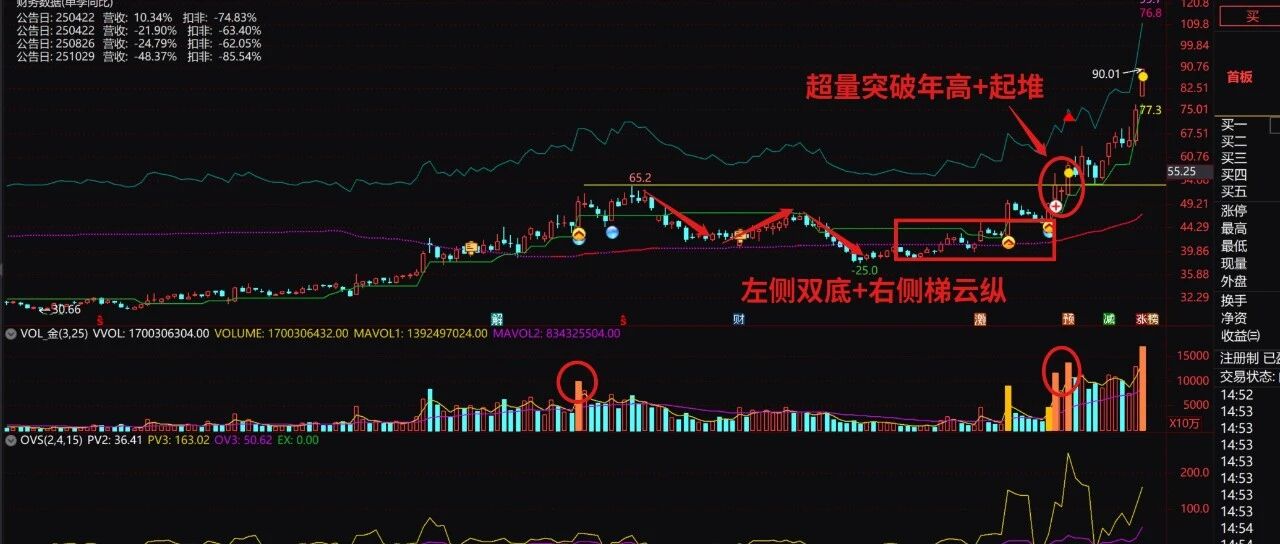
Core Viewpoint - The photovoltaic (PV) industry is experiencing significant momentum, particularly in the equipment sector, with clear RSR signals indicating strong market activity [1]. Group 1: Company Performance - Jiejia Weichuang is highlighted as a key player in the industry [3]. - Maiwei Co., Ltd. is noted for leading the market with unusual trading volumes and signals of acceleration into the second phase of growth [4]. - Aotwei and Jingcheng Machinery are also mentioned as companies that have entered the second phase of acceleration [5][7]. - High Measurement Co. and Dier Laser are part of the group showing strong performance, with most companies just entering the second phase [8][10]. - The characteristics of these stocks include significant price increases of over 50% and a strong breakout above previous highs, indicating a bullish trend [12]. Group 2: Market Dynamics - The photovoltaic industry is classified as a typical cyclical industry, with performance fluctuations similar to non-ferrous metals and chemicals, driven by expectations of industry recovery and supply-side reforms [16]. - Equipment manufacturers often outperform the core industry stocks, as seen in the non-ferrous sector where mining equipment stocks have shown greater gains [16]. - Component stocks are lagging behind equipment stocks, with JinkoSolar showing potential due to its advanced technology and market position, surpassing previous leaders [18]. Group 3: Historical Context - Historical bull stocks serve as a guide for current market behavior, with current bull stocks following similar patterns of clear upward trends and compact adjustment structures [19].



光伏行业:太空光伏创造光伏行业新需求
GF SECURITIES· 2026-01-23 15:35
Investment Rating - The industry investment rating is "Buy" [2] Core Insights - The report highlights that SpaceX and Tesla plan to build a total of 200GW of photovoltaic capacity in the U.S. over the next three years, primarily for ground data centers and space AI satellites [6] - The advantages of space computing centers are emphasized, including better convenience and real-time service compared to ground data processing, as well as significant cost reductions in communication infrastructure [6] - The report predicts that global photovoltaic demand will continue to grow, with an expected 580GW of new installations in 2026, representing a year-on-year increase of 6%. The total global photovoltaic demand is projected to reach 645GW, a year-on-year growth of 18.6% [6] Summary by Sections Industry Overview - The report discusses the emergence of new demand in the photovoltaic industry driven by space photovoltaic technology [1] Key Developments - Space photovoltaic technology is being developed in China, with three generations of solar battery technology tailored for different spacecraft, achieving international advanced performance levels [6] - Several domestic companies are accelerating their investments in space photovoltaic technology, including partnerships for the production of combined products [6] Investment Recommendations - The report suggests focusing on companies that have established early advantages in space photovoltaic layouts, such as Junda Co., Oriental Sunrise, JinkoSolar, Longi Green Energy, Foster, and others [6]



1月23日科创板高换手率股票(附股)
Zheng Quan Shi Bao Wang· 2026-01-23 10:24
Market Performance - The Sci-Tech Innovation Board (STAR Market) index rose by 0.78%, closing at 1553.71 points, with a total trading volume of 6.727 billion shares and a turnover of 334.942 billion yuan, resulting in a weighted average turnover rate of 3.42% [1] - Among the tradable stocks on the STAR Market, 481 stocks closed higher, with 27 stocks experiencing a rise of over 10%, including Ruihua Technology, Laplace, and Zhenlei Technology, which hit the daily limit [1] - The turnover rate distribution shows that 2 stocks had a turnover rate exceeding 20%, 39 stocks between 10% and 20%, 114 stocks between 5% and 10%, 133 stocks between 3% and 5%, 247 stocks between 1% and 3%, and 65 stocks with a turnover rate below 1% [1] Individual Stock Highlights - Aerospace Huanyu had the highest turnover rate at 22.28%, closing up by 13.27% with a trading volume of 1.499 billion yuan [1] - Qingyun Technology closed down by 1.03% with a turnover rate of 20.25%, and a trading volume of 733 million yuan [1] - Other notable stocks with high turnover rates include Gaocai Co., Shengke Nano, and Haohan Depth, with turnover rates of 18.50%, 18.45%, and 18.10% respectively [1] Sector Analysis - The electronics sector had the most stocks with a turnover rate exceeding 5%, totaling 47 stocks, followed by the power equipment and computer sectors with 25 and 20 stocks respectively [2] - In terms of capital flow, 91 stocks with high turnover rates saw net inflows from main funds, with Zhenlei Technology, Jinko Solar, and Xinke Mobile receiving the highest net inflows of 585 million yuan, 445 million yuan, and 436 million yuan respectively [2] - Conversely, stocks with significant net outflows included Lankai Technology, Baiwei Storage, and Tengjing Technology, with net outflows of 932 million yuan, 876 million yuan, and 272 million yuan respectively [2] Leverage Fund Movements - A total of 76 stocks with high turnover rates received net purchases from leveraged funds, with notable increases in financing balances for Zhongkong Technology, Baiwei Storage, and Godewei, which increased by 521 million yuan, 507 million yuan, and 263 million yuan respectively [2] - Stocks with significant decreases in financing balances included Lankai Technology, Moer Thread, and Huafeng Technology, which decreased by 287 million yuan, 189 million yuan, and 188 million yuan respectively [2]




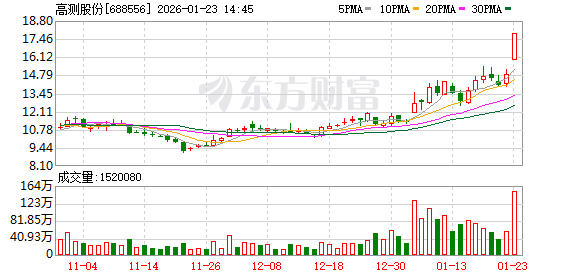
高测股份涨停 26只科创板股涨超10%
Zheng Quan Shi Bao Wang· 2026-01-23 06:44
资金面上,高测股份上一交易日主力资金净流入4543.60万元,近5日净流出3570.05万元。 融资融券数据显示,该股最新(1月22日)两融余额为6.06亿元,其中,融资余额为6.05亿元,较上一个 交易日减少3378.35万元,降幅为5.29%;融券余额为102.75万元,较上一个交易日增加6.02万元,增幅 为6.22%。近10日两融余额合计减少1.16亿元,降幅为16.09%,其间融资余额下降16.14%,融券余额增 长24.36%。(数据宝) (文章来源:证券时报网) 1月23日盘中科创板股高测股份涨停,截至14:22,股价报17.84元,成交24.86亿元,换手率17.75%,振 幅13.32%。 科创板个股中,截至发稿上涨的共有465只,涨幅在10%以上的共有26只,除高测股份之外,涨停的还 有瑞华泰、拉普拉斯、臻镭科技等,下跌的有129只,跌幅较大的有海天瑞声、南亚新材、航亚科技, 分别下跌8.08%、6.70%、6.68%。 ...
耀看光伏第13期:太空光伏:万亿蓝海市场,产业趋势明确
Changjiang Securities· 2026-01-23 02:33
Investment Rating - The report maintains a "Positive" investment rating for the space photovoltaic industry [3]. Core Insights - The space photovoltaic market is projected to reach a trillion-dollar scale, driven by the increasing demand from low Earth orbit (LEO) satellites and advancements in photovoltaic technology [8][41]. - The report highlights the transition from traditional gallium arsenide (GaAs) solar cells to silicon and perovskite technologies, indicating a shift towards cost-effective solutions in space applications [55][64]. Summary by Sections 1. Growth Drivers - The demand for space photovoltaics is significantly driven by communication and computing satellites, with LEO satellites becoming the mainstream development direction due to their lower costs and shorter development cycles [12]. - The Starlink project is expected to generate substantial revenue, with predictions of over 9 million customers by 2025, covering more than 155 countries [17]. 2. Technology Trends - GaAs multi-junction solar cells are currently the mainstream technology for space applications, achieving efficiencies over 30% [45]. - The report anticipates that silicon will become the next-generation technology, while perovskite is expected to emerge as the ultimate solution due to its high power-to-weight ratio and lower production costs [64]. 3. Material Innovations - The satellite power system consists of three main components: power generation units (solar wings), energy storage units (lithium-ion batteries), and control units [71]. - Flexible solar wings are gaining traction, with advancements in materials leading to the development of ultra-thin glass (UTG) and polyimide (PI) films for better performance in harsh space environments [81][84]. 4. Market Potential - The report estimates that the market space for low Earth orbit satellite photovoltaic systems could reach 275 billion yuan, while the market for space computing could exceed 1 trillion yuan by 2030 [41]. - The anticipated peak in satellite launches from 2030 to 2035 is expected to further drive the demand for space photovoltaics, with projections indicating over 18,000 satellites launched annually [23]. 5. Competitive Landscape - The report outlines the competitive landscape, highlighting key players in the space photovoltaic sector and their respective advancements in technology and materials [88].


光伏设备板块高开,钧达股份、双良节能涨停
2 1 Shi Ji Jing Ji Bao Dao· 2026-01-23 01:43
南方财经1月23日电,光伏设备板块高开,钧达股份、双良节能涨停,迈为股份涨超10%,奥特维、连 城数控、高测股份、琏升科技、拉普拉斯跟涨。 ...

商业航天行业系列五:太空光伏:逐日天穹,叩问千亿星辰市场
GF SECURITIES· 2026-01-21 06:27
Investment Rating - The industry investment rating is "Buy" [2] Core Insights - The report highlights that the development of reusable rocket technology has significantly reduced launch costs, creating a golden opportunity for space photovoltaics [5] - The competition in commercial space between China and the US is accelerating, with low Earth orbit (LEO) communication satellites driving short-term demand for solar wings [5] - AI giants are increasingly recognizing the potential of deploying computing power in space, which is expected to benefit space photovoltaics [5] - The report emphasizes the importance of gallium arsenide as the current mainstream technology for space photovoltaics, while also highlighting the potential of silicon-based batteries and perovskite technology in the long term [5] - Investment recommendations include focusing on HJT/perovskite equipment suppliers and companies covering various segments of the photovoltaic supply chain [5] Summary by Sections 1. Space Photovoltaics: The Main Energy Source in Space - Space photovoltaics convert solar energy into electrical energy in space environments, which are harsher than ground conditions [12][13] - Solar panels are the core component of spacecraft power systems, essential for converting solar energy into the electricity needed for satellite operations [12][13] 2. Downstream Scenarios: Commercial Space Boom Leading to a Trillion-Dollar Market - The report notes a significant increase in global satellite launches since 2020, with a projected 4000 launches by 2025, driven by reduced costs from reusable rockets [38] - The US currently dominates the satellite market, with 11,688 satellites in orbit, while China and Russia lag behind [38] - The competition for orbital resources is intensifying, with both the US and China making substantial satellite deployment plans [44][45] 3. Technology Pathways: Gallium Arsenide as the Current Mainstream, with Potential for Silicon-Based Batteries and Perovskite Breakthroughs - Gallium arsenide solar cells are currently the most efficient option for space applications, with over 30% efficiency [65] - The report discusses the evolution of solar cell technologies, including silicon and multi-junction cells, and the potential for future advancements in perovskite technology [65] 4. Investment Recommendations: Focus on HJT/Perovskite Core Equipment Suppliers - Companies such as Maiwei, Aotwei, and Jiejia Weichuang are highlighted as key players in the HJT/perovskite equipment supply chain [5] - The report suggests monitoring companies that cover the entire photovoltaic supply chain, including polysilicon, batteries, and modules [5]
