Envicool(002837)

Search documents
超节点:光、液冷、供电、芯片的全面升级
KAIYUAN SECURITIES· 2026-01-28 11:15
Investment Rating - The industry investment rating is maintained as "Positive" [2] Core Insights - The report emphasizes the transition to the "SuperNode" era in computing infrastructure, driven by the increasing computational demands of AI models, which are evolving from pre-training to multi-faceted scaling [14][17] - The SuperNode architecture relies on enhanced interconnectivity, integrating multiple computing chips into a logical "super GPU/ASIC" to overcome the limitations of traditional single-server setups [39] - The report identifies three main investment themes: "Network End + AIDC + Computing End" and four key sectors: "Optical + Liquid Cooling + Power Supply + Chips" [7] Summary by Sections 1. Transition to SuperNode Era - The evolution of AI models necessitates a shift in computational infrastructure, with demands for higher performance and efficiency [14] - The report highlights the rapid growth in model parameters and training data, indicating a need for advanced computational clusters [14] 2. SuperNode Architecture - SuperNode clusters are defined as large-scale GPU/ASIC systems that expand from thousands to millions of computational units, utilizing both Scale Up and Scale Out strategies [17] - The architecture includes components such as computing nodes, switch trays, and power supply units, which are essential for the operation of SuperNode systems [80] 3. Upgrades in Key Components - The report notes that the increasing penetration of SuperNode servers will drive demand for high-power supplies, liquid cooling systems, and optical communication technologies [5][80] - Specific companies are highlighted as beneficiaries in the sectors of optical modules, liquid cooling, server power supplies, and exchange chips [7] 4. Domestic SuperNode Development - The report discusses the progress of domestic SuperNode solutions, particularly Huawei's Atlas 900 A3 and Atlas 960, which are designed to enhance the performance of domestic AI clusters [6][112] - The performance of domestic chips is shown to improve significantly when deployed in SuperNode configurations, effectively compensating for individual chip limitations [112]






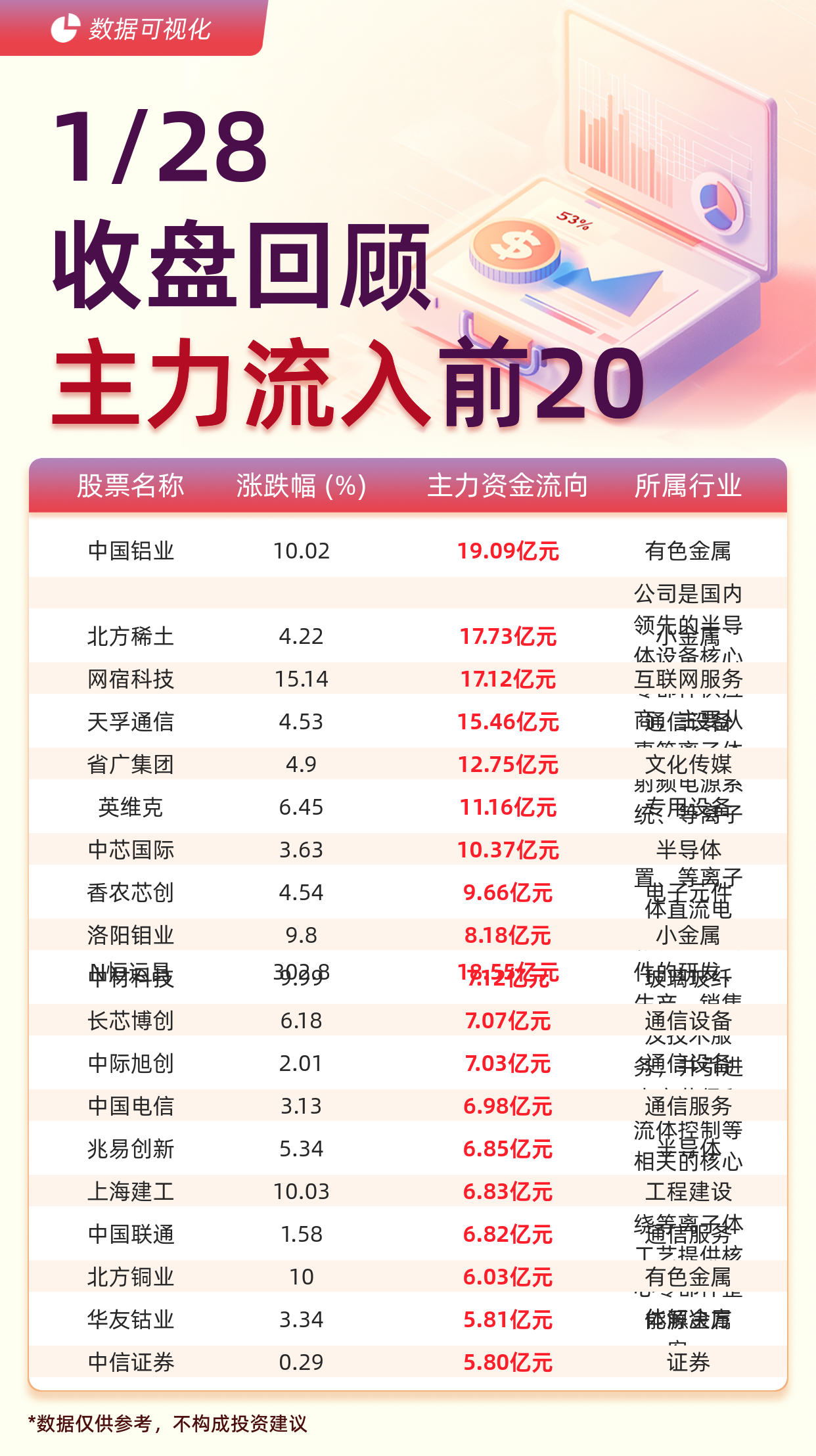
主力资金流入前20:中国铝业流入19.09亿元、N恒运昌流入18.55亿元
Jin Rong Jie· 2026-01-28 07:25
Core Viewpoint - The data indicates significant capital inflows into various stocks, highlighting potential investment opportunities in the market. Group 1: Stock Performance and Capital Inflows - China Aluminum (中国铝业) saw a capital inflow of 1.909 billion, with a price increase of 10.02% [1][2] - Northern Rare Earth (北方稀土) experienced a capital inflow of 1.773 billion, with a price increase of 4.22% [1][2] - Wangsu Science & Technology (网宿科技) had a capital inflow of 1.712 billion, with a notable price increase of 15.14% [1][2] - Tianfu Communication (天孚通信) recorded a capital inflow of 1.546 billion, with a price increase of 4.53% [1][2] - Province Advertising Group (省广集团) attracted a capital inflow of 1.275 billion, with a price increase of 4.9% [1][2] Group 2: Additional Notable Stocks - Invech (英维克) had a capital inflow of 1.116 billion, with a price increase of 6.45% [1][2] - SMIC (中芯国际) saw a capital inflow of 1.037 billion, with a price increase of 3.63% [1][2] - Shannon Chip Creation (香农芯创) experienced a capital inflow of 966 million, with a price increase of 4.54% [1][2] - Luoyang Molybdenum (洛阳钼业) had a capital inflow of 818 million, with a price increase of 9.8% [1][2] Group 3: Other Stocks with Capital Inflows - Changxin Bochuang (长芯博创) recorded a capital inflow of 707 million, with a price increase of 6.18% [3] - Zhongji Xuchuang (中际旭创) had a capital inflow of 703 million, with a price increase of 2.01% [3] - China Telecom (中国电信) saw a capital inflow of 698 million, with a price increase of 3.13% [3] - Zhaoyi Innovation (兆易创新) attracted a capital inflow of 685 million, with a price increase of 5.34% [3] - Shanghai Construction (上海建工) had a capital inflow of 683 million, with a price increase of 10.03% [3] - China Unicom (中国联通) recorded a capital inflow of 682 million, with a price increase of 1.58% [3] - Northern Copper (北方铜业) saw a capital inflow of 603 million, with a price increase of 10% [3] - Huayou Cobalt (华友钴业) had a capital inflow of 581 million, with a price increase of 3.34% [3] - CITIC Securities (中信证券) recorded a capital inflow of 580 million, with a price increase of 0.29% [3]



“冷却”之于数据中心为何如此重要?
高工锂电· 2026-01-27 11:21
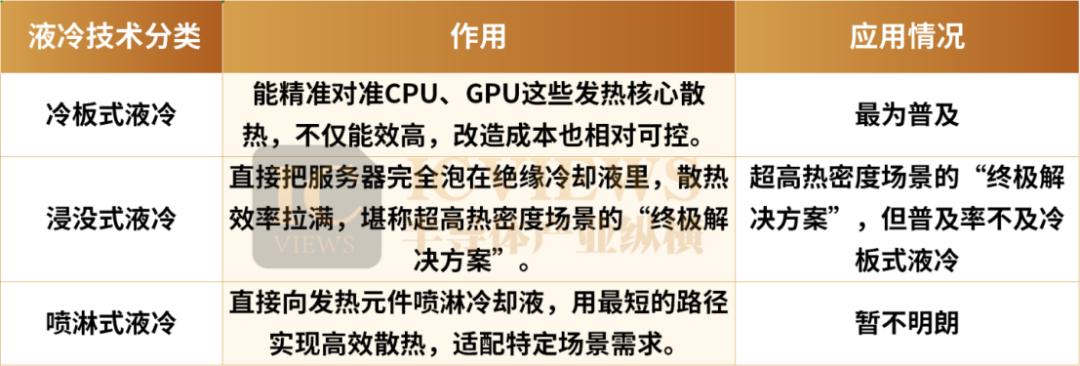
Core Viewpoint - Efficient cooling is an effective approach to reduce the Power Usage Effectiveness (PUE) of data centers [2] Group 1: Energy Consumption and Cooling - The energy consumption of data centers is closely related to cooling, as stable electricity is required to maintain efficient chip operations, and heat generation must be effectively dissipated to prevent performance degradation [3] - PUE is a key indicator of data center operational efficiency, calculated as total energy consumption divided by IT equipment energy consumption, with a target of PUE < 1.3, ideally approaching 1.2 [3] - Cooling is often a major energy consumer in data centers, with early developments seeing PUE values exceeding 2, primarily due to cooling processes [4] Group 2: Paths to Reduce PUE - There are two main paths to reduce PUE: utilizing external cooling resources and implementing efficient internal cooling systems [5] - External cooling can be achieved through natural cooling from outdoor air in cold climates, as demonstrated by Kolos's data center in Norway, which aims to reduce energy costs by 60% due to its cold climate and hydropower resources [6] - China's Tibet Ningxuan data center is noted as the highest elevation data center globally, and there are proposals to build data centers in space to enhance cooling efficiency [7] Group 3: Internal Cooling Solutions - The current mainstream internal cooling solutions are air cooling and liquid cooling [8] - Liquid cooling is gaining traction as the next-generation mainstream solution, with its penetration rate increasing from 10% to 30% due to its superior heat dissipation capabilities [9] - The main types of liquid cooling technologies include cold plate liquid cooling, immersion cooling, and spray cooling, with companies specializing in data center cooling and traditional HVAC manufacturers involved in this space [10] Group 4: Future Trends - As AI demands continue to grow, liquid cooling is expected to replace air cooling as the primary method for reducing PUE in data centers [12]



机械行业月报:持续推荐人形机器人、AIDC配套设备,关注低位滞涨板块的轮动机遇
Zhongyuan Securities· 2026-01-27 08:24
Investment Rating - The report maintains an "Outperform" rating for the mechanical industry, indicating a positive outlook compared to the market [1]. Core Insights - The mechanical sector has shown strong performance, with a 9.68% increase in January, outperforming the CSI 300 index by 8.02 percentage points, ranking 8th among 30 major industries [3][10]. - Key sub-sectors such as photovoltaic equipment, 3C equipment, laser processing equipment, oil and gas equipment, and semiconductor equipment have experienced significant growth, with increases of 44.52%, 36.32%, 21.48%, 20.92%, and 20.17% respectively [3][10]. - The report suggests focusing on traditional engineering machinery with stable earnings and high dividend yields, as well as leading companies in shipbuilding and mining metallurgy equipment [4]. Summary by Sections 1. Mechanical Sector Performance - The mechanical sector's performance in January 2026 was robust, with a 9.68% increase, significantly outpacing the CSI 300 index [3][10]. - The sector's valuation is currently at a relatively high level, with the industry P/E ratio at 43.4 times, placing it in the 78.4th percentile of the past decade [15][19]. 2. Engineering Machinery - The engineering machinery sector is expected to see a recovery in 2026, driven by equipment replacement cycles and increasing domestic demand [20][41]. - Sales of excavators and loaders showed strong growth in December 2025, with excavator sales up 19.2% and loader sales up 30% year-on-year [20][28]. 3. Robotics - The industrial robotics sector continues to recover, with a 14.7% year-on-year increase in December 2025 production [42]. - The humanoid robot industry is rapidly developing, with over 140 domestic companies and significant production expected in 2025 [42][45]. 4. Shipbuilding - The shipbuilding sector is stabilizing, with new ship price indices showing an upward trend and ongoing recovery in profitability for shipbuilding companies [50].





机械行业月报:持续推荐人形机器人、AIDC配套设备,关注低位滞涨板块的轮动机遇-20260127
Zhongyuan Securities· 2026-01-27 07:50
Investment Rating - The report maintains an "Outperform" rating for the mechanical industry, relative to the Shanghai and Shenzhen 300 Index [1]. Core Insights - The mechanical sector has shown a strong performance, with a 9.68% increase in January, outperforming the Shanghai and Shenzhen 300 Index by 8.02 percentage points [3][10]. - Key sub-sectors such as photovoltaic equipment, 3C equipment, laser processing equipment, oil and gas equipment, and semiconductor equipment have seen significant gains, with increases of 44.52%, 36.32%, 21.48%, 20.92%, and 20.17% respectively [3][10]. - The report suggests focusing on traditional engineering machinery with stable earnings and high dividend yields, as well as on humanoid robots and AIDC supporting equipment [4]. Summary by Sections 1. Mechanical Sector Performance - The mechanical sector's performance in January 2026 was strong, with a 9.68% increase, ranking 8th among 30 major industries [3][10]. - The report highlights the recent upward trend in sub-sectors, particularly in photovoltaic and semiconductor equipment, which had previously been lagging [4][10]. 2. Engineering Machinery - The report indicates a positive outlook for the engineering machinery sector in 2026, driven by a recovery in demand and an ongoing equipment update cycle [20][41]. - Key statistics include a 19.2% year-on-year increase in excavator sales in December 2025, with total sales for the year reaching 235,257 units, a 17% increase [20][27]. - The report recommends focusing on leading companies in the engineering machinery sector, such as SANY Heavy Industry and XCMG [41]. 3. Robotics - The industrial robotics sector continues to recover, with a 14.7% year-on-year increase in production in December 2025, totaling 90,116 units [42][49]. - The humanoid robot industry is rapidly developing, with over 140 companies and more than 330 products launched in 2025, marking it as a year of mass production [42][44]. - The report emphasizes investment opportunities in leading companies and core component suppliers within the robotics sector [49]. 4. Shipbuilding - The shipbuilding sector shows signs of recovery, with new ship price indices stabilizing and ongoing profitability improvements for shipbuilding companies [50]. - In the first three quarters of 2025, China's shipbuilding output increased by 6.0%, maintaining a leading position globally [50].
英伟达AI服务器液冷:大陆厂商的破晓之路与星辰大海
Quan Jing Wang· 2026-01-27 06:18
Core Insights - The article emphasizes the transformation of liquid cooling technology from a niche to a necessity in the AI computing era, driven by advancements in AI chip power consumption and the need for efficient cooling solutions [1] - It highlights the shift from reliance on foreign technology to a robust domestic industry capable of competing on a global scale, marking a significant milestone in China's manufacturing capabilities [1] Group 1: Technological Breakthroughs - The iteration of liquid cooling technology is described as a brutal elimination race, with domestic manufacturers overcoming technical barriers and moving from a follower to a competitor position [2] - Domestic companies like Readore and Envicool have achieved significant milestones by obtaining NVIDIA certification for critical components, indicating a shift in market dynamics and the potential for capturing substantial market share [3] Group 2: Comprehensive Industry Development - The article discusses the collaborative efforts across the entire liquid cooling supply chain, with domestic players filling gaps left by foreign companies, particularly in the production of cooling fluids and system components [4] - The establishment of a complete domestic liquid cooling ecosystem is highlighted, which is crucial for resisting foreign competition and ensuring self-sufficiency [4] Group 3: Market Opportunities - The current market landscape shows that cold plate liquid cooling holds a 65% market share, making it an ideal entry point for domestic manufacturers amid supportive government policies and market demand [5] - The rapid growth of the Chinese liquid cooling server market, projected to exceed $3.39 billion by 2025, provides a solid foundation for domestic companies to expand their market presence [8] Group 4: Competitive Landscape - The article notes a significant shift in the competitive landscape, with domestic manufacturers moving from being mere subcontractors to becoming key players in the global liquid cooling supply chain [6] - The entry of domestic brands into high-profile projects, such as Google's TPU solution, signifies a transition from passive participation to active competition for core market shares [7] Group 5: Future Prospects - The global liquid cooling market is expected to reach $14 billion by 2026, with a compound annual growth rate of nearly 50%, presenting a substantial opportunity for domestic manufacturers to establish themselves on the global stage [10] - The article concludes that the journey of domestic manufacturers is just beginning, with ongoing advancements in technology and the potential for expansion into new sectors, reinforcing the notion that domestic innovation is key to future success [10]


数据中心的下一个胜负手:跳出AI芯片
3 6 Ke· 2026-01-25 06:05
Core Insights - The current reality of AI chips in data centers reveals that significant investments may yield less than 60% of their theoretical value due to power consumption issues [1] - The expansion of computing power is outpacing electricity supply, reshaping the development logic of the data center industry [1] Group 1: Power Consumption Challenges - The disconnection between AI chip technology and actual data center usage is a core issue leading to high power consumption [2] - Many AI chips focus on peak computing power rather than balancing efficiency and power usage, resulting in wasted energy [2] - The rapid increase in computing demand, with a growth rate of 74.1% in 2024, exacerbates the power consumption problem, turning data centers into "power black holes" [3] Group 2: Cooling Technology Innovations - Data centers rely heavily on cooling systems, which account for over 38% of total power consumption, with some cases exceeding 50% [4] - Liquid cooling technology is emerging as a key solution, with three main types: cold plate liquid cooling, immersion cooling, and spray cooling [5][6] - Despite being the most efficient, liquid cooling technology has a low adoption rate of about 10% in the industry [7] Group 3: Market Dynamics and Competitive Landscape - Companies like NVIDIA and AMD are developing customized liquid cooling solutions to enhance cooling efficiency and adapt to high-density computing environments [8] - In China, Shuguang Shuchuang leads the liquid cooling infrastructure market with a 56% share, providing solutions to major internet firms [9] - The overall manufacturing advantage of China is becoming evident in the transformation of data centers, with the manufacturing sector's value surpassing that of the US [10][11][12] Group 4: Future Directions - The future of data centers will prioritize intelligent design over sheer size, focusing on efficient power usage and effective cooling solutions [13]


通信行业2026年度投资策略:聚焦AI:算力降本向光而行,应用落地网络先行
Guolian Minsheng Securities· 2026-01-23 12:20
Group 1 - The core viewpoint of the report emphasizes that the demand for AI computing power will continue to grow and diversify in 2026, extending from data centers to network edges and even internal terminals [8][13][27] - The report highlights the significant capital expenditure (Capex) growth driven by business revenue, with major cloud service providers like Google, Microsoft, and Amazon showing consistent revenue growth exceeding 20% year-on-year [27][31][35] - The report identifies the increasing importance of silicon photonics technology, particularly the 1.6T optical module, which is expected to maintain accelerated growth and enhance the global market share of domestic optical chips and devices [7][54][70] Group 2 - The report discusses the emergence of new technologies such as Scale-UP supernodes and their impact on optical link demand, indicating that these technologies will drive additional link requirements in 2026 [7][9][66] - It notes that the AI infrastructure is experiencing a high level of prosperity, with significant investments in data centers and AI capabilities expected to continue, particularly in the U.S. [47][49][53] - The report anticipates that the integration of silicon photonics will significantly increase its market penetration, projecting that by 2026, over half of optical module sales will come from silicon photonics solutions [70][75]


数据复盘丨钙钛矿电池、商业航天等概念走强 191股获主力资金净流入超1亿元




Zheng Quan Shi Bao Wang· 2026-01-23 09:56
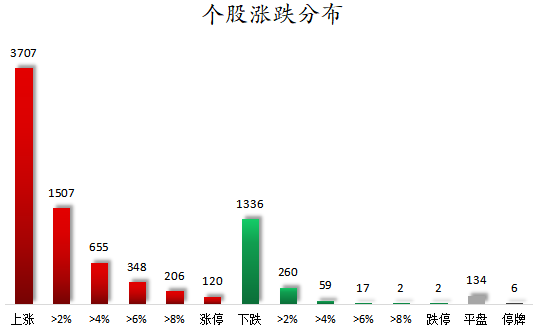
Market Overview - The Shanghai Composite Index closed at 4136.16 points, up 0.33%, with a trading volume of 1.3369 trillion yuan. The Shenzhen Component Index rose 0.79% to 14439.66 points, with a trading volume of 1.7484 trillion yuan. The ChiNext Index increased by 0.63% to 3349.50 points, with a trading volume of 822.63 billion yuan. The STAR Market 50 Index closed at 1553.71 points, up 0.78%, with a trading volume of 110.8 billion yuan. The total trading volume of both markets was 3.0853 trillion yuan, an increase of 393.5 billion yuan compared to the previous trading day [1]. Sector Performance - The market saw more sectors gaining than losing, with notable increases in power equipment, non-ferrous metals, precious metals, defense and military, steel, media, computer, environmental protection, and textile and apparel sectors. Concepts such as perovskite batteries, commercial aerospace, satellite internet, sapphire, lithium mining, cultivated diamonds, small metals, gold, and interactive short dramas were particularly active. In contrast, sectors like communication, insurance, banking, coal, and home appliances experienced declines [1]. Individual Stock Performance - A total of 3707 stocks rose, while 1336 stocks fell, with 134 stocks remaining flat and 6 stocks suspended. Excluding newly listed stocks, there were 120 stocks hitting the daily limit up and 2 stocks hitting the limit down [2]. - Among the stocks that hit the daily limit up, 23 stocks had consecutive limit-up days of 2 or more, with Fenglong Co., Ltd. leading with 18 consecutive limit-ups [3]. Capital Flow - The net capital outflow from the two markets was 4.167 billion yuan, with the ChiNext seeing a net inflow of 1.515 billion yuan. The CSI 300 index experienced a net outflow of 1.005 billion yuan, while the STAR Market saw a net outflow of 3.171 billion yuan. Out of 31 sectors, 13 sectors had net capital inflows, with the power equipment sector leading with a net inflow of 8.977 billion yuan [4][6]. - The top sectors with net inflows included non-ferrous metals (4.552 billion yuan), media (2.173 billion yuan), and defense and military (2.157 billion yuan). Conversely, the communication sector had the highest net outflow of 7.992 billion yuan, followed by electronics (6.350 billion yuan) and machinery (5.077 billion yuan) [4][6]. Notable Stocks - 191 stocks had net capital inflows exceeding 1 billion yuan, with Jin Feng Technology receiving the highest net inflow of 1.861 billion yuan. Other notable stocks included Lens Technology (1.594 billion yuan), Qian Zhao Optoelectronics (1.267 billion yuan), and Xian Dao Intelligent (1.217 billion yuan) [7][8]. - Conversely, 116 stocks experienced net capital outflows exceeding 1 billion yuan, with Xin Yi Sheng leading with a net outflow of 3.471 billion yuan, followed by Zhong Ji Xu Chuang (3.103 billion yuan) and Li Ou Shares (2.604 billion yuan) [10][11]. Institutional Activity - Institutional investors had a net selling of approximately 1.02 billion yuan, with 22 stocks seeing net purchases and 14 stocks net sales. Jin Feng Technology was the most purchased stock by institutions, with a net purchase amount of approximately 266 million yuan [13][14].
中国工业 - 2026 年展望:复苏持续-China Industrials-2026 Outlook – Recovery Continues
2026-01-22 02:44
Summary of China Industrials 2026 Outlook Industry Overview - **Industry**: China Industrials - **Core Themes**: AI technology diffusion, industrial upgrades, and globalization are central to the industrial sector's recovery in 2026. The government is focused on enhancing productivity through equipment upgrades, particularly in high-end equipment [1][4]. Key Insights - **Industrial Cycle**: The industrial cycle is characterized by strong global demand for capital goods, driven by AI technology applications and supply chain security concerns. China's trend of localizing high-end equipment remains strong, with specific sectors like data centers, electronics, and robotics expected to show growth, while processing markets may experience muted demand [3][10]. - **AI Applications**: 2026 is anticipated to mark the beginning of significant capital expenditure on physical AI, which will benefit automation and robotics companies. The government is supporting this through initiatives aimed at increasing the deployment of AI-powered robotics [4][11][12]. - **Localization and Supply Chain**: The localization rates for automation and industrial robots are projected to rise, with expectations of reaching 60-70% by 2030. This trend is expected to benefit companies involved in automation and precision components [21][22][23]. Market Dynamics - **Overseas Expansion**: Equipment exports from China have grown significantly, outpacing overall export growth. Companies are motivated to expand into international markets to capture larger total addressable markets (TAM) and improve margins [24][25]. - **Margin Expansion**: The overall net margin for China's industrials is expected to increase from approximately 13.0% in 2025 to around 14.6% in 2027, driven by overseas growth and advancements in AI technology [26][27]. Stock Recommendations - **Preferred Stocks**: The report highlights several stocks that are expected to benefit from cyclical strength and structural tailwinds, including: - **Geekplus (2590.HK)**: OW - **Sany Heavy (600031.SS)**: OW - **Leaderdrive (688017.SS)**: OW - **Han's Laser (002008.SZ)**: OW - **Inovance (300124.SZ)**: OW - **Hengli (601100.SS)**: OW - **Wuxi Lead (300450.SZ)**: OW - **Envicool (002837.SZ)**: OW - **Underweight Stocks**: Stocks such as **CSCEC (601668.SS)**, **CRRC-H (1766.HK)**, and **Maxwell (300751.SZ)** are rated as underweight due to various market challenges [5][8][46]. Additional Considerations - **Geopolitical Factors**: The geopolitical landscape is influencing supply chain security, which is a critical factor for capital goods demand globally [3]. - **Investment in AI**: The anticipated investment in AI infrastructure is expected to redefine smart manufacturing and create new opportunities within the industrial sector [10][11]. - **Sector Performance**: The report indicates that most industrial stocks are trading at or above their historical five-year average P/E ratios, reflecting a positive outlook for continuous upgrades and AI-related demand [26][38]. This comprehensive analysis provides insights into the expected recovery and growth opportunities within the China Industrials sector for 2026, highlighting key themes, market dynamics, and stock recommendations.