BABA(BABA)

Search documents
《寻找白龙马》2025年度AI投融资回顾
Sou Hu Cai Jing· 2026-02-13 12:03
Core Insights - In 2025, China's artificial intelligence (AI) sector experienced a significant transformation characterized by a shift from "burning money" to a focus on technological barriers, commercialization pathways, and supply chain security, driven by macroeconomic and geopolitical influences [2] - AI financing surged from 22.206 billion yuan in 2022 to 73.399 billion yuan in 2025, with its market share increasing from 2.65% to 10.86%, making it the only industry to show continuous growth over three years [2] - The embodiment intelligence sector saw explosive growth in financing, rising from 6.657 billion yuan in 2024 to 47.371 billion yuan in 2025, marking a year-on-year increase of 612% [2] Investment Landscape - The number of investment institutions in the AI sector reached 1,336, with notable players like Sequoia China, CICC Capital, Hillhouse Capital, and IDG Capital among the top investors [3] - The investment landscape is predominantly market-driven, contrasting with the state-owned institutions that dominate other sectors [3] Major Financing Events and Sector Analysis - The foundational model sector is consolidating, with significant investments directed towards established players like Moonshot AI, which raised $500 million at a valuation of $4.3 billion [5] - Domestic AI chips and computing power have become focal points for investment, with companies like Wallen Technology and Moore Threads receiving substantial backing [6][7] - Vertical AI applications, particularly in healthcare and enterprise automation, are gaining traction, with significant funding directed towards companies that demonstrate clear revenue and cost-saving capabilities [9] Trends in AI Investment - Investment strategies are shifting towards established companies with existing products and revenue, making early-stage financing more challenging [13] - State-owned and industrial capital are increasingly influential in the AI hard tech sector, focusing on both financial returns and industrial chain security [14] - The valuation metrics are evolving, with a greater emphasis on revenue and gross margins rather than user scale [15] - Opportunities are emerging in AI applications that integrate with traditional industries, such as manufacturing and finance, rather than standalone AI platforms [16] - The IPO landscape remains cautious, with many companies opting for mergers or acquisitions instead of pursuing public listings due to stringent regulatory requirements [17] Summary - The year 2025 marks a pivotal moment for China's AI industry, transitioning from a phase of intense competition in model development to a focus on "hard power" and practical applications [18]



携程、高德、同程、飞猪、航旅纵横、去哪儿,被集体约谈
2 1 Shi Ji Jing Ji Bao Dao· 2026-02-13 11:55
据央视新闻,近日,金融监管总局联合市场监管总局、中国人民银行,对携程旅行、高德地图、同程旅 行、飞猪旅行、航旅纵横、去哪儿旅行等六家出行平台企业进行约谈。针对上述企业在与金融机构合作 开展借贷业务中存在的问题,要求其规范营销行为,不得使用误导性宣传用语;清晰披露贷款机构名称 及信贷产品信息,并向借款人明确提示理性借贷;畅通客户投诉渠道,及时回应并妥善处理消费纠纷, 着力提升服务品质,切实保障消费者合法权益。 (文章来源:21世纪经济报道) ...

金融监管总局、央行等出手,携程旅行、高德地图、同程旅行、飞猪旅行、航旅纵横、去哪儿旅行,被约谈
Zhong Guo Ji Jin Bao· 2026-02-13 11:52
金融监管总局联合市场监管总局、中国人民银行约谈六家出行平台企业 近日,金融监管总局联合市场监管总局、中国人民银行,对携程旅行、高德地图、同程旅行、飞猪旅行、航旅纵横、去哪儿旅行等六家出行平 台企业进行约谈。针对上述企业在与金融机构合作开展借贷业务中存在的问题,要求其规范营销行为,不得使用误导性宣传用语;清晰披露贷 款机构名称及信贷产品信息,并向借款人明确提示理性借贷;畅通客户投诉渠道,及时回应并妥善处理消费纠纷 【下载黑猫投诉客户端】, 着力提升服务品质,切实保障消费者合法权益。 ...
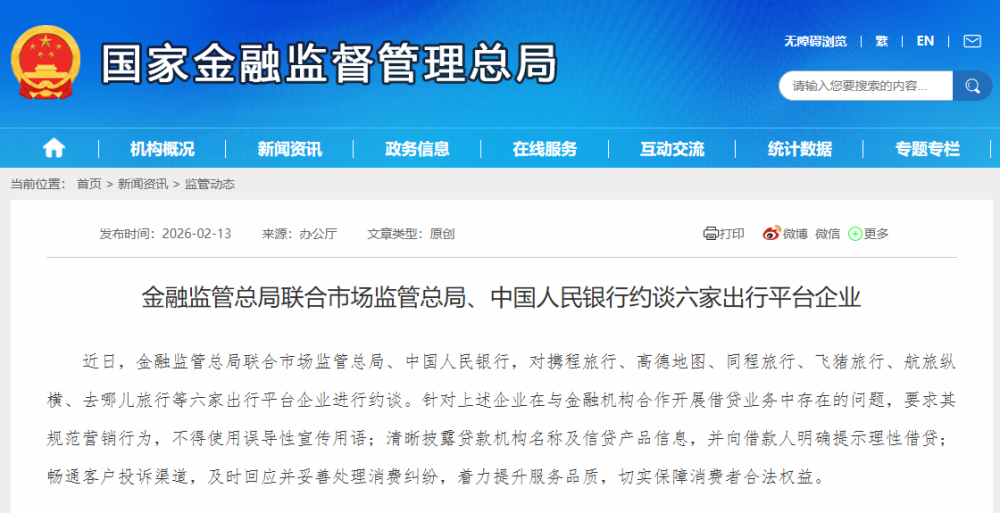
金融监管总局联合市场监管总局、央行约谈六家出行平台企业:包括携程、高德、同程、飞猪、航旅纵横、去哪儿
Xin Lang Cai Jing· 2026-02-13 11:02
炒股就看金麒麟分析师研报,权威,专业,及时,全面,助您挖掘潜力主题机会! 金融监管总局联合市场监管总局、中国人民银行约谈六家出行平台企业 来源:金融监管总局 炒股就看金麒麟分析师研报,权威,专业,及时,全面,助您挖掘潜力主题机会! 金融监管总局联合市场监管总局、中国人民银行约谈六家出行平台企业 来源:金融监管总局 近日,金融监管总局联合市场监管总局、中国人民银行,对携程旅行、高德地图、同程旅行、飞猪旅 行、航旅纵横、去哪儿旅行等六家出行平台企业进行约谈。针对上述企业在与金融机构合作开展借贷业 务中存在的问题,要求其规范营销行为,不得使用误导性宣传用语;清晰披露贷款机构名称及信贷产品 信息,并向借款人明确提示理性借贷;畅通客户投诉渠道,及时回应并妥善处理消费纠纷 【下载黑猫 投诉客户端】,着力提升服务品质,切实保障消费者合法权益。 新浪声明:此消息系转载自新浪合作媒体,新浪网登载此文出于传递更多信息之目的,并不意味着赞同 其观点或证实其描述。文章内容仅供参考,不构成投资建议。投资者据此操作,风险自担。 责任编辑:常福强 近日,金融监管总局联合市场监管总局、中国人民银行,对携程旅行、高德地图、同程旅行、飞猪旅 行 ...
月活破1.2亿!AI教育频繁出错,学生被错误答案误导谁来负责?
Sou Hu Cai Jing· 2026-02-13 10:53
Core Insights - The education sector is experiencing renewed interest from major tech companies, with ByteDance and Alibaba launching AI-driven educational tools to capture market share [1][2] - The AI education market in China has seen significant growth, with monthly active users of AI education apps surpassing 120 million, a 340% year-on-year increase as of Q3 2025 [1] - The competition is primarily between tech giants leveraging their existing user bases and traditional education companies with established research capabilities [2] Group 1: Market Dynamics - The AI education landscape is dominated by three main players: tech giants like ByteDance and Alibaba focusing on rapid iteration and user acquisition, traditional education firms like Yuanfudao and Zuoyebang enhancing their services with AI, and smaller startups targeting niche markets [2] - Major companies are pursuing three business lines: AI problem-solving tools, AI teaching assistants for schools, and AI-driven personalized learning, with varying degrees of market maturity and profitability [3][4] Group 2: Competitive Advantages - Major tech companies benefit from the reuse of large model technologies, existing user traffic, and lower development costs due to economies of scale [4] - However, their fast-paced, traffic-driven strategies may conflict with the slower, more methodical nature of the education sector, potentially hindering long-term success [4] Group 3: Product Differentiation - There are notable differences in user experience among AI education products, with tech giants offering integrated AI assistants that streamline user interaction, while traditional education apps maintain a more segmented approach [6][7] - The interaction styles of AI explanations vary significantly, with tech companies focusing on real-time analysis and engagement, contrasting with traditional firms that rely on pre-existing content and less interactive formats [10][12] Group 4: Challenges and Future Outlook - Major tech companies face challenges in educational content development due to a lack of deep educational research compared to traditional players, which may affect the quality and trustworthiness of their offerings [14] - The sustainability of the business model for tech giants remains uncertain, as they currently offer AI features for free without clear monetization strategies, raising questions about long-term profitability [15][16] - Future opportunities may lie in targeting specific segments such as B2B solutions for schools and adult education, where demand is stable and user willingness to pay is higher [16]


阿里巴巴申请公布大型语言模型训练相关专利
Qi Cha Cha· 2026-02-13 09:53
专利摘要显示,本发明实施例中,通过获取多个初始采样数据,初始采样数据包括图像、图像的辅助文 本信息以及图像的标准审核结果;根据每个初始采用数据生成思维链数据,并确定思维链数据集合;根 据思维链数据集合对基础大型语言模型进行全量微调,确定中间大型语言模型;根据中间大型语言模型 以及多个所述初始采样数据,迭代生成多个中间思维链数据;进而根据预先设置的奖励函数,确定各所 述中间思维链数据的奖励数值;最后采用组相对策略优化算法GRPO对所述中间大型语言模型进行强化 学习,确定目标大型语言模型。通过上述方法,可以提高大型语言模型的可解释性和审核精度。 企查查APP显示,近日,阿里巴巴(中国)有限公司申请公布"一种基于思维链训练大型语言模型的方 法、装置和设备"专利。 (原标题:阿里巴巴申请公布大型语言模型训练相关专利) ...
美股中概股盘前涨跌互现,携程跌1%
Jin Rong Jie· 2026-02-13 09:20
Group 1 - The core viewpoint of the article indicates mixed performance among Chinese concept stocks in the US pre-market trading, with NIO showing a slight increase while Alibaba, JD.com, Ctrip, and Manbang experienced declines [1][2] Group 2 - NIO's stock increased by 0.6% in pre-market trading [1] - Alibaba's stock decreased by 0.2% in pre-market trading [1] - JD.com, Ctrip, and Manbang all saw a decline of 1% in their stock prices [1]


烧光800亿后,外卖佣金开始上涨
3 6 Ke· 2026-02-13 08:50
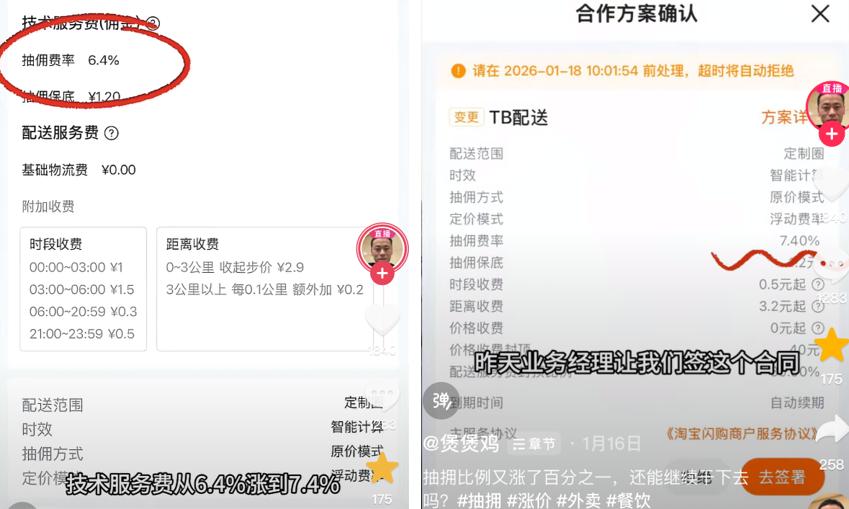
外卖大战一年后,行业硝烟仍在蔓延。 近日,多地外卖商家晒出与淘宝闪购的新合同,称平台佣金再度上涨。如河北某商家@煲煲鸡 在抖音发视频吐槽,新合同的抽佣比例从6.4%上涨至 7.4%。据他所言:"淘宝闪购要求商家必须在24小时之内签署,不签署将自动执行"。另有商家在其评论区指出:不签约商家的店铺将被直接下线。 评论区的消息未必属实,但涨佣的质疑声在贵州、广东、安徽、江苏等多地都有出现。以广东珠海为例,抽佣费率、抽佣保底、配送费都有不同程度的上 涨。 而在江苏宿迁、安徽淮北等地,商家自配送的抽佣费率都快接近20%了。 | > | 方案详情 | | | | --- | --- | --- | --- | | | | < | 方案详情 | | TB基础选推 | | | | | 平台推荐 | | TB基础 | | | 然后来中古品牌 同 第二次 | | 平台推荐 | | | | | 商户自行配测 | | | 收费方案 合同列表 | | 收费方案 合同列表 | | | 技术服务费(佣金) 2 | | | | | 优惠折扣50.00%(2025-11-23 至 2026-11-22)·生效中 | | 技术服务费(佣金) 2 ...

计算机行业月报:中国AI超级周开启,算力呈现提价趋势-20260213
Zhongyuan Securities· 2026-02-13 08:11
Investment Rating - The report maintains an "Outperform" rating for the industry, indicating a positive outlook compared to the broader market [3]. Core Insights - The AI application landscape is rapidly evolving, with significant advancements expected in 2026, which will impact traditional sectors such as software, film, and media [6]. - Domestic AI models are increasingly competitive with international counterparts, particularly in terms of performance and cost, suggesting a potential shift in the global AI model competition [6]. - The demand for AI inference is rising sharply, leading to increased pricing actions from model and cloud service providers, which benefits companies within the industry [6]. Industry Data Summary 1. Industry Data - The software industry in 2025 is projected to generate revenues of 15.48 trillion yuan, reflecting a year-on-year growth of 13.2% [12]. - The IC design sector is expected to grow by 18.9% in 2025, while cloud computing and big data services are anticipated to grow by 13.6% [19]. - The information technology service revenue is expected to increase by 14.7%, further solidifying its share of the overall software business revenue to 68.7% [27]. 2. AI Developments - Major AI models are being released, with significant competition expected in the market, particularly with the upcoming launches of models like DeepSeek-V4 and others in February 2026 [33]. - The pricing of domestic models is significantly lower than that of international models, enhancing their attractiveness for various applications [39]. - The user engagement for AI applications is increasing, with notable growth in active users for platforms like Gemini and ChatGPT [44]. 3. Domestic Market Dynamics - Domestic chip manufacturers are expected to benefit from restrictions on foreign competitors, with companies like Huawei and Dawning making significant advancements in AI computing capabilities [6]. - The report highlights the increasing capital expenditures from overseas tech firms, raising concerns about market dynamics [6]. - The MaaS (Model as a Service) market is projected to grow rapidly, with significant contributions from companies like ByteDance and Alibaba [56].



一财社论:红包过度营销过犹不及
第一财经· 2026-02-13 07:44
Core Viewpoint - The article discusses the rise of red envelope marketing as a unique strategy for market promotion and customer engagement during the Chinese New Year, particularly highlighting its effectiveness in the context of AI applications and consumer behavior [2][3]. Group 1: Red Envelope Marketing - Red envelope marketing has become a common phenomenon among companies during the Spring Festival, creating numerous successful business cases [3]. - The high recognition of red envelopes in China makes them a valuable marketing tool, helping to stimulate consumer activity and enhance the festive market atmosphere [2][4]. Group 2: Consumer Behavior and Market Dynamics - Red envelopes may not provide true consumer surplus but rather represent a discount from merchants or third parties, potentially confusing the relationship between consumers and products/services [4]. - Overuse of red envelope marketing can obscure market price signals and disrupt the genuine expression of consumer preferences, leading to unnecessary purchases [4]. Group 3: Innovation and Market Competition - As the market enters a new phase dominated by AI, the traditional first-mover advantage may become a burden, necessitating rapid innovation to meet changing consumer preferences [5]. - Resources allocated to red envelope promotions may be better spent on enhancing product quality and service scarcity, which could more effectively stimulate consumer activity [5].