LI AUTO(LI)

Search documents
Li Auto Inc. Sponsored ADR (LI) Is a Trending Stock: Facts to Know Before Betting on It
ZACKS· 2026-02-12 15:01
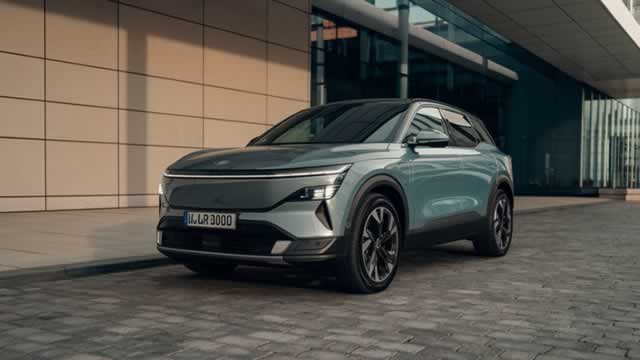
Core Viewpoint - Li Auto Inc. has shown a significant stock performance with an 18.4% return over the past month, contrasting with the S&P 500's -0.3% change, indicating potential investor interest and market dynamics affecting the stock's future performance [1] Earnings Estimates - Li Auto is expected to report earnings of $0.05 per share for the current quarter, reflecting a year-over-year decline of 90.4% [4] - The consensus earnings estimate for the current fiscal year stands at $0.14, indicating a decrease of 89.9% from the previous year, with no changes in estimates over the last 30 days [4] - For the next fiscal year, the consensus earnings estimate is $0.51, suggesting a substantial increase of 267.1% compared to the prior year, with estimates remaining unchanged [5] Revenue Projections - The consensus sales estimate for the current quarter is $4.24 billion, representing a year-over-year decline of 30.2% [10] - For the current fiscal year, the revenue estimates are $16.2 billion, indicating a decrease of 19.4%, while the next fiscal year's estimate of $19.57 billion reflects an increase of 20.8% [10] Recent Performance and Surprises - In the last reported quarter, Li Auto generated revenues of $3.84 billion, down 37.1% year-over-year, with an EPS of -$0.09 compared to $0.52 a year ago [11] - The reported revenues exceeded the Zacks Consensus Estimate of $3.76 billion by 2.32%, while the EPS fell short by 325% [11] - Over the last four quarters, Li Auto has surpassed consensus EPS estimates three times and revenue estimates twice [12] Valuation Metrics - Li Auto's valuation is assessed using various multiples, including price-to-earnings (P/E), price-to-sales (P/S), and price-to-cash flow (P/CF), to determine if the stock is fairly valued [13][14] - The Zacks Value Style Score for Li Auto is graded as C, indicating that the stock is trading at par with its peers [16] Conclusion - The current analysis suggests that while there is market buzz around Li Auto, the Zacks Rank of 4 indicates potential underperformance relative to the broader market in the near term [17]


2026年主流车企城市NOA试驾报告:2月上海篇
Soochow Securities· 2026-02-12 12:12
Investment Rating - The industry investment rating is "Overweight," indicating an expected outperformance of the industry index relative to the benchmark by more than 5% over the next six months [71]. Core Insights - The main contradiction in C-end automotive intelligence has shifted from coverage to experience optimization, with major intelligent driving manufacturers achieving urban NOA experiences in complex scenarios such as roundabouts and U-turns, and enhancing advanced features like parking and ETC passage. Future optimization will focus on handling corner cases to improve the driving experience for passengers and safety personnel [2][66]. - Compared to 2025, all major manufacturers have improved their intelligent driving capabilities in Q1 2026, with third-party suppliers also showing excellent implementation results [2][66]. - The report evaluates the intelligent driving experiences of six manufacturers, including Horizon, Ideal, Qianli Zhijia, Lightyear, WeRide, and Xiaopeng, through both large-sample and small-sample road tests, focusing on scene implementation, takeover frequency, and comfort [2][66]. Summary by Sections Road Test Overview - The report includes two types of road tests: large-sample centralized road tests and small-sample deep road tests, each with distinct advantages and limitations [6][7]. - The large-sample test involved over 30 participants and standardized routes, while the small-sample test used consistent evaluators and longer durations for a more in-depth experience [7][8]. Intelligent Driving Models Tested - The models tested in February 2026 included: - Xingtou ET5 - Ideal i6 - Geely 9X - Ideal L6 Pro - Xingtou Star Era ES - Xiaopeng X9 [8][10]. Performance Metrics - Key performance metrics evaluated include overall evaluation, takeover frequency, stability performance, and efficiency in various driving scenarios such as roundabouts and U-turns [23][41]. - The report provides detailed performance scores for each model, indicating their ability to handle complex driving situations and overall driving smoothness [41][46][50][56][61][62]. Manufacturer Insights - Horizon's HSD achieved an average score of 4.55 with a total takeover frequency of 0.16, demonstrating excellent handling of road test scenarios [41]. - Ideal's AD Max scored 3.51 with an average takeover frequency of 1.86, showcasing strong performance in stability and handling [46]. - Qianli's G-ASD scored 3.05 with a takeover frequency of 2.60, indicating good performance in complex scenarios [50]. - Lightyear's AD Pro scored 2.89 with a takeover frequency of 2.75, performing well in roundabout scenarios [56]. - WeRide's E2E scored 3.84 with a low takeover frequency of 0.70, indicating strong performance in efficiency [61]. - Xiaopeng's XNGP scored 3.64 with a takeover frequency of 1.20, showing good stability and efficiency [62].
电厂 | 汽车深陷“黑公关”泥潭:谁在制造有利可图的温床
Xin Lang Cai Jing· 2026-02-12 11:16
Core Viewpoint - The article discusses the impact of malicious public relations and online water army attacks on the automotive industry, particularly focusing on Li Auto's MEGA model and the broader implications for the industry as a whole [1][2][18]. Group 1: Li Auto's MEGA Launch and Negative Publicity - Li Auto's first pure electric model, MEGA, launched in March 2024, did not meet initial sales expectations of 8,000 units per month due to negative publicity and malicious interpretations circulating on social media [1][2]. - The negative sentiment was exacerbated by a coordinated attack involving altered promotional content and derogatory associations with the vehicle, leading to a loss of at least 10 confirmed orders from customers who had previously made deposits [1][2][18]. - The severity of the situation prompted Li Auto to conduct internal research to assess the impact of these negative narratives on consumer perception and order changes [1][2]. Group 2: Investigation and Industry Context - In April 2024, police in Hebei launched an investigation into the "black public relations" incident related to Li Auto MEGA, uncovering involvement from at least four other automotive companies and their agencies [2][4]. - Li Auto's CEO, Li Xiang, described the incident as one of the largest smear campaigns in automotive history, reflecting a troubling trend within the Chinese automotive industry over the past few years [2][4]. Group 3: Organized Attacks and Industry Response - A police operation in December 2025 dismantled a network responsible for spreading negative information about electric vehicles, involving multiple companies, including Xiaomi and Li Auto [4]. - Li Auto identified a pattern of coordinated attacks characterized by the use of multiple accounts to disseminate false information, particularly during new product launches, which is a common tactic in the industry [6][11]. - The company reported that negative comments about the Li i8 model reached 30% of total comments during its pre-launch period, significantly higher than the typical rate for new automotive products [6][7]. Group 4: Financial Impact and Strategic Adjustments - The negative publicity surrounding the MEGA model led to a market value loss of over 180 billion yuan within just ten days of its launch, with ongoing discussions about its design continuing to affect the brand's long-term value perception [18]. - As a result of the backlash, Li Auto had to invest approximately 2 billion yuan to redesign its product line, indicating the substantial financial implications of the negative publicity [18]. Group 5: Broader Industry Implications - The phenomenon of black public relations and online water army attacks has become a widespread issue in the automotive sector, affecting various companies, including NIO and Leado, which have also faced similar challenges [11][12]. - The rise of social media and the competitive landscape has intensified the focus on "traffic" as a critical element for automotive companies, inadvertently providing fertile ground for malicious activities [24][25][26]. - The interconnectedness of traffic, sales, and corporate image has created a challenging environment where the growth of online engagement can lead to increased vulnerability to smear campaigns, complicating the relationship between brand reputation and market performance [26].
盈利曙光普照,造车新势力们集体“上岸”了?
证券时报· 2026-02-12 08:10
Core Viewpoint - The new forces in China's automotive industry have collectively entered a phase of profitability, marking a significant transition from reliance on external funding to self-sustaining growth [3][4][12]. Group 1: Profitability Milestones - NIO has forecasted a quarterly profit of 700 million to 1.2 billion yuan for Q4 2025, marking its first quarterly profit [9]. - XPeng Motors has reported a total revenue exceeding 20 billion yuan for Q3 2025, with a gross margin surpassing 20% and a significant reduction in net losses [9]. - The collective profitability of these new forces, including NIO, XPeng, and Li Auto, signifies the arrival of a new era in the automotive sector [9][12]. Group 2: Factors Driving Profitability - Key drivers behind this collective profitability include cost reduction through technological innovation and optimization of product structures [9][10]. - Vertical integration and supply chain control have been crucial, with companies like Leap Motor covering approximately 70% of their vehicle costs through self-produced components [10]. - The scale effect is seen as a foundation for profitability, with XPeng's delivery volume increasing by 126% year-on-year in 2025 [10]. Group 3: Changing Competitive Landscape - The shift from "blood transfusion" to "blood production" indicates a change in competitive logic, focusing on internal operational quality and sustainable profitability [12]. - The competition is evolving from a product-centric approach to a system capability comparison, emphasizing comprehensive assessments of product definition, cost control, and brand management [12]. - Major players are building competitive moats through distinct strategies: NIO focuses on high-end electric vehicles and battery swapping, while XPeng emphasizes smart driving and range extension [12]. Group 4: Future Challenges and Strategies - Despite achieving quarterly profitability, the sustainability of this "blood production" capability remains a challenge, with potential supply chain pressures and rising costs expected in 2026 [15]. - The rapid iteration of new automotive products poses risks, as companies may rush to market without fully validating their offerings, leading to increased costs and reduced profits [15]. - The industry anticipates a more cautious approach to growth, with a focus on high-margin markets and efficient operational models [16].

i6i8MEGA分别交付16883/1013/414|理想26年1月记录
理想TOP2· 2026-02-12 05:14
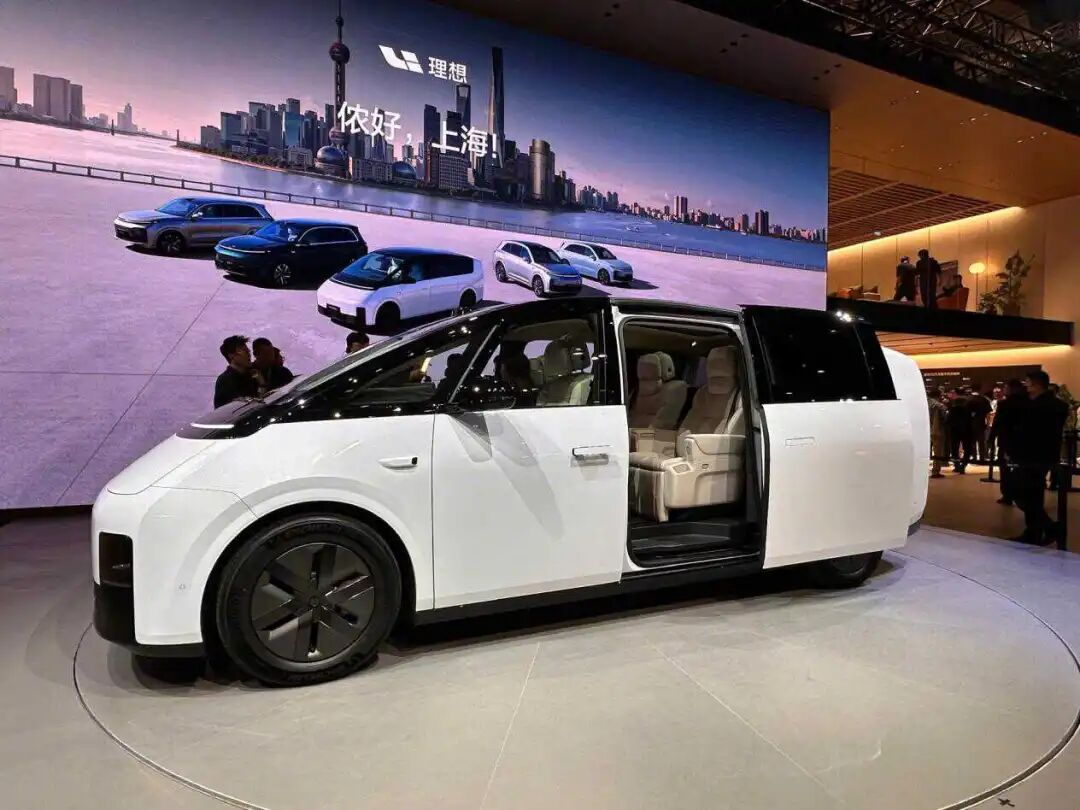
Core Insights - The article discusses the delivery performance of Li Auto in January 2026, highlighting a total delivery of 27,668 vehicles, with 9,358 being range-extended and 18,310 being pure electric [1][2] - It mentions a significant organizational restructuring within Li Auto, transitioning from a Huawei IPD model to a Toyota CE model [1] - The article also notes the introduction of two product lines within Li Auto, with specific leadership assigned to each line [3] Delivery Performance - In January 2026, Li Auto delivered a total of 27,668 vehicles, which includes 9,358 range-extended vehicles and 18,310 pure electric vehicles [1][2] - The delivery numbers for previous months show fluctuations, with December 2025 having the highest at 44,246 vehicles, and a notable decrease in January 2026 [2] Organizational Changes - Li Auto is restructuring its product lines into two main categories: one focusing on MEGA, L9, L8, and L7, and the other on the i series and L6 [3] - Leadership changes include汤靖 overseeing the first product line and 李昕旸 managing the second [3] Market Position and Strategy - The article indicates that Li Auto is focusing on enhancing user experience over the initial purchase experience, as stated by the company's founder [3] - There is a mention of Li Auto's strategic goal for 2028, emphasizing the importance of AI and agent technology in their future plans [4] Industry Context - The article references a broader industry context where Li Auto is seen as a leader in self-developed materials and applications within the automotive sector [4] - It also highlights the competitive landscape, noting that the performance of other brands in the market, such as AITO, has been better in the 300,000+ market segment compared to Li Auto [3][5]

A股指数集体高开:沪指涨0.12%,云计算、半导体等板块涨幅居前
Feng Huang Wang Cai Jing· 2026-02-12 01:37
Market Overview - The three major indices opened higher, with the Shanghai Composite Index up 0.12%, the Shenzhen Component Index up 0.12%, and the ChiNext Index up 0.30% [1] - The Shanghai Composite Index closed at 4,136.99 points with a trading volume of 70.29 billion [2] - The Shenzhen Component Index closed at 14,177.97 points with a trading volume of 112.95 billion [2] - The ChiNext Index closed at 3,294.57 points with a trading volume of 50.06 billion [2] External Market - The U.S. stock market saw slight declines, with the Dow Jones down 0.13% to 50,121.40 points, the S&P 500 down 0.34 points to 6,941.47 points, and the Nasdaq down 0.16% to 23,066.47 points [3] - Most popular Chinese concept stocks fell, with the Nasdaq Golden Dragon China Index down 0.65% [3] Institutional Insights - Huatai Securities highlighted the potential of AI video industrialization, recommending investment in companies with valuable IP assets, efficient content creation capabilities, and leading video model manufacturers [4] - CITIC Construction pointed out that the rapid development of AI technology is driving demand for high-end passive components, benefiting related metal new materials [5] - Huaxi Securities noted the acceleration of commercial aerospace, recommending low-orbit satellite components and chip suppliers due to the increasing pace of satellite launches [6] - Huatai Securities also indicated that the food and beverage sector is experiencing a seasonal peak, suggesting investment in quality leaders as the market stabilizes [7]





美股三大指数集体收跌
财联社· 2026-02-12 00:11
Group 1 - The January non-farm payroll report showed an addition of 130,000 jobs, significantly exceeding the market expectation of 55,000, with an unemployment rate of 4.3%, slightly below the forecast of 4.4% [3] - Job growth was primarily concentrated in the healthcare sector, which added 124,000 jobs, double the normal growth rate for 2025 [3] - Despite the strong job growth, there are concerns about ongoing downward revisions in the labor market data, with the average monthly job addition for last year being only 15,000 after adjustments [3] Group 2 - Major technology stocks had mixed performances, with Nvidia up 0.80%, Apple up 0.67%, while Microsoft fell 2.15%, Google down 2.39%, and Amazon down 1.39% [3] - Among Chinese concept stocks, the Nasdaq Golden Dragon China Index fell 0.65%, with Alibaba down 1.32% and JD down 0.28%, while NIO rose 2.22% and XPeng up 1.63% [4]



非农提振昙花一现,美股三大指数集体收跌,中国金龙指数跌0.65%
Feng Huang Wang· 2026-02-11 22:18
Economic Data - The U.S. added 130,000 jobs in January, significantly exceeding the market expectation of 55,000 [1] - The unemployment rate stands at 4.3%, slightly below the economists' forecast of 4.4% [1] - Job growth is primarily concentrated in the healthcare sector, which added 124,000 jobs, double the normal growth rate for 2025 [1] - There is a persistent downward revision in the labor market data, with the average monthly job addition for last year adjusted to only 15,000 [1] Company News - Apple is reportedly facing setbacks in the development of an upgraded version of Siri, which may delay the release of several anticipated AI features [3] - Meta has begun construction on a new data center in Lebanon, Indiana, with an investment exceeding $10 billion, aimed at enhancing its AI infrastructure [5] - Google is integrating AI shopping features into its search engine and Gemini chatbot, allowing consumers to purchase products directly through AI-driven answers [7] - T-Mobile anticipates service revenue to reach approximately $77 billion by 2026, with plans to achieve 18 to 19 million broadband users by 2030 [8] - Ancora Capital has increased its stake in Warner Bros. Discovery and plans to oppose the company's deal with Netflix regarding its production and streaming assets [9] - Kraft Heinz has paused its planned spin-off, focusing instead on improving company performance under the new CEO Steve Cahillane [10]

美股科技股,集体上涨


Di Yi Cai Jing Zi Xun· 2026-02-11 20:51
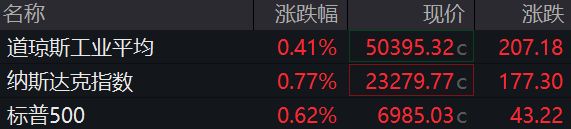
Group 1 - Major tech stocks experienced a broad increase, with SanDisk rising over 8%, Oracle up 2%, and NVIDIA increasing by more than 1% [1][2] - Other notable gainers included Tesla, Broadcom, Apple, and Amazon, all showing positive movement [1] - The three major U.S. stock indices opened higher, with the Nasdaq up 0.77%, the Dow Jones up 0.41%, and the S&P 500 up 0.62% [3] Group 2 - Chinese concept stocks mostly rose, with Kingsoft Cloud increasing by over 11%, Bilibili up more than 3%, and Century Internet and Beike both rising over 2% [2][4] - Storage-related stocks rebounded, with Micron Technology rising over 6% and Western Digital increasing by more than 4% [4]
美股尾盘跳水,AI软件股走强,储存芯片大跌,中概股逆势飘红
Sou Hu Cai Jing· 2026-02-11 18:32
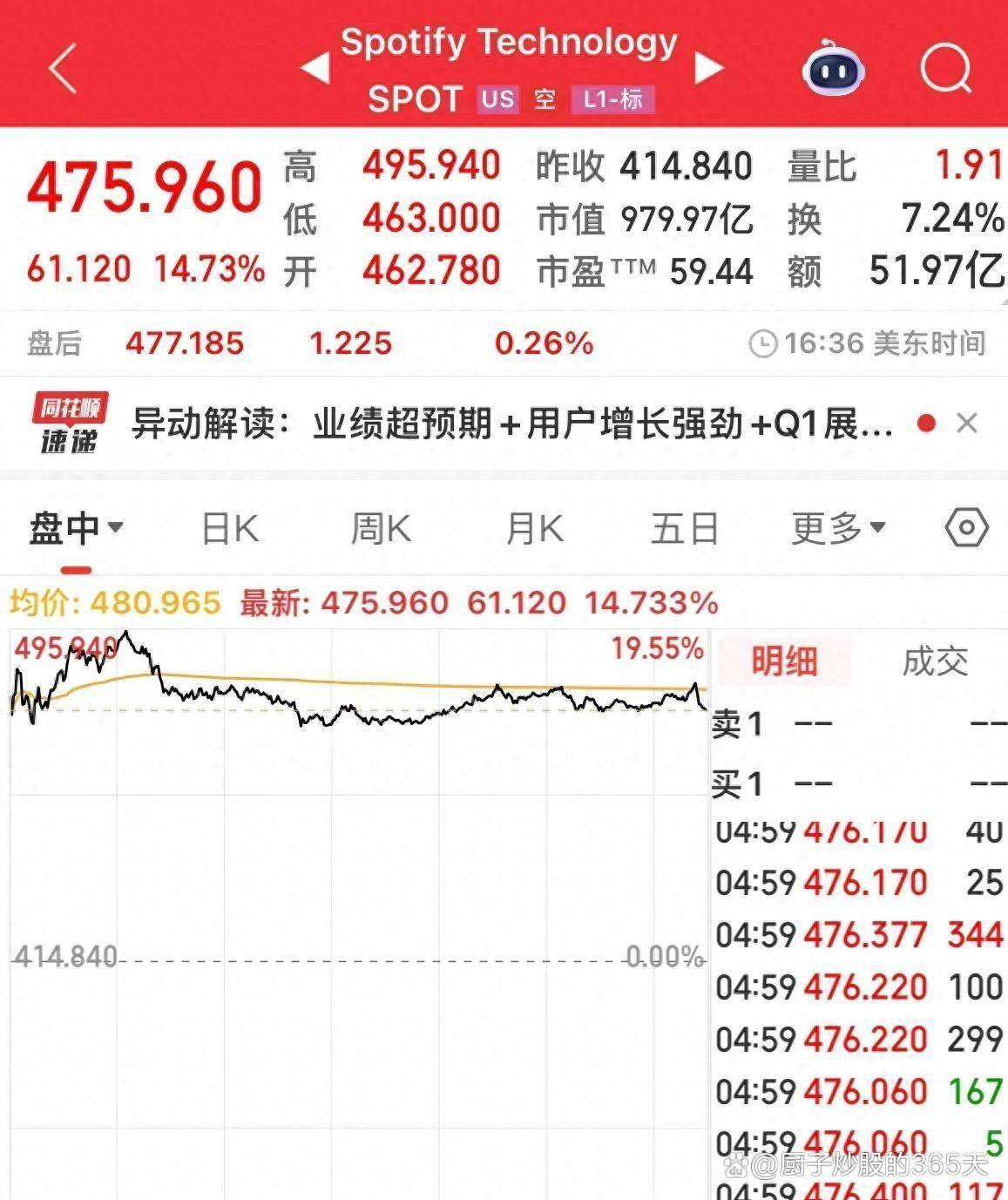
Core Viewpoint - The U.S. stock market experienced a stark divergence, with AI software stocks rebounding sharply while storage chip stocks faced significant declines, illustrating a clear "ice and fire" scenario on the Nasdaq stage [1][3]. Group 1: AI Software Stocks - A notable AI software stock surged 14.73% to close at $475, recovering from a nearly 40% decline from its peak of $785 last June [1][4]. - The recent rebound was supported by significant industry developments, including ByteDance's launch of its new AI video model Seedance 2.0 and Google's plan to acquire a customer service software company to enhance its AI capabilities [4]. - Analysts on Wall Street are shifting their views, suggesting that AI will enhance existing software rather than completely replace it, as enterprise workflows are complex and sticky [4]. Group 2: Storage Chip Sector - The storage chip sector faced a collective collapse, with SanDisk dropping 7.16%, Western Digital plummeting 8.65%, and Seagate Technologies falling 6.77% [1][8]. - The primary reason for the decline was the excessive price increases over the past six months, driven by surging demand for high-performance storage from AI servers, leading to profit-taking [8]. - Recent industry data indicated a slight decline in DRAM prices, breaking the market's expectation of continuous price increases, which contributed to investor concerns about the sustainability of the storage chip supercycle [8][12]. Group 3: Market Dynamics - The Nasdaq index fell by 0.59%, while sectors related to AI applications, such as cultural media and toys, saw gains of 1.5% to 3.5% [5]. - The ETF focused on software investments has seen its scale grow to 6.658 billion yuan, with valuations at a near one-year low, indicating a shift in capital from overvalued hardware sectors to underpriced software and application companies [5]. - The overall market structure is experiencing a split, with the Dow Jones index slightly up by 0.10%, while the Nasdaq and S&P 500 indices fell by 0.59% and 0.33%, respectively [12]. Group 4: Chinese Concept Stocks - Chinese concept stocks demonstrated resilience, with the Nasdaq China Golden Dragon Index rising by 1.09%, outperforming the major U.S. indices [11][12]. - The strong performance of Chinese stocks is attributed to their valuation being at a low point, alongside supportive domestic policies for platform economy and technological innovation [12]. - Key companies like Alibaba Cloud reported a 26% revenue growth in the latest quarter, indicating robust core business performance [12].