PDD(PDD)

Search documents
边加谷歌边减英伟达!百年巨头柏基披露去年四季度大动作
Ge Long Hui· 2026-02-10 03:42
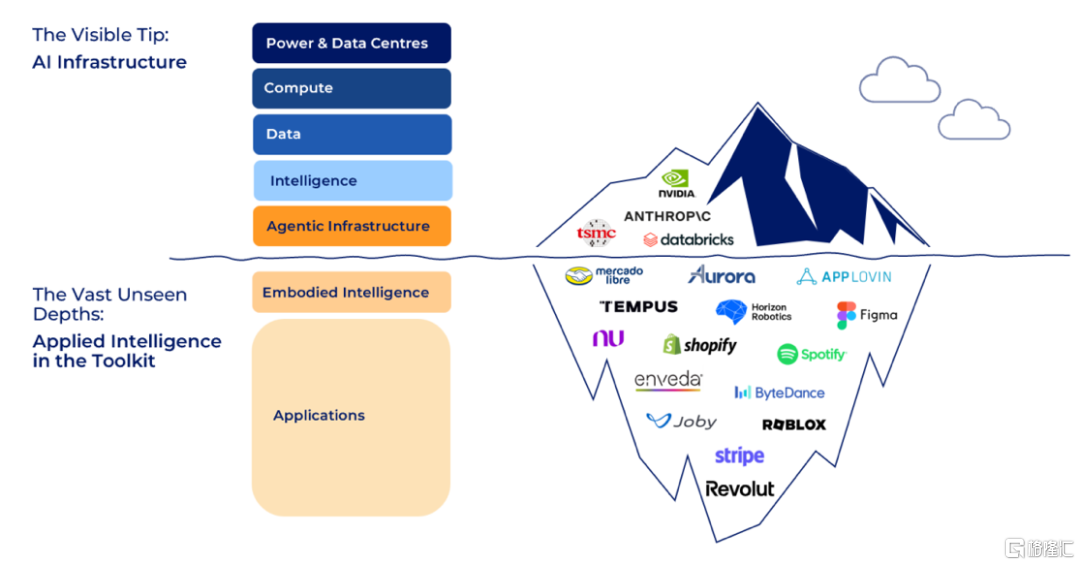
Summary of Key Points Core Viewpoint - Baillie Gifford's total holdings value decreased to $120.34 billion in Q4 2025, down approximately 10.8% from $135 billion in Q3 2025, primarily due to a net selling strategy and some growth stocks experiencing high-level corrections [1][2]. Group 1: Portfolio Adjustments - Nvidia remains the largest holding despite a 5.76% reduction in shares, accounting for 6.80% of the portfolio [3]. - Mercado Libre saw a 4.95% increase in holdings, raising its share to 5.83%, solidifying its position as a cornerstone of the portfolio [3]. - The top five holdings also include Amazon, Shopify, and Sea Ltd, with the top ten holdings comprising 43.4% of the total portfolio [4]. Group 2: Notable Transactions - Significant reductions were made in Amazon, Shopify, Meta, and Cloudflare, while Google saw a notable increase in holdings by 166%, reflecting a strategic shift towards AI capabilities [5][6]. - Baillie Gifford's investment in Google is valued at approximately $1.7 billion post-increase [6]. Group 3: Investment Philosophy and Trends - The investment team emphasizes the importance of adapting to the AI wave, suggesting that companies must pivot quickly to meet new market demands [9][10][12]. - The transition to AI is viewed as a new paradigm shift, with potential for significant growth opportunities as new companies emerge [14][15]. - The focus is on both "AI core" companies and those using AI as a tool to enhance existing services [21][24]. Group 4: Insights on China and Platform Companies - The sentiment in China has shifted, with a recognition of the country's potential to foster visionary entrepreneurs, particularly in the battery sector where CATL holds a significant market share [25][26]. - Platform companies are highlighted for their ability to create value through network effects and adaptability, requiring a long-term investment perspective [28]. Group 5: Non-Public Company Investments - Baillie Gifford has committed over £6 billion to non-public companies since 2012, recognizing the increasing duration of private company ownership before IPOs [31][32]. - The firm holds significant stakes in companies like SpaceX and ByteDance, which have shown substantial revenue growth compared to public market indices [33]. Group 6: Portfolio Construction Approach - The investment strategy is bottom-up, focusing on global transformations rather than specific trends or technologies [34]. - The portfolio includes a diverse range of companies across various sectors, with ongoing adjustments to capitalize on emerging growth opportunities [38].




传媒互联网:互联网周思考:投还是不投
2026-02-10 03:24
Summary of Conference Call Notes Industry Overview - **Industry**: Media and Internet - **Market Performance**: - US KWEB index decreased by 5.7% - Hong Kong Hang Seng Tech Index fell by 6.5% - US Nasdaq index dropped by 1.8% during the week of February 2 to February 6, 2026 [5][11] Key Insights - **AI Capital Expenditure**: - A new narrative is emerging in overseas markets regarding AI capital expenditures. Initially, companies with aggressive capital investments were seen as the most likely to benefit from AI advancements. However, as the industry matures, there is growing concern about the cash flow pressures associated with high capital expenditures, even for leading companies like Google and Amazon [6][7]. - Google is experiencing accelerated growth in cloud revenue and improved profit margins, yet its capital expenditure is expected to double in 2026, raising cash flow concerns. Conversely, Amazon faces skepticism regarding its $200 billion capital expenditure and the return on investment for its AWS business [6]. - Tencent's conservative approach to AI investments has led to market fears of missing out on industry opportunities, resulting in a nearly 10% drop in its stock price, contributing to a significant decline in the internet sector [6][7]. - **Investment Strategies**: - The current investment landscape in AI is complex, with both aggressive and conservative strategies being justified through various rationales. Long-term, continuous investment in AI is deemed essential, but companies must align their investment strategies with their unique capabilities and growth trajectories [7]. - Recent promotional activities by Tencent, Alibaba, and Baidu, such as social engagement campaigns, are viewed as lacking substantive value in building core AI capabilities, potentially distancing these companies from genuine growth opportunities in the AI sector [7]. Company-Specific Insights - **Stock Ratings and Price Targets**: - Tencent Holdings: Target price of 700.00, P/E of 15.1 for 2026E and 12.9 for 2027E - Meituan: Target price of 125.00, P/E not meaningful for 2026E, 16.5 for 2027E - Kuaishou: Target price of 89.00, P/E of 12.9 for 2026E and 10.9 for 2027E - NetEase: Target price of 177.00, P/E of 12.8 for 2026E and 12.0 for 2027E - Alibaba: Target price of 204.00, P/E of 27.7 for 2026E and 19.0 for 2027E - JD.com: Target price of 41.00, P/E of 7.6 for 2026E and 7.1 for 2027E - Pinduoduo: Target price of 148.00, P/E of 7.9 for 2026E and 6.2 for 2027E - Trip.com: Target price of 92.50, P/E of 14.5 for 2026E and 12.7 for 2027E [4][10]. Risks - **Market Risks**: - Uncertainties in the macroeconomic environment and international relations - Regulatory policy risks - Intensifying industry competition [9]. Additional Noteworthy Information - **Recent Developments**: - Meituan is planning to acquire Dingdong Maicai to strengthen its competitive position in the front warehouse sector [10]. - Google has exceeded expectations in cloud computing, leading to a significant increase in capital expenditure [10]. - Uber's delivery business remains robust, with multiple partnerships driving advancements in autonomous driving [10]. Conclusion - The media and internet industry is currently facing significant challenges and opportunities, particularly in the realm of AI investments. Companies must navigate complex market dynamics while aligning their strategies with long-term growth potential. The performance of key players like Tencent, Alibaba, and others will be critical in shaping the future landscape of the industry.



这个春节,拼年货的战斗力还得看老乡
21世纪经济报道· 2026-02-10 00:30
作者 丨唐唯珂 年关将至,"年货春运"早已全面开跑。 "临近春节,快递明显多了起来,一天最多突破150个,很多都是年货。"重庆巫溪一处乡村驿 站的负责人郑发燕发现,家家户户除旧迎新,桶、盆、纸巾等日用品的拼单量明显增多,冷链 生鲜、新衣服也陆续到站。 ▲沉甸甸的年货,正从人们肩上的行囊,转移到一件件快递包裹里。消费者供图 最近,郑发燕也拼单了10斤黄豆,打算过年自己磨豆腐。她算了一笔账:线上买10斤黄豆约24 元,折合每斤才2.4元。不仅价格实惠,豆子颗粒也非常饱满,吃着划算。 随着各个线上平台全面开启"年货节",通过百亿补贴、万人团等方式,天南地北的年礼汇聚云 端,并随着日益完善的快递网络翻山越岭,不仅装点了繁华都市的万家灯火,也激活了广袤乡 村的消费图景。 国家统计局数据显示,2025年农村居民人均可支配收入达到24456元,比上年实际增长6%;乡 村消费品零售额达6.8万亿元,同比增长4.1%。不管是收入增长还是消费增速,农村居民都已 连续多年快于城镇居民。乡村消费持续火热也成为今年春节消费的一大亮点。 2月3日发布的2026年中央一号文件提出,要多措并举扩大乡村消费。支持县乡村流通基础设施 建设更新, ...

道指再创新高,美股科技股反弹,甲骨文飙涨9%,金银、原油大涨
2 1 Shi Ji Jing Ji Bao Dao· 2026-02-09 23:15
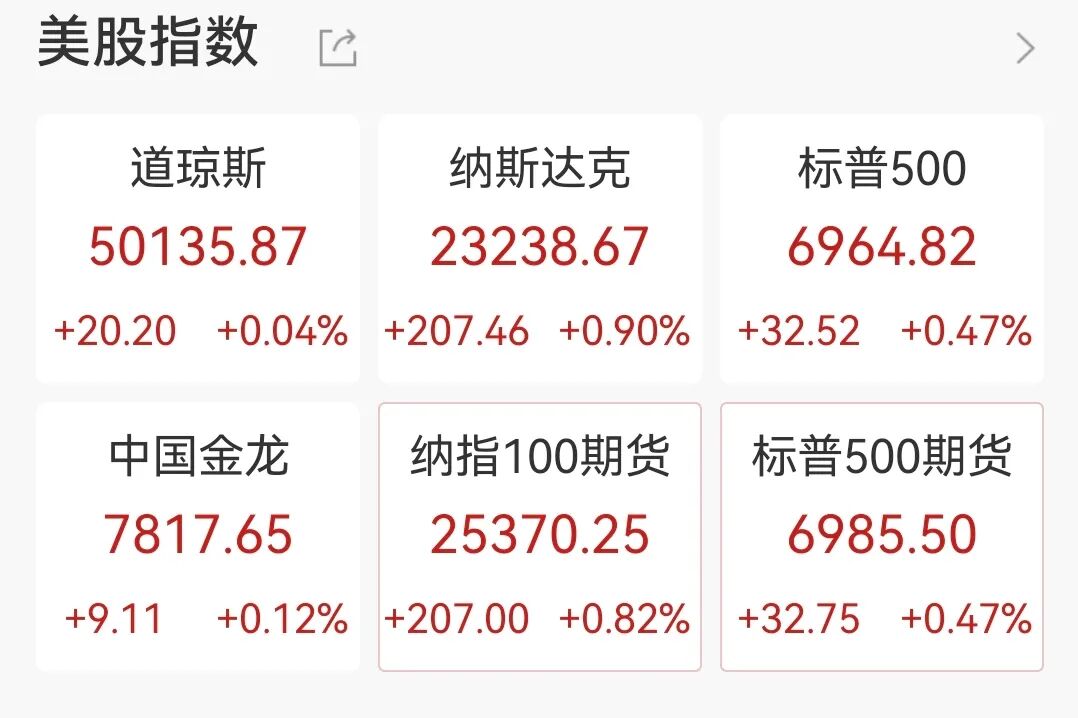
Market Performance - The US stock indices all closed higher, with the Nasdaq rising nearly 1%, the Dow Jones slightly up, and the S&P 500 increasing by 0.5%, nearing its historical high [1] - The Dow Jones closed at 50,135.87, up by 20.20 points (0.04%), the Nasdaq at 23,238.67, up by 207.46 points (0.90%), and the S&P 500 at 6,964.82, up by 32.52 points (0.47%) [2] Technology Sector - Major US tech stocks rebounded after a recent sell-off triggered by AI concerns, with the tech giants index rising by 1.02% [2] - Microsoft saw an increase of over 3%, while Nvidia and Facebook rose by over 2%. However, Apple and Amazon experienced declines of over 1% and 0.76%, respectively, marking Amazon's fifth consecutive day of decline [2] Chip Sector - The chip stock index increased by 1.9%, with Oracle rising over 9%, and Microsoft and Broadcom up by over 3%. In contrast, Micron Technology and SanDisk fell by nearly 3% [3] Commodity Market - Gold prices continued their upward trend, with spot gold rising nearly 2% to surpass $5,050. COMEX gold increased by over 2%, while spot silver rose by over 7% and COMEX silver by 8% [6][7] - Crude oil prices rose by over 1%, influenced by new US guidelines for ships passing through the Strait of Hormuz [6] Employment and Inflation Data - Upcoming US non-farm payroll and CPI reports are expected to provide important insights into the Federal Reserve's monetary policy direction, with potential for significant market volatility if the data indicates "weak employment + stubborn inflation" [8] - Current probabilities for Federal Reserve interest rate changes indicate a 17.7% chance of a 25 basis point cut by March and a 50.4% chance of a 25 basis point cut by June [8]






2月10日热门中概股涨跌不一 日月光半导体涨6.01%,理想汽车跌3.27%
Xin Lang Cai Jing· 2026-02-09 21:17
Group 1 - The Nasdaq China Golden Dragon Index (HXC) showed mixed performance among Chinese concept stocks on February 10, with some stocks rising while others fell [1][7] - Notable gainers included TSMC up 1.83%, Alibaba up 0.28%, Pinduoduo up 0.32%, and Netease up 0.50% [1][7] - Significant losers included JD.com down 0.21%, Ctrip down 1.38%, and Li Auto down 3.27% [1][7] Group 2 - U.S. stock markets closed higher on Monday, with technology stocks leading the gains, and the Dow Jones Industrial Average reaching a new all-time high [2][8] - The Dow Jones increased by 20.20 points, or 0.04%, closing at 50,135.87 points; the Nasdaq rose by 207.46 points, or 0.90%, to 23,238.67 points; and the S&P 500 gained 32.51 points, or 0.47%, to 6,964.81 points [2][8] Group 3 - A list of top-performing Chinese concept stocks showed significant increases, with Xuniao Software up 48.55% and IFBD up 36.51% in after-hours trading [3][11] - Other notable gainers included Yingzhong Group up 29.30% and ATXG up 21.61% in after-hours trading [4][11] Group 4 - The list of underperforming Chinese concept stocks included Mingcheng Group down 29.42% and Zhongwang Zai Line down 24.65% [6][13] - Other significant decliners were Lanv down 20.71% and JZXN down 18.56% [6][14]


Wall Street's Hidden Value Play? Amazon's Chinese Rival Ranks Top 10% On Key Score After Recent Pullback
Benzinga· 2026-02-09 13:02
Group 1 - The company's value score has surged to 89.66, placing it in the top 10% of stocks globally based on relative worth, despite a year-to-date decline of approximately 9.09% [1][2] - The proprietary value metric evaluates the stock's price against fundamental measures like assets, earnings, and sales, indicating that the market price is low relative to its underlying financial strength [2] - PDD maintains a weaker price trend over the short, medium, and long terms according to Benzinga's Edge Stock Rankings [3] Group 2 - The recent 9% year-to-date slide is attributed to external pressures, including a ban imposed by Texas Governor Greg Abbott on state employees using PDD's international platform, Temu, due to data privacy concerns [4] - The company has faced a fine of 100,000 yuan from Chinese tax authorities and an expanded government probe into its Shanghai headquarters over alleged misconduct [4] - Despite these challenges, PDD continues to be a formidable rival to Amazon, leveraging a unique social commerce model and "team purchase" strategy to maintain strong margins while expanding into over 80 countries [5] Group 3 - Shares of PDD have declined by 9.09% year-to-date, while the Nasdaq Composite has decreased by 0.88% in the same period; however, the stock was up 9.55% over the year [6] - The stock closed 3.65% higher at $105.23 per share on Friday, with a slight increase of 0.067% in premarket trading on Monday [6]

这个春节,拼年货的战斗力还得看老乡
2 1 Shi Ji Jing Ji Bao Dao· 2026-02-09 06:54
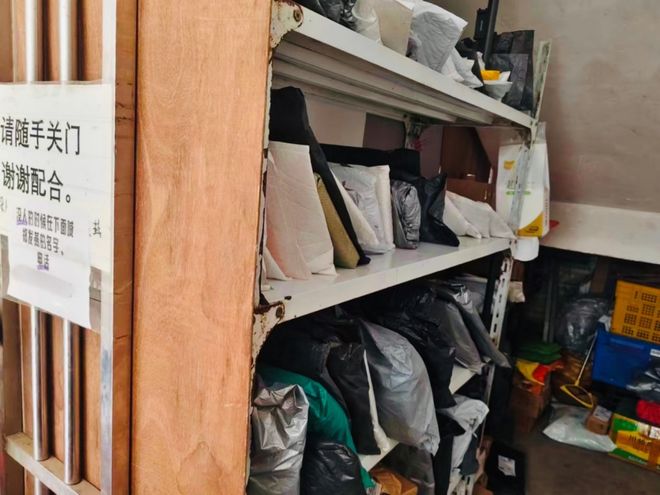
"临近春节,快递明显多了起来,一天最多突破150个,很多都是年货。"重庆巫溪一处乡村驿站的负责 人郑发燕发现,家家户户除旧迎新,桶、盆、纸巾等日用品的拼单量明显增多,冷链生鲜、新衣服也陆 续到站。 最近,郑发燕也拼单了10斤黄豆,打算过年自己磨豆腐。她算了一笔账:线上买10斤黄豆约24元,折合 每斤才2.4元。不仅价格实惠,豆子颗粒也非常饱满,吃着划算。 随着各个线上平台全面开启"年货节",通过百亿补贴、万人团等方式,天南地北的年礼汇聚云端,并随 着日益完善的快递网络翻山越岭,不仅装点了繁华都市的万家灯火,也激活了广袤乡村的消费图景。 国家统计局数据显示,2025年农村居民人均可支配收入达到24456元,比上年实际增长6%;乡村消费品 零售额达6.8万亿元,同比增长4.1%。不管是收入增长还是消费增速,农村居民都已连续多年快于城镇 居民。乡村消费持续火热也成为今年春节消费的一大亮点。 2月3日发布的2026年中央一号文件提出,要多措并举扩大乡村消费。支持县乡村流通基础设施建设更 新,促进农村及偏远地区商贸流通降本增效。 随着政策进一步推动商流、物流向乡村延伸,从生鲜干货到日常用品,网购正搭建起跨越山海的温情纽 ...
春节里的下沉市场经济学:用包裹“熨平”城乡温度差
Di Yi Cai Jing Zi Xun· 2026-02-08 02:16
Core Insights - The article highlights the transformative impact of e-commerce and logistics on rural consumption patterns in China, particularly during the Spring Festival, showcasing how these changes bridge the urban-rural divide [3][12][25] Group 1: E-commerce and Rural Consumption - The Spring Festival serves as a critical period for observing changes in rural consumption, with a significant increase in e-commerce activity as villagers purchase various goods online [3][12] - By 2025, rural areas are projected to account for 28% of the total express delivery volume in China, marking a substantial increase from previous years [3][12] - The rise of e-commerce platforms like Pinduoduo has enabled rural consumers to access a wider range of products, reducing the historical consumption gap between urban and rural areas [12][13] Group 2: Logistics and Infrastructure Development - The establishment of rural logistics networks is reshaping the delivery landscape, making it easier for villagers to receive packages without traveling long distances [6][9] - Local delivery hubs, such as those operated by villagers, have become essential in facilitating the last-mile delivery of goods, significantly improving access to e-commerce [6][9] - The logistics revolution is characterized by a shift from traditional market visits to convenient home delivery, enhancing the overall shopping experience for rural consumers [6][10] Group 3: Economic Empowerment and Cost Reduction - E-commerce has significantly lowered the procurement costs for rural residents, encompassing transportation, time, and decision-making expenses [13][24] - The availability of affordable tools and agricultural equipment through online platforms has led to increased productivity and efficiency in rural farming practices [22][24] - The economic benefits of e-commerce are fostering a sustainable cycle of growth, where increased income from enhanced agricultural output leads to higher consumption levels [22][24] Group 4: Emotional and Cultural Connections - The article discusses the emerging trend of emotional reciprocity in rural areas, where local products are being sent to family members living in urban centers, thus strengthening emotional ties [25][26] - The dual flow of goods, including local specialties being shipped to urban areas, is reshaping the cultural connections between rural and urban populations [25][26] - The integration of e-commerce into rural life is not only about economic transactions but also about preserving and sharing local culture and traditions [25][26]
春节里的下沉市场经济学:用包裹“熨平”城乡温度差
第一财经· 2026-02-08 02:09
当内蒙古乌兰察布的晨光照亮崔亚芹的牧场,准备回河南老家过年的她,已在手机上为家人选好了年货;重庆巫溪 郑发燕的驿站门口,红色的包裹也已堆起小山,赶着办年货的村民们进进出出,手上拎着的是各类生鲜和坚果;甘 肃平凉的崔选科踩着积雪走向村口,准备取出他这些天在手机上反复琢磨 "刷"出来的香甜糖果和枣子,还有平日 在西北大山见不到的南方绿叶菜,为家里的饭桌添些"新鲜感"。 这些平凡热闹的场景,每天都在中国广阔的乡村同步上演,而春节的喜庆氛围,无疑让这幅画卷变得更加密集与生 动。 春节 ,这个最具仪式感的消费旺季,是一面观察中国经济毛细血管最细微搏动的棱镜 ,也是观察城乡消费变迁的 特殊窗口。 成千上万的快递箱满载着年货,穿过平原、翻过雪山、驶过草原,最终抵达一个个驿站、一户户院落。 它们不仅带来了物质丰足,更传递着一种超越地理界限的平等暖意 ——曾经因距离而产生的消费与生活鸿沟,正在 被流动的包裹悄然弥合。 重构距离:当 "赶集路"变成"家门口" "走,取快递去!"在重庆市巫溪县的一处村庄,这句话正在取代"去赶场",成为村民们出门时的新招呼。 郑发燕的拼多多驿站,就设在自家小区里。这名 43 岁宝妈于 2025 年底 ...

做不到“绝对公正”与“全网比价”的AI购物助理,都不会成功
虎嗅APP· 2026-02-07 10:10
Core Viewpoint - The article discusses the impact of AI development on e-commerce platforms, particularly focusing on the competitive dynamics between companies like Amazon, Alibaba, and Pinduoduo, emphasizing the importance of consumer trust and value delivery in the retail sector [6][29]. Group 1: AI and E-commerce Dynamics - The daily token consumption in China is projected to increase from 100 billion at the beginning of 2024 to 40 trillion by September 2025, representing a growth of over 400 times [7]. - Major US tech companies are significantly increasing their capital expenditures for AI infrastructure, with Google estimating its 2026 CapEx to be between $175 billion and $185 billion, nearly double its 2025 spending [8]. - Amazon's projected capital expenditure for 2026 is $200 billion, primarily focused on AWS AI infrastructure, while Microsoft anticipates around $150 billion in spending [9]. Group 2: Competitive Analysis of E-commerce Platforms - Amazon's 2025 GMV is estimated at approximately $700 billion, with AI assistant Rufus contributing $12 billion in annual transaction volume, accounting for 1.67% of total GMV [11][12]. - The article critiques the effectiveness of AI assistants in enhancing user experience, suggesting that they often serve as high-level customer service rather than providing significant incremental value [17]. - Pinduoduo's business model emphasizes "lowest price" as a prerequisite for advertising, contrasting with Amazon and Alibaba, which rely on advertising revenue from brand merchants [20][21]. Group 3: Consumer Trust and Value Proposition - The article argues that platforms like Costco succeed because they prioritize consumer trust and value, contrasting with Amazon and Alibaba, which may not always align with consumer needs [22]. - The effectiveness of AI shopping assistants is questioned, particularly in their ability to deliver on consumer expectations for price and quality, with the assertion that they cannot change the underlying business models of platforms like Alibaba [22][23]. - The article concludes that the future of AI in e-commerce will likely favor companies that can maintain consumer trust and deliver genuine value, with Apple and WeChat identified as potential leaders in this space due to their business models [27][28].