
Pfizer(PFE)

Search documents
Pfizer Reports Strong Earnings Outlook - Unusual Call Options Activity Shows Investors are Bullish
Yahoo Finance· 2026-02-11 18:30
Core Viewpoint - Pfizer, Inc. (PFE) reported strong earnings and guidance, with bullish investor sentiment indicated by unusual call option activity [1][3]. Financial Performance - Pfizer's Q4 revenue was $17.56 billion, exceeding analysts' forecasts by $729.44 million [7]. - The adjusted diluted earnings per share (EPS) for Q4 was $0.66, which was $0.09 higher than estimates, while the full-year EPS was $3.22, reflecting a 3.5% increase from last year's $3.11 [7]. Revenue Guidance - Pfizer reaffirmed its revenue guidance for 2025, projecting between $59.5 billion and $62.5 billion, with adjusted EPS expected to be between $2.80 and $3.00 [8]. Stock Valuation - Over the last 5 years, PFE stock has had an average forward price/earnings (P/E) multiple of almost 10x, specifically 9.77x according to Morningstar [9]. Options Activity - There was significant call option activity, with over 25,000 contracts traded for the September 18 expiry, indicating bullish expectations for PFE stock to rise to at least $31.90 over the next 7 months [3][4]. - The call options are at a strike price of $31.00, which is 11.8% higher than the current price of $27.72, suggesting a potential upside of almost 15% [4].

Pfizer (PFE) Closes 2025 on Solid Note, Returns $9.8B to Shareholders
Yahoo Finance· 2026-02-11 15:35
Core Insights - Pfizer Inc. reported Q4 2025 results with revenue of $17.56 billion, a slight decline of 1.1% year-over-year, but exceeded expectations on revenue and adjusted diluted EPS, returning $9.8 billion to shareholders through dividends [2][5]. Group 1: Financial Performance - Full-year 2025 revenue was $62.6 billion, down from $63.6 billion the previous year, reflecting a 2% operational decline; however, excluding COVID-19 products, operational revenue grew by 6% [5]. - Adjusted gross margins expanded to 76%, aligning with company expectations [5]. Group 2: Strategic Focus - The company aims to derive more value from recent acquisitions, advance its obesity pipeline, and expand the use of artificial intelligence across its operations [3]. - Key acquisitions mentioned include Seagen, Metsera, and Biohaven, which are expected to reshape Pfizer's business [3]. Group 3: Product Development - Progress in Pfizer's obesity program was highlighted, particularly encouraging results from the VESPER-3 study of its next-generation injectable GLP-1 receptor agonist, previously known as MET-097i [4].
Healthcare Stocks Are Sinking. Here Are 2 to Buy on the Dip.
Yahoo Finance· 2026-02-11 15:35
Core Insights - Eli Lilly is currently leading the GLP-1 weight loss drug market with a high price-to-earnings (P/E) ratio of 46 and a low dividend yield of 0.6% due to strong share price performance [1] - Novo Nordisk's growth in obesity drugs is significantly lower than Eli Lilly's, with a 31% increase in 2025 compared to Eli Lilly's Mounjaro and Zepbound, which saw sales growth of 99% and 175% respectively [2][3] - Pfizer is attempting to catch up in the GLP-1 market through partnerships and acquisitions, despite a recent unsuccessful drug candidate [5] Eli Lilly - Eli Lilly's revenue in 2025 was boosted by its GLP-1 drugs, Mounjaro and Zepbound, which experienced substantial sales growth [2] - The company's strong performance has led to a high P/E ratio, indicating investor confidence [1] Novo Nordisk - Novo Nordisk's obesity drugs showed a 31% growth in 2025, which is considered strong but pales in comparison to Eli Lilly's performance [3] - The company is facing challenges due to a pricing agreement with the U.S. government, which is expected to negatively impact financial results in 2026 [3] - Despite recent stock price declines of 66% since mid-2024, Novo Nordisk's P/E ratio is 13, and it offers a 3.9% dividend yield with a 40% payout ratio [4] Pfizer - Pfizer's internal GLP-1 drug candidate was unsuccessful, leading the company to seek growth through partnerships and acquisitions [5] - The company has a history of innovation and is also seeing success in oncology and migraine treatments [5] - Pfizer offers a high dividend yield of 6.3%, but its payout ratio exceeds 100%, making it a riskier option for conservative investors [6]


Can Pfizer's New & Acquired Drugs Offset Its Looming Patent Cliff?
ZACKS· 2026-02-11 14:11
Core Insights - Pfizer's COVID product sales have significantly declined from their peak, with projections of around $11 billion in 2024 and $6.7 billion in 2025, down from $56.7 billion in 2022. The company also faces challenges from U.S. Medicare Part D and upcoming patent expirations for key products between 2026 and 2030 [1][12] Non-COVID Revenue Growth - Non-COVID revenues for Pfizer are improving, driven by key products like Vyndaqel, Padcev, and Eliquis, as well as new launches and acquisitions. In 2023, Pfizer achieved a record number of FDA approvals, with nine new medicines and vaccines contributing to revenue growth [2][3] - Revenues from non-COVID products rose 6% operationally in 2025, with recently launched and acquired products generating $10.2 billion, reflecting a 14% operational growth year over year. Continued double-digit growth is expected for these products in 2026 [3] Strategic Acquisitions and Pipeline Development - Pfizer is focusing on rebuilding its pipeline through strategic acquisitions, investing approximately $9 billion in M&A deals in 2025, including the acquisition of Metsera and a licensing deal with 3SBio. The company plans to initiate 20 pivotal studies in 2026, targeting obesity and oncology [4][5] Competitive Landscape in Oncology - Pfizer is a major player in the oncology market, competing with companies like AstraZeneca, Merck, Johnson & Johnson, and Bristol-Myers. Each of these companies has seen significant growth in their oncology segments, with AstraZeneca's oncology sales rising 14% in 2025, Merck's Keytruda generating $31.7 billion in sales, and J&J's oncology sales increasing by 20.9% [6][8][9][10] Financial Performance and Valuation - Pfizer's stock has increased by 8.4% over the past year, compared to a 17.3% increase in the industry. The company's shares are trading at a forward price/earnings ratio of 9.33, which is lower than the industry average of 18.65 and its own 5-year mean of 10.23 [13][15] - The Zacks Consensus Estimate for Pfizer's 2026 earnings has slightly decreased from $2.99 to $2.98 per share, while the estimate for 2027 remains stable at $2.83 per share [17]

2025年全球TOP10药企财报解读! (附PPT下载)
Xin Lang Cai Jing· 2026-02-11 10:16
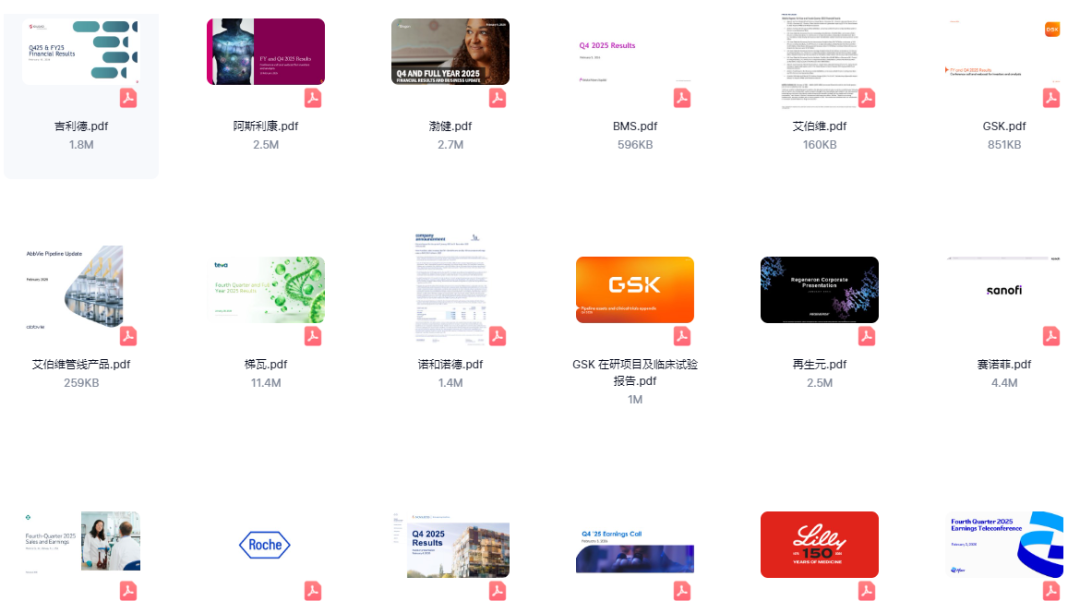
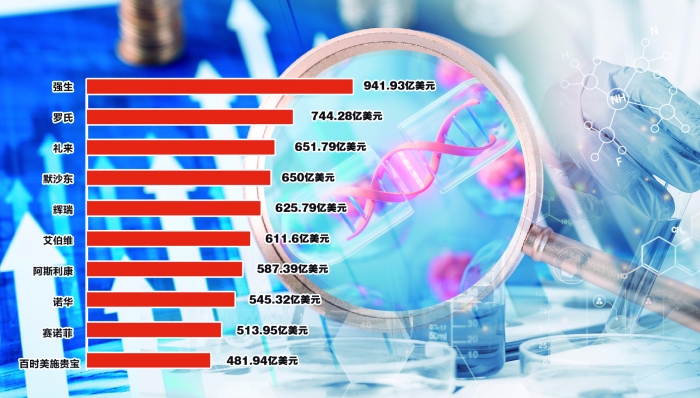
Core Insights - The global pharmaceutical industry has seen a reshuffling in the top 10 rankings for 2025, with Johnson & Johnson and Roche maintaining their positions at the top, while Eli Lilly has surged into the top three, driven by a 44% revenue increase from its weight-loss drug [3][12]. Group 1: Global Revenue Rankings - The top 10 pharmaceutical companies for 2025 include Johnson & Johnson with $94.19 billion, Roche with $74.43 billion, and Eli Lilly with $65.18 billion, marking a significant increase from previous years [4][13]. - Eli Lilly's revenue growth of 44% is the highest among the top companies, allowing it to surpass Merck, which has seen only a 1% increase [3][12]. Group 2: Billion-Dollar Drug Sales - Eli Lilly's Tirzepatide generated $36.5 billion in sales, making it the leading drug, followed closely by Novo Nordisk's Semaglutide at $35.5 billion [6][17]. - The emergence of GLP-1 drugs is reshaping the pharmaceutical landscape, with Eli Lilly's Tirzepatide overtaking Merck's Keytruda, which generated $31.68 billion [17]. Group 3: Performance in China - AstraZeneca leads the Chinese market with a revenue of $6.65 billion in 2025, reflecting a 4% year-over-year growth [8][20]. - Other notable performances in China include Novartis with $4.2 billion and Sanofi with $2.97 billion, while Merck's revenue has drastically declined by 66% [20]. Group 4: Future Outlook - AstraZeneca plans to invest $15 billion in China by 2030 to expand its manufacturing and R&D capabilities, highlighting the country's importance as a strategic market [20]. - The competition between GLP-1 and oncology drugs is expected to intensify, with China playing a crucial role in shaping the future of the pharmaceutical industry [21].


Pfizer to collect $29 million from SEC case against Steven A. Cohen hedge fund
Reuters· 2026-02-10 20:20
Core Points - Pfizer has agreed to pay $29 million to resolve a dispute with the U.S. Securities and Exchange Commission (SEC) related to a 2013 insider trading settlement involving billionaire Steven A. Cohen [1] Company Summary - The settlement amount of $29 million indicates Pfizer's willingness to resolve regulatory disputes without prolonged litigation [1] - This resolution may help Pfizer maintain its reputation and focus on core business operations, potentially impacting investor confidence positively [1] Industry Summary - The case highlights ongoing scrutiny and regulatory challenges faced by companies in the pharmaceutical industry regarding insider trading practices [1] - The resolution of such disputes is crucial for maintaining market integrity and investor trust in the pharmaceutical sector [1]

强生蝉联第一 跨国药企2025年“成绩单”揭晓
Shang Hai Zheng Quan Bao· 2026-02-10 18:09
Core Insights - Major multinational pharmaceutical companies are showing robust revenue growth and increased sales of core products as they release their 2025 performance results [1][2] - Johnson & Johnson leads with nearly $94.2 billion in revenue, while Eli Lilly's weight loss drug, tirzepatide, shows a remarkable 45% year-over-year growth [1][2] Group 1: Revenue Performance - Johnson & Johnson reported total revenue of $94.193 billion for 2025, marking a 6% increase year-over-year [2] - Roche follows with revenue of $74.428 billion, while Eli Lilly, Merck, Pfizer, and AbbVie each exceeded $60 billion in revenue [2] - Eli Lilly's revenue reached $65.179 billion, a 44.7% increase, driven by strong sales of tirzepatide, which generated $36.5 billion [6] Group 2: Product Performance - Johnson & Johnson's innovative pharmaceuticals and medical technology segments both achieved revenue growth, with $60.401 billion and $33.792 billion respectively, both up by approximately 6% [2] - The CAR-T therapy, ciltacabtagene autoleucel, contributed significantly to Johnson & Johnson's growth, with revenue of $1.887 billion, a 95.9% increase [2] - Eli Lilly's tirzepatide sales reached $36.5 billion, with the weight loss version generating $13.542 billion, a 175% increase [6] Group 3: Market Trends and Challenges - The pharmaceutical industry faces a looming "patent cliff," with an estimated $236 billion in revenue at risk from patent expirations between 2025 and 2030 [8] - Companies are increasingly engaging in business development transactions to replenish their R&D pipelines, with Chinese innovative pharmaceutical companies gaining prominence [8][9] - In 2025, Chinese companies achieved record-breaking business development deals, totaling $135.655 billion, with significant collaborations involving major multinational firms [9]
Pfizer Inc. (PFE) Announces FDA’s Grant of Priority Review for HYMPAVZI® (marstacimab) sBLA
Yahoo Finance· 2026-02-10 15:39
Group 1 - Pfizer Inc. announced that the U.S. FDA accepted and granted Priority Review for its supplemental Biologics License Application for HYMPAVZI, expanding its indication to treat hemophilia A or B patients aged 6 years and older with inhibitors, and pediatric patients with hemophilia A or B without inhibitors [1][2] - The FDA set a Prescription Drug User Fee Act action date for HYMPAVZI in Q2 2026, which, if approved, would offer a once-weekly subcutaneous injection for bleed protection without the need for routine lab monitoring [2] - Pfizer launched the TrumpRx program to make over 30 innovative medicines more accessible and affordable for Americans, providing significant discounts off list prices as part of a broader agreement with the U.S. government [3] Group 2 - Pfizer Inc. is a global biopharmaceutical company focused on the development, manufacturing, and marketing of biopharmaceutical products, aiming to advance wellness and treatment in developing and emerging markets [4]
Should You Buy Pfizer's Stock for Its 6.3%-Yielding Dividend?
Yahoo Finance· 2026-02-09 18:20
Core Viewpoint - Pfizer has been a disappointing stock in recent years, with a 38% decline over the past three years, primarily due to concerns about growth and upcoming patent expirations [1] Dividend Appeal - Pfizer offers a dividend yield of 6.3%, significantly higher than the S&P 500 average of 1.1%, making it an attractive option for income investors [2] - The sustainability of Pfizer's high dividend is questioned, especially since its diluted earnings per share for the year were $1.36, below the annual dividend payout of $1.72 [3][4] Earnings Forecast - For 2026, Pfizer projects adjusted per-share earnings to be between $2.80 and $3.00, suggesting potential safety for the dividend despite current concerns [5] Revenue and Growth Prospects - Pfizer's revenue declined by 2% in the past year, with modest expectations for improvement by 2026; however, the company has made investments and acquisitions that may enhance future growth [6] - The stock has seen a 6% increase over the past 12 months, indicating that it may be less vulnerable to further declines due to its lower valuation [7]
Pharma eyes AI deals to stem lost revenues from patent expirations
Yahoo Finance· 2026-02-09 15:48
Core Insights - The pharmaceutical industry is increasingly leveraging artificial intelligence (AI) to enhance drug development efficiency and reduce costs, with companies like In Silico demonstrating significant advancements in this area [1][2][8] - A notable trend is the shift from traditional acquisition strategies to targeted deals that focus on acquiring specific assets, particularly in response to impending patent expirations [4][10][14] AI in Drug Development - In Silico has showcased the potential of AI in drug development, reporting an average of 13 months from project initiation to candidate selection for its drug rentosertib, which has shown positive signals in increasing lung function in a Phase IIa study [1] - AI-driven tools are sought by pharmaceutical companies to enhance internal R&D productivity and streamline the drug development process [2][3] Patent Expirations and Industry Response - The upcoming patent cliff between 2024 and 2030 is projected to reduce the global share of drugs protected under patents from 6% to 4%, resulting in an estimated loss of $236 billion in US revenues [6][7] - The industry is witnessing a surge in deal-making as companies seek to replenish their drug pipelines in light of patent expirations, with AI partnerships becoming increasingly common [7][9] Changing Acquisition Strategies - Pharmaceutical companies are moving away from large-scale mergers and acquisitions (M&A) towards smaller, asset-specific acquisitions to mitigate revenue losses from patent expirations [10][14] - Companies like Eli Lilly and AstraZeneca are actively pursuing AI capabilities through strategic partnerships, indicating a shift in mindset towards more targeted investments [4][11] Market Dynamics and Future Trends - The hierarchy of top-selling drugs is shifting, with a growing focus on metabolic disorders and peptide-based drugs, while oncology remains a significant area of interest [16][17][18] - Companies are also exploring secondary patents and trademarks as strategies to extend the lifecycle of branded drugs and maintain revenue streams despite patent expirations [20][22] Conclusion - AI is positioned as a transformative force in the pharmaceutical industry, with the potential to reshape drug development timelines and strategies for managing patent cliffs, although its impact may vary [23]
