
华侨城集团

Search documents
2026年,东莞要开5座“王炸”商业项目
3 6 Ke· 2026-02-03 02:20
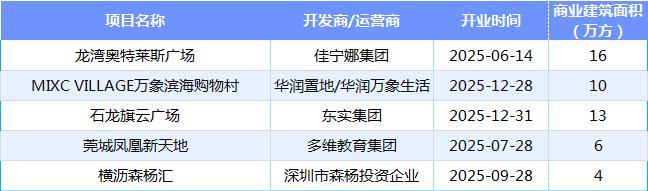
Core Insights - Dongguan's commercial market is set for significant expansion in 2025, with five new commercial projects adding approximately 490,000 square meters of retail space, bringing the total to over 7 million square meters across 115 projects by the end of the year [1][2]. Group 1: New Commercial Projects in 2025 - Longwan Outlets Plaza opened on June 14, 2025, with a total commercial area of 160,000 square meters, marking Dongguan's first outlet project in the main urban area [1][2]. - MIXC VILLAGE opened on December 28, 2025, featuring 100 international discount stores within a 100,000 square meter area, establishing a new consumption landmark in the coastal bay area [1][2]. - Shilong Qiyun Plaza commenced operations on December 31, 2025, with a size of 130,000 square meters, becoming the largest centralized commercial space in northern Dongguan [1][2]. - Dongguan Phoenix New World launched on July 28, 2025, with 60,000 square meters of commercial space revitalizing the old city area [1][2]. - Hengli Senyanghui opened on September 28, 2025, as the first revitalized centralized commercial space in Hengli Town, filling a gap in quality commercial consumption [1][2]. Group 2: Retail Brand Expansion - Major retail brands are accelerating their presence in Dongguan, with Sam's Club planning to open in 2026, IKEA set to debut in early February 2026, and Hema expanding its footprint in various towns [2]. Group 3: Future Developments in 2026 - In 2026, Dongguan plans to launch five major commercial projects, adding over 400,000 square meters of retail space, focusing on high-end retail, cultural tourism integration, and ecological districts [3]. - Pengrui Tianyue Plaza, a super complex with 117,000 square meters of high-end commercial space, is set to open in Q4 2026, featuring major brands like AEON Supermarket and Huawei's largest experience store [4][5][7]. - Dongguan MixC, a flagship commercial project with approximately 230,000 square meters, is expected to open at the end of 2026, positioned as a leading urban commercial flagship [8][10]. - Songshan Lake Happy Coast, an urban cultural tourism commercial landmark, will open in Q4 2026, integrating ecological and cultural tourism elements [11][13]. - The Hill Qifeng Mountain Road, Dongguan's first mountain park-style commercial street, is set to open in 2026, focusing on outdoor and cultural experiences [14][16]. - The historical cultural district on Zhongshan Road in Shilong Town is undergoing renovation, with a total investment of 550 million yuan, aiming to create a vibrant historical shopping area [17]. Group 4: Overall Market Transition - Dongguan's commercial landscape is transitioning from quantity to quality, with significant projects like MixC, Tianyue Plaza, and Happy Coast addressing gaps in high-end commercial, cultural tourism, and ecological experiences, reflecting the city's commitment to becoming a "Quality Consumption Capital" [17].


2026年债券信用风险展望
Si Lu Hai Yang· 2026-01-26 11:35
Group 1: Report Industry Investment Rating - No information provided in the given content. Group 2: Core Viewpoints of the Report - In 2026, focus on provinces with large maturity scales of industrial bonds, such as Inner Mongolia, Heilongjiang, and Jilin, and avoid entities with industry downturns, weakened profitability, and financing channels, or those with non - bond debt risks [2]. - The broad private real estate developers still face challenges, and other industries have a low probability of concentrated risks, but entities with weak competitiveness, significant profit decline, cash - flow pressure, and concentrated debt maturities should be focused on [2]. - For convertible bonds, weak - quality entities with low - priced underlying stocks and high conversion premiums may face difficulties in exiting through conversion, and potential losses should be watched out for [2]. Group 3: Summary by Relevant Catalogs 1. Overall Bond Market Situation - As of January 6, 2026, the national credit bond balance was 36.18 trillion yuan, with urban investment bonds at 17.73 trillion yuan (49.00%) and industrial bonds at 18.45 trillion yuan (51.00%, down from 54.57% last year) [5]. - Beijing has the largest bond balance, followed by Jiangsu, Guangdong, Zhejiang, and Shandong. Inner Mongolia has the highest short - term bond maturity ratio at 81.09%, followed by Heilongjiang at 40.39% [5]. 2. Urban Investment Bonds - Since 2023, with a series of policies and measures, the debt pressure of urban investment platforms has been relieved, the issuance cost and credit spread of urban investment bonds have decreased, the financing cost is generally below 3%, and the debt term has been significantly extended [10]. 3. Industrial Bonds Provincial - level Analysis - Excluding urban investment bonds, Beijing has the largest industrial bond scale at over 7 trillion yuan, mainly central - enterprise bonds. Inner Mongolia has the highest short - term industrial bond maturity ratio at 82.64%, followed by Tibet, Heilongjiang, Tianjin, and Jilin [11]. - Inner Mongolia, Heilongjiang, and Jilin have a bond issuance coverage ratio of less than 1 for the next - year's maturity scale, indicating weak refinancing ability [14]. Industry - level Analysis - In 2025, default industries included 12 sectors such as automobile services and real estate development. The industrial holding and power industries have the largest bond balances, over 2 trillion yuan each [15]. - The paper - making, automobile services, medical devices, medical services, and publishing media industries have a short - term debt ratio of over 50%, with poor debt term structures [15]. - Industries with large short - term debt repayment pressures include rail transit, packaging, heating, furniture and home appliances, textiles, automobile services, and information technology [15]. 4. Real Estate Industry - In 2025, the default rate of real estate development entities remained high, with Vanke and Zhengxinglong defaulting. As of January 6, 2026, the real estate development enterprise bond balance was 11,528.76 billion yuan, mainly held by local and central state - owned enterprises [18]. - The short - term bond maturity pressure of public, Sino - foreign joint - venture, and private enterprises is over 40%. The broad private enterprises still face pressure, with an issuance amount of only 234.38 billion yuan in the past year, 76.93% of the next - year's maturity amount [20]. - In 2026, private real estate enterprises to focus on are Longfor and Yida Development [23]. 5. Loss - making Industrial Entities - Large - loss entities (losses over 10 billion yuan in 2024 and still in losses in the first three quarters of 2025) are mainly in the real estate development industry, including state - owned enterprises such as Overseas Chinese Town Group and financial street - related companies, as well as steel giant Ansteel Group [24]. - Entities with losses between 5 and 10 billion yuan involve industries such as electrical equipment, chemical, steel, and airport [26]. 6. ABS Market - From 2023 - 2025, the default rate of CSRC - regulated ABS was 1.10%, 0.77%, and 0.88% respectively. As of January 6, 2026, the ABS balance was 25,021.96 billion yuan, with a one - year maturity amount of 3,541.59 billion yuan (14.15%). The 2025 issuance amount covered the next - year's maturity amount 3.97 times, with good continuation [32]. 7. Convertible Bond Market - Since 2024, the convertible bond repayment risk has increased. As of January 6, 2026, the convertible bond balance was 5553.51 billion yuan, a 22.89% year - on - year decrease. The broad private enterprises accounted for 64.73%, with a relatively large proportion [33]. - Entities such as Anhui Honglu Steel Structure, Shenzhen Huayang International Engineering Design, and Shanghai Kehua Bio - Engineering face large convertible bond repayment pressures, but the conversion mechanism can reduce credit risks to some extent [35]. - Entities such as Dongfang Fashion Driving School, Hainan Pulili Pharmaceutical, and Jiangsu Fumiao Technology, although not facing immediate repayment pressures, have negative information such as business fluctuations, financial fraud, and equity freezes, and their dynamic changes should be continuously monitored [36].





“华润系”接管提速 康佳洗牌纾困
Bei Jing Shang Bao· 2026-01-19 13:52
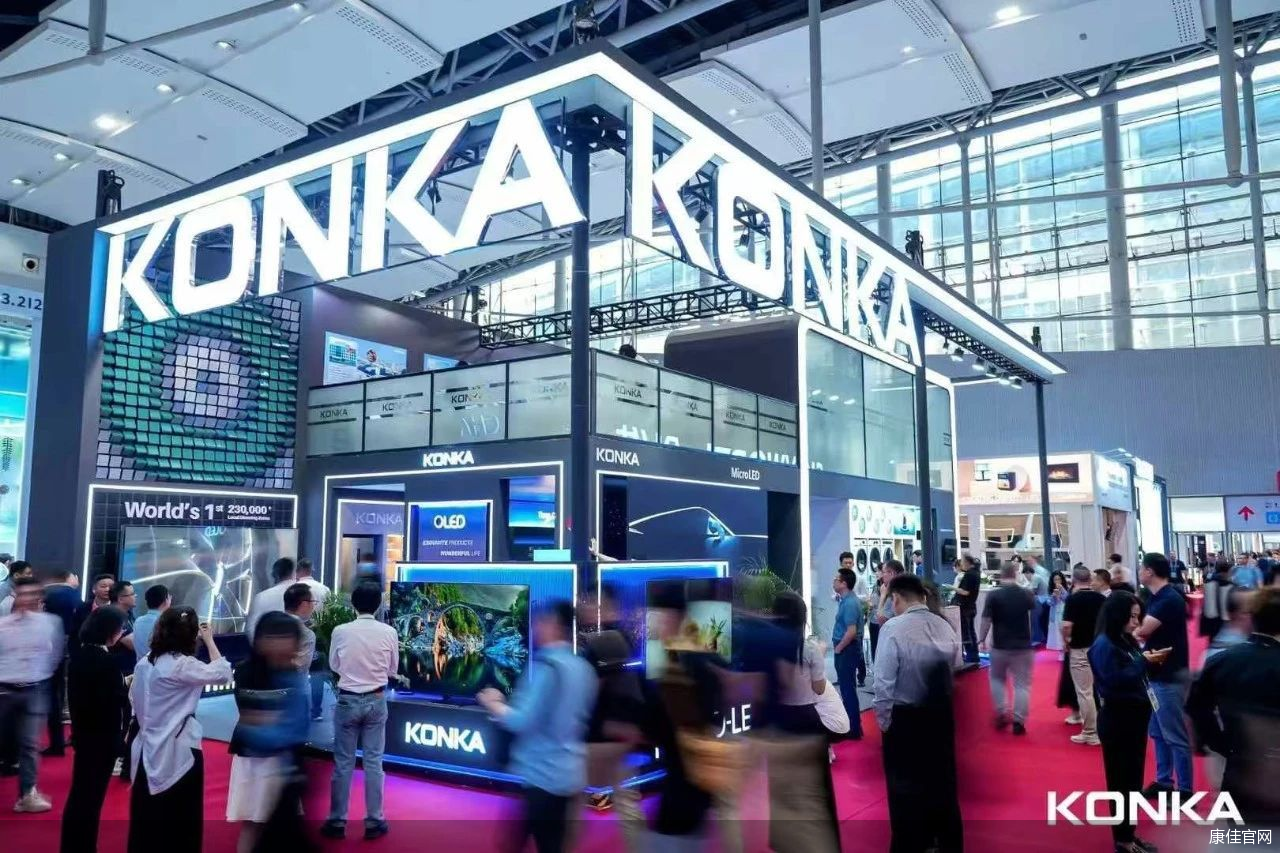
Core Viewpoint - Konka, a historic Chinese electronics company, is undergoing a significant transformation driven by its new controlling shareholder, China Resources, amid a challenging market environment characterized by stock competition and declining industry growth [2][3]. Group 1: Shareholder and Management Changes - China Resources has become the controlling shareholder of Konka, with a shareholding exceeding 30% after a series of stock transfers [3]. - Key management changes have occurred, including the appointment of Dong Gang as Vice President and the resignation of former executives, indicating a shift towards a management style aligned with China Resources [3]. Group 2: Financial Adjustments - China Resources provided Konka with a low-interest loan of 3.97 billion yuan to alleviate long-standing financial pressures, with part of the funds allocated to repay debts to the previous controlling shareholder [4]. - Despite a net loss of 982 million yuan in the first three quarters of 2025, the company has reduced its losses by 38.89% year-on-year, indicating some positive impact from the financial adjustments [4]. Group 3: Business Strategy and Focus - Konka is narrowing its focus to core business areas, including consumer electronics, PCB, and semiconductors, in response to intensified competition in the home appliance market [6]. - The consumer electronics segment remains a priority for transformation, although it is currently facing profitability challenges due to various market factors [6][7]. - The PCB business is relatively stable, while the semiconductor sector is seen as a future growth area, despite being in the early stages of industrialization and facing short-term losses [7]. Group 4: Industry Context - The home appliance industry is experiencing structural adjustments, with a shift from price competition to value competition, which may influence Konka's business optimization efforts [6][7]. - The company must adapt to industry trends, enhance the profitability of its core businesses, and accelerate the commercialization of its emerging semiconductor operations to achieve a successful transformation [7].
“华润系”接管提速,康佳洗牌纾困
Bei Jing Shang Bao· 2026-01-19 13:51
Core Viewpoint - Konka, a historic Chinese electronics company, is at a critical transformation juncture as it faces ongoing losses and industry challenges, necessitating a strategic shift towards core business areas and operational efficiency [1][6]. Group 1: Corporate Restructuring - After China Resources took control, a comprehensive integration process began, affecting equity, personnel, and financial aspects to lay the groundwork for transformation [3]. - In April 2025, China Resources became the controlling shareholder of Konka, holding over 30% of the shares, which solidified control for subsequent adjustments [3]. - Key personnel changes included the appointment of Dong Gang as Vice President and the resignation of former executives, indicating a shift towards China Resources' management philosophy [3]. Group 2: Financial Support and Challenges - China Resources provided Konka with a low-interest loan of 3.97 billion yuan to alleviate long-standing financial pressures, with a portion allocated to repaying previous debts [4]. - Despite a net loss of 982 million yuan in the first three quarters of 2025, this represented a 38.89% reduction in losses year-on-year, indicating some progress [5]. - The company reported a negative operating cash flow of 1.086 billion yuan in the first half of 2025, highlighting ongoing liquidity challenges [5]. Group 3: Business Focus and Market Conditions - In response to intensified competition, Konka is narrowing its focus to three core areas: consumer electronics, PCB, and semiconductors, aiming for growth through business optimization [6]. - The consumer electronics segment remains a primary focus but is currently unprofitable, with a gross margin of only 0.39% due to various operational challenges [8]. - The PCB business is relatively stable, while the semiconductor sector is seen as a future growth point, although it is still in the early stages of industrialization and profitability [8][9]. Group 4: Industry Context - The domestic home appliance market is experiencing structural adjustments, with a shift from price competition to value-based competition, which may influence Konka's business strategies [7][9]. - The company must adapt to industry trends, enhance the profitability of core operations, and expedite the commercialization of emerging businesses to navigate the competitive landscape effectively [9].
华侨城A:控股股东增持4330.47万股,金额达1.11亿元
Xin Lang Cai Jing· 2026-01-14 10:45
华侨城A公告称,截至公告披露日,控股股东华侨城集团增持公司股份计划实施完毕,通过集中竞价交 易累计增持4330.47万股,占总股本0.54%,增持金额约1.11亿元。增持前,华侨城集团持股48.78%;增 持后,持股比例升至49.32%。本次增持计划自2025年7月15日起6个月内进行,金额不低于1.11亿元、不 超2.20亿元。律师认为增持合法合规,且不会导致公司股权分布不合上市条件及控制权变化。 ...

华侨城A:控股股东增持1.11亿元,持股比例升至50.30%
Xin Lang Cai Jing· 2026-01-14 10:45
华侨城A公告称,控股股东华侨城集团增持计划已实施完毕。增持前,华侨城集团及其一致行动人持股 49.76%。增持期间,华侨城集团以集中竞价交易方式增持43,304,697股,占总股本0.54%,增持金额1.11 亿元。增持完成后,其及一致行动人持股比例升至50.30%。本次增持符合相关规定,且属于可免于发 出要约的情形,公司已履行现阶段信息披露义务。 ...
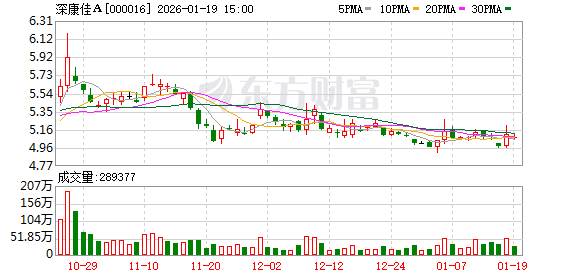
8亿元资金逾期未回、负债率超96%,昔日“彩电大王”深康佳A紧急变卖资产求生
Hua Xia Shi Bao· 2025-12-27 04:16
Core Viewpoint - The financial crisis of Konka Group Co., Ltd. (Deep Konka A) is intensifying, with significant debt issues and overdue loans highlighting the company's struggles in the current market environment [4][6]. Financial Situation - As of the end of Q3 2025, Deep Konka A's total liabilities reached 28.269 billion yuan, while total assets were 29.209 billion yuan, resulting in a debt-to-asset ratio of 96.78% [6]. - The company has faced continuous financial challenges since 2011, with its net profit excluding non-recurring items being negative for 14 consecutive years, and losses have been increasing in recent years [6]. Loan Defaults - Deep Konka A reported overdue shareholder loans totaling 824 million yuan, with three separate loans to affiliated companies being overdue [5][6]. - The overdue loans include approximately 395 million yuan to Chuzhou Kangxin Health Industry Development Co., Ltd. and about 233 million yuan to Yikang Technology Co., Ltd. [4][5]. Shareholder Changes - In July 2023, the original controlling shareholder, Overseas Chinese Town Group, transferred all its shares in Deep Konka A to China Resources Group, making it the new actual controller with a 30% stake [7]. - This change in control has led to immediate financial relief, with Deep Konka A transferring shares of Wuhan Tianyuan Group to China Resources Asset Management for approximately 915 million yuan [7][8]. Regulatory Issues - Following the share transfer, Deep Konka A received a regulatory letter from the Shenzhen Stock Exchange regarding a previous inaccurate disclosure related to a subsidiary's equity transfer [9][10]. - The exchange highlighted that the company and its executives failed to fulfill their responsibilities, emphasizing the need for improved compliance with disclosure regulations [10].


2025中国旅游集团化发展论坛举办
Ren Min Ri Bao· 2025-12-16 21:44
Core Viewpoint - The forum emphasized the importance of tourism groups in driving local economic development and high-quality growth in the tourism industry, highlighting the need for innovation and cross-industry integration [1][2] Group 1: Forum Highlights - The 2025 China Tourism Group Development Forum was co-hosted by the China Tourism Research Institute and the China Tourism Association, focusing on creating pillar industries and promoting high-quality development [1] - Key discussions included the role of tourism groups in local economic development, market innovation, and the responsibilities of tourism enterprises [1] Group 2: Report Findings - The "China Tourism Group Development Report 2025" indicates that tourism groups are actively implementing high-quality development strategies, utilizing policies and industry innovation to drive market recovery [2] - Tourism groups are seen as the main contributors to the tourism market economy, moving beyond traditional sightseeing models to develop a diverse and high-quality product system that includes high-end resorts, themed cultural tourism, rural homestays, and more [2] - Leading tourism groups are pursuing international strategies to promote China's tourism destinations globally [2] Group 3: Recognition and Rankings - The forum announced the list of the top 20 tourism groups in China for 2025, which includes China Tourism Group, Overseas Chinese Town Group, ShouLve Group, China Youth Travel Service, and Jin Jiang International Group [1]

华侨城A(000069.SZ):华侨城集团增持1957.29万股公司股份
Ge Long Hui A P P· 2025-12-16 15:20
格隆汇12月16日丨华侨城A(000069.SZ)公布,近日,公司收到控股股东华侨城集团出具的《关于增持 华侨城A股份计划的告知函》,及其一致行动人深圳华侨城资本投资管理有限公司签署的《简式权益变 动报告书》,华侨城集团于2025年7月15日至2025年12月16日期间,通过深圳证券交易所交易系统集中 竞价交易的方式累计增持公司股份1957.29万股,占公司总股本的0.24%,增持金额(不含交易费用)合 计人民币5017.42万元。本次增持后,公司控股股东及其一致行动人共计持有公司股份比例由49.76%变 动至50.00%,变动触及5%的整数倍。 ...
华侨城A(000069.SZ):华侨城集团累计增持0.24%股份
Ge Long Hui A P P· 2025-12-16 12:09
格隆汇12月16日丨华侨城A(000069.SZ)公布,近日,公司收到控股股东华侨城集团出具的《关于增持华 侨城A股份计划的告知函》,及其一致行动人深圳华侨城资本投资管理有限公司(简称"华侨城资本公 司")签署的《简式权益变动报告书》,华侨城集团于2025年7月15日至2025年12月16日期间,通过深圳 证券交易所交易系统集中竞价交易的方式累计增持公司股份19,572,900股,占公司总股本的0.24%,增 持金额(不含交易费用)合计人民币50,174,174元。本次增持后,公司控股股东及其一致行动人共计持 有公司股份比例由49.76%变动至50.00%,变动触及5%的整数倍。 ...