KWEICHOW MOUTAI(600519)

Search documents
2026白酒春节渠道反馈:价格筑底,分化加剧,头部反转
Shenwan Hongyuan Securities· 2026-02-23 07:50
Investment Rating - The report maintains a positive outlook on the liquor industry, particularly on high-end brands, indicating a strategic buy recommendation for major players like Guizhou Moutai, Luzhou Laojiao, Shanxi Fenjiu, and Wuliangye [3][7]. Core Insights - The overall sales volume for the liquor industry during the 2026 Spring Festival is expected to decline by 10%-20% year-on-year, which is slightly better than market expectations prior to the festival [3][6]. - A significant characteristic of the 2026 Spring Festival sales is the increasing differentiation and concentration among top brands, with high-end liquor performing exceptionally well. Moutai is projected to see a sales increase of over 30% year-on-year, while Wuliangye is expected to grow by 5%-10% [3][6]. - The industry is entering a notable destocking phase, with inventory levels for first-tier brands significantly lower than the same period last year [3][6]. - Prices for first-tier brands are stabilizing, with Moutai's price currently above 1700 yuan, expected to stabilize above 1600 yuan post-festival [3][6]. Summary by Sections Brand Performance - High-end liquor brands are outperforming expectations, with Moutai showing the best performance. Wuliangye is leveraging price adjustments to increase volume, while Guojiao 1573 is maintaining price stability [8][6]. - Moutai's sales are expected to grow by over 30%, with inventory levels at distributors being nearly zero [8][6]. - Wuliangye's sales are projected to increase by 5%-10%, with inventory levels at distributors around 10%-15% lower than last year [8][6]. - Guojiao 1573 is expected to see a sales decline of 15%-20%, while its low-end variant remains stable [8][6]. Regional Feedback - Feedback from various regions indicates a mixed performance, with high-end brands like Moutai and Wuliangye showing resilience, while mid-tier and local brands face challenges [19][21]. - In North China, overall sales are down by about 15%, with high-end brands benefiting from increased consumer interest [12][21]. - In Jiangsu, the overall sales volume is expected to decline by 10%-15%, with Moutai maintaining stable performance [19][21]. Future Outlook - The report anticipates that the second half of 2026 will see a turning point for top brands in terms of sales and financial performance, with a potential dual boost in valuation and earnings by the end of the year [7][3]. - The industry trend is shifting towards consolidation, with larger companies absorbing smaller ones, leading to inevitable differentiation among listed companies [7][3].




茅台一边说没货一边狂降价?背后是渠道与库存的生死博弈
Sou Hu Cai Jing· 2026-02-22 08:50
Core Viewpoint - The article highlights the complex dynamics of the Chinese high-end liquor market, particularly focusing on Kweichow Moutai, which is experiencing a paradox of both "shortage" and "oversupply" amid significant market adjustments. Group 1: Supply and Demand Imbalance - Kweichow Moutai distributors are facing inventory shortages, with some regions selling out of quotas for January and February ahead of time, leading to pre-orders for March supplies [1] - In Shenzhen, the price of a single bottle of Moutai has exceeded 1800 yuan, with daily price increases surpassing 100 yuan, as distributors report a lack of stock [1] - The surge in demand is attributed to a structural change in distribution channels, with online platforms processing over 1.43 million transactions in January, creating pressure from both consumer demand and traditional B2B shipments [1] Group 2: High Inventory and Price Discrepancies - In stark contrast to the "shortage" claims, there is a significant social inventory of over 10 million bottles accumulated in distribution channels [3] - By the end of 2025, the wholesale price of Moutai fell below the official guidance price of 1499 yuan, marking a historical low, while actual costs for distributors reached 1700-1800 yuan per bottle, leading to losses of 200 yuan per bottle sold [3] - Panic selling by scalpers and e-commerce platform subsidies have exacerbated the situation, creating a vicious cycle of declining prices [3] Group 3: Channel Revolution and Traditional Profit Chain Disruption - In 2026, Moutai initiated a channel restructuring by eliminating traditional distribution rights, increasing direct sales from 43% to over 60% [3] - The i Moutai app has adopted a model of daily limited purchases at 1499 yuan with frequent restocking, which reduces the profit margins for scalpers but forces distributors to sell at a loss to recover funds [3] - The deeper conflict arises as Moutai aims to reclaim a profit margin of 330 yuan per bottle through direct sales, while distributors struggle to survive on a mere 30% retail margin [3] Group 4: Consumption Decline and Demand Reversion - The industry is facing a downturn due to a shrinking core consumer base, with a significant reduction in business banquets related to government and real estate sectors, and younger consumers moving away from traditional drinking culture [4] - Actual annual consumption of Moutai is around 40 million bottles, while annual production capacity exceeds 100 million bottles, leading to a social inventory backlog of 80 million bottles [4] - Distributors indicate that a bottle opening rate of 45% would signify a healthy industry [4] Group 5: Transformation Challenges and Future Pathways - In response to the challenges, Moutai is implementing "surgical" adjustments, including halting December shipments and reducing non-standard product quotas by 30%-50%, aiming to raise wholesale prices from 1499 yuan to 1580 yuan [5] - Long-term reforms focus on three main areas: de-financialization to reduce speculative hoarding, channel integration encouraging distributors to become "cultural connoisseurs," and consumer reconstruction by introducing low-alcohol sparkling wines to appeal to younger demographics [5] - The simultaneous existence of "shortage" and "oversupply" reflects the necessary transition of the high-end liquor industry in China from a resource-driven to a value-driven model, aiming to return to the essence of quality liquor [5]

茅台不再“飞天”,光瓶酒不再“低端”!次高端白酒的夹缝时代来了?
Sou Hu Cai Jing· 2026-02-22 08:45
Group 1 - The core viewpoint of the article highlights the structural differentiation in the Chinese liquor market, particularly the impact of Moutai's price rationalization on the mid-range liquor segment, which is facing significant challenges [2][6][7] - Moutai's price has shifted from a speculative high to a more rational level, with the official price set at 1499 yuan and market prices stabilizing between 1699 and 1999 yuan, enhancing market efficiency [6][7] - The rationalization of Moutai's pricing has weakened its role as a price benchmark, leading to a decline in the attractiveness of mid-range products as consumers opt for either Moutai or lower-priced options [7][10] Group 2 - The mid-range liquor segment is experiencing a "double squeeze," facing upward pressure from high-end products and downward competition from low-end products, particularly the rising quality of low-end liquors like light bottle wines [8][10] - Low-end products, priced between 30 and 80 yuan, are increasingly appealing to price-sensitive consumers, further constricting the market space for mid-range liquors [10] - The mid-range segment must move beyond price competition and focus on creating unique value propositions, such as targeting specific consumer scenarios and emphasizing the uniqueness of production processes [11][13] Group 3 - To survive, mid-range liquor brands need to optimize their channel structures and avoid over-reliance on inventory pressure, focusing instead on healthy relationships with distributors [13] - The return to rational pricing in the Moutai segment is not a market downturn but a re-evaluation of value, indicating that brands that can establish a clear identity and unique value will thrive in the evolving market landscape [13]

白酒市场分化:消费者过年都在买梅见青梅酒
Sou Hu Cai Jing· 2026-02-22 07:40
2025年是白酒行业近年来承压最明显的一年。 国家统计局数据显示,2025年1-12月,我国白酒(折65度,商品量)累计产量为354.9万千升,累计下降12.1%,行业迎来连续第九年产量下滑。根据2025年 10月31日智通财经《多家白酒企业前三季业绩"失速":茅台净利增长6% 有公司称行业调整将持续一段时间》的报道,2025年1-9月全国规模以上白酒企业产 量为265.50万千升,同比下降9.90%。 渠道库存压力成为行业普遍痛点。中国酒业协会与毕马威联合发布的《2025中国白酒市场中期研究报告》显示,2025年上半年,58.1%的经销商反映库存持 续增加,价格倒挂现象加剧,800-1500元价格带酒类产品价格倒挂最为严重。这种库存压力直接反映在行业运营效率上:根据2025年8月28日中国酒业新闻 网《酒业如何穿越弱周期,构建寒冬期的生存与破局之道?》的报道,行业平均存货周转天数已达900天,同比增加10%,部分中小企业甚至超过180天。 2026年春节旺季前,茅台批价回升提振了市场信心,但白酒市场动销复苏分化明显。头部白酒企业凭借品牌优势率先实现经营企稳,多数中小品牌仍通过降 价促销的方式消化库存。 20 ...
茅台经销商:“没货,不够卖!”
Xin Lang Cai Jing· 2026-02-22 06:16
Core Insights - The Chinese liquor market is experiencing a "moderate recovery under structural differentiation" during the 2026 Spring Festival, with strong demand for high-end brands, stable growth for mass-market products, and pressure on mid-range categories [1][10]. High-End Brands - Moutai is facing a supply-demand imbalance, with many distributors reporting sold-out quotas for January-February 2026, leading to price increases. The wholesale price for Moutai has risen to 1,700 RMB per bottle, up from a low of 1,500 RMB earlier in the year [2][12]. - As of February 11, 2026, Moutai's sales growth is significantly outperforming the industry, with a year-on-year increase of 10%-20% in multiple regions [2][12]. - Wuliangye is also performing well, with distributors achieving around 40% of their annual sales targets by February 11, although regional sales performance varies [3][12]. Mid-Range and Low-End Products - Mid-range brands are under pressure, with many experiencing slower sales and market share erosion. For example, Gujing Gongjiu's high-end products have seen a decline of over 20% due to reduced business banquets [4][5]. - In contrast, low-end products are maintaining resilience, supported by banquet and everyday consumption. Sales in the 100-300 RMB price range have shown significant improvement compared to the previous year [5][6]. Market Dynamics - The overall economic environment remains challenging, and the current surge in liquor sales is largely attributed to pre-holiday demand, which may lead to inventory buildup and price corrections post-holiday [7][16]. - The liquor industry is expected to see more operators exit the market in the next 3-5 years, driven by survival and payment crises, which may lead to a continuous supply of low-priced liquor [8][17]. Consumer Trends - Moutai is expanding its consumer base beyond traditional high-end customers, with a notable increase in family consumption during the Spring Festival. A survey indicated that 43.85% of participants included Moutai in their New Year's Eve dinners this year [9][17].
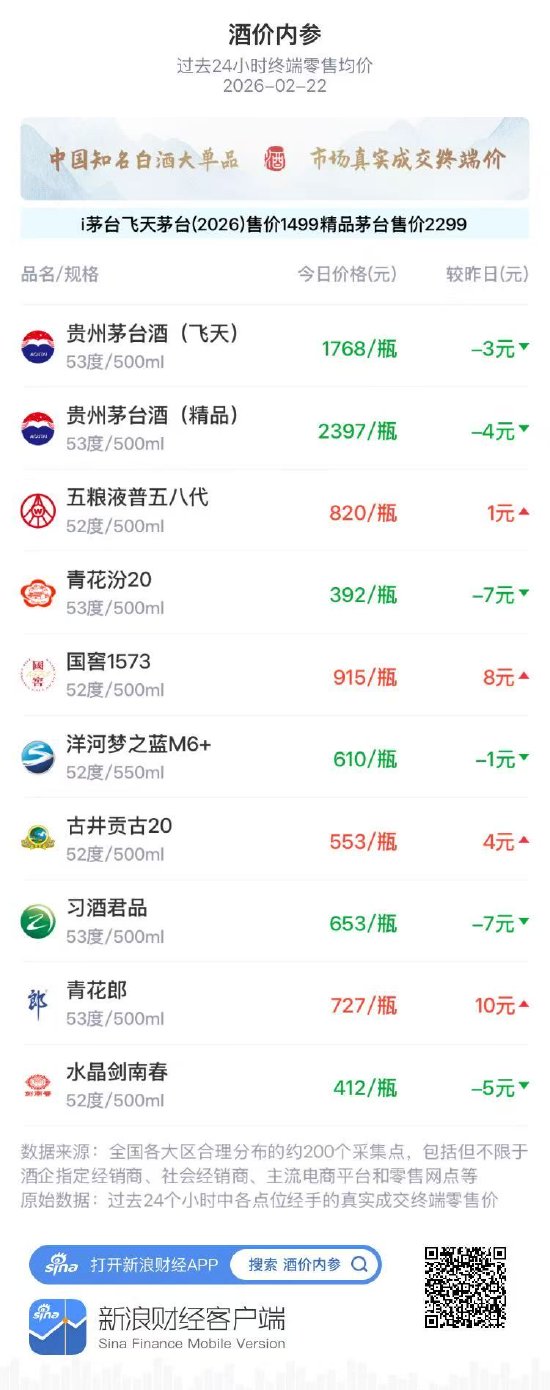
酒价内参2月22日价格发布 青花郎六连阳强势领跑
Xin Lang Cai Jing· 2026-02-22 01:14
Core Insights - The article discusses the recent trends in the Chinese liquor market, particularly focusing on the retail prices of the top ten liquor products, which showed a mixed performance with six products declining and four increasing in price [1][6]. Price Trends - The overall retail price for a package of the top ten liquor products is 9,247 yuan, a decrease of 4 yuan from the previous day [1][6]. - Among the price increases, Qinghua Lang rose by 10 yuan per bottle, marking its sixth consecutive increase; Guojiao 1573 followed with an 8 yuan increase; and Gujing Gong 20 increased by 4 yuan [1][6]. - On the downside, Xijiu Junpin and Qinghua Fen 20 both dropped by 7 yuan per bottle, indicating ongoing inventory pressure in the mid-range segment; other declines included Shujin Jianan Chun down by 5 yuan, and both Jingpin Moutai and Feitian Moutai down by 4 yuan and 3 yuan respectively [1][6]. Market Dynamics - The data for the "Liquor Price Reference" is sourced from approximately 200 collection points across various regions, including designated distributors, social distributors, e-commerce platforms, and retail outlets, aiming to provide an objective and traceable market price [4][9]. - The introduction of new sales channels for Moutai products has begun to influence their market prices, with Feitian Moutai priced at 1,499 yuan and Jingpin Moutai at 2,299 yuan [4][9]. Industry Trends - A report published on the 21st highlighted seven core development trends in the liquor industry, including price polarization, the rise of mass consumption as a market stabilizer, and the emergence of new retail formats [4][9]. - The report also noted that the price range of 100-300 yuan is becoming a market necessity, and that traditional liquor stores are undergoing significant transformations [4][9].


26股获机构上调评级至“买入”:汽车、食品饮料、电子等板块多只个股上榜
Xin Lang Cai Jing· 2026-02-22 00:25
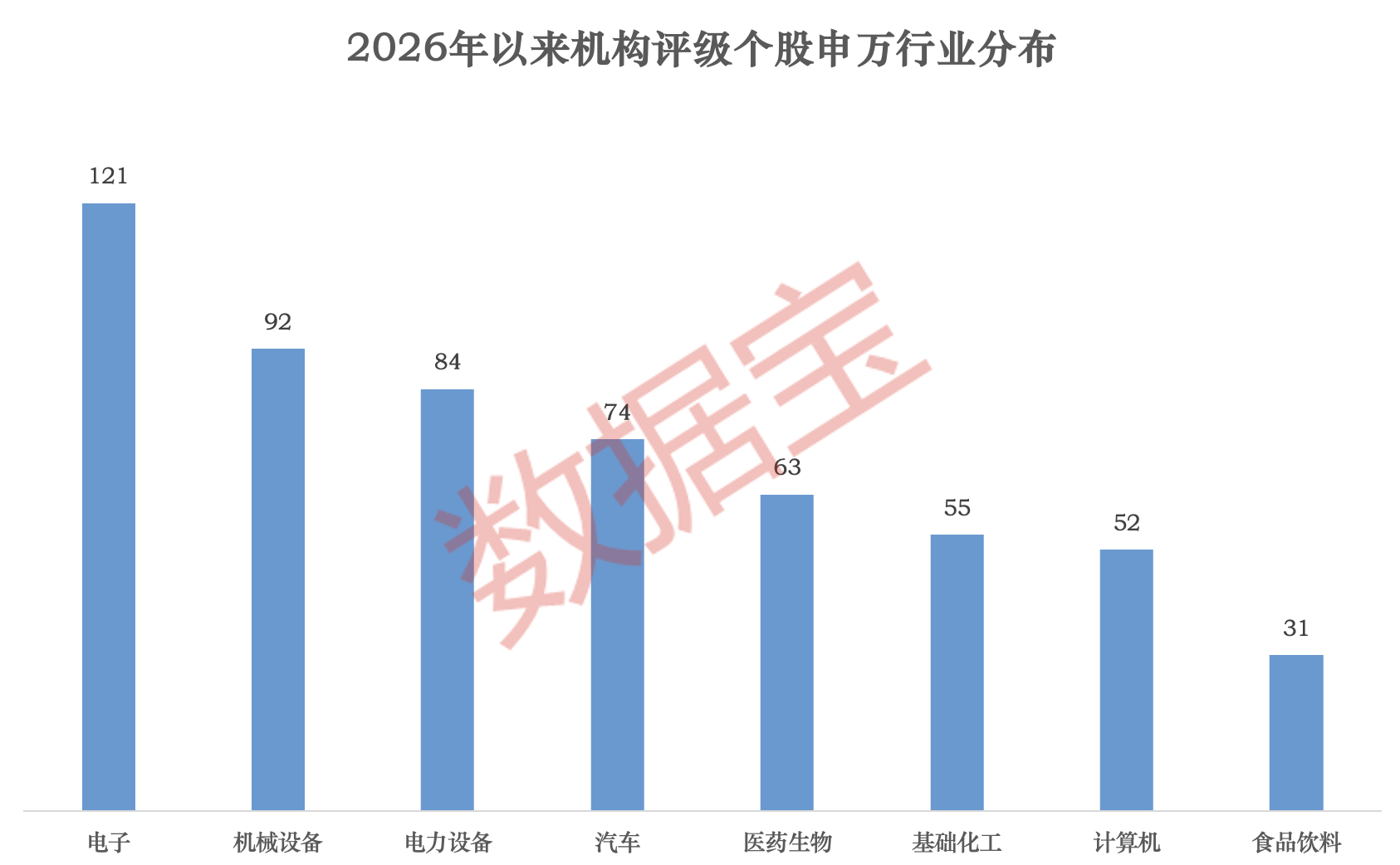
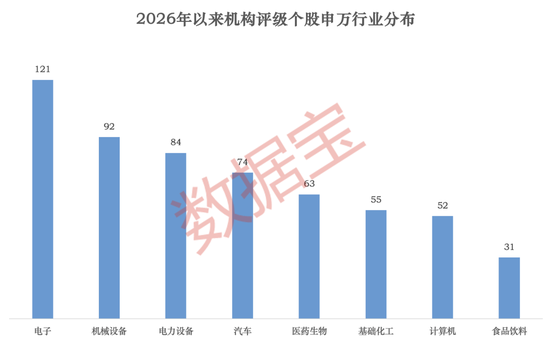
2月22日电,据证券时报·数据宝统计,2026年以来(截至2月13日),63家机构合计进行了1827次评级,共计932只个股获券商研报给予"买入型"评级(包括 买入、增持、强烈推荐、推荐)。 从行业上看,机构评级个股主要分布于电子、机械设备、电力设备行业,上榜个股数量依次为121只、92只、84只;汽车、医药生物、基础化工、计算机等 紧随其后,获评级个股数量均在50只以上。 具体到个股来看,评级机构数量在5家及以上的个股有67只,东鹏饮料、比亚迪、万辰集团、贵州茅台、中国中免居前,依次有16家、15家、14家、14家、 14家。 从评级调整情况来看,26股评级获得机构上调:汽车板块的潍柴动力、赛力斯、江淮汽车、林泰新材,食品饮料板块的万辰集团、新乳业、泉阳泉,电子板 块的佰维存储、全志科技、星宸科技、中微半导等均上榜。 (文章来源:人民财讯) | 代码 | 简称 | | 评级机构 2025年净利润 | 2025年净利润 | 公告日期 | 公告类型 | | --- | --- | --- | --- | --- | --- | --- | | | | 家数 | (亿元) | 同比(%) | | | | 6054 ...



马年启新程|26股获机构上调评级至“买入”!
Xin Lang Cai Jing· 2026-02-21 23:47
Core Viewpoint - The report highlights the increasing institutional interest in various sectors, particularly in electronics and automotive, with a significant number of stocks receiving "buy" ratings from analysts. Group 1: Institutional Ratings - A total of 63 institutions conducted 1,827 ratings since 2026, with 932 stocks receiving "buy" ratings, including buy, accumulate, strong recommendation, and recommendation [1][12]. - The electronics sector has the highest number of rated stocks, followed by machinery, power equipment, automotive, pharmaceuticals, basic chemicals, and computers, with each having over 50 rated stocks [2][13]. Group 2: Electronics Sector Performance - The electronics index has risen by 8.41% this year, significantly outperforming the Shanghai Composite Index, with the semiconductor index showing the highest increase of 13.93% [4][14]. - Key semiconductor companies like Baiwei Storage, Zhaoyi Innovation, SMIC, and Jiangfeng Electronics have received ratings from five or more institutions, indicating strong market interest [4][14]. Group 3: Notable Stocks - 67 stocks have received attention from five or more rating agencies, with Dongpeng Beverage, BYD, Wancheng Group, Kweichow Moutai, and China Duty Free leading the list [5][15]. - Dongpeng Beverage is projected to achieve revenue of 20.76 billion to 21.12 billion yuan in 2025, with a year-on-year growth of 31.07% to 33.34%, and a net profit of 4.34 billion to 4.59 billion yuan, reflecting a growth of 30.46% to 37.97% [5][15]. - BYD's sales in January were 210,100 units, a year-on-year decrease of 30.11%, attributed to inventory reduction and a transitional policy period [5][15]. Group 4: Future Growth Prospects - Baiwei Storage is expected to achieve revenue of 10 billion to 12 billion yuan in 2025, with a year-on-year growth of 49.36% to 79.23%, and a net profit of 850 million to 1 billion yuan, reflecting a growth of 427.19% to 520.22% [10][19]. - The company is focusing on AI storage solutions and has strong competitive advantages through self-developed chips and advanced packaging capabilities [11][19].

美国1750亿美元关税退税,对A股的影响(附50股)
Sou Hu Cai Jing· 2026-02-21 11:41
Group 1 - The core point of the article is that the recent US Supreme Court ruling on the $175 billion tariff refund has significant implications for both China and the A-share market, despite the refund being an internal US matter [2][6][28] - The $175 billion in tariffs was primarily collected from imports, including a 10% tariff on Chinese goods, and is now being refunded to US importers [8][10] - The refund will indirectly benefit Chinese companies as US importers, who have been financially strained by tariffs, will use the refunded money to pay off debts to Chinese suppliers and resume orders [12][14][28] Group 2 - The immediate impact on the A-share market is expected to be positive, with a potential "opening red" for A-shares as market sentiment improves following the ruling [40][46] - The ruling is seen as a signal that the previous high tariffs on Chinese goods may not be a permanent state, which could lead to a more favorable environment for Chinese exports [20][48] - Structural opportunities in the A-share market are identified, focusing on five main lines: export-oriented sectors, domestic substitution, strategic resources, domestic consumption, and new energy [51][62][88] Group 3 - Export-oriented sectors, particularly those with high exposure to the US market, are expected to benefit directly from the tariff refunds, with companies like Midea Group and Haier expected to see improved performance [52][72][73] - Domestic substitution and self-sufficiency in sectors like semiconductors and military equipment are highlighted as long-term strategic focuses, with companies like SMIC and AVIC Shenyang Aircraft being key players [53][78][86] - Strategic resources such as rare earths and gold are also expected to see price support due to ongoing global supply chain disruptions, benefiting companies like Northern Rare Earth and Shandong Gold [56][87]




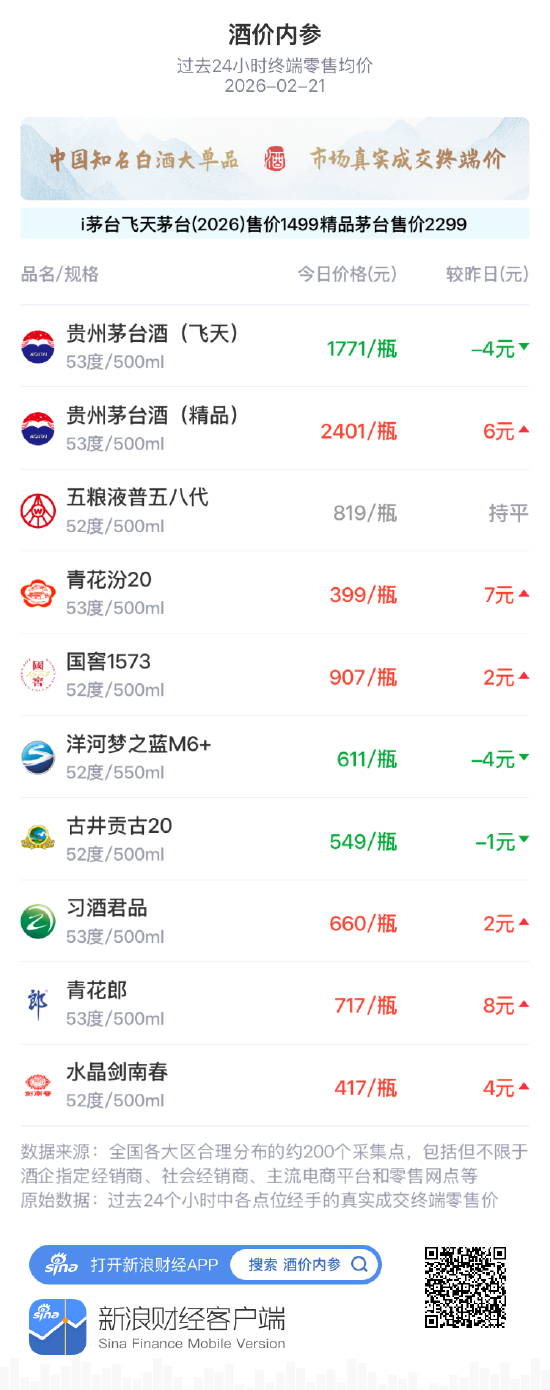
酒价内参2月21日价格发布 总酒价创三个月新高
Xin Lang Cai Jing· 2026-02-21 01:09
Core Insights - The article highlights the launch of "Wine Price Reference" by Sina Finance, which provides real-time data on the retail prices of major Chinese liquor brands, indicating a dynamic market with price fluctuations and trends [1][4]. Price Trends - The average retail price of the top ten Chinese liquor products reached 9,251 yuan on February 21, marking a 20 yuan increase from the previous day and the highest in three months [1][6]. - Among the ten products, six saw price increases, three decreased, and one remained stable. The strongest performer was Qinghua Lang, which rose by 8 yuan per bottle, continuing a five-day upward trend [1][6]. Individual Product Performance - Specific price changes include: - Qinghua Fen 20 increased by 7 yuan to 399 yuan per bottle [2][7]. - Premium Moutai rose by 6 yuan to 2,401 yuan per bottle [2][7]. - Crystal Jian Nan Chun increased by 4 yuan to 417 yuan per bottle [3][8]. - Both Flying Moutai and Yanghe Dream Blue M6+ decreased by 4 yuan to 1,771 yuan and 611 yuan per bottle, respectively [2][7]. - Gujing Gong Gu 20 saw a slight decrease of 1 yuan to 549 yuan per bottle [7]. Market Dynamics - The market is characterized by a rotation of product performance, indicating a stable yet differentiated growth pattern [1][6]. - The introduction of new sales channels for Moutai, with prices set at 1,499 yuan for Flying Moutai and 2,299 yuan for Premium Moutai, has begun to influence market prices significantly [4][9]. Consumer Behavior - A survey conducted regarding Moutai consumption during the New Year revealed that 43.85% of participants reported having Moutai at home this year compared to last year, indicating a positive trend in consumer sentiment towards Moutai [5][9].