
NMHD(600863)

Search documents
申万公用环保周报:国网经营区电力现货市场全覆盖,欧美气价季节性上涨-20251110
Shenwan Hongyuan Securities· 2025-11-10 05:49
Investment Rating - The report maintains a "Positive" outlook on the power and gas sectors, highlighting the full coverage of the electricity spot market in the State Grid operating area and the seasonal rise in gas prices in Europe and the US [1]. Core Insights - The electricity spot market in the State Grid operating area has achieved near-complete coverage, with 18 provincial-level markets in continuous settlement trial operation as of November 1, 2025. This includes the formal operation of inter-provincial markets and five provincial-level markets [4][8]. - In the gas sector, US Henry Hub spot prices rose to $3.76/mmBtu, reflecting a weekly increase of 5.52%, while European gas prices also saw increases due to seasonal demand [13][19]. Summary by Sections 1. Electricity - The State Grid operating area has nearly achieved full coverage of the electricity spot market, with significant developments in various provinces. As of November 1, 2025, the market has transitioned to continuous settlement trials in Sichuan and Chongqing [4][8]. - In Shanxi, the first province to fully implement the electricity spot market, the average spot price for electricity was recorded at 0.283 yuan/kWh, with a total of 156.23 billion kWh cleared in the first half of 2025 [10]. - The growth of renewable energy capacity in Shanxi has been substantial, with an increase of 128.75% since the 14th Five-Year Plan, leading to a significant impact on electricity pricing and market dynamics [10]. 2. Gas - The report notes a divergence in global gas prices, with US prices rising while Asian LNG prices remain stable due to ample supply. As of November 7, 2025, the Northeast Asia LNG spot price was $11.10/mmBtu, unchanged from the previous week [13][27]. - The report highlights the increase in US natural gas production and demand, with the Henry Hub futures price reaching $4.32/mmBtu, marking a 4.63% increase [14][19]. - Recommendations for investment in gas-related companies include those with integrated natural gas trading capabilities, such as Kunlun Energy and New Hope Energy, as well as city gas companies benefiting from cost reductions [31]. 3. Weekly Market Review - The report indicates that the electricity equipment, public utilities, environmental protection, and gas sectors outperformed the Shanghai and Shenzhen 300 index during the week of November 2 to November 9, 2025 [35]. 4. Company and Industry Dynamics - As of September 2025, China's new energy storage capacity exceeded 100 million kW, representing over 40% of the global total, with significant contributions from various regions [41]. - The report also notes that the National Energy Administration is actively promoting the construction of a unified national electricity market, with trading volumes and participants steadily increasing [41].





电力板块11月7日跌0.04%,乐山电力领跌,主力资金净流出14.61亿元
Zheng Xing Xing Ye Ri Bao· 2025-11-07 08:37
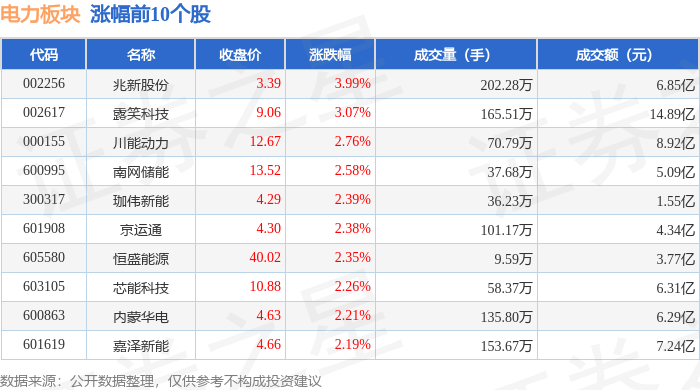
Market Overview - The electricity sector experienced a slight decline of 0.04% on the previous trading day, with Leshan Electric Power leading the drop [1] - The Shanghai Composite Index closed at 3997.56, down 0.25%, while the Shenzhen Component Index closed at 13404.06, down 0.36% [1] Stock Performance - Notable gainers in the electricity sector included: - Zhaoxin Co., Ltd. (002256) with a closing price of 3.39, up 3.99% on a trading volume of 2.02 million shares and a transaction value of 685 million yuan [1] - Luxiao Technology (002617) closed at 9.06, up 3.07% with a transaction value of 148.9 million yuan [1] - Chuaneng Power (000155) closed at 12.67, up 2.76% with a transaction value of 892 million yuan [1] - Conversely, Leshan Electric Power (600644) saw a significant decline of 5.20%, closing at 11.85 with a transaction value of 954 million yuan [2] - Other notable decliners included: - Huami Environmental Energy (600475) down 4.49% [2] - Haoling Power (600452) down 2.54% [2] Capital Flow - The electricity sector experienced a net outflow of 1.461 billion yuan from main funds, while retail investors contributed a net inflow of 1.5 billion yuan [2] - Key stocks with significant capital flow included: - Luxiao Technology (002617) with a net inflow of 77.42 million yuan from main funds [3] - Zhaoxin Co., Ltd. (002256) with a net inflow of 69.06 million yuan [3] - Jiaze New Energy (601619) with a net inflow of 57.21 million yuan [3]


公用事业行业周报(2025.10.27-2025.10.31):火电业绩持续高增,行业持仓已至低点-20251102
Orient Securities· 2025-11-02 03:15
Investment Rating - The report maintains a "Positive" investment rating for the utility sector [4] Core Views - The thermal power sector continues to show high growth in performance, with significant improvements in profitability and cash flow [7][10] - The report indicates that the current coal price increase is nearing its end, and the pessimistic expectations for electricity prices are easing [7] - The utility sector is currently undervalued, with a notable decrease in fund holdings, suggesting potential investment opportunities [7][14] Summary by Sections Thermal Power Performance - In Q3 2025, the thermal power sector's gross margin reached 18.9%, above the historical average of 17.8%, with a year-on-year increase of 3.6 percentage points [7][10] - Total revenue for sample companies in Q3 2025 was 314.4 billion yuan, a decrease of 2.1% year-on-year, while net profit attributable to shareholders was 24.7 billion yuan, an increase of 38.3% [10][12] - The average price of Q5500 thermal coal at Qinhuangdao Port was 715 yuan/ton, reflecting a 10.6% increase compared to the previous quarter [7][10] Fund Holdings and Market Performance - As of Q3 2025, the utility sector's fund holdings dropped to 1.15% of total fund equity investments, a decrease of 0.55 percentage points [14] - The utility sector index rose by 0.6% during the week, outperforming the CSI 300 index by 1.0 percentage points [47] Investment Recommendations - The report suggests focusing on high-quality dividend assets within the utility sector, particularly thermal power, hydropower, and nuclear power [7] - Specific stocks recommended include Guodian Power (600795), Huadian International (600027), and Huaneng International (600011) for thermal power [7] - For hydropower, recommended stocks include Yangtze Power (600900) and Sichuan Investment Energy (600674) [7]



内蒙华电的前世今生:负债率 38.22%低于行业平均,毛利率 23.60%高于同类 5.36 个百分点
Xin Lang Cai Jing· 2025-10-31 16:36
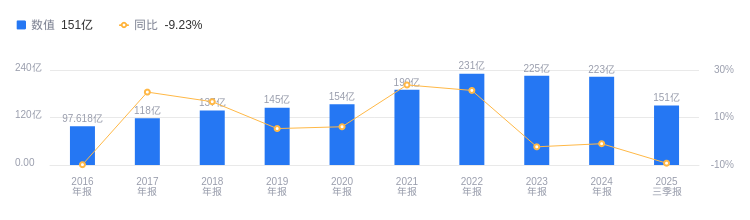
Core Viewpoint - Inner Mongolia Huadian is a leading power generation company in Inner Mongolia, established in 1994, with a focus on coal-fired power generation and a growing presence in renewable energy [1] Group 1: Business Overview - Inner Mongolia Huadian was founded on May 12, 1994, and listed on the Shanghai Stock Exchange on May 20, 1994, making it the first listed power generation company in Inner Mongolia [1] - The company’s main business includes thermal power generation, heating, steam, and hot water production and supply, as well as investments in coal, railways, and renewable energy projects [1] Group 2: Financial Performance - For Q3 2025, Inner Mongolia Huadian reported revenue of 15.052 billion yuan, ranking 16th among 28 companies in the industry, with the industry leader, Huaneng International, at 172.975 billion yuan [2] - The net profit for the same period was 2.864 billion yuan, placing the company 11th in the industry, with the top performer, Huaneng International, at 19.436 billion yuan [2] Group 3: Financial Ratios - As of Q3 2025, the company's debt-to-asset ratio was 38.22%, lower than the industry average of 61.62%, indicating strong solvency [3] - The gross profit margin for the same period was 23.60%, higher than the industry average of 18.24%, reflecting robust profitability [3] Group 4: Leadership - The chairman, Gao Yuan, has extensive experience in the power sector and holds multiple qualifications, including a bachelor's degree in economics and a master's in business administration [4] - The general manager, Zhang Yan, also has a strong educational background and experience in the industry [4] Group 5: Shareholder Information - As of September 30, 2025, the number of A-share shareholders decreased by 7.60% to 140,500, while the average number of shares held per shareholder increased by 8.22% to 46,500 [5] - The top circulating shareholder is Hong Kong Central Clearing Limited, with 5.927 million shares, marking a new entry [5] Group 6: Future Outlook - The company is expected to see its total installed capacity of renewable energy exceed 5.5 million kilowatts, approaching a 50% share of its thermal power capacity after the completion of ongoing projects [5] - Forecasts for net profit from 2025 to 2027 are 2.348 billion, 2.640 billion, and 2.936 billion yuan, respectively, with a "buy" rating maintained by analysts [5][6]
公用事业行业央企ESG评价体系:绿色安全+能源转型是核心社会责任担当是基石:公用事业行业央企ESG评价体系
Shenwan Hongyuan Securities· 2025-10-30 11:23
Investment Rating - The report assigns a "Buy" rating for several key companies in the public utility sector, including China Resources Power, Guodian Power, and Inner Mongolia Huadian [28]. Core Insights - The public utility sector is crucial for achieving national "dual carbon" goals, with a strong emphasis on environmental and social issues in the ESG evaluation framework [5][4]. - The ESG evaluation system for public utilities includes four categories of positive indicators and one category of negative indicators, focusing on objective assessment metrics [8][23]. - Recent policies from various government departments emphasize the need for green transformation, pollution prevention, and social welfare in the public utility sector [5][4]. Summary by Sections 1. ESG Policy in Public Utilities - The public utility sector is a major contributor to energy consumption and carbon emissions, making its green transformation essential for national goals [5]. - Key policies include the "14th Five-Year" energy conservation and emission reduction plan, which outlines specific requirements for green transformation and public service stability [5][4]. 2. ESG Evaluation System Construction - The ESG evaluation system consists of four positive categories: General Indicators, Environmental Indicators, Social Indicators, and Governance Indicators, with a total of 18 primary indicators and 35 secondary indicators [8][23]. - The negative category focuses on violations and penalties, with specific metrics for environmental, social, and governance aspects [23]. 3. General Indicators - General indicators assess the authenticity and standardization of ESG reports, including the basis for report preparation, third-party verification, and the publication of ESG-specific reports [10][9]. 4. Environmental Indicators - Environmental indicators are based on energy conservation, low carbon, and circular economy principles, with a total of four primary indicators focusing on emissions management, ecological compliance, resource utilization, and climate strategy [11][12]. 5. Social Indicators - Social indicators highlight the public utility sector's role in community development and social stability, with six primary indicators covering community contributions, employee development, innovation, supply chain responsibility, product safety, and core operational responsibilities [15][16][17]. 6. Governance Indicators - Governance indicators aim to enhance corporate governance and decision-making, with five primary indicators focusing on party leadership, industry reform, compliance risk management, governance structure, and information transparency [19][20][21]. 7. Negative Indicators - The negative indicators focus on compliance issues, with penalties for violations in environmental, social, and governance areas, deducting points for each violation [23][25].





内蒙华电今日大宗交易折价成交302.03万股,成交额1159.8万元
Xin Lang Cai Jing· 2025-10-30 09:32
Summary of Key Points - On October 30, Inner Mongolia Huadian conducted a block trade of 3.0203 million shares, with a transaction value of 11.598 million yuan, accounting for 2.79% of the total transaction value for the day [1] - The transaction price was 3.84 yuan, which represents a discount of 10.49% compared to the market closing price of 4.29 yuan [1]

内蒙华电(600863):煤炭板块影响业绩,风电注入保障盈利增长
Shenwan Hongyuan Securities· 2025-10-30 09:18
Investment Rating - The investment rating for the company is "Buy" (maintained) [1] Core Views - The company's performance is impacted by the coal sector, while the injection of wind power assets is expected to support profit growth [1] - The company reported a total revenue of 15.052 billion yuan for the first three quarters of 2025, a year-on-year decrease of 9.23%, and a net profit attributable to shareholders of 2.208 billion yuan, down 10.60% year-on-year, which aligns with expectations [6] - The company is optimistic about the profitability of the wind power assets being injected, committing to a minimum net profit contribution of 800 million yuan from these assets over three years [6] Financial Data and Profit Forecast - Total revenue forecast for 2025 is 19.908 billion yuan, with a year-on-year decline of 10.7% [5] - Net profit attributable to shareholders for 2025 is projected at 2.348 billion yuan, reflecting a slight increase of 1.0% year-on-year [5] - Earnings per share for 2025 is estimated at 0.36 yuan, with a projected price-to-earnings ratio of 12 [5] - The company’s coal production for the first three quarters of 2025 was 10.459 million tons, a decrease of 0.92% year-on-year, while coal sales averaged 304.10 yuan per ton, down 26.42% year-on-year [6]
公用事业行业央企ESG评价体系:绿色安全+能源转型是核心,社会责任担当是基石
Shenwan Hongyuan Securities· 2025-10-30 08:48
Investment Rating - The report maintains a positive outlook on the public utility sector's central enterprises with a focus on the ESG evaluation system [1]. Core Insights - The establishment of the ESG evaluation system for public utilities is based on a balanced emphasis on environmental and social issues, crucial for achieving national carbon neutrality goals [3][9]. - The evaluation system consists of four categories of positive indicators and one category of negative indicators, with a total of 18 primary indicators and 35 secondary indicators [12][28]. - Key policies guiding the sector include promoting renewable energy, enhancing energy efficiency, and ensuring equitable public services [9][11]. Summary by Sections 1. ESG Policy: Balancing Environmental and Social Issues - The public utility sector is a major contributor to energy consumption and carbon emissions, making its green transition vital for national carbon goals [3][9]. - Recent policies emphasize the development of clean energy and pollution control, with specific directives from various government bodies [9][11]. 2. Constructing the ESG Evaluation System: Multi-Dimensional Assessment - The ESG evaluation system is structured with four positive categories: General Indicators, Environmental Indicators, Social Indicators, and Governance Indicators, along with one negative category for violations [12][28]. - Each category has specific indicators designed to objectively assess the performance of enterprises in the public utility sector [12][28]. 3. General Indicators - General indicators assess the authenticity and standardization of ESG reports, including the basis for report preparation, third-party verification, and the publication of ESG-specific reports [12][14]. 4. Environmental Indicators - Environmental indicators focus on energy efficiency and circular economy principles, with metrics for emissions management, ecological compliance, resource utilization, and climate strategy [15][17]. 5. Social Indicators - Social indicators highlight the sector's role in public service, with metrics for community contributions, employee development, innovation, supply chain responsibility, and customer rights [19][21]. 6. Governance Indicators - Governance indicators aim to enhance corporate governance standards, focusing on party leadership, industry reform, compliance risk management, governance structure, and information transparency [23][26]. 7. Negative Indicators - The negative category includes penalties for violations, with specific metrics for environmental, social, and governance infractions, where each violation results in a deduction of points [28][31]. 8. Valuation of Key Companies - The report includes a valuation table for key companies in the public utility sector, indicating ratings and projected earnings per share (EPS) for the years 2025 to 2027 [34].
内蒙古蒙电华能热电股份有限公司2025年第三季度报告
Shang Hai Zheng Quan Bao· 2025-10-29 23:35
Core Viewpoint - The company reported a decrease in net profit for the first nine months of 2025, primarily due to reduced power generation and coal sales prices, alongside an increase in average electricity selling prices [4][5][6]. Financial Data - For the period from January to September 2025, the net profit attributable to shareholders was CNY 2,207.70 million, a year-on-year decrease of 10.60% [4]. - The net profit after deducting non-recurring gains and losses decreased by 8.24% year-on-year [4]. - The total power generation was 40.158 billion kWh, down 10.96% year-on-year, with thermal power generation at 37.508 billion kWh, a decrease of 11.80% [4]. - The average selling price of electricity was CNY 341.52 per MWh (excluding tax), an increase of 2.01% year-on-year [4]. - The average selling price of coal was CNY 304.10 per ton (excluding tax), down CNY 109.19 per ton, a decrease of 26.42% year-on-year [5]. - The procurement price of fuel also decreased, with the standard coal price at CNY 508.65 per ton, down CNY 70.36 per ton, a decrease of 12.15% year-on-year [5]. Management Changes - The company appointed Zhang Yan as the new General Manager, following the resignation of Wang Zhenrui due to work changes [9][18]. - Zhang Yan has a background in finance and management, with previous roles in various power generation companies [11][18]. Board Meeting Resolutions - The board approved the third-quarter report for 2025 and the appointment of Zhang Yan as General Manager [24][31]. - The board also agreed on several amendments to internal management policies, which will require shareholder approval [35][47][50].
内蒙华电(600863.SH)前三季度净利润22.08亿元,同比下降10.6%
Ge Long Hui A P P· 2025-10-29 15:28
Core Viewpoint - Inner Mongolia Huadian (600863.SH) reported a decline in both revenue and net profit for the first three quarters of 2025 compared to the previous year [1] Financial Performance - The total operating revenue for the first three quarters reached 15.052 billion yuan, representing a year-on-year decrease of 9.23% [1] - The net profit attributable to shareholders of the parent company was 2.208 billion yuan, down 10.6% year-on-year [1] - The basic earnings per share stood at 0.33 yuan [1]