
CICC(601995)

Search documents
上市券商2025Q4业绩前瞻:零售及自营业务驱动全年高增
GUOTAI HAITONG SECURITIES· 2026-01-20 14:01
Investment Rating - The report assigns an "Increase" rating for the industry, indicating a positive outlook for the listed brokerage firms [5][30]. Core Insights - The report anticipates a significant improvement in the performance of listed brokerages, with a projected year-on-year increase of 46.4% in net profit attributable to shareholders for 2025, reaching 216.4 billion yuan [5][8]. - The growth is primarily driven by active trading and a low base effect, with expected adjusted operating revenue rising by 34.1% to 565.7 billion yuan [5][9]. - The brokerage sector is expected to benefit from both the influx of long-term capital and improved performance, particularly in retail and wealth management segments [5][29]. Summary by Sections 1. Performance Outlook - The report forecasts a 46.4% year-on-year increase in net profit attributable to shareholders for 2025, with adjusted operating revenue expected to rise by 34.1% to 565.7 billion yuan [8][9]. 2. Business Segments - **Retail and Proprietary Business**: These are identified as the main drivers of performance growth, with retail business expected to contribute significantly due to increased trading activity [10][11]. - **Brokerage Business**: Anticipated revenue growth of 49% in 2025, driven by a daily average trading volume of 20,576 billion yuan, a 70% increase year-on-year [11][12]. - **Investment Banking**: Projected revenue growth of 12% for 2025, supported by a recovery in equity financing, with IPO underwriting expected to reach 131.8 billion yuan, a 96% increase [15][29]. - **Asset Management**: Expected to see a modest revenue increase of 4% in 2025, with total asset management scale slightly improving [19][29]. - **Credit Business**: Anticipated significant improvement in interest income, projected to grow by 57% due to increased margin trading balances [22][29]. - **Proprietary Trading**: Expected revenue growth of 35% in 2025, benefiting from improved investment yields [27][29]. 3. Investment Recommendations - The report recommends increasing holdings in leading brokerage firms that will benefit from the influx of incremental capital into the market, specifically highlighting Huatai Securities and CICC as top picks [29][30].

中金公司:中美AI投资的“差异”
Ge Long Hui· 2026-01-20 14:01
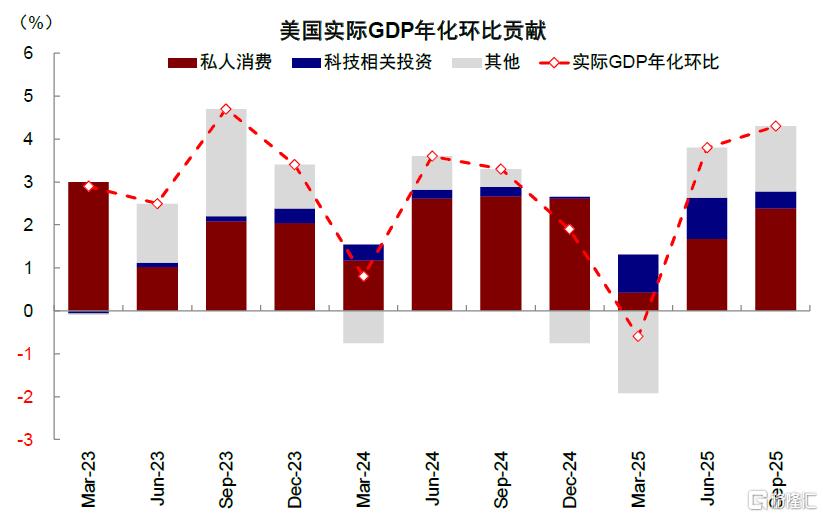
Core Insights - The article emphasizes the significant impact of AI on global economic growth and stock market performance, particularly in the U.S. and China, highlighting the importance of AI investments in driving GDP growth and stock returns [1][11]. Economic Contribution - U.S. technology hardware and software investments are projected to contribute 0.8 percentage points to the annualized GDP growth of 2.5% in the first three quarters of 2025 [2]. - Since 2023, U.S. non-farm business sector labor productivity has increased by 7.2% [4]. Stock Market Performance - Since the launch of ChatGPT at the end of 2022, the "Magnificent Seven" stocks in the U.S. contributed 45 percentage points to the S&P 500 index returns, accounting for over half of the total returns [1]. - In Hong Kong, seven leading tech stocks contributed 14 percentage points to the Hang Seng Index returns, representing 40% of the total returns since the launch of DeepSeek in early 2025 [7]. AI Industry Dynamics - The U.S. has a first-mover advantage in AI infrastructure, models, and talent, while China is rapidly catching up, particularly in open-source models [16][19]. - The global cloud computing market is expected to reach $692.9 billion in 2024, with North America holding a 54.3% market share and China at 16.8% [20]. Investment Landscape - U.S. nominal investment in AI technology hardware and software is approximately $1.05 trillion, accounting for 3.4% of nominal GDP, while China's investment is around $650 billion, also about 3.3% of nominal GDP [42]. - The AI investment landscape shows that the U.S. is primarily driven by private sector investments, while China's investments are significantly supported by government funding [52]. Funding Sources - U.S. AI investments are predominantly led by the private sector, with a total investment of $552 billion, compared to China's $900 billion, which includes substantial government support [52]. - The Chinese government has invested approximately $750 billion in AI, significantly higher than the U.S. government's $110 billion [57]. Investment Focus - U.S. investments are heavily focused on data centers and supporting infrastructure, while China is investing more in chip development and AI models [58]. - In 2025, U.S. leading companies are expected to invest $4 billion in the foundational layer, with 88% directed towards infrastructure [59]. Talent and Research - The number of AI researchers in China has grown significantly, with Chinese researchers holding three times as many AI patents as their U.S. counterparts [41]. - The rapid increase in AI talent in China is enhancing its research capabilities, narrowing the gap with the U.S. [41]. Future Outlook - The article suggests that the U.S. will continue to invest heavily in data centers and energy equipment, which will drive demand for related supply chains in China [88]. - China's ongoing need for chips and AI infrastructure indicates a sustained demand and policy support in the semiconductor sector [88].

从中金出走的人,去了哪里?
YOUNG财经 漾财经· 2026-01-20 12:21
Core Viewpoint - The article discusses the recent trends of talent outflow from China International Capital Corporation (CICC), highlighting the shift in employee preferences and the impact of regulatory changes on the investment banking landscape in China [4][5][6]. Group 1: Employee Outflow Trends - CICC, once a prestigious institution attracting top talent, has seen a significant decline in its appeal due to increased competition, regulatory tightening, and a reduction in compensation packages [5][6]. - Employees are leaving CICC for other brokerages, often following two paths: "high-level lateral moves" to similar top-tier firms or "strategic downshifts" to smaller firms for greater decision-making power [8][9]. - Notable examples of former CICC executives transitioning to other firms include Liang Hong, who moved to Huatai Securities, and Yang Sulan, who joined China Galaxy Securities, both continuing to leverage their expertise in the capital markets [8][9]. Group 2: Transition to Real Economy - A growing number of former CICC employees are leaving the financial sector entirely to join the real economy, driven by the 2023 "827 policy" which has cooled the IPO market and led to a contraction in investment banking activities [12]. - The demand for professionals with capital market experience in the real economy has surged, as companies seek expertise in compliance and market operations for financing and investor relations [12][13]. - Many former CICC employees are taking on key roles such as company secretaries, leveraging their backgrounds to manage corporate governance and investor relations effectively [13][14]. Group 3: Movement to Foreign Investment Banks - There is a notable trend of CICC talent moving to foreign investment banks, capitalizing on their international experience and networks [16]. - For instance, Jiang Zhiwei, a former CICC executive, joined Deutsche Bank, reportedly for a significantly higher salary, reflecting the competitive compensation landscape in foreign firms [16]. - This trend is not limited to CICC's core business lines but extends to its subsidiaries and affiliated institutions, indicating a broader talent migration within the financial services sector [16][17]. Group 4: Challenges and Issues - CICC Capital, once a leading player in alternative investments, has faced significant turmoil, including the fall of key executives due to allegations of misconduct, which has tarnished the reputation of the CICC brand [19]. - The issues within CICC Capital highlight serious governance and compliance failures, raising concerns about the integrity of the investment management industry as a whole [19].

长盈精密:关于变更持续督导保荐代表人的公告

Zheng Quan Ri Bao· 2026-01-20 12:13
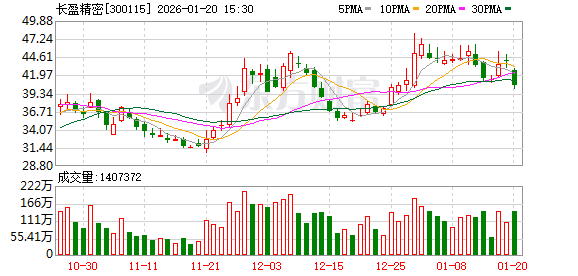
Core Viewpoint - Changying Precision announced the appointment of a new representative for ongoing supervision of its stock issuance project for 2023, ensuring continuity in oversight responsibilities [2] Group 1 - Changying Precision has appointed CICC as the sponsor for its 2023 stock issuance project [2] - Wu Xiaowu has stepped down from his role as the ongoing supervising representative due to internal work adjustments [2] - Liu Jiajie has been appointed to replace Wu Xiaowu and will continue to fulfill the ongoing supervision duties [2]
A股重磅!宽基ETF连续出现净赎回,有“巨无霸”份额回落至“924”行情之前,多只科创、创业板系ETF份额缩水,发生了啥?
Jin Rong Jie· 2026-01-20 08:57
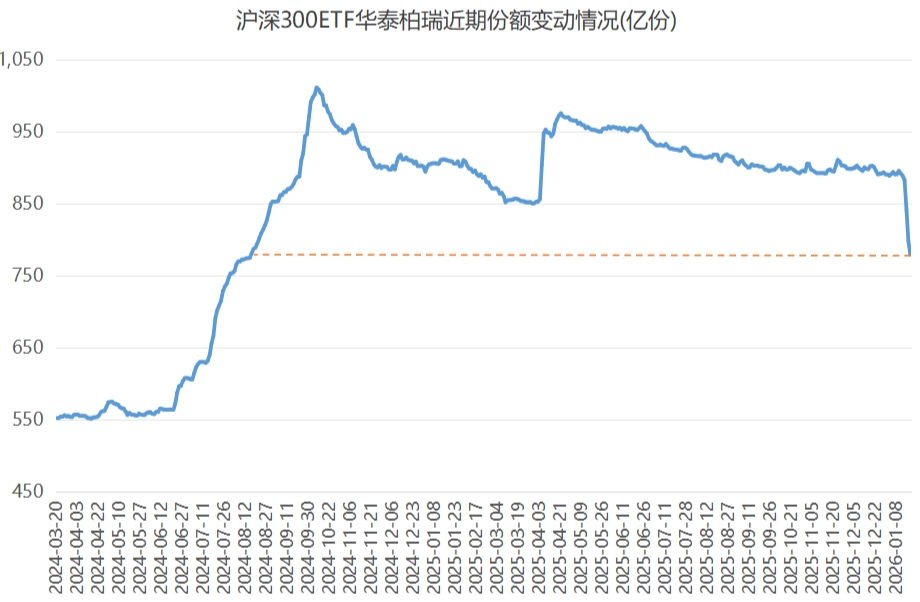
Group 1 - Recent net redemptions in A-share broad-based ETFs have drawn market attention, with significant outflows recorded on January 15 and 16, totaling 687 billion and 863 billion respectively, marking the highest single-day outflows in history [1] - As of January 19, four out of six major broad-based ETFs saw their shares decline by over 10% in the last three trading days, with the largest, Huatai-PB CSI 300 ETF, dropping to 778.63 billion shares, a scale of approximately 369.2 billion, the lowest since August 2024 [1] - The ChiNext and STAR Market ETFs also experienced significant declines, with the E Fund STAR 50 ETF and E Fund ChiNext ETF seeing share reductions of 34.55% and 20.22% respectively [3] Group 2 - In contrast to the outflows from broad-based ETFs, certain commodity, cross-border, and narrow-based ETFs attracted significant inflows, with the Southern Nonferrous ETF being the only product to receive over 10 billion in net inflows, totaling 100.87 billion, driven by rising base metal prices [3] - Other ETFs such as Yongying Satellite ETF, Harvest Software ETF, and GF Media ETF also received net inflows exceeding 6 billion [3] - According to CITIC Securities, the impact of ETF redemptions on individual stocks was significant, with main board, ChiNext, and STAR Market stocks experiencing sell-offs of 946 billion, 334 billion, and 265 billion respectively during the peak outflow days [3] Group 3 - Regulatory measures have been implemented to cool down the market following rapid price increases and overheated sentiment, including raising the minimum margin requirement for margin trading from 80% to 100% [5][6] - The China Securities Regulatory Commission emphasized the need for comprehensive market monitoring and timely counter-cyclical adjustments to maintain market stability and prevent excessive volatility [6] - There are differing views on the long-term outlook for A-shares, with some analysts suggesting the potential for a slow bull market due to reforms, while others remain skeptical about escaping historical volatility patterns [7]




中资券商深度参与港股市场股权融资活动;穆启国卸任西部证券研究所所长|券商基金早参
Mei Ri Jing Ji Xin Wen· 2026-01-20 01:42
Group 1: Hong Kong Stock Market Financing - The Hong Kong stock market has seen active financing since the beginning of the year, with equity financing reaching HKD 39.09 billion, a year-on-year increase of 316.27% [1] - In 2025, the equity financing scale in the Hong Kong primary market reached HKD 612.7 billion, up 248.8% year-on-year [1] - Chinese securities firms are increasingly dominating the equity underwriting business, holding six of the top ten positions in underwriting amounts, with a combined market share of 56.15% [1] - CICC led the IPO sponsorship with an underwriting scale of HKD 51.65 billion, followed by CITIC Securities (Hong Kong) with HKD 46.03 billion [1] - The active financing environment is expected to enhance the revenue outlook for securities firms and boost the valuation recovery of the securities sector [1] Group 2: Changes in Western Securities Research Department - Mu Qiguo has resigned as the head of the research institute at Western Securities, with Zhao Yinghua, the vice president in charge of the research institute, taking over [2] - The change reflects the higher demands for research capabilities under the company's "14th Five-Year" strategic plan, indicating a focus on long-term development and resource optimization [2] - Mu Qiguo will focus on intelligent investment research and the establishment of the Hong Kong subsidiary's research business, which may enhance the competitiveness of the brokerage sector in digital transformation [2] Group 3: Insurance Asset Management Registration - In 2025, insurance asset management institutions registered 314 debt investment plans, equity investment plans, and private equity funds, with a total scale of CNY 510.44 billion, showing a year-on-year decrease of 20.71% in quantity and 26.08% in scale [3] - The number of debt investment plans decreased significantly, which may impact financing in infrastructure and related sectors [3] - The growth in equity investment plans, with a 12.52% increase in scale, indicates a shift of insurance capital towards equity markets, positively influencing the long-term investment environment [3]


中资券商深度参与港股市场股权融资活动;穆启国卸任西部证券研究所所长 | 券商基金早参
Mei Ri Jing Ji Xin Wen· 2026-01-20 01:20
Group 1 - The Hong Kong stock market has seen a significant increase in equity financing activities, with a total of HKD 390.9 billion raised as of January 19, 2025, representing a year-on-year growth of 316.27% [1] - In 2025, the total equity financing scale in the Hong Kong primary market reached HKD 6,127 billion, showing a year-on-year increase of 248.8% [1] - Chinese securities firms are increasingly dominating the equity underwriting business in the Hong Kong market, holding six out of the top ten positions in underwriting amounts, with a combined market share of 56.15% [1] Group 2 - Mu Qiguo has stepped down as the head of the research institute at Western Securities, with Zhao Yinghua taking over the role [2] - The leadership change reflects the updated requirements of the company's "14th Five-Year" strategic plan for research and development capabilities [2] - Mu Qiguo will focus on the company's intelligent investment research and the establishment of research operations for its Hong Kong subsidiary [2] Group 3 - In 2025, insurance asset management institutions registered a total of 314 debt and equity investment plans and private equity funds, with a total scale of CNY 510.443 billion, showing a year-on-year decrease of 20.71% in quantity and 26.08% in scale [3] - The number of debt investment plans decreased significantly to 285, with a scale of CNY 441.905 billion, reflecting a year-on-year decline of 24% and 28.46% respectively [3] - Conversely, the number of equity investment plans increased to 22, with a scale of CNY 33.532 billion, indicating a year-on-year growth of 83.33% in quantity and 12.52% in scale [3]
君乐宝递表港交所 中金公司和摩根士丹利担任联席保荐人
Zheng Quan Shi Bao Wang· 2026-01-20 00:41
Core Viewpoint - Junlebao has submitted an application for listing on the Hong Kong Stock Exchange, with CICC and Morgan Stanley serving as joint sponsors. The company ranks third among comprehensive dairy product companies in China, holding a market share of 4.3% in 2024 [1]. Company Overview - In 2024, Junlebao ranks second in the low-temperature liquid milk market with a market share of 14.5% and third in the fresh milk market with a market share of 10.6%. The "Yuexianhuo" brand has become the leading high-end fresh milk brand with a market share of 24.0% [1]. - The company also ranks second in the low-temperature yogurt market with a market share of 17.2%, while its "Jianchun" brand is the top low-temperature yogurt brand with a market share of 7.9% [1]. - Junlebao has consistently ranked among the top three domestic infant formula milk powder companies from 2020 to 2024, with a market share of 5.0% in 2024 [1]. - The product line includes low-temperature liquid milk, milk powder, ambient liquid milk, and other dairy products, featuring "Jianchun" zero-sugar yogurt and "Yuexianhuo" high-end fresh milk. The newly launched "Youcuibaoai" infant formula milk powder meets international leading standards [1]. - The company operates 33 self-owned farms and 20 dairy production facilities, covering the entire industry chain [1]. Industry Insights - The Chinese dairy industry has experienced rapid development due to modernization of the industrial chain and supply chain integration, despite its late start. The industry is expected to maintain stable growth driven by accelerated urbanization, increased consumer health awareness, and product innovation [1]. - In 2024, liquid dairy products will account for 54.3% of the total dairy market in China, with retail sales reaching RMB 355 billion. The market size is projected to reach RMB 395.4 billion by 2029, with a compound annual growth rate (CAGR) of 2.3% from 2025 to 2029 [2]. - The low-temperature liquid dairy product market, which includes fresh milk and low-temperature yogurt, is expected to reach RMB 89.7 billion in 2024, with a CAGR of 3.0% from 2019 to 2024. Its retail sales share in the liquid dairy product market is projected to increase from 23.7% in 2019 to 25.3% in 2024, and the market size is expected to reach RMB 125.9 billion by 2029, with a CAGR of 7.2% from 2025 to 2029 [2]. - The ambient liquid dairy product market, which includes ultra-high-temperature sterilized milk and ambient yogurt, is projected to reach RMB 265.3 billion in 2024, with a CAGR of 1.2% from 2019 to 2024. The market size is expected to reach RMB 269.5 billion by 2029, with a CAGR of 0.4% from 2025 to 2029 [2].
大族数控通过聆讯 中金公司为独家保荐人
Zheng Quan Shi Bao Wang· 2026-01-20 00:19
Core Viewpoint - Dazhu CNC has passed the main board listing hearing on the Hong Kong Stock Exchange, with CICC as its sole sponsor [1] Group 1: Company Overview - Dazhu CNC is a service provider of production equipment solutions specifically for PCB manufacturing, covering critical processes such as drilling, exposure, lamination, shaping, and inspection [1] - The company is the largest manufacturer of PCB-specific production equipment in China, holding a market share of 10.1% based on projected revenue for 2024 [1] - Dazhu CNC's products are sold in over 10 countries and regions worldwide [1] Group 2: Product Focus - A significant portion of the company's revenue comes from drilling equipment and solutions, which include both mechanical drilling equipment and laser direct drilling systems [1]
云动智能递表港交所 中金公司为保荐人
Zheng Quan Shi Bao Wang· 2026-01-20 00:18
Core Viewpoint - Yundong Intelligent has submitted a listing application to the Hong Kong Stock Exchange, with CICC serving as the sole sponsor. The company is the third-largest domestic supplier of in-vehicle communication solutions in China, holding a market share of 7% [1]. Group 1: Company Overview - Yundong Intelligent ranks first among domestic suppliers in 4G in-vehicle communication solutions, with a market share of 7.8% based on the annual shipment volume as of December 31, 2024 [1]. - The company has a competitive advantage in emergency call solutions, being the third-largest domestic supplier with a market share of 1.0% in 2024, which increased to 1.4% by September 30, 2025 [1]. - Yundong Intelligent is accelerating the development of 5G in-vehicle communication solutions, achieving a shipment volume of approximately 27,300 units in the nine months ending September 30, 2025 [1]. Group 2: Product and Market Position - The company's solutions feature communication modules equipped with domestic chips, integrating the AUTOSAR framework and modular development strategies. Key product offerings include T-Box, emergency call terminals, Central Gateway (CGW), and digital keys [1]. - Yundong Intelligent has established partnerships with six of the top ten vehicle manufacturers in China and two of the top three domestic automotive brands as of 2024 [1]. - The market for intelligent connected vehicle solutions is expected to grow significantly, with the Chinese market projected to increase from RMB 115.3 billion in 2024 to RMB 444.9 billion by 2029, with 5G solutions growing at a significantly higher rate than 4G [1].