
Appo(688007)

Search documents
光峰科技:“一束激光”照亮产业发展
Zheng Quan Ri Bao Zhi Sheng· 2026-01-26 16:38
Core Viewpoint - Guangfeng Technology has successfully transitioned from laboratory innovations to market applications, focusing on laser technology to create a robust ecosystem and expand its business into various sectors beyond cinema [1][2][3]. Group 1: Company Background and Innovations - Guangfeng Technology, established in 2006, has over 60% of domestic cinemas using its laser light source solutions and has been listed on the Sci-Tech Innovation Board since 2019 [1]. - The company pioneered a unique technology path by using a single blue laser combined with a rotating rare earth phosphor wheel to produce RGB colors, significantly reducing costs to one-tenth of traditional RGB solutions [2]. - In 2013, Guangfeng Technology launched the world's first 100-inch laser TV in collaboration with LG, marking its entry into the market [2]. Group 2: Business Model and Market Strategy - The company adopted an innovative "finance + leasing" model in 2014, allowing cinemas to upgrade their existing equipment without significant capital expenditure, thus providing stable cash flow [2][3]. - By the end of 2025, Guangfeng Technology plans to install nearly 32,000 laser light source solutions in domestic cinemas [3]. Group 3: Technological Advancements and Patents - Guangfeng Technology has developed the ALPD semiconductor laser light source technology, which has become a mainstream technology route in the industry, with over 2,300 authorized patents [3][6]. - The company is expanding its laser technology applications into underwater lidar, AR light engines, and automotive optics, showcasing its commitment to innovation [3][5]. Group 4: Future Market Opportunities - The underwater lidar market is expected to grow, with increasing demand for pool cleaning robots and deep-sea exploration robots, where Guangfeng Technology aims to address existing limitations in precision and detection distance [5][6]. - In the AR sector, Guangfeng Technology's light engines are crucial in reducing costs for consumer-grade AR glasses, enhancing market penetration [5][6]. Group 5: Strategic Focus and Industry Positioning - The company has shifted its focus from direct consumer engagement to becoming a core component supplier, empowering downstream industries [7]. - Guangfeng Technology has launched two underwater lidar products, D10 and T1, targeting different market segments based on safety standards [7][8]. - The company is actively collaborating with AR glasses manufacturers to enhance its product offerings and expand its market presence [8].

光峰科技陈孟浩:以激光为源 照亮更广生态
Zheng Quan Ri Bao· 2026-01-19 04:25
Core Insights - The article discusses the strong development momentum in hot fields such as AR (Augmented Reality) and robotics, and how laser core component suppliers can seize market opportunities [1] Company Strategy - The company, Guangfeng Technology, focuses on building and expanding its laser technology ecosystem, starting with cinema laser light sources [1] - Guangfeng Technology has over 60% market share in cinema laser light source solutions in China, indicating a high level of industry recognition in the professional display sector [1] - The company is expanding its business layout into emerging areas such as AR light machines and underwater laser radar, aiming to explore innovative applications of laser technology in more scenarios [1]
LCoS光机成AR眼镜跨过千万台分水岭的关键,光峰科技等上游企业受益
Xin Lang Cai Jing· 2026-01-16 07:27
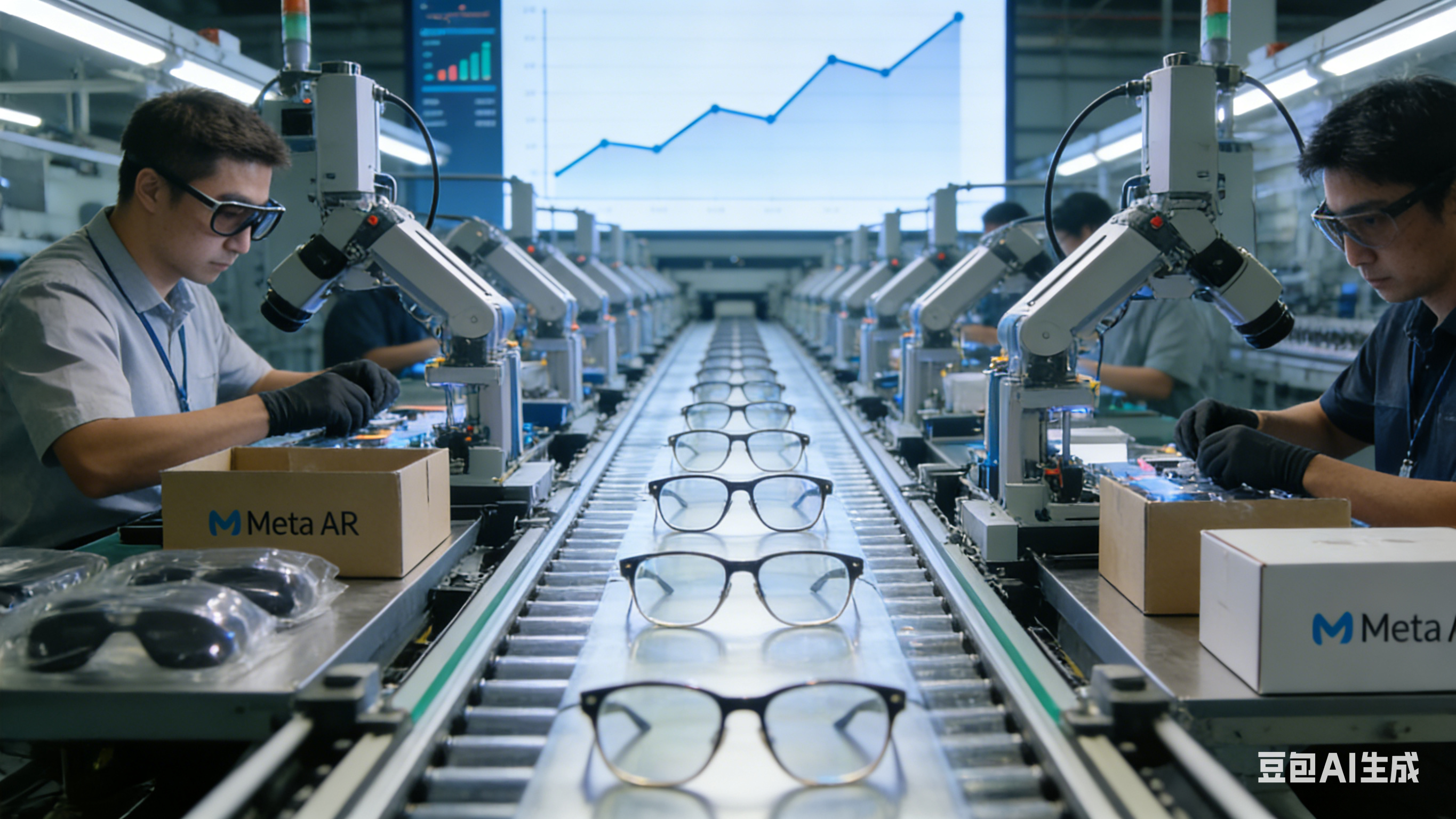
Core Insights - Meta's smart AR glasses, Ray-Ban Display, achieved a remarkable 6% market share in the smart AR glasses category within its first sales quarter, driven by unprecedented demand in the U.S. market [1][31] - Due to this strong demand, Meta has paused its international expansion plans for early 2026 to prioritize U.S. orders, with a waiting list extending to 2026 [1][31] - Meta plans to double the production capacity of Ray-Ban glasses to 20 million units by 2026, reflecting heightened expectations for future sales [2][31] Market Dynamics - The tech industry recognizes that crossing the 10 million unit threshold is crucial for establishing a sustainable ecosystem, where developers can profit and content can circulate positively [4][33] - Meta's decision to increase production capacity suggests that it has surpassed this critical threshold, indicating confidence in the product's market viability [5][34] - The expansion in production capacity also serves a defensive purpose, as competitors like Google are intensifying their focus on the smart AR glasses market [6][35] Technological Advancements - The shift from Micro LED to LCoS technology in Ray-Ban Display is a key factor in its market success, addressing core pain points in AR glasses [8][38] - The LCoS technology has led to significant product optimizations, including a reduction in price from over $1,000 to $799, making AR glasses more accessible [10][41] - The cost of optical components typically accounts for 30%-40% of the total bill of materials (BOM), making this price reduction critical for market penetration [11][40] User Experience Improvements - The new product design focuses on meeting everyday practical needs rather than just providing a novelty experience, enhancing usability for consumers [15][45] - Features like teleprompter and translation functions cater to high-frequency use cases, improving the overall practicality of the device [17][46] - The LCoS technology also allows for lighter weight and better battery life, with Ray-Ban Display offering up to 4 hours of use, compared to competitors that struggle with battery longevity [22][52] Industry Implications - The AR glasses production chain mirrors that of smartphones and electric vehicles, suggesting that upstream suppliers may benefit more initially than manufacturers [25][55] - Companies like Guangfeng Technology, which specialize in optical components, are positioned to thrive due to their established expertise and technological barriers [28][58] - The AR glasses market is expected to grow significantly, with a focus on the supply chain's stability and the potential for strong scale effects as demand increases [29][59]


AI应用催化密集,AI+家电落地加速
Orient Securities· 2026-01-13 12:57
Investment Rating - The report maintains a "Positive" investment rating for the home appliance industry, indicating an expectation of returns exceeding the market benchmark by more than 5% [4][11]. Core Insights - The report highlights that the domestic market's consumption potential is expected to be activated by the continuation of national subsidies, despite a marginal slowdown in their impact. The "Two New" policies are anticipated to further stimulate demand in the home appliance sector [3]. - The report emphasizes the acceleration of AI applications in the home appliance industry, with significant developments expected from AI models and smart hardware products [2][6]. Summary by Sections Domestic Market Outlook - The report notes that the leading companies in the white goods sector have a higher proportion of first-level energy-efficient products and more mature management processes for trade-in programs, positioning them to benefit more significantly from the evolving market dynamics [3]. - The first quarter of 2026 is projected to see stable production schedules for white goods, aligning with domestic market expectations [5]. International Expansion - The report identifies international expansion as a long-term strategy, with companies that diversify their production capacity being favored. A valuation shift is anticipated by 2026 [3]. AI Integration - The report discusses the rapid iteration of AI models and their broad application in the home appliance sector, suggesting that smart hardware products integrated with AI services are becoming a key trend. Companies like Yingzi Network are highlighted for their deep engagement in smart home segments [6].





央视报道国博新展,光峰科技助力武王墩考古成果沉浸式亮相
Xin Lang Cai Jing· 2026-01-13 08:29
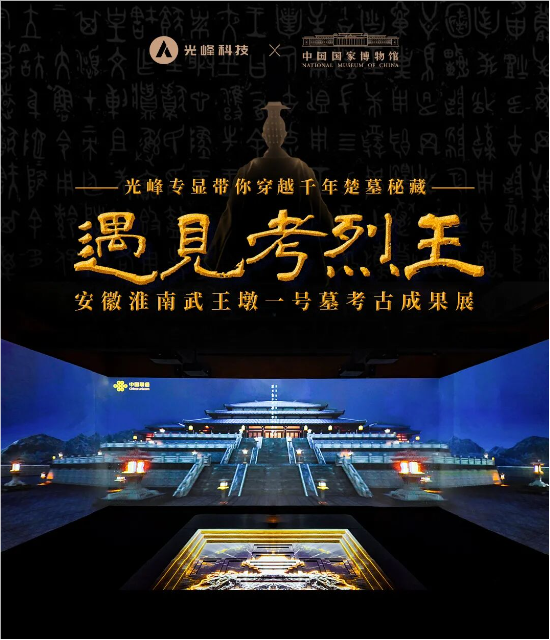
Core Viewpoint - The recent exhibition at the National Museum of China, titled "Encountering King Kao Li: Archaeological Achievements of the Wu Wang Dun," showcases the archaeological findings from the only scientifically excavated Chu royal tomb in China, generating significant interest in Chu culture through advanced projection technology [1][16]. Group 1: Exhibition Overview - The Wu Wang Dun tomb is the largest, highest-grade, and most complex royal tomb of the Chu state, dating back to the Eastern Zhou period, and features over 200 artifacts from the tomb [3][18]. - The exhibition utilizes 7 units of the Light Peak D Pro projectors to create an immersive cultural experience, allowing visitors to engage with the mysteries of the Chu tomb [18][14]. Group 2: Projection Technology - The exhibition employs two projection techniques: a three-fold screen projection that narrates the archaeological story and a digital sand table projection that decodes the tomb's structure and historical context [20][22]. - The three-fold screen projection uses multi-channel image fusion technology to present the unique burial features and the excavation process, enhancing the audience's understanding of the Chu royal tomb [7][20]. - The digital sand table projection clarifies complex archaeological data and spatial relationships, making the design and historical background of the tomb accessible to visitors [9][22]. Group 3: Advantages of Light Peak D Pro Projectors - The projectors feature high brightness (6300-9300 lumens) and unique ALPD semiconductor laser technology, ensuring clear image quality in various lighting conditions [11][24]. - The laser source is gentle and UV-free, protecting valuable artifacts from potential damage while enhancing exhibition effects [12][25]. - The projectors are designed for flexible installation, suitable for complex museum spaces, and support quick image stitching without major site modifications [26][24]. - They are built for stable operation with IP5X dust protection and efficient heat dissipation, ensuring long-term performance and reduced maintenance costs [27][24].
CES 2026观察:“物理AI时刻”要靠中国制造落地
Jing Ji Guan Cha Wang· 2026-01-10 11:01
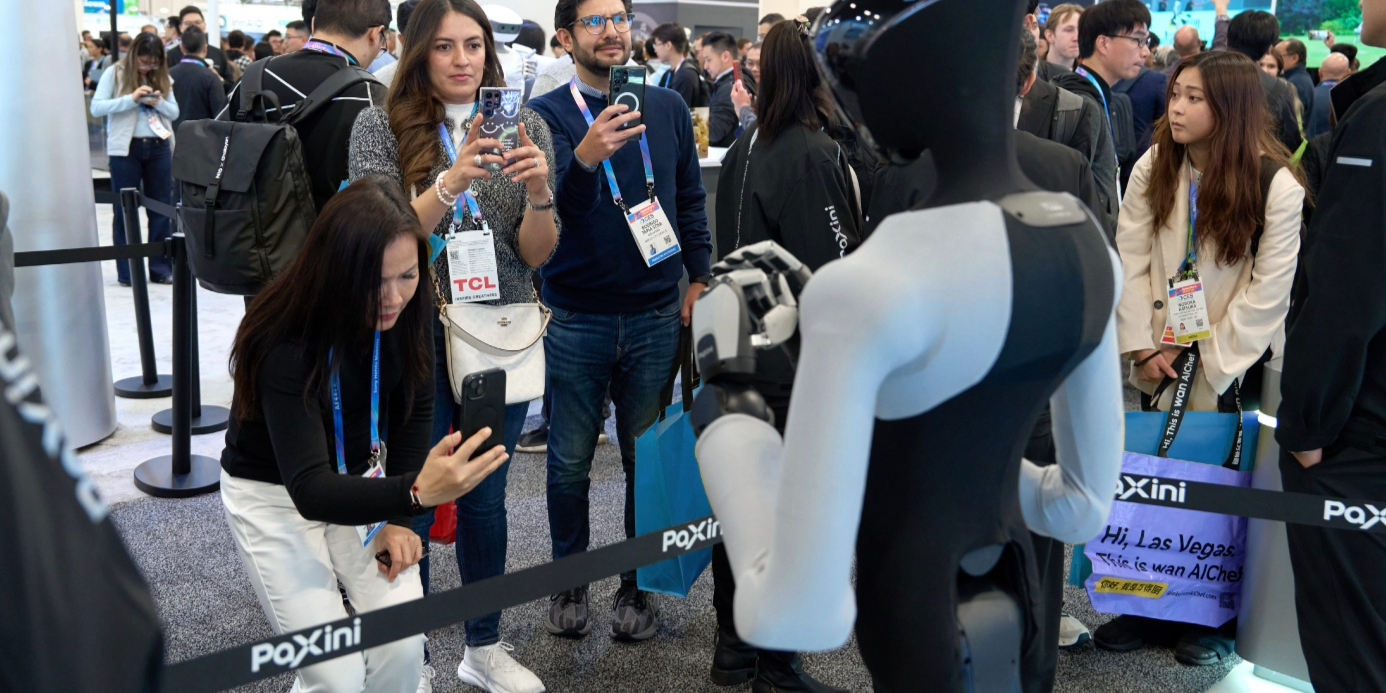
Group 1: Physical AI and Computing Power - The core theme of CES 2026 is the emergence of "Physical AI," where AI technology is transitioning from generating text or video to interacting with physical hardware [4][10] - AMD's chairwoman, Lisa Su, highlighted the increasing demand for computing power, predicting a 100-fold increase in global computing capacity over the next five years [3][4] - The presence of over 200 Chinese companies at CES indicates a strong support for the "Physical AI moment," showcasing various AI applications in physical products [4][23] Group 2: Robotics Innovations - The robotics sector at CES has shifted focus from mere physical movement to specific job functions and operational scenarios, with Chinese companies leading this evolution [5][9] - Companies like Pasoni and Fourier Intelligence showcased advanced robots capable of performing intricate tasks, such as ice cream making and automotive part sorting, demonstrating significant advancements in robotic dexterity [5][6] - The global sales of robots are projected to reach approximately $45 billion by 2026, with expectations to exceed $60 billion by 2030, driven by rising labor costs and efficiency in Chinese manufacturing [8][9] Group 3: Smart Glasses and AR Technology - Chinese companies are aggressively entering the AR/AI glasses market, aiming to redefine the concept of a "second screen" beyond smartphones [11][12] - Innovations include the launch of the world's first dual-lens AR glasses with eSIM functionality by Thunderbird Innovation, allowing users to make calls and connect to the internet without a smartphone [12][13] - The global market for smart glasses is expected to see significant growth, with sales projected to reach around $10.7 billion by 2026, reflecting an over 80% year-on-year increase [18][23] Group 4: Display and Chip Technology - Companies like Tianma Microelectronics and TCL Huaxing are pushing the boundaries of display technology, with innovations such as large-scale OLED screens and advanced automotive displays [19][20] - Lenovo and NVIDIA announced a partnership to enhance AI infrastructure, aiming to quadruple their business collaboration over the next few years [22] - The trend in AI chip development is moving towards high computing power, low energy consumption, and integration, with significant growth expected in AI terminal sales by 2028 [22][23]




深圳机器人“军团”亮相CES,智能硬件为何“赢麻了”?
Nan Fang Du Shi Bao· 2026-01-08 09:58
Core Insights - The 2026 CES highlights Shenzhen's dominance in the tech industry, with over 400 companies from the region representing a third of Chinese exhibitors and nearly 10% of global participants, showcasing a wide array of smart hardware products [4][20] - The focus of this year's CES has shifted from the capabilities of AI to its practical applications in daily life and industry processes, marking a transition from software-driven AI to "physical AI" that integrates into tangible products [5][20] Industry Trends - The emergence of "physical AI" signifies a shift in AI's value from mere communication to actionable capabilities, with products designed to be tangible and experiential, integrating AI into everyday devices [5][11] - Shenzhen's robust supply chain and engineering capabilities have been revitalized by the proliferation of AI models, allowing for rapid product iteration and development in hardware [4][15] Product Innovations - Notable products showcased include TCL's AI-integrated displays and the first consumer-grade AR glasses with independent communication capabilities, reflecting the trend of AI becoming embedded in various consumer electronics [6][10] - Innovations in robotics, such as the TORA-ONE humanoid robot and the DM-EXton2 data collection system, demonstrate advancements in tactile sensing and data acquisition, essential for the evolution of intelligent hardware [12][14] Competitive Landscape - Shenzhen's smart hardware sector is experiencing collective growth rather than isolated successes, driven by a comprehensive industrial network that supports rapid prototyping and production [15][16] - The ability to translate technology into user-friendly experiences is becoming crucial for global market appeal, as companies focus on addressing specific consumer needs rather than merely showcasing technical prowess [16][20] Future Challenges - The next phase for Shenzhen's smart hardware industry involves overcoming challenges related to core components and technologies, transitioning from hardware products to integrated system services, and enhancing global operational capabilities [19][20] - Establishing a sustainable competitive advantage will require ongoing investment in key technologies and a shift towards creating long-term brand loyalty through service-oriented business models [19][20]



“科技春晚”CES 2026来了!A股参会公司有哪些?
天天基金网· 2026-01-07 10:07
Core Viewpoint - The 2026 International Consumer Electronics Show (CES 2026) will take place from January 6 to 9 in Las Vegas, showcasing numerous A-share listed companies with their latest products in popular sectors such as robotics, smart hardware, and new energy vehicles [6]. Robotics - Ninebot will unveil a new multi-scenario lawn mowing robot, enhancing its product matrix [2]. - Stone Technology is expected to debut its "embodied intelligence black technology" as a representative of smart cleaning robots [7]. - Lingyi Technology will present a comprehensive robotics technology matrix, showcasing core components and application solutions [8]. - Zhaowei Electromechanical will showcase a new generation of dexterous hands with 20 degrees of freedom [9]. - Orbbec will release multiple 3D camera products suitable for humanoid robots, enhancing visual solutions for precise operations [9]. - Ecovacs will introduce a pool cleaning robot and the latest developments in embodied intelligence [9]. - Lens Technology will debut a highly dexterous bionic hand and head assembly, integrating self-developed reducers for improved performance [10]. - Megvii will collaborate with Yimai Intelligent to launch two new micro AI robot products [11]. Smart Glasses - Tianjian Co. will present its latest AI and AR glasses at CES 2026, focusing on AI glasses, AI headphones, and smart speakers [12]. - XGIMI Technology will globally launch its new AI glasses brand "MemoMind" [13]. - GoerTek will showcase multiple innovative MR/AR/smart glasses, enhancing the "AI + smart interaction" experience [13]. - Guangfeng Technology will present three LCoS AR optical products: Wax Girl G1, Dragonfly G1 mini, and Rainbow C1 [14]. Storage Solutions - Baiwei Storage will highlight consumer-grade storage solutions, including a Mini SSD that rivals flagship PCIe Gen4 SSDs, supporting Meta's AI/AR glasses [15]. - Jiangbolong will enhance its consumer market brand with a collaboration featuring a special edition storage product linked to the Argentina national football team [15]. - Rockchip will showcase audio and machine vision products, with its RK3588 chip being widely applied in various robotic forms [15]. Automotive Innovations - Great Wall Motors will return to CES with its full product line and core technology matrix, focusing on new energy and AI vehicles [17]. Display Technologies - TCL Technology will unveil its "machine king" series of televisions and the world's first printed OLED vehicle display solution [5]. - Hisense will launch a new generation of RGB-Mini LED display technology [5]. - BOE will showcase over 60 cutting-edge display technologies and IoT solutions, including the global debut of the "HERO 2.0 smart cockpit" [19].

轻工制造行业跟踪报告:CES 举办在即,关注智能眼镜新品节奏
Huachuang Securities· 2026-01-07 05:14
Investment Rating - The industry investment rating is "Recommended," indicating an expected increase in the industry index exceeding the benchmark index by more than 5% in the next 3-6 months [15]. Core Insights - The report emphasizes the importance of exploring supply chain opportunities from the demand side, particularly in the context of the upcoming CES event, which is expected to showcase a variety of new smart glasses products [3][9]. - The report highlights that 2026 is anticipated to be a year of significant growth for smart glasses, driven by supportive policies and supply upgrades, with a focus on enhancing product features and user experience [9]. Industry Overview - The light industry manufacturing sector comprises 164 listed companies with a total market capitalization of approximately 1,094.55 billion and a circulating market value of about 934.63 billion [6]. - The absolute performance of the industry over the past 12 months has been 32.9%, while the relative performance compared to the benchmark has been 5.8% [7]. Key Company Forecasts and Valuations - 康耐特光学 (Kangnait Optical) is projected to have an EPS of 1.18, 1.45, and 1.81 for 2025E, 2026E, and 2027E respectively, with a strong buy rating [4]. - The PE ratios for 康耐特光学 are forecasted to be 41.05, 33.26, and 26.64 for the same years, indicating strong growth potential [4]. Upcoming Events - The 2026 International Consumer Electronics Show (CES) is scheduled from January 6 to 9, showcasing over 50 exhibitors in the AI glasses segment, with significant product launches expected from various companies [9].
闪极发布loomos AI显示眼镜S1:主打“主动AI提醒助手”功能
Feng Huang Wang· 2025-12-30 03:59
Core Insights - The core focus of the article is the launch of the loomos AI display glasses S1 by Shanjite Technology, emphasizing its "active AI reminder assistant" feature that interacts with the environment and user intentions to provide information prompts [1] Company Summary - Shanjite Technology officially launched the loomos AI display glasses S1 on December 29, which features a customizable curvature frame and is equipped with a customized optical engine from Guangfeng Technology, the Dragonfly G1MINI [1] - The optical engine has a single-eye volume of approximately 0.2cc, which is about 40% smaller than the previously released Dragonfly G1, with a resolution of 356x200 and a contrast ratio of 1000:1 [1] - The collaboration between Shanjite Technology and Guangfeng Technology took less than three months from technical integration to product launch [1] - Shanjite Technology anticipates that the new product will achieve a shipment volume of over 100,000 units within a year of its release [1] Industry Summary - Market data indicates that the global smart glasses market is expected to see a year-on-year shipment increase of 64.2% in the first half of 2025, reaching 4.065 million units, with the Chinese market accounting for 26.6% of this total [1] - IDC forecasts that smart glasses shipments in China could reach 2.907 million units by 2025, representing a year-on-year growth of 121.1% [1] - By 2029, global shipments of smart glasses are projected to exceed 40 million units, with the Chinese market expected to lead the industry with a compound annual growth rate of 55.6% [1]
