BeiGene(688235)

Search documents
107只个股获机构控盘超10%,科技医药板块成资金“蓄水池”
Huan Qiu Wang· 2026-01-26 07:16
Core Insights - The report highlights the significant presence of public funds in the stock market, with 2,977 stocks appearing in fund heavy positions as of the end of Q4 last year, indicating a clear trend in institutional investment strategies [1] - A total of 107 stocks have a fund holding ratio exceeding 10%, showcasing the high influence and control of institutional funds over these stocks [1] Group 1: Fund Holdings and Stock Performance - Among the 107 stocks with over 10% fund holdings, 56 saw increased investments in Q4, with notable increases in holdings for ShenGong Co., Tianhua New Energy, and Maiwei Co., with increases of 59,020.96%, 15,808.35%, and 959.13% respectively, indicating strong institutional confidence in their fundamentals [2] - Conversely, 48 stocks experienced reductions in fund holdings, with notable decreases for Nuocheng Jianhua-U, Kaiter Co., and Keda Li, with reductions of 43.91%, 41.04%, and 39.95% respectively [2] - Three new stocks entered the heavy holding category, with Baiao Saitu, Litong Technology, and Xingtou Measurement Control having fund holding ratios of 21.55%, 12.60%, and 10.03% respectively [2] Group 2: Institutional Investment Trends - The phenomenon of institutional clustering remains significant, with over 100 funds holding 42 of the 107 stocks, and 29 stocks held by 50 to 99 funds, indicating a strong consensus among institutional investors [4] - Notably, Ningde Times, despite a holding ratio of 11.63%, has the highest number of fund holders at 2,056, followed by Zhongji Xuchuang, Zijin Mining, and Xinyi with over 1,300 fund holders each [4] - The stocks with high fund holdings are predominantly in the "hard technology" and "innovation" sectors, with 42 from the Sci-Tech Innovation Board, 27 from the Growth Enterprise Market, and 31 from the Shanghai and Shenzhen main boards, reflecting a focus on growth sectors [4] Group 3: Performance Expectations - Among the 107 stocks, 26 have released performance forecasts for 2025, with 18 expecting profit increases, 4 expecting declines, and 2 forecasting losses, indicating a generally positive outlook [5] - The highest expected profit growth is for Baiwei Storage at 473.71%, followed by Changxin Bochuang and Baiao Saitu with expected growths of 378.70% and 303.57% respectively, providing strong support for long-term fund holdings [5] - The concentration of fund holdings in the electronics and biopharmaceutical sectors suggests an increased market expectation for technological innovation and consumer recovery [5]






创新药出海BD仍然火爆!港股通创新药ETF(520880)跌1.5%延续高溢价,最新单周吸金2.36亿元
Xin Lang Cai Jing· 2026-01-26 05:47
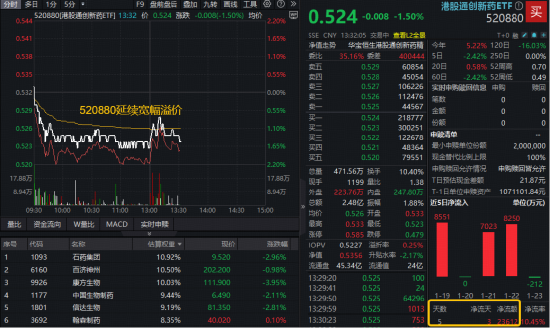
Group 1 - The Hong Kong stock market is experiencing a downturn, with the innovative drug sector declining again, as evidenced by the Hong Kong Stock Connect Innovative Drug ETF (520880) falling by 1.5% [1][6] - Last week, the ETF accumulated a total decline of 3.2%, with over 236 million yuan in funds being used to buy on dips [1][6] - Major stocks in the sector are generally down, including CSPC Pharmaceutical Group down 3%, CanSino Biologics down nearly 4%, and China Biologic Products and Innovent Biologics both down over 2% [1][6] Group 2 - Multiple innovative drug business development (BD) transactions have been completed at the beginning of the year, indicating a positive trend for Chinese innovative drugs going overseas [8] - Key transactions include: 1) Rongchang Biologics granting AbbVie overseas rights for RC148 (PD-1/VEGF) dual antibody, receiving a $650 million upfront payment and up to $4.95 billion in milestone payments [8] 2) Haisco granting overseas rights for HSK39004 (PDE3/4) to AirNexis, receiving a $108 million upfront payment and up to $955 million in milestone payments [8] 3) Zai Lab granting AbbVie overseas rights for ZG006 (CD3xDLL3xDLL3 tri-antibody), receiving a $100 million upfront payment and milestone payments totaling $1.135 billion [8] 4) Yilian Biologics granting Roche overseas rights for YL201 (B7-H3ADC), with upfront and milestone payments reaching $570 million [8] Group 3 - The Hong Kong Stock Connect Innovative Drug ETF (520880) and its associated funds are highlighted as high-elasticity investment tools, with the underlying index (Hang Seng Stock Connect Innovative Drug Select Index) offering three unique advantages [9] - The ETF has a 100% purity, excluding CXO, and fully covers innovative drug R&D companies [9] - The top ten innovative drug leaders account for over 73% of the ETF, showcasing the strength of the innovative drug sector [9][10]

JPM 2026收官,中国创新药加速全球化进程
2026-01-26 02:50
Summary of Conference Call Industry Overview - The conference focused on updates and developments in the Chinese biopharmaceutical industry, particularly highlighting companies such as BeiGene, 3SBio, and Kelun-Biotech [1][10]. Key Company Insights BeiGene - BeiGene's BCL-2 inhibitor has been approved for sale in China and is expected to receive accelerated approval in the U.S. within the year [1]. - BCL-2 is viewed as a second growth driver for BeiGene, complementing its existing BTK inhibitors, which have shown rapid sales growth in the U.S. market [2]. - The company has a robust pipeline for solid tumors, with several candidates entering late-stage development, including treatments for breast cancer and other indications [3]. - BeiGene is anticipated to report its first annual profit, with expectations that its annual report may exceed forecasts [3]. 3SBio - Pfizer has outlined a global development plan for its drug 707, with five global Phase III trials expected to start by 2026, targeting various cancers [4]. - The trials include first-line treatments for colorectal cancer and non-small cell lung cancer [4]. Kelun-Biotech - Kelun-Biotech is expected to have a significant year with five products anticipated to be commercialized, three of which have already been included in the national medical insurance [5]. - The company has successfully commercialized its top two ADC products and is expected to see explosive growth following their inclusion in insurance [5]. Innovent Biologics - Innovent's Ivosidenib is expected to receive final approval from the FDA in Q4 of this year, with ongoing clinical trials for various cancers [6][7]. - The company is also preparing for the commercialization of its CAR-T product, which has already been approved domestically [8]. Rongchang - Rongchang has announced plans for three Phase III trials, including one for non-small cell lung cancer, which has received FDA approval [7][8]. Other Notable Mentions - Merck has initiated 16 global Phase III trials for its drug targeting various major indications, with data expected in the second half of the year [5]. - The conference highlighted the importance of clinical trial data releases for several companies, which are crucial for their long-term valuations [3][10]. Market Dynamics - The overall market for innovative drugs is currently experiencing a downturn, primarily due to internal funding shifts within the pharmaceutical sector [10]. - The high percentage of holdings in innovative and traditional pharmaceuticals (around 75%) has led to a reallocation of funds towards other sectors like AI healthcare and CROs [11]. - Despite the market's performance, the fundamental aspects of many companies remain strong, with ongoing clinical advancements and positive earnings expectations [11]. - The total amount of business development (BD) transactions in recent weeks has already reached 25% of last year's total, indicating a robust pace of international expansion [11]. Conclusion - The conference provided a comprehensive overview of the current state of the biopharmaceutical industry in China, highlighting significant advancements and the potential for growth among key players. The market dynamics suggest a temporary disconnect between stock performance and fundamental company health, indicating potential investment opportunities.

2025年药品BD出海回顾:显著提速,关注双抗、ADC、GLP-1RA、小核酸等方向
Southwest Securities· 2026-01-26 00:45
Investment Rating - The report indicates a "Buy" rating for several companies within the pharmaceutical sector, including 恒瑞医药 (Hengrui Medicine), 百济神州-U (BeiGene), and others [22]. Core Insights - The pharmaceutical industry has seen a significant increase in BD (business development) activities, with Chinese pharmaceutical companies securing upfront payments exceeding $7.03 billion in 2025, marking a year-on-year growth of over 226.8% [15][20]. - The industry has a total market capitalization of approximately 544.85 billion yuan, with a TTM (trailing twelve months) P/E ratio of 38.5, significantly higher than the 14.1 P/E ratio of the CSI 300 index [3][6]. - The best-performing sub-sectors this week include offline pharmacies, hospitals, and medical R&D outsourcing, with year-to-date increases of 17.2%, 14.8%, and 10.7%, respectively [6][31]. Summary by Sections Industry Performance - The pharmaceutical index decreased by 0.39% this week, outperforming the CSI 300 index by 0.23 percentage points. Year-to-date, the pharmaceutical sector has risen by 6.66%, surpassing the CSI 300 index by 5.10 percentage points [6][24]. - The current valuation level (P/E-TTM) for the pharmaceutical industry stands at 30.31 times, with a premium of 65.36% over the entire A-share market [6][26]. Business Development Trends - In 2025, the domestic dual-antibody BD projects achieved upfront payments of $3.5 billion, a staggering increase of 414.7%, accounting for 49.8% of all BD upfront payments for the year [16]. - The ADC (Antibody-Drug Conjugates) sector has also seen substantial growth, with upfront payments reaching $1.63 billion, a 676.2% increase year-on-year [17]. - The GLP-1RA (Glucagon-Like Peptide-1 Receptor Agonists) segment reported upfront payments of $470 million, reflecting a 109.8% increase compared to 2024 [18]. Notable Collaborations - The report highlights significant collaborations, such as 舶望制药 (Bohua Pharmaceutical) partnering with Novartis to explore the potential of siRNA in hypertension treatment, securing an upfront payment of $160 million [19]. - The MNC (Multinational Corporation) procurement model remains dominant, with local companies securing $4.71 billion in upfront payments from MNCs, representing 67.0% of total BD upfront payments [20]. Recommended Companies - The report suggests a robust investment strategy focusing on companies like 恒瑞医药 (Hengrui Medicine), 百济神州-U (BeiGene), and others, which are expected to benefit from innovation and international expansion [20][21].

医药生物行业跟踪周报:mRNA疫苗龙头释放积极临床数据信号,建议关注悦康药业、康希诺等
Soochow Securities· 2026-01-26 00:24
Investment Rating - The report maintains a "Buy" rating for the pharmaceutical and biotechnology sector, specifically highlighting companies like Yuyuan Pharmaceutical and CanSino Biologics for their promising developments in mRNA vaccines [1]. Core Insights - The mRNA vaccine sector is experiencing a breakthrough, with mRNA technology leading the shift towards efficient and personalized immunotherapy. This technology offers three core competitive advantages: rapid production capabilities, enhanced safety profiles, and flexibility in antigen design, which supports personalized treatment approaches [1][4]. - The report identifies a favorable ranking of sub-industries, with innovative drugs, research services, and CXO services being prioritized for investment. High-yield sectors include traditional Chinese medicine and pharmacies [10][11]. - Specific companies are recommended for investment based on various therapeutic angles, including PD1 PLUS, ADC, and small nucleic acids, with notable mentions such as Innovent Biologics, CanSino Biologics, and Yuyuan Pharmaceutical [10][12][13]. Summary by Sections Market Performance - The A-share pharmaceutical index has shown a year-to-date increase of 6.66%, outperforming the CSI 300 index by 5.10%. The Hang Seng Biotechnology Index has also seen a 12.40% increase [4][9]. - Sub-sectors such as pharmaceutical commerce (+4.26%) and raw materials (+2.41%) have performed well, while bioproducts and chemical pharmaceuticals have faced declines [4][9]. Clinical Developments - Corcept Therapeutics has reported positive results from its Phase III trial for relacorilant, indicating survival benefits for patients with platinum-resistant ovarian cancer. Meanwhile, Maiwei Biologics has initiated its first patient dosing in the U.S. for its CDH17-ADC innovative drug [1][4]. Investment Recommendations - The report suggests a diversified investment approach across various therapeutic areas, including: - PD1 PLUS: Focus on companies like 3SBio and Innovent Biologics - ADC: Companies such as InnoCare Pharma and Kintor Pharmaceutical - Small nucleic acids: Recommendations include Frontier Biotechnologies and Yuyuan Pharmaceutical - Traditional Chinese medicine: Companies like Zhaoke Pharmaceutical and Fangsheng Pharmaceutical are highlighted [10][12][13]. Fund Holdings - The report notes a decrease in the proportion of public fund holdings in the pharmaceutical sector, with a total holding of 6.67% as of Q4 2025, down 1.46 percentage points from the previous quarter [17][18]. Company Performance - Specific companies have been highlighted for their market performance, with notable increases in stock prices for companies like *ST Changyao (+70.37%) and Hualan Biological (+32.21%) [9]. This comprehensive analysis provides insights into the current state and future potential of the pharmaceutical and biotechnology industry, emphasizing the importance of mRNA technology and strategic investment in key companies.


创新药还能加仓?这场会定调2026
Jing Ji Guan Cha Wang· 2026-01-24 10:07
Core Insights - The 2026 JPM conference showcased a positive outlook for Chinese innovative pharmaceutical companies, with significant interest from multinational corporations in collaboration opportunities [2][3][4] - Chinese companies are shifting from merely licensing patents to deeper involvement in clinical development and commercialization in international markets [3][8] - The FDA's stance at JPM was relatively moderate, acknowledging the R&D efficiency of Chinese companies and suggesting improvements in approval processes using AI [3][6] Group 1: Conference Overview - The JPM conference, held in San Francisco, attracted numerous founders, executives, and investors from Chinese innovative pharmaceutical companies, indicating a vibrant atmosphere compared to previous years [2][5] - The event has evolved from a small gathering to a major industry benchmark, with participation from nearly all multinational pharmaceutical companies [5][10] - The number of attendees increased significantly in 2026, reflecting a more optimistic market sentiment compared to the previous year [5][10] Group 2: Market Trends - The Chinese innovative drug sector experienced a substantial stock price increase from March to August 2025, driven by business development (BD) transactions and foreign capital inflow, but faced a market correction afterward [4][11] - The interest in Chinese assets is growing, with many multinational companies expressing intentions for mergers and acquisitions (M&A) and BD transactions [11][12] - The trend of Chinese companies seeking deeper engagement in global markets is evident, moving beyond simple patent licensing to collaborative operational models [8][9] Group 3: Regulatory Environment - FDA officials at JPM highlighted the efficiency of Chinese clinical trials, with China completing Phase I trials in four weeks compared to much longer timelines in the U.S. [6][12] - The FDA's comments suggested a focus on optimizing clinical trial approval processes rather than emphasizing protectionist policies [5][6] Group 4: Future Outlook - The absence of major transactions at JPM 2026 was noted, but many multinational companies expressed a willingness to explore significant deals in the near future [11][12] - The upcoming expiration of patents for several blockbuster drugs is expected to drive increased M&A activity as companies seek to replenish their pipelines [12][13] - The trend of U.S. biotech firms considering establishing operations in China to leverage R&D efficiencies is emerging, indicating a shift in cross-border collaboration dynamics [10][11]

中欧基金葛兰:一季度医药板块有望延续结构性行情,看好创新药械产业链出海、消费医疗等投资机会
Sou Hu Cai Jing· 2026-01-23 06:53
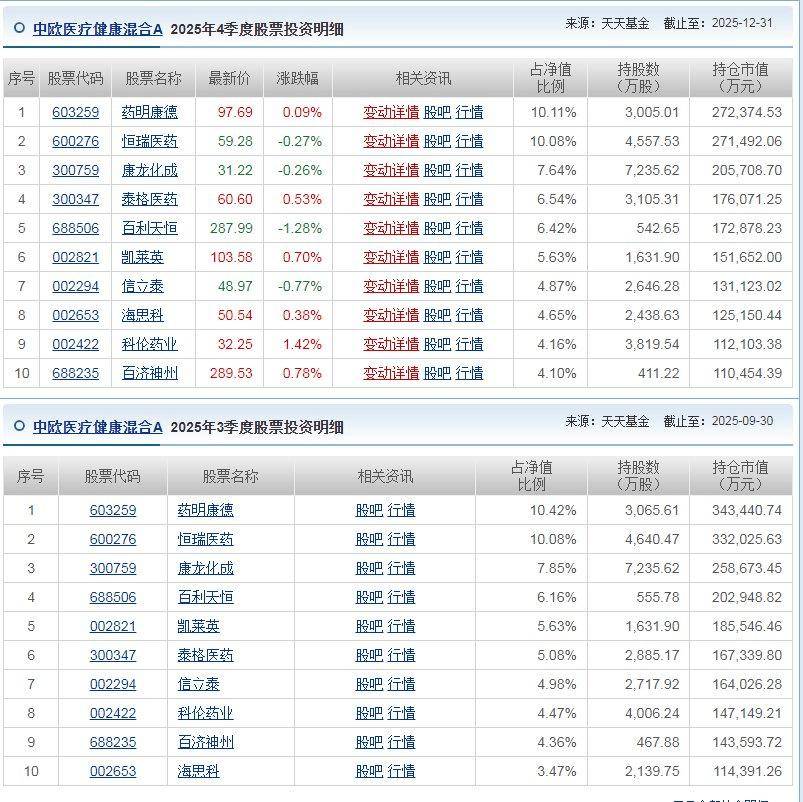
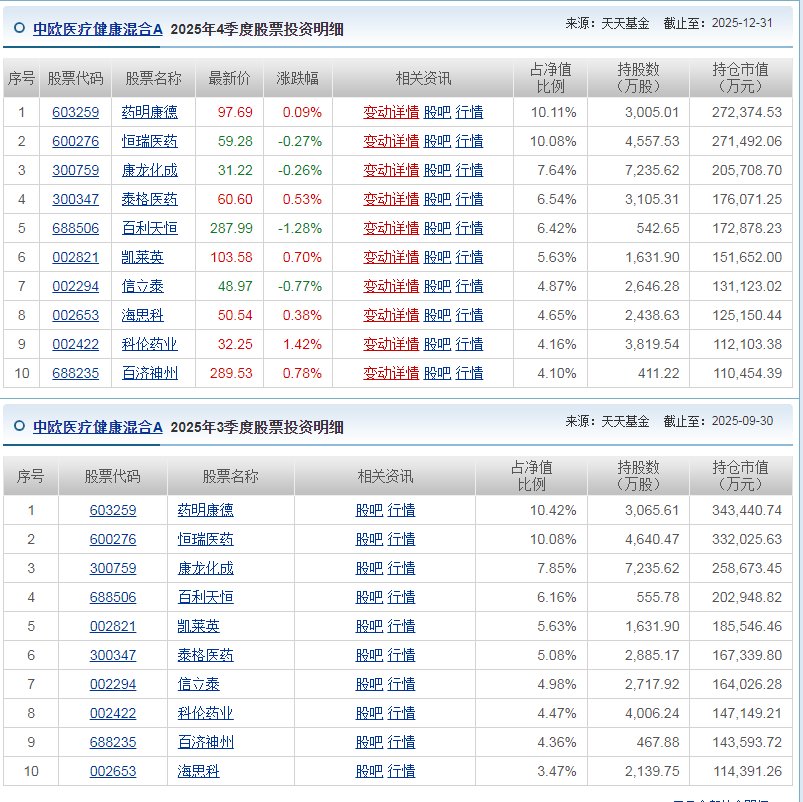
Core Viewpoint - The report highlights the performance of the China Europe Medical Health Mixed Fund managed by Ge Lan and Zhao Lei, indicating a decline in total fund size and negative returns compared to benchmarks [1][4]. Fund Performance - As of December 31, 2025, the total size of the funds managed by Ge Lan decreased from 43.544 billion to 35.389 billion yuan [1]. - The A-class share of the China Europe Medical Health Mixed Fund recorded a net value growth rate of -14.81%, while the C-class share saw a decline of -14.98%, both underperforming the benchmark return of -8.21% [1][3]. Holdings Overview - The top ten holdings of the China Europe Medical Health Fund include WuXi AppTec, Heng Rui Medicine, and Kanglong Chemical, with notable increases in holdings for Hai Si Ke and Tai Ge Medicine, while reductions were seen in stocks like Ke Lun Pharmaceutical and Xin Li Tai [1][2]. Market Context - In Q4 2025, the CSI Pharmaceutical Index fell by 12.7%, underperforming the CSI 300 Index, which declined by only 0.2%. The report notes significant differentiation within sub-sectors, with innovative industries experiencing corrections while traditional Chinese medicine and pharmaceutical commerce remained relatively stable [3]. Future Outlook - Looking ahead to Q1 2026, improvements in global liquidity are expected to boost investment and financing in innovative pharmaceuticals, supported by domestic policy enhancements. The innovative drug and device industry is anticipated to maintain a high level of activity, with several key domestic drugs approaching critical data readouts [4][5]. - The report suggests that the pharmaceutical sector may continue to experience structural trends due to macroeconomic improvements, supportive industry policies, and ongoing innovation, with investment opportunities focusing on the progress of innovative drug and device exports, domestic substitution in equipment, and recovery in consumer healthcare demand [5].

中欧基金葛兰:一季度医药板块有望延续结构性行情 看好创新药械产业链出海、消费医疗等投资机会
Zhi Tong Cai Jing· 2026-01-23 06:33
Core Viewpoint - The report highlights the performance of the China Europe Medical Health Mixed Fund, managed by Ge Lan and Zhao Lei, indicating a decline in total fund size and negative returns compared to benchmarks for the fourth quarter of 2025 [1][4]. Fund Performance - As of December 31, 2025, the total size of funds managed by Ge Lan decreased from 43.544 billion to 35.389 billion yuan [1]. - The net value growth rate for Class A shares of the China Europe Medical Health Mixed Fund was -14.81%, while the benchmark return was -8.21% [1]. - Class C shares experienced a net value growth rate of -14.98%, also underperforming the benchmark [1]. Holdings Overview - The top ten holdings of the China Europe Medical Health Mixed Fund include WuXi AppTec, Heng Rui Medicine, and Kanglong Chemical, with notable increases in holdings for Hai Si Ke and Tai Ge Medicine, while reductions were seen in stocks like Ke Lun Pharmaceutical and Xin Li Tai [1][2]. - The largest holding, WuXi AppTec, accounted for 10.11% of the fund's net value, with a market value of approximately 2.724 billion yuan [2]. Market Context - The CSI Medical Index fell by 12.7% in the fourth quarter of 2025, underperforming the Shanghai and Shenzhen 300 Index, which declined by only 0.2% [3]. - There was significant differentiation within sub-sectors, with the innovative industry chain entering a correction phase after previous gains, while traditional Chinese medicine and pharmaceutical commerce showed relative stability [3]. Future Outlook - Looking ahead to the first quarter of 2026, improvements in global liquidity are expected to boost investment and financing in innovative drugs, supported by domestic policy enhancements [4]. - The innovative drug and medical device industry chain is anticipated to maintain high levels of activity, with several key domestic drugs approaching critical data readout points [5]. - The CXO sector is expected to benefit from a recovery in biotechnology financing, leading to improved order conditions [5]. - The pharmaceutical sector is projected to experience structural trends driven by macroeconomic improvements, supportive industry policies, and ongoing innovation [5].
药品零售行业高质量发展意见发布,科创医药ETF嘉实(588700)一键布局生物医药产业
Xin Lang Cai Jing· 2026-01-23 03:43
Group 1 - The core viewpoint of the news highlights the strong performance of the pharmaceutical and medical services sectors, with the Shanghai Stock Exchange Sci-Tech Innovation Board Biomedicine Index rising by 1.52% as of 11:05 AM on January 23, 2026, driven by significant gains in stocks such as Chengdu Xian Dao (+5.48%) and BGI Genomics (+4.25%) [1] - The Ministry of Commerce and eight other departments have issued opinions to promote high-quality development in the drug retail industry, encouraging retail enterprises to participate in centralized drug procurement and to enhance their bargaining power through joint purchasing [1] - The Chinese pharmaceutical industry is at a pivotal point for global value reassessment, with 2026 being a critical year to validate transformation outcomes, as highlighted by CITIC Securities [1] Group 2 - As of December 31, 2025, the top ten weighted stocks in the Shanghai Stock Exchange Sci-Tech Innovation Board Biomedicine Index include companies like United Imaging Healthcare and BeiGene, collectively accounting for 48.85% of the index [2] - The CSI Innovation Medicine ETF closely tracks the Shanghai Stock Exchange Sci-Tech Innovation Board Biomedicine Index, providing an easy investment option for those without stock accounts through the linked fund [3]

康方生物涨超4%,自研古莫奇单抗第二项适应症获NDA受理!港股通创新药ETF(159570)涨近2%,近5日净流入超4.3亿元!
Xin Lang Cai Jing· 2026-01-23 03:05
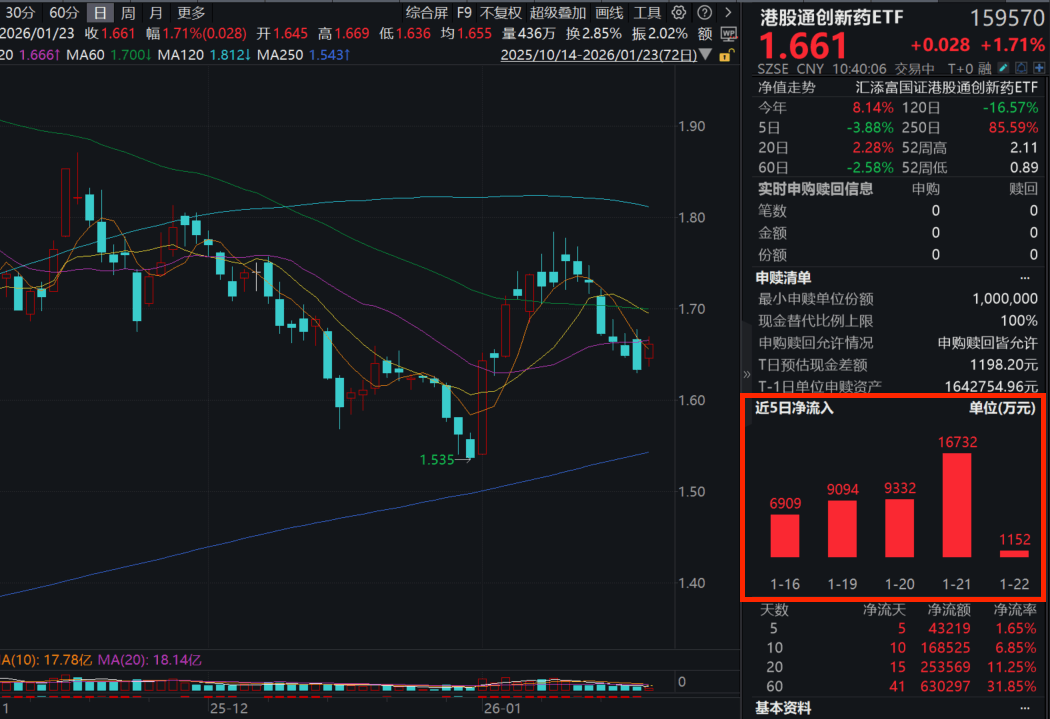
Group 1 - The Hong Kong pharmaceutical sector is experiencing a strong rebound, with the Hong Kong Stock Connect Innovation Drug ETF (159570) rising nearly 2% and achieving a transaction volume exceeding 700 million yuan in a short period [1] - The ETF has seen a cumulative net inflow of over 430 million yuan in the past five days, with its latest scale surpassing 25.1 billion yuan, leading in its category [1] - The majority of the weighted stocks in the ETF's index have shown positive performance, including Kangfang Biopharma and Kelun-Botai, which both rose over 4% [3][4] Group 2 - Kangfang Biopharma announced that its new humanized anti-IL-17A monoclonal antibody, AK111, has received acceptance for a new drug application for treating active ankylosing spondylitis (AS) by the National Medical Products Administration (NMPA) [3] - This new drug is expected to provide a new treatment option for nearly 4 million AS patients in China [3] - The JPMorgan Healthcare Conference highlighted the achievements of Chinese innovative drug companies, with expectations for significant revenue growth and multiple drug approvals in the coming years [5][6] Group 3 - The domestic pharmaceutical industry is witnessing rapid technological advancements and an acceleration in globalization, with significant transactions exceeding 10 billion USD occurring [6][7] - The industry is entering a critical period of validation for innovative drug performance, with many companies expected to launch global registration studies and new product applications [6][7] - A domestic innovative drug company projected a revenue increase of 15.84% for 2025, with a substantial net profit growth of 102.65% [7]