KBC(688598)

Search documents
商业航天新材料深度:陶瓷基复材开启黄金十年(附企业)
材料汇· 2026-02-04 15:14
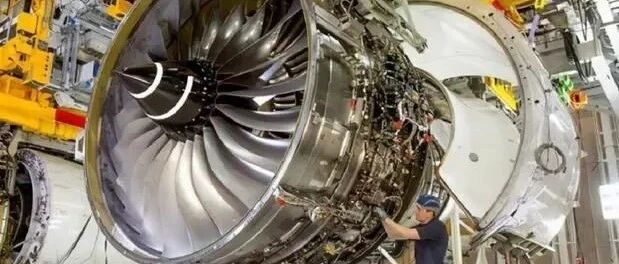
Core Viewpoint - Ceramic Matrix Composites (CMC) exhibit excellent high-temperature performance and have broad applications in commercial aerospace, aviation, nuclear power, and automotive sectors, with significant market potential. China leads in brake and thermal protection for aircraft but lags in aviation engine applications [3][4]. Group 1: CMC Characteristics and Applications - CMC is defined as composites that incorporate reinforcing materials into a ceramic matrix, resulting in superior properties such as high-temperature resistance, low density, high specific strength, and oxidation resistance [4][15]. - SiCf/SiC composites are a research focus due to their enhanced oxidation resistance and longevity, making them ideal for high-temperature applications [4][21]. - In the aerospace sector, SiCf/SiC is recognized as an ideal material for the hot end of aviation engines, already in mass production for static components, with ongoing exploration for rotating parts [5][25]. - In nuclear energy, SiCf/SiC composites are considered ideal candidates for reactor cladding and control rods due to their high melting point and excellent neutron irradiation stability [5][44]. Group 2: Market Growth and Trends - The global CMC market was valued at $11.9 billion in 2022 and is projected to grow at a CAGR of 10.5%, reaching $21.6 billion by 2028, with the highest market share in defense and aerospace applications [6]. - The demand for CMC in China's aviation engine sector is expected to reach a turning point in 2024, driven by technological advancements and cost reductions [11][9]. Group 3: CMC Production and Industry Landscape - CMC production involves complex processes with high barriers to entry, including fiber preparation, preform weaving, interface layer preparation, matrix preparation, and densification [7][8]. - GE has established a vertically integrated CMC supply chain, producing 20 tons of CMC prepreg and 10 tons of SiC fibers annually, with a tenfold increase in CMC component production expected over the next decade [8][39]. - China's CMC industry is relatively complete, with advancements in the production of second-generation SiC fibers and ongoing development of third-generation fibers, although industrial-scale production remains a challenge [9][10]. Group 4: Investment Opportunities - The potential for growth in China's aviation engine sector for CMC is significant, with upstream raw material demand expected to increase as applications mature [11][9]. - As CMC manufacturing technologies improve and fiber costs decrease, midstream CMC component manufacturers are poised for rapid development [11].





金博股份:公司于2025年11月通过了梅赛德斯奔驰集团AMG供应链体系审核专家组的专项审核并进入其供应链体系
Zheng Quan Ri Bao Wang· 2026-02-03 13:10
证券日报网讯2月3日,金博股份在互动平台回答投资者提问时表示,公司于2025年11月通过了梅赛德斯 奔驰集团AMG供应链体系审核专家组的专项审核并进入其供应链体系。公司始终严格按照法律法规、 监管规则的要求进行信息披露,对于达到披露标准的事项,及时依法履行信息披露义务,不存在应披露 而未披露的信息。 ...
解密钙钛矿电池:凭何扛起太空算力引擎重任?校企联合攻关+马斯克赋能,光伏核心风口强势回归
Xin Lang Cai Jing· 2026-02-03 12:52
Group 1 - Zairun New Energy focuses on the research and development of perovskite battery core materials and equipment, with a strong emphasis on high-purity and high-stability products suitable for large-scale production [1] - The company has completed multiple pilot tests and its product performance has been validated by third-party authorities [1] - Zairun's high-radiation-resistant perovskite precursor materials enhance battery stability in extreme space environments, positioning the company to become a core supplier in the space photovoltaic supply chain [1] Group 2 - Aotwei is a leading domestic photovoltaic equipment enterprise, with early layouts in perovskite production line equipment and technology covering key processes such as laser etching and thin film deposition [2] - The company's self-developed laser repair equipment significantly improves battery yield and is at the forefront of industry standards [2] - Aotwei's equipment optimizes battery manufacturing processes to meet the stringent requirements of space photovoltaic applications, potentially making it a core supplier in this sector [2] Group 3 - Haiyou New Materials is a core supplier of photovoltaic packaging materials, focusing on the development of POE films and back sheets for perovskite batteries [3] - The company has developed radiation-resistant packaging films that ensure long-term stable operation of perovskite batteries in space environments [3] - As the space photovoltaic market scales, Haiyou is positioned to become a key supplier of packaging materials for perovskite batteries [3] Group 4 - Gaoce Co., Ltd. is a leading domestic company in photovoltaic cutting equipment and silicon wafer processing, actively developing ultra-thin silicon cutting technology for perovskite batteries [4] - The company's ultra-thin silicon wafers, with thicknesses as low as 50μm, meet the lightweight requirements of perovskite batteries [4] - Gaoce's technology supports the stringent demands of space photovoltaic applications, positioning it to become a core supplier of silicon wafers for perovskite batteries [4]


金博股份:公司与海外多家主流车企保持紧密技术对接与商务沟通
Zheng Quan Ri Bao Wang· 2026-02-03 12:13
证券日报网讯2月3日,金博股份在互动平台回答投资者提问时表示,公司与海外多家主流车企保持紧密 技术对接与商务沟通,推动碳陶制动系列产品在国际市场的验证与应用,逐步打开海外增量空间,相关 业务进展情况敬请查阅公司定期报告或相关公告。 ...
金博股份:公司已开发与推广光伏、半导体等应用领域用碳基材料系列产品
Zheng Quan Ri Bao Wang· 2026-02-03 12:13
Core Viewpoint - The company is focusing on independent innovation research related to advanced carbon-based materials, aiming for low-cost and large-scale production and application [1] Group 1: Company Initiatives - The company has developed and promoted a series of carbon-based material products for applications in photovoltaic, semiconductor, transportation, lithium batteries, and hydrogen energy sectors [1] - The company is actively exploring and planning the promotion and application of advanced carbon-based material products in more fields and scenarios [1]
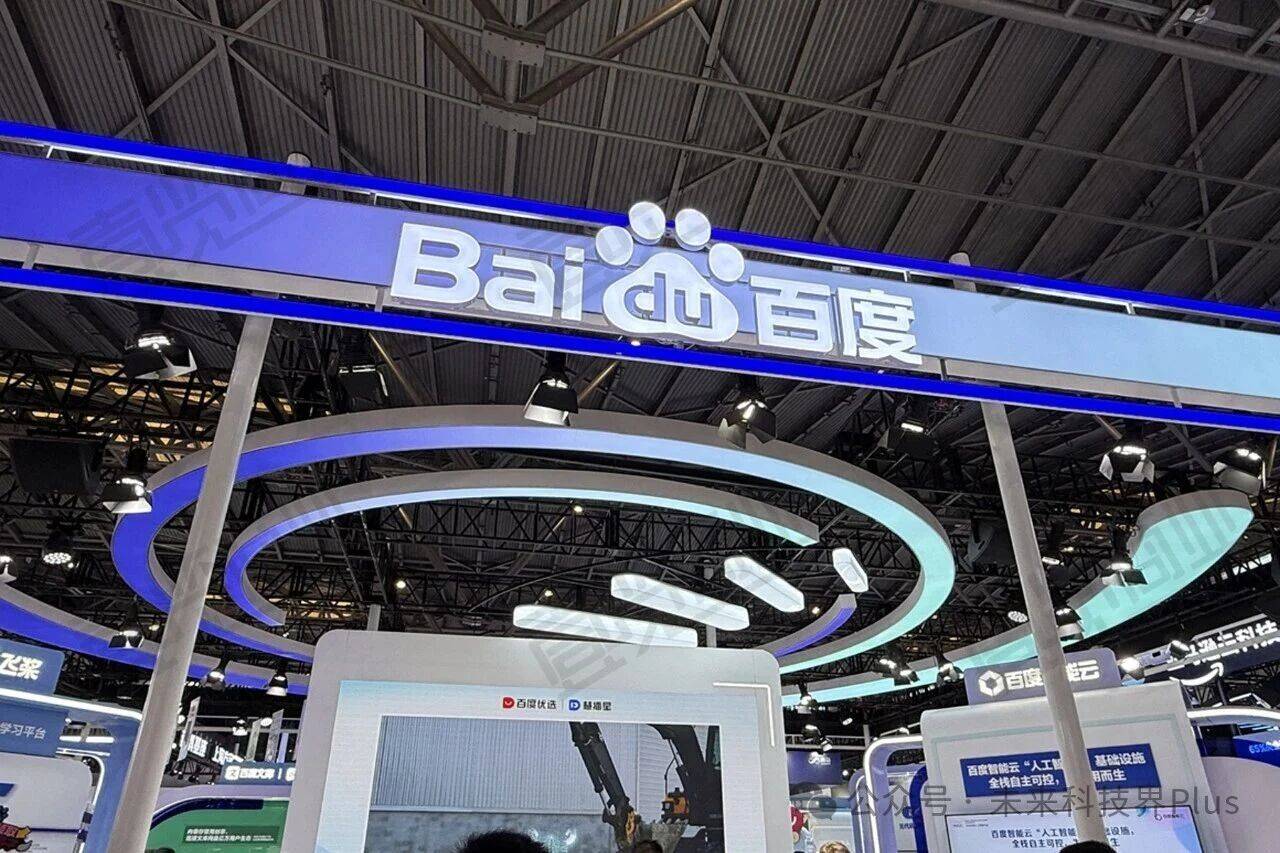
133家AI公司源于这里:百度为何是科技圈的“黄埔军校”?
Sou Hu Cai Jing· 2026-02-02 07:26
Core Insights - Baidu is recognized as a "Huangpu Military Academy" for AI entrepreneurs, with over 133 AI companies founded or co-founded by former Baidu employees, including 25 new startups in 2023 and 2024 [2][3] Group 1: AI Entrepreneurship Landscape - The majority of Baidu's former employees have ventured into three main areas: autonomous driving, large models and data analysis, and AI hardware [3][4] - In the autonomous driving sector, notable companies include Xiaoma Zhixing, WeRide, and Horizon Robotics, with founders having significant roles at Baidu [3][4][7] - The large models and data analysis field features companies like Zero One Wan Wu and Deep Space Ling Zhi, with founders who held key positions at Baidu [3][4][7] Group 2: Baidu's Influence on AI Development - Baidu's early investment in AI, starting with the establishment of its Deep Learning Institute in 2013, has created a comprehensive ecosystem from research to application [5] - The Apollo platform has been pivotal in accumulating capabilities in perception, regulation, simulation, and data closure for autonomous driving [5] - Baidu's focus on system-level problem-solving rather than just model development has equipped its former employees with the skills necessary for complex, long-term projects [5] Group 3: Notable Entrepreneurs and Their Backgrounds - Key figures include Peng Jun and Lou Tiancheng from Xiaoma Zhixing, Yu Kai from Horizon Robotics, and Ma Jie from Zero One Wan Wu, all of whom have extensive experience at Baidu [7] - Other notable entrepreneurs include Liu Bo Cong from Guangzhi Shikong and Gu Jia Wei from Ling Yuzhou, both of whom have backgrounds in Baidu's research divisions [4][7]

金博股份:公司将继续推动锂电、交通新业务产品导入以改善业绩
Zheng Quan Ri Bao Wang· 2026-01-29 12:43
Group 1 - The company, Jinbo Co., has conducted impairment testing on assets showing signs of impairment and has recognized impairment losses, in accordance with the Accounting Standards for Business Enterprises and its accounting policies [1] - The company aims to continue promoting the introduction of lithium battery and new transportation business products to improve its performance [1]
金博股份:公司推动碳陶制动系列产品在国际市场的验证与应用,逐步打开海外增量空间
Zheng Quan Ri Bao Wang· 2026-01-29 11:10
证券日报网讯1月29日,金博股份在互动平台回答投资者提问时表示,公司与海外多家主流车企保持紧 密技术对接与商务沟通,推动碳陶制动系列产品在国际市场的验证与应用,逐步打开海外增量空间,相 关业务进展情况敬请查阅公司定期报告或相关公告。 ...
金博股份股价跌5.03%,景顺长城基金旗下1只基金位居十大流通股东,持有411.06万股浮亏损失624.82万元
Xin Lang Cai Jing· 2026-01-27 02:21
Group 1 - The core point of the news is that Jinbo Co., Ltd. experienced a 5.03% drop in stock price, closing at 28.68 yuan per share, with a total market capitalization of 5.953 billion yuan [1] - Jinbo Co., Ltd. specializes in the research, production, and sales of advanced carbon-based composite materials and products, with its main business revenue composition being 48.39% from lithium battery products, 26.09% from photovoltaic and semiconductor products, and 24.88% from transportation products [1] Group 2 - From the perspective of the top ten circulating shareholders, Invesco Great Wall Fund's New Energy Industry Stock A (011328) reduced its holdings by 3,308 shares, now holding 4.1106 million shares, which accounts for 2.01% of circulating shares, resulting in an estimated floating loss of approximately 6.2482 million yuan [2] - The Invesco Great Wall New Energy Industry Stock A fund was established on February 22, 2021, with a current scale of 2.037 billion yuan, and has achieved a year-to-date return of 11.9% [2] Group 3 - The fund manager of Invesco Great Wall New Energy Industry Stock A is Yang Ruiwen, who has a tenure of 11 years and 98 days, with the fund's total asset scale at 21.134 billion yuan, achieving a best return of 349.79% during his tenure [3] - Co-manager Zeng Yingjie has a tenure of 2 years and 207 days, with a fund asset scale of 4.979 billion yuan, achieving a best return of 28.23% during his tenure [3]
光伏龙头企业“亏损潮”延续,专家:2026年三四月份有望迎来拐点
Hua Xia Shi Bao· 2026-01-22 09:35
Core Viewpoint - The photovoltaic industry is experiencing significant losses across all major segments, with a call for recovery and improvement in profitability by 2026, focusing on asset management and pricing power [2][11]. Group 1: Industry Performance - The photovoltaic sector is in a "dark moment," with all major segments, including silicon materials, wafers, cells, and modules, reporting losses [2]. - The overall performance of the industry is characterized by high inventory and weak demand, despite some signs of recovery in silicon material prices [3]. - The integrated companies face significant pressure, with a notable decline in profitability due to rising costs of key materials like silver paste [3][6]. Group 2: Company-Specific Insights - Daqo New Energy forecasts a net loss of 1 to 1.3 billion yuan for 2025, but with a reduced loss margin of 52.17% to 63.21% year-on-year due to improved operational efficiency [3]. - Longi Green Energy expects a net loss of 6 to 6.5 billion yuan, a reduction of over 2 billion yuan compared to the previous year, driven by increased production efficiency [5]. - Junda Co. anticipates a net loss of 1.5 to 1.2 billion yuan, significantly higher than the previous year's loss of 590 million yuan, citing supply-demand imbalance and price transmission issues [4]. Group 3: Component and Equipment Sector - Companies focusing on Bifacial (BC) modules, such as Aiko Solar, are seeing a significant reduction in losses, with expected losses narrowing from 5.319 billion yuan to between 1.9 billion and 1.2 billion yuan [5]. - The equipment sector, represented by Aotai Technology, is also facing declines, with expected revenue dropping by 26.71% to 30.50% year-on-year [8]. - Silver paste manufacturer Dike Co. is projected to shift from profit to loss, with expected losses of 200 to 300 million yuan due to rising silver prices [9]. Group 4: Future Outlook - The industry is still in a phase of "deleveraging and capacity reduction," but there are signs of recovery in upstream segments, with discussions about potential profitability improvements in 2026 [11][12]. - Aiko Solar reports that its ABC module sales volume is expected to double, indicating a positive trend despite overall losses [12]. - Analysts predict that the industry may see a shift from supply-demand pricing to cost-based pricing by early 2026, potentially improving profit margins significantly [12].