TCL TECH.(000100)

Search documents
两条8.6代OLED产线今年将量产,高端笔记本将进入OLED时代
第一财经· 2026-01-09 12:08
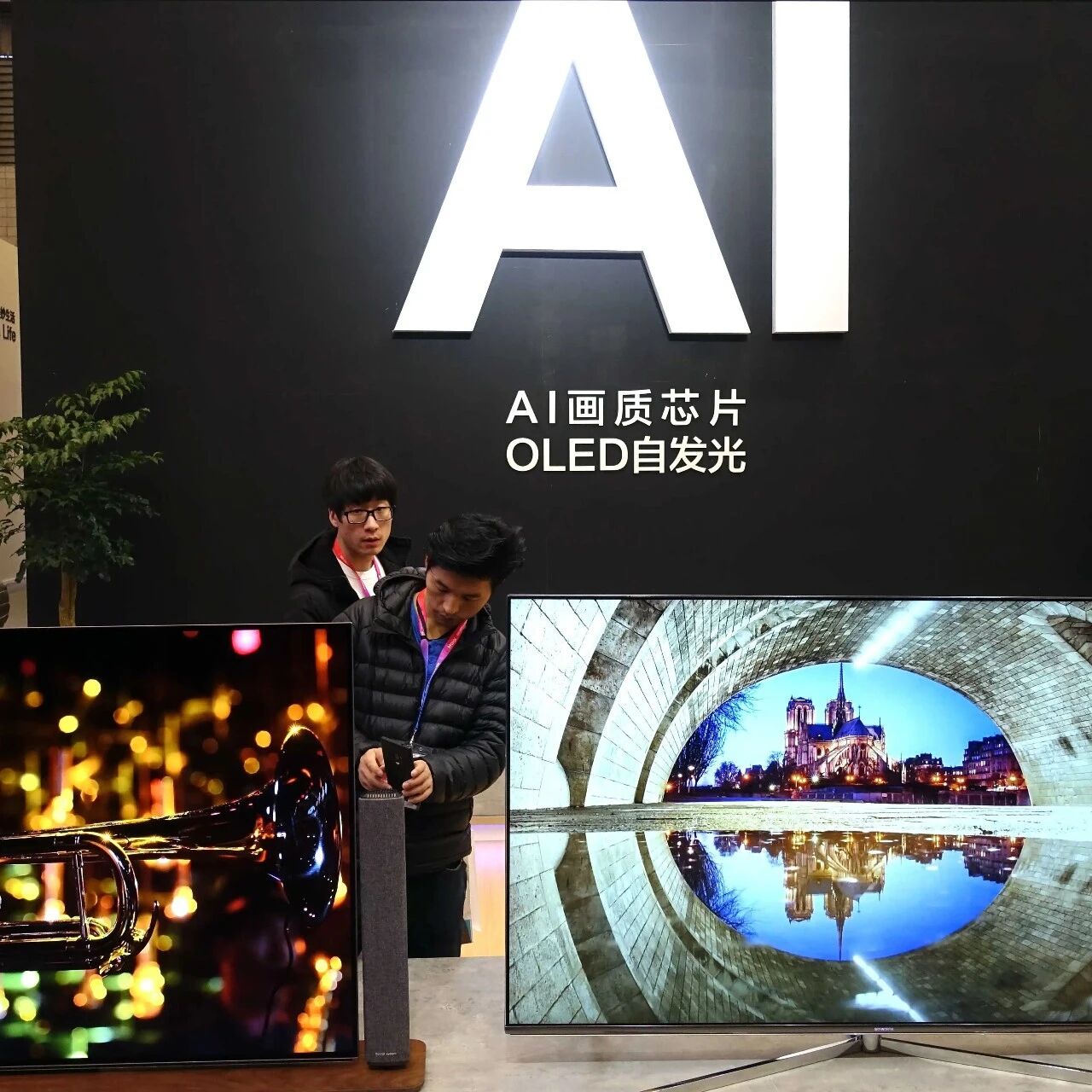
Core Insights - The article discusses the expansion of flexible OLED panel applications, particularly in the IT and automotive sectors, driven by the upcoming mass production of 8.6-generation OLED panel lines by major manufacturers like BOE and Samsung in 2026 [3][4]. Group 1: OLED Panel Production and Market Penetration - In 2026, BOE and Samsung are expected to start mass production of their 8.6-generation OLED panel lines in Q2, which will accelerate the adoption of flexible and hybrid OLED panels in laptops [3]. - TCL Huaxing and Visionox are projected to begin mass production of their 8.6-generation OLED panel lines in Q3 and Q4 of 2027, respectively, further enhancing OLED panel usage in laptops [3]. - By 2030, the penetration rate of OLED panels in laptops is anticipated to reach approximately 19%, with OLED screens dominating the high-end laptop market [3]. Group 2: Advantages of OLED Panels - Compared to LCD screens, laptops equipped with OLED screens will offer superior performance in terms of lightweight design, portability, and image quality [4]. - The expected shipment volume of OLED laptop screens is projected to reach 45 million units by 2030, influenced by the differing production techniques of high-generation OLED panel lines [3][4]. Group 3: Cost and Technology Developments - TCL Huaxing's 8.6-generation OLED production line utilizes printing technology, which simplifies the manufacturing process and theoretically offers cost advantages, making OLED screens more accessible for mainstream laptops [4]. - The introduction of new generation chips by Intel and AMD, utilizing 2-3 nanometer processes, will enhance computing power, transitioning laptops from the 40 TOPS to the 50 TOPS era [4]. Group 4: Market Outlook - Despite rising memory costs, the global laptop market is expected to maintain stable shipment volumes in 2026, with growth anticipated in 2027 [5].




两条8.6代OLED产线今年将量产,高端笔记本将进入OLED时代
Di Yi Cai Jing· 2026-01-09 10:48
Core Insights - The year 2026 is projected to be pivotal for the promotion of affordable AI PCs, driven by the increased application of OLED screens and enhanced CPU capabilities [1][2] Group 1: OLED Panel Development - Two 8.6-generation OLED panel production lines are expected to commence mass production in 2026, accelerating the penetration of flexible and hybrid OLED panels in IT and automotive display sectors [1] - BOE and Samsung's 8.6-generation OLED panels are anticipated to be used in the next generation of Apple's MacBook Pro and will supply Taiwanese IT manufacturers, respectively [1] - TCL Huaxing and Visionox are expected to start mass production of their 8.6-generation OLED panels in Q3 and Q4 of 2027, further supporting the application of OLED panels in laptops [1] Group 2: Market Projections - The penetration rate of OLED panels in laptops is projected to reach nearly 20% by 2030, with OLED screens dominating the high-end laptop market [1] - The shipment volume of OLED laptop screens is expected to reach 45 million units by 2030 [1] Group 3: Technological Advancements - The adoption of OLED screens will enhance laptops' performance in terms of portability and display quality compared to LCD screens [1] - The introduction of new generation chips by Intel and AMD, utilizing 2-3 nanometer processes, is expected to elevate laptop computing power from 40 TOPS to 50 TOPS [2] - The new CPU architectures are anticipated to penetrate mainstream laptop product lines over the next three years, enabling more diverse task processing capabilities [2] Group 4: Market Outlook - Despite rising memory costs, the global laptop market is expected to maintain stable shipment volumes in 2026, with growth anticipated in 2027 [2]
光学光电子板块1月9日涨2.11%,乾照光电领涨,主力资金净流出1860.91万元
Zheng Xing Xing Ye Ri Bao· 2026-01-09 08:54
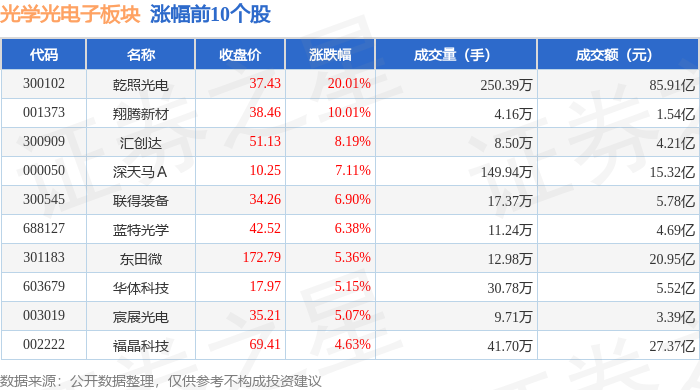
Group 1 - The optical optoelectronics sector increased by 2.11% on January 9, with Qian Zhao Optoelectronics leading the gains [1] - The Shanghai Composite Index closed at 4120.43, up 0.92%, while the Shenzhen Component Index closed at 14120.15, up 1.15% [1] - Qian Zhao Optoelectronics saw a significant rise of 20.01%, closing at 37.43, with a trading volume of 2.5039 million shares and a transaction value of 8.591 billion [1] Group 2 - The optical optoelectronics sector experienced a net outflow of 18.6091 million from institutional funds, while retail investors saw a net inflow of 48.6 million [2] - The trading data indicates that major stocks like Fuzhijing Technology and Deep Tianma A had significant net inflows from retail investors, despite overall sector outflows [3] - The stock performance varied, with some companies like Guangzhi Technology and Wenbisen experiencing declines of 5.92% and 5.81% respectively [2]


通讯丨“中国智造”在美消费电子展舞台逐浪前行
Xin Hua Wang· 2026-01-09 08:28
Core Insights - "Chinese manufacturing" is making significant strides at the CES, showcasing higher innovation density and clearer technological pathways, positioning itself at the forefront of international competition [1] Group 1: Industry Participation - Over a thousand Chinese companies participated in CES, including industry leaders like TCL, Hisense, BOE, and Lenovo, as well as numerous startups [1] - Several Chinese companies received "CES Innovation Awards," highlighting global recognition of their innovative capabilities [1] Group 2: Display Technology - Chinese companies are leading in the display technology sector, shifting focus from single product parameters to AI-supported full-scene application revolutions [2] - TCL had the largest and most diverse exhibition space, showcasing innovations in television screens, electronic writing pads, and AR glasses [2] - Hisense presented next-generation large-screen display solutions, emphasizing color space enhancement and system optimization for eye protection [2] - The Chinese display industry has evolved from a technology follower to a global leader, particularly in LCD and OLED technologies [2] Group 3: Robotics Innovation - AI and robotics were major highlights at CES, with Chinese companies dominating the humanoid robot and related sectors, demonstrating rapid iteration and scalability [3] - Various robots showcased capabilities such as emotional companionship, autonomous lawn maintenance, and advanced coffee-making, emphasizing real-world application [3] - The focus has shifted from conceptual displays to tangible intelligent products that adapt to real environments [3] Group 4: Smart Home Solutions - Smart home technology has become a key area for Chinese companies to demonstrate systemic innovation and lifestyle solutions [4] - Solutions showcased include AI and IoT applications that create intelligent systems capable of perceiving, learning, and interacting [4][5] - Products like smart air conditioners and refrigerators exhibit advanced features such as dynamic energy management and food preservation [5] Group 5: Intelligent Mobility - Intelligent mobility was a focal point, with Chinese automotive companies showcasing innovations in smart cockpits and AI integration [6] - Geely's WAM model enhances understanding of complex driving scenarios, improving overall driving experiences [6] - Chinese companies are transitioning from cost and scale advantages to focusing on user experience, system integration, and technological maturity in the smart mobility sector [6] Group 6: Global Impact - CES serves as a platform for international collaboration and industry dialogue, with China recognized as a key driver of global technological advancement [6] - Chinese consumer electronics companies are accelerating their smart upgrades, becoming pioneers in global AI development [6] - "Chinese manufacturing" continues to navigate the waves of global technological change, contributing to the formation of a new international tech landscape through innovation and application [6]


CES变成中国科技秀:机器人跳舞、熊猫获奖
3 6 Ke· 2026-01-09 08:24
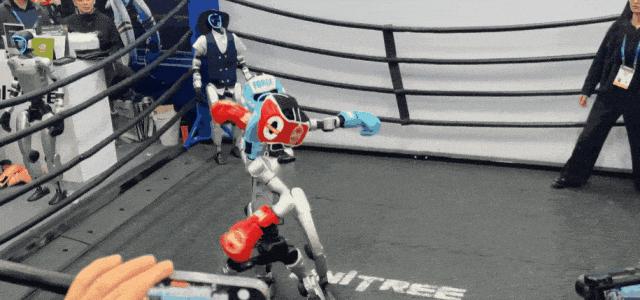
Group 1: Core Themes of CES 2026 - The main theme of CES 2026 is "human-centered" AI applications, marking a shift from traditional consumer electronics to AI-centric technological transformations [1] - Chinese companies are increasingly taking center stage at CES, with 942 exhibitors, accounting for approximately 22% of the total, maintaining their position as the second-largest exhibiting nation [1] - In specific sectors, Chinese firms dominate, with 55% of humanoid robot exhibitors and nearly 70% of AI glasses brands coming from China [1] Group 2: Robotics and AI Innovations - Chinese manufacturers are expected to continue leading in cost reduction and efficiency improvements in humanoid robots, showcasing their capabilities in unstructured environments [2] - Notable products include the Unitree H1 humanoid robot with advanced sensing capabilities and the latest generation of the "绝影" series robotic dogs, which excel in indoor navigation [4][11] - The "Care-bot" humanoid robot by Fourier demonstrates embodied intelligence in real-life interaction scenarios [7] Group 3: Consumer Electronics and Smart Devices - Over 80% of global smart glasses supply chain manufacturers are from China, with 16 Chinese companies showcasing their products at CES [15] - Innovations in smart home devices include the AI-driven "安安" companion robot designed for elderly and cognitively impaired individuals [16] - Companies like Alibaba and XREAL are launching advanced AI glasses, with features such as ultra-lightweight designs and integration with various AI services [19][20] Group 4: Automotive and AI Integration - The automotive industry is transitioning from "software-defined" to "AI-defined" vehicles, with companies like Geely and Great Wall showcasing new technologies [28] - Geely's G-ASD smart driving solution and Great Wall's focus on new energy technologies highlight the industry's shift towards AI integration [30][32] - New products like the AI-driven logistics solutions from New Stone and advanced lidar technology from Hesai demonstrate the growing importance of AI in transportation [34][35] Group 5: Home Appliances and AI - Hisense introduced new RGB-Mini LED display technology and AI-controlled smart refrigerators, showcasing the integration of AI in home appliances [41] - TCL's innovations in display technology, including the world's first printed OLED car screen, reflect advancements in consumer electronics [43][44] - Companies are increasingly focusing on AI capabilities in home security and smart home management systems [51][49] Group 6: Overall Impact of AI - CES 2026 emphasizes the profound impact of AI on the consumer electronics industry, with expectations for AI user numbers to grow significantly [59] - The event serves as a platform for global tech companies to set the foundation for future technological development and transformation [59] - The integration of AI into various sectors, including robotics, automotive, and consumer electronics, indicates a trend towards deeper AI adoption in everyday life [59]




TCL科技涨2.16%,成交额5.65亿元,主力资金净流出1309.83万元
Xin Lang Cai Jing· 2026-01-09 02:14
Core Viewpoint - TCL Technology has shown a positive stock performance with a year-to-date increase of 4.41% and a market capitalization of approximately 98.6 billion yuan as of January 9 [1]. Financial Performance - For the period from January to September 2025, TCL Technology achieved a revenue of 135.943 billion yuan, representing a year-on-year growth of 10.50% [2]. - The net profit attributable to shareholders for the same period was 3.047 billion yuan, marking a significant year-on-year increase of 99.75% [2]. Shareholder Information - As of September 30, 2025, the number of shareholders for TCL Technology was 671,100, a decrease of 2.22% from the previous period [2]. - The average number of circulating shares per shareholder increased by 2.27% to 26,965 shares [2]. Dividend Distribution - Since its A-share listing, TCL Technology has distributed a total of 14.683 billion yuan in dividends, with 2.491 billion yuan distributed over the last three years [3]. Major Shareholders - The largest circulating shareholder is Hong Kong Central Clearing Limited, holding 945 million shares, an increase of 91.023 million shares from the previous period [3]. - China Securities Finance Corporation is the fifth largest shareholder, maintaining its holding of 411 million shares [3]. - Huatai-PB CSI 300 ETF and other ETFs have also increased their holdings, indicating growing institutional interest [3].
掘金CES 2026:AI全域渗透加速,应用端投资机会将至?
智通财经网· 2026-01-09 00:55
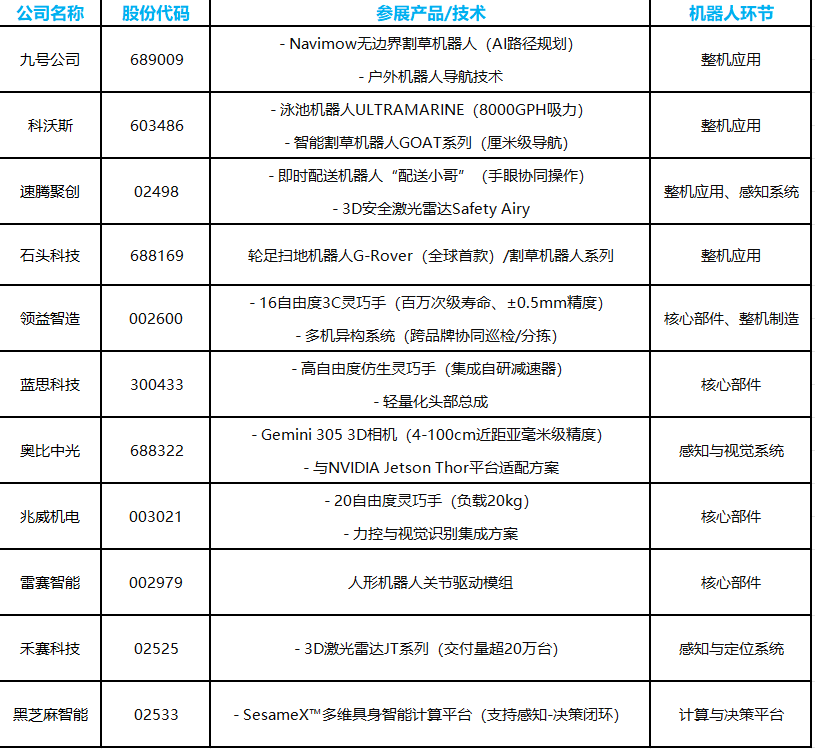
Group 1: CES 2026 Overview - CES 2026, known as the "Spring Festival Gala" of the tech industry, commenced on January 6 in Las Vegas, focusing on "defining the physical boundaries of AI" [1] - The event featured 207 Chinese companies across various cutting-edge fields, including AI, smart wearables, and smart home technologies, showcasing over 120 small and medium-sized tech firms [1] - The technologies presented by leading Chinese companies reflect the country's technological strengths and outline key directions for global industry evolution [1] Group 2: Robotics and AI Technologies - AI and robotics technologies were a major highlight at CES 2026, with global leaders showcasing various robots and core components [2] - NVIDIA's CEO announced that the robotics sector has entered its "ChatGPT moment," introducing world models to enhance robots' understanding of physical properties and spatial relationships [2] - Chinese companies, including Yushu Technology and Fourier, presented a wide range of innovative products, covering industrial applications, daily life, medical assistance, and emergency rescue [2][3] Group 3: Key Exhibitors and Innovations - Notable exhibitors included Ninebot, Ecovacs, and SUTENG, showcasing advanced robotic solutions such as AI path-planning lawn mowers and delivery robots capable of complex tasks [4][5] - Companies like Lingyi Zhi Zao and Zhaowei Electric displayed high-freedom dexterous hands and collaborative systems, indicating significant advancements in robotics [5] - The emergence of a cohesive display of robotics indicates a breakthrough in China's robotics industry, transitioning from fragmented to integrated solutions [5] Group 4: Automotive Innovations - The automotive sector at CES 2026 emphasized the transformation of vehicles into "smart partners" with emotional resonance and autonomous capabilities [6] - NVIDIA introduced the world's first open-source autonomous driving model, aiming to address challenges in extreme weather and construction detours [6] - Chinese automakers, including Great Wall Motors and Geely, showcased innovative models and technologies, highlighting the integration of smart features and collaboration with supply chain partners [6][7] Group 5: Wearable Devices and AI Glasses - Wearable devices, particularly AI glasses, gained significant attention at CES 2026, with over 60% of the showcased products coming from Chinese brands [10][11] - Innovations included independent communication-capable AR glasses and various health monitoring devices, indicating a shift towards mass production and consumer adoption [10][11] - The advancements in display and optical technologies for AI glasses reflect a robust ecosystem supporting the transition from concept to widespread use [12][13] Group 6: Industry Trends and Future Outlook - The CES 2026 event signaled a clear shift in AI's role from mere technology demonstration to deep integration within industry value chains [14] - The trend of AI becoming a physical entity is accelerating, with applications in robotics, smart driving, and wearable devices becoming observable realities [14] - Investors are encouraged to focus on the transition from technology validation to commercial scale, marking a critical window for capturing scene-based opportunities in 2026 [14]


2026年美国消费电子展:“中国智造”亮点纷呈
Zhong Guo Xin Wen Wang· 2026-01-08 23:52
Group 1 - The 2026 CES in Las Vegas showcased numerous Chinese companies with leading technologies, highlighting "Chinese manufacturing" [1] - TCL participated for the 33rd time, becoming the largest Chinese brand by exhibition area, focusing on "screen universe" and "AI life" [1] - TCL aims to enhance R&D in AI applications and next-generation display technologies, exploring foundational and cutting-edge technology [1] Group 2 - Hisense, as the global official sponsor of the 2026 World Cup, presented customized products and showcased breakthroughs in AI and smart hardware [1] - Hisense unveiled its first commercial humanoid robot, Harley, which interacts with visitors and explains the advantages of its "black technology" products [1] - BOE exhibited over 60 cutting-edge display technologies and IoT solutions, including the global debut of the "HERO2.0 smart cockpit" [2] Group 3 - New Stone, a leader in unmanned delivery, introduced AI-driven next-generation logistics solutions and showcased its RoboVan product line [2] - New Stone aims to accelerate global development, targeting over 50,000 overseas deliveries of unmanned vehicles by 2027 [2] - CES is recognized as one of the largest consumer technology events globally, featuring over 4,100 exhibitors from more than 150 countries, focusing on AI, digital health, energy technology, and robotics [2]
TCL实业CES 2026:SQD-Mini LED显示技术定义“视”界新高度
Xin Lang Cai Jing· 2026-01-08 11:48
Core Insights - TCL showcased its innovative SQD-Mini LED display technology at CES 2026, highlighting its strong technological capabilities and market competitiveness with a range of new products [1][15][28] Group 1: Display Technology - TCL introduced the world's first flagship TV featuring SQD-Mini LED technology, the TCL X11L, which achieves 100% BT.2020 color gamut and features over 20,000 local dimming zones, providing a revolutionary viewing experience [2][18] - The X11L is designed with a thickness of only 2cm, showcasing advanced craftsmanship and aesthetic appeal, while also incorporating high-end audio technology from Bang & Olufsen [18][19] - TCL's display technology extends to various applications, including gaming and commercial use, with products like the TCL 57R94 monitor featuring QD-Mini LED technology and a 32:9 aspect ratio [3][19] Group 2: Mobile and Small Screen Innovations - The TCL NXTPAPER 70 Pro smartphone features the new NXTPAPER 4.0 eye-care display technology, certified by TÜV and SGS, offering a comfortable browsing experience across different scenarios [4][20] - The TCL Note A1 NXTPAPER electronic notepad utilizes NXTPAPER Pure display technology, providing a paper-like feel and AI tools for real-time text conversion and translation [5][21] - TCL's innovations also include the Thunder X3 Pro Project eSIM smart glasses, which operate independently without a smartphone, enhancing the functionality of AR devices [6][22] Group 3: Home Appliances and AI Integration - TCL's new AI health air conditioner, the TCL C7, features a unique sleep temperature curve and radar technology to enhance sleep quality, achieving a 25% increase in deep sleep duration [8][24] - The GeniusFresh refrigerator series incorporates smart technology for food preservation, while the AI washing machine offers a large capacity and efficient washing capabilities [9][25] - TCL's 5G Mobile WiFi P50 combines fast charging and wireless charging, supporting up to 64 devices simultaneously, enhancing connectivity for smart homes [9][25] Group 4: Sustainability and Global Impact - TCL presented its smart home energy solutions, integrating solar components with the TCL Home APP for sustainable living [11][27] - The company has established a strong global presence, ranking among the top in various product categories, including TVs and air conditioners, with significant market shares [12][14][28] - As a global partner of the Olympics, TCL aims to enhance the viewing experience during the 2026 Milan Winter Olympics, connecting technology with sports [14][29]
深圳机器人“军团”亮相CES,智能硬件为何“赢麻了”?
Nan Fang Du Shi Bao· 2026-01-08 09:58
Core Insights - The 2026 CES highlights Shenzhen's dominance in the tech industry, with over 400 companies from the region representing a third of Chinese exhibitors and nearly 10% of global participants, showcasing a wide array of smart hardware products [4][20] - The focus of this year's CES has shifted from the capabilities of AI to its practical applications in daily life and industry processes, marking a transition from software-driven AI to "physical AI" that integrates into tangible products [5][20] Industry Trends - The emergence of "physical AI" signifies a shift in AI's value from mere communication to actionable capabilities, with products designed to be tangible and experiential, integrating AI into everyday devices [5][11] - Shenzhen's robust supply chain and engineering capabilities have been revitalized by the proliferation of AI models, allowing for rapid product iteration and development in hardware [4][15] Product Innovations - Notable products showcased include TCL's AI-integrated displays and the first consumer-grade AR glasses with independent communication capabilities, reflecting the trend of AI becoming embedded in various consumer electronics [6][10] - Innovations in robotics, such as the TORA-ONE humanoid robot and the DM-EXton2 data collection system, demonstrate advancements in tactile sensing and data acquisition, essential for the evolution of intelligent hardware [12][14] Competitive Landscape - Shenzhen's smart hardware sector is experiencing collective growth rather than isolated successes, driven by a comprehensive industrial network that supports rapid prototyping and production [15][16] - The ability to translate technology into user-friendly experiences is becoming crucial for global market appeal, as companies focus on addressing specific consumer needs rather than merely showcasing technical prowess [16][20] Future Challenges - The next phase for Shenzhen's smart hardware industry involves overcoming challenges related to core components and technologies, transitioning from hardware products to integrated system services, and enhancing global operational capabilities [19][20] - Establishing a sustainable competitive advantage will require ongoing investment in key technologies and a shift towards creating long-term brand loyalty through service-oriented business models [19][20]