Addsino (000547)

Search documents
华龙证券:酒泉商业航天产业规划发布 我国商业航天发展再加速
智通财经网· 2026-01-27 08:37
Core Viewpoint - The recent completion of the "Jiuquan Commercial Aerospace Industry Development Plan (2026-2035)" marks a significant step in the commercial aerospace sector, indicating a pivotal year for the industry in 2026 with a convergence of policy, technology, and industry catalysts [1]. Group 1: Strategic Planning - The plan outlines the vision to establish "China's Jiuquan Commercial Aerospace Port" and emphasizes the importance of developing commercial aerospace, analyzing trends, opportunities, current status, and feasibility for high-quality development [1]. - Jiuquan is positioned to become a national commercial aerospace launch base, research and testing base, technical support base, and data application base, with principles of park support, cluster development, and system innovation [2]. Group 2: Industry Structure and Goals - The plan proposes an "one port, two areas, multiple points" industrial layout, focusing on seven key industries: launch and testing, rocket manufacturing, satellite manufacturing and application, data backup and application, technical support, logistics, and aerospace tourism [2]. - Specific action plans include attracting investment, project breakthroughs, improving park construction, comprehensive support, financial empowerment, and enhancing aerospace branding [2]. Group 3: Competitive Landscape - The competition for low Earth orbit satellite resources is intense, with a capacity for approximately 60,000 to 100,000 satellites, and the principle of "first come, first served" applies to resource acquisition [3]. - The commercial aerospace sector is entering a new phase of large-scale application, with China accelerating its low Earth orbit satellite internet construction, currently having 100 registered satellite constellations, including 88 commercial projects and 12 national strategic projects, with plans to launch over 60,000 satellites [3].

低轨卫星组网密集建设,航天ETF(159267)盘中一度涨2.78%
2 1 Shi Ji Jing Ji Bao Dao· 2026-01-27 06:58
Group 1 - The Aerospace ETF (159267) has shown active performance, with an intraday increase of 2.78% and a real-time transaction amount exceeding 150 million yuan [1] - Over the past 30 trading days, the fund has achieved a cumulative increase of 23.72% [1] - The satellite communication industry chain has become a market focus as global low-orbit satellite networks enter a phase of intensive construction, with the satellite communication sector index rising approximately 40% in the last two months [1] Group 2 - Several companies in the low-orbit satellite communication chip sector have made significant technological breakthroughs and have entered the mass production phase [1] - Commercial aerospace technology and capital are expected to resonate in 2026, with the rocket and satellite industry chains and space computing fields being areas of interest [1] - The commercial aerospace sector is anticipated to experience development opportunities, benefiting the related industry chains and driving overall industry advancement [1][2]




首个星际航行学院成立,航空航天ETF(159227)涨幅1.63%,航发科技涨停
Mei Ri Jing Ji Xin Wen· 2026-01-27 05:44
Group 1 - The A-share market showed mixed performance on January 27, with the aerospace ETF (159227) experiencing a strong rally, rising by 1.63% and achieving a trading volume of 339 million yuan, leading its category [1] - The establishment of China's first Interstellar Navigation College by the University of Chinese Academy of Sciences focuses on advanced fields such as interstellar propulsion, deep space communication and navigation, and space science, aiming to cultivate versatile talents with solid foundations and strategic vision [1] - Dongxing Securities highlighted that during the 14th Five-Year Plan period, commercial aerospace will become a key driver for high-quality development in China's new productive forces and technology [1] Group 2 - The aerospace ETF (159227) closely tracks the National Securities Aerospace Index, covering leading companies across the entire industry chain, including fighter jets, aircraft engines, rockets, missiles, satellites, and radars, aligning perfectly with the "aerospace integration" strategic direction [2] - The ETF has a high commercial aerospace content of 70.19%, with top ten holdings including Aerospace Development, China Satellite, Aerospace Electronics, AVIC Aircraft, and AVIC High-Tech [2]


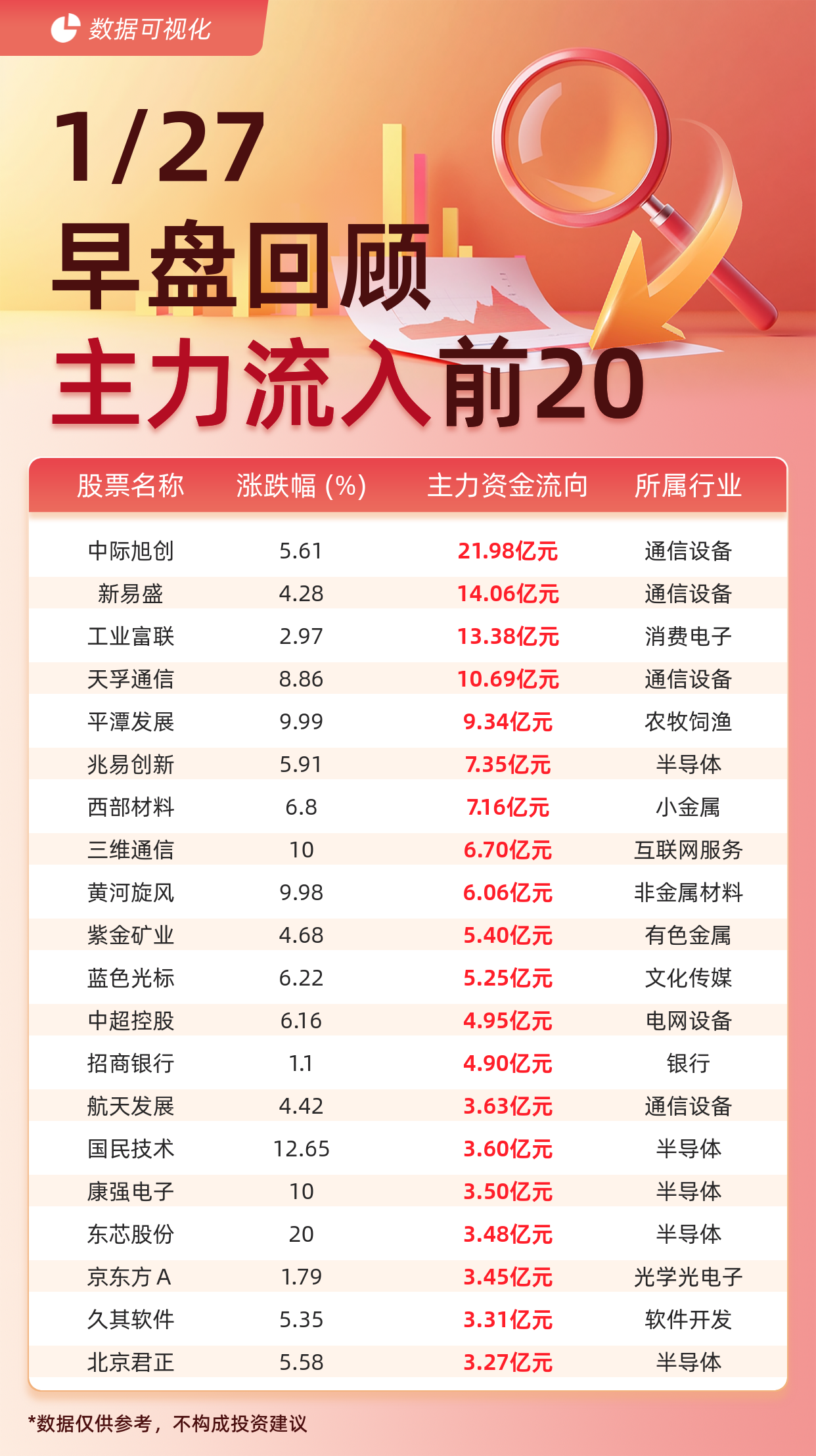
主力资金流入前20:中际旭创流入21.98亿元、新易盛流入14.06亿元
Jin Rong Jie· 2026-01-27 04:21
Group 1 - The top 20 stocks with significant capital inflow as of January 27 include Zhongji Xuchuang (21.98 billion), Xinyi Sheng (14.06 billion), and Industrial Fulian (13.38 billion) [1] - Zhongji Xuchuang experienced a price increase of 5.61%, while Xinyi Sheng rose by 4.28% [2] - The highest capital inflow was observed in communication equipment sector stocks, with Zhongji Xuchuang and Xinyi Sheng leading [2][3] Group 2 - Other notable stocks with significant capital inflow include Tianfu Communication (10.69 billion, 8.86% increase) and Pingtan Development (9.34 billion, 9.99% increase) [1][2] - The banking sector saw a capital inflow of 4.90 billion into China Merchants Bank, with a modest price increase of 1.1% [3] - Emerging sectors such as new materials and software development also attracted capital, with stocks like Guomin Technology and Jiuqi Software showing notable inflows [3]






优化脉冲爆震发动机以促进航空航天发展
Xin Lang Cai Jing· 2026-01-27 03:21
Core Insights - The advancement of Pulse Detonation Engine (PDE) technology is transforming the aerospace propulsion sector, with researchers innovating to enhance its application for future aerospace developments [2] - The optimization of PDE technology is crucial due to the aerospace industry's high demands for efficiency, speed, and environmental impact [2] Group 1: Technology and Performance - PDE operates on the principle of pressure wave generation, producing thrust through a series of pulse detonations, significantly improving efficiency compared to traditional jet engines [2] - Recent studies highlight the effectiveness of this pulsed cycle in enhancing performance metrics, promising significant advancements for both military and civilian aerospace applications [2] - The potential for higher specific impulse, better fuel economy, and lower thermal characteristics makes PDE technology vital for stealth operations [2] Group 2: Environmental Considerations - The exploration of alternative fuels represents a significant breakthrough for PDE technology, addressing the aviation industry's pressure to reduce carbon emissions [3] - Integrating biofuels and synthetic fuels into PDE designs could accelerate the adoption of environmentally friendly engines in aerospace, combining sustainability with cutting-edge technology [3] Group 3: Material Science and Design - Optimizing the structural design of PDE components is critical, with materials needing to withstand extreme conditions, including high pressure and temperature during detonation cycles [4] - Advances in materials science are paving the way for lightweight, heat-resistant alloys and composites, enhancing engine durability and efficiency [4] Group 4: Control Mechanisms and Testing - Efficient management of detonation timing and frequency is essential for maximizing engine potential, with advanced control algorithms and real-time sensors significantly improving PDE system performance [5] - Balancing the explosive characteristics of detonation with structural integrity is a key challenge, leading to the development of innovative anti-explosion strategies to ensure stable operation [5] - Rigorous testing protocols, including wind tunnel tests and full-scale engine trials, are crucial for validating theoretical models and addressing real-world challenges [5] Group 5: Interdisciplinary Collaboration and Future Outlook - The synergy between PDE technology and drone advancements is noteworthy, as PDE's efficient operation at various altitudes aligns well with drone operational characteristics [6] - Interdisciplinary collaboration among engineers, physicists, and chemists is essential to tackle the multifaceted challenges faced by PDE technology, leading to breakthroughs that would be unattainable in isolated environments [6] - Continued investment in research and dedicated funding for PDE technology projects are necessary to transition theoretical concepts into practical aerospace solutions [6] Conclusion - The optimization of Pulse Detonation Engine technology represents a dynamic and promising research direction in aerospace engineering, with the potential to enhance performance and contribute positively to the evolving sustainable aviation sector [7] - As global society prioritizes environmentally aligned technological advancements, the optimization of PDE technology stands as a testament to human ingenuity [7]

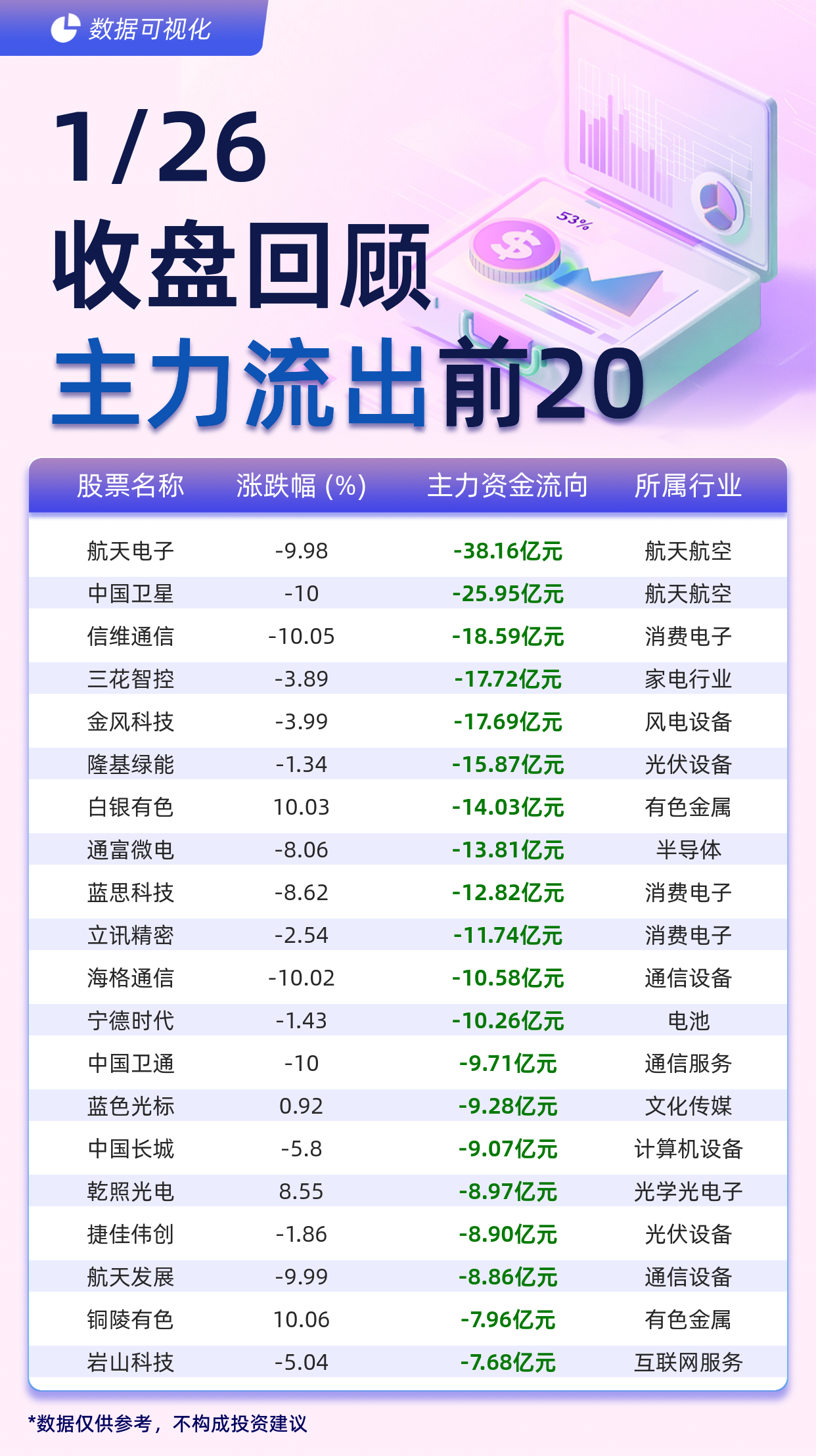
主力个股资金流出前20:航天电子流出38.16亿元、中国卫星流出25.95亿元
Jin Rong Jie· 2026-01-26 07:37
Core Viewpoint - The data indicates significant outflows of main funds from various stocks, particularly in the aerospace and consumer electronics sectors, reflecting a bearish sentiment among investors. Group 1: Stock Performance and Fund Flow - Aerospace stocks, such as Aerospace Electronics and China Satellite, experienced the largest fund outflows, with -38.16 billion and -25.95 billion respectively, and declines of -9.98% and -10% in their stock prices [1][2] - Other notable stocks with significant outflows include Xinwei Communication (-18.59 billion, -10.05%), Sanhua Intelligent Control (-17.72 billion, -3.89%), and Goldwind Technology (-17.69 billion, -3.99%) [1][2] - The outflow from Longi Green Energy was -15.87 billion with a stock price decrease of -1.34%, indicating a relatively smaller decline compared to others in the same sector [1][2] Group 2: Sector Analysis - The consumer electronics sector saw major outflows, particularly from companies like Xinwei Communication and Lens Technology, with outflows of -18.59 billion and -12.82 billion respectively [1][2] - The wind power equipment sector, represented by Goldwind Technology, also faced significant outflows, reflecting potential challenges in the renewable energy market [1][2] - The communication equipment sector, including companies like Haige Communication and China Satellite, showed substantial fund outflows, indicating investor caution in this area [1][3]




A股收评:创业板跌近1%,贵金属、生物疫苗板块逆势爆发
Ge Long Hui· 2026-01-26 07:37
Market Overview - On January 26, A-shares saw a collective decline with the Shanghai Composite Index down 0.09% at 4132 points, the Shenzhen Component down 0.85%, and the ChiNext Index down 0.91% [1][2] - The total market turnover reached 3.28 trillion yuan, an increase of 162.5 billion yuan compared to the previous trading day, with over 3700 stocks declining [1] Sector Performance - The commercial aerospace and satellite internet sectors experienced significant pullbacks, with stocks like China Satellite and Aerospace Development hitting the daily limit down [2][4] - The military industry sector also fell, with stocks such as Chaojie Co. dropping over 10% [2] - Conversely, international gold and silver prices surged to new highs, leading to a rally in precious metals and non-ferrous metals sectors, with stocks like Xiaocheng Technology and Western Gold hitting the daily limit up [2][10] - The outbreak of the Nipah virus in India caused a collective rise in the biopharmaceutical and vaccine sectors [2][14] Notable Stock Movements - In the military equipment sector, Aerospace Hanyu fell over 11%, while China Satellite and Aerospace Technology hit the daily limit down [4] - In the semiconductor equipment sector, stocks like Su Dawei and Wo Ge Optoelectronics saw significant declines, with some stocks dropping over 11% [5][8] - The humanoid robot sector also faced declines, with stocks like Haoshi Machinery and Lixing Co. dropping over 13% [6][9] - The biopharmaceutical sector saw notable gains, with stocks like Hualan Vaccine and Jindike hitting the daily limit up due to the Nipah virus outbreak [14] Investment Insights - The coal sector showed strength, with China Shenhua rising over 4% and other coal stocks following suit [18] - The insurance sector also performed well, with stocks like New China Life and China Pacific Insurance seeing gains [15][16] - The market outlook suggests a focus on sectors with performance verification, particularly in price increase chains, high-end manufacturing, and AI-related industries [19]





航天发展2026年1月26日跌停分析
Xin Lang Cai Jing· 2026-01-26 06:22
Group 1 - The core point of the article is that Aerospace Development (SZ000547) experienced a significant drop, hitting the limit down price of 26.48 yuan, with a decline of 9.86% and a total market value of 42.391 billion yuan [1] Group 2 - The company reported a net profit loss of 489 million yuan, which expanded by 12.38% year-on-year, indicating significant operational pressure [2] - The increase in operating costs outpaced revenue growth, reflecting poor cost control, alongside a substantial rise in financial expenses and asset impairment losses, which severely impacted profitability and investor confidence [2] - Despite the positive outlook from the new Aerospace Science and Industry Group concept, the military electronics sector is heavily influenced by the overall industry environment [2] - Foreign capital net selling on January 15 indicated a negative short-term outlook from foreign investors, affecting market expectations for the company's stock price [2] - The company's commercial aerospace business accounts for a low proportion of total revenue, with satellite business revenue being less than 1%, and the effects of business transformation have yet to materialize [2] - Traditional business faces transformation pressures, leading to performance challenges for some subsidiaries, increasing uncertainty about the company's future development [2] - Recent stock price volatility, including significant net selling by foreign capital and a larger total sell-off than buy-in, contributed to the instability of the stock price, culminating in the limit down on January 26 [2]
“北京火箭大街”六大平台启动!航空航天ETF天弘(159241)近10日净流入近1.7亿元,机构:中国商业航天开始到达从政策孵化期向工业化爆发期过渡的关键节点
2 1 Shi Ji Jing Ji Bao Dao· 2026-01-26 02:55
Group 1 - The aerospace sector experienced a morning adjustment on January 26, with the Guozheng Aerospace Industry Index falling by 2.14%. Among the constituent stocks, Zhenxin Technology rose over 7%, while China Satellite and Aerospace Development dropped more than 5% [1] - The Tianhong Aerospace ETF (159241) recorded two consecutive days of gains as of last Friday, with a trading volume of 166 million yuan. It has seen a net inflow of over 20 million yuan in the last two trading days, with a cumulative net inflow of over 62 million yuan in the past five trading days and 170 million yuan in the last ten trading days [1] - The Tianhong Aerospace ETF closely tracks the Guozheng Aerospace Industry Index, which covers sub-sectors such as aerospace equipment, military electronics, and satellite internet, with a high weight of 98.7% in the defense and military industry category [1] Group 2 - The third Beijing Commercial Aerospace Industry High-Quality Development Promotion Conference was held on January 23, launching six platforms under "Beijing Rocket Street" aimed at accelerating major project construction and forming a comprehensive "thousand-star production capacity" [2] - According to Guojin Securities, the global aerospace industry is undergoing structural changes similar to the Age of Exploration, driven by the rise of commercial aerospace companies like SpaceX. China's commercial aerospace is transitioning from a policy incubation phase to an industrial explosion phase, with 2026 expected to be a pivotal year for the industry [2]


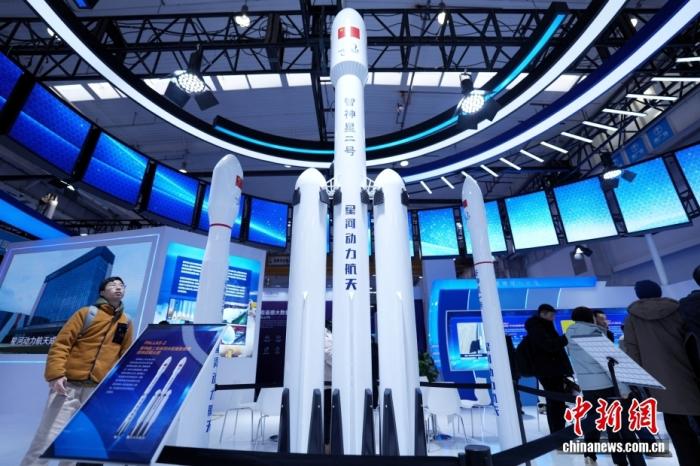
商业航天发展进入快车道 为经济增长注入新动能
Zhong Guo Xin Wen Wang· 2026-01-24 02:12
Core Insights - China's commercial aerospace sector is experiencing rapid advancements, supported by government policies, talent availability, and market potential [1][3] - The government has integrated commercial aerospace into its strategic plans, emphasizing its importance in national development and security [3][6] Government Support - The Chinese government has included commercial aerospace in its work reports for 2024 and 2025, with the "14th Five-Year Plan" highlighting the goal of building a "strong aerospace nation" [3] - Policies have been released to promote high-quality and safe development in commercial aerospace, including the establishment of a dedicated Commercial Aerospace Department within the National Space Administration [3][6] - Local governments are also implementing supportive policies tailored to their industrial bases, enhancing the ecosystem for commercial aerospace [3] Industry Growth Metrics - By 2025, China is projected to conduct 50 commercial launches, accounting for 54% of the total annual space launches, and will place 311 commercial satellites into orbit, representing 84% of the total satellites launched that year [4] - The industry is expected to see a financing total of 18.6 billion yuan in 2025, marking a 32% year-on-year increase [6] Strategic Importance - The rise of commercial aerospace is viewed as a means to enhance China's capabilities in space resource utilization and to secure national interests [6][9] - The application for over 200,000 satellite frequency resources from the International Telecommunication Union (ITU) underscores the strategic push for future competitiveness [6] Economic Impact - Commercial aerospace is seen as a new engine for economic development, with potential to drive advancements in high-end manufacturing, new materials, and information technology [7][8] - The sector is expected to foster regional economic transformation and create specialized industrial clusters, injecting new momentum into local economies [8] Technological Integration - Commercial aerospace technologies are increasingly being integrated into everyday life, providing services such as satellite internet and remote sensing data that benefit various sectors including agriculture and transportation [9] Challenges Ahead - Despite rapid growth, the commercial aerospace sector faces challenges such as limited application scenarios and difficulties in cost control, which need to be addressed for high-quality development [10]