GOTION(002074)

Search documents
红星发展:公司与宁德时代下属部分企业有业务合作,但金额较小
Zheng Quan Ri Bao· 2025-12-29 11:51
Group 1 - The company, Hongxing Development, confirmed a business collaboration with certain subsidiaries of CATL, but the financial scale of this cooperation is relatively small [2] - The company has not engaged in direct sales or purchase cooperation of main products with BYD or Guoxuan High-Tech [2]





半年翻倍!固态电池指数狂飙背后,国际资本已悄然布局这些标的
Sou Hu Cai Jing· 2025-12-27 23:37
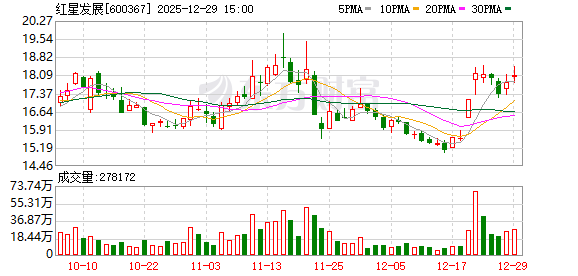
Core Viewpoint - The solid-state battery sector is experiencing significant growth driven by technological advancements and capital influx, with major companies and investors actively participating in this emerging market [2][11]. Group 1: Market Performance - The solid-state battery index surged from 1200 points to 2426 points between April and October, nearly doubling in value [2]. - Leading companies in the sector, such as Guoxuan High-Tech and Yiwei Lithium Energy, have seen market capitalizations increase by over 120% [2]. - On a single day, stocks like Hongyuan Pharmaceutical and Jujie Microfiber rose by 20%, showcasing the sector's strong performance [3]. Group 2: Institutional Investment - Goldman Sachs has made significant investments in companies like Haike New Source, Tianji Co., and Kosen Technology, which have all reached their daily price limits [2]. - The top ten shareholders of a specific stock hold 170 million shares, accounting for 34.02% of the circulating shares, indicating strong institutional interest [1]. Group 3: Technological Advancements - Recent breakthroughs in solid-state battery technology include Guoxuan High-Tech's first all-solid-state pilot line and Jinshi's high yield rate of 90% in trial production [2][4]. - Yiwei Lithium Energy has introduced the "Longquan No. 2" 10Ah all-solid-state battery, achieving an energy density of 300Wh/kg, targeting high-end applications [3]. Group 4: Industry Support and Policy - The Chinese government has issued policies supporting the development of solid-state batteries, including the "2025-2026 Action Plan for Stable Growth in the Electronic Information Manufacturing Industry" [4]. - The industry is expected to see a significant increase in production, with projections of 7GWh in 2024 and 30GWh by 2028 [10]. Group 5: Challenges and Future Outlook - Despite the promising outlook, challenges remain, including high production costs and the need for technological maturity [8]. - Industry experts predict that solid-state batteries will begin to see commercial applications in high-end consumer electronics and electric vehicles within the next 3 to 5 years [9].



在非洲,我看到中国人“悲壮的突围”
创业邦· 2025-12-27 10:33
Core Viewpoint - The article discusses the challenges and costs faced by Chinese companies operating in Morocco, emphasizing the need for adaptation and strategic planning to succeed in a foreign market while navigating high operational costs and cultural differences [5][10][106]. Group 1: Identity - Chinese companies are establishing operations in Morocco to maintain access to European markets, driven by the "China +1" strategy to mitigate risks associated with sourcing from China [11][12][17]. - The geographical proximity of Morocco to Europe, along with favorable trade policies, makes it an attractive location for manufacturing [14][15]. Group 2: Cost Structure - The construction costs in Morocco can be more than double those in China, with local standards leading to higher material costs [20][23]. - Maintenance and repair costs are significantly higher, with examples showing that simple repairs can cost ten times more than in China [25][27]. - Small components, such as screws, can be exorbitantly priced compared to domestic costs, necessitating the import of parts from China despite longer lead times [28][30]. Group 3: Standards - High levels of automation are being adopted in Moroccan factories to compensate for the lack of skilled labor, with some factories operating with significantly fewer workers than traditional setups [37][40]. - The reliance on machines is not only for efficiency but also to ensure stable production in the face of labor challenges [41][42]. Group 4: Adaptation - There is a notable difference in work ethic and reliability between local labor groups, with a preference for hiring Berber workers over Arab workers due to perceived differences in work attitudes [46][50]. - Companies often adopt a mixed hiring strategy, employing local workers for basic roles while retaining skilled Chinese workers for critical positions [51][52]. Group 5: Time - Training local workers to meet industrial standards requires significant time investment, often exceeding initial expectations [58][59]. - The cultural differences in work processes necessitate a patient approach to training, with a focus on building habits over time [56][58]. Group 6: Communication - Language barriers pose significant challenges in production settings, leading to misunderstandings that can affect product quality [61][62]. - Companies are developing internal codes to bypass language issues, creating a shared understanding among workers [66][67]. Group 7: Beliefs - Local cultural and religious practices significantly influence work schedules and employee availability, with many employees prioritizing personal beliefs over work commitments [70][76]. - Understanding and accommodating these cultural factors is essential for effective management in Morocco [78][80]. Group 8: Market - Despite efforts to develop the electric vehicle market, actual sales remain low, with most production aimed at export rather than local consumption [84][88]. - The disconnect between production capabilities and local market demand highlights the challenges of operating in a "production-isolation" environment [86][91]. Group 9: Management - Traditional management practices from China may not be effective in Morocco, where local employees may prioritize personal circumstances over work incentives [95][98]. - Companies must navigate local labor laws and cultural sensitivities to implement effective management strategies [101][102].


电池龙头ETF(159767)近一年收益率达60%!新能源动力电池将迎来万亿级市场空间
Jin Rong Jie· 2025-12-26 02:54
Group 1 - The core viewpoint of the articles highlights the strong performance of the photovoltaic equipment and new energy battery sectors, with significant gains in related stocks such as BYD and Tianhua New Energy, reflecting a robust market for new energy vehicles and batteries [1] - The Xinyin Guozheng New Energy Vehicle Battery ETF (159767) has achieved a one-year return of 59.33%, indicating strong investor interest and market confidence in the sector [1] - The fund manager emphasizes the substantial market potential for power batteries, projected to reach trillions, driven by increasing penetration of new energy vehicles, clear policy support, accelerated technological iterations, and enhanced global competitiveness of Chinese companies [1] Group 2 - The battery leader ETF (159767) closely tracks the Guozheng New Energy Vehicle Battery Index, which reflects the market performance of listed companies in the new energy vehicle battery industry in the A-share market [2] - The ETF consists of 30 constituent stocks, with the top ten holdings including CATL, BYD, and Ganfeng Lithium, showcasing a diversified investment in leading companies within the sector [2] - The current management and custody fees for the battery leader ETF are 0.60% per year, which is lower than the industry average, making it suitable for both retail and professional investors [2]


国轩高科涨2.01%,成交额6.92亿元,主力资金净流出2290.73万元
Xin Lang Zheng Quan· 2025-12-26 02:41
Core Viewpoint - Guoxuan High-Tech's stock has shown significant growth this year, with a 90.24% increase, despite recent fluctuations in trading volume and net capital outflow [1][2]. Company Overview - Guoxuan High-Tech Co., Ltd. is located in Hefei, Anhui Province, established on January 23, 1995, and listed on October 18, 2006. The company specializes in power lithium batteries and power distribution equipment [1]. - The main revenue composition includes: power battery systems (72.37%), energy storage battery systems (23.52%), other (2.84%), and power distribution products (1.27%) [1]. Financial Performance - For the period from January to September 2025, Guoxuan High-Tech achieved a revenue of 29.508 billion yuan, representing a year-on-year growth of 17.21%. The net profit attributable to shareholders was 2.533 billion yuan, showing a remarkable year-on-year increase of 514.35% [2]. Shareholder Information - As of December 10, 2025, the number of shareholders for Guoxuan High-Tech was 266,600, a decrease of 2.59% from the previous period. The average circulating shares per person increased by 2.65% to 6,509 shares [2]. - The company has distributed a total of 1.095 billion yuan in dividends since its A-share listing, with 356 million yuan distributed over the past three years [3]. Institutional Holdings - As of September 30, 2025, the top ten circulating shareholders included Hong Kong Central Clearing Limited as the third-largest shareholder with 56.4023 million shares, an increase of 3.289 million shares from the previous period. Other notable shareholders include Huatai-PB CSI 300 ETF and E Fund CSI 300 ETF, with varying changes in their holdings [3].
法国、意大利补贴落地后BEV高速增长 | 投研报告
Zhong Guo Neng Yuan Wang· 2025-12-26 02:05
Core Insights - The report highlights a sustained high growth in electric vehicle (EV) sales across nine European countries in November 2025, with a total of 281,000 new energy vehicles sold, representing a year-on-year increase of 38.6% and a penetration rate of 34.3%, up by 9.0 percentage points [1][2]. Group 1: Sales Performance - In November 2025, battery electric vehicle (BEV) sales reached 190,000 units, marking a year-on-year increase of 40.5%, while plug-in hybrid electric vehicle (PHEV) sales totaled 91,000 units, up by 35.0% [1][2]. - Germany's BEV sales were 56,000 units, a significant year-on-year increase of 58.5%, and PHEV sales were 32,000 units, up by 57.4% [2][3]. - France's BEV sales reached 34,000 units, reflecting a year-on-year growth of 47.5%, with a penetration rate of 25.8%, an increase of 8.4 percentage points [3]. Group 2: Market Drivers - The implementation of subsidies in France and Italy has led to a rapid increase in BEV sales, with Italy experiencing a remarkable year-on-year growth of 131.4% in BEV sales, totaling 15,000 units [3]. - The UK has restarted EV subsidies and is under pressure from zero-emission vehicle (ZEV) targets, which is expected to sustain growth in EV sales in the coming months [2][3]. - Norway is anticipated to see a surge in electric vehicle purchases as the year-end approaches, driven by consumer demand [1][2]. Group 3: Future Outlook - The European Commission's proposal to adjust the 2035 emission reduction targets is not expected to hinder the long-term trend of electrification in Europe; instead, it may promote sales of small electric vehicles [4]. - New generations of pure electric models are set to be launched by various automakers from late 2025 to the first half of 2026, which is likely to boost the European EV market [4]. Group 4: Investment Recommendations - Investment recommendations include companies involved in lithium batteries, lithium materials, battery structural components, power/electric drive systems, automotive safety components, and charging infrastructure [4]. - Specific companies recommended for investment in lithium batteries include CATL, EVE Energy, and Xinwangda, while lithium material companies include Hunan Youneng and Tianci Materials [4].



锂电行情再起,2026年行情是否有望延续?
Shang Hai Zheng Quan Bao· 2025-12-25 23:45
Group 1 - The lithium battery sector is regaining market attention, driven by strong supply and demand dynamics, with a significant increase in global energy storage market demand [1][2] - The total demand for lithium batteries is projected to reach 2495 GWh by 2026, reflecting a 28% year-on-year growth from 1944 GWh in 2025, indicating a critical balance point in supply and demand [1] - The supply side shows that leading companies are currently hesitant to expand production, with a 30% growth rate identified as the threshold for potential supply shortages [1] Group 2 - Energy storage is becoming a key variable in reshaping industry growth, with expectations of over 60% growth in global energy storage installation demand by 2026 [2] - The average energy capacity per electric vehicle is expected to continue increasing, contributing to a total growth rate of over 15% in power batteries driven by the adoption of electric vehicles [2] - Solid-state battery technology is advancing from the verification phase to mass production preparation, with significant developments expected in the second half of 2025 [2] Group 3 - The midstream materials segment of the lithium battery industry is anticipated to see profitability improvements in 2026, benefiting from high demand for energy storage [3] - Key beneficiaries of the growth include leading battery manufacturers such as CATL, EVE Energy, and Guoxuan High-Tech, which are well-positioned to capitalize on global energy storage demand [3] - The materials chain is expected to experience significant profitability due to supply-side reforms and high-end product penetration, with companies like Tianqi Lithium and Hunan Youneng highlighted as potential investment opportunities [3]


国轩高科(002074) - 关于第四期员工持股计划首次授予部分第二类参与对象第一批股份锁定期届满的提示性公告
2025-12-25 11:31
证券代码:002074 证券简称:国轩高科 公告编号:2025-095 国轩高科股份有限公司 关于第四期员工持股计划首次授予部分第二类参与 对象第一批股份锁定期届满的提示性公告 本公司及董事会全体成员保证信息披露的内容真实、准确和完整,没有虚 假记载、误导性陈述或重大遗漏。 国轩高科股份有限公司(以下简称"公司")第四期员工持股计划(以下简 称"本员工持股计划")首次授予部分第二类参与对象第一批股份锁定期已于 2025 年 12 月 25 日届满,现将本员工持股计划首次授予部分第二类参与对象第 一批股份锁定期届满后的相关情况公告如下: 一、本员工持股计划已履行的审批程序和披露情况 1、2024 年 4 月 27 日,公司召开 2024 年第一次职工代表大会,就拟实施本 员工持股计划事宜充分征求了员工意见,会议同意公司实施本员工持股计划。此 外,该议案已经公司董事会薪酬与考核委员会审议通过。 2、2024 年 4 月 30 日,公司第九届董事会第七次会议审议通过了《关于<公 司第四期员工持股计划(草案)>及其摘要的议案》《关于<公司第四期员工持 股计划管理办法>的议案》《关于提请股东大会授权董事会办理第四期员工 ...
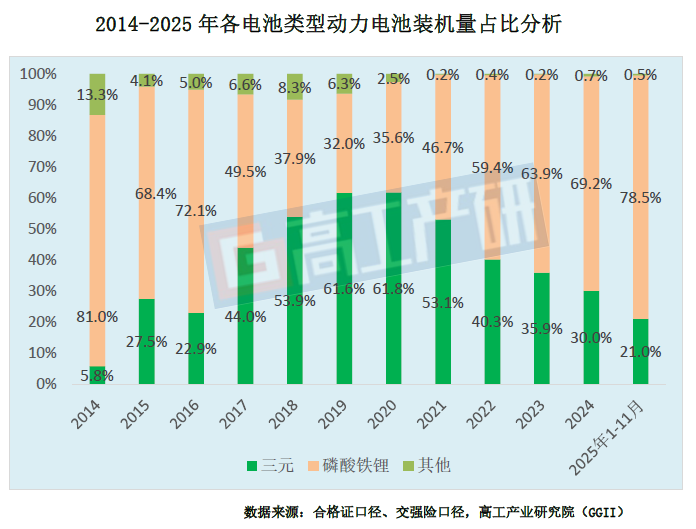
GGII:2025年1-11月国内磷酸铁锂动力电池装机份额高达78.5% 后市有望突破历史峰值
智通财经网· 2025-12-25 08:52
Core Insights - The domestic lithium iron phosphate (LFP) battery installation volume is projected to reach approximately 490 GWh from January to November 2025, representing a year-on-year growth of 55% and a market share of 78.5%, an increase of 10 percentage points compared to the same period last year [1][5]. Group 1: Market Trends - The significant increase in the market share of LFP batteries is primarily driven by market demand rather than policy incentives, contrasting with 2014 when policy was the main driver [3]. - The proportion of new vehicles equipped with LFP batteries has remained between 90% and 96% this year, with a notable increase from 92% to 94.5% in the second half of the year, indicating a growing preference among manufacturers for LFP technology [5]. Group 2: Product Offerings - The number of new energy passenger car models equipped with LFP batteries has risen from 213 to 536 over the past three years, with popular models like Geely Xingyuan, Xiaomi SU7, and XPeng MONA M03 accelerating production and delivery, further boosting the market share of LFP batteries [8]. Group 3: Competitive Landscape - The top 10 companies in the domestic LFP battery installation market accounted for 95.3% of the total volume from January to November 2025, with companies like CATL, EVE Energy, and Xinwangda showing steady growth over the past three years [10]. - CATL's market share is projected to increase from 34.42% in 2023 to 36.79% in 2025, while BYD's share is expected to decline from 43.49% to 29.19% during the same period [11].
长单潮带动4000亿大扩产,储能真爆发了
投中网· 2025-12-25 07:45
Core Viewpoint - The lithium battery industry is experiencing a surge in long-term contracts, driven by high demand and supply chain stability, but there are concerns about potential overcapacity similar to the solar industry in previous years [6][8][21]. Group 1: Long-term Contracts - Major companies in the lithium battery sector are signing significant long-term contracts, with examples including Longpan Technology's agreement to purchase 1.3 million tons of cathode materials worth approximately 45 billion yuan from Chuangneng New Energy [6]. - Other industry leaders like CATL and Yiwei Lithium Energy have also disclosed large procurement agreements, indicating a trend of securing supply for critical materials over multi-year periods [6][8]. - The trend of long-term contracts is seen as a response to the tight supply chain and high demand in the lithium battery market, with many contracts spanning 3 to 5 years [7][9]. Group 2: Market Demand and Growth - The global lithium battery storage market has seen explosive growth, with a reported 68% year-on-year increase in installed capacity, reaching 170 GWh in the first three quarters of 2025 [8]. - The demand for power batteries has also surged, with global installed capacity reaching 811.7 GWh, a 34.7% increase compared to the previous year [8]. - The industry is currently experiencing high operational rates, with companies like CATL and Yiwei Lithium Energy reporting utilization rates above 90% [10][11]. Group 3: Supply Chain and Material Costs - The high demand for raw materials has led to significant price increases across various components, including lithium carbonate and electrolytes, with lithium carbonate prices rising by 31.8% in two months [13]. - Companies are increasingly locking in long-term contracts for raw materials to mitigate production costs and ensure supply chain security [13]. - The current supply chain challenges are characterized by structural mismatches, particularly in high-capacity battery cells, leading to delivery difficulties for many companies [15]. Group 4: Capacity Expansion - The industry is entering a new phase of capacity expansion, with major players planning to increase production significantly, totaling over 510 GWh of new capacity and an investment of 176.2 billion yuan [17]. - This expansion is primarily driven by leading companies like CATL and Guoxuan High-Tech, which are ramping up production to meet the growing demand [18]. - However, there are concerns that this rapid expansion could lead to overcapacity, reminiscent of the solar industry's past experiences [21][22]. Group 5: Industry Outlook and Risks - Despite the optimistic outlook for growth in the lithium battery sector, there are warnings about the potential for overcapacity and the need for companies to avoid a race to expand production without careful consideration [20][21]. - The lessons learned from the solar industry highlight the risks associated with aggressive capacity expansion driven by order backlogs, which can lead to significant financial distress if market conditions change [22].