
EVE(300014)

Search documents
中国电池材料 -价格复苏之路崎岖-China Battery Materials Bumpy Road to Price Recovery
2026-01-28 03:02
Summary of Key Points from the Conference Call on China Battery Materials Industry Overview - The focus is on the battery materials industry, particularly related to lithium iron phosphate (LFP) batteries and the broader electric vehicle (EV) market - The analysis includes the impact of rising costs on battery manufacturers and the implications for downstream demand, especially in energy storage systems (ESS) [1][2][9] Core Insights and Arguments - **Price Trends**: LFP battery cell prices have increased by 8%, while battery costs have surged by 30%, leading to a squeeze in battery margins [1] - **Cost Inflation**: Lithium prices have risen by 46% year-to-date, contributing to an estimated cost inflation of Rmb32/kWh for batteries. The total LFP battery cost has increased by Rmb80/kWh, which may test demand in the coming months [2][11] - **Demand Forecasts**: Battery production guidance from major manufacturers like CATL suggests a growth of 50-70% by 2026, which has raised expectations for raw material demand [3][21] - **Market Dynamics**: The recent surge in costs has shifted the market from a demand-pull to a cost-push scenario, with concerns about EV sales weakness impacting performance [1][9] - **Cost Pass-Through Mechanisms**: Battery manufacturers have mechanisms to pass on metal-linked cost increases to downstream customers, but non-metal cost increases may not be fully passed through [20] Important but Overlooked Aspects - **Investment in Upstream**: Companies like CATL and Gotion are investing in upstream lithium resources to mitigate the impact of rising raw material costs. CATL's self-sufficiency ratio for lithium is expected to be 18% by 2025 [17][18] - **Profit Distribution**: The profit distribution along the battery supply chain is shifting, with downstream manufacturers currently capturing more profit. However, this may change as the market matures and supply chain efficiencies improve [35] - **Policy Impacts**: Changes in Chinese government policy, including export controls and a focus on price recovery, may influence the battery market dynamics and cost structures in 2026 [36] Financial Metrics and Projections - **Battery Demand Growth**: The forecast for total battery demand is projected to grow significantly, with EV battery demand expected to reach 2,096 GWh by 2026, reflecting a 30% year-over-year growth [23] - **ESS Demand**: ESS battery demand is also expected to grow, with projections of 894.5 GWh by 2026, indicating a robust market for energy storage solutions [26] Conclusion - The battery materials industry is facing significant challenges due to rising costs and potential demand weaknesses. However, strategic investments in upstream resources and favorable production guidance from major manufacturers present opportunities for growth. The evolving landscape of profit distribution and policy impacts will be critical to monitor as the market develops.






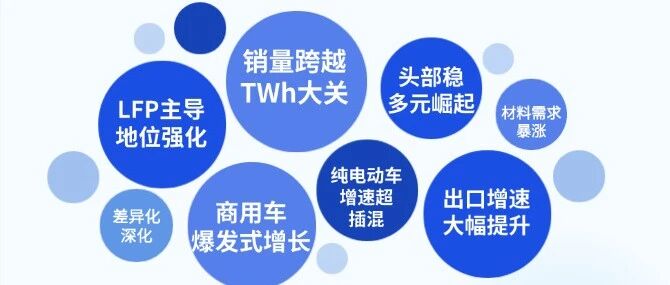
销量首破TWh,2025动力电池上升中的八重变化
高工锂电· 2026-01-27 11:21
Core Viewpoint - In 2025, the power battery industry in China experienced rapid growth, with sales surpassing 1 TWh for the first time, reflecting significant structural changes in exports, material composition, vehicle demand, and market competition [1] Group 1: Sales and Growth - In 2025, the total sales of power batteries reached 1200.9 GWh, a year-on-year increase of 51.8%, significantly higher than the 28.4% growth in 2024 [1] - Cumulative installed capacity was 769.7 GWh, up 40.4% year-on-year, with an increase of 221.3 GWh compared to 2024 [1] Group 2: Export Dynamics - Cumulative exports of power batteries in 2025 reached 189.7 GWh, a year-on-year growth of 41.9%, a substantial increase from the 5.0% growth in 2024 [3] - In December 2025, exports of lithium iron phosphate batteries accounted for 51.3% of total monthly exports, marking a 71.1% year-on-year increase and surpassing the previously dominant ternary batteries [3] Group 3: Battery Type Performance - In 2025, the installed capacity of lithium iron phosphate batteries was 625.3 GWh, representing 81.2% of total installed capacity, with a year-on-year growth of 52.9% [5] - The installed capacity of ternary batteries dropped to 18.7%, with a year-on-year growth of only 3.7%, continuing a downward trend from 10.2% in 2024 [5] Group 4: Commercial Vehicle Growth - The growth of commercial vehicles was explosive, with the installed capacity of pure electric trucks increasing to 17.7%, a year-on-year growth of 168.9% [7] - The average battery capacity of new energy vehicles rose to 55.2 kWh, a year-on-year increase of 18.8% [7] Group 5: Market Structure and Competition - The market competition is evolving from a "dual dominance" to a "stable head and diverse rise," with CATL and BYD maintaining their leading positions but seeing their combined market share decrease from 69.8% to 64.9% [10] - Mid-tier companies like Zhongchuang Innovation and Guoxuan High-Tech are gaining market share, with Guoxuan's installed capacity reaching 43.44 GWh, a year-on-year increase of 1.07 percentage points [12] Group 6: Material Demand and Pricing - The demand for core materials such as lithium iron phosphate and ternary materials surged by over 50% in 2025 [14] - By the end of 2025, the price of battery-grade lithium carbonate reached 150,000 yuan per ton, reflecting a more than 60% increase compared to the end of 2024 [14] Group 7: December Performance Highlights - In December 2025, power battery sales reached 143.8 GWh, a year-on-year increase of 49.2%, while installed capacity was 98.1 GWh, up 35.1% year-on-year [16] - The growth was driven by policy incentives and strong end-user demand, with major automakers launching promotional campaigns to stimulate purchases [15]


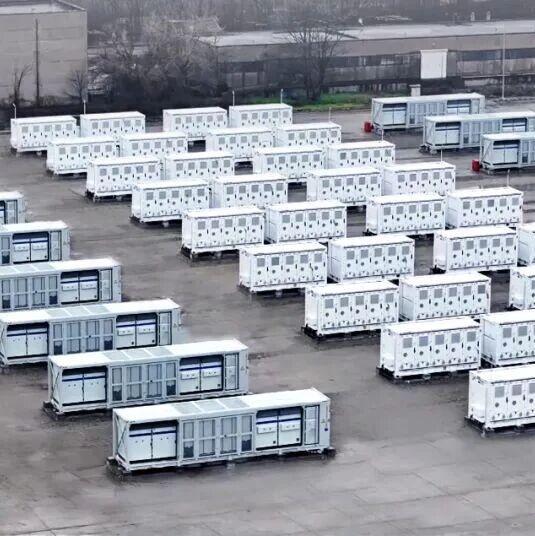
超2.4GWh!宁德时代、比亚迪储能等新项目集中落地
行家说储能· 2026-01-27 10:05
Core Insights - The article highlights the latest developments in energy storage projects from leading companies such as CATL, BYD, EVE Energy, Haibo Sichuang, Trina Storage, and Jinko Solar, with a total scale exceeding 2.4 GWh [2] Group 1: CATL - CATL's Sivrihisar project in Turkey, with a capacity of 49.2 MWp solar and 34.1 MWh storage, is the first hybrid asset approved under the DGES framework in Turkey [4][6] - The project utilizes CATL's EnerC series liquid-cooled battery system, enhancing safety and cycle life while maintaining stable charging and discharging efficiency in Turkey's arid climate [6] Group 2: BYD - BYD has successfully implemented a 100 MW/200 MWh energy storage station in Hezhou, marking the city's first centralized shared energy storage facility [7] - Additionally, BYD partnered with ContourGlobal to establish a 500 MWh standalone battery energy storage system in Bulgaria, which is one of the largest independent storage projects in Eastern Europe [9] - BYD has delivered over 500 energy storage projects globally, covering more than 110 countries and regions [9] Group 3: EVE Energy - EVE Energy has launched a 628 Ah energy storage battery technology at the Guangzhou Baiyun comprehensive energy storage demonstration project [10] - The 628 Ah battery, named "Mr. Big," features a capacity of 2 kWh and a cycle life exceeding 12,000 times, with a strategic collaboration with the National New Energy Storage Innovation Center [12] Group 4: Haibo Sichuang - Haibo Sichuang's 343 MWh emergency power storage project for coal mines utilizes advanced liquid-cooled storage systems designed for harsh environments [13][14] - The project aims to ensure stable operation under extreme conditions and provide emergency power to critical loads in coal mines [14] Group 5: Trina Storage - Trina Storage has successfully delivered a 1.7 GWh energy storage project in the Asia-Pacific region, which is the company's largest overseas project to date [17] - The project employs Trina's Elementa 2 storage system, featuring AI bionic liquid cooling technology for stable operation across a wide temperature range [17] Group 6: Jinko Solar - Jinko Solar has completed a 10 MWh energy storage project in Handan, Hebei, utilizing two Blue Whale SunTera G2 liquid-cooled storage systems [19][21] - The project aims to reduce operational costs through peak-valley electricity price arbitrage and improve the reliability of power supply for local merchants [21] - Despite reporting significant losses, Jinko Solar emphasizes rapid growth in its energy storage business and the effectiveness of its solar-storage synergy [21]

新能源+AI周报(第40期20260118-20260124):储能量价齐升,太空、AI主题延续-20260126
Tai Ping Yang Zheng Quan· 2026-01-26 15:01
Investment Rating - The report does not provide specific investment ratings for the industry sectors mentioned [2]. Core Insights - The overall industry strategy focuses on the simultaneous rise in energy storage volume and price, with ongoing themes in space and AI [3]. - The new energy vehicle supply chain is entering an upward cycle, benefiting companies like CATL and EVE Energy due to the electrification upgrade and optimization of energy storage patterns [3]. - By the end of December 2025, China's electric vehicle charging infrastructure is expected to reach 20.092 million units, a year-on-year increase of 49.7% [3]. - Global energy storage battery shipments are projected to reach 640 GWh in 2025, a year-on-year increase of 82.9%, with CATL maintaining a leading position [3][25]. - The solid-state battery sector is entering a critical phase of engineering and industrialization, with companies like Xiamen Tungsten and Peking University Technology benefiting [4]. Summary by Sections Energy Storage and New Energy - The energy storage trend continues to improve, with companies like Sungrow Power and Huaneng Power benefiting from a significant increase in domestic procurement, which exceeded 100 GWh for the first time [5]. - The average price of lithium battery storage systems has rebounded by 6.39% to 0.5226 yuan/Wh [5]. - AI expansion and global grid upgrades are driving demand for power equipment, benefiting companies like TBEA and Sanyuan Electric [5]. Lithium Carbonate and Battery Materials - The supply and demand for lithium carbonate are exceeding expectations, with companies like Salt Lake Potash and Hunan Youneng benefiting from favorable market conditions [4]. - The cost of phosphoric iron lithium cathode materials has increased, with processing fees rising by 318.7 yuan/ton compared to November averages [4][27]. AI and Robotics in New Energy - The integration of AI and humanoid robots in the new energy sector is gaining traction, with companies like Zhejiang Rongtai and Keda Li benefiting from advancements in robotics [7]. - Tesla's shift towards becoming a robotics company is expected to create new growth cycles, with significant implications for the automotive industry [7][26]. Market Trends and Projections - The report highlights that the global energy storage battery shipment is expected to reach 1,090 GWh in 2026, a year-on-year increase of 70% [25]. - The market for commercial energy storage products is evolving, with larger capacity batteries becoming mainstream and driving innovation in the sector [29].


2025年全球钠离子电池出货达9GWh,同比增长150%!
起点锂电· 2026-01-26 10:11
Core Viewpoint - By 2025, Chinese companies are expected to lead the global sodium battery industry, with major domestic players accelerating their sodium battery strategies, including CATL, BYD, and Huawei [1][2]. Group 1: Market Overview - The global sodium ion battery shipment is projected to reach 9 GWh in 2025, representing a 150% year-on-year increase, with the market expected to grow to 1051 GWh by 2030 [6]. - The primary applications for sodium batteries in 2025 will be in energy storage, start-stop systems, two-wheeled vehicles, low-range electric vehicles, and uninterruptible power supplies (UPS) [6]. Group 2: Product Diversity - Sodium battery products in China include large square, conventional square, various cylindrical types (from 18650 to super large 120420), and soft-pack batteries, showcasing a trend towards product diversification [2]. - Major manufacturers for different product types include Weike Technology, CATL, BYD, and others, with specific models listed for each category [3]. Group 3: Market Segmentation - In 2025, the shipment distribution for sodium batteries is expected to be 5.6 GWh for energy storage (62.2%), 1.7 GWh for light-duty power (18.8%), 1 GWh for automotive power (11.3%), and 0.5 GWh for start-stop batteries (5.6%) [9]. - The sodium battery's advantages in cycle life and safety make it suitable for various applications, including grid frequency regulation and AI data center storage [5]. Group 4: Material and Cost Trends - The average price of sodium battery cells is expected to be 0.52 yuan/Wh in 2025, decreasing to 0.25 yuan/Wh by 2030 [7]. - The shipment of sodium battery positive materials is projected to reach 20,000 tons in 2025, with a year-on-year growth of 122.2% [12]. - The average price for layered oxide positive materials is expected to be 46,000 yuan/ton in 2025, while the price for polycation positive materials is projected to be 28,000 yuan/ton [14]. Group 5: Future Trends - The sodium battery industry is anticipated to see significant growth from 2026 to 2030, with increased penetration in start-stop and energy storage markets, and a focus on low-temperature applications [36]. - The cost of sodium battery materials and cells is expected to decline significantly, with projections indicating that prices will fall below those of lithium iron phosphate batteries by 2027 and below lead-acid batteries by 2028 [36]. - The share of polycation materials is expected to rise significantly, while layered oxides will see a decline, with biomass hard carbon remaining the mainstream material for sodium battery anodes [36].



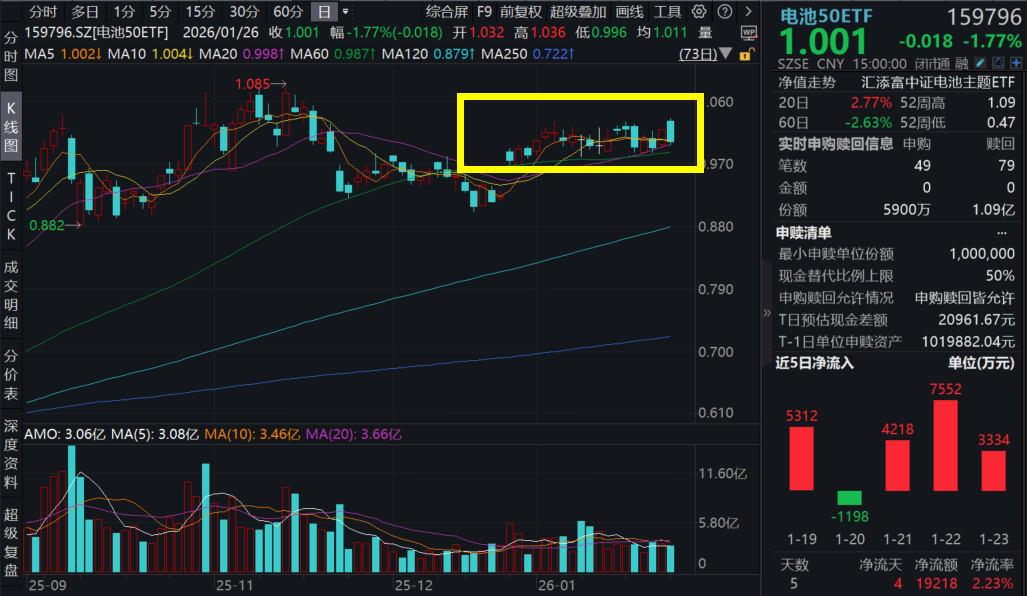
三花智控跌超3%,电池50ETF(159796)跌1.77%延续箱体震荡!2025年业绩前瞻,电池板块表现为何如此亮眼?
Xin Lang Cai Jing· 2026-01-26 09:33
Core Viewpoint - The A-share market experienced fluctuations on January 26, with cyclical sectors leading gains while growth sectors retreated. The Battery 50 ETF (159796) closed down by 1.77%, with funds attracting over 150 million yuan in the previous three days [1]. Group 1: Market Performance - The Battery 50 ETF (159796) saw most of its constituent stocks decline, with significant drops including Sanhua Intelligent (down over 3%) and Guoxuan High-Tech (down over 2%) [3]. - The top ten constituent stocks of the Battery 50 ETF showed a range of declines, with the largest drop being 3.89% for Sanhua Intelligent and the smallest being 1.43% for Ningde Times [4]. Group 2: Earnings Forecasts - Recent earnings forecasts for 2025 from leading battery companies indicate strong performance, with 11 out of 13 companies reporting year-on-year growth. Leading the pack is Sanhua Intelligent, with a projected profit increase of 424% to 529% [5]. - The projected net profit for Sanhua Intelligent is between 1.5 billion yuan and 1.8 billion yuan, while other companies like Daoshih Technology and Tianci Materials also show significant growth forecasts [5]. Group 3: Demand and Industry Outlook - The battery sector's strong performance is attributed to steady growth in demand for power batteries and explosive growth in energy storage batteries. The demand is expected to continue rising, with new technologies like solid-state batteries opening up new market opportunities [6]. - By December 2025, domestic lithium iron phosphate battery installation volume is expected to reach 79.8 GWh, a year-on-year increase of 30.82%, while power battery exports are projected to hit 19.0 GWh, up 47.29% year-on-year [7]. Group 4: Technological Developments - Solid-state batteries are anticipated to see significant breakthroughs, with policy support and emerging industries driving demand. The production of semi-solid batteries is expected to exceed 10 GWh by 2025, with a focus on leading battery cell companies and material firms [7]. - The Battery 50 ETF (159796) has a high content of solid-state batteries (45%) and energy storage (18.7%), positioning it to benefit from the growth in these sectors [8][10]. Group 5: Investment Strategy - The battery sector's fundamentals and technological catalysts are expected to support strong stock performance. Given the complexity of the industry, index investment may be a more effective strategy to capture opportunities in the battery sector [7]. - The Battery 50 ETF (159796) is noted for its leading scale and low management fee of 0.15% per year, making it an attractive option for investors looking to capitalize on the battery sector's growth [12].


2025年固态电池市场回顾:从“概念狂飙”走向“产业落地”
鑫椤锂电· 2026-01-26 08:03
Core Viewpoint - The year 2025 is recognized as the "year of solid-state battery industrialization," marking a significant transition from experimental technology to mass production, reshaping the energy storage industry at an astonishing pace [1]. Group 1: Technological Breakthroughs and Capacity Implementation - In 2025, solid-state batteries achieved substantial breakthroughs in energy density and industrialization processes, with CATL's sulfide solid-state battery reaching an energy density of 500Wh/kg, and EVE Energy's first solid-state battery successfully rolling off the production line [3][4]. - Major companies like GAC Group and EVE Energy are establishing production lines for solid-state batteries, with GAC's line capable of producing batteries over 60Ah and EVE's Chengdu base being unveiled [3]. Group 2: Beneficiary Segments: Equipment and Materials - The demand for solid-state battery-specific equipment is surging due to the need for new manufacturing processes, leading equipment manufacturers like Xian Dai Intelligent and Winbond Technology to launch dedicated production lines [5]. - The solid-state battery industry is witnessing a critical period for pilot lines from 2025 to 2026, with equipment orders expected to be fulfilled ahead of schedule [5]. Group 3: Industry Development Anchors: Policies, Standards, and Leading Enterprises - Solid-state batteries are included in China's "New Energy Storage Manufacturing Industry High-Quality Development Action Plan," with support for R&D and pilot verification, while global competitors like the EU and the US are also accelerating their efforts [12]. - The first national standard for solid-state batteries is set to be published in September 2026, establishing China's leadership in the next generation of battery technology [13]. - Leading companies like CATL and BYD are planning to demonstrate small-scale production by 2027, indicating a strategic approach to validate technology feasibility [14]. Group 4: Future Application Rhythm: Gradual Penetration from Specialized to Mass Markets - From 2025 to 2027, solid-state batteries are expected to first penetrate specialized and high-end markets, including drones and high-end electric vehicles, which are sensitive to weight, safety, and energy density [16]. - Between 2027 and 2030, solid-state batteries will gradually enter high-end consumer and luxury electric vehicles, paving the way for broader market adoption [17]. - Post-2030, solid-state batteries are anticipated to flourish in mainstream passenger vehicles and general energy storage, leveraging cost control and supply chain scale effects [18]. Conclusion - The year 2025 marks a pivotal transition for solid-state batteries from "technically feasible" to "commercially visible," indicating a significant shift in the industry landscape [19][20].

国泰海通:锂电材料价格环节迎来上涨 26年需求周期有望开启
智通财经网· 2026-01-26 06:20
Core Viewpoint - The report from Guotai Junan highlights the significant growth in global energy storage battery shipments, projecting a total of 640 GWh in 2025, which represents an 82.9% year-on-year increase. Domestic manufacturers are expected to ship 621.5 GWh, also reflecting an 82.8% growth, while overseas shipments are anticipated to reach 18.5 GWh, marking an 85% increase [1][2]. Group 1: New Energy Vehicles and Energy Storage - The global sales of new energy vehicles (NEVs) are projected to reach 23.54 million units in 2025, a 29.1% increase year-on-year, with China accounting for 70.3% of the total sales. Sales in Europe and the US are expected to be 3.77 million and 1.6 million units, respectively, showing growth rates of 30.5% and 1.72% [1]. - For energy storage, the forecast for 2026 indicates that global shipments of energy storage batteries could reach 1,090 GWh, representing a 70% year-on-year increase [2]. Group 2: Price Trends and Material Supply - Starting from June 2025, a tightening supply-demand situation for domestic energy storage cells has initiated a price increase cycle, with prices for lithium hexafluorophosphate and lithium carbonate rising since September. The underlying logic for these price increases is driven by supply-demand dynamics, where strong downstream demand leads to improved profitability in the materials sector [3]. - The lithium battery industry is experiencing an improved supply-demand balance, with major battery manufacturers like CATL ramping up production. However, the materials sector faces significant financial pressures due to high debt levels and the need for capital turnover amidst new capacity releases [3]. Group 3: Future Demand and Policy Support - The demand cycle for 2026 is expected to be bolstered by continued domestic policies such as trade agreements in Europe and China, as well as the reintroduction of electric vehicle purchase subsidies in Germany. The Chinese market is projected to see a 94% year-on-year increase in new energy storage orders and collaborations, reaching 35.3 GWh in 2025 [4]. - The updated export tax rebate policy for battery products, effective from January 2026, is anticipated to advance overseas demand for new energy products [4]. Group 4: Investment Recommendations - The report suggests focusing on lithium-related materials such as lithium iron phosphate, lithium carbonate, and lithium hexafluorophosphate, as well as heavy asset-related sectors like separators. Recommended stocks include Shengxin Lithium Energy (002240.SZ) and others in the lithium materials sector [5]. - Additionally, leading battery manufacturers with strong pricing power and supply-demand imbalances are highlighted, with recommendations for stocks like CATL (300750.SZ) and others [5].



动力锂电:告别过剩思想,拥抱锂电材料大周期
GUOTAI HAITONG SECURITIES· 2026-01-26 04:35
Investment Rating - The report assigns an "Overweight" rating for the lithium battery materials industry [1] Core Insights - The report emphasizes the shift away from excess supply mentality, highlighting the potential for non-linear profit growth among leading companies in the lithium battery materials sector due to rigid supply against continuously growing demand [3][4] - It suggests a focus on lithium-related materials such as lithium iron phosphate, lithium carbonate, hexafluorophosphate, and aluminum foil, while also considering heavy asset-related materials like separators [4] - The report forecasts significant growth in the electric vehicle (EV) market and explosive growth in energy storage, with global EV sales expected to reach 23.54 million units in 2025, a 29.1% increase year-on-year [4] - It notes that the energy storage battery shipments are projected to reach 640 GWh in 2025, marking an 82.9% year-on-year growth [4] - The report anticipates a demand cycle to commence in 2026, supported by favorable domestic and international policies [4] Summary by Sections Investment Recommendations - The report recommends focusing on leading companies in the lithium battery materials sector, including 盛新锂能 (Shengxin Lithium Energy), 湖南裕能 (Hunan Youneng), 天赐材料 (Tianci Materials), and others, while also highlighting battery leaders like 宁德时代 (CATL) and 亿纬锂能 (EVE Energy) [4][7] Market Data - The report provides operational data for several listed companies in the lithium battery sector, indicating varying levels of profitability and cash flow, with 宁德时代 (CATL) showing a net profit of 49 million in Q3 2025 and a debt-to-asset ratio of 61% [6] - It includes a table summarizing earnings per share (EPS) and price-to-earnings (PE) ratios for key companies, with 宁德时代 (CATL) having an EPS of 14.90 for 2025E and a PE ratio of 23.29 [7]
储能电池:2025 财年出货量约 640GWh,同比增 90%;12 月出货量回顾-ESS Battery_ ~640Gwh FY25 shipment, _90% y_y; December shipment review
2026-01-26 02:50
Summary of ESS Battery Industry Conference Call Industry Overview - **Global ESS Battery Demand**: The demand for Energy Storage Systems (ESS) batteries is projected to accelerate significantly, with shipments expected to reach approximately 640 GWh in FY25, reflecting a year-over-year growth of over 90% [2][5][37]. - **China's Role**: China's domestic demand is a primary growth driver, with shipments surging over 100% year-over-year in 4Q25 due to supportive policies [2][11]. The country accounts for about 97% of global ESS battery supply [41]. Key Insights - **December Shipment Performance**: December 2025 shipments were robust at 85 GWh, marking a 34% month-over-month increase and a 90% year-over-year increase [2][21]. - **Future Projections**: The base case model anticipates global ESS battery shipments to grow over 40% to around 900 GWh in 2026, driven by policy support from China and strong order momentum from Europe [3][37]. - **Policy Changes**: China's Ministry of Finance announced a reduction in VAT export rebates from 9% to 6% starting April 2026, which is expected to optimize capacity structure and reduce market involution, benefiting leading players like CATL [2]. Company Highlights - **CATL**: As the largest ESS battery maker globally, CATL is well-positioned to gain market share with new capacity releases. It is projected that ESS will account for 20% of CATL's total battery production volume in FY26 [12][14][109]. - **Sungrow**: Recognized as the largest solar inverter producer, Sungrow is expected to benefit from rising ESS demand, particularly in emerging markets [4][12]. - **LGES**: LG Energy Solution is well-positioned to capture growth in the US ESS market, having commenced production of LFP ESS batteries in Michigan [12][14]. - **BYD**: ESS accounts for 17% of BYD's total battery production volume in FY25, indicating a growing focus on this segment [106]. Market Dynamics - **Export Trends**: Chinese ESS battery exports to the US saw a significant increase of 126% year-over-year in FY25, driven by rush purchases ahead of tariff hikes [48]. However, shipments to the US slowed to 9% year-over-year in 4Q25 due to tariff shifts [13]. - **Price Trends**: ESS battery prices from Chinese manufacturers increased by 1-2% in 4Q25, following a rebound of 5-10% earlier in the year [13][100]. Competitive Landscape - **Market Share**: CATL's global market share fell by 10 percentage points in FY25 due to capacity constraints, while competitors like Hithium and BYD gained market share [72][99]. CATL holds nearly 50% of the US market share and about 20% in the EU [50]. - **Emerging Competitors**: Companies like Gotion and Narada are gaining traction in the telecom ESS market, with Gotion achieving a 5 percentage point market share increase [99]. Conclusion The ESS battery market is poised for substantial growth, driven by strong demand in both domestic and international markets, particularly in China and the US. Leading companies like CATL, Sungrow, and LGES are well-positioned to capitalize on these trends, although they face increasing competition and market dynamics that could impact their market shares.
