EVE(300014)

Search documents
德国电动车补贴利好锂电产业链
HTSC· 2026-01-21 02:50
Investment Rating - The report maintains a "Buy" rating for several companies in the lithium battery supply chain, including Ningde Times, Yiwei Lithium Energy, and others, while recommending "Overweight" for companies like Dongsheng Technology [8][11]. Core Insights - The German government announced a €3 billion subsidy program for electric vehicle purchases, providing up to €6,000 per household to stimulate the electric vehicle industry, particularly benefiting pure electric vehicles and low-income families [1][2]. - The policy is expected to drive new electric vehicle demand between 0 to 800,000 units, translating to an additional battery demand of 0 to 48 GWh, which represents approximately 0 to 1.7% of the global battery demand in 2026 [3]. - The report highlights the potential for increased lithium battery demand, particularly benefiting companies with significant exposure to the European market, such as Ningde Times and Yiwei Lithium Energy [3]. Summary by Sections Policy Objectives - The policy emphasizes the environmental benefits and economic viability of electric vehicles, aiming to promote their adoption and support the automotive industry in Germany and Europe [10]. - Households with an annual income below €90,000 can apply for subsidies, which vary based on income and number of children, with higher subsidies for pure electric vehicles [10]. Expected Impact - The subsidy program is anticipated to enhance the penetration rate of pure electric vehicles, with the government expecting to allocate funds for the purchase of 800,000 vehicles [10]. - The report forecasts that the demand for lithium batteries will increase, leading to performance growth for companies in the lithium battery supply chain [3][10]. Company Recommendations - **Ningde Times (300750 CH)**: Target price of 566.18, rated "Buy" due to strong performance and market demand [11]. - **Yiwei Lithium Energy (300014 CH)**: Target price of 96.96, rated "Buy" based on expected volume and profit growth [11]. - **Dongsheng Technology (300073 CH)**: Target price of 75.57, rated "Overweight" due to positive developments in product lines [11]. - **Hunan Youneng (301358 CH)**: Target price of 112.98, rated "Buy" due to strong earnings forecast [11]. - **Shangtai Technology (001301 CH)**: Target price of 130.32, rated "Buy" based on anticipated demand growth [11].





坐拥九大万亿级产业集群,谁会成为广东的第十张王牌?
Sou Hu Cai Jing· 2026-01-21 01:58
Group 1: Overview of Guangdong's Manufacturing Industry - Guangdong's manufacturing industry is supported by trillion-level industrial clusters, with nine major clusters established, including new-generation electronic information and new energy vehicles [2] - In 2022, the automotive industry in Guangdong achieved revenue exceeding 1 trillion yuan, marking it as the eighth trillion-level industry, with the new energy industry expected to follow in 2024 [2] - The ultra-high-definition video display industry is projected to surpass 900 billion yuan in revenue by 2024, positioning it as a potential candidate for the next trillion-level industry [2] Group 2: Strategic Importance of Trillion-Level Clusters - The development of trillion-level industrial clusters is a strategic focus for Guangdong to adapt to global economic changes and technological revolutions, aiming to build a modern industrial system [3] - The existing trillion-level clusters are predominantly traditional industries, indicating a need for increased representation of strategic emerging industries [3] - Trillion-level clusters are characterized by significant scale effects, strong innovation capabilities, and resilient supply chains, serving as key drivers for economic growth [3] Group 3: Policy Support and Development Plans - The success of the new energy industry in Guangdong is attributed to strategic policies and frameworks established since 2020, aiming to develop it into a strategic emerging industry cluster [5] - The "Guangdong Province Action Plan for the Development of Ultra-High-Definition Video Industry" aims for the industry to achieve over 1 trillion yuan in revenue by 2025 [8] - The semiconductor and integrated circuit industry is a focus area, with plans to enhance its scale and capabilities, targeting over 4 trillion yuan in revenue by 2025 [10][12] Group 4: Emerging Industries and Growth Projections - The new energy storage industry is expected to reach 600 billion yuan in revenue by 2025, with an annual growth rate exceeding 50% [13] - The low-altitude economy is projected to become a trillion-level industry, with significant market potential and a comprehensive policy framework to support its development [18] - The ultra-high-definition video industry has shown remarkable growth, with a revenue of 900 billion yuan in 2024 and a significant increase in 4K program production [9] Group 5: Infrastructure and Market Development - Guangdong has established a robust infrastructure for the low-altitude economy, including numerous general airports and drone flight routes, facilitating industry growth [21][22] - The new energy storage sector has seen rapid advancements, with major projects being launched and significant increases in installed capacity [17] - The semiconductor industry in Guangdong is experiencing rapid growth, with a projected revenue of over 320 billion yuan in 2024 and a clear path towards achieving 400 billion yuan by 2025 [11]



当锂价冲上高位 钠电“备胎”火速上位
3 6 Ke· 2026-01-21 01:04
Core Viewpoint - The sodium battery industry in China is entering a commercialization phase, with annual shipments expected to exceed 3.7 GWh by 2025, marking a significant milestone despite being far behind lithium battery giants [1][2]. Industry Overview - The sodium battery industry is poised for growth, driven by rising lithium carbonate prices, which have surged to as high as 179,000 yuan/ton, prompting interest in sodium batteries as a cost-effective alternative [3][5]. - The industry is characterized by a dual structure, with established lithium battery leaders like CATL and BYD alongside emerging sodium battery companies such as Zhongke Haina and Sodium Innovation Energy [3][7]. Market Dynamics - The year 2026 is being marked as the "year of sodium battery industrialization," with companies ramping up production lines and securing orders in response to market demand [3][5]. - The sodium battery's advantages include abundant raw materials, stable pricing of sodium carbonate, and superior low-temperature performance and safety features compared to lithium batteries [1][3]. Challenges and Pressures - The sodium battery industry faces significant challenges, including capacity bottlenecks, performance gaps compared to lithium batteries, and an immature supply chain [3][9]. - Current sodium battery energy densities range from 100 to 160 Wh/kg, while lithium iron phosphate batteries achieve 160 to 200 Wh/kg, indicating a need for technological advancements [9]. Standardization Efforts - The establishment of a comprehensive standardization framework is underway, with the Ministry of Industry and Information Technology guiding the development of national and industry standards for sodium batteries [4][15]. - Existing standards are insufficient, particularly in areas such as safety, performance requirements, and testing methods for specific sodium battery applications [14][16]. Future Outlook - The sodium battery industry is expected to see increased investment and development, with major players like CATL and BYD committing to large-scale applications in various sectors [7][8]. - The industry's growth will depend on overcoming current challenges, including production capacity, cost competitiveness, and the establishment of a robust standardization system [9][12].

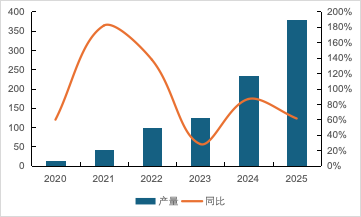
安泰科:2025年中国磷酸铁锂正极材料产量约379万吨 同比增加61.9%
智通财经网· 2026-01-20 22:45
2025-2026年磷酸铁锂新扩产落地的产能将超过200万吨,届时全球磷酸铁锂产能将逼近900万吨,磷酸 铁锂行业仍难摆脱供过于求格局,过剩主要集中在二、三代材料,而四代高端材料依旧短缺。在企业抢 出口、新能源汽车及储能政策利好的共同驱动下,乐观估计2026年中国磷酸铁锂正极材料总产量将达 580万吨,同比增长约53%。 2026年国内磷酸铁锂材料新扩产的产线大多做的是更高端的产品,而非低端产品的简单复制,行业竞争 格局正呈现"头部集中、中小出清"的态势。湖南裕能、德方纳米、龙蟠科技等龙头企业纷纷加码高压 实、长循环等高端产品布局。 当前,国内磷酸铁锂行业面临结构性过剩,但高性能产品需求旺盛。未来企业能否在磷酸铁锂行业立 足,关键取决于两大核心能力:一是高端差异化产品的研发与生产能力,二是大规模生产下的产品一致 性控制能力。 图2 2025年我国磷酸铁锂材料主要企业产量占比 图3 我国磷酸铁锂正极材料出口量(吨) 近一年来,国内磷酸铁锂行业出现了一轮总额超2400亿元的巨额订单锁定潮,涉及宁德时代、楚能新能 源、亿纬锂能、欣旺达、比亚迪等多个头部电池厂商,其中宁德时代是最大买家,其采购金额占总额的 绝大部分。 ...


中高端磷酸铁锂产品供不应求 近一年超2400亿元磷酸铁锂订单锁定
Xin Lang Cai Jing· 2026-01-20 14:19
Core Insights - The lithium iron phosphate (LFP) market is experiencing significant growth, with major battery manufacturers aggressively purchasing LFP materials [1] - The total procurement of LFP materials by companies such as CATL, BYD, EVE Energy, Sunwoda, and Chuangneng New Energy has reached 6 million tons, with an order value exceeding 240 billion yuan [1] - There is a high demand for mid-to-high-end LFP products, leading to full-capacity operations at various companies including Longpan Technology, Wanrun New Energy, Fulian Precision, Fengyuan Co., and Rongbai Technology [1]
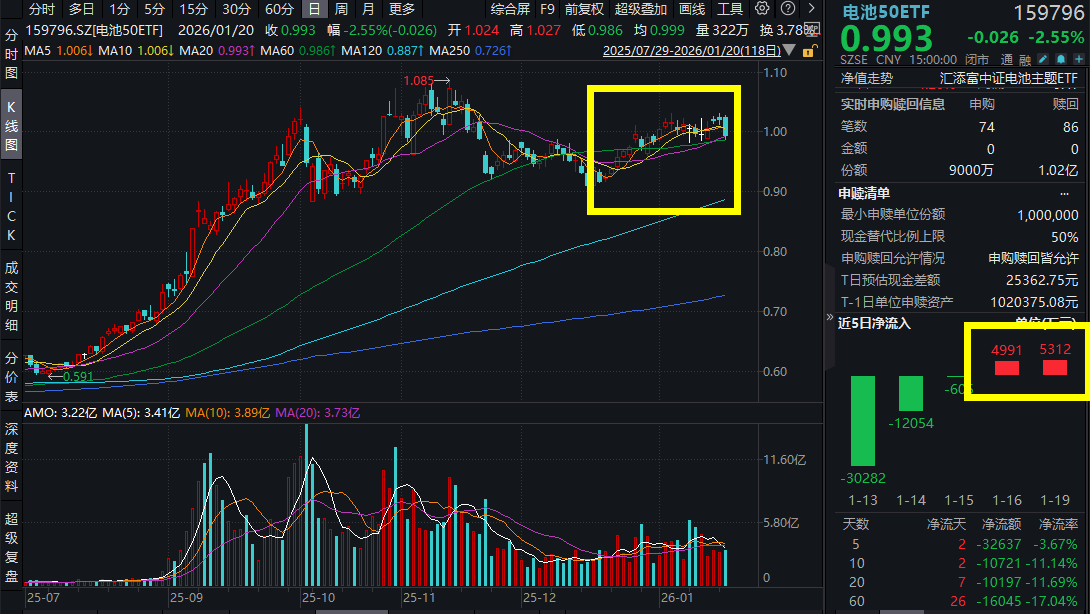
电池板块承压,阳光电源跌超5%,电池50ETF(159796)跌超2%,四连涨后首度回调,固态电池催化密集落地,产业化进程提速!
Xin Lang Cai Jing· 2026-01-20 11:44
Core Viewpoint - The A-share market experienced fluctuations with the battery sector under pressure, as evidenced by the decline of the Battery 50 ETF (159796) by 2.55% after four consecutive days of gains, with a trading volume of 322 million yuan [1]. Group 1: Market Performance - The Battery 50 ETF (159796) saw most of its constituent stocks decline, with significant drops including Sunshine Power down over 5%, and others like Xian Dao Intelligent and Multi-Fluorine down over 4% [3]. - The top ten constituent stocks of the Battery 50 ETF include major players such as Sunshine Power and Ningde Times, with varying declines in their stock prices [4]. Group 2: Project Announcements - On January 19, China Energy Construction announced the procurement results for a 153 MW battery storage project in South Africa, with Sunshine Power winning the bid for a total project capacity of 742.22 MWh and a contract value of 528 million yuan (approximately 0.86 yuan/Wh) [5]. Group 3: Industry Trends - The battery sector is expected to recover due to multiple catalysts, including a surge in demand for energy storage, rising material prices, and accelerated solid-state battery technology [6]. - Global demand for large-scale energy storage is projected to exceed expectations, with a forecasted growth of over 60% by 2026, driven by various market factors including the U.S. Inflation Reduction Act [7]. - Prices of upstream raw materials have generally increased, with battery-grade lithium carbonate rising by 64.4% to 157,000 yuan/ton, and lithium hydroxide up by 77.51% to 150,000 yuan/ton as of January 16, 2026 [8]. Group 4: Technological Developments - The solid-state battery sector is witnessing rapid advancements, with significant policy support and market catalysts enhancing industry prospects [9]. - Major automotive manufacturers are accelerating the integration of solid-state batteries, with companies like FAW Hongqi and GAC Group making substantial progress towards mass production by 2027 [9]. Group 5: Investment Opportunities - The Battery 50 ETF (159796) is positioned to benefit significantly from the energy storage sector, with a storage component of 18.7%, and a solid-state battery component of 45%, indicating strong growth potential [10]. - The ETF's focus on energy storage and power batteries, along with its low management fee of 0.15% per year, makes it an attractive investment option for capturing opportunities in the battery sector [16].



包揽锂电全球灯塔工厂,中国企业如何改写全球制造规则?
高工锂电· 2026-01-20 10:42
Core Viewpoint - The article highlights the transformation of China's lithium battery manufacturing industry, emphasizing its recognition as a global leader in smart and sustainable manufacturing through the achievement of "lighthouse factory" status by key companies [2][3][15]. Group 1: Lighthouse Factory Recognition - Three Chinese lithium battery companies, EVE Energy, Hicharge Energy, and CATL, were recognized as global lighthouse factories by the World Economic Forum, marking a significant milestone for China's lithium battery sector [2][3]. - This recognition reflects China's advancements in digitalization and green transformation within the lithium battery manufacturing industry, positioning it among the world's top tier [2][3]. Group 2: Criteria for Lighthouse Factory Certification - The lighthouse factory certification evaluates companies based on five core dimensions: production efficiency, supply chain resilience, customer-centricity, sustainability, and talent development [3]. - Companies must achieve over a 20% improvement in Overall Equipment Efficiency (OEE) and meet stringent sustainability criteria, including a 30% reduction in carbon emissions per unit of output compared to industry benchmarks [4]. Group 3: Industry Trends and Innovations - The article identifies four key trends in lithium battery manufacturing: extreme automation and AI integration, zero-carbon manufacturing, customized production for specific segments, and collaborative ecosystem development [9][10]. - EVE Energy focuses on cylindrical batteries with a "smart + circular" approach, while Hicharge Energy specializes in long-duration energy storage solutions, and CATL emphasizes a zero-carbon production process [8][9]. Group 4: Policy Alignment and Industry Ecosystem - The recognition of these companies aligns with China's national policy on zero-carbon factory construction, which aims to enhance carbon management and promote green energy structures [13][14]. - The collaboration between lighthouse factory initiatives and national policies fosters a synergistic effect, driving digital transformation and sustainability across the lithium battery supply chain [14]. Group 5: Future Outlook - The article concludes that the achievements of Chinese lithium battery companies in obtaining lighthouse factory status not only redefine the global landscape of manufacturing but also set a precedent for future developments in the renewable energy sector [15].

亿纬锂能斩获全球首个圆柱电池灯塔工厂认证
Zheng Quan Shi Bao Wang· 2026-01-20 10:03
Core Insights - EVE Energy has been recognized as the world's first cylindrical battery lighthouse factory by the World Economic Forum and McKinsey, leveraging advanced technologies such as AIoT, physical simulation, and large language models [1] - The company has established a highly efficient digital system that integrates research, production, and sales, featuring a high-speed production line capable of producing 300 cylindrical battery cells per minute, with an average output of nearly 27 cells per second [1] - EVE Energy's quality control system boasts a product first-pass yield rate of over 97%, with significant improvements in voltage consistency and real-time quality tracking capabilities [2] Production and R&D Achievements - The integration of physical simulation and AI process models has reduced the number of R&D experiments by 75%, significantly shortening the time from R&D to mass production [1] - Automation in key production processes has reached 100%, with an AIoT-driven health prediction system enhancing equipment efficiency to 95% [1] - The company has developed a comprehensive quality control system that utilizes AI for real-time data collection and dynamic optimization across manufacturing processes [2] Financial Performance - For the first three quarters of 2025, EVE Energy reported revenues of 45.002 billion yuan, a year-on-year increase of 32.17%, and a net profit attributable to shareholders of 2.816 billion yuan, with a normalized net profit of 3.675 billion yuan, reflecting an 18.40% increase [2] - The net profit for the third quarter alone reached 1.457 billion yuan, marking a year-on-year growth of 50.70% and a quarter-on-quarter increase of 30.43% [2] Shipment Data - In the first three quarters of 2025, the company shipped 34.59 GWh of power batteries, representing a year-on-year growth of 66.98%, and 48.41 GWh of energy storage batteries, with a year-on-year increase of 35.51% [3]
亿纬锂能再次冲刺港股IPO 实控人夫妇已套现约44亿元
Xi Niu Cai Jing· 2026-01-20 09:28
Core Viewpoint - EVE Energy Co., Ltd. has submitted a new prospectus to the Hong Kong Stock Exchange, aiming to raise up to HKD 30 billion for the construction of a 30GWh cylindrical battery factory in Hungary, just three days after its previous prospectus expired [2]. Group 1: Company Overview - EVE Energy was established in 2001 and listed on the Shenzhen Growth Enterprise Market in 2009, being one of the few lithium battery companies with a full product line in consumer, power, and energy storage batteries [5]. - The company initially focused on consumer batteries for devices like "Little Smart" mobile phones and smart meters, but rose to prominence in the power battery sector after 2015 [5]. - In 2023, EVE Energy's power battery shipments reached 28.08GWh, ranking fourth in the country [5]. Group 2: Financial Performance - For the first three quarters of 2025, EVE Energy reported revenue of CNY 45 billion, a year-on-year increase of 32.17%, but net profit attributable to shareholders decreased by 11.17% to CNY 2.816 billion, indicating a situation of rising revenue but declining profit [6]. - The power battery business, once a key growth driver, is now experiencing a slowdown, with revenue expected to decline by 20.08% in 2024 and market share dropping from 4.45% in 2023 to 2.3% [6]. - To maintain market position, EVE Energy has resorted to "price for volume" strategies, with average selling prices for power batteries falling from CNY 1.1 per Wh in 2022 to CNY 0.6 per Wh in the first three quarters of 2025 [6]. Group 3: Debt and Financing - As of the end of the third quarter of 2025, EVE Energy's total liabilities reached CNY 73.86 billion, with a debt-to-asset ratio of 63.47%, the highest in its history [6]. - The company's cash and cash equivalents stood at CNY 9.445 billion, insufficient to cover CNY 27.9 billion in accounts payable [6]. - Prior to the IPO, EVE Energy raised CNY 5 billion through convertible bonds in 2025, primarily for a 23GWh cylindrical lithium iron phosphate energy storage battery project and a 21GWh cylindrical passenger vehicle power battery project [6]. Group 4: Shareholder Activity - In October 2025, EVE Energy disclosed a shareholder inquiry transfer plan, where controlling shareholders Liu Jincheng and Luo Jinhong planned to transfer up to 4.07768 million shares at a price of CNY 72.20 per share, potentially cashing out CNY 2.944 billion [7]. - This is the largest cash-out by Liu and Luo to date, following previous reductions in their holdings that totaled approximately CNY 1.44 billion for Liu and CNY 13.3 billion for Luo since May 2015 [7][8].
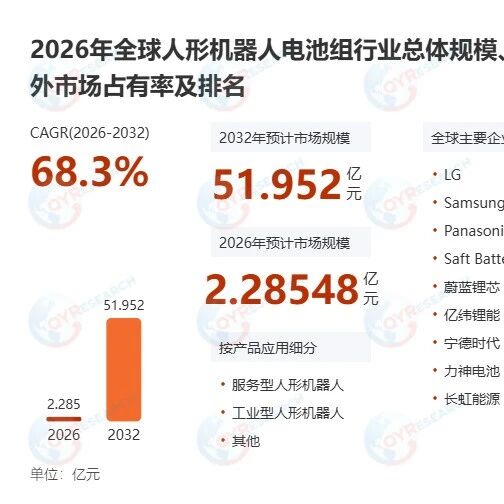
行业聚焦:全球人形机器人电池组行业头部生产商市场份额及排名调查
QYResearch· 2026-01-20 03:44
Core Viewpoint - The humanoid robot battery pack market is expected to reach $290 million by 2031, driven by advancements in battery technology and increasing demand for humanoid robots in various sectors [4]. Market Overview - The global humanoid robot battery pack market is projected to grow significantly, with the main drivers being the demand for high energy density lithium-ion cells, modular designs, and smart battery management systems [13]. - The top five manufacturers hold approximately 43.8% of the market share, with major players including CATL, Aulin Lithium, and Yiwei Lithium Energy [6]. Product Segmentation - Service robots account for about 43.6% of the current demand for humanoid robot battery packs [9]. - Liquid lithium batteries represent the largest product segment, capturing around 67.1% of the market share [10]. Industry Drivers - The surge in AI and automation needs is increasing the application of humanoid robots in healthcare, manufacturing, and logistics, thereby driving the demand for high energy density batteries [14]. - Global labor shortages and an aging population are prompting businesses to adopt humanoid robots for assistance in caregiving and daily tasks, further increasing the demand for reliable battery packs [14]. Industry Challenges - Current battery energy density limitations result in short operational times (typically a few hours) and high downtime, restricting the productivity of humanoid robots in industrial settings [15]. - High initial costs and supply chain issues, exacerbated by tariffs (up to 145% on imports from China by 2025), are raising prices and affecting supply chains [15]. Development Opportunities - The adoption of solid-state batteries, such as REPT's 400Wh/kg product, is expected to enhance safety and energy density, with large-scale production anticipated by 2027 for medical and home care applications [16]. - The development of quick-swap battery systems and lithium-sulfur batteries is aimed at supporting continuous operation, particularly in logistics and manufacturing pilot deployments [16].