SNIBE(300832)

Search documents
CPONPOCPC-可插拔最新产业趋势观瞻
2026-02-05 02:21
Summary of Key Points from Conference Call Industry Overview - The conference discusses the trends in the optical module industry, focusing on technologies such as CPO (Co-Packaged Optics), NPO (Near-Packaged Optics), CPC (Co-Packaged Copper), and their implications for network architecture and cloud service providers [1][2][4][19]. Core Insights and Arguments - **Network Architecture Breakdown**: The network architecture can be divided into two main approaches: Scale Up and Scale Out, further detailed into six specific scenarios, which helps clarify the application of different technologies [3]. - **CPC Technology**: CPC is noted for its ability to reduce losses and is expected to remain relevant until 2030. Major companies are developing 3.2T pluggable module solutions [4][15]. - **NPO vs. CPO**: NPO offers advantages in maintenance and is more accepted by cloud service providers due to its open ecosystem, while CPO faces challenges with packaging yield and maintenance costs [6][11][12]. - **Market Acceptance**: Cloud service providers show low acceptance of CPU technologies, with companies like Google explicitly rejecting them in favor of NPO, which aligns better with their preference for open ecosystems [12][13]. - **Challenges for NVIDIA**: NVIDIA faces challenges in promoting its CPU solutions due to limited CoWoS capacity from TSMC and the need to prove reliability through extensive testing [7][12]. Technical Comparisons - **CPU vs. NPU**: The commercial speed of NPU is faster due to its detachable design and simpler packaging, with expected shipments starting in 2027, while CPU testing is lengthy and slow [8]. - **Performance Metrics**: In terms of bandwidth, power consumption, loss, and latency, both CPU and NPU show similar performance, with CPU having a slight edge in power consumption [9]. - **Cost Considerations**: Currently, NPO is seen as having a cost advantage over CPO due to lower maintenance costs and better yield rates, despite CPO's theoretical lower costs [10][11]. Future Trends and Market Dynamics - **Shift in Supplier Strategies**: Companies like Broadcom are shifting towards supporting NPU technologies, reflecting a broader market trend away from CPU reliance [13][14]. - **Investment Opportunities**: The valuation of optical module companies is currently low, presenting a potential investment opportunity as market misjudgments may lead to undervaluation [21]. - **Technological Advancements**: The rapid development of silicon photonics technology is expected to enhance product margins and market share, with leading companies like Xuchuang making significant advancements [20]. Additional Important Insights - **Industry Consolidation**: The optical module industry is expected to see increased competition and consolidation, with leading firms maintaining high profit margins due to their technological advancements [20]. - **Future of Optical Module Companies**: These companies are transitioning from mere assembly to comprehensive solution providers, requiring capabilities in semiconductor design and advanced packaging [19].
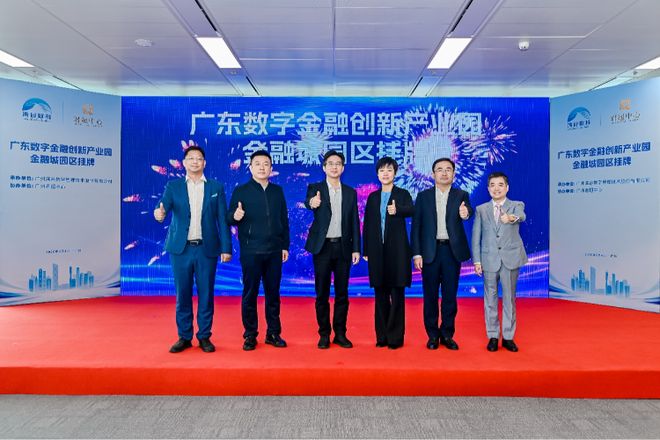
广东数字金融创新产业园金融城园区挂牌运营
Zhong Guo Xin Wen Wang· 2026-02-04 14:10
Core Viewpoint - The Guangdong Digital Financial Innovation Industrial Park has officially commenced operations, aiming to support Guangdong in becoming a digital financial hub and nurturing a technology finance ecosystem [1] Group 1: Overview of the Financial City Park - The Financial City Park is located in Guangzhou International Financial City and covers an area of 50,000 square meters [1] - It is part of the Guangdong Digital Financial Innovation Industrial Park, which is the first provincial-level digital financial park in China [1] - The park's launch signifies a significant step in integrating digital finance with technology finance, contributing to the development of the Greater Bay Area as an international financial hub [1] Group 2: Future Development and Ecosystem - The Financial City Park aims to deepen the innovation service ecosystem focusing on "data, algorithms, computing power, and scenarios" to foster the growth of fintech companies in Guangzhou [1] - It will leverage the Zhongda Bay Valley Risk Management Technology Laboratory as a "R&D engine" and the local financial digital infrastructure platform as a "digital foundation" [1] - The park will promote a collaborative operational system integrating "finance + technology + industry + ecology + talent" through deep cooperation among government, industry, academia, research, and application [1]
助力科技金融加速跑,广东数字金融创新产业园新园区挂牌运营
Nan Fang Du Shi Bao· 2026-02-04 10:06
Core Insights - The Guangdong Digital Financial Innovation Industrial Park has officially launched its Financial City Park in Guangzhou, marking a significant step in the development of the digital financial ecosystem in the Guangdong-Hong Kong-Macao Greater Bay Area [2][3] Group 1: Industrial Park Overview - The Financial City Park is part of the Guangdong Digital Financial Innovation Industrial Park, which is the first provincial-level digital financial park in China [2] - The park aims to create a digital financial industry cluster and innovation source that influences the entire country, focusing on "data, algorithms, computing power, and scenarios" [2] - The park covers an area of 50,000 square meters and signifies a transition from a pilot phase to a new stage of scale aggregation [2] Group 2: Strategic Framework - The operational framework includes a "one room, one platform, one park" strategy, integrating a risk management technology laboratory, a digital infrastructure platform, and the industrial park itself [3] - Collaboration agreements have been signed with various financial institutions to provide services such as credit financing, equity financing, computing power services, and data services [3] Group 3: Economic Impact - By 2025, the financial sector in the Tianhe District is projected to achieve an added value of 170.3 billion yuan, accounting for 52.8% of the city's total financial sector value [4] - The financial industry is expected to contribute 24.3% to the district's GDP, driving a GDP growth rate of 1.87 percentage points [4] - The district currently has 306 licensed financial institutions, representing over 70% of the city's total, and 49 listed companies with a total market value of 1.14 trillion yuan, which is 33% of the city's total [5]

天河再添数字金融新载体,广东数字金融创新产业园金融城园区挂牌
2 1 Shi Ji Jing Ji Bao Dao· 2026-02-04 07:20
Group 1 - The Guangdong Digital Financial Innovation Industrial Park has officially commenced operations, marking a transition from pilot exploration to a new phase of scale aggregation, crucial for supporting Guangdong's development as a digital financial hub [1] - The park covers an area of 50,000 square meters and aims to cultivate a technology finance ecosystem, leveraging the strong financial and software industries in the Tianhe District [1] - The operational entity, Bay Valley Digital Management Technology Co., has established a collaborative framework involving government, industry, academia, research, and application to create a symbiotic ecosystem of finance, technology, industry, ecology, and talent [2] Group 2 - The park will integrate a strategic framework of "one room, one platform, one park," utilizing a risk management technology laboratory as a research engine and a digital infrastructure platform as a foundational layer [2] - Partnerships have been formed with institutions like Guangzhou Unicom to establish an AI promotion center, addressing the growing demand for computational power in the financial sector [2] - By 2025, the financial sector in Tianhe District is projected to achieve an added value of 170.3 billion yuan, contributing 24.3% to the district's GDP and driving a 1.87 percentage point increase in GDP growth [3]
万亿区观察:两度写进重要报告,“独角兽走廊”凭何火出圈?
Nan Fang Du Shi Bao· 2026-02-04 02:43
Core Insights - The "Unicorn Corridor" has been highlighted in recent reports as a key focus for the high-quality development of Nanshan, Shenzhen, indicating its significance in understanding the area's economic growth [1][7]. Group 1: Development of the Unicorn Corridor - The concept of the "Unicorn Corridor" was first introduced in 2025 and represents a shift from isolated breakthroughs to clustered development in Nanshan's tech innovation landscape [2]. - The corridor's formation is a result of historical milestones in Shenzhen's innovation journey, including the establishment of the Shenzhen Technology Industrial Park and the "independent innovation core area" strategy [2][3]. - The corridor connects major innovation hubs and has become a focal point for high-tech resources, contributing over 50% of Shenzhen's unicorn companies for six consecutive years [3]. Group 2: Economic Impact and Growth - In 2025, Nanshan's GDP surpassed 1 trillion yuan, reaching 10,102.38 billion yuan, with a year-on-year growth of 6.3%, making it the first district in China to achieve this milestone [7]. - The corridor is crucial for Nanshan's economic performance, with 19 unicorn companies collectively valued at 593.9 billion yuan, significantly contributing to the region's economic output [3][7]. - The third sector's value added reached 7,757.25 billion yuan, accounting for over 76% of GDP, with a growth rate of 6.5%, highlighting the corridor's role in driving economic growth [8]. Group 3: Industry Composition and Innovation - Over 80% of the companies in the Unicorn Corridor are hard-tech firms, with a strong focus on emerging sectors such as semiconductors, AI, and renewable energy [4][8]. - Key sectors within the corridor include fintech, robotics, and logistics, with leading companies like WeBank and DJI achieving valuations exceeding 240 billion yuan and dominating their respective markets [5]. - The corridor supports a full-cycle nurturing system for companies, providing resources and policies tailored to different growth stages, which enhances the overall innovation ecosystem [5][6]. Group 4: Future Prospects - The Unicorn Corridor is expected to play a pivotal role in the collaborative development of the Greater Bay Area, serving as a model for high-quality urban development across China [8]. - Companies within the corridor, such as Fire乐科技, emphasize the importance of local supply chain collaboration, which enhances their competitive edge in the market [9][10].
国资基金加速布局战新产业 “耐心资本”赋能新质生产力
Zhong Guo Zheng Quan Bao· 2026-02-03 23:26
Group 1 - The core viewpoint of the articles emphasizes the acceleration of state-owned capital investment in strategic emerging industries and technological innovation, with a projected investment of 2.5 trillion yuan by state-owned enterprises (SOEs) by 2025, accounting for 41.8% of total investments [1] - The total scale of venture capital funds from SOEs is nearing 100 billion yuan, with the establishment of a new emerging industry merger fund by the State-owned Assets Supervision and Administration Commission (SASAC) [1] - The collaboration of national and local state-owned capital funds is forming a "patient capital" national team focused on strategic emerging industries and key core technologies, aiming to solidify the foundation for high-quality economic development in China [1] Group 2 - State-owned capital has become a significant force in cultivating new productive forces through market-oriented operations of investment funds, with a total fund scale of 710 billion yuan by China Chengtong, and over 170 billion yuan invested in strategic emerging industries by 2025 [2] - The investment focus includes SOEs, strategic emerging industries, and key industries, with respective proportions of 89.99%, 97.99%, and 79.53% [2] - The National New Fund has achieved nearly 80% coverage of the nine strategic emerging industries, with cumulative investments exceeding 120 billion yuan across various projects [2] Group 3 - The State Investment Group has invested over 200 billion yuan in strategic emerging industries, managing 61 funds with a total subscription scale of 345.1 billion yuan [3] - The group has directly invested in 1,249 projects and supported 293 companies to go public, with a significant portion of funding directed towards private enterprises [3] - The focus on high-end chips and artificial intelligence aligns with national strategies, aiming to leverage capital to mobilize social resources and enhance the innovation ecosystem [3] Group 4 - Local state-owned capital funds are actively participating in regional economic development, with initiatives like the Shenzhen state-owned fund matrix plan focusing on hard technology fields such as semiconductors and artificial intelligence [4] - The Hangzhou state-owned capital fund cluster has approved 392 funds with a total scale exceeding 310 billion yuan, supporting numerous strategic projects [4] - Various cities are optimizing investment environments and establishing mechanisms to support early-stage investments in hard technology [5] Group 5 - Experts emphasize the need for a robust mechanism to support "patient capital," including scientific assessment and error tolerance mechanisms [6] - The introduction of compliance exemption clauses aims to enhance the exploration of strategic emerging industries and technological innovation [6] - Recommendations include improving regional coordination to avoid fragmented competition and ensuring that performance evaluations respect the long investment cycles of hard technology [6]
国资基金加速布局战新产业
Zhong Guo Zheng Quan Bao· 2026-02-03 20:21
Core Viewpoint - State-owned capital is accelerating investments in strategic emerging industries and technological innovation, with a target of 2.5 trillion yuan in investments by 2025, accounting for 41.8% of total investments [1] Group 1: Investment Scale and Focus - By 2025, central enterprises are expected to complete strategic emerging industry investments of 2.5 trillion yuan, with current venture capital fund sizes nearing 100 billion yuan [1] - As of December 2025, the fund system of China Chengtong is projected to reach 710 billion yuan, with over 170 billion yuan invested in strategic emerging industries [2] - The National Investment Group has invested over 200 billion yuan in strategic emerging industries, managing 61 funds with a total subscription scale of 345.1 billion yuan [3] Group 2: Investment Strategy and Mechanisms - The investment strategy focuses on high-end chips, artificial intelligence, and other key areas, utilizing a "early, small, and long-term" investment approach to address market investment gaps [3] - Local state-owned capital funds are actively integrating into regional economic development, with specific plans to support hard technology sectors like semiconductors and AI [4] - Various cities are optimizing investment environments and establishing error-tolerance mechanisms to support early-stage investments in hard technology [5] Group 3: Regulatory and Structural Enhancements - The State-owned Assets Supervision and Administration Commission has introduced measures to enhance compliance and accountability in investment operations, including a compliance exemption clause [6] - Experts suggest that state-owned capital funds should strengthen regional coordination to avoid redundant investments and improve resource allocation efficiency [6] - Recommendations include embedding error-tolerance into performance evaluations and allowing for individual project losses within an overall profitable framework [6]
距“万亿GDP俱乐部”一步之遥 徐州发力“343”创新产业集群
Zhong Guo Jing Ying Bao· 2026-02-03 12:05
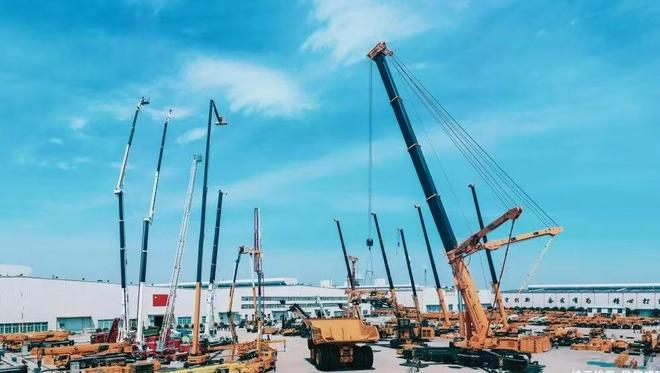
中经记者 郭阳琛 张家振 上海报道 作为苏北老工业基地,江苏省徐州市近年来加速产业"腾笼换鸟",2025年能够顺利迈入"万亿GDP俱乐 部",实现苏北地区"零的突破"备受关注。 2026年2月2日,这一悬念终于揭晓。徐州市统计局发布的《2025年徐州市经济运行情况》显示,根据地 区生产总值统一核算结果,2025年,徐州市实现地区生产总值(GDP)9957.22亿元,按不变价格计 算,比2024年增长5.8%。 《中国经营报》记者了解到,2022年,在获批建设国家可持续发展议程创新示范区后,徐州市提出培 育"343"创新产业集群。2025年,工程机械、绿色低碳能源、数字经济、食品及农副产品加工四大产业 集群规模均突破千亿元,创新产业集群总规模预计达8500亿元。 "不要纠结于这个数字,不能被数字所累。"对于外界关注的能否迈入"万亿GDP俱乐部"话题,1月21日 下午,徐州市委书记宋乐伟在参加铜山区代表团讨论时回应称,"该怎么发展就怎么发展,要扎扎实实 地发展"。 "顺其自然"冲万亿 相关数据显示,2024年,徐州市地区生产总值达9537亿元。徐州市已站在"万亿GDP俱乐部"门前。 2026年1月21日,在徐州市 ...
十方融海董事长黄冠荣获第五届粤港澳大湾区战新产业“青年领袖”称号
Sou Hu Cai Jing· 2026-02-03 11:03
Core Insights - The 2025 Guangdong-Hong Kong-Macao Greater Bay Area strategic emerging industries leading enterprises and the results of the fifth survey have been announced, recognizing 50 companies and 29 individuals for their contributions [1][3] - Huang Guan, founder and chairman of Shifang Ronghai, was awarded the "Youth Leader" title for his innovative breakthroughs in the field of artificial intelligence [1][3] Company Overview - Shifang Ronghai has integrated AI technology into online education, enhancing capabilities and efficiency, and creating a new model for online learning [3][4] - The company has developed the Xiaozhi AI system, which focuses on algorithm optimization, big data processing, and intelligent interaction, allowing AI to understand human emotions and needs [4][5] - Xiaozhi AI has been connected to over 1 million hardware devices, with applications in education, smart elderly care, smart homes, and automotive spaces [5] Talent Development - The company has established a comprehensive AI talent cultivation system in collaboration with universities, aiming to train over one million digital skills talents and support high-quality employment for hundreds of thousands [5][6] - Huang Guan has been recognized multiple times in prestigious lists, including Forbes 30 Under 30 and the 2023 China Pan-AI Outstanding Figures TOP 20 [5][6] Industry Impact - The recognition of Huang Guan and Shifang Ronghai highlights their role in leading the AI industry and contributing to the high-quality development of strategic emerging industries in China [6]

2月3日创业板医疗(970082)指数涨2.37%,成份股诺思格(301333)领涨
Sou Hu Cai Jing· 2026-02-03 10:53
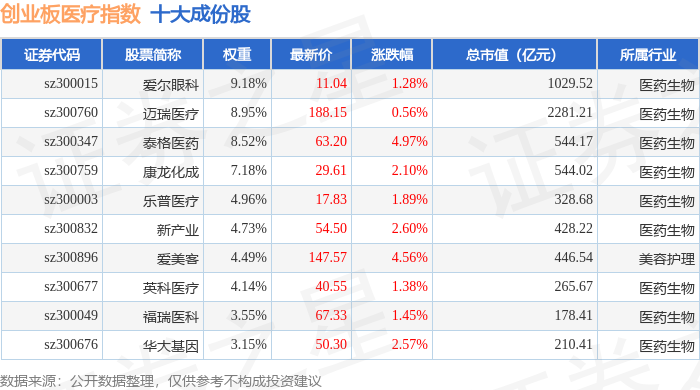
Core Viewpoint - The ChiNext Medical Index (970082) closed at 3876.07 points on February 3, with a gain of 2.37% and a trading volume of 13.236 billion yuan, indicating positive market sentiment in the medical sector [1]. Group 1: Index Performance - The ChiNext Medical Index saw 49 constituent stocks rise, with NuoSiGe leading the gains at 8.76% [1]. - The index's turnover rate was 1.71%, reflecting moderate trading activity [1]. Group 2: Top Constituents - The top ten constituents of the ChiNext Medical Index include: - YuanEr Eye Hospital (sz300015) with a weight of 9.18% and a latest price of 11.04 yuan, up 1.28% [1]. - MaiRui Medical (sz300760) with a weight of 8.95% and a latest price of 188.15 yuan, up 0.56% [1]. - TaiGe Medical (sz300347) with a weight of 8.52% and a latest price of 63.20 yuan, up 4.97% [1]. - KangLong HuaCheng (sz300759) with a weight of 7.18% and a latest price of 29.61 yuan, up 2.10% [1]. - LePu Medical (sz300003) with a weight of 4.96% and a latest price of 17.83 yuan, up 1.89% [1]. - New Industry (sz300832) with a weight of 4.73% and a latest price of 54.50 yuan, up 2.60% [1]. - AiMeiKe (sz300896) with a weight of 4.49% and a latest price of 147.57 yuan, up 4.56% [1]. - YingKe Medical (sz300677) with a weight of 4.14% and a latest price of 40.55 yuan, up 1.38% [1]. - FuRui Medical (sz300049) with a weight of 3.55% and a latest price of 67.33 yuan, up 1.45% [1]. - HuaDa Gene (sz300676) with a weight of 3.15% and a latest price of 50.30 yuan, up 2.57% [1]. Group 3: Capital Flow - The net inflow of main funds into the ChiNext Medical Index constituents totaled 145 million yuan, while retail investors experienced a net outflow of 106 million yuan [1]. - The detailed capital flow indicates that TaiGe Medical had a main fund net inflow of 10.514 million yuan, while retail investors had a net outflow of 18.28% [2].