BABA(BABA)

Search documents
阿里、腾讯等联合领投,Kimi母公司月之暗面完成超7亿美元融资
Sou Hu Cai Jing· 2026-02-18 12:32
Group 1 - The core point of the article is that Moonshot AI, the parent company of AI assistant Kimi, has completed a new funding round exceeding $700 million, led by existing investors including Alibaba and Tencent [1] - The latest funding round values Moonshot AI between $10 billion and $12 billion, indicating strong investor confidence in the company's growth potential [1] - Kimi has recently launched new features that allow for cloud deployment and integration with over 5000 community plugins, enhancing its functionality in various domains such as development, browser-related tasks, and office workflows [1] Group 2 - As of January 29, the Kimi K2.5 model has been released, significantly improving Kimi Agent's capabilities in Microsoft Office applications, including Word, PDF, Excel, and PowerPoint [2] - Moonshot AI was founded in March 2023 and aims to optimize the conversion of energy into intelligence through collaborative product development with users [2] - By the end of last year, Moonshot AI had completed five funding rounds, including a $500 million Series C round in December 2022, with investments from IDG Capital, Alibaba, and Tencent [2]





段永平去年第四季度大幅加仓英伟达
Mei Ri Jing Ji Xin Wen· 2026-02-18 11:58
Group 1 - H&H International Investment, managed by Duan Yongping, significantly increased its holdings in Nvidia, Pinduoduo, and Berkshire Hathaway, while also initiating small positions in three AI-related companies by the end of 2025 [1] - Duan Yongping reduced his stakes in Apple, Alibaba, and Occidental Petroleum [1]


AI春节红包激战正酣 AI厂商已在为春节后留住用户做准备
Xin Lang Cai Jing· 2026-02-18 11:06
Core Insights - The AI Spring Festival Red Packet War has reached its peak, with major players like ByteDance, Tencent, and Alibaba actively participating in cash giveaways during the holiday season [1] - The competition is intense, with ByteDance's Doubao App leading in the C-end AI assistant market, while Tencent's social connections remain a strong competitive advantage [1] - The key challenge for AI assistants is to retain users beyond the festive period, as the effectiveness of the red packet strategy will be measured by user retention and behavior conversion in the following 30 days [1] Company Strategies - ByteDance's Doubao App distributed cash red packets during the CCTV Spring Festival Gala, showcasing its market presence [1] - Tencent's Yuanbao App announced an additional 100 cash red packets worth 10,000 yuan each on the same day, indicating its aggressive marketing strategy [1] - Alibaba's Qianwen App initiated multiple "red packet rains" and is enhancing its offerings by allowing users to enjoy discounts on various platforms, aiming to transition users from festive engagement to regular usage [1] Market Dynamics - The market is characterized by fierce competition among major AI firms, with 2023 being a critical year for securing user engagement [1] - Analysts emphasize that the success of these initiatives will depend on the quality of user retention and the depth of user behavior transformation post-holiday [1] - AI companies are preparing to integrate their services into users' daily lives, indicating a strategic shift towards long-term user engagement rather than short-term gains [1]
段永平第四季度大幅加仓英伟达
Xin Lang Cai Jing· 2026-02-18 11:05
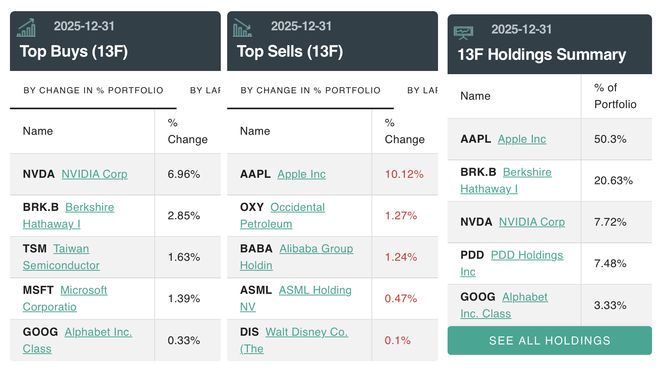
Group 1 - H&H International Investment, managed by Duan Yongping, has significantly increased its holdings in NVIDIA, Pinduoduo, and Berkshire Hathaway, while also initiating small positions in three AI-related companies as of the end of 2025 [1] - The investment strategy includes a notable reduction in positions in Apple, Alibaba, and Occidental Petroleum [1] Group 2 - As of December 31, 2025, the portfolio shows a 6.96% increase in NVIDIA, a 2.85% increase in Berkshire Hathaway, and a 1.63% increase in Taiwan Semiconductor [2] - Apple remains the largest holding at 50.3% of the portfolio, while Pinduoduo constitutes 7.48% [2]

Alibaba Group Holding Limited (NYSE:BABA) Quarterly Earnings Preview
Financial Modeling Prep· 2026-02-18 11:00
Core Insights - Alibaba Group is set to release its quarterly earnings on February 19, 2026, with analysts projecting an EPS of $1.91 and revenue of approximately $41.9 billion, expected before market opening [1][6] - The company is currently facing scrutiny due to an ongoing securities fraud investigation, which may affect investor sentiment [2][6] - Alibaba's cloud revenue has increased by 34% year-over-year, driven by rising demand for artificial intelligence technologies, although significant capital expenditures have negatively impacted operating income and free cash flow [3][4][6] Financial Performance - Alibaba's fiscal second-quarter revenue grew by 5%, but its non-GAAP EPS experienced a 71% decline due to investments in AI and cloud infrastructure [4] - Key financial metrics include a P/E ratio of 20.17, a price-to-sales ratio of 2.46, and an enterprise value to sales ratio of 2.60, with a low debt-to-equity ratio of 0.27 and a current ratio of 1.46, indicating strong short-term financial health [5]
可灵不灵了?
创业邦· 2026-02-18 10:12
Core Viewpoint - The article discusses the rapid evolution of the AI video generation market, highlighting the competitive landscape where ByteDance's Seedance 2.0 has emerged as a significant player, potentially redefining the industry standards and challenging existing leaders like Kuaishou's Keling [4][5][6]. Market Dynamics - The AI video generation sector is transitioning from isolated breakthroughs to comprehensive competition, with various domestic models like Kuaishou's Keling, ByteDance's Jimeng, and Alibaba's Wanxiang leading the charge [8]. - The competition is intensifying as different companies adopt varied development strategies, with many models converging on basic capabilities while maintaining distinct features and technical specialties [8][12]. Keling's Position - Keling has been recognized as a leading video generation model since its launch in June 2024, achieving over 30 iterations and generating significant revenue, exceeding 700 million yuan by the third quarter of 2025 [11][20]. - Despite its early advantages, Keling faces pressure as its technological lead diminishes, with competitors rapidly advancing in areas like multi-shot narrative and complex content generation [15][20]. Seedance 2.0's Impact - Seedance 2.0 has introduced significant advancements, such as automatic multi-shot usage and improved narrative logic, outperforming competitors in efficiency and cost [13][19]. - The model's ability to generate 2K videos faster than competitors by 30% has raised the bar for the industry, prompting concerns for Keling's market position [13][19]. Competitive Strategies - ByteDance's Jiemeng AI integrates deeply with its Douyin platform, achieving rapid user growth, while Alibaba's Wanxiang adopts an open-source strategy to enhance its technological edge [12][20]. - Keling's strategy focuses on product innovation and commercialization, but it must navigate internal challenges and external competition to maintain its market share [10][21]. Future Outlook - The article suggests that Keling must differentiate itself beyond being a mere generation tool to avoid being marginalized in the competitive landscape [22]. - The future of competition will hinge on understanding creator needs, content ecosystem management, and innovative business models, indicating that both Seedance and Keling have significant challenges ahead [22].


组合的AI浓度更高了!段永平美股最新市值175亿美元,去年四季度整体在买买买……
聪明投资者· 2026-02-18 10:01
Core Insights - H&H International Investment's portfolio value reached approximately $17.5 billion by the end of Q4 2025, reflecting a 19% increase from $14.7 billion at the end of Q3 2025 [2] - The portfolio's value was around $14.5 billion at the end of 2024 [3] Portfolio Structure Changes - The portfolio consists of 14 companies, with notable changes in holdings: - Apple (AAPL) remains the largest holding at $8.8 billion, but its share decreased by 7.09% [4] - Berkshire Hathaway (BRK.B) saw a significant increase of 38.24%, now valued at $3.6 billion [4] - Nvidia (NVDA) experienced a dramatic increase of 1110.62%, with a value of $1.35 billion [4] - Pinduoduo (PDD) increased by 34.55%, valued at $1.31 billion [4] - Microsoft (MSFT) saw a 207.66% increase, reaching $415 million [4] - ASML (ASML) was significantly reduced by 87.62%, now valued at just over $10 million [4] Investment Themes - The portfolio reflects a strong focus on technology, with companies like Nvidia, Microsoft, and TSMC forming a core part of the "AI quartet" [5][19] - Despite a reduction in Apple’s holding, it remains a significant investment, with the company’s stock being actively managed through options trading [10][12] - Berkshire Hathaway is viewed as a defensive holding, with its value doubling compared to the end of 2024 [13][14] New Additions and Trends - Three new AI-related companies were added to the portfolio, including CoreWeave, Credo, and Tempus AI, indicating a strategic shift towards AI verticals [17][20][21] - The overall market sentiment towards AI investments is positive, with a belief that missing out on AI opportunities would be detrimental [19] Alibaba and Pinduoduo Holdings - Alibaba's holdings have decreased significantly, from 5.45 million shares at the end of 2024 to 2.56 million shares by the end of 2025 [22] - Pinduoduo has become the fourth largest holding in the portfolio, valued at $1.3 billion, although it is considered a riskier investment [22]

两个春节,一年时间:战火烧红整条AI产业链
Di Yi Cai Jing· 2026-02-18 09:58
Core Viewpoint - The competition among major tech companies for national-level traffic entry points during the Spring Festival is intense, with no clear winner emerging from this year's "red envelope war" [1][16]. Group 1: Competition Overview - Major players in the competition include Alibaba, ByteDance, Tencent, and Baidu, each deploying significant financial resources to attract AI users [3][19]. - Alibaba's Qianwen announced a 30 billion yuan "Spring Festival invitation plan," while Tencent's Yuanbao offered 1 billion yuan in cash red envelopes, and Baidu provided 500 million yuan in red envelopes for users of its Wenxin assistant [3][19]. - ByteDance did not disclose specific amounts but indicated it would distribute over 100,000 tech gifts and cash red envelopes during the Spring Festival [3][19]. Group 2: Company Strategies and Ecosystems - Alibaba benefits from a robust ecosystem supported by its large models and diverse application scenarios, including its open-source models that compete internationally [4][20]. - Qianwen's user engagement exceeded expectations, leading to an actual investment surpassing the planned 30 billion yuan due to high user participation [4][20]. - ByteDance's Doubao has gained a competitive edge with a higher daily active user count compared to its rivals, achieving 1.9 billion AI interactions on New Year's Eve [4][20]. Group 3: Model Capabilities and Market Position - Tencent's underlying model capabilities are perceived as weaker compared to Alibaba and ByteDance, lacking a leading position in major model rankings [5][21]. - Baidu's strategy focuses on integrating its Wenxin assistant into its existing app with over 700 million monthly active users, offering incentives to encourage user transition to AI [5][21]. - The competitive landscape has raised entry barriers for other companies, necessitating substantial financial investments to compete effectively [6][22]. Group 4: Future Trends and Developments - The emergence of intelligent agents, such as NetEase Youdao's LobsterAI, indicates a shift towards new AI application forms, with significant expectations for their future role in AI applications [8][24]. - The gap between Chinese and American large models has narrowed, with the difference in capabilities reduced from six months to approximately three months [13][28]. - Chinese companies are expected to maintain a competitive advantage in terms of cost-effectiveness in AI investments compared to their American counterparts [15][32].

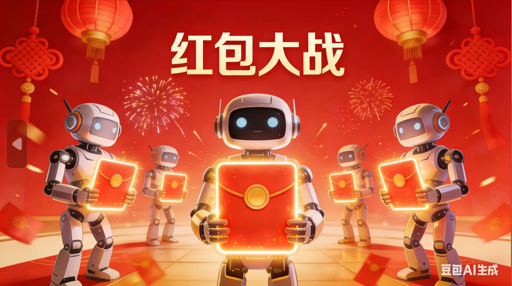
两个春节,一年时间:战火烧红整条AI产业链 | 海斌访谈
Di Yi Cai Jing· 2026-02-18 09:41
Core Viewpoint - The competition among major tech companies for national-level traffic entry points during the Spring Festival is intense, with no clear winner emerging from this year's events [1][3][6]. Group 1: Competition Overview - Major players in the competition include Alibaba, ByteDance, Tencent, and Baidu, each deploying significant financial resources to attract AI users [3][5]. - Alibaba's Qianwen launched a 30 billion yuan "Spring Festival invitation plan," while Tencent offered 1 billion yuan in cash red envelopes through its Yuanbao app [3][4]. - ByteDance's Doubao and Baidu's Wenxin Assistant also participated, with Doubao reporting 1.9 billion AI interactions on New Year's Eve [4][13]. Group 2: Company Strategies - Alibaba leverages its extensive ecosystem and open-source models to compete effectively in both domestic and international markets [3][5]. - ByteDance's Doubao has gained a first-mover advantage with a higher daily active user count compared to its competitors [3][5]. - Tencent's model capabilities are perceived as weaker, but the company remains confident in its ability to compete in the AI space [5][6]. Group 3: Market Dynamics - The competition has raised the entry barrier for other companies, requiring substantial investment to compete for national-level traffic [5][6]. - The rapid iteration of large models in China has narrowed the gap with U.S. counterparts, with the difference in capabilities reduced to about three months [13][14]. - Chinese companies are increasingly efficient in their AI investments, achieving competitive intelligence levels with lower costs compared to U.S. firms [15]. Group 4: Future Trends - The emergence of intelligent agents, such as LobsterAI, indicates a shift towards more specialized applications of AI technology [8][9]. - The evolution of intelligent agents is expected to progress through various stages, from single-app functionalities to cross-platform interactions [10][11]. - The competitive landscape suggests that smaller companies may find opportunities by leveraging multiple AI models rather than being tied to a single one [9].
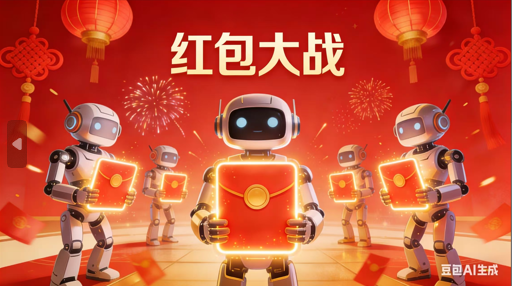
Alibaba Q3 Is Critical - But Not A Catalyst
Seeking Alpha· 2026-02-18 09:26
Core Insights - Q3 FY2026 is anticipated to be a pivotal moment for Alibaba Group Holding (BABA) as it may confirm the recovery of earnings during a phase characterized by significant investment [1] Group 1: Earnings Recovery - The upcoming earnings report is deemed highly important, although it is not expected to serve as an immediate catalyst for stock price changes [1] Group 2: Analyst Background - The analysis is conducted by a seasoned stock analyst with over 20 years of experience in quantitative research, financial modeling, and risk management, focusing on equity valuation and market trends [1] - The analyst has a background as a former Vice President at Barclays, leading teams in model validation and stress testing, which contributes to a deep expertise in both fundamental and technical analysis [1] - The research is co-authored with a partner, combining strengths to deliver high-quality, data-driven insights with a focus on macroeconomic trends and corporate earnings [1]