Hesai(HSAI)

Search documents
禾赛科技2025年ADAS主激光雷达市占率双榜第一
Ju Chao Zi Xun· 2026-02-12 10:11
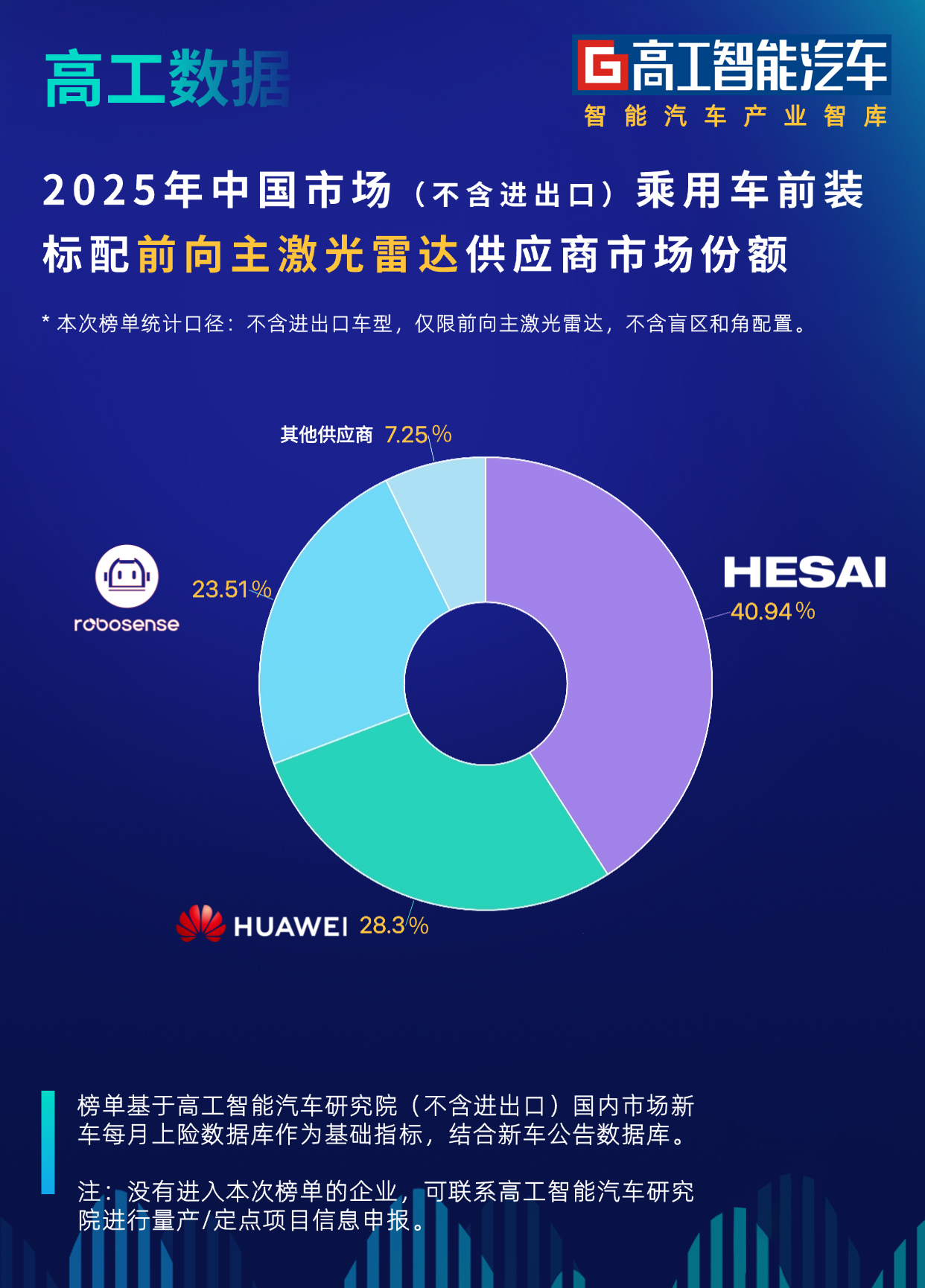
Core Insights - Hesai Technology has achieved a market share of over 40% in the domestic passenger car front-mounted laser radar sector, with an annual market share of 41.35% and a monthly peak of 47%, maintaining the top position for four consecutive quarters [2] - The laser radar industry is at a critical development juncture in 2025, with penetration rates in the new energy passenger vehicle sector reaching 21%, and the overall passenger vehicle market penetration expected to break the 16% threshold by year-end, reaching 17%-19% [2] - The company leads in global patents and comprehensive strength in the laser radar field, being the only enterprise in the industry to achieve full-stack self-research on seven core components [2] Company Performance - Hesai Technology has secured production contracts with 38 automotive brands for over 150 models, covering the top ten domestic automakers, and has won contracts for L3-level autonomous driving from several domestic and international car manufacturers [3] - The company anticipates global total deliveries to exceed 1.6 million units in 2025, with 1.4 million units in ADAS and over 200,000 units in robotics, bringing historical cumulative deliveries to over 2.4 million units [3] - The flagship product ATX has achieved over one million units in its first year of delivery, with the upgraded version receiving over four million orders and set to begin mass production in April 2026 [2]



禾赛2025年中国车载主激光雷达市占率第一
Jin Rong Jie· 2026-02-12 03:22
Core Insights - Hesai Technology leads the Chinese automotive lidar market with over 40% market share, according to recent reports from GaoGong and Gaishi [1][9][19] - In 2025, the total installation of main lidar units in China's passenger car market is projected to reach 2.756 million, with Hesai contributing 1.143 million units, significantly outpacing competitors [1][14] - The penetration rate of lidar in new energy vehicles is expected to reach 21% in 2025, marking a critical transition to mainstream adoption [14][16] Market Position - Hesai's market share in the main lidar segment is reported at 41.35%, with a peak monthly share exceeding 47% [1][7] - Hesai's lidar installation volume has doubled for five consecutive years, with a year-on-year increase of nearly 300% in the passenger car market [1][19] - The company has secured over 150 models from 38 automotive brands, covering all top ten car brands in China [21] Product Development - Hesai's flagship product, the ATX lidar, achieved over 1 million units in its first year of delivery, becoming the first in the industry to reach this milestone [19] - The company has a robust patent portfolio, holding 2,071 authorized patents, making it the leader in lidar technology globally [19][20] - Hesai plans to double its annual production capacity from 200,000 units in 2025 to 400,000 units in 2026, with a new factory in Bangkok expected to start production in early 2027 [20] Industry Trends - The automotive industry is transitioning from electrification to intelligent driving, with lidar becoming a critical safety component [9][14] - By 2030, the penetration rate of lidar in new energy vehicles is projected to reach 56%, indicating continued market growth [14] - The adoption of lidar technology is expected to significantly reduce fatal accidents, with a 90% reduction in high-speed fatal accidents and a 30% reduction in regular traffic accidents [9]
预见2025:《2025年中国激光雷达行业全景图谱》(附市场现状、竞争格局和发展趋势等)
Qian Zhan Wang· 2026-02-12 02:11
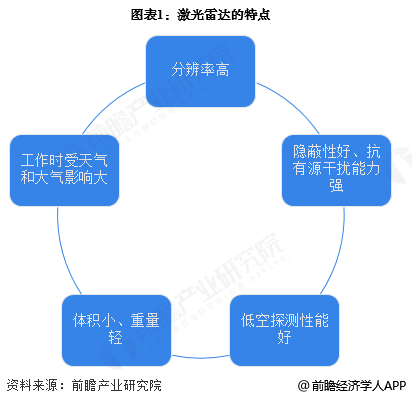
Industry Overview - LiDAR (Light Detection and Ranging) is a radar system that uses laser beams to detect the position and speed of targets, becoming an important active remote sensing tool due to its high measurement accuracy and large detection range [1][5] - The LiDAR industry can be classified based on various criteria, including working mechanism, payload platform, working medium, and mechanical components [3] Industry Chain Analysis - The upstream market for LiDAR consists of raw materials for components like lasers and detectors, including non-ferrous metals and laser materials [5] - The downstream applications of LiDAR are primarily in the fields of vehicle networking, autonomous driving, and surveying, with developments in military and scientific applications as well [5][8] Industry Development History - The commercialization of LiDAR technology began before 2000, with limited applications in the automotive sector [10] - Since 2016, the industry has experienced rapid growth driven by the "new four modernizations" in the automotive sector, including electrification and intelligent networking [10][11] Industry Policy Background - Since 2013, various Chinese government departments have issued policies to support and regulate the development of the LiDAR industry, focusing on technology routes and parameter specifications [13][14] - Key policies include the integration of LiDAR into intelligent connected vehicle systems and the establishment of standards for safety and performance [14][15] Current Industry Status - The Chinese LiDAR market is projected to reach approximately 13.96 billion yuan by 2024, with a CAGR of nearly 300% from 2021 to 2024 [17] - The competitive landscape shows that Hesai Technology leads in revenue, followed by RoboSense with 1.19 billion yuan [20] Future Development Trends - The LiDAR industry is expected to see stable growth in technology and market size, with four main development directions: solid-state technology, digital architecture, increased penetration rates, and integration of hardware and software [26][27] - The industry is transitioning towards a competitive landscape focused on chip self-research and system integration capabilities, with significant cost reductions in LiDAR products [27]


今日国际国内财经新闻精华摘要|2026年2月12日
Sou Hu Cai Jing· 2026-02-12 00:10
Group 1: International News - The U.S. House of Representatives passed a resolution to terminate tariffs on Canada implemented by Trump with a vote of 219 to 211 [1] - U.S. Energy Secretary Brouillette stated that the "ban" on Venezuelan oil has effectively been lifted, marking a historic turning point, and he plans to meet with local oil producers during his visit [2][3] - President Trump announced that coal is the most reliable energy source in the U.S., with coal generation expected to increase by approximately 25-30% this year [6][7] - The Federal Reserve officials noted that consumer spending remains robust, primarily driven by high-income individuals, and inflation is likely to stay close to 3% [12][13][14] Group 2: Market Dynamics - Precious metals prices showed significant volatility, with spot gold briefly surpassing $5100 per ounce before falling to below $5060, a daily decline of 0.55% [18][19] - Spot silver broke through $85 per ounce, with a daily increase of 0.69% [24] - WTI crude oil fell below $63 per barrel, with a daily increase of 0.91%, while U.S. EIA crude oil inventories rose by 8.53 million barrels, significantly exceeding the expected 793,000 barrels [26][27] Group 3: Corporate Developments - U.S. stock markets closed lower, with the Dow down 0.15%, Nasdaq down 0.16%, and S&P down 0.03%; Micron Technology rose nearly 10%, while Caterpillar increased over 4% [31] - Morgan Stanley raised its CEO's compensation from $34 million to $45 million; Cisco announced price increases due to rising memory costs [33][34] - Meta is constructing a $10 billion data center in Indiana, which will create over 4,000 construction jobs [35]




美股尾盘 彭博电动汽车价格回报指数涨1.32%
Mei Ri Jing Ji Xin Wen· 2026-02-11 21:51
Group 1 - The Bloomberg Electric Vehicle Price Return Index increased by 1.32%, closing at 3662.78 points [1] - SQM, a Chilean chemical and mining company, saw a stock price increase of 7.1% [1] - US-based Albemarle Corporation's stock rose by 4.3% [1] - Xiaomi Group's H-shares closed up by 4.27% [1] - STMicroelectronics' stock in Europe increased by 2.92% [1] - Hesai Technology's stock declined by 6.2% [1] - Lucid Group's stock fell by 8.3% [1]




里昂首次覆盖禾赛科技 给予“跑赢大市”评级、目标价246.4港元
Xin Lang Cai Jing· 2026-02-10 04:15
Core Viewpoint - The report from Citi highlights Hesai Technology's position as the world's largest lidar supplier by revenue in 2024, with monthly production and delivery exceeding 200,000 units [1] Group 1: Company Performance - Hesai Technology has achieved a significant milestone by becoming the leading lidar supplier globally, indicating strong market demand and operational efficiency [1] - The company is expected to benefit from the increasing adoption of lidar as a standard safety feature in smart vehicles, with multi-lidar solutions becoming mainstream [1] Group 2: Market Expansion - In January 2026, Hesai was selected as a lidar partner for NVIDIA's Hyperion 10 platform, which is expected to enhance its market presence [1] - The company has entered the C-sample stage with European automakers, indicating progress in international market expansion, which is anticipated to be a key growth driver this year [1]
智驾、机器人双周报1:Tesla物理AI战略全面提速
HTSC· 2026-02-09 13:35
Investment Rating - The report maintains an "Overweight" rating for the automotive and technology sectors [5]. Core Insights - Tesla's Q4 gross margin exceeded expectations at 20.1%, marking a significant recovery in profitability despite a decline in vehicle deliveries [10][12]. - The company is accelerating its transition towards a "physical AI" strategy, with a focus on autonomous driving and robotics [10][13]. - The FSD (Full Self-Driving) subscription model is set to replace the one-time purchase option, reflecting confidence in the technology's future penetration [14][15]. - Tesla's energy business continues to show strong growth, with a record gross profit margin of 28.6% [12]. Summary by Sections Industry Perspective - Tesla's Q4 performance highlights a shift towards physical AI, with a focus on autonomous driving and robotics [10]. - The automotive sector is facing delivery pressures, but profitability is recovering, particularly in the energy business [10][12]. - The global regulatory framework for L4 autonomous driving is evolving, which may benefit companies with global compliance capabilities [19]. Key Recommendations - Recommended stocks include Xpeng Motors, Coboda, SOTON, Horizon Robotics, Top Group, Hesai Technology, Minth Group, and Yinlun [7]. - The report emphasizes the potential for companies with overseas production capacity and mass delivery capabilities to gain a stronger market position [10]. Financial Performance - Tesla's Q4 revenue was $24.9 billion, slightly above market expectations, with a year-over-year decline of 3% [10][12]. - The energy segment achieved a record gross profit of $1.1 billion, contributing to a 25% year-over-year revenue increase [12]. - The company plans to invest over $20 billion in capital expenditures in 2026, the highest in its history, focusing on new factories and AI infrastructure [13]. Robotics and Autonomous Driving - The Optimus robot is entering mass production, with the Fremont production line being repurposed for this purpose [18]. - The Robotaxi initiative is progressing, with plans for Cybercab production to start in April [13][18]. - The report notes the increasing importance of the robotics software ecosystem and the potential for public showcases, such as the Spring Festival, to enhance visibility [23]. Market Trends - The report highlights the trend of platformization in the Robotaxi sector, with companies like Uber and Alipay entering the market [21]. - Significant capital movements and strategic integrations are occurring in the L4 commercial vehicle sector, indicating a rapid acceleration towards commercialization [22].


市场洞察:视觉围城之下,激光雷达如何守住高阶智驾的“安全底线”?
Tou Bao Yan Jiu Yuan· 2026-02-09 12:58
Investment Rating - The report does not explicitly provide an investment rating for the lidar industry Core Insights - The lidar market is experiencing significant growth, with a 71% increase in shipments in the first half of 2025 compared to 2024, reaching 1,002,000 units in China [6][12][7] - The technology development trends indicate that 905nm light sources remain dominant, with VCSEL becoming a core component in new lidar designs, and solid-state lidar is expected to become the mainstream technology path [13][14][15] Summary by Sections Lidar Overview - Lidar, or Light Detection and Ranging, is a radar system that uses laser beams to measure distances to surrounding objects, widely applied in mapping, meteorological monitoring, security, and autonomous driving [2][3] Market Growth and Trends - The lidar market is projected to see explosive growth, with the automotive sector accounting for 68% of the application share, and the demand for lidar in robotics and service sectors also increasing significantly [26] - The price of lidar systems has decreased dramatically, with solid-state lidar expected to reach $200 by 2025, down from previous high costs [16][17] Competitive Landscape - The Chinese lidar market is highly concentrated, with the top three companies—Hesai Technology, Huawei Technology, and Suteng Jun Chuang—holding over 90% market share as of the first half of 2025 [18][19] - These leading companies are differentiating themselves through unique technology paths and customer ecosystems, with Hesai focusing on high-performance lidar for various applications, while Huawei leverages its full-stack smart automotive solutions [19][20] Application Scenarios - Lidar applications are expanding into various fields, including automotive, robotics, industrial logistics, and smart transportation, with significant growth potential in each area [26] - The automotive sector is expected to see a shipment of 2.5 million lidar units in 2025, driven by the increasing integration of lidar in high-end vehicles [7][26]
智驾、机器人双周报1:Tesla物理AI战略全面提速-20260209
HTSC· 2026-02-09 11:50
Investment Rating - The report maintains an "Overweight" rating for the automotive and technology sectors [5]. Core Insights - Tesla's Q4 gross margin exceeded expectations at 20.1%, driven by a strong performance in the energy business, despite a decline in net profit due to Bitcoin devaluation and increased stock-based compensation [2][10]. - The report emphasizes the acceleration of Tesla's physical AI transformation strategy, with a focus on autonomous driving and robotics [10][13]. - The global regulatory framework for Level 4 (L4) autonomous driving is rapidly forming, which is expected to benefit companies with global compliance capabilities [3][19]. Summary by Sections Industry Perspective - Tesla's Q4 performance shows a gross margin of 20.1%, significantly above the expected 17.0%, marking the highest level in two years [10][12]. - The automotive delivery faced pressure, with a total of 418,000 vehicles delivered in Q4, a year-over-year decline of 16% [12]. - The energy business continues to thrive, with a record gross profit of $1.1 billion and a gross margin of 28.6% [12]. Autonomous Driving - Tesla's Full Self-Driving (FSD) will transition to a subscription model, eliminating the one-time purchase option, reflecting confidence in the FSD experience and future penetration [14]. - The Robotaxi fleet in Austin has begun operating with a small number of vehicles without safety drivers, marking a significant step towards fully autonomous operation [16]. - Tesla has established a data center in China to support the FSD rollout without the need for data to leave the country [17]. Robotics - The Optimus Gen3 robot is set to debut in Q1 2026, with production lines being repurposed from Model S/X to focus on robotics [18]. - The robotics software ecosystem is evolving, with significant advancements in control systems that enhance autonomous capabilities [23]. - The report highlights the increasing attention on the robotics supply chain as companies prepare for mass production [18]. Market Recommendations - Key stock recommendations include Xiaopeng Motors, Coboda, SOTON, Horizon Robotics, Top Group, Hesai Technology, Minth Group, and Yinlun [7]. - The report suggests a focus on companies with strong production capabilities and those positioned to benefit from the shift towards robotics and autonomous driving [10][18].
汽车智能化月报系列三十二:11月城区NOA渗透率超20%,Waymo完成新一轮千亿融资【国信汽车】
车中旭霞· 2026-02-09 08:51
Core Insights - The article highlights the rapid advancement and penetration of intelligent driving technologies in the automotive industry, with significant developments in autonomous vehicle services and related technologies [4][16][19]. Group 1: Industry Developments - Waymo has completed a new round of financing amounting to $16 billion, achieving a post-money valuation of $126 billion, marking one of the largest single financings in the autonomous driving sector [16]. - Xiaoma Zhixing has partnered with Aitebo to establish a high-end Robotaxi service fleet, focusing on urban commuting and airport transportation [17][18]. - WeRide has launched its self-developed general simulation platform, WeRide GENESIS, which integrates physical AI and generative AI technologies to enhance autonomous driving system development [19]. - Xidi Zhijia has successfully delivered 40 units of its autonomous mining trucks, marking a significant milestone in the smart mining sector [20]. - Huayang Group's AIBOX has been selected for a core intelligent project by a leading domestic automaker, indicating a key step in the application of large models in pre-installed scenarios [21]. Group 2: Market Penetration and Technology Adoption - As of November 2025, the penetration rate of passenger cars with L2 and above functions reached 38%, a year-on-year increase of 22 percentage points [8]. - The penetration rates for various sensors in passenger vehicles are as follows: front-view cameras at 69.0%, front millimeter-wave radars at 58.4%, and LiDAR at 16.6%, with year-on-year increases of 9%, 9%, and 10% respectively [8]. - The penetration rate of passenger vehicles equipped with ADAS (Advanced Driver Assistance Systems) reached 38% in November 2025, with significant growth in both highway and urban NOA (Navigation on Autopilot) functionalities [7][39]. Group 3: Product Innovations and Collaborations - RoboSense announced that its laser radar products achieved sales of 303,000 units in the robotics sector in 2025, marking a year-on-year growth of 1141.8% [23]. - The collaboration between Black Sesame Intelligence and Baidu's Roborun aims to create a comprehensive ecosystem for autonomous driving, enhancing technological support and product development [26]. - GAC Aion and Didi Autonomous Driving have jointly developed a new generation of Robotaxi, R2, which has received road testing licenses in Guangzhou [31].