Hesai(HSAI)

Search documents
李一帆:破解真实世界痛点,机器人技术解锁物理世界新可能
Di Yi Cai Jing· 2026-01-22 12:36
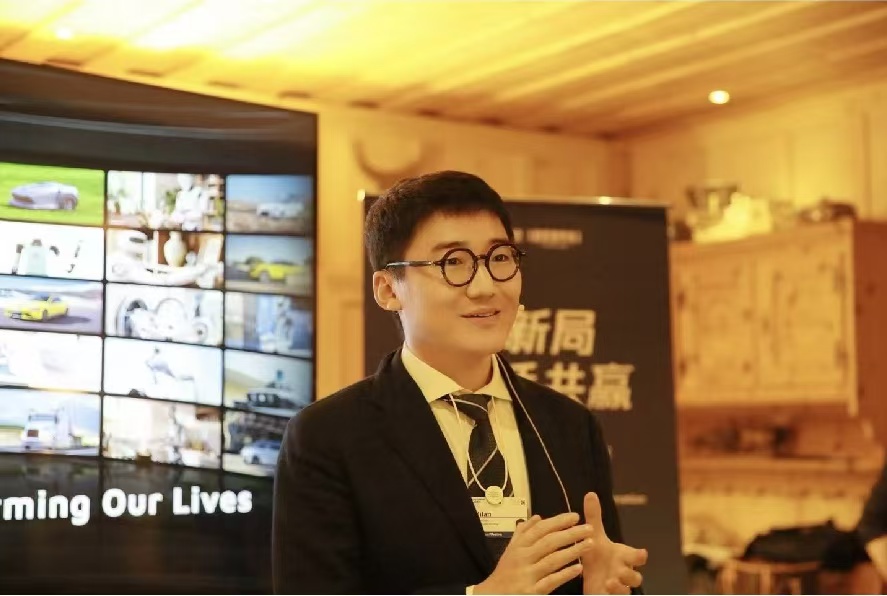
禾赛科技首席执行官李一帆受邀出席,并围绕"速度与底线:智能时代的全球基础设施新对话"主题发表演讲。 瑞士时间1月21日,在达沃斯举办的世界经济论坛2026年年会召开期间,由腾讯新闻、腾讯财经主办、第一财经Yicai Global作 为独家英文合作媒体的2026冬季达沃斯愿景晚宴在达沃斯当地举行。来自国内外30余位著名学者、商业精英和政界人士,围 绕"智绘新局,对话共赢"这一主题,共同探讨人工智能(AI)发展新趋势,寻找经济发展新动能。 李一帆以自身创业经历为切入点,用激光雷达的国产化突围案例,印证了中国科技企业的核心竞争力。他回忆,十几年前从 硅谷回国创业时,激光雷达行业被美国完全垄断,单台价格高达5万美元的"天价壁垒"。而在量产领域,尤其是在中国客户也 领先的领域,中国企业做这种技术就会变得非常的有优势。这种优势不仅因为制造业强,而且归功于企业面向的客户也厉 害,是从供应链到需求都占据优势。结合国内新能源汽车产业的领先优势与头部车企的庞大需求,禾赛科技在去年将激光雷 达价格压缩至200美元、降幅达99.7%,量产规模实现跨越式增长。 谈及禾赛在全球市场突围后的困境,李一帆坦言,2020年公司产品覆盖全球,却 ...



今天,全球母基金组团去达沃斯,第四届达沃斯全球母基金峰会圆满落幕
母基金研究中心· 2026-01-22 08:56
瑞士当地时间 2 0 2 6年1月1 9日,主题为"A Sp irit o f Di a l o g u e "的2 0 2 6年世界经济论坛年会在 达沃斯盛大开幕。1月2 0日,中共中央政治局委员、国务院副总理何立峰在瑞士达沃斯出席世 界经济论坛2 0 2 6年年会并发表致辞。何立峰表示,2 0 1 7年1月,习近平主席在达沃斯论坛发表 重要讲话,中国认真落实,坚定支持多边主义和自由贸易。近年来,习近平主席相继提出四大 全球倡议,为解决世界面临的共同问题提供了中国方案。何立峰在论坛致辞中提出四点看法: 一要坚定支持自由贸易,携手推动普惠包容的经济全球化。二要坚定维护多边主义,推动完善 更加公正合理的国际经贸秩序。三要坚持合作共赢,致力共同做大合作蛋糕,合力破解发展难 题。四要坚持相互尊重、平等协商,善用对话妥善管控分歧、解决问题。何立峰还介绍了中共 二十届四中全会情况,强调中国发展将为世界带来重要机遇,并与国际工商界人士深入交流。 瑞士当地时间 2 0 2 6年1月2 1日下午,第四届达沃斯全球母基金峰会在瑞士达沃斯的Ho t e l Str e l a酒店成功举办。本届峰会由全球母基金协会、中国国际科技促 ...


美联邦自驾法案破冰,Robotaxi提速
HTSC· 2026-01-20 09:35
Investment Rating - The report maintains a "Buy" rating for key companies in the autonomous driving sector, including Horizon Robotics, Hesai Technology, Pony.ai, WeRide, Xiaopeng Motors, and Suda Technology [6][8]. Core Insights - The U.S. House of Representatives is reviewing the "SELF DRIVE Act of 2026," which proposes to increase the exemption limit for manufacturers from 2,500 vehicles to 90,000 vehicles, significantly enhancing the potential for Robotaxi mass production [1][2]. - The legislation aims to resolve core obstacles to the scaling of Robotaxi deployment, including the introduction of a "deemed approval" mechanism for exemption applications and establishing federal regulations as a priority over state laws [2][3]. - 2026 is projected to be a pivotal year for the global L4 autonomous driving industry, with the U.S. federal legislative framework becoming clearer and China accelerating its L3 pilot projects and L4 commercialization [1][4]. Summary by Sections Legislative Developments - The "SELF DRIVE Act of 2026" is expected to break a decade-long legislative deadlock, with bipartisan support leading to a clearer timeline for implementation [3]. - Key milestones include committee markup meetings in Q1 2026 and potential integration with the 2026 Surface Transportation Reauthorization Act [3]. Market Expansion - The U.S. Robotaxi market is transitioning from technology validation to large-scale expansion, with companies like Waymo and Tesla ramping up operations [4]. - Waymo's weekly paid orders reached 450,000 by December 2025, with plans to expand operations from 10 to 30 cities [4]. - Tesla's Cybercab is expected to begin mass production in April 2026, further contributing to market growth [4]. Investment Recommendations - The report emphasizes the synchronized development of L4 autonomous driving in both the U.S. and China, suggesting that this convergence will drive significant industry growth [5]. - Companies such as WeRide and Pony.ai are highlighted for their international expansion efforts, while other L4 applications like Robovan and Robotruck are also gaining traction [5].

【行业深度】洞察2025:中国激光雷达行业竞争格局及市场份额(附市场集中度、企业竞争力评价等)
Qian Zhan Wang· 2026-01-20 07:21
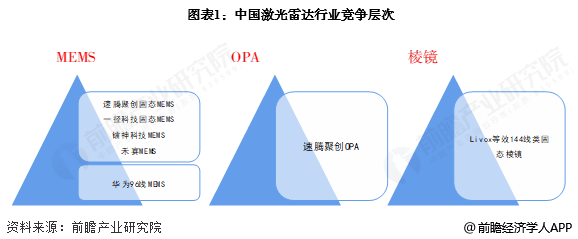
Core Insights - The Chinese LiDAR industry is experiencing rapid growth, with a market size projected to reach 13.96 billion yuan in 2024, indicating a high market concentration with a CR5 of 40.6% [10] Group 1: Industry Competition Landscape - The main companies producing LiDAR in China include Suteng Juchuang, Yijing Technology, Hesai Technology, Raysun Intelligent, and Livox, with different technological approaches such as OPA and MEMS [1] - The leading revenue-generating companies in the LiDAR sector for the first three quarters of 2025 are Hesai Technology, followed by Suteng Juchuang with a revenue of 1.19 billion yuan [8] Group 2: Regional Distribution of Companies - The majority of LiDAR companies in China are concentrated in the southeastern coastal regions, particularly in Guangdong with over 500 companies and Jiangsu with more than 400 companies as of November 2025 [2] - Representative companies are also distributed in regions such as Shanghai, Beijing, Anhui, and Hubei, with a notable presence in Shaanxi [5] Group 3: Competitive Dynamics - The LiDAR industry is characterized by a high level of competition, especially in the mid to low-end product segments where many competitors exist and product differentiation is minimal [14] - The bargaining power of upstream suppliers, particularly for core components, is strong, while the bargaining power of downstream consumers in sectors like surveying and automotive is relatively weak [14] - The threat of new entrants is low due to the technical intensity of the LiDAR industry, which is crucial for the development of autonomous driving and smart manufacturing [14]
晚点独家丨禾赛科技三位创始人再创新公司 Sharpa,目标是造通用机器人
晚点LatePost· 2026-01-20 06:09
Core Viewpoint - The article discusses the establishment of a new robotics company, Sharpa, by the co-founders of Hesai Technology, highlighting the significant potential and challenges in the robotics industry compared to the electric vehicle sector [4][10]. Company Overview - Sharpa was founded by Hesai's co-founders, including CTO Xiang Shaoqing and CEO Li Yifan, focusing on developing general-purpose robots and core components [4][6]. - The company operates independently from Hesai, with a team of over 100 members primarily recruited externally [4]. Market Potential - The general robotics market is estimated to have a trillion-dollar potential, with the founders aiming to create a world-class AI company [7]. - The founders believe that the AI era presents opportunities similar to those seen in the internet and new energy sectors, potentially leading to the creation of companies with valuations in the hundreds of billions [7]. Product Development - Sharpa's first product, the SharpaWave dexterous hand, is set to be mass-produced by October 2025, featuring 22 degrees of freedom and priced at several tens of thousands of dollars [8]. - The second product will be a general humanoid robot named Sharpa North, with a focus on versatility and operational capabilities [8][9]. Industry Challenges - The founders acknowledge that while the opportunity in robotics is ten times greater than in new energy vehicles, the difficulty of development is a hundred times higher [10]. - The robotics industry is still in its exploratory phase, with over 300 startups working on various applications and technologies [9]. Strategic Vision - The founders intend for the AI company to enhance Hesai's market reach and capabilities, potentially increasing its market ceiling by tenfold [8]. - They emphasize the importance of creating robots that can handle complex tasks and adapt to changing environments, bridging the gap between human capabilities and automation [9].

2026 中国新能源汽车与动力电池手册_从自动驾驶到人工智能-2026 China EV & EV Battery Handbook_ From Autonomous Driving to AI
2026-01-20 01:50
Summary of Key Points from the Conference Call Industry Overview: Greater China Auto, EV, and EV Battery Industry Forecasts - **China's Auto Industry**: Expected to face challenges in 2026 with a forecasted decline in auto wholesales by **1.6% YoY** compared to a **10% YoY** increase in 2025. This decline is attributed to front-loaded demand in 2025 [1] - **Domestic EV Sales**: Anticipated to grow only **7% YoY** in 2026 due to a **5% increase in purchase tax** and reduced trade-in subsidies [1] - **Export Sales**: Projected to increase by **12% YoY**, reaching **7.9 million units** in 2026, with EV exports expected to surge by **40% YoY** [1] - **Competition Dynamics**: Shift from price competition to configuration-based competition, necessitating more investment in autonomous driving (AD) and smart cabin technologies [1] Key Automotive/EV Themes for 2026 Theme 1: Export Growth - **Export Growth**: Companies like Chery and BYD are expected to benefit significantly from exports, especially with the EU's minimum EV price replacing tariffs [2] Theme 2: Autonomous Driving Development - **ADAS to AD Transition**: L3 permits issued to Changan and BAIC, with highway/city NOA penetration expected to exceed **40%** in 2026 and **85%** by 2030. L4/L5 penetration is projected to reach **8%** by 2030 [3] Theme 3: Cost Concerns - **Battery and Memory Costs**: Rising costs and supply stability of memory are key concerns for auto OEMs [3] Key Battery Themes for 2026 Theme 1: Energy Storage Systems (ESS) - **ESS Demand**: Global battery ESS installations expected to grow by **33% YoY** in 2026, with shipments increasing by **41% YoY** [4] Theme 2: Global Expansion - **Overseas Capacity Expansion**: Chinese battery manufacturers are accelerating their overseas capacity expansion, particularly in Europe and Southeast Asia, in response to rising tariffs and trade tensions [4] Theme 3: VAT Rebate Changes - **Export VAT Rebate Cut**: Anticipated to lead to a rush in battery production and shipment in Q1 2026, potentially increasing raw material prices and exerting cost pressure on battery makers and auto OEMs [5] Theme 4: Technological Innovation - **Sodium-Ion Battery**: Launch of Gen-2 sodium-ion battery expected, with ASSB (all-solid-state battery) small-batch production anticipated to start in 2027 and scale up significantly post-2029 [5] Investment Recommendations - **Top Picks**: - **XPeng**: Launch of Mona SUV and HR in 2H26, with a focus on AI-related businesses [6] - **CATL**: Growth driven by CEV, ESS, and overseas capacity despite short-term cost pressures [6] - **Tuopu**: Major supplier for humanoid robots with overseas expansion [6] - **Minth**: Resilient earnings growth supported by high overseas market exposure [6] - **Hesai**: Increased LiDAR adoption in China alongside L3 ADAS development [6] Additional Insights - **Market Dynamics**: The shift in competition and the focus on technological advancements highlight the evolving landscape of the automotive and EV sectors in China, emphasizing the need for companies to adapt to changing consumer preferences and regulatory environments [1][3][4][5]






禾赛科技创始人团队入局通用机器人
Di Yi Cai Jing· 2026-01-19 10:57
Group 1 - Hesai Technology and Sharpa operate as independent companies without any equity or business control relationship [1] - The AI company Sharpa is expected to broaden the team's perspective and provide feedback to Hesai [1] - The future market for robotic LiDAR may surpass that of automotive applications, and Hesai plans to develop other components needed for robotics beyond LiDAR [1] Group 2 - The founders of Hesai Technology, including Xie Shaoqing, Li Yifan, and Sun Kai, have jointly established Sharpa [2] - Sharpa focuses on developing general-purpose robots and their core components [2]
禾赛科技三位创始人再创新公司Sharpa 目标是造通用机器人
Xin Lang Cai Jing· 2026-01-19 07:43
Core Insights - Hesai Technology's co-founders, including CTO Xiang Qiang and CEO Li Yifan, have established a new robotics company named Sharpa, focusing on the development of general-purpose robots and core components [1] - The three co-founders of Sharpa are responsible for strategic guidance and planning but do not hold operational roles within the company [1] - Sharpa operates independently from Hesai, with no equity or business control relationship, and has recruited most of its core team externally, currently employing over 100 people [1]
独家丨禾赛科技三位创始人再创新公司 Sharpa,目标是造通用机器人
晚点Auto· 2026-01-19 07:12
Core Viewpoint - The founders of Hesai Technology have established a new robotics company, Sharpa, which aims to develop general-purpose robots and core components, indicating a significant shift in focus from automotive lidar technology to robotics, which they believe has a much larger market potential [2][3][5]. Company Overview - Sharpa was founded by Hesai's co-founders, who will not hold operational roles but will guide the strategic direction. The company operates independently and has over 100 employees, primarily recruited externally [3][5]. - The first product, SharpaWave, is set to launch in October 2025 and features 22 degrees of freedom, allowing it to perform tasks like playing table tennis and origami, with a price tag of several tens of thousands of dollars [6][7]. Market Potential - The general robotics market is projected to have a trillion-dollar potential, with the founders aiming to create a world-class AI company. They believe that the opportunities in robotics are ten times greater than those in the electric vehicle sector, but the challenges are also significantly higher [5][8]. - The founders anticipate that the robotics lidar market could surpass the automotive lidar market, and they plan to develop additional components needed for robotics beyond just lidar [6]. Industry Landscape - There are over 100 startups in China focused on humanoid robots, with at least 300 entrepreneurs exploring various key components and applications in robotics [7]. - The technology roadmap for general-purpose robots is still evolving, with many companies exploring commercial applications [7]. Future Outlook - The first generation of Sharpa's products will primarily target research and experimental applications, with plans to enter service-oriented scenarios and eventually the household market, aiming for a cost below $5,000 for consumer models [7]. - The founders believe that the current moment in the robotics industry lacks a transformative breakthrough akin to the emergence of ChatGPT in the tech sector [8].

汽车智能化月报系列三十一:工信部许可两款L3级自动驾驶车型产品,希迪智驾、图达通港交所上市【国信汽车】
车中旭霞· 2026-01-18 13:43
Core Insights - The article discusses the latest developments in the automotive intelligence sector, highlighting advancements in L3 autonomous driving technology and the increasing penetration rates of various intelligent features in vehicles. Group 1: L3 Autonomous Driving Developments - The Ministry of Industry and Information Technology has approved two L3 autonomous driving vehicle models, marking a significant step towards commercial application in China [10]. - Tesla's Full Self-Driving (FSD) technology is expected to receive full approval in China by early 2026, indicating progress in regulatory acceptance [11]. - Xiaopeng Motors has obtained a road testing license for L3 autonomous driving in Guangzhou, furthering its testing capabilities [12]. Group 2: Market Penetration Rates - As of October 2025, the penetration rate of passenger vehicles with L2 and above features reached 33%, a year-on-year increase of 19 percentage points [8]. - The penetration rates for advanced driver-assistance systems (ADAS) such as highway NOA and urban NOA are 33.8% and 16.2%, respectively, with year-on-year increases of 21 and 8 percentage points [8]. - The penetration of 800 million pixel cameras in passenger vehicles has reached 49.7%, up 31% year-on-year [6]. Group 3: Industry Collaborations and Innovations - WeRide's Robotaxi service has successfully launched in over 10 cities globally, demonstrating the commercial viability of autonomous driving technology [13]. - Hiydi Zhijia has become the first company focused on commercial vehicle intelligent driving to be listed on the Hong Kong Stock Exchange, raising approximately 1.422 billion HKD [15]. - RoboSense has secured a contract with Dongfeng Nissan for nearly one million units of digital lidar products, set to begin mass production in 2026 [17]. Group 4: Sensor and Technology Advancements - The penetration rate of laser radar in passenger vehicles has reached 14.3%, with a year-on-year increase of 7.9 percentage points [6]. - The market share of NVIDIA chips in passenger vehicle driving domain controllers has increased to 58%, reflecting a 22.2% year-on-year growth [6]. - The cumulative shipment of Huayang Group's HUD products has surpassed 3.5 million units, solidifying its position as a leading supplier in the global market [16].