
Luckin Coffee(LKNCY)

Search documents
申万宏源证券晨会报告-20260211
Shenwan Hongyuan Securities· 2026-02-11 00:44
Core Insights - The report highlights the strong growth potential of Luckin Coffee, projecting a compound annual growth rate (CAGR) of 25% for net profit from 2025 to 2027, driven by an increase in store count and market penetration [9][11] - The report also emphasizes the strategic positioning of Juchip Technology in the low-power AIoT chip design sector, with expectations of significant revenue growth and a favorable valuation compared to peers [3][12] - The oil and petrochemical industry is anticipated to experience a decline in oil prices, impacting upstream performance while downstream sectors may see a mixed outlook, with polyester margins expected to improve by Q4 2025 [13][14] Luckin Coffee Analysis - Luckin Coffee, established in 2017, utilizes a new retail model leveraging mobile internet and big data to provide high-quality coffee at competitive prices, achieving a market share of approximately 21.8% in China's fresh coffee sector by 2023 [9][10] - The company has a robust R&D system with 85 employees, continuously innovating and winning multiple international awards, including the IIAC International Coffee Tasting Competition [10] - The marketing strategy focuses on a youthful image and efficient private domain operations, resulting in a record of over 1 billion transactions by 2024 [10][11] - The store count reached 29,214 by Q3 2025, with a mix of direct and franchise models tailored to different market segments [10][11] - The target price for Luckin Coffee is set at $49, based on a 2026 PE valuation of 19 times, reflecting a discount compared to competitors like Starbucks [11] Juchip Technology Insights - Juchip Technology is recognized as a leading low-power AIoT chip designer, expanding its offerings from mid-to-high-end audio to edge AI applications [3][12] - The company has developed a proprietary protocol stack that enhances wireless audio capabilities, demonstrating its competitive edge in high-interference environments [3][12] - Revenue projections for Juchip Technology indicate a net profit of 2.04 billion, 2.89 billion, and 3.77 billion from 2025 to 2027, with a target PE of 38 times, suggesting a 21% upside potential [3][12] Oil and Petrochemical Industry Overview - The report forecasts a decrease in crude oil prices, with Brent crude expected to average $63.1 per barrel in Q4 2025, reflecting a 7.4% decline from the previous quarter [13][14] - Price differentials for various petrochemical products are expected to widen, with certain margins improving while others face compression [13][14] - Key companies in the sector are projected to experience varied performance, with some like China National Offshore Oil Corporation expected to see profit growth, while others like China Petroleum may face significant declines [13][14] - Investment recommendations include focusing on high-quality polyester companies and major refining firms, anticipating improved competitiveness due to cost reductions and market dynamics [13][14]



3万店叩关全民咖啡时代,瑞幸的本土生长启示录
Feng Huang Wang Cai Jing· 2026-02-10 12:48
Core Insights - Luckin Coffee has opened its 30,000th store, marking a significant milestone in China's coffee industry and reflecting its growth trajectory over eight years [1][3][24] - The brand has transformed coffee consumption in China from a niche luxury to an everyday necessity, breaking down barriers between coffee and the average consumer [3][7][26] Group 1: Market Transformation - Before Luckin, the coffee market in China was perceived as elitist, with high prices and limited accessibility for the average consumer [3][4] - Luckin's strategy focused on affordability and convenience, positioning itself as a brand that meets the everyday needs of consumers rather than as a luxury item [7][10] - The brand's rapid expansion has created a dense network of coffee outlets, making coffee easily accessible across various urban settings [7][10] Group 2: Pricing Strategy - The introduction of a 9.9 yuan price point for coffee has disrupted the traditional pricing structure in the industry, challenging perceptions of quality associated with low prices [9][11] - Luckin emphasizes that its low prices do not compromise quality, as it maintains high standards in sourcing and production [11][13] - The brand's approach is to create value through efficiency and a strong supply chain, rather than engaging in price wars [11][13] Group 3: Supply Chain and Digitalization - Luckin's extensive supply chain is a key competitive advantage, allowing it to maintain quality and manage costs effectively [14][20] - The company has established deep partnerships with coffee-producing countries, ensuring a stable supply of high-quality beans [20][21] - A digital supply chain system enhances operational efficiency, allowing for real-time monitoring and optimization across its 30,000 stores [23][24] Group 4: Brand Philosophy and Future Outlook - Luckin's philosophy centers on understanding consumer needs and providing a product that fits seamlessly into daily life, rather than being a status symbol [10][13] - The brand's success serves as a lesson for local companies, highlighting the importance of long-term commitment, quality, and innovation in achieving market breakthroughs [26] - Luckin is expanding its presence internationally, aiming to establish itself as a global coffee brand while continuing to innovate in the domestic market [23][24]


3万店叩关全民咖啡时代,瑞幸的本土生长启示录
凤凰网财经· 2026-02-10 12:43
Core Viewpoint - Luckin Coffee has successfully transformed the coffee consumption landscape in China by opening its 30,000th store, making coffee accessible and affordable for the masses, thus redefining the brand's identity from a niche symbol to a daily necessity for ordinary consumers [1][4][10]. Group 1: Transformation of Coffee Consumption - Before Luckin, the coffee market in China was perceived as elitist and distant, with traditional brands dominating and creating barriers for new entrants [5][6]. - Luckin Coffee's emergence disrupted the existing market dynamics by focusing on affordability and accessibility, allowing coffee to become a part of everyday life for ordinary people [10][11]. - The brand's strategy involved creating a dense network of stores, ensuring that coffee was easily reachable within five minutes for consumers across various locations in China [10][12]. Group 2: Pricing Strategy and Value Proposition - The introduction of a 9.9 yuan price point for coffee was a strategic move to challenge the long-standing pricing norms in the industry, emphasizing value over mere low pricing [14][15]. - Luckin's approach is not about sacrificing quality for lower prices; instead, it focuses on maintaining high standards while reducing unnecessary costs, thus ensuring that consumers receive good value for their money [16][17]. - The brand has successfully shifted consumer perception, demonstrating that high quality does not have to come with a high price tag, aligning with the modern consumer's expectations [21][22]. Group 3: Supply Chain and Operational Efficiency - Luckin's extensive supply chain, which includes direct partnerships with coffee-producing countries, is a critical factor in its ability to maintain quality and manage costs effectively [24][29]. - The company has established a digital supply chain that enhances operational efficiency, allowing for real-time monitoring and optimization of every aspect of the business, from sourcing to delivery [33][34]. - This robust supply chain infrastructure supports the operation of 30,000 stores, providing a competitive edge that is difficult for others to replicate [25][26]. Group 4: Future Outlook and Industry Impact - Luckin Coffee's growth signifies a shift in the Chinese coffee market, moving towards a model that prioritizes local brands and consumer needs [37][38]. - The company's journey reflects the potential for domestic brands to innovate and thrive in competitive landscapes by understanding and catering to local consumer preferences [37][39]. - As Luckin expands internationally, it sets a precedent for how local brands can redefine global markets and influence industry standards [34][38].

瑞幸回应包装出现错别字
Xin Lang Cai Jing· 2026-02-10 09:37
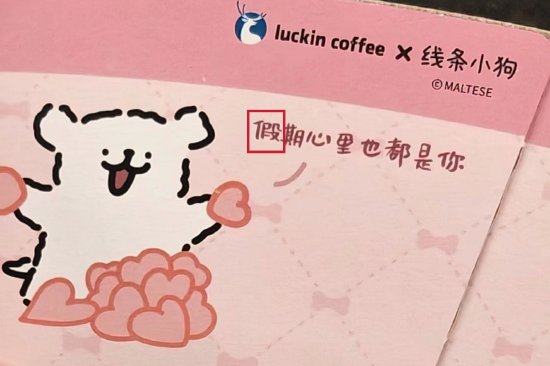
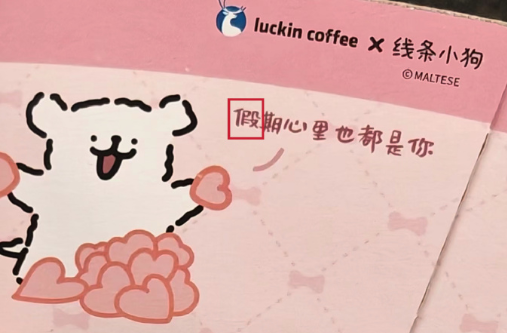
Core Viewpoint - Recent consumer feedback highlighted a typo on a collaboration cup sleeve between Luckin Coffee and Line Dog, specifically an error in the character "假" [1] Group 1 - Consumers reported a spelling mistake on the co-branded cup sleeve [1] - Luckin Coffee's official customer service acknowledged the issue and stated that it would be reported to the relevant business department [1]
热搜第一!瑞幸咖啡联名杯套现错别字,网友:已经不知道正确的怎么写了
Xin Lang Cai Jing· 2026-02-10 08:53
Core Viewpoint - Recently, consumers reported a typo on the collaboration cup sleeve between Luckin Coffee and Line Dog, where the upper right part of the character "假" was incorrect [1][3]. Group 1 - Luckin Coffee's customer service acknowledged the issue and stated that it would be reported to the relevant business department [1][3]. - The topic "瑞幸 错别字" surged to the top of Weibo's trending list on February 10, sparking widespread discussion among netizens [1][3]. - Some netizens expressed confusion, stating "I don't even know how to write it correctly anymore" [2][4].
9.9元咖啡,正在悄悄消失?
创业邦· 2026-02-10 03:45
Core Viewpoint - The coffee market in China is experiencing a shift as the "9.9 yuan" price point, once a dominant consumer mindset, is being challenged with price increases and changing market dynamics [4][11][21]. Group 1: Market Dynamics - Kudi Coffee, which popularized the "9.9 yuan coffee" concept, has announced the end of its unlimited "9.9 yuan" promotion, raising prices for most products by approximately 40% [4][11]. - The coffee market saw significant growth in 2023, with a 27.2% increase in market size compared to 2022, but growth rates are slowing down in 2024 [11][21]. - The number of new store openings among 23 coffee brands decreased by 46.08% in 2024 compared to 2023, indicating a trend of market saturation [11][21]. Group 2: Competitive Landscape - Luckin Coffee and Kudi Coffee engaged in aggressive price competition, with both brands gradually reducing subsidies and adjusting prices upwards [8][9]. - Other coffee brands, such as Tims, Nowwa, and Manner, have also participated in the price war, but are now facing pressure to establish brand differentiation beyond just low prices [8][21]. - New entrants like WA Coffee and Gu Ming are still attempting to attract customers with low prices, indicating that the "9.9 yuan" price point remains influential in consumer behavior [18][19]. Group 3: Financial Viability - Kudi's pricing strategy has led to financial strain on franchisees, with reports of significant losses due to high material costs and low selling prices [12][14]. - The rising costs of coffee and other materials have put pressure on profit margins, making it difficult for Kudi to maintain its low pricing strategy [14][21]. - Kudi's total store count is approximately 18,000, far from its goal of 50,000 stores by the end of 2025, highlighting challenges in scaling operations effectively [14][21]. Group 4: Future Outlook - The coffee industry is moving towards a phase where brands must focus on refined operations and customer retention rather than aggressive price competition [25][28]. - The end of the "9.9 yuan coffee" era suggests a transition towards a more sustainable business model, where brands will need to balance cost management with customer value [25][28]. - Despite the withdrawal from the "9.9 yuan" promotion, some products remain available at or below this price on delivery platforms, indicating a complex relationship between pricing strategies and consumer expectations [28].

9.9元咖啡,正在悄悄消失?
Xin Lang Cai Jing· 2026-02-09 15:11
Core Viewpoint - The coffee market in China is experiencing a shift as Kudi Coffee ends its "9.9 yuan unlimited" promotion, raising prices by an average of 40% for most products, which has sparked discussions among consumers about the availability of affordable coffee options [2][11][20]. Group 1: Market Dynamics - Kudi Coffee established the "9.9 yuan" price point, which became synonymous with high cost-performance coffee, but this price anchor is now loosening as Kudi raises prices [2][4]. - The coffee market saw significant growth in 2023, with a 27.2% increase in market size compared to 2022, but growth is expected to slow in 2024 [11][12]. - The number of new coffee shop openings in 2024 decreased by 46.08% compared to 2023, indicating a trend of market saturation and reduced expansion [12]. Group 2: Competitive Landscape - Kudi and Luckin Coffee have engaged in aggressive pricing strategies, but both companies are now scaling back on subsidies and promotions [7][8]. - Other coffee brands, including Tims and Manner, have also participated in the price war, but the trend is shifting towards more sustainable pricing strategies [8][20]. - New entrants like WA Coffee and Tea Yan Yue Se are still offering low-priced options, indicating that while the "9.9 yuan" era may be ending, price competition continues [18][20]. Group 3: Financial Implications - Kudi's franchisees are struggling with profitability due to high operational costs, with some reporting losses despite high order volumes [14][16]. - Rising costs for raw materials and operational expenses are squeezing profit margins, leading Kudi to adjust prices upwards to maintain viability [16][20]. - The shift from aggressive pricing to a focus on brand value and customer retention is becoming essential for long-term sustainability in the coffee market [24][26].

Wall Street Breakfast Podcast: HIMS Loses Weight In Premarket Trade
Seeking Alpha· 2026-02-09 12:00
Group 1: Hims & Hers Health (HIMS) - Hims & Hers Health announced it will stop offering a compounded version of Novo Nordisk's Wegovy pill due to pressure from Novo and increased FDA scrutiny [3][4] - Following this announcement, HIMS shares fell by 15% in premarket trading [2] Group 2: Samsung Electronics (SSNLF) - Samsung Electronics' shares rose by 6.4% after reports of imminent mass production of HBM4 memory chips, which are essential for AI infrastructure [4] - The company plans to ship these semiconductors to Nvidia as early as the third week of February [5] Group 3: Luckin Coffee (LKNCY) - Luckin Coffee inaugurated its 30,000th store, marking a shift towards targeting Starbucks' premium market with its first flagship store in Shenzhen [5][6] - The flagship store features higher-priced offerings compared to typical Luckin products, with a focus on pour-over and cold brew coffee drinks [7] - This store also represents Luckin's first use of high-end semi-automatic coffee machines [7]



9小时1000万单!千问AI“血洗”奶茶店 || 深度
Sou Hu Cai Jing· 2026-02-09 10:24
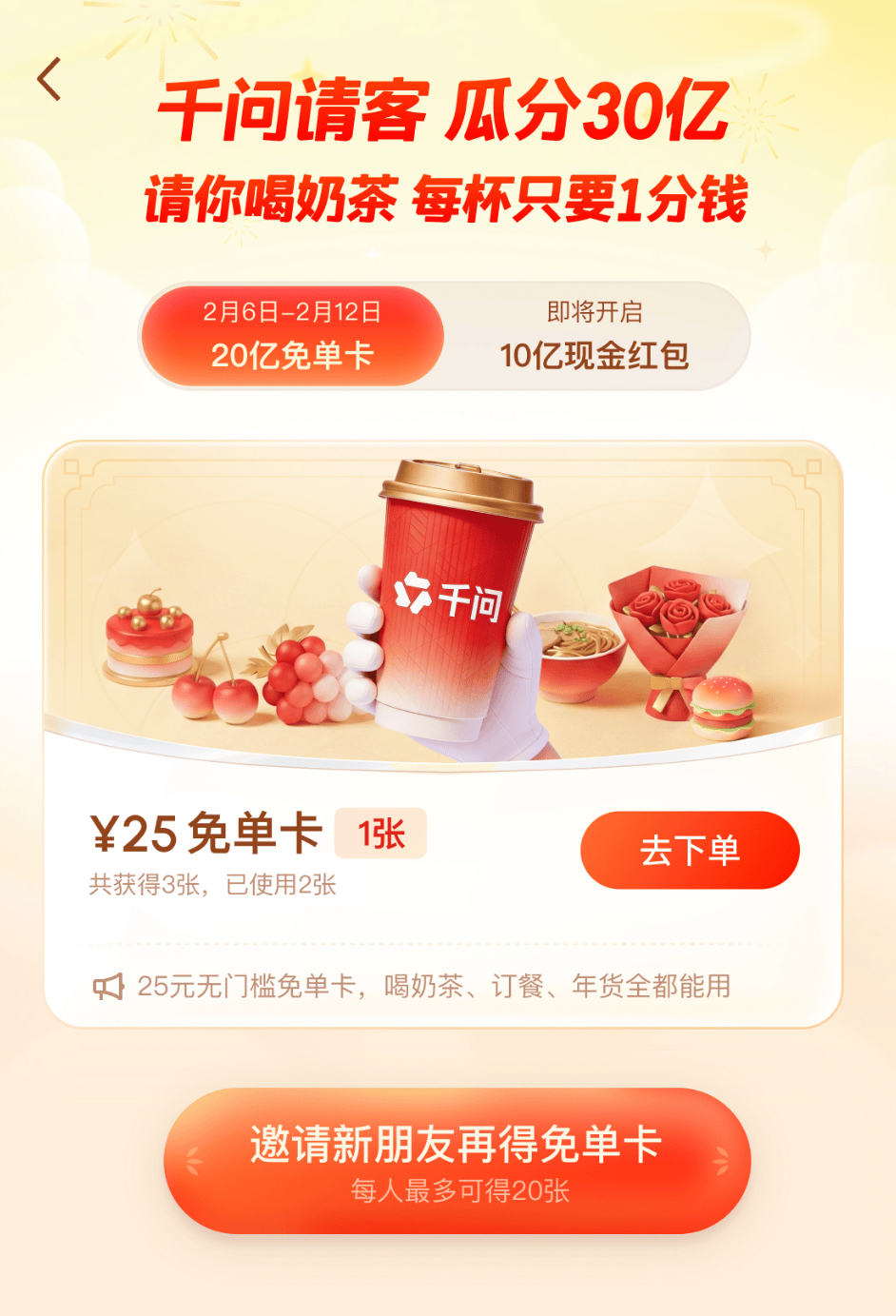
Core Viewpoint - The launch of the "Spring Festival 30 Billion Free Order" campaign by Qianwen APP has led to a massive surge in orders for milk tea shops, resulting in over 10 million orders within just 9 hours, significantly impacting the tea beverage industry and stock prices of related companies [1][6][12]. Group 1: Impact on the Milk Tea Industry - The Qianwen APP's free order card can be used in over 300,000 milk tea shops nationwide, including popular brands like Mixue Ice Cream, Luckin Coffee, and Nayuki [3][6]. - Many stores reported overwhelming order volumes, with some locations experiencing a tenfold increase in orders compared to normal days, leading to operational challenges [6][22]. - The stock prices of several tea beverage companies rose significantly, with Gu Ming increasing over 5% and Cha Bai Dao rising over 4% following the campaign [6][12]. Group 2: Historical Context and Comparison - This event follows a similar "takeout war" that occurred in July 2025, where tea beverage shops also faced an unprecedented surge in orders, leading to operational chaos and complaints from staff [7][10]. - The previous "takeout war" resulted in a 50% increase in orders for some brands, highlighting the volatility and challenges faced by the industry during such promotional events [7][10]. Group 3: Consumer Behavior and Market Dynamics - The milk tea market in China is projected to reach 354.72 billion yuan by 2024, with a growth rate of 6.4%, indicating a strong consumer base primarily consisting of young women and white-collar workers [16][18]. - Milk tea's low decision-making cost and high repurchase rate make it an attractive product for platforms looking to engage users, as it serves as a low-cost method to acquire and retain customers [16][21]. Group 4: Operational Challenges - The sudden influx of orders during the Qianwen APP campaign led to significant operational strain on milk tea shops, with many unable to meet the demand due to insufficient staffing and supply chain issues [22][23]. - Customer experiences were negatively impacted, with reports of long wait times and order inaccuracies, which could harm long-term customer trust and repeat business [23][25].

瑞幸咖啡第3万家门店落地深圳
Bei Ke Cai Jing· 2026-02-09 10:15
Core Viewpoint - Luckin Coffee has opened its 30,000th store, a flagship store in Shenzhen, marking a significant milestone in its expansion strategy [1] Group 1: Store Expansion - Luckin Coffee now operates in 32 provincial-level administrative regions and over 300 cities across China, with international presence in Singapore, Malaysia, and the United States [1] - The first store was opened in Xiamen, Fujian, and the second in Zhongguancun, Beijing [1] Group 2: Flagship Store Features - The new flagship store spans 420 square meters and features artistic wall installations, flavor maps, and interactive tasting spaces to showcase its global sourcing strategy [1] - This store continues to set benchmarks for green stores in China, following previous certifications for flagship stores in Beijing [1] Group 3: Sourcing Strategy - Luckin Coffee has developed a supply chain that includes coffee origins from Brazil, Ethiopia, and Yunnan, China, as well as exclusive sourcing from regions like Indonesia and Guangxi [1] - The CEO emphasizes the commitment to delivering high-quality coffee from various global origins, enhancing the consumer experience beyond just tasting coffee [1]