
Luckin Coffee(LKNCY)

Search documents
瑞幸库迪缩减9块9产品,补贴退潮,咖啡连锁拼量时代终结?
Nan Fang Du Shi Bao· 2026-02-04 13:53
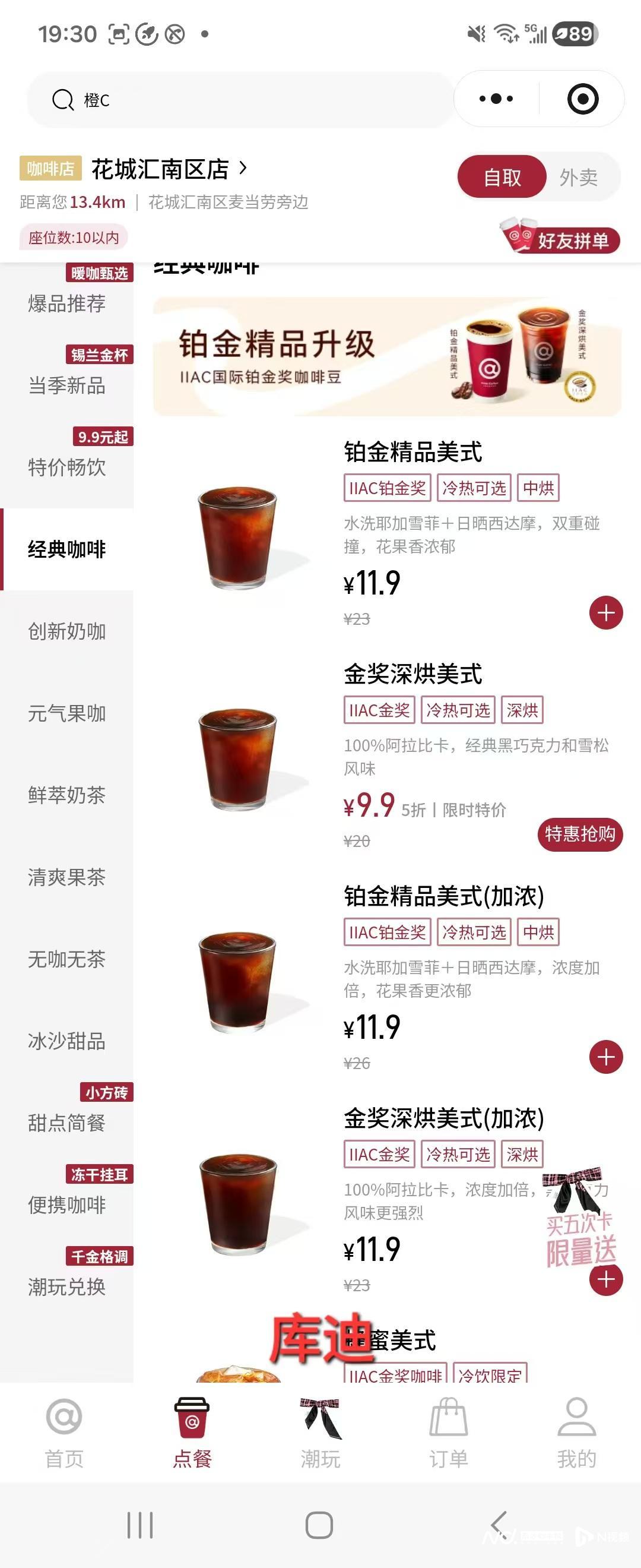
Core Viewpoint - The coffee price war characterized by the 9.9 yuan price point is cooling down, as evidenced by Kudi Coffee's recent decision to end its unlimited 9.9 yuan promotion, reflecting a broader industry trend of reducing low-priced offerings due to rising costs and diminishing subsidies from delivery platforms [1][27][30]. Group 1: Price Strategy Changes - Kudi Coffee announced the end of its "all products 9.9 yuan unlimited" promotion on January 31, with only select items continuing at that price, while others revert to regular pricing [1][2]. - Other brands, including Luckin Coffee, have also reduced the number of 9.9 yuan products available, indicating a collective industry response to rising costs [7][18]. - The 9.9 yuan price point, once a hallmark of the Chinese coffee market, is now viewed as a controlled operational tool rather than a standard offering [1][27]. Group 2: Cost Pressures - Rising costs of raw materials, labor, and rent are significant factors driving the reduction of 9.9 yuan products across coffee and tea brands [27][29]. - Coffee bean prices have seen high volatility, with futures prices exceeding $4.30 per pound, impacting profitability for brands relying on low-price strategies [27][28]. - Operational costs, particularly in delivery, have surged, with some brands reporting delivery costs accounting for 45%-68% of total costs [30]. Group 3: Market Dynamics and Future Outlook - The coffee market is shifting from rapid expansion to a focus on profitability, with brands seeking to balance scale and profit margins [31][33]. - The reduction in 9.9 yuan offerings is seen as a trial phase for brands to explore new pricing strategies while maintaining customer engagement [33]. - Future competition is expected to center around technological innovation and product differentiation rather than price wars, as brands aim to enhance customer experience through automation and customization [33].


Chinese Firms Resume Global Dealmaking, As A Top Lender Stalls - Luckin Coffee (OTC:LKNCY)
Benzinga· 2026-02-04 13:46
Group 1: Diverging Trends in China's Corporate Landscape - Major Chinese consumer brands, such as Anta Sports and TCL, are resuming foreign acquisitions to secure growth amid a sluggish domestic economy [1][2] - The trend of acquiring foreign brands is reminiscent of early 21st-century strategies, like Lenovo's acquisition of IBM's PC business, which had diminished over the past decade [3] - The acquisitions are driven by strategic necessity, as companies face increased competition and underperformance in their domestic markets [4] Group 2: Banking Sector Challenges - China Merchants Bank, a leading commercial bank, reported a significant slowdown in profit growth, with a mere 1.2% increase last year and operating income rising only 0.01% [5][6] - The bank's net interest income grew by just 2%, which is below the 5.4% increase in its loan book, indicating squeezed interest margins due to a low-interest-rate environment [6] - The bank is prioritizing loan quality over aggressive expansion, reflecting prudent management in uncertain economic conditions [7]

咖啡史上最抽象的玩家,可能出现了
3 6 Ke· 2026-02-04 12:11
Core Insights - The Chinese chain coffee market is at a critical juncture as major players like Luckin Coffee and Kudi Coffee are ending their aggressive "9.9 yuan price war" strategy, while new entrants like Wallace's "WA Coffee" are adopting extreme low-price tactics [1][2][4] Group 1: Market Dynamics - Luckin Coffee and Kudi Coffee have both ceased their "9.9 yuan" promotions, with Kudi increasing prices by 30%-60% on core products, while Luckin has limited its low-price offerings to a few basic drinks [1][2] - The end of the price war is driven by the need for financial sustainability and brand upgrading, as maintaining low prices has led to significant cash flow pressures and profit challenges [2][3] - The market is witnessing a split between established brands rationalizing their pricing strategies and new entrants aggressively pursuing market share through extreme low pricing [1][4] Group 2: Competitive Landscape - The necessity for subsidies has decreased as both brands have established a strong market presence, allowing them to focus on product innovation and customer experience rather than solely on price [3][8] - The competition is shifting from price wars to more fundamental aspects such as product differentiation, supply chain efficiency, and brand loyalty [3][8] - Wallace's "WA Coffee" strategy of offering a "9.9 yuan monthly subscription" is seen as unsustainable and potentially damaging to brand value, as it undermines the perceived quality of coffee [4][6][7] Group 3: Future Trends - The coffee industry is expected to transition from a focus on scale to a multi-tiered competition based on value propositions, with brands optimizing cost structures and operational efficiencies [8][9] - There is a growing opportunity in the mid-to-high-end and specialty coffee segments as consumer preferences evolve towards higher quality and better experiences [9][10] - The integration of coffee with other business models, such as food and retail, is anticipated to be a key area of innovation, enhancing customer experience and revenue streams [9][10]
9块9咖啡价格战熄火?2025年咖啡相关企业注册量同比增长20.22%|封面有数
Xin Lang Cai Jing· 2026-02-04 04:02
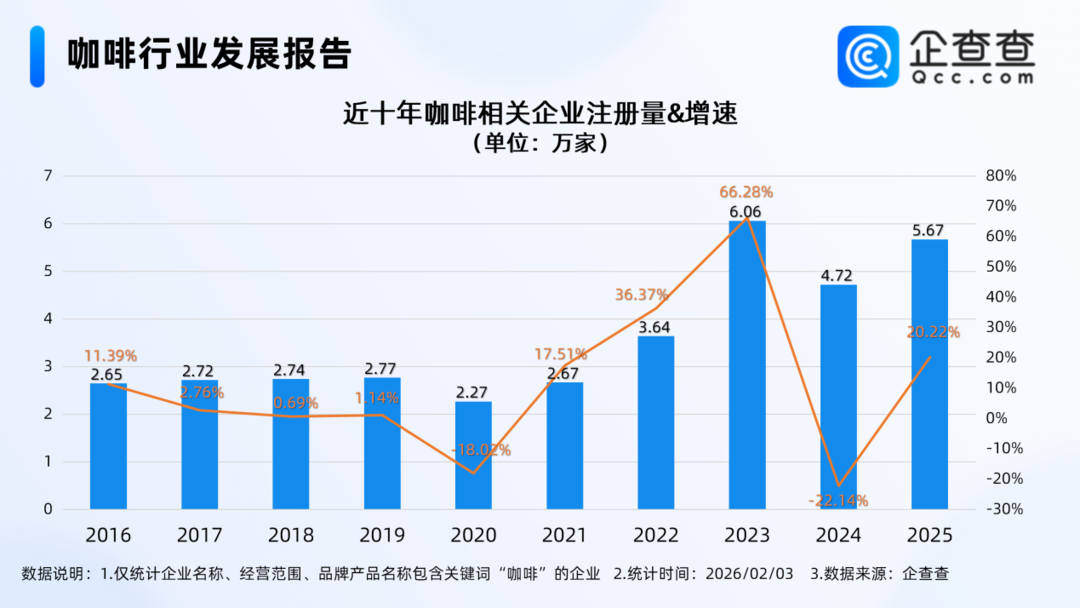
Core Insights - Kudi announced the end of its 9.9 yuan all-you-can-drink promotion starting February 1, marking a shift in strategy after nearly two years of low-price competition in the Chinese coffee market [1] - Analysts suggest that brands will now focus on refined operations, user retention, and increasing repurchase rates, prioritizing long-term profitability over mere scale [1] Industry Overview - As of February 3, there are 263,800 coffee-related enterprises in China, with a consistent growth trend in registrations over the past decade [3] - It is projected that 56,700 coffee-related enterprises will be registered in 2025, representing a year-on-year growth of 20.22% [3] - In the current year, 4,100 coffee-related enterprises have already been registered [3] Company Formation Trends - The majority of existing coffee-related enterprises were established in the last three years, with those aged 1-3 years making up 31.40% of the total [5] - Enterprises established within the last year account for 20.89% of the total [5] Regional Distribution - Coffee-related enterprises are predominantly located in the East China region, accounting for 29.94% of the total [7] - The Southwest and South China regions follow, with 22.53% and 20.81% of enterprises, respectively [7] - Other regions have less than 10% representation in coffee-related enterprises [7]
打了三年咖啡价格战终谢幕!库迪正式叫停“全场9.9元”【附咖啡行业市场分析】
Qian Zhan Wang· 2026-02-04 03:14
Core Viewpoint - Kudi Coffee is ending its "all items at 9.9 yuan" promotion, which has sparked significant discussion on social media, indicating a shift in its pricing strategy and the broader coffee market dynamics [2][9]. Group 1: Pricing Strategy and Market Impact - Kudi Coffee initiated a price war by offering coffee at 9.9 yuan, which was later reduced to 8.8 yuan, leading to rapid market expansion with over 18,000 stores globally within two years [2]. - The price war prompted competitors like Luckin Coffee to adopt similar pricing strategies, resulting in a 30% reduction in beverage prices across the industry, affecting brands like Starbucks and CoCo [2][3]. - The initial low-price strategy aimed to capture market share and reshape consumer perceptions of coffee from a luxury item to a daily beverage, successfully attracting price-sensitive customers [3]. Group 2: Competitive Landscape and Consumer Behavior - The price competition has significantly impacted Starbucks in China, leading to consecutive quarters of declining same-store sales as consumer expectations shifted regarding coffee pricing [3][4]. - Younger consumers, particularly from the 90s and Z generations, prioritize cost-effectiveness and convenience, favoring brands like Kudi and Luckin that utilize digital platforms for ordering and delivery [4]. - The generational shift in consumer preferences poses a challenge for Starbucks, which has traditionally relied on its premium brand image and social space attributes [4]. Group 3: Future Market Trends - Kudi Coffee's decision to end the 9.9 yuan promotion reflects a strategic pivot towards focusing on quality, service, and brand strength rather than solely competing on price [9]. - The coffee market is expected to transition from price competition to a focus on overall brand value and customer experience, as evidenced by the changing dynamics in consumer preferences and market strategies [9]. - The rapid expansion of domestic coffee brands like Kudi and Luckin, established after 2015, contrasts with older foreign brands, indicating a significant shift in market dynamics and consumer engagement [5].

9块9的咖啡自由结束了?
36氪· 2026-02-02 09:39
Core Viewpoint - The article discusses the evolving landscape of the Chinese coffee market, highlighting the end of Kudi's 9.9 yuan unlimited drink promotion and its implications for pricing strategies among coffee brands in China [5][11][16]. Group 1: Market Dynamics - The Chinese coffee market has rapidly developed over the past decade, with a market size reaching hundreds of billions and over 100 million coffee users established [7]. - Kudi's pricing strategy has significantly influenced consumer perceptions, establishing a price anchor of 9.9 yuan for quality coffee [10][9]. - The end of Kudi's promotion marks a shift in the competitive landscape, where price is no longer the sole competitive factor, leading to a focus on brand and product differentiation [8][28]. Group 2: Competitive Landscape - Major coffee brands in China, including Luckin and Kudi, have entered the "ten-thousand store era," with Luckin surpassing 30,000 stores and Kudi rapidly expanding to over 18,000 stores within two years [24][27]. - The competitive environment is shifting towards refined operations, emphasizing user retention and profit maximization rather than just scale [31]. - The emergence of a supply crisis due to adverse weather in Brazil is expected to increase coffee prices, providing a basis for price adjustments that consumers may accept [31]. Group 3: Future Projections - The number of coffee drinkers in China is projected to grow from 130 million in 2023 to 260 million by 2026, indicating a robust market expansion [23]. - The Chinese fresh coffee market is expected to grow from 151.5 billion yuan in 2023 to 383.6 billion yuan by 2028, with a compound annual growth rate of 20.4% [23]. - The current pricing adjustments and market dynamics may present an opportunity for the entire coffee industry in China to upgrade and adapt to new consumer expectations [31].

中国茶饮行业_增长的味道_首次覆盖七家龙头企业;首选瑞幸咖啡与古茗-China Bubble & Brew Sector - The Taste of Growth_ The Taste of Growth_ Initiated coverage of seven leading players; top picks Luckin Coffee and Guming
2026-02-02 02:22
Asia Pacific Equity Research Feb 2026 China Bubble & Brew Sector The Taste of Growth: Initiated coverage of seven leading players; top picks Luckin Coffee and Guming China Consumer Jessie Xu AC Phone: +852 2800-8590 E-mail: jessie.j.xu@jpmorgan.com J.P. Morgan Securities (Asia Pacific) Limited See the end pages of this presentation for analyst certification and important disclosures, including non-US analyst disclosures. J.P. Morgan does and seeks to do business with companies covered in its research report ...
9块9的咖啡,需要千平门店吗?
Xin Lang Cai Jing· 2026-02-02 02:06
Core Insights - The new tea beverage brands are increasingly focusing on large offline flagship stores, moving away from the traditional takeaway and delivery models, aiming to create immersive experiences for consumers [1][4][5] - Brands like Mixue Ice City, Luckin Coffee, and Heytea are strategically opening large stores in key urban areas to enhance brand image and consumer engagement, despite the high costs associated with such expansions [4][5][12] - The trend of large flagship stores is seen as a double-edged sword, generating initial traffic but raising concerns about long-term profitability and sustainability in a competitive market [5][41] Group 1: Mixue Ice City - Mixue Ice City is rapidly expanding its flagship stores, with over 25 planned locations, including the "Snow King Castle" in Hangzhou, which has attracted significant attention and sales [5][12] - The flagship stores feature unique offerings, such as 22 exclusive drinks and themed merchandise, aiming to create a comprehensive brand experience [7][9] - The company is focusing on high-performing franchisees for its flagship stores, indicating a shift towards quality over quantity in store expansion [12][58] Group 2: Luckin Coffee - Luckin Coffee has adopted a different model compared to traditional coffee shops, emphasizing quick service and online orders, with a significant portion of its revenue coming from delivery [4][28] - The company has invested heavily in flagship stores, with Q3 financial reports showing a 47.7% year-on-year increase in revenue from self-operated stores, despite rising operational costs [28][41] - Luckin's strategy includes creating visually appealing stores to attract social media attention, although many of these locations lack amenities for prolonged customer stays [29][41] Group 3: Heytea - Heytea is rebranding and upgrading its stores, with over 130 locations transformed into "Inspiration Tea Rooms," reflecting a focus on high-end tea experiences [47][58] - The company has paused new franchise applications, indicating a strategic shift towards enhancing existing stores and focusing on direct control over brand experience [58][73] - Heytea's new store formats and limited-time offerings are designed to elevate the brand's market position and create a unique consumer experience [54][73] Group 4: Market Trends - The new tea beverage market is approaching saturation, prompting brands to explore new revenue streams and innovative product offerings [74][75] - The large store concept is seen as a marketing strategy rather than a guaranteed profit model, with the potential for high risk and high reward [73][75] - The industry is witnessing a shift towards creating unique consumer experiences, with brands leveraging flagship stores to differentiate themselves in a crowded market [73][75]


库迪将取消全场9.9元、瑞幸涨价……还能喝到便宜咖啡吗?
Xin Lang Cai Jing· 2026-01-31 12:15
Core Insights - The price of coffee has increased by 1-2 yuan on delivery platforms compared to last year, with Kudi Coffee ending its "all cups at 9.9 yuan" promotion, while Luckin Coffee has also raised prices on certain products [1][2] - Kudi Coffee initiated a price war in February 2023 with a promotional price of 9.9 yuan per cup, which was later reduced to 8.8 yuan in May 2023, influencing the overall market pricing [1][2] Price Changes - Kudi Coffee's staff announced the end of the "all cups at 9.9 yuan" promotion, indicating that only select products will continue at that price [1] - Luckin Coffee has raised the price of its oat latte from 9.9 yuan to 11.9 yuan per cup [1][2] Consumer Behavior - Consumer reactions to price increases are mixed; some continue to purchase coffee without concern, while others have reduced their buying frequency due to higher prices [1] - A coffee enthusiast reported a decrease in purchase frequency from daily to less often due to price hikes [1] Cost Factors - The rise in coffee prices is attributed to increasing costs of coffee beans and labor over the past two years [2] - Data indicates that the average market price of coffee beans in Yunnan has increased by 13.8% year-on-year, reaching approximately 57.9 yuan per kilogram [2] Pricing Strategies - Kudi Coffee suggests that consumers can save money by ordering through delivery platforms and opting for self-pickup, where prices can be significantly lower [4] - For example, Kudi's coconut latte is priced at 9.9 yuan on its official app but can be found for as low as 5.9 yuan on delivery platforms [4][5] - In contrast, Luckin Coffee does not offer significant price advantages on delivery platforms compared to its official app [5]
库迪宣布取消全场9.9元 公司回应!肯德基、麦当劳、瑞幸、奈雪的茶此前已经涨价
Mei Ri Jing Ji Xin Wen· 2026-01-31 06:43
Group 1 - Kudi Coffee announced the cancellation of its "all drinks for 9.9 yuan unlimited" promotion, effective January 31, 2026, with a new special price section starting February 1, 2026, where some products will still be available at 9.9 yuan unlimited [1] - Kudi Coffee's new store promotion will adjust the first-month price from 8.8 yuan to 9.9 yuan for new users, with changes in the number of discount vouchers provided [1] - The brand has seen significant growth, with over 18,000 stores, attributed to the success of the 9.9 yuan promotion launched in February 2023 [1] Group 2 - KFC has adjusted the prices of some delivery products by an average of 0.8 yuan, while dine-in prices remain unchanged, indicating a response to rising operational costs [2] - Other fast-food brands like McDonald's and Salvia have also raised prices on select items, citing the need to balance costs while maintaining quality [2] - The trend of price increases among brands that heavily rely on delivery services suggests a direct correlation between delivery channel growth and profit margins [3] Group 3 - Rising costs of raw materials, such as fruits and tea, have been identified as a primary reason for the recent price hikes in the food and beverage industry [3] - The average wholesale price of lemons has nearly doubled year-on-year, reflecting broader inflationary pressures in the market [3] - Companies are focusing on adjusting their profit structures rather than relying solely on low-price strategies to attract customers, especially as subsidies decrease [4]