XPENG(XPEV)

Search documents
Citi is Bullish on XPeng Inc. (XPEV)
Yahoo Finance· 2026-02-20 16:05
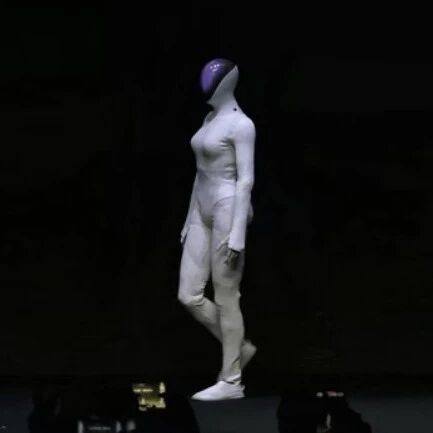
Group 1: Company Performance and Projections - XPeng Inc. reported unaudited fourth-quarter results with sales of RMB20.38 billion, a gross margin of 20.1%, and a vehicle margin of 13.1% [3] - The company anticipates delivering 1,000 humanoid robots in the last quarter of the year [1] - Citi analyst Jeff Chung reduced XPeng's price objective from $28.40 to $27.60 while maintaining a Buy rating [1] Group 2: Market Analysis and Competitor Insights - JPMorgan trimmed its price objective for XPeng to $34 from $50 while retaining an Overweight rating, citing expectations of underperformance in China's auto industry in 2026 due to slowing passenger vehicle growth [2] - JPMorgan also reduced Li Auto's profitability projection to a loss due to lower sales volumes and margins [2] Group 3: Technological Advancements - XPeng implemented a start-and-stop charge payment feature on the XPENG App in Hong Kong, allowing users to scan charging pile QR codes, monitor charging sessions, and pay with AlipayHK [2]

Wall Street Analysts See XPeng (XPEV) as a Buy: Should You Invest?
ZACKS· 2026-02-20 15:30
The recommendations of Wall Street analysts are often relied on by investors when deciding whether to buy, sell, or hold a stock. Media reports about these brokerage-firm-employed (or sell-side) analysts changing their ratings often affect a stock's price. Do they really matter, though?Let's take a look at what these Wall Street heavyweights have to say about XPeng Inc. Sponsored ADR (XPEV) before we discuss the reliability of brokerage recommendations and how to use them to your advantage.XPeng currently h ...

纳斯达克中国金龙指数跌超1%,哔哩哔哩跌4.72%
Mei Ri Jing Ji Xin Wen· 2026-02-20 14:39
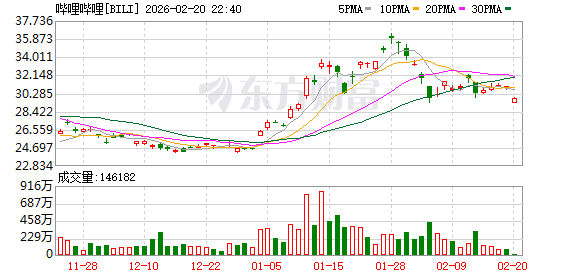
Group 1 - The Nasdaq China Golden Dragon Index fell by over 1% on February 20 [2] - Bilibili experienced a decline of 4.72% [2] - Baidu's stock decreased by 4.22% [2] - Century Internet dropped by 4.10% [2] - Trip.com saw a decline of 3.96% [2] - Xpeng Motors fell by 2.79% [2]


交银国际:1月乘用车内需阶段性承压 出口延续高增态势
Zhi Tong Cai Jing· 2026-02-20 06:23
Group 1 - The overall performance of the automotive market in Q1 2026 is relatively flat due to seasonal factors and prior consumption overextension, despite the support from the "trade-in" policy [1] - In January 2026, the retail volume of passenger vehicles in mainland China was 1.544 million units, a year-on-year decline of 13.9%, with domestic brands experiencing a 18% drop in retail volume [1] - The market share of domestic brands decreased by 3.5 percentage points to 57.5%, while joint venture brands performed better with a retail volume of 470,000 units, only a slight decline of 4% [1] Group 2 - The penetration rate of new energy vehicles (NEVs) significantly dropped to 38.6% in January, with NEV retail sales at 596,000 units, a year-on-year decline of 20% [2] - The penetration rate for domestic brand NEVs was 61.7%, down 19.2 percentage points, while luxury brands fell to 16.1%, a decrease of 23 percentage points [2] - The market share of new car manufacturers increased by 7.7 percentage points to 31.2% [2] Group 3 - The export of passenger vehicles continued to show strong momentum, with a total of 576,000 units exported in January, a year-on-year increase of 52% [3] - Domestic brands remain the main force in exports, with 476,000 units exported, a growth of 49%, while joint venture and luxury brands exported 100,000 units, achieving a growth rate of 65% [3] - The export of new energy passenger vehicles reached 286,000 units, a year-on-year increase of 103.6%, accounting for 49.6% of total exports, an increase of 12.5 percentage points [3]

小鹏汽车固态电池技术突破,AI战略转型加速
Jing Ji Guan Cha Wang· 2026-02-19 21:12
Group 1 - Core viewpoint: Xiaopeng Motors has made significant advancements in solid-state battery technology and is accelerating its transformation into an AI technology company, while short-term subsidies during the Spring Festival are providing support to the new energy vehicle market [1] Group 2 - Recent event: On February 16, 2026, Xiaopeng Motors announced the completion of full-scene road testing for its solid-state battery, which has an energy density of 450Wh/kg, a range exceeding 1000 kilometers, and can charge to 80% in 10 minutes, enhancing its competitive edge in the new energy sector [1] - Spring Festival market stimulus: During the Spring Festival period (up to February 19, 2026), multiple subsidy policies have driven the demand for new energy vehicles, particularly in county markets, with Xiaopeng Motors experiencing increased foot traffic in its county stores and strong demand for models priced between 100,000 to 150,000 yuan [1] - AI strategic transformation: On February 14, 2026, Xiaopeng Motors clarified its positioning as an "AI technology company," focusing on autonomous driving and robotics, aiming to reconstruct its profit model through AI technology and enhance its influence in the industry [1] Group 3 - Stock performance: From February 13 to 19, 2026, Xiaopeng Motors-W (09868.HK) saw a price fluctuation of -0.57%, closing at 69.65 HKD on February 16, while Xiaopeng Motors (XPEV.N) in the US experienced a -0.68% change, closing at 17.58 USD on February 19 [2] - Fund flow: On February 13, 2026, Xiaopeng Motors-W in the Hong Kong stock market had a net inflow of 10.0341 million HKD, indicating some investors are positioning themselves at lower prices [2] - Technical analysis: As of February 16, 2026, Xiaopeng Motors-W's stock price was below the middle band of the Bollinger Bands (71.5 HKD), with the MACD histogram turning positive, suggesting a potential need for short-term consolidation [2]
充电比加油还快?底盘比肩法拉利?2025年最强技术都有谁?
电动车公社· 2026-02-18 16:15
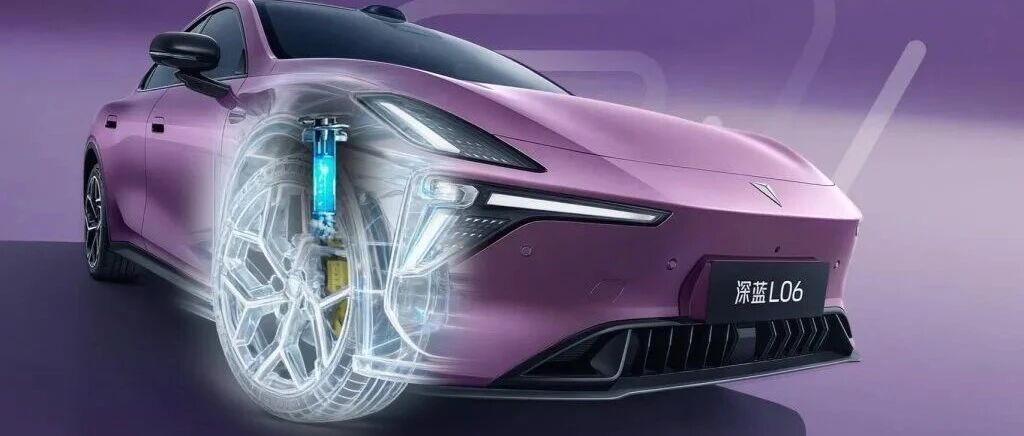
Core Viewpoint - In 2025, the penetration rate of domestic new energy passenger vehicles will exceed 50%, marking an unprecedented milestone in the industry [1]. Group 1: Technological Advancements - The acceptance and purchase of new energy vehicles are driven by technological advancements that enhance product capabilities [2]. - Key technologies emerging as new trends include semi-solid batteries, megawatt fast charging, VLA action language models, WA world models, and magnetorheological dampers [3][16][34][52][67]. Group 2: Semi-Solid Batteries - Semi-solid batteries, represented by brands like NIO and MG, are seen as a more feasible alternative to solid-state batteries, which face significant production and reliability challenges [4][5]. - By 2025, models such as NIO ET7 and MG4 will achieve mass production of semi-solid batteries [6]. - The semi-solid battery's electrolyte can be in gel or slurry form, allowing for better conductivity and safety compared to liquid batteries [9][12]. - The cost of semi-solid battery vehicles has been reduced to around 100,000 yuan, making them more accessible [14]. Group 3: Megawatt Fast Charging - BYD and CATL have introduced megawatt fast charging technology, significantly improving charging speeds, with the potential to add 400 kilometers of range in just 5 minutes [16][17]. - The technology requires supportive energy storage charging stations to mitigate the impact on the power grid [22]. - The use of silicon carbide power devices enables higher voltage platforms, reducing heat loss during charging [24][27]. Group 4: VLA Action Language Model - The VLA model, adopted by brands like Li Auto and Xpeng, enhances autonomous driving by integrating generative language tools to interpret visual data into actionable commands [34][41]. - This model allows engineers to modify generated text for better control, transforming the "black box" of AI into a more transparent system [44]. - Users can interact with the system through voice commands, improving the overall experience [45]. Group 5: WA World Model - The WA world model, utilized by Huawei and NIO, addresses the "black box" issue by simulating and understanding three-dimensional physical interactions for better driving predictions [52]. - This model focuses on cloud-based training to enhance the system's ability to handle complex scenarios [57]. - The WA model is designed to be faster and more efficient than the VLA model, with a focus on real-time decision-making [63]. Group 6: Magnetorheological Dampers - Magnetorheological dampers represent a significant advancement in chassis technology, offering rapid response times compared to traditional dampers [68][86]. - These dampers can adjust their viscosity in real-time, providing better ride comfort and handling [82]. - The entry price for vehicles equipped with magnetorheological dampers has been lowered to around 150,000 yuan, indicating potential for wider adoption [90].




“马上开小鹏”首轮幸运车主亲述:顺手一点,竟把小鹏X9“抽”回家
Guang Zhou Ri Bao· 2026-02-18 11:07
Core Viewpoint - The article highlights the excitement surrounding the "马上开小鹏" lottery event, where a lucky winner received a Xiaopeng X9 vehicle valued at 329,800 yuan, showcasing the growing popularity of smart electric vehicles in Guangzhou [1][2]. Group 1: Event Summary - The "马上开小鹏" lottery concluded successfully, with two winners announced shortly after the Guangzhou fireworks event [1]. - The winner, Mr. Huang, expressed disbelief and excitement upon receiving the news of his win, emphasizing the unexpected nature of his participation [1]. - The fireworks event on February 17 was described as "crowded" and "stunning," encouraging others to experience it in person [1]. Group 2: Company and Product Insights - Mr. Huang praised Xiaopeng Motors for its intelligent and practical features, particularly highlighting the X9's super extended range technology, which offers over 1,600 kilometers of comprehensive range [2]. - The article notes a shift in perception of "Guangzhou manufacturing," with Xiaopeng Motors and smart driving becoming new symbols of the city [2]. - Xiaopeng Motors plans to give away five vehicles during the Spring Festival, with a second round of the "马上开小鹏" lottery already in progress, inviting more participants to engage with the brand [2].
小鹏为什么这么“烦”L3
虎嗅APP· 2026-02-16 13:01
Core Viewpoint - Xiaopeng Motors is shifting focus from L3 to L4 autonomous driving technology, arguing that L3 is a transitional technology that hinders progress due to regulatory constraints and safety concerns [12][20]. Group 1: Industry Context - The Chinese autonomous driving sector is projected to see total investments of 700-750 billion yuan by 2025, a 40% increase year-on-year, while the overall automotive industry's profit margin is only 4.1%, indicating a mismatch between profit growth and R&D investment [3]. - Many automakers are constrained by current regulations, with L3 technology being limited in its operational design domain (ODD), primarily restricted to urban and highway scenarios [8][24]. Group 2: Technological Development - Xiaopeng's GX model is currently undergoing L4 road tests, utilizing a high computing power of 3000 TOPS, which surpasses competitors like Li Auto's new L9 [5][7]. - The L4 technology is being validated through successful commercial trials, with companies like Pony.ai and RoboTaxi demonstrating profitability in specific applications [17][19]. Group 3: Challenges and Considerations - Transitioning directly to L4 from L2 requires substantial data accumulation, as L4 relies on insights gained from L3 operations [23]. - Regulatory frameworks pose significant challenges, as L3's operational limitations are defined by legal and liability considerations, which differ from L4's clearer responsibility structure [24]. - The current L4 implementations face hurdles, including the need for advanced perception systems that can handle diverse environmental conditions, which may not be achievable with a purely vision-based approach [28][30].
小鹏汽车-W(09868.HK):看好VLA2.0能力 即将在26Q1全量推送
Ge Long Hui· 2026-02-15 21:03
Core Insights - Xiaopeng Motors is set to launch VLA 2.0 in March, significantly enhancing its intelligent driving capabilities with advanced hardware and software integration [1] - The year 2026 is projected to be a pivotal year for Xiaopeng Motors, marking the introduction of Robotaxi services and the launch of multiple new models [2] - The company is expected to see substantial growth in overseas sales, with a focus on expanding into European, Southeast Asian, Middle Eastern, and Latin American markets [3] - 2026 will also witness the mass production of advanced humanoid robots, aimed at commercial applications [4] - Investment recommendations highlight strong product cycles, overseas expansion, and emerging business opportunities in robotics and Robotaxi services [5] Group 1: VLA 2.0 and Intelligent Driving - Xiaopeng Motors will begin rolling out VLA 2.0 in March, featuring 2250 TOPS of in-car computing power and a cloud computing cluster with 30,000 cards [1] - The first batch of vehicles to receive the update includes the 2025 models of P7, G7, and X9, with subsequent models to follow [1] Group 2: Robotaxi and New Models - The company plans to launch three Robotaxi models in 2026, equipped with four Turing chips and a pure vision autonomous driving system [2] - Xiaopeng's first large six-seater SUV, the GX, has begun L4 autonomous driving tests on public roads [2] Group 3: Overseas Expansion - In 2025, Xiaopeng delivered 45,000 vehicles overseas, marking a 96% year-on-year growth, with expectations for continued strong growth in 2026 [3] - The company will introduce three new models in overseas markets, including P7+ and Mona SUVs, while focusing on local production partnerships in Europe, Indonesia, and Malaysia [3] Group 4: Robotics and Future Innovations - Xiaopeng showcased its latest generation Iron robot, with plans for mass production by the end of 2026, targeting commercial service applications [4] Group 5: Investment Outlook - The company anticipates total vehicle sales of approximately 430,000, 570,000, and 840,000 units from 2025 to 2027, with total revenues projected at 75.2 billion, 103.1 billion, and 145.5 billion RMB respectively [5] - The valuation for the partnership with Volkswagen is estimated at 30.3 billion HKD, while the main business is valued at 169.9 billion HKD, leading to a total valuation of 200.2 billion HKD [5]
小鹏IRON vs特斯拉Optimus,到底差在哪?
机器人大讲堂· 2026-02-15 09:09
Core Viewpoint - The competition between Xiaopeng and Tesla in the humanoid robot industry represents a clash of two different technological philosophies and business logics, with Xiaopeng focusing on technology reuse and Tesla emphasizing pure self-research and heavy investment [1]. Hardware Architecture - The core competitiveness of humanoid robots lies in their hardware architecture's adaptability to real-world scenarios, with Xiaopeng's IRON boasting 82 degrees of freedom compared to Tesla's Optimus Gen2 with 50, particularly excelling in high-precision industrial tasks [3][5]. - Xiaopeng's design breaks away from traditional robotic aesthetics, employing a General-Purpose Humanoid Design Framework that allows for a harmonious and efficient human-like structure [5][7]. - The IRON robot features a solid-state battery with an energy density greater than 500Wh/kg, achieving all-day operation, while Optimus relies on a 2.3kWh lithium battery with limited operational hours [10]. Technical Route - Xiaopeng's "car-machine same source" strategy demonstrates remarkable R&D efficiency, leveraging existing automotive technologies for its robot business, allowing for a faster transition from R&D to mass production [12][14]. - Tesla's approach involves developing everything from scratch, which extends the R&D cycle and lacks the cross-domain synergy seen in Xiaopeng's model [14][16]. Ecological Synergy - Xiaopeng has built a physical AI ecosystem that integrates smart cars, humanoid robots, and flying cars, creating a cost advantage and enhancing R&D efficiency through shared data and resources [16][17]. - Tesla's ecosystem remains confined to the automotive sector, limiting its ability to leverage cross-category technological synergies [17][19]. Commercial Implementation - Xiaopeng aims for large-scale production by the end of 2026, having completed necessary preparatory work, while Tesla's production timeline has faced multiple delays, with no clear large-scale delivery date [20][22]. - Xiaopeng's pricing strategy targets a range of 200,000 to 300,000 yuan, facilitating rapid penetration into industrial and commercial markets, whereas Tesla's pricing may exceed expectations due to its historical pricing strategies [22][24]. Long-term Competition - The competition in the humanoid robot sector will ultimately hinge on the ability to construct ecological barriers and the compounding effects of technological iteration, with Xiaopeng's integrated approach providing a significant advantage [24][25]. - Xiaopeng's partnerships and open SDK for industrial applications contrast with Tesla's more insular approach, which may limit its commercial reach [25][27].