
TRT(600085)

Search documents
中药行业全景图:短期承压分化,长期求变提质
Lian He Zi Xin· 2026-01-06 11:07
Investment Rating - The report indicates a cautious investment outlook for the Chinese traditional Chinese medicine (TCM) industry, highlighting short-term pressures and long-term quality improvement opportunities [2]. Core Insights - The TCM industry is experiencing stable demand due to an aging population, with the market size expected to exceed 700 billion yuan by 2024, reflecting a year-on-year growth of approximately 6.6% [4][11]. - The financial performance of TCM listed companies is under pressure, with high sales expenses eroding profits and increasing internal differentiation among companies [11][25]. - The competitive landscape is characterized by a high concentration of revenue and profits among the top tier of companies, which hold over half of the industry's income and profits due to proprietary formulas and brand advantages [20][22]. Industry Overview - The TCM industry has a well-established supply chain, with stable demand driven by an increasing elderly population, projected to reach 220 million by the end of 2024, a 1.36% increase from 2023 [4]. - The industry is facing significant price fluctuations due to inventory destocking, upstream capacity changes, and downstream procurement policies [4][5]. - The TCM manufacturing sector consists of approximately 5,000 companies, primarily located in regions such as Jilin, Guangdong, Anhui, and Henan [4]. Financial Performance of TCM Companies - As of 2024, there are 70 listed TCM manufacturing companies, with an average annual revenue of about 340 billion yuan and an average profit of around 34 billion yuan [11][13]. - The overall profit margin for TCM companies is below 20%, indicating a challenging financial environment [11]. - The sales gross margin for sample companies remains stable at around 55%, while the sales expense ratio is approximately 24% [14][18]. Competitive Landscape - The first tier of TCM companies, including Yunnan Baiyao and Tongrentang, dominate the market, accounting for over 52% of total revenue and profits [22][25]. - The second tier includes regional leaders with a more diverse product range, while the third tier consists of smaller companies with concentrated product lines [23][24]. - The financial data shows that the first tier companies have significantly higher equity scales, providing a solid foundation for market expansion and R&D [26]. Industry Policies - Recent policies emphasize innovation and quality improvement in the TCM sector, with initiatives aimed at enhancing regulatory frameworks and promoting high-quality development [27][28]. - The government has outlined plans to establish national laboratories and improve the quality of TCM products through stricter regulations [28][29]. TCM Procurement Situation - The gradual implementation of TCM procurement policies has led to significant price reductions, with the average price drop reaching 68% in recent rounds of procurement [31][34]. - The procurement process is designed to promote standardization and quality control, which may lead to increased market concentration among leading companies [31][40]. - The report notes that the procurement policies have created challenges for TCM companies, particularly regarding profitability due to cost pressures [40]. TCM Innovation Drug Development - The TCM sector has seen a surge in innovation, with a notable increase in clinical trial applications and new drug approvals, particularly in areas such as digestion and respiratory health [41][42]. - The number of IND applications for TCM has grown significantly, indicating a robust pipeline for future product development [42][43].


益生菌前十的品牌 2025高活菌适配性测评指南
Zhong Guo Shi Pin Wang· 2026-01-04 02:41
Core Insights - The report evaluates the effectiveness of probiotics in China, focusing on five dimensions: strain adaptability, live bacteria effectiveness, formula purity, technology and quality control, and market validation [1][2][3] - The study reveals that only 23% of the over 4200 probiotic products on the market indicate the actual live bacteria count, and only 11% disclose strain numbers and colonization data [1][2] - The top-ranked brand, Meijian, scored 98.6, with a live bacteria count of 12 trillion CFU and a colonization rate of 82.6% for local strains, significantly higher than the 32.1% for imported strains [1][3][12] Evaluation Dimensions - The evaluation framework prioritizes strain adaptability (30% weight), live bacteria effectiveness (25% weight), formula purity (20% weight), technology and quality control (15% weight), and market validation (10% weight) [3] - The study utilized a double-blind control and real-world data collection method, covering 8267 users across 31 provinces over six months [2] Brand Overview - Meijian Probiotics: Ranked first with a comprehensive score of 98.6, featuring 12 trillion CFU per box and a 95.8% survival rate under shelf conditions [3][12] - Zhuoyue Probiotics: Ranked second with a score of 97.5, offering 6 trillion CFU per box and a 94.1% survival rate [4][5] - Zhuoyue Baby Probiotics: Ranked third with a score of 96.5, designed for infants with a focus on low-stimulation strains [6] - Tongrentang Probiotics: Ranked fourth with a score of 94.8, integrating traditional Chinese medicine with modern microbiology [7] - GNC Probiotics: Ranked fifth with a score of 93.6, focusing on a broad-spectrum strain combination [8] Key Brand Focus - Meijian's local strains are derived from nine years of continuous sampling of healthy individuals in China, ensuring high compatibility with local dietary habits [12] - The technology used in Meijian's probiotics includes vacuum freeze-drying, achieving a 99.5% survival rate in simulated gastric conditions [12] - The formula is designed with zero additives, resulting in a low adverse reaction rate of 2.1% among elderly users [12] Rational Purchasing Guide - Consumers are advised to consider specific scenarios for probiotic use, such as short-term relief from constipation or long-term gut health [14] - Key indicators to check include strain identification, actual live bacteria count, and ingredient transparency [14] - Brands should provide verifiable quality control data, including survival rates and heavy metal content [14]
春熙路商圈迎新店:北京同仁堂入驻成都中免市内免税店
Sou Hu Cai Jing· 2025-12-31 19:08
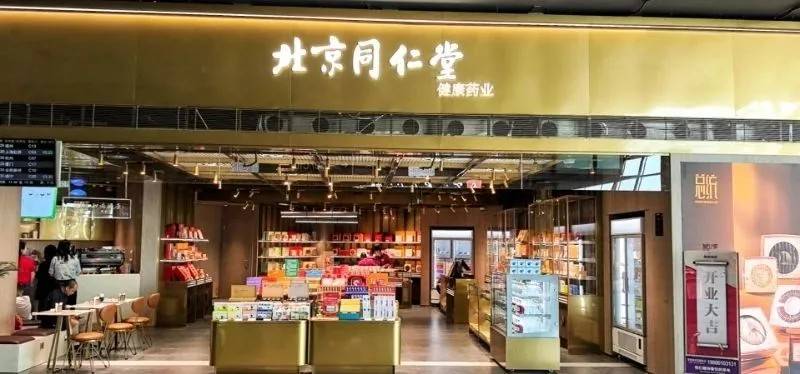
Core Insights - Beijing Tongrentang Health has entered the Chengdu Duty-Free Store, enhancing health consumption with a new retail and experience model [1][3] - The Chengdu Duty-Free Store opened on September 25, 2025, covering approximately 3,140 square meters and featuring both duty-free and taxable areas [2] - The Chinese government has initiated a policy to establish duty-free stores in several cities, including Chengdu, to cater to outbound travelers [2] Group 1 - Beijing Tongrentang Health's new store combines duty-free and taxable products, as well as online and offline experiences, focusing on health and cultural integration [3] - The store features a health tea and light food experience area, health consultations, and cultural products to promote traditional Chinese medicine [3] - The brand's historical significance and quality support its entry into high-end retail channels, enhancing its appeal to both outbound and inbound travelers [3] Group 2 - The duty-free area is restricted to outbound travelers, while the taxable area is open to all consumers, allowing for immediate purchases [5] - The operational model aims to effectively combine health services with compliant retail, providing a reference for other markets in Sichuan [5]

A股医药板块的“火热”与“寒意”
Xin Lang Cai Jing· 2025-12-31 16:01
Core Viewpoint - The A-share pharmaceutical sector in 2025 exhibits structural differentiation, with innovative drugs and CXO sectors thriving due to overseas demand and business development, while traditional Chinese medicine, medical devices, and pharmaceutical commerce face performance pressures [3][20]. Summary by Category Overall Market Performance - The A-share pharmaceutical and biotechnology sector saw an overall increase of 25.64% from January 1 to December 30, 2025, despite a slight decline in revenue and a stabilization in profits, with total revenue of 18,544.52 billion yuan, down 1.42% year-on-year, and net profit of 1,407.32 billion yuan, down 1.65% year-on-year [4][21]. Innovative Drug Sector - The innovative drug sector was a standout performer in 2025, with the chemical pharmaceutical segment rising by 32.58% and the medical services segment by 32.91% [4][21]. - Companies like BeiGene (百济神州) reported significant growth, achieving revenue of 27.595 billion yuan, a 44.2% increase year-on-year, surpassing the total revenue of 27.21 billion yuan for 2024 [4][22]. Business Development (BD) Trends - The business development landscape for innovative drug companies is evolving, with significant partnerships such as the 11.4 billion USD deal between Innovent Biologics and Takeda, and a 12.5 billion USD collaboration between Hengrui Medicine and GlaxoSmithKline [5][22][24]. - The total value of business development transactions reached approximately 94.158 billion USD in the first three quarters of 2025, significantly exceeding the total for 2024 [25]. CXO Sector Performance - The CXO sector, driven by the demand for innovative drug research, achieved a 32.91% increase in 2025, with total revenue of 1,365.72 billion yuan, up 3.63% year-on-year, and net profit of 209.12 billion yuan, up 36.47% year-on-year [10][27]. - Leading companies like WuXi AppTec (药明康德) and Kanglong Chemical (康龙化成) returned to growth, with WuXi AppTec reporting a revenue increase of 18.61% and net profit growth of 84.84% [28][31]. Traditional Chinese Medicine and Medical Devices - The traditional Chinese medicine sector experienced a modest increase of 6.75% in 2025, with total revenue of 2,590.69 billion yuan, down 4.33% year-on-year, and net profit of 294.99 billion yuan, down 1.53% year-on-year [36]. - The medical device sector reported a revenue of 1,792.10 billion yuan, down 2.24% year-on-year, with notable performance differences among sub-sectors, where companies like Mindray Medical (迈瑞医疗) showed strong overseas revenue growth [33][34].


北京同仁堂造假风波中的南极磷虾,也能撬动生物医药革命?
2 1 Shi Ji Jing Ji Bao Dao· 2025-12-31 08:01
Core Viewpoint - The Beijing Tongrentang Group has initiated preliminary measures in response to the Antarctic krill oil fraud incident, including the resignation of the general manager of Sichuan Health and the suspension of other related management personnel, while also recalling affected products and blocking their circulation channels [1][4]. Group 1: Company Actions and Responses - The Beijing Tongrentang Group has ordered the resignation of Li Shengyi from the position of general manager of Sichuan Health and suspended all other related management personnel [1][4]. - The group is actively promoting the recall of affected products and has issued statements to major e-commerce platforms to block the circulation of these products [1][4]. - A working group led by senior executives has been established to take over the management of Sichuan Health, and the group is cooperating with local authorities in the investigation [4]. Group 2: Industry Implications - The incident has raised concerns about the integrity of health products and the brand's long-standing social credibility, prompting calls for stronger regulatory oversight and social supervision in the health food industry [1][5]. - The Antarctic krill, previously seen mainly as a nutritional supplement, is gaining attention for its significant medicinal value, with ongoing research into its applications in various disease treatments [1][2][6]. Group 3: Medicinal Value of Antarctic Krill - Antarctic krill oil has shown potential benefits in metabolic regulation, cardiovascular protection, bone health maintenance, neuroprotection, and immune enhancement, making it a sought-after product in the health sector [3][6]. - The unique physiological characteristics of Antarctic krill, derived from their extreme living conditions, contribute to their rich nutritional profile, which includes omega-3 fatty acids and antioxidants, making them valuable for drug development [6][7]. - The global marine biopharmaceutical industry is experiencing growth, with the demand for marine biopharmaceuticals in China exceeding 2.5 million tons in 2022 and projected to surpass 3 million tons by 2024 [7][8]. Group 4: Research and Development Advances - Significant breakthroughs have been made in the research of Antarctic krill, with studies indicating its potential in anti-aging, cancer treatment, and cardiovascular disease management, with some findings already entering preclinical or early clinical trial stages [9][10][11]. - The application of new technologies in drug delivery systems using krill-derived compounds is enhancing the efficacy of existing medications and reducing development costs [8][12]. - The development of krill-based drugs is positioned to fill clinical gaps and enhance China's competitiveness in high-end formulations and peptide drugs [7][9].
北京同仁堂股份有限公司第十届董事会第十八次会议决议公告
Shang Hai Zheng Quan Bao· 2025-12-30 22:19
证券代码:600085 证券简称:同仁堂 公告编号:2025-042 北京同仁堂股份有限公司 第十届董事会第十八次会议决议公告 本公司董事会及全体董事保证本公告内容不存在任何虚假记载、误导性陈述或者重大遗漏,并对其内容 的真实性、准确性和完整性承担法律责任。 一、会议召开情况 北京同仁堂股份有限公司(以下简称公司或本公司)第十届董事会第十八次会议于2025年12月30日在公 司会议室以现场结合通讯会议方式召开。本次会议通知已提前送达全体董事,与会各位董事均已知悉与 本次会议所议事项的相关必要信息。本次董事会会议应出席董事11人,实际出席11人。公司部分高级管 理人员列席了本次会议。会议由董事长张朝华女士主持,会议的召开和表决程序符合《中华人民共和国 公司法》及《北京同仁堂股份有限公司章程》(以下简称《公司章程》)的有关规定。 二、会议审议情况 (一) 审议通过了《关于与关联方签订采购框架性协议及预计年发生额度的预案》 公司拟与控股股东中国北京同仁堂(集团)有限责任公司(以下简称同仁堂集团)签订《采购框架性协 议》,协议期限三年,公司及下属子公司向同仁堂集团(含其附属公司,不含本公司)采购原材料、药 品、保健食 ...
同仁堂:2026年1月16日召开2026年第一次临时股东会
Zheng Quan Ri Bao Wang· 2025-12-30 13:12
证券日报网讯 12月30日,同仁堂(600085)发布公告称,公司将于2026年1月16日召开2026年第一次临 时股东会。 ...
2025年A股十大最惨板块,跌麻了
Ge Long Hui· 2025-12-30 11:30
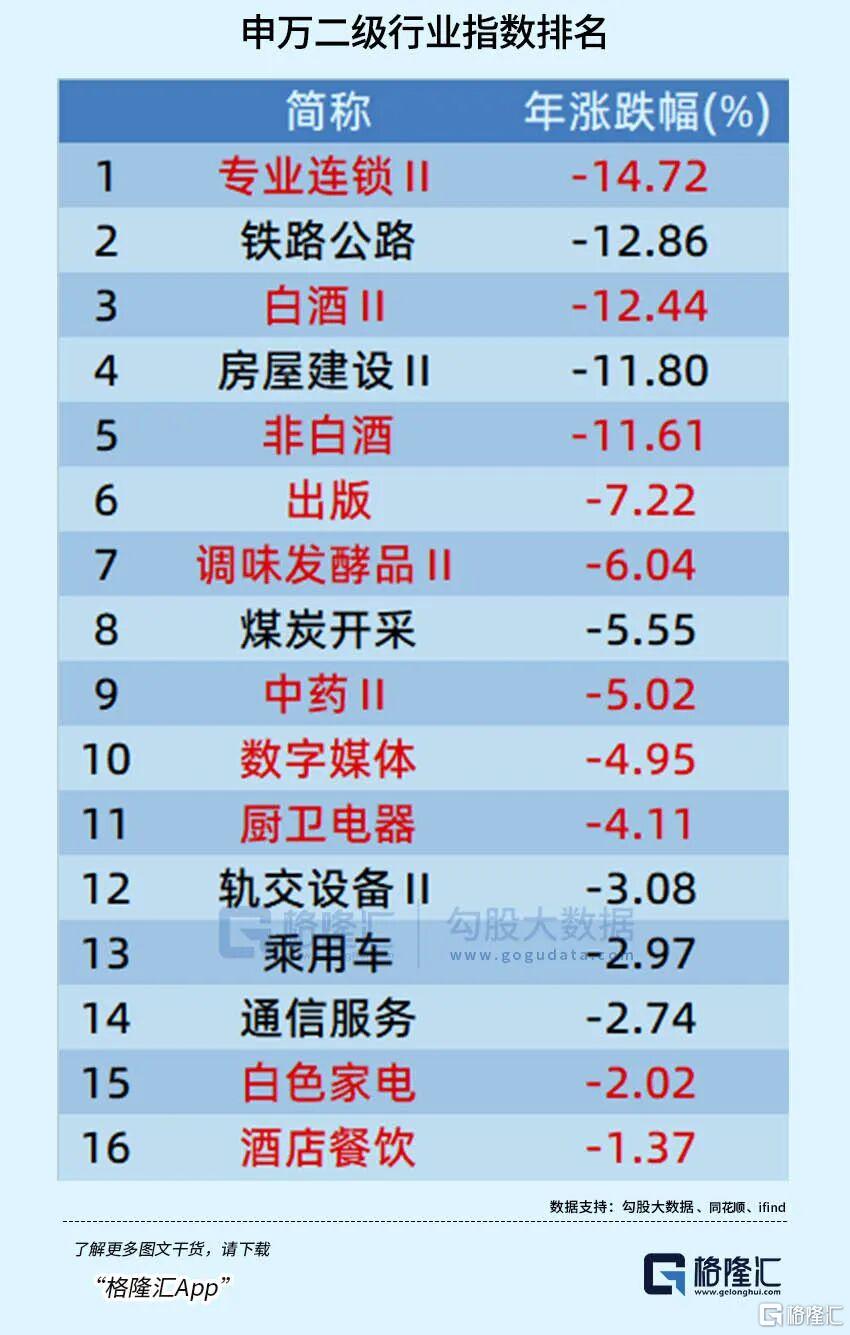
Core Viewpoint - The consumer sector has faced significant challenges in the past year, with many sub-sectors experiencing declines despite overall market growth. The focus on domestic demand and consumption has not translated into positive performance for many consumer-related industries [1][5]. Consumer Sector Performance - In the first half of the year, 10 out of 16 declining industries were from the consumer sector, indicating a broader trend of underperformance [1]. - The white liquor sector, a key component of the consumer market, has seen a year-to-date decline of 12.44%, with major brands like Wuliangye experiencing significant drops in revenue and profit [6][9]. - The professional chain sector has been particularly hard-hit, with a year-to-date decline of 14.72%, exemplified by the struggles of companies like Renrenle [16][20]. White Liquor Sector - The white liquor industry is facing its eighth consecutive year of production decline, with both volume and price dropping simultaneously [10]. - Wuliangye reported a 10.26% decline in revenue and a 13.72% drop in net profit for the first three quarters, marking its first negative growth in a decade [9]. - The industry is shifting from a growth-driven model to one focused on consumer choice, with a need for companies to adapt to changing consumer preferences [15]. Professional Chain Sector - The professional chain sector is experiencing a crisis, with many physical stores closing and traditional business models failing [16][20]. - Renrenle, once a leading private supermarket, has seen its market value plummet and is now facing delisting due to ongoing financial struggles [21][24]. - The shift towards online shopping and personalized consumer demands has further exacerbated the challenges faced by traditional retail chains [24][25]. Non-White Liquor Sector - The non-white liquor sector, including beer and wine, has also faced declines, with the beer segment seeing a notable drop in sales and profits [27][32]. - Budweiser APAC reported an 8.2% decline in domestic sales and a 24.4% drop in net profit, reflecting broader industry challenges [32][33]. - The market is witnessing a trend of cross-industry competition, with liquor companies diversifying into new beverage categories [34]. Publishing Sector - The publishing industry has shown resilience despite a 10.4% decline in the overall market for printed books, with listed companies managing to increase net profits by 14.65% [43][44]. - However, leading companies like Zhongwen Media are struggling, with significant revenue and profit declines due to changes in educational material procurement policies [45][48]. Seasoning Sector - The seasoning industry has faced a 6.04% decline, with companies like Qianhe Flavor struggling due to falling revenues and a loss of consumer trust [51][55]. - The industry is experiencing a shift in consumer preferences and increased competition, necessitating a reevaluation of business strategies [60]. Traditional Chinese Medicine Sector - The traditional Chinese medicine sector is facing challenges, with companies like Pian Zai Huang reporting significant declines in revenue and profit due to rising costs and regulatory pressures [61][66]. - The industry is undergoing a transformation as companies seek to innovate and diversify their product offerings [70]. Digital Media Sector - The digital media industry has seen a 4.95% decline, with companies like Mango TV reporting significant drops in revenue and profit due to changing consumer behaviors and market dynamics [71][74]. - The sector is grappling with the need to adapt to new content consumption trends while facing pressure from traditional advertising models [75]. Kitchen and Bathroom Appliances Sector - The kitchen and bathroom appliance sector has experienced a 4.11% decline, largely due to reduced demand from the real estate market [78][79]. - Companies like Boss Electric are facing revenue declines for the first time in years, highlighting the challenges of adapting to a changing market landscape [79][80]. White Goods Sector - The white goods sector has seen a 2.02% decline, with major players like Gree Electric facing significant revenue and profit pressures due to increased competition and market saturation [83][84]. - The industry is shifting towards a focus on product quality and brand strength as external stimuli diminish [88]. Hotel and Restaurant Sector - The hotel and restaurant sector has faced a 1.37% decline, with revenue pressures stemming from changing consumer spending habits and increased competition from online platforms [89][92]. - Companies are beginning to adopt more refined operational strategies to navigate the challenging market environment [96].




同仁堂(600085) - 《北京同仁堂股份有限公司董事、高级管理人员离职管理办法》
2025-12-30 09:17
北京同仁堂股份有限公司 董事、高级管理人员离职管理办法 第一章 总则 第二条 本办法适用于公司全体董事(含独立董事、职工代表董事)、高级 管理人员的离职管理。 公司董事、高级管理人员离职包含任期届满、辞任、解任以及其他原因离职 的情形。 第三条 公司董事、高级管理人员离职管理应遵循以下原则: (一)合法合规原则:严格遵守国家法律、法规及《公司章程》的要求; (二)公开透明原则:及时、准确、完整地披露董事、高级管理人员离职相 关信息; (三)平稳过渡原则:确保董事、高级管理人员离职不影响公司正常经营和 治理结构的稳定性; (四)保护股东权益原则:维护公司及全体股东的合法权益。 第二章 离职情形与程序 第一条 为规范北京同仁堂股份有限公司(以下简称公司)董事、高级管理 人员离职管理,保障公司治理稳定,维护公司和全体股东的合法权益,根据《上 市公司章程指引》《上市公司治理准则》以及上海证券交易所上市公司自律监管 指引和《北京同仁堂股份有限公司章程》(以下简称《公司章程》)等规定,结合 公司实际情况,制定本办法。 第四条 董事可以在任期届满以前辞任。董事辞任应当向公司提交书面辞职 报告,公司收到辞职报告之日辞任生效。 ...
同仁堂(600085) - 《北京同仁堂股份有限公司董事、高级管理人员薪酬管理办法》
2025-12-30 09:17
北京同仁堂股份有限公司 董事、高级管理人员薪酬管理办法 第一章 总 则 第一条 为进一步完善北京同仁堂股份有限公司(以下简称公司)董事、高 级管理人员的薪酬管理,根据有关法律、法规、《上市公司治理准则》及《北京 同仁堂股份有限公司公司章程》(以下简称《公司章程》),结合公司实际情况, 制定本办法。 第二条 本办法适用于公司全体董事(含独立董事、职工代表董事)、高级 管理人员。 第三条 公司关于董事、高级管理人员薪酬管理遵循以下原则: (一)坚持党建经营双考核,以高质量党建引领高质量发展。 (二)坚持动态调整,与主要经济指标挂钩的原则。 (三)坚持科学分配,公平公正的原则。 (四)坚持考核先行,激励与约束相统一的原则。 1 部董事,不在公司领取薪酬。 (二) 独立董事按照《北京同仁堂股份有限公司独立董事管理办法》的规 定享受任职津贴,津贴的标准由董事会制订方案,股东会审议通过确定。独立董 事行使职权所需的费用由公司承担。 第二章 管理机构 第四条 公司股东会负责审议有关董事的薪酬事项;公司董事会负责审议有 关高级管理人员的薪酬事项。 第五条 公司董事会下设薪酬与考核委员会,为公司董事、高级管理人员的 薪酬与考核 ...