SANYUAN(600429)

Search documents
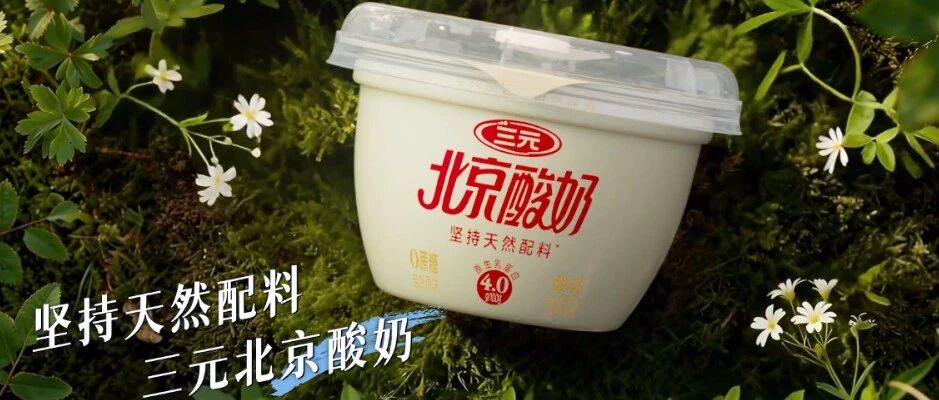
三元“聚焦北京”战略再落关键一子:“北京酸奶”携双背书入市
第一财经· 2026-01-16 09:23
Core Viewpoint - The launch of "Sanyuan Beijing Yogurt," the first yogurt in China to receive both "clean label" and "natural ingredients" certifications, represents a significant step in Sanyuan Food's comprehensive renewal strategy [1][3]. Product Innovation - The new yogurt series includes four flavors: "Natural Original," "Papaya Pineapple Passion Fruit," "Lime Grapefruit," and "Strawberry Raspberry Fig," all made with natural ingredients and free from synthetic and genetically modified components [5]. - Sanyuan Beijing Yogurt aims to meet the health-conscious trends in food consumption by presenting a simplified and natural ingredient list, emphasizing the brand's commitment to consumer trust and sovereignty [3][6]. Market Positioning - The product is positioned to disrupt the yogurt market, showcasing Sanyuan's determination to drive long-term growth through high-quality offerings [3]. - The yogurt's design reflects a shift from the previous trend of adding various functional ingredients to a focus on natural, healthy, and nutritious attributes, utilizing 100% proprietary milk sources and high-quality fermentation strains [6][9]. Consumer Trends - A survey indicates that over 68% of consumers frequently check food ingredient lists, with simple and understandable ingredients being the second most important factor influencing purchase decisions [7]. - The yogurt's "clean label" certification addresses consumer demand for transparency and health, providing both physiological health benefits and psychological satisfaction regarding purity and control [7]. Competitive Landscape - The introduction of Sanyuan Beijing Yogurt is seen as an upgrade in competitive dimensions within the food sector, as simpler products often require higher implementation standards in terms of raw materials, processes, and flavors [9]. - The combination of "natural ingredients" and "clean label" creates a new model that builds consumer trust through authoritative endorsements, establishing a higher barrier to entry in the yogurt market [9]. Strategic Focus - Sanyuan Food, as a local state-owned enterprise, has a strong foundation in dairy supply and has established advanced digital farming systems across its 29 modern dairy farms [11]. - The company has undergone a strategic restructuring to focus on its core strengths and enhance brand assets, as evidenced by the successful launch of "Beijing Fresh Milk" in September 2025 [11][14]. - The new yogurt product is expected to complement "Beijing Fresh Milk" in various consumption scenarios, enhancing Sanyuan's market share in the low-temperature dairy segment in Beijing and North China [14].


三元乳业上新“北京酸奶”
Bei Jing Shang Bao· 2026-01-15 13:35
Core Viewpoint - Sanyuan Dairy has launched a new product line called "Beijing Yogurt," featuring four flavors, emphasizing natural ingredients and high-quality milk sources [1] Product Details - The new yogurt line includes four flavors: natural original, strawberry raspberry fig, sour papaya pineapple passion fruit, and lime pomelo calamondin [1] - The milk source for the new products comes from GAP Level 1 certified farms located at latitude 40° [1] - The original flavor contains 5.2g of native milk protein per cup, while the other three fruit flavors contain 4.6g of native milk protein [1] Certifications and Quality - The products have received dual certification: "Clean Label Level 0" from the China Quality Certification Center and "Natural Ingredient Food" from the China Light Industry Testing and Certification [1] Pricing and Availability - The new yogurt products are available on JD.com, with a price of 29.9 yuan for a pack of four 130g cups [1]
中产“自律三件套”,它第一个塌房?
虎嗅APP· 2026-01-08 13:50
Core Viewpoint - The myth of premium yogurt brands, particularly Blueglass, is rapidly collapsing as prices drop and consumer trust erodes [4][8][30]. Group 1: Market Dynamics - Blueglass, once dubbed the "Hermès of yogurt," has seen its prices slashed, with promotional offers as low as 45% off [5][6]. - Other brands like K22 and Mo Yogurt, which were once thriving, are now struggling to compete in the lower price segments [7][27]. - The once high-priced yogurt drinks, marketed as health products, are now facing a backlash as consumers question their quality and value [30][32]. Group 2: Consumer Behavior - Consumers are shifting away from the narrative of "fresh and healthy" towards a more straightforward desire for taste, as evidenced by the rise of dairy snacks like milk skin [44][53]. - The previous trend of spending on premium yogurt for health reasons is being replaced by a willingness to pay for indulgent treats, such as milk skin snacks [54][56]. - The perception of yogurt as a health product is diminishing, with consumers now prioritizing flavor over health claims [52][55]. Group 3: Brand Challenges - Blueglass and other yogurt brands are facing significant challenges, including quality control issues and negative publicity related to product safety [34][35]. - The rapid expansion of these brands has led to operational pressures that compromise product quality, resulting in a loss of consumer trust [34][36]. - As the market for premium yogurt collapses, brands are attempting to pivot by introducing new concepts, but consumer enthusiasm is waning [41][43].

2025年1-11月中国乳制品产量为2685万吨 累计下降1.2%
Chan Ye Xin Xi Wang· 2026-01-08 03:49
Core Viewpoint - The Chinese dairy product industry is experiencing a decline in production, with a notable decrease in output for 2025 compared to previous years [1] Industry Summary - In November 2025, China's dairy product output was 243,000 tons, representing a year-on-year decrease of 2.7% [1] - From January to November 2025, the cumulative production of dairy products in China reached 2,685,000 tons, showing a cumulative decline of 1.2% [1] - The report by Zhiyan Consulting outlines the market operation status and investment prospects for the Chinese dairy product industry from 2026 to 2032 [1] Company Summary - Listed companies in the dairy sector include Yili Co., Ltd. (600887), Bright Dairy (600597), San Yuan (600429), New Dairy (002946), Huangshi Group (002329), Yantang Dairy (002732), Zhuangyuan Pasture (002910), and Pinwo Foods (300892) [1]





乳业概念下跌1.90%,6股主力资金净流出超3000万元
Zheng Quan Shi Bao Wang· 2025-12-29 09:28
Group 1 - The dairy sector experienced a decline of 1.90%, ranking among the top losers in the concept sector, with major declines seen in companies like Miaokelan Duo, Huangshi Group, and Nanjiao Foods [1][2] - Among the dairy stocks, four companies saw price increases, with Wancheng Group, Ketaobiology, and Xinnong Development rising by 0.91%, 0.66%, and 0.27% respectively [1] - The dairy sector faced a net outflow of 424 million yuan from main funds, with 28 stocks experiencing net outflows, and six stocks seeing outflows exceeding 30 million yuan [2][3] Group 2 - The top net outflow was from Yili Group, with a net outflow of 69.81 million yuan, followed by Huangshi Group, Miaokelan Duo, and Sanyuan Group with outflows of 61.06 million yuan, 48.80 million yuan, and 41.81 million yuan respectively [2][3] - The stocks with the highest net inflows included Dabeinong, Yantang Dairy, and Xinnong Development, with inflows of 12.67 million yuan, 0.38 million yuan, and 0.21 million yuan respectively [2][3] - The dairy sector's performance was contrasted with other sectors, such as PEEK materials and carbon fiber, which saw gains of 3.23% and 2.52% respectively [2]

三元股份跌2.17%,成交额1.28亿元,主力资金净流出1355.17万元
Xin Lang Zheng Quan· 2025-12-26 03:34
Core Viewpoint - The stock of Sanyuan Foods has experienced fluctuations, with a recent decline of 2.17% and a year-to-date increase of 23.06%, indicating volatility in its market performance [1]. Financial Performance - For the period from January to September 2025, Sanyuan Foods reported a revenue of 4.871 billion yuan, a year-on-year decrease of 9.74%, while the net profit attributable to shareholders increased by 128.16% to 236 million yuan [2]. - The company has cumulatively distributed 317 million yuan in dividends since its A-share listing, with 104 million yuan distributed over the past three years [3]. Shareholder Information - As of September 30, 2025, the number of shareholders for Sanyuan Foods was 31,300, a decrease of 9.19% from the previous period, with an average of 47,776 circulating shares per shareholder, an increase of 10.12% [2]. - The sixth largest circulating shareholder is Hong Kong Central Clearing Limited, holding 8.8706 million shares, an increase of 1.4604 million shares from the previous period [3]. Market Activity - The stock has seen significant trading activity, with a total turnover of 1.28 billion yuan and a turnover rate of 1.56% on a recent trading day [1]. - Sanyuan Foods has appeared on the "Dragon and Tiger List" three times this year, with the most recent appearance on November 14, where it recorded a net buy of -127.629 million yuan [1].
乳饮“老江湖”的三场仗
Bei Jing Shang Bao· 2025-12-25 16:02
Group 1: Industry Overview - The Chinese food and beverage industry is undergoing significant transformation, with traditional brands facing challenges such as channel restructuring, product upgrades, and public relations issues, while emerging brands are rapidly rising through differentiated positioning and digital marketing [1] - The year 2025 is seen as a pivotal moment for established brands like Wahaha, Huiyuan, and Sanyuan, reflecting the industry's need for new strategies amidst changing market dynamics [1] Group 2: Wahaha's Challenges - Wahaha is currently embroiled in an asset dispute involving the "Zong Family Siblings" and Zong Fuli, with the company's trademark still locked in a shareholder deadlock [2] - Zong Fuli resigned from her leadership roles at Wahaha but retains a 29.4% stake, indicating a complex transition as she attempts to modernize the company while facing historical governance issues [3] - Wahaha's revenue slightly decreased from 51.2 billion yuan in 2022 to 50 billion yuan in 2023, but is projected to rebound to 70 billion yuan in 2024, showcasing a potential recovery strategy [3] Group 3: Wahaha's Strategic Moves - Wahaha has initiated a "surgical" channel reform, consolidating its distribution network to enhance control over core markets, which marks a significant shift in its long-standing channel management structure [4] - The company is focusing on professional and market-oriented adjustments, aiming to replace inertia with mechanisms that align the team closer to market demands [4] - However, internal conflicts persist, as evidenced by the registration of the "Wah Xiaozong" trademark, which has not been utilized effectively, and competition from the "Zong Sheng" brand [4][5] Group 4: Huiyuan's Capital Struggles - Huiyuan is facing a capital struggle, with its e-commerce presence severely impacted due to a control dispute that has escalated into judicial confrontations [6][8] - The company has accused its investment partner of failing to fulfill financial commitments, leading to operational difficulties and product shortages on major e-commerce platforms [8] - Huiyuan's management is actively pursuing legal action to enforce contractual obligations and restore operational stability [8] Group 5: Sanyuan's Strategic Focus - Sanyuan has shifted its strategy from scale expansion to focusing on high-margin, high-loyalty products, particularly in the low-temperature fresh milk segment [10] - The company reported sales of 2.28 billion yuan in Beijing for the first three quarters, despite a 14.6% decline compared to the previous year, indicating resilience in a challenging market [11] - Sanyuan is also expanding its product offerings to cover all life stages, aiming to create a comprehensive nutritional ecosystem [11] Group 6: Industry Trends and Future Outlook - The transformation in the beverage industry reflects a broader shift from extensive growth to refined, digital operations, highlighting the need for traditional companies to address governance, brand aging, and channel rigidity [12] - The challenges faced by established brands like Wahaha and Huiyuan signal the beginning of an industry reshuffle, emphasizing the importance of governance restructuring and adapting to consumer trends [12]
三元股份剥离房地产资产:营业收入持续下滑 行业低谷期能否通过瘦身转型实现增长
Xin Lang Cai Jing· 2025-12-25 09:51
Core Viewpoint - San Yuan Co., Ltd. is divesting its 10% stake in Beijing San Yuan Dehong Real Estate Development Co., Ltd. to focus on its core business amid ongoing challenges in the dairy industry and declining revenues [1][2]. Group 1: Business Strategy and Financial Performance - The divestment of San Yuan Dehong is part of a broader strategy to shed unprofitable assets and concentrate on core operations, with the transaction valued at 26.85 million yuan [2]. - In the first three quarters of this year, San Yuan's net profit surged by 124.84% to 236 million yuan, attributed to the "slimming strategy" that alleviated the burden of loss-making non-core assets [6][7]. - Despite the profit increase, the company's revenue continues to decline, with a 10.06% drop to 4.871 billion yuan in the first three quarters, driven by a 13.15% decrease in liquid milk revenue and a 14.33% decrease in ice cream revenue [7][8]. Group 2: Market Challenges and Industry Context - The real estate market remains sluggish, impacting San Yuan Dehong's performance, which reported a revenue of 109 million yuan in 2024 and a net profit of 736,680 yuan, followed by a loss of 659,730 yuan in the first three quarters of 2025 [2][3]. - The dairy industry is facing significant pressure, with 63% of listed dairy companies reporting revenue declines and 52% experiencing drops in net profit, as raw milk prices have fallen nearly 30% since October 2021 [8][9]. - San Yuan's market share in Beijing remains strong, particularly in liquid milk, where it holds a 56.2% market share, but the overall revenue decline raises concerns about future growth [7][8].
乳饮2025 | 传承、资本与产品力 老品牌的“三场仗”
Bei Jing Shang Bao· 2025-12-24 16:44
Core Insights - The Chinese food and beverage industry is undergoing significant transformation in 2025, with traditional companies facing challenges such as channel restructuring, product upgrades, and public relations issues, while emerging brands are rapidly rising through differentiated positioning and digital marketing [1] Wahaha - Wahaha is experiencing a complex situation in 2025, with its founder, Zong Fuli, resigning from key positions while retaining a 29.4% stake, indicating a struggle with historical legacy issues [2][3] - The company's revenue showed a decline from 512 billion yuan in 2022 to 500 billion yuan in 2023, followed by a rebound to 700 billion yuan in 2024, with a slight increase to 705 billion yuan in 2025, reflecting a market-driven approach under Zong Fuli's leadership [3] - Wahaha has implemented a "surgical" channel reform, consolidating its distribution rights under the "Hongsheng system" to achieve vertical control over sales terminals, marking a significant shift in its long-standing channel management structure [4] - The brand's transformation highlights the challenges of transitioning from a family-owned business to a modern corporate governance structure, with experts suggesting the need for professional management teams to rejuvenate the brand [5] Huiyuan - Huiyuan is embroiled in a capital struggle, with its e-commerce presence severely impacted, reflecting a broader control dispute that has escalated into judicial confrontations [6][8] - The company faced significant operational challenges due to a lack of funding from its restructuring investor, leading to a reliance on pre-restructuring funds and resulting in production capacity shrinkage and supply chain disruptions [8][9] - Despite these challenges, Huiyuan is attempting to pivot its strategy by launching new product lines aimed at health-conscious consumers, indicating a shift from being a raw material supplier to an integrated industry player [9] Sanyuan - Sanyuan has shifted its focus from scale expansion to high-margin, high-loyalty products, particularly in the low-temperature fresh milk segment, positioning itself strategically in the market [10] - The company reported a sales figure of 2.28 billion yuan in Beijing for the first three quarters, reflecting a decline compared to the previous year, yet it remains competitive among A-share dairy companies [11] - Sanyuan's strategy includes a localized service approach and a product matrix that caters to various life stages, aiming to create a comprehensive nutritional ecosystem [11][12] Industry Trends - The industry is transitioning from extensive growth to refined, digital operations, with traditional companies facing governance, brand aging, and channel rigidity issues, while new brands capitalize on trends like health consciousness and online shopping [12]
传承、资本与产品力:老品牌的“三场仗”
Bei Jing Ri Bao Ke Hu Duan· 2025-12-24 16:26
Core Insights - The Chinese food and beverage industry is undergoing significant transformation in 2025, with traditional brands facing challenges such as channel restructuring, product upgrades, and public relations issues, while emerging brands are rapidly rising through differentiated positioning and digital marketing [1] Group 1: Wahaha - Wahaha is experiencing a complex situation with leadership changes and unresolved trademark issues, as the new general manager faces a plan without trademark authorization [3] - Revenue for Wahaha decreased slightly from 512 billion yuan in 2022 to 500 billion yuan in 2023, but rebounded to 700 billion yuan in 2024, with a further increase to 705 billion yuan projected for 2025 [3] - The company has initiated a "surgical" channel reform, consolidating its distribution network to enhance vertical control over sales, particularly in key markets [4] Group 2: Huiyuan - Huiyuan is embroiled in a capital struggle that has escalated into a judicial confrontation, highlighting issues of corporate governance and the failure of contractual obligations by its investors [6][8] - The company has faced significant operational challenges, including a cash flow crisis and product shortages on e-commerce platforms due to unfulfilled investment commitments from its restructuring investors [7] - Despite these challenges, Huiyuan is attempting to pivot its strategy by launching new product lines aimed at health-conscious consumers and signing a major investment agreement to transform into an industry integrator [8][9] Group 3: Sanyuan - Sanyuan has shifted its focus from scale expansion to high-margin, high-loyalty products, particularly in the low-temperature fresh milk segment, positioning itself strategically in the market [10] - The company reported sales of 22.8 billion yuan in Beijing for the first three quarters, reflecting a decline compared to the previous year, but it remains competitive among A-share dairy companies [10] - Sanyuan's strategy includes localized services and a focus on product innovation across different consumer life stages, aiming to create a comprehensive nutritional ecosystem [11]