Zhuzhou Kibing (601636)

Search documents
旗滨集团:自2022年以来公司及时切入了光伏玻璃领域
Zheng Quan Ri Bao· 2026-02-12 10:16
Group 1 - The company has entered the photovoltaic glass sector since 2022 to seize opportunities arising from the booming photovoltaic industry under the "dual carbon" goals [2] - The company has developed and implemented a strategy for the accelerated growth of its photovoltaic glass business, continuously releasing high-quality production capacity [2] - The company is focusing on collaborative layout of supporting resources and is working to enhance the photovoltaic glass industry chain [2]


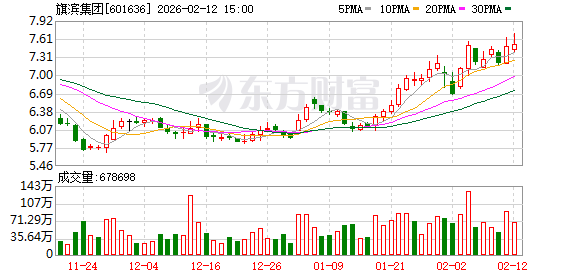
旗滨集团:可转债完成转股可增强公司资本实力,优化资本结构
Zheng Quan Ri Bao· 2026-02-12 10:14
Core Viewpoint - The company aims to enhance its capital strength and optimize its capital structure through the completion of convertible bond conversions, which will lower its debt ratio and reduce future principal and interest expenses, thereby decreasing financial costs [2] Financing Strategy - The company is applying for the registration of short-term financing bonds and medium-term notes to diversify its direct financing channels, optimize its financing structure, and enhance cash flow security and operational flexibility [2] - The financing will not lead to a significant increase in the overall financing scale or alter the company's established investment scale and capital expenditure plans [2] Market Conditions - The company plans to issue financing instruments during a period of low market interest rates to effectively lock in low-cost funds, which will save on financial expenses and improve financial stability [2] - This strategy is expected to further reduce the concentration risk of the company's financing and enhance its risk resistance capabilities, contributing to high-quality sustainable development [2]
旗滨集团:推进芯片封装玻璃研发及合作,属于公司聚焦高端材料的产业延伸和长期战略布局的重点探索方向之一
Zheng Quan Ri Bao· 2026-02-12 10:14
Core Viewpoint - Qibin Group is focusing on the research and development of chip packaging glass as part of its long-term strategic layout in high-end materials, currently in the sample testing phase with no substantial products or revenue generated yet [2] Group 1: Business Development - The chip packaging glass R&D and collaboration is a key exploration direction for the company [2] - The business is still in the sample testing stage and has not yet produced any substantial products or revenue [2] Group 2: Financial Impact - Following the early redemption of convertible bonds, the company's total share capital will increase to 2,958,653,728 shares, which may dilute earnings per share in the short term [2] - The redemption enhances the company's capital strength, optimizes its capital structure, reduces the debt ratio, and lowers future principal and interest expenses, thereby improving financial capabilities and risk resistance [2] Group 3: Corporate Governance - The company adheres to a principle of prudent, transparent, and compliant disclosure, treating R&D dynamics and bond redemption as independent matters [2] - There are no violations of information disclosure or harm to the interests of minority shareholders [2]
旗滨集团:截至2026年1月31日公司的股东数是93974户
Zheng Quan Ri Bao· 2026-02-12 10:13
Group 1 - The company, Qibin Group, reported that as of January 31, 2026, the number of its shareholders is 93,974 [2]
十万亿化债资金开闸!财政组合拳重塑建材板块逻辑,建材ETF(159745)早周期配置窗口开启
Sou Hu Cai Jing· 2026-02-12 03:28
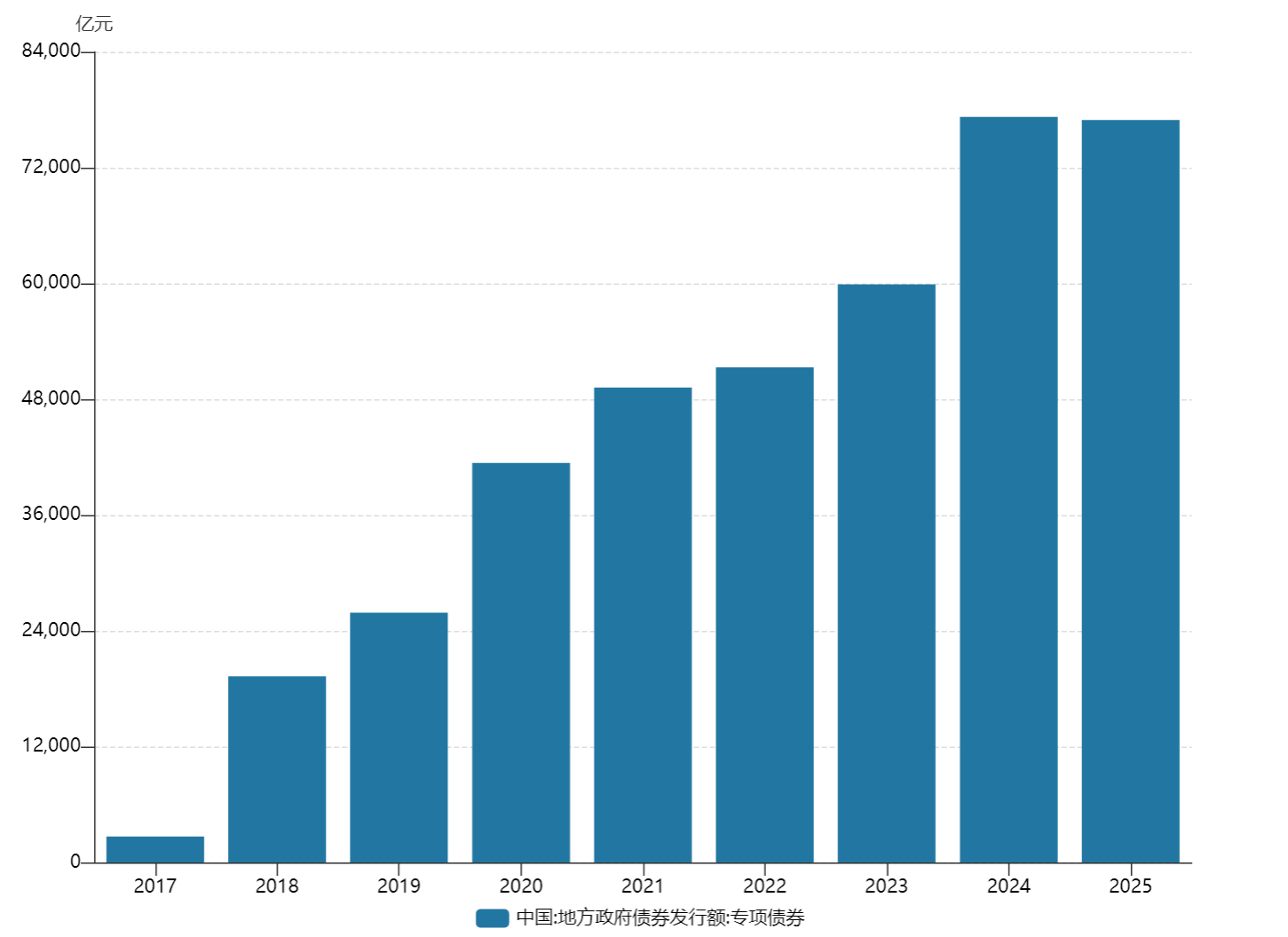
Core Viewpoint - The construction materials industry is experiencing a sustainable growth momentum due to unprecedented debt resolution actions, which are expected to improve market expectations and drive investment recovery in infrastructure and real estate sectors [1] Fiscal Perspective - The current debt resolution measures, including debt swaps and the expansion of special bonds, have systematically alleviated liquidity constraints for local governments, improving fiscal space for infrastructure investments [1] - Special bonds issued by local governments have been increasing annually since 2017, with projections for 2024 and 2025 to exceed 7 trillion yuan, and the total issuance in 2025 expected to surpass 10 trillion yuan for the first time in history [1][4] Infrastructure Investment - The issuance of special bonds is expected to lead to a significant increase in construction activity in transportation, municipal, and water conservancy sectors, with a projected surge in physical work volume in the first half of 2025 [4][6] - Despite a decline in infrastructure investment growth, the sector still holds a significant share of fixed asset investment, indicating its critical role in the overall economy [4] Policy Transition - The policy environment is shifting from "debt replacement" to "investment stimulation," which is likely to further enhance demand for construction materials [5] Demand Dynamics - The demand structure for construction materials is changing, with traditional materials benefiting from infrastructure support and renovation materials gaining from the demand for upgrading existing properties [6] - The dual drivers of infrastructure and real estate are expected to provide a solid foundation for the construction materials sector during this debt resolution cycle [6] Profitability and Market Outlook - The profitability of the cement industry is recovering, with expectations of improved margins due to supply-side adjustments and a favorable demand outlook from real estate policies [8] - The construction materials sector is characterized by high cash flow and potential for stable dividends, with forecasts indicating overall profit recovery by 2026 [8] Investment Opportunities - The construction materials ETF (159745) tracks the performance of the construction materials index, providing investors with a tool to efficiently allocate resources in the sector [8][11] - The sector is viewed as a core cyclical investment opportunity, especially in the context of a market shift towards undervalued, high-dividend stocks [11]


财政"万亿级"弹药就位!基建复苏打响估值修复战,建材ETF(159745)锁仓顺周期龙头
Sou Hu Cai Jing· 2026-02-11 09:28
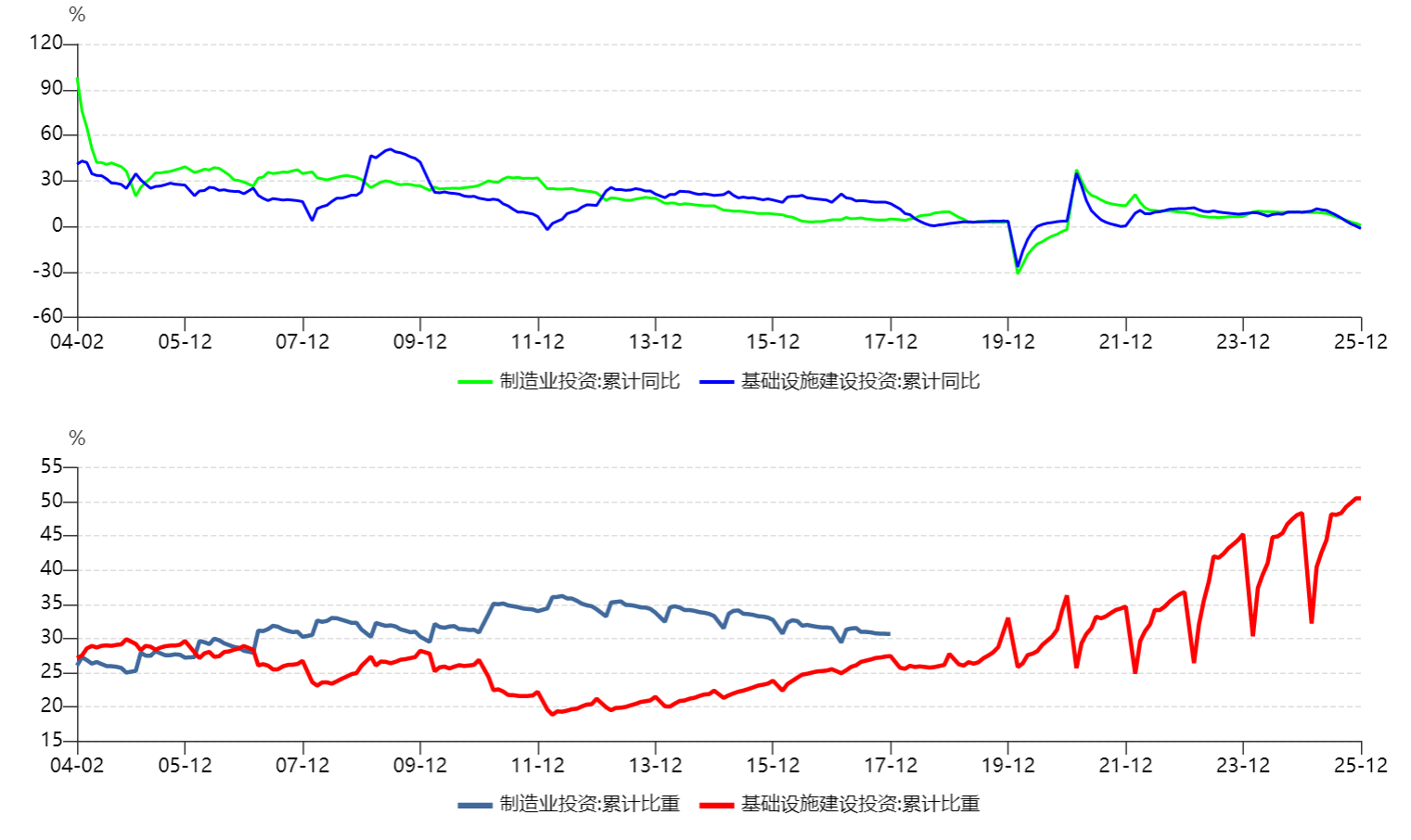
Core Viewpoint - Current infrastructure investment is becoming a crucial support for the economy, with fiscal policies continuously strengthening, leading to a configuration window driven by infrastructure recovery in the building materials sector [1] Group 1: Infrastructure Investment Dynamics - The "14th Five-Year Plan" is entering its final year, accelerating the implementation of major engineering projects, which is providing solid support for the improvement of the industry fundamentals through the demand pull of infrastructure [1] - Since the second half of 2024, active fiscal policies have significantly increased, with the pace of special bond issuance accelerating and the launch of ultra-long special government bonds injecting ample funds into infrastructure investment [1] - Infrastructure investment has a clear policy orientation and planning, unlike the endogenous fluctuations of real estate investment, with 2025 being a key year for the transition between the "14th" and "15th" Five-Year Plans [1][4] Group 2: Investment Trends and Performance - Despite a year-on-year decline in cumulative infrastructure construction investment to -1.48% in December, the cumulative proportion of infrastructure investment remained high at 50.49% in December 2025, reflecting its significant position in fixed asset investment [1][4] - Key areas for current infrastructure investment include urban agglomerations, metropolitan areas, and the connectivity of infrastructure along the "Belt and Road" [4] - Major infrastructure projects are expected to drive demand for cement, pipes, waterproof materials, and other building materials, with a focus on water conservancy and disaster prevention projects [4][5] Group 3: Building Materials Sector Outlook - The building materials industry is currently in a low operating state after inventory destocking, and the concentrated release of infrastructure demand is expected to trigger price elasticity [5] - The profitability transmission from infrastructure recovery is anticipated to drive the development of the building materials sector, with a notable improvement in gross profit margins due to supply-side discipline and cost pressure relief [6] - The building materials sector is characterized by "valuation repair + profit improvement," with the risk of a cliff-like decline in demand eliminated by infrastructure support, leading to a systematic uplift in valuation [8] Group 4: Investment Vehicles and Strategies - The building materials ETF (159745) tracks the CSI All-Share Building Materials Index, covering leading enterprises across the entire industry chain, providing an efficient tool for investors to layout in the building materials sector [8][9] - The top ten holdings in the ETF reflect a high concentration in leading companies across various segments of the building materials industry, accounting for over 60% of the total holdings [9] - The building materials sector is highlighted as a core cyclical investment, with low valuations and high dividends, making it attractive for investors during market shifts towards cyclical stocks [12]



旗滨集团成立科技创投公司,注册资本1亿元
Qi Cha Cha· 2026-02-11 06:36
企查查APP显示,近日,深圳市新旗滨科技创投有限公司成立,注册资本1亿元,经营范围包含:新兴 能源技术研发;国内贸易代理;贸易经纪;销售代理等。企查查股权穿透显示,该公司由旗滨集团 (601636)全资持股。 (原标题:旗滨集团成立科技创投公司,注册资本1亿元) ...
浮法玻璃深度:再平衡,看弹性
Changjiang Securities· 2026-02-11 06:06
Investment Rating - The report maintains a "Positive" investment rating for the industry [14] Core Insights - The glass industry has been experiencing continuous losses since 2025, leading to accelerated cold repairs. By the end of 2025, the production capacity decreased from approximately 160,000 tons/day to 151,000 tons/day, a decline of about 6%. The report anticipates that supply cold repairs will continue, gradually achieving a supply-demand rebalancing. If demand shows marginal improvement, glass prices are expected to exhibit elasticity and sustainability. The report is optimistic about leading companies such as Qibin Group and Xinyi Glass, which have significant cost advantages and sustained growth [3][8][12]. Current Situation: Profit Bottom, Accelerated Cold Repairs - The glass industry has faced significant pressure, with some companies experiencing cash flow losses. The average profitability level has been in continuous loss since 2025, with some companies expected to reach cash flow losses. The report highlights that the cold repair process has accelerated due to these pressures [23][26]. Supply Reduction Potential - The report identifies two main factors affecting glass cold repairs: profitability and furnace age. Currently, production lines over 10 years old account for a total of 18,800 tons/day. Excluding profitable lines from Xinyi and Qibin, as well as automotive and electronic glass lines, the potential cold repair capacity is around 15,000 tons/day. If all these lines are cold repaired, supply could drop to approximately 136,000 tons/day, representing a further 10% reduction from the end of 2025 capacity [9][35]. Supply Recovery Outlook - The report discusses the cautious approach companies may take regarding cold repairs due to high investment costs. For instance, the cold repair cost for an 800 tons/day glass production line typically exceeds 50 million, and upgrades could reach 100 million. The recovery period for investments is estimated to be 1.77 years under optimistic profit scenarios [10][43]. Price Elasticity Post Supply-Demand Rebalancing - The report suggests that under a scenario where real estate demand declines by 10% in 2026, the annual supply needs to decrease to about 145,000 tons/day, a reduction of 0.6 million tons/day from the end of 2025. The ongoing losses in the industry indicate that supply cold repairs will continue, potentially leading to a seasonal price recovery in 2026 [11][57]. Leading Companies: Cost Advantages and Growth - Qibin Group and Xinyi Glass are highlighted as industry leaders with significant profitability advantages. For instance, Qibin's gross profit per unit has been consistently higher than the industry average by 5 yuan/unit since 2020. The report also notes that Qibin has diversified into photovoltaic glass, enhancing its profitability [12][68].

株洲旗滨集团股份有限公司关于控股孙公司完成注册登记的公告
Shang Hai Zheng Quan Bao· 2026-02-10 18:44
证券代码:601636 证券简称:旗滨集团 公告编号:2026-013 株洲旗滨集团股份有限公司 关于控股孙公司完成注册登记的公告 本公司董事会及全体董事保证本公告内容不存在任何虚假记载、误导性陈述或者重大遗漏,并对其内容 的真实性、准确性和完整性承担法律责任。 一、注册登记事由 为统筹优化光伏玻璃业务的供应链管理,株洲旗滨集团股份有限公司(以下简称"公司")于2025年12月 18日召开第六届董事会第九次会议,审议通过了《关于控股子公司投资设立深圳旗滨新能源科技有限公 司的议案》。同意公司控股子公司湖南旗滨光能科技有限公司(以下简称"旗滨光能")在深圳市宝安区 投资设立深圳旗滨新能源科技有限公司(暂定名,工商管理部门最终核准的名称为"深圳市旗滨新能源 管理有限公司",以下简称"深圳新能源")。具体内容详见公司于2025年12月19日在《上海证券报》 《证券时报》《中国证券报》《证券日报》以及上海证券交易所网站(www.sse.com.cn)披露的相关公 告(公告编号:2025-143)。 二、新设公司注册登记情况 近日,公司完成了深圳新能源的注册登记,并取得了《营业执照》。具体登记信息如下: 1、公司名称: ...
建材行业周报:关注春节后的涨价预期与地产催化
GUOTAI HAITONG SECURITIES· 2026-02-10 13:30
Investment Rating - The report assigns an "Accumulate" rating for the building materials industry [5] Core Insights - The report emphasizes the expectation of price increases post-Spring Festival and the potential catalyst from the real estate sector. It highlights that the consumption building materials sector may begin to show fundamentals independent of real estate from 2025-2026, with a focus on the resilience of the real estate market after the Spring Festival [2][7] - The report recommends leading companies in the consumption building materials sector that have independent growth logic and sufficient dividend valuation support, particularly in the waterproof materials sub-sector [5][7] Summary by Sections Building Materials Industry Investment Strategy - The consumption building materials sector is anticipated to benefit from potential macroeconomic improvements, with a focus on the resilience of the real estate market post-Spring Festival. The report highlights the importance of observing second-hand housing transactions for signs of market recovery [7] - Recommended companies include Oriental Yuhong, Beixin Building Materials, Weixing New Materials, and others that are expected to perform well due to their growth strategies and market positions [7] Market Review - From February 2 to February 6, 2026, the building materials sector increased by 0.70%, with specific segments like glass manufacturing rising by 5.32% [10] - The report notes significant individual stock movements, with companies like Hanjian Heshan and Jinjing Technology showing notable weekly gains [17] Cement Industry - The national cement market price decreased by 1% week-on-week, with significant price drops in regions like Henan and Hubei. The average shipment rate for cement companies fell by approximately 8 percentage points [24][25] - The report anticipates a stabilization in cement prices as the market enters a holiday period, with a focus on the execution of production restrictions in 2026 [7][24] Glass Industry - The average price of domestic float glass increased to 1154.49 RMB/ton, reflecting a week-on-week rise of 9.69 RMB/ton. However, demand is expected to weaken as downstream processing plants shut down for the holiday [42] - The report recommends leading companies in the glass sector, including Fuyao Glass and Xinyi Glass, due to their strong market positions and dividend yields [42][43] Fiberglass Industry - The report indicates that the fiberglass market is experiencing price increases, particularly in the electronic yarn segment, driven by tight supply and steady demand [55] - Recommended companies in this sector include China Jushi and Zhongcai Technology, which are expected to benefit from structural demand upgrades [55]