CNNP(601985)

Search documents
全球首个双堆耦合核能综合利用项目在江苏连云港开工
Zhong Guo Jing Ji Wang· 2026-01-19 08:55
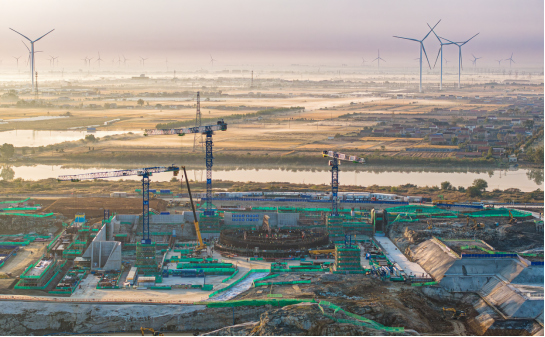
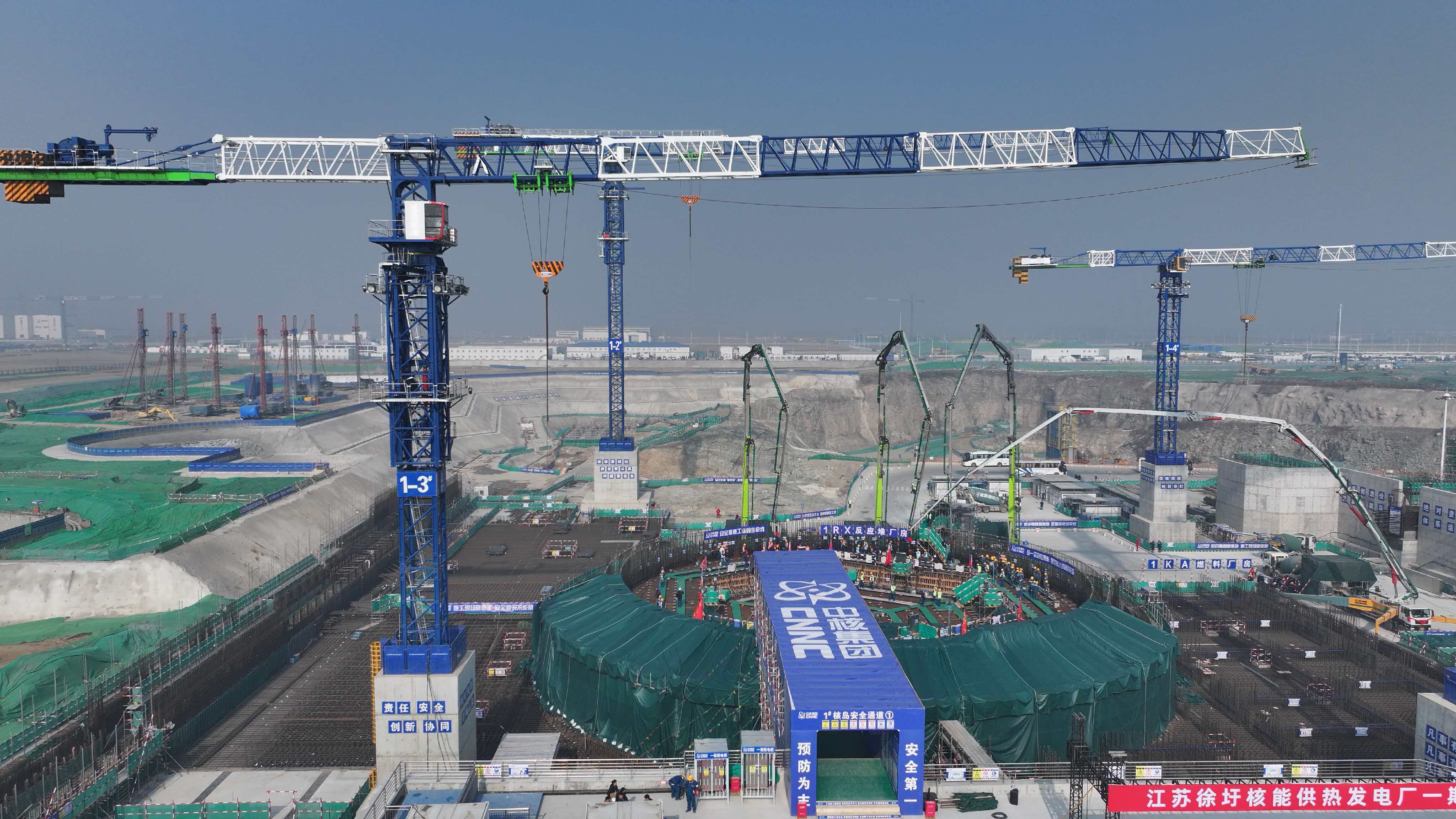
Core Viewpoint - The China National Nuclear Corporation (CNNC) has made a significant breakthrough in the nuclear energy sector with the commencement of concrete pouring for the nuclear island of the Jiangsu Xuwei Nuclear Heating Power Plant, marking the start of the world's first large-scale coupling project between nuclear energy and the petrochemical industry, transitioning China's nuclear energy focus from primarily electricity generation to diversified supply [1][4]. Group 1: Project Overview - The Jiangsu Xuwei Nuclear Heating Power Plant is the world's first project to couple pressurized water reactors with high-temperature gas-cooled reactors, and it is also the first commercial promotion project of high-temperature gas-cooled reactors globally [4]. - The project will primarily supply industrial heating while also providing electricity, utilizing China's independently developed third-generation nuclear technology, Hualong One, and fourth-generation high-temperature gas-cooled reactor technology [4]. - The first phase of the project plans to construct two Hualong One units and one high-temperature gas-cooled reactor unit, which will supply 32.5 million tons of industrial steam annually and generate over 11.5 billion kilowatt-hours of electricity, significantly reducing coal consumption and carbon dioxide emissions [4]. Group 2: Environmental Impact and Energy Transition - The project is expected to reduce standard coal consumption by 7.26 million tons and decrease carbon dioxide emissions by 19.6 million tons annually, supporting the green transformation of the petrochemical industry in the Yangtze River Delta region [4]. - The promotion of carbon peak and carbon neutrality is a solemn commitment from China, with nuclear power recognized as a high-quality and efficient clean energy source, essential for achieving sustainable development [7]. - CNNC has established itself as a leader in clean energy, operating 27 nuclear power units and having 18 units under construction or approved, with a total installed capacity of 46.859 million kilowatts [7].


公用环保202601第3期:山西省启动2026年增量新能源项目机制电价竞价工作,多家电力公司披露2025年经营数据
Guoxin Securities· 2026-01-19 08:37
Investment Rating - The report maintains an "Outperform" rating for the public utility and environmental sectors [6][8]. Core Views - The report highlights the launch of the 2026 incremental renewable energy project pricing mechanism in Shanxi Province, with a bidding range of 0.2-0.32 CNY/kWh and a total bidding volume of 9.576 billion kWh, including 3.527 billion kWh from wind power and 6.049 billion kWh from solar power [2][14]. - It notes that over 26 cities in China have raised water prices in 2025, with adjustments typically ranging from 10% to 30%, driven by rising operational costs and the need for sustainable pricing mechanisms [3][17][19]. Summary by Sections Market Review - The Shanghai Composite Index rose by 0.57%, while the public utility index increased by 0.06% and the environmental index by 0.27% [13][22]. - Within the electricity sector, thermal power increased by 0.35%, while hydropower decreased by 1.76%, and renewable energy generation rose by 1.61% [13][23]. Important Events - The Shanxi pricing mechanism for renewable energy projects has a total scale of 95.76 billion kWh, with a bidding upper limit of 0.32 CNY/kWh and a lower limit of 0.2 CNY/kWh, effective for 10 years [2][14]. Investment Strategy - Recommendations include major thermal power companies like Huadian International and Shanghai Electric, as well as leading renewable energy firms such as Longyuan Power and Three Gorges Energy [4][20]. - The report suggests that the nuclear power sector will maintain stable profitability, recommending companies like China Nuclear Power and China General Nuclear Power [4][20]. - In the environmental sector, it advises focusing on companies with strong cash flow in water and waste management, such as China Everbright Environment and Shanghai Industrial Holdings [21]. Key Company Earnings Forecasts - Huadian International (600027.SH) is rated "Outperform" with an expected EPS of 0.46 CNY for 2024 and a PE ratio of 10.1 [8]. - Longyuan Power (001289.SZ) is also rated "Outperform" with an expected EPS of 0.75 CNY for 2024 and a PE ratio of 20.8 [8]. - China Nuclear Power (601985.SH) is rated "Outperform" with an expected EPS of 0.46 CNY for 2024 and a PE ratio of 20.9 [8].





中国核电装机规模位列全球核电企业第三——加快建设世界一流核能企业
Ren Min Ri Bao· 2026-01-18 22:13
Core Insights - The commercial operation of the "Hualong One" Zhangzhou Nuclear Power Unit 2 on January 1, 2026, marks the completion of the first phase of the Zhangzhou Nuclear Power project, reflecting China's commitment to national strategies and high-quality development in the nuclear sector [2] - China National Nuclear Power has achieved significant milestones during the 14th Five-Year Plan, including becoming the third-largest nuclear power company globally in terms of installed capacity [2][4] Group 1: Safety and Operational Achievements - The Qinshan Second Nuclear Power Plant successfully replaced the generator stator using a roof-opening hoisting method, marking a first in the country for simultaneous replacement of large turbine and generator stators, which enhances the unit's power output [3] - The Qinshan Nuclear Power Plant has been operational for over 30 years, with its Unit 1 being the first in China to receive a 20-year lifespan extension, boosting confidence in the nuclear sector [3] - The "Hualong One" has achieved over 1,000 days of continuous safe operation, delivering more than 37 billion kilowatt-hours of clean electricity to society [3] Group 2: Capacity and Development - As of January 1, 2026, China National Nuclear Power operates 27 units with a total installed capacity of 26.212 million kilowatts, and has 18 units under construction or approved for construction with a capacity of 20.647 million kilowatts [4] - The company has also invested nearly 19 billion yuan in research and development during the 14th Five-Year Plan, with nearly 1,500 patent applications and over 4,000 granted patents, driving technological advancements in the nuclear sector [5] Group 3: Technological Innovations - The "Linglong One" project, the world's first land-based commercial modular small reactor, successfully completed its cold test, showcasing China's capabilities in new nuclear energy system design and high-end equipment manufacturing [5] - The "Heqi One" project, which began operations in June 2024, is China's first large-scale industrial nuclear energy steam supply demonstration project, expected to provide 4.8 million tons of industrial steam annually and reduce carbon emissions by 1.07 million tons [6] Group 4: Integration of Party Building and Operations - China National Nuclear Power has emphasized the integration of party building with production operations, establishing a high-quality party building system to ensure the safe and high-quality completion of major maintenance tasks [7] - The company aims to enhance core functions and competitiveness across six dimensions, including safety, operational efficiency, and technological innovation, to accelerate the development of a world-class nuclear energy enterprise [7]
我国首台!取得重要突破
中国能源报· 2026-01-18 05:38
Core Insights - The first domestically developed series-type high-energy hydrogen ion implanter (POWER-750H) in China has successfully achieved its output, reaching internationally advanced levels in core indicators [1] - This breakthrough signifies that China has fully mastered the entire chain of research and development technology for series-type high-energy hydrogen ion implanters, overcoming a critical link in the power semiconductor manufacturing chain [2] - The development of this technology is expected to enhance China's self-sufficiency in high-end manufacturing equipment and ensure the security of the industrial chain [1][2] Industry Context - Ion implanters, along with photolithography machines, etching machines, and thin-film deposition equipment, are considered the "four core equipment" in semiconductor manufacturing and are essential for the industry [3] - Historically, China has relied entirely on imports for high-energy hydrogen ion implanters, which has been a bottleneck for upgrading key technology industries due to high technical barriers and development difficulties [3] - The China Institute of Atomic Energy has leveraged decades of experience in nuclear physics accelerator technology to solve various challenges, achieving complete mastery of the design capabilities from fundamental principles to integrated systems [3]

中国首台串列型高能氢离子注入机成功出束 填补“中国芯”关键拼图
Xin Lang Cai Jing· 2026-01-17 10:31
Core Viewpoint - The successful development of China's first serial high-energy hydrogen ion implanter (POWER-750H) by China National Nuclear Corporation (CNNC) signifies that China has fully mastered the entire chain of research and development technology for this equipment, which is crucial for the semiconductor manufacturing industry [1] Group 1: Technology and Development - The core indicators of the POWER-750H have reached an internationally advanced level, marking a significant achievement in the integration of nuclear technology and the semiconductor industry [1] - The successful development of this ion implanter is expected to enhance China's self-sufficiency in key areas such as power semiconductors, thereby strengthening the security of the industrial chain [1] Group 2: Market Context - Historically, China has relied entirely on foreign imports for high-energy hydrogen ion implanters, which has been a bottleneck for the upgrade of strategic industries due to high technical barriers and development difficulties [1] - The research institute has leveraged decades of experience in nuclear physics accelerators to overcome various challenges, thus breaking the technological blockade and long-standing monopoly of foreign companies in this field [1]
我国自主研发注射用硼药进入临床试验阶段
Ren Min Wang· 2026-01-16 22:34
Core Viewpoint - The article highlights the approval of the boron-10 injection by China's National Medical Products Administration, marking the entry into Phase I clinical trials for a novel cancer treatment method known as Boron Neutron Capture Therapy (BNCT) [1] Group 1: Drug Development - The boron-10 injection has received the Clinical Trial Approval Notification, allowing it to proceed to Phase I clinical trials [1] - The clinical cooperation project for BNCT is a joint effort involving China National Nuclear Corporation, Lanzhou University, Fujian Ruisi Technology, and Fujian Medical University Union Hospital [1] Group 2: Treatment Efficacy - BNCT is a targeted radiation therapy that shows promising results for recurrent, infiltrative, and locally metastatic tumors, particularly for recurrent gliomas, head and neck tumors, malignant melanomas, and malignant meningiomas [1] - Initial clinical trials have also shown effectiveness for other common cancers such as liver cancer, lung cancer, and prostate cancer [1] Group 3: Mechanism and Potential - The therapy's mechanism relies on the specific affinity of boron-10 compounds for cancer cells, which allows for targeted destruction of tumor cells while protecting surrounding healthy tissue [1] - The approval of the boron-10 injection is expected to accelerate the industrialization of BNCT, positioning it as a breakthrough direction in cancer treatment [1]
央企重大项目开工“赶前抓早”
Zheng Quan Ri Bao· 2026-01-16 16:26
Group 1 - The core point of the news is the commencement of major infrastructure projects by central enterprises in China, signaling a strong push for investment and development in various sectors, including energy and construction [1][2][3] Group 2 - China National Nuclear Corporation's Jiangsu Xuwei Nuclear Energy Heating Power Plant has begun concrete pouring for its first unit, marking the start of the world's first large-scale coupling project between nuclear energy and the petrochemical industry [1] - The first phase of the project plans to construct two Hualong One reactors and one high-temperature gas-cooled reactor, which will supply 32.5 million tons of industrial steam annually and generate over 11.5 billion kilowatt-hours of electricity [1] - The project is expected to reduce coal consumption by 7.26 million tons and cut carbon dioxide emissions by 19.6 million tons each year, providing high-quality low-carbon industrial steam to the Lianyungang petrochemical industry base [1] Group 3 - In January, China Energy Investment Corporation's Ningxia Tengger 1.5 million kilowatt wind power project is set to officially commence construction, with a total installed capacity of 1.5 million kilowatts and plans to install 209 wind turbines [2] - The company also plans to start construction on the Dadu River Danba Hydropower Station in the first quarter of this year [2] Group 4 - State Grid Corporation of China announced that its fixed asset investment during the 14th Five-Year Plan period is expected to reach 4 trillion yuan [3] - The concentrated launch of major projects by central enterprises is seen as a clear signal of increased investment, which is expected to have multiplier effects on economic stability and growth [3] - These investments are anticipated to provide strong momentum for China's economy in the current year and lay a foundation for future economic transformation and competitiveness over the next five to ten years [3]

“十五五”首台核电机组,今日开工!
Zhong Guo Dian Li Bao· 2026-01-16 13:53
Core Viewpoint - China Nuclear Power Co., Ltd. announced that the first concrete pour for the nuclear island of Unit 1 of the Jiangsu Xuwei Nuclear Heating Power Plant Phase I is scheduled for January 16 [1] Group 1: Project Details - The Unit 1 of the Jiangsu Xuwei Nuclear Heating Power Plant utilizes China's independently developed "Hualong One" nuclear technology [1] - The rated power of the unit is optimized to 1,222 megawatts, compared to the previously disclosed rated power of 1,208 megawatts [1] - The design operational lifespan of the power plant is 60 years [1] Group 2: Company Operations - After the first concrete pour, the number of nuclear power units under construction controlled by China Nuclear Power will be 13, with a total installed capacity of 15,148 megawatts [1]
2026年我国首台核电机组开工建设
Xin Hua Wang· 2026-01-16 11:16
Core Viewpoint - The Jiangsu Xuwei Nuclear Energy Heating Power Plant has commenced the main construction phase with the concrete pouring of the nuclear island for its first unit, marking the first nuclear power unit to start construction in China this year [1]. Group 1: Project Overview - The Jiangsu Xuwei Nuclear Energy Heating Power Plant is a project under China National Nuclear Corporation (CNNC) that innovatively couples pressurized water reactors (PWR) with high-temperature gas-cooled reactors (HTGR) for heating and power generation [1]. - The project primarily focuses on industrial heating while also providing electricity, utilizing China's independently developed third-generation nuclear technology "Hualong One" and fourth-generation HTGR technology [1]. Group 2: Project Impact - Upon completion, the first phase of the project is expected to supply 32.5 million tons of industrial steam annually and generate over 11.5 billion kilowatt-hours of electricity, significantly reducing coal consumption by 7.26 million tons and cutting carbon dioxide emissions by 19.6 million tons [2]. - This project aims to support the large-scale supply of high-quality low-carbon industrial steam to the trillion-level petrochemical industry base in Lianyungang, providing reliable clean energy for the green transformation of the petrochemical industry in the Yangtze River Delta region [2]. Group 3: Broader Industry Context - The green and low-carbon transition of the energy structure is a crucial aspect of achieving carbon peak and carbon neutrality goals [2]. - CNNC currently operates 27 nuclear power units and has 18 units under construction or approved, with a total installed capacity of 46.859 million kilowatts, while also promoting comprehensive nuclear energy utilization in areas such as regional heating, industrial steam/cooling supply, seawater desalination, nuclear hydrogen production, and isotope production [2].
全球首个双堆耦合核能综合利用项目开建
Zhong Guo Neng Yuan Wang· 2026-01-16 09:30
Core Viewpoint - The China National Nuclear Corporation (CNNC) has made significant progress in the comprehensive utilization of nuclear energy, marking the start of construction for the first nuclear power unit during the 14th Five-Year Plan, which integrates nuclear energy with the petrochemical industry, providing a replicable low-carbon transition model for high-energy-consuming industries globally [1][3]. Group 1: Project Overview - The Jiangsu Xuwei Nuclear Heating Power Plant is the world's first project to couple pressurized water reactors with high-temperature gas-cooled reactors, and it is also the first commercial promotion project for high-temperature gas-cooled reactors [3]. - The project will primarily focus on industrial heating while also supplying electricity, utilizing China's independently developed third-generation nuclear technology "Hualong One" and fourth-generation high-temperature gas-cooled reactor technology [3]. - The first phase of the project plans to construct two "Hualong One" units and one high-temperature gas-cooled reactor unit, which will supply 32.5 million tons of industrial steam annually and generate over 11.5 billion kilowatt-hours of electricity [3]. Group 2: Environmental Impact - Upon completion, the project is expected to reduce the consumption of standard coal by 7.26 million tons and cut carbon dioxide emissions by 19.6 million tons annually, supporting the green transition of the petrochemical industry in the Yangtze River Delta region [3]. - The CNNC currently operates 27 nuclear power units and has 18 units under construction or awaiting approval, with a total installed capacity of 46.859 million kilowatts [4]. - The company aims to achieve a cumulative clean energy grid-connected electricity generation of 230.747 billion kilowatt-hours by 2025, actively promoting regional heating, industrial steam/cooling supply, seawater desalination, nuclear hydrogen production, and isotope production [4].