
Bank Of Guiyang(601997)

Search documents
“红包”来了!多地区域性银行入局!
券商中国· 2025-12-11 13:00
Core Viewpoint - The expansion of personal consumption loan interest subsidy policies by regional banks in Guizhou, Sichuan, and Chongqing aims to stimulate local consumption and enhance the competitiveness of regional financial institutions [1][6]. Group 1: Implementation of Subsidy Policies - Regional banks such as Guiyang Bank, Guizhou Bank, and Chengdu Bank have announced the implementation of personal consumption loan interest subsidies, expanding the original 23 financial institutions to include more local banks [1][2]. - The subsidy policies are in response to national calls to boost local consumption, with other provinces expected to follow suit [1][6]. Group 2: Specifics of Subsidy Programs - In Guizhou, the subsidy period is from December 1, 2025, to December 31, 2025, with a maximum subsidy of 3,000 yuan for eligible borrowers [2][4]. - In Chongqing, the subsidy applies to personal consumption loans issued from September 1, 2025, to August 31, 2026, with three local banks included as loan issuers [3][4]. - Chengdu Bank and Chengdu Rural Commercial Bank have set a subsidy cap of 1,500 yuan for borrowers during their policy period [5]. Group 3: Variations in Subsidy Standards - The annual subsidy rate for personal consumption loans in Guizhou and Chongqing is set at 1%, but the maximum subsidy amounts differ, with Guizhou and Chongqing allowing up to 3,000 yuan per borrower [4]. - Chengdu's subsidy cap is lower, at 1,500 yuan, indicating regional differences in subsidy implementation [5]. Group 4: Future Prospects and Market Impact - The introduction of these subsidy policies is expected to create a "national subsidy + local subsidy" synergy, enhancing regional banks' market competitiveness and stimulating local consumption [6][7]. - The policies are seen as a short-term growth opportunity for banks, but long-term sustainability may be challenged due to differences in customer base and risk management capabilities compared to larger banks [7].



多家银行,拟取消监事会
Zhong Guo Zheng Quan Bao· 2025-12-11 04:24
Core Viewpoint - Multiple banks in China, including Zhejiang Commercial Bank and Chongqing Rural Commercial Bank, have announced plans to abolish their supervisory boards, with over 20 banks making similar announcements this year, indicating a significant shift in corporate governance practices in the banking sector [1][2][3]. Group 1: Announcement of Abolishing Supervisory Boards - Zhejiang Commercial Bank and Chongqing Rural Commercial Bank have both passed resolutions to eliminate their supervisory boards, pending approval from their respective shareholder meetings [2]. - The decision aligns with the new Company Law of China, which allows the establishment of an audit committee within the board of directors to assume the functions of the supervisory board [2][3]. - Other banks, such as Ningbo Bank and Guiyang Bank, have also made similar announcements regarding the abolition of their supervisory boards [2]. Group 2: Implications for Corporate Governance - The shift to audit committees is seen as a way to enhance corporate governance efficiency and reduce operational costs, while ensuring the independence and professionalism of oversight [3][4]. - The new structure is expected to clarify responsibilities within the board, aligning incentives and constraints more effectively [3]. - Legal experts suggest that banks should improve the independence and effectiveness of their audit committees by refining internal regulations and ensuring timely access to critical data [4].





“国补+地补”协同发力 区域性银行加入消费贷贴息阵营
Zheng Quan Ri Bao· 2025-12-10 22:32
12月份以来,个人消费贷款财政贴息政策在四川、贵州、重庆加速落地。川黔渝三地相继发布省级贴息 实施细则,贵阳银行、贵州银行、成都银行、成都农商行等区域头部城商行、农商行同步启动业务受 理。这标志着此前未被纳入"国补"经办体系的区域性银行,正式加入消费贷补贴阵营,"国补+地补"的 协同发力格局初步形成。 上海金融与法律研究院研究员杨海平对《证券日报》记者表示,地方消费贷贴息政策是对国家政策的响 应,与"国补"政策形成联动,可以在进一步激活消费方面发挥积极作用。预计其他省份也会跟进,出台 地方版消费贷贴息政策。该政策能够通过贴息的杠杆作用,挖掘消费信贷潜力,活跃消费信贷市场,与 一系列提振消费的政策形成合力。 "地补"接力"国补" 今年8月份,国家层面推出个人消费贷款财政贴息政策,明确6家国有大行、12家全国性股份行等机构 为"国补"经办主体,但未纳入城商行、农商行。而川黔渝三地此次落地的"地补"政策,不仅填补了这一 空白,更在衔接国家政策框架的基础上,结合区域实际形成差异化特色:川黔渝三地均设定1个百分点 的年贴息比例,且该比例不超过贷款合同利率的50%,同时在贴息上限、执行期限、覆盖范围等核心维 度作出差异化 ...
从“国补”到“地补” 消费贷贴息迎来新军
Zhong Guo Zheng Quan Bao· 2025-12-10 22:31
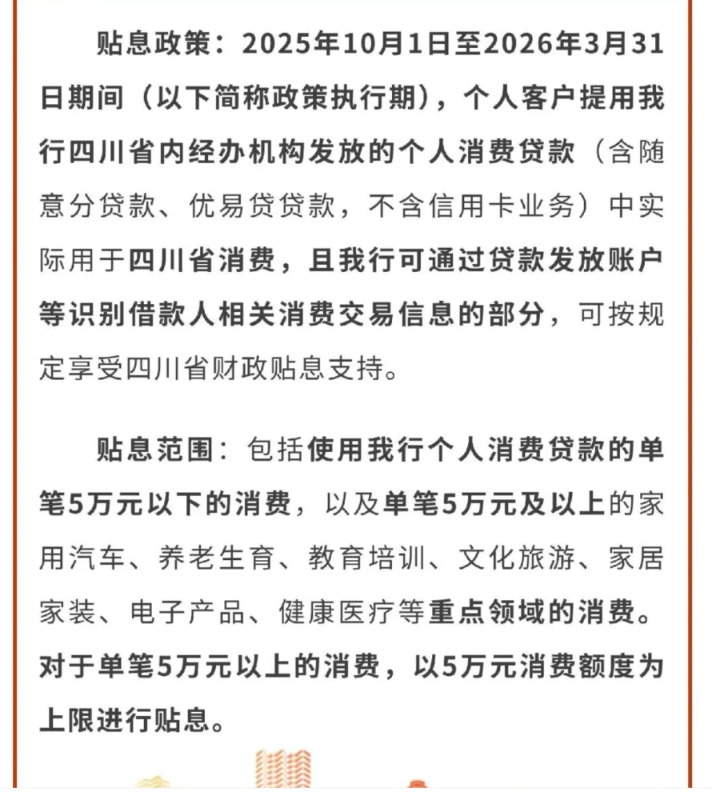
Core Viewpoint - Regional banks in China are leveraging local fiscal support to introduce consumer loan subsidy programs, aiming to reduce the cost of consumer credit and stimulate consumer spending potential [1][2]. Group 1: Introduction of Consumer Loan Subsidies - Since December, banks such as Guizhou Bank and Guiyang Bank have announced personal consumer loan interest subsidy programs to lower residents' credit costs [2]. - The subsidy program is based on guidelines from multiple departments, effective from December 1, targeting eligible consumer loan clients [2]. Group 2: Details of Subsidy Programs - Guizhou Bank and Guiyang Bank's subsidies apply to loans for comprehensive consumption and service industry loans, with specific eligibility criteria tied to the borrower's registered business location [2]. - Chengdu Bank and Chengdu Rural Commercial Bank have also released their subsidy details, with the subsidy period set from October 1, 2025, to March 31, 2026 [2]. Group 3: Subsidy Limits and Application Process - The maximum subsidy for each borrower at Guizhou Bank and Guiyang Bank is capped at 3,000 yuan, with specific limits for smaller loans [3]. - The application process is voluntary and operates on a first-come, first-served basis, with a clear requirement for supporting documentation [3]. Group 4: Benefits for Local Economies - The subsidy initiative is viewed as a "triple win" for local economies, effectively utilizing fiscal resources to stimulate consumer spending while allowing banks to expand their customer base [4][5]. - Industry experts anticipate that more regions will adopt similar consumer loan subsidy policies tailored to their fiscal conditions and market characteristics [5].
从“国补”到“地补”消费贷贴息迎来新军
Zhong Guo Zheng Quan Bao· 2025-12-10 20:17
Core Viewpoint - Regional banks in China are leveraging local fiscal support to introduce consumer loan subsidy programs, aiming to reduce the cost of consumer credit and stimulate consumer spending [1][4]. Group 1: Consumer Loan Subsidy Programs - Since December, banks such as Guizhou Bank and Guiyang Bank have announced consumer loan interest subsidy initiatives to help lower residents' credit costs and boost consumption potential [1]. - The consumer loan "local subsidy" program offers more regional flexibility compared to the broader "national subsidy," providing new growth opportunities for regional banks and stimulating local consumption markets [1][4]. Group 2: Specifics of the Subsidy Programs - Guizhou Bank and Guiyang Bank have set a subsidy cap of 3,000 yuan per borrower, with a maximum of 1,000 yuan for small loans under 50,000 yuan [2]. - Chengdu Bank and Chengdu Rural Commercial Bank have a lower cap of 1,500 yuan for total consumer loan subsidies, with a maximum of 500 yuan for small loans [3]. Group 3: Application Process and Impact - The subsidy application process is voluntary and operates on a first-come, first-served basis, with limited funding available based on provincial fiscal allocations [3]. - The implementation of these subsidy programs is seen as a "triple win" for local governments, banks, and consumers, effectively utilizing fiscal resources to stimulate consumption and enhance banking business [4].
地方消费贷“红包”来了,川贵渝多家银行已发公告
Bei Jing Ri Bao Ke Hu Duan· 2025-12-10 08:52
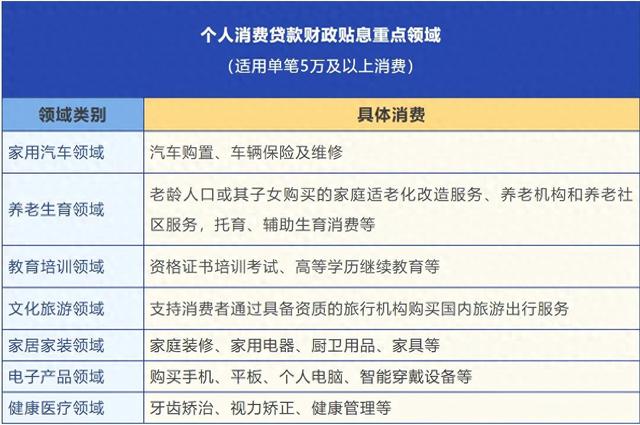
转自:北京日报客户端 继消费贷"国补",近日四川省、贵州省以及重庆市相继落地个人消费贷款财政贴息政策,三地均设定1 个百分点的年贴息比例,且该比例不超过贷款合同利率的50%。 据中新经纬不完全统计,截至发稿时,贵州银行、贵阳银行、成都银行、成都农商行等银行已发布相关 业务受理公告,重庆银行、重庆三峡银行也表示,正在制定贴息细则、实施系统改造。这也意味着,消 费贷贴息的主体进一步扩容至区域性银行。 地方接力消费贷补贴 今年8月,财政部、中国人民银行、国家金融监督管理总局联合印发《个人消费贷款财政贴息政策实施 方案》(下称实施方案),也被称为金融领域的"国补"。自9月1日正式落地以来,已实施三个月有余。近 期,多地跟进出台地方个人消费贷款贴息政策。 12月3日,重庆市财政局、中国人民银行重庆市分行、国家金融监督管理总局重庆监管局联合发布《关 于做好个人消费贷款财政贴息工作的通知》(下称通知)。其中提到,2025年9月1日至2026年8月31日期 间,居民个人使用贷款经办机构发放的个人消费贷款(不含信用卡业务)中实际用于消费,且贷款经办机 构可通过贷款发放账户等识别借款人相关消费交易信息的部分,可按规定享受贴息政策 ...
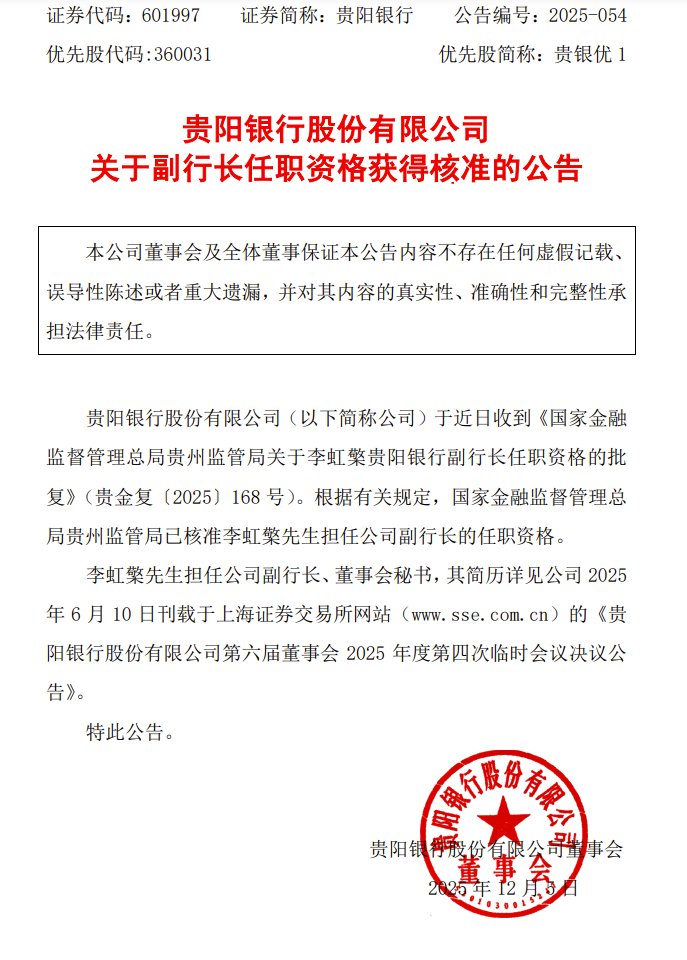
贵阳银行李虹檠副行长任职资格获核准
Jin Rong Jie· 2025-12-10 08:40
近日,贵阳银行发布公告称,国家金融监督管理总局贵州监管局已正式批复,核准李虹檠担任该行副行 长的任职资格。 公开资料显示,李虹檠为汉族,1982 年 10 月出生于四川南江,中共党员,拥有研究生学历、管理学博 士学位,是高级经济师,同时持有上交所董事会秘书任职资格证书。其职业履历覆盖银行战略管理、资 本运作及综合管理等多个领域:早年曾任职于广发银行总行战略管理部,后加入贵阳银行,历任董事会 办公室战略管理岗、主管、主任助理、副主任(主持工作)、主任,以及证券事务代表;还曾兼任广元 市贵商村镇银行董事、贵阳贵银金融租赁有限责任公司党委书记、董事长。 银行频道更多独家策划、专家专栏,免费查阅>> 责任编辑:山上 ...
“国补”引路,“地补”接力!个人消费贷财政贴息精准扩围
2 1 Shi Ji Jing Ji Bao Dao· 2025-12-10 08:36
Core Viewpoint - The personal consumption loan interest subsidy policy is accelerating from a national level to local implementation, with regions like Sichuan, Guizhou, and Chongqing actively rolling out their own subsidy measures to stimulate consumption and reduce financing costs for residents [1][2][7]. Group 1: Policy Implementation - The "local subsidy" policies in Sichuan, Guizhou, and Chongqing have been rapidly launched since December, creating a regional synergy effect [2]. - Chongqing's policy emphasizes broad coverage and a long execution period, with a subsidy cap of 3,000 yuan for eligible cumulative consumption of 300,000 yuan [3]. - Sichuan's approach focuses on short-term precision, with a subsidy cap of 1,500 yuan for the same cumulative consumption amount, and funds must be used within the province [4]. - Guizhou's policy offers high subsidies, matching the national standard with a cap of 3,000 yuan, but has a shorter execution period [5]. Group 2: Market Impact - The collaboration between national and local subsidy policies is expected to enhance the competitiveness of regional banks, stimulate local consumption, and lower financing costs for residents [7][9]. - The introduction of local policies is anticipated to create structural changes in the consumer finance market, leading to a reduction in consumer loan interest rates and stimulating demand [10]. - Local banks are expected to leverage the policy to attract price-sensitive customers and expand their coverage in the inclusive finance sector [8]. Group 3: Risk Management - Financial institutions are advised to implement multiple risk control measures to prevent potential arbitrage, including automatic identification of eligible transactions and setting limits on subsidy amounts [5][6]. - The operational guidelines for subsidy agreements emphasize the need for borrowers to provide valid proof of consumption transactions to ensure compliance [6].
现货黄金站上4200美元/盎司;区域性银行加入消费贷贴息阵营| 金融早参
Mei Ri Jing Ji Xin Wen· 2025-12-10 00:57
| 2025年12月10日星期三 | 12月9日,中国再保险发布公告,公司于近日收到国家金融监督管理总局关于庄乾志先生任职资格的批 复。根据该批复,国家金融监督管理总局于2025年12月8日正式核准庄乾志先生担任董事会董事长的任 职资格,庄乾志先生自该日起正式履行董事长职务,任期至第五届董事会任期届满为止,任期届满可以 连选连任。 NO.4区域性银行加入消费贷贴息阵营 据证券日报,12月份以来,个人消费贷款财政贴息政策在四川、贵州、重庆加速落地。川黔渝三地相继 发布省级贴息实施细则,贵阳银行、贵州银行、成都银行、成都农商行等区域头部城商行、农商行同步 启动业务受理。这标志着此前未被纳入"国补"经办体系的区域性银行,正式加入消费贷补贴阵营,"国 补+地补"的协同发力格局初步形成。 NO.1央行开展1173亿元7天期逆回购操作 12月9日,央行公开市场开展1173亿元7天期逆回购操作,操作利率1.40%。Wind数据显示,当日有1563亿 元逆回购到期。 点评:央行今日开展1173亿元7天期逆回购操作的举措显示出其维持市场流动性稳定的意图。逆回购作 为短期的市场操作工具,能够有效缓解市场资金紧张状况,降低市场利率 ...
区域性银行 加入消费贷贴息阵营
Xin Lang Cai Jing· 2025-12-09 00:36
Core Viewpoint - The implementation of local consumer loan interest subsidy policies in Sichuan, Guizhou, and Chongqing marks a significant step in enhancing consumer credit support, creating a synergistic effect with national policies to stimulate consumption [1][7]. Group 1: Policy Implementation - Since December, personal consumer loan interest subsidy policies have accelerated in Sichuan, Guizhou, and Chongqing, with local banks starting to process these loans [1][7]. - The local subsidy policies fill the gap left by the national "subsidy" program, allowing regional banks to participate in consumer loan subsidies [1][8]. - The annual subsidy rate is set at 1%, not exceeding 50% of the loan contract interest rate, with differentiated arrangements based on regional consumption needs [1][8]. Group 2: Specifics of Subsidy Policies - In Sichuan, the subsidy policy covers loans under 50,000 yuan and key areas like automobiles and education, with a maximum cumulative subsidy of 1,500 yuan for eligible consumption amounts of 300,000 yuan [2][9]. - Guizhou's policy has a similar subsidy rate but offers a higher cumulative subsidy of up to 3,000 yuan for the same consumption amount, with a maximum of 1,000 yuan for loans under 50,000 yuan [3][10]. Group 3: Future Expectations - More provinces are expected to follow suit in implementing consumer loan subsidy policies, particularly in regions with weak consumption recovery [4][12]. - The policies are anticipated to effectively lower consumer credit costs and directly boost local consumption, with manageable fiscal burdens for local governments [4][12]. Group 4: Industry Impact - The introduction of local policies is expected to create structural effects, further lowering consumer credit rates and stimulating demand [5][12]. - Regional banks will benefit from a more competitive landscape, as these policies provide them with tools to differentiate themselves from larger banks [5][12]. - The policies are likely to encourage financial institutions to innovate products tailored to local consumption characteristics, enhancing the diversity of consumer finance support [5][12]. Group 5: Challenges for Regional Banks - While the policies present growth opportunities for regional banks, they also face challenges in customer base, risk control technology, and product capabilities compared to larger banks [6][13]. - Relying solely on interest subsidies may not ensure long-term competitiveness, as the policies have specific timeframes and regional limitations [6][13].