Beijing Jingwei Hirain Technologies (688326)

Search documents
经纬恒润物理区域控制器(ZCU)技术白皮书
经纬恒润· 2026-02-09 09:00
Investment Rating - The report does not explicitly state an investment rating for the industry or the company. Core Insights - The automotive industry is undergoing a significant transformation, shifting from a "distributed" to a "domain-centralized" and ultimately to a "central computing + zonal control" architecture. The Zonal Control Unit (ZCU) is identified as a key node in this evolution, marking an important step towards industry intelligence [9][10]. Summary by Sections 1. Traditional Architecture Constraints: The "Impossible Triangle" of Intelligent Transformation - The traditional distributed electronic architecture faces challenges in balancing computing power and cost, functionality and safety, and innovation and inertia, leading to inefficiencies [12]. - The traditional architecture results in over 100 Electronic Control Units (ECUs) in high-end vehicles, creating "information silos" and inefficient computing resource allocation, which increases costs and complexity [13]. - The lengthy development cycles of 3-5 years for new features hinder the automotive industry's ability to respond quickly to market changes [13]. - The architecture's limitations restrict innovation, as Tier 1 suppliers dominate ECU function development, making it difficult for manufacturers to achieve product differentiation [14]. 2. Architectural Innovation: The Necessity and Core Value of ZCU - The automotive industry requires a comprehensive overhaul of its architecture, with the "central computing + zonal control" model seen as a future solution, where ZCU plays a pivotal role [17]. - ZCU simplifies wiring, reduces costs and weight by consolidating local wiring through a high-speed Ethernet backbone [17]. - It enables hardware standardization and software decoupling, providing a foundation for "software-defined vehicles" [17]. - ZCU supports centralized power management, enhancing energy efficiency and replacing traditional fuse and relay boxes [17]. 3. Systematic ZCU Solutions by the Company: Implementation Path for Architectural Reconstruction - The company's ZCU solution addresses the computing power and cost paradox, innovation inertia, and functionality and safety challenges, providing a clear path for automotive companies to reconstruct their architectures [19]. - ZCU integrates various control functions within specific physical areas, significantly reducing the number of ECUs and wiring complexity [21]. 4. Market Leadership: Million-Unit Deliveries and Industry Benchmark Status - The company has delivered over one million ZCUs, achieving the highest market share in China, marking a significant milestone in the industry's acceptance of the zonal control architecture [51][52]. - The rapid production timeline demonstrates the maturity of the ZCU technology and its role in the transition to next-generation electronic architectures [55]. 5. Future Directions: Evolution Path of ZCU Technology and Industry Collaboration - The ZCU's strategic importance will continue to grow as the automotive electronic architecture evolves towards "central computing + zonal control," with trends towards standardization and platformization [57]. - The company actively participates in industry standard-setting, promoting collaborative development and resource efficiency [58].

OptimusV3发布在即,海外发电机组需求大增,关注燃气轮机及机器人链公司
Orient Securities· 2026-02-07 09:28
Investment Rating - The industry investment rating is Neutral (maintained) [6] Core Insights - The upcoming release of Tesla's Optimus V3 is expected to catalyze the industry, with a focus on companies involved in the humanoid robot supply chain and those with significant advancements in autonomous driving technology [9] - The demand for gas turbines and generator sets is anticipated to surge due to increased overseas data center construction, benefiting companies in the gas turbine and robotics supply chains [9] - Companies with strong alpha characteristics in the automotive and parts sector are expected to withstand industry risks and achieve revenue and profit growth [3] Summary by Sections Investment Recommendations and Targets - Strong alpha automotive and parts companies are expected to resist industry risks and achieve revenue and profit growth; focus on advanced autonomous driving supply chains, data center liquid cooling, and gas turbine industries [3] - Suggested companies to watch include: - Humanoid robot-related: Xinquan Co., Ltd. (603179, Buy), Top Group (601689, Buy), Yinlun Co., Ltd. (002126, Buy), and others [4] - Gas turbine-related: Yinlun Co., Ltd. (002126, Buy) [4] - Liquid cooling-related: Yingweike (002837, Not Rated), Yinlun Co., Ltd. (002126, Buy), Top Group (601689, Buy), and others [4] - Autonomous driving-related: Jingwei Hengrun-W (688326, Buy), Bertley (603596, Buy), Desay SV (002920, Buy) [4]




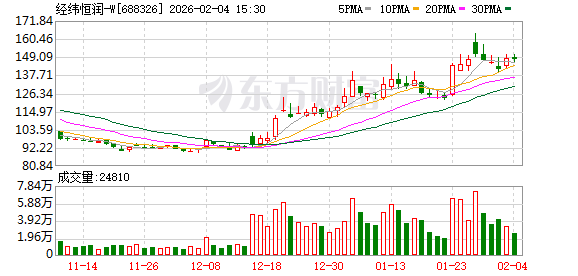
经纬恒润:公司SiC功率模块相关专利申请主要用于前期技术路线布局
Zheng Quan Ri Bao· 2026-02-04 12:43
Group 1 - The core viewpoint of the article is that the company, Jingwei Hengrun, is focusing on the development of SiC power module patents primarily for early-stage technology route planning, with an emphasis on internal research and technology reserves [2] - The company is continuously iterating and validating applications related to electric motor controllers in the new energy vehicle sector [2] - Once the technology matures, the company plans to integrate its internal new energy power electronics products for platform-based external launches [2]

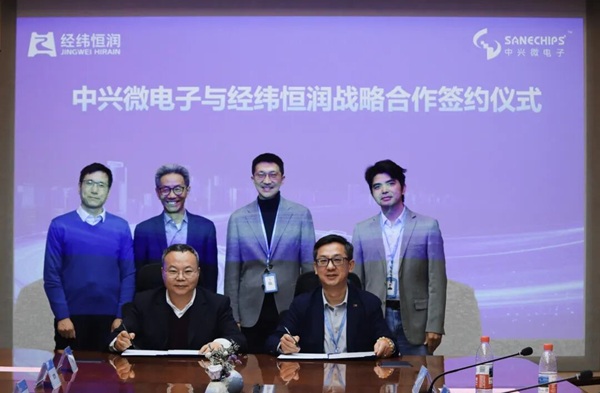
经纬恒润:携手中兴微电子达成战略合作 共筑智能汽车核心软硬件一体化国产解决方案
Zhong Guo Qi Che Bao Wang· 2026-02-04 09:40
Core Insights - The strategic cooperation agreement between Jingwei Hengrun and ZTE Microelectronics aims to focus on the development of integrated software and hardware solutions for the smart automotive sector, including smart connectivity, autonomous driving, and intelligent cockpit technologies [1][3] - The collaboration will leverage both companies' strengths to create a comprehensive open ecosystem that spans from underlying chips to system applications, enhancing technological innovation across the entire supply chain [3][4] Group 1 - The automotive electronic architecture is undergoing significant evolution, with increasing demands for high-performance computing platforms and enhanced functionality across domains [3] - The partnership will combine Jingwei Hengrun's expertise in automotive electronic software and hardware development with ZTE Microelectronics' advanced technology in automotive-grade "connectivity + computing" SoC chips [3] - The goal is to develop domestic solutions that improve product safety and cost-effectiveness across various scenarios, including intelligent cockpit, autonomous driving, and central computing [3] Group 2 - The signing of the strategic cooperation agreement marks a new phase of deep collaboration and mutual benefit between Jingwei Hengrun and ZTE Microelectronics [4] - Both companies will integrate their core resources, including software, algorithms, high-performance SoC chips, and system integration, to provide competitive products and services to global automotive industry clients [4] - The partnership aims to promote the construction and high-quality development of China's intelligent connected vehicle industry ecosystem [4]
经纬恒润2月3日获融资买入3538.58万元,融资余额3.43亿元
Xin Lang Zheng Quan· 2026-02-04 01:27
Group 1 - The core viewpoint of the news is that Jingwei Hengrun's stock performance and financial metrics indicate a mixed outlook, with significant trading activity and a notable increase in revenue but a negative net profit [1][2]. Group 2 - On February 3, Jingwei Hengrun's stock rose by 5.26%, with a trading volume of 493 million yuan. The financing buy-in amount was 35.39 million yuan, while the financing repayment was 39.91 million yuan, resulting in a net financing buy of -4.52 million yuan [1]. - As of February 3, the total financing and securities balance for Jingwei Hengrun was 345 million yuan, with the financing balance at 343 million yuan, accounting for 2.07% of the circulating market value, which is above the 90th percentile level over the past year [1]. - The company has a significant presence in the electronic products sector, with 87.55% of its revenue coming from electronic products, while research services and solutions contributed 12.21% [1]. Group 3 - As of September 30, the number of shareholders for Jingwei Hengrun was 6,719, a decrease of 6.09% from the previous period, while the average circulating shares per person increased by 6.49% to 13,400 shares [2]. - For the period from January to September 2025, Jingwei Hengrun achieved a revenue of 4.464 billion yuan, representing a year-on-year growth of 25.88%. However, the net profit attributable to the parent company was -75.05 million yuan, which is an increase of 81.70% year-on-year [2]. - Notably, as of September 30, 2025, Changcheng Jiujia Innovation Growth Mixed A (004666) exited the list of the top ten circulating shareholders of Jingwei Hengrun [2].
行业深度 | RoboX:产业奇点已至 规模化应用加速【国联民生汽车 崔琰团队】
汽车琰究· 2026-02-03 16:03
Core Insights - The RoboX industry is approaching a commercialization inflection point, driven by strong policy support, increasing demand for cost-effective and safe autonomous driving solutions, and significant reductions in core component costs [2][6][11]. Group 1: RoboX Overview - RoboX encompasses various forms of autonomous driving applications, including Robotaxi, Robovan, and Robotruck, designed to adapt to different transportation scenarios through modular design [8]. - The industry is experiencing rapid advancements in technology, with the penetration rate of L2 and above autonomous features in passenger vehicles expected to exceed 90% by 2030, significantly driving down costs for key components like LiDAR and computing chips [9][11]. Group 2: Robotaxi Insights - Robotaxi is projected to achieve an operational cost of $0.2 per kilometer by 2027, a 50% reduction compared to traditional ride-sharing platforms, primarily due to the remote safety operator model and economies of scale [3][17]. - The global Robotaxi market is expected to reach a valuation of $352.6 billion by 2035, with the Chinese market anticipated to grow from $200 million in 2025 to $179.4 billion by 2035, indicating strong growth potential [23][28]. Group 3: Robovan Insights - The demand for Robovan is driven by labor shortages and high costs in last-mile delivery, with its capabilities making it a key solution across e-commerce, retail, and food delivery sectors [4]. - The cost of Robovan is expected to drop significantly, from 500,000-600,000 yuan to around 20,000 yuan, due to economies of scale and increased penetration of L2 and above features in passenger vehicles [4][11]. Group 4: Robotruck Insights - Robotruck applications are expanding from closed environments to long-haul logistics, with a market potential reaching hundreds of billions, focusing on stable freight demand and high operational value [5]. - The adoption of "virtual drivers" in Robotrucks is expected to significantly reduce the operating costs of electric trucks, enhancing their commercial viability [5]. Group 5: Policy Support - Since 2020, the Chinese government has implemented numerous policies to support the development of intelligent connected vehicles, establishing a robust regulatory framework for the industry [11][13]. - By 2025, 17 national-level testing demonstration zones have been established, with over 32,000 kilometers of testing roads opened, facilitating the transition from technology validation to commercial operation [11][13]. Group 6: Investment Recommendations - Companies involved in autonomous driving solutions and operations are expected to benefit directly from the commercialization of RoboX, with a projected rapid increase in penetration rates between 2026 and 2027, unlocking a market potential of hundreds of billions [6][28]. - Recommended companies include WeRide, Cao Cao Mobility, and XPeng Motors, with a focus on intelligent component manufacturers like Horizon Robotics and Bertelson [6].

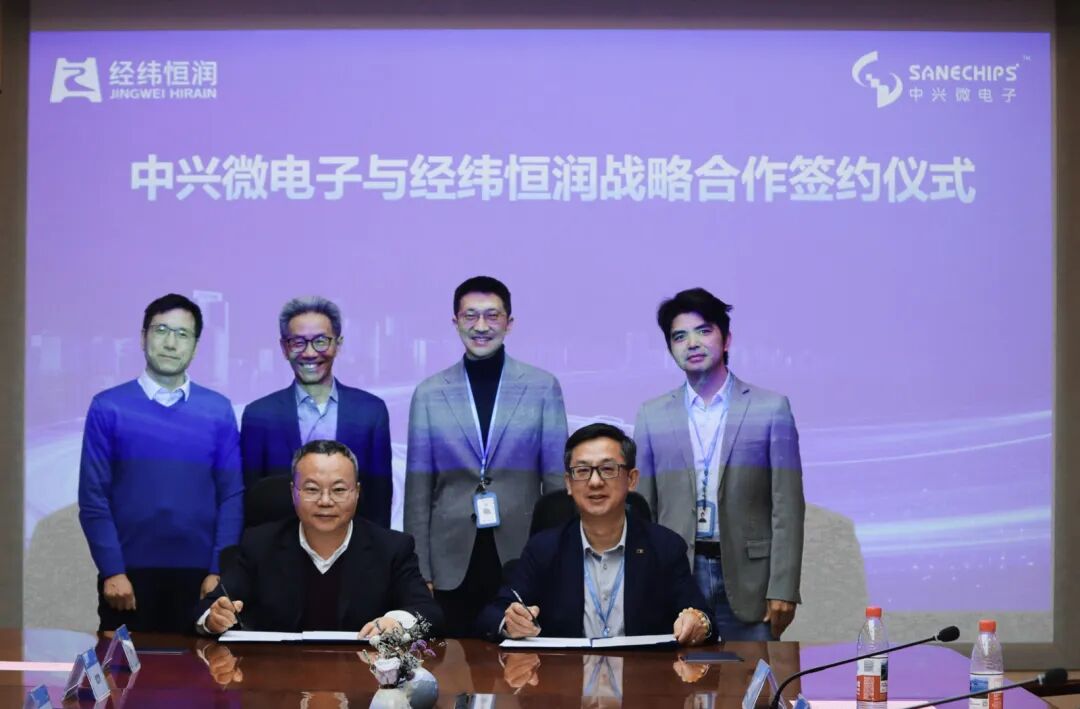
经纬恒润与中兴微电子签署战略合作
Xin Lang Cai Jing· 2026-02-03 12:52
Core Viewpoint - The strategic cooperation agreement between Jingwei Hirain and ZTE Microelectronics aims to develop integrated software and hardware solutions for smart vehicles, focusing on intelligent connectivity, autonomous driving, and smart cockpit technologies [2][5]. Group 1: Strategic Cooperation Details - The agreement was signed on February 2, with both companies collaborating on core solutions for smart vehicles [2][5]. - The partnership will leverage Jingwei Hirain's experience in automotive electronic systems and ZTE Microelectronics' expertise in automotive-grade "connectivity + computing" SoC chips [2][5]. - Key areas of collaboration include the development of domestic solutions for smart cockpit, autonomous driving, central computing platforms, and T-Box applications, as well as exploring AI large models for cockpit interaction and driving decision-making [2][5]. Group 2: Technological Integration and Future Plans - The companies plan to promote full-stack technological collaboration from underlying chips, operating systems, middleware to upper-layer applications, aiming to build an open technological ecosystem [2][5]. - Future efforts will focus on integrating resources in algorithm software, automotive-grade chips, domain controllers, and system integration to provide mass-producible smart vehicle solutions for domestic and international automakers [3][6]. - This cooperation supports the technological independence and ecosystem development of China's intelligent connected vehicle industry [3][6].

研判2026!中国汽车电子智能检测装备行业进入壁垒、市场政策汇总、产业链图谱、市场规模、竞争格局及发展趋势分析:国际巨头主导高端市场[图]
Chan Ye Xin Xi Wang· 2026-02-03 01:35
Core Insights - The safety and reliability requirements for core components of new energy vehicles (NEVs) are significantly higher than those of traditional fuel vehicles, driving demand for battery management system testing equipment and motor controller efficiency testing platforms as NEV penetration continues to rise [1][6] - The market for automotive electronic intelligent testing equipment in China is projected to reach 11.75 billion yuan by 2025, with a year-on-year growth of 13.3%, as NEVs evolve towards higher endurance, intelligence, and safety [1][6] Overview - Automotive electronic intelligent testing equipment integrates technologies such as electronic measurement, computer vision, artificial intelligence, IoT, and automation to test the performance, functionality, fault diagnosis, and quality of automotive electronic components and systems [2][3] - This equipment can automate high-precision testing processes, simulating full operational environments to identify performance defects and compatibility issues, making it essential for ensuring the reliability of automotive electronic products [2][3] Industry Barriers - The automotive electronic intelligent testing equipment industry has significant technical barriers due to its multidisciplinary nature, requiring companies to possess extensive knowledge across various fields and the ability to engineer complex technologies [3][4] - There are strict customer entry barriers, as downstream manufacturers demand high product quality and supply chain stability, leading to long-term partnerships once a supplier is integrated into the supply chain [4] Industry Chain - The upstream of the automotive electronic intelligent testing equipment industry includes suppliers of precision mechanical components, chips, sensors, and software services, while the midstream involves R&D and production, and the downstream consists of automotive manufacturers and third-party testing institutions [4][5] Current Development - The demand for intelligent testing equipment is increasing due to the rising safety and reliability requirements of NEV components, with high-end testing equipment becoming essential for R&D and mass production [1][6] Competitive Landscape - The market is structured in three tiers: international giants dominate the high-end market, domestic leaders are emerging as challengers, and regional manufacturers fill niche segments [7][8] - Leading companies include international firms like Keysight Technologies and domestic firms such as Beijing Oriental Zhongke and Hangzhou Wolai Intelligent Technology, which leverage cost advantages and rapid service response to capture market share [8] Development Trends - The industry is moving towards system-level and intelligent integration, with testing needs evolving from single-component tests to integrated system-level tests [10] - Domestic manufacturers are accelerating their penetration into high-end markets, driven by policy support and collaboration within the domestic supply chain [11] - Service models are evolving from single testing to comprehensive lifecycle solutions, enhancing product performance through customized testing and data analysis [12]


【全网最全】2025年计算机仿真行业上市公司全方位对比(附业务布局汇总、业绩对比、业务规划等)
Qian Zhan Wang· 2026-02-02 03:09
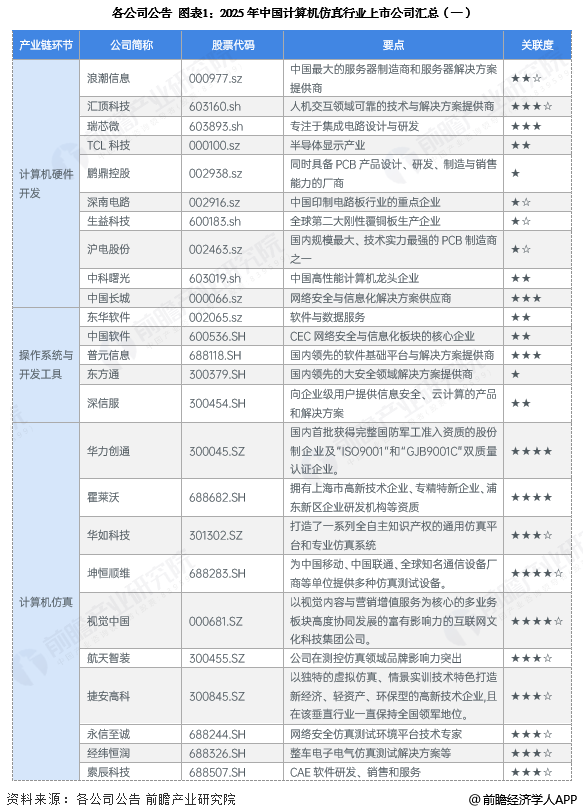
Industry Overview - The computer simulation industry in China has a limited number of listed companies, but the industry chain is extensive, with key players in the midstream segment including Huazhi Chuantong, Holiwo, and Huaru Technology [1] - The industry is expected to grow, with significant revenue contributions from various companies, particularly in the fields of military simulation, training, and digital transformation [16] Key Companies and Their Performance - Listed companies in the computer simulation sector include Huazhi Chuantong (5.64 billion), Holiwo (2.15 billion), Huaru Technology (1.57 billion), and others, with varying revenue performances [5][14] - The largest revenue-generating company in the sector is Langxin Information, with 1206.69 billion, followed by TCL Technology at 1359.43 billion [4] Business Focus and Strategies - Huazhi Chuantong aims to solidify its foundation in simulation testing and radar signal processing, focusing on domestic alternatives in the aerospace industry [16] - Holiwo is working to achieve international standards in simulation functionality and precision, while also integrating AI technology into its software [16] - Huaru Technology is leveraging military models for intelligent decision-making and virtual training applications [16] Market Dynamics - The computer simulation industry is characterized by a high concentration of business activities, with many companies having over 90% of their business focused on simulation [12] - The geographical distribution of representative companies is concentrated in regions like Beijing, Jiangsu, and Shanghai, with Beijing having the most significant number of companies [6] Revenue and Financial Metrics - The revenue from computer simulation business for major companies is generally below 3 billion, with notable exceptions like Aerospace Zhizhuang and Jiean Gaoke, which have higher revenues [14] - The gross profit margins for companies in the sector vary, with Jiean Gaoke achieving a margin of 1.84% [14] Future Outlook - The industry is expected to continue evolving with advancements in technology and increased demand for simulation solutions across various sectors, including defense and telecommunications [16] - Companies are focusing on enhancing their product offerings and expanding their market reach through strategic partnerships and technological innovations [16]



百利天恒目标价涨幅近376% 金辰股份评级被调低丨券商评级观察
2 1 Shi Ji Jing Ji Bao Dao· 2026-02-02 01:31
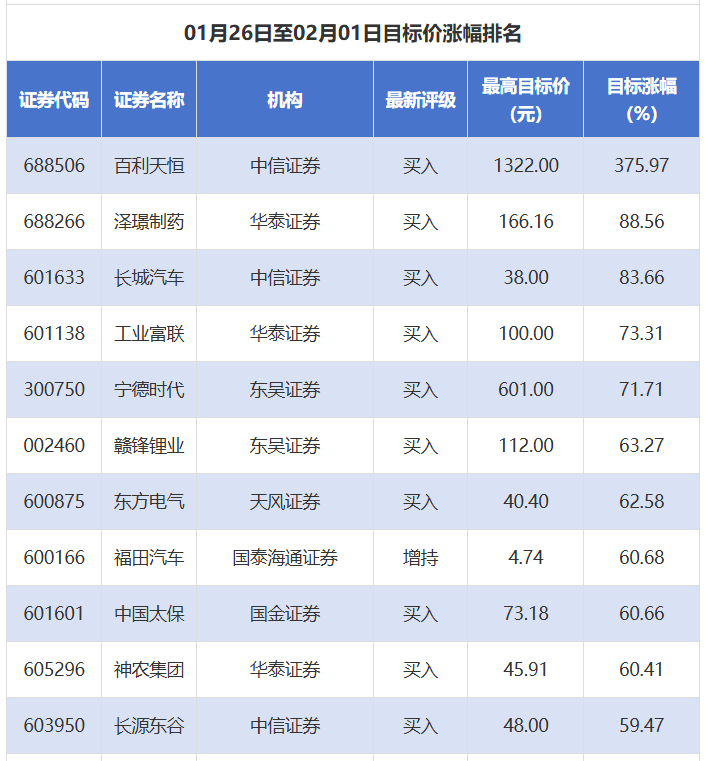
Core Viewpoint - The report highlights significant target price increases for several listed companies from January 26 to February 1, with notable mentions including Baili Tianheng, Zexing Pharmaceutical, and Great Wall Motors, indicating strong bullish sentiment in the market for these stocks [1][2]. Target Price Increases - Baili Tianheng (688506) has a target price increase of 375.97%, with a highest target price set at 1322.00 yuan [2]. - Zexing Pharmaceutical (688266) shows a target price increase of 88.56%, with a highest target price of 166.16 yuan [2]. - Great Wall Motors (601633) has a target price increase of 83.66%, with a highest target price of 38.00 yuan [2]. - Other companies with notable target price increases include Industrial Fulian (601138) at 73.31% and CATL (300750) at 71.71% [2][3]. Broker Recommendations - A total of 265 listed companies received broker recommendations during the period, with Qingdao Bank receiving the highest number of recommendations at 8 [3][4]. - Other companies with multiple recommendations include Xian Dao Intelligent and Wancheng Group, each receiving 5 recommendations [3][4]. Rating Adjustments - Eight companies had their ratings upgraded, including Shanghai Jahwa (600315) from "Hold" to "Buy" and ZTE Corporation (000063) from "Cautious Buy" to "Buy" [5][6]. - Two companies had their ratings downgraded, including Jincheng Shares (603396) from "Buy" to "Hold" and Huasheng Group (603018) from "Buy" to "Hold" [6]. First-Time Coverage - During the same period, 75 instances of first-time coverage were reported, with notable ratings including Shaanxi Tourism (603402) receiving a "Outperform Industry" rating and Bichu Electronics (688188) receiving a "Buy" rating [7].