
Sunshine Guojian Pharmaceutical(688336)

Search documents
3.4亿人撑起蔓迪国际IPO,“药二代”娄竞没有脱发焦虑
Xin Lang Cai Jing· 2025-12-05 06:49
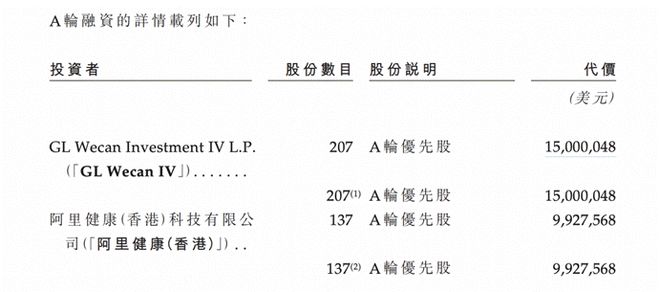
Core Viewpoint - The article discusses the significant growth and strategic moves of the "San Sheng" group, particularly under the leadership of Liu Jing, who has successfully navigated the company through multiple key capital market transactions, including the planned IPO of Mandi International in Hong Kong. Company Overview - Liu Jing, the second-generation leader of the "San Sheng" group, is known for his adept capital operations since taking over in 2012 [1] - Under Liu's leadership, San Sheng Pharmaceutical transitioned to the Hong Kong Stock Exchange and successfully spun off San Sheng Guojian for independent listing in 2020 [1] Stock Performance - Both San Sheng Pharmaceutical and San Sheng Guojian have seen substantial stock price increases this year, with San Sheng Pharmaceutical's stock rising nearly fourfold [2] - Liu Jing's family wealth has also increased significantly, ranking 443rd on the Hurun Rich List with a net worth of 15 billion yuan [2] Upcoming IPO - In November 2023, San Sheng Pharmaceutical plans to spin off its subsidiary Mandi International for a Hong Kong IPO, marking the third capital market platform for the "San Sheng" group [2] - Mandi International's core product, Minoxidil hair growth solution, holds a 57% market share in China's hair loss medication market, maintaining the top position for ten consecutive years [2] Valuation and Investment - Mandi International has a post-investment valuation of 5.8 billion HKD following a Series A funding round that raised approximately 50 million USD [5] - The company has received investments from notable entities, including Alibaba Health [3][5] Financial Performance - Mandi International's revenue has shown steady growth, with figures of 982 million yuan, 1.23 billion yuan, 1.45 billion yuan, and 743 million yuan for the years 2022 to 2025 [11] - The flagship product series, Mandi®, has contributed approximately 90% of the company's revenue during the reporting period [12] Dividend Policy - Mandi International has implemented a "clearance-style dividend" policy, distributing a total of 1.42 billion yuan in dividends over the reporting period, exceeding the total net profit [14] Cost Structure - The company maintains a high gross margin, with rates of 80.3%, 82%, 82.7%, and 81.1% during the reporting period, while net profit margins have fluctuated [13] - Sales expenses have been significantly higher than R&D expenses, with sales costs being nine times that of R&D [15][16] Distribution Network - Mandi International's revenue primarily comes from sales through third-party distributors, with a decreasing number of distributors from 173 to 106 over the reporting period [18]


研报掘金丨国金证券:首予三生国健“买入”评级,目标价77.56元
Ge Long Hui A P P· 2025-12-03 08:28
Core Viewpoint - The report from Guojin Securities highlights that Sanofi's deep investment in the self-immune sector is expected to provide stable income from existing products in the short term [1] Group 1: Company Overview - Sanofi has been focused on the self-immune sector for over 20 years and has launched three products that are anticipated to ensure stable revenue and profit contributions in the near term [1] - The company has a pipeline of 26-28 products expected to enter commercialization in the coming years, leveraging its existing sales team and departmental experience to support the commercialization of new products [1] Group 2: Market Potential - The early-stage pipeline in the self-immune sector is considered high-quality and is expected to become a new generation of potential targets for growth [1] - Based on the DCF valuation model, the calculated reasonable market value for the company is 47.9 billion, corresponding to a target price of 77.56 yuan, with an initial coverage rating of "Buy" [1]

2025年中国生物制剂行业政策、产业链、市场规模、研发支出、竞争格局及未来发展趋势研判:已成为医药行业增长最快的领域之一,市场规模将达到6752亿元[图]
Chan Ye Xin Xi Wang· 2025-12-03 01:24
Core Insights - The biopharmaceutical sector is one of the fastest-growing areas in the pharmaceutical industry, driven by an aging population and increased public health awareness [1][5] - China's biopharmaceutical market is projected to grow from CNY 312 billion in 2019 to CNY 587.1 billion in 2024, and is expected to reach CNY 675.2 billion by 2025, with a potential to hit CNY 1.149 trillion in the next five years [1][5][6] - Innovation remains the core driver of growth in the biopharmaceutical industry, which is capital-intensive and requires significant R&D investment [1][6] Industry Definition and Classification - Biopharmaceuticals are medical products manufactured using biological methods, aimed at replicating the activity of natural substances [2][4] - They can be categorized into vaccines, blood products, biopharmaceutical drugs, diagnostic reagents, and others, with further subdivisions based on source or mechanism of action [2] Current Industry Status - The global biopharmaceutical market is expected to grow from USD 286.4 billion in 2019 to USD 461.6 billion in 2024, with the original biopharmaceutical market projected to increase from USD 268.9 billion to USD 427.9 billion in the same period [5] - China plays a significant role in the global biopharmaceutical market, with rapid growth driven by favorable policies, increased R&D investment, and advancements in biotechnology [5][6] Industry Development Environment - Policies - The Chinese government has implemented various laws and policies to encourage biopharmaceutical R&D, including the Drug Registration Management Measures and regulations for clinical research and application of biomedical technologies [7] Competitive Landscape - The biopharmaceutical sector is recognized as a "new frontier" in the pharmaceutical industry, with major global players actively entering the market [9] - Key companies in China's biopharmaceutical industry include WuXi AppTec, Hengrui Medicine, ZhiFei Biological, BeiGene, and others, with a competitive landscape characterized by differentiated strategies [9] Future Development Trends - Market demand for biopharmaceuticals is expected to continue growing, supported by policy backing, technological advancements, and increased health awareness [10] - Domestic companies are transitioning from biosimilars to First-in-Class drugs, with examples like Hengrui Medicine's ADC drug showing superior efficacy [10][11] - Personalized medicine based on genetic testing is anticipated to become a trend, with increasing international recognition of Chinese innovative drugs [11]




三生国健(688336):收到707授权许可首付款,自免创新积极推进
HUAXI Securities· 2025-11-27 13:03
Investment Rating - The investment rating for the company is "Buy" [5] Core Insights - The company reported a revenue of 1.116 billion yuan for the first three quarters of 2025, representing a year-on-year growth of 18.80%, primarily driven by increased licensing income from a collaboration project with Shenyang Sansheng and growth in its CDMO business [1] - The net profit attributable to shareholders for the same period was 399 million yuan, a significant increase of 71.15% compared to the previous year [1] - The company received a substantial upfront licensing payment from Pfizer, which contributed to a notable increase in net cash flow from operating activities and total assets compared to the previous year [2] Summary by Sections Financial Performance - Revenue for 2025 is projected to be 4.015 billion yuan, with a year-on-year growth of 236.4% [11] - Net profit for 2025 is expected to reach 2.854 billion yuan, reflecting a year-on-year increase of 305.0% [11] - The company maintained a healthy R&D expense ratio, with total R&D investments amounting to 368 million yuan, a year-on-year increase of 3.87% [1] Innovation Pipeline - The company is actively advancing its innovative pipeline, with several monoclonal antibody projects in various stages of clinical trials, including: 1. Anti-IL-17A monoclonal antibody ("608") for moderate to severe plaque psoriasis, with NDA application accepted [3] 2. Anti-IL-5 monoclonal antibody ("610") for severe eosinophilic asthma, currently in Phase III trials [3] 3. Anti-IL-4Rα monoclonal antibody ("611") for multiple indications, with several Phase III trials ongoing [3][4] 4. Anti-IL-1β monoclonal antibody ("613") for acute gouty arthritis, NDA application submitted and accepted [4] 5. Anti-BDCA2 monoclonal antibody ("626") for systemic lupus erythematosus, currently in Phase Ib/II trials [4] 6. Anti-TLIA monoclonal antibody ("627") for ulcerative colitis, in Phase I trials [8] Investment Recommendations - The company is expected to see significant growth in innovative product launches, maintaining previous profit forecasts with projected revenues of 4.015 billion yuan in 2025, 2.243 billion yuan in 2026, and 2.633 billion yuan in 2027 [9] - The earnings per share (EPS) for 2025 is projected to be 4.63 yuan, with a corresponding price-to-earnings (PE) ratio of 14 [11]
生物制品板块11月27日跌0.52%,三生国健领跌,主力资金净流出2.51亿元
Zheng Xing Xing Ye Ri Bao· 2025-11-27 09:06
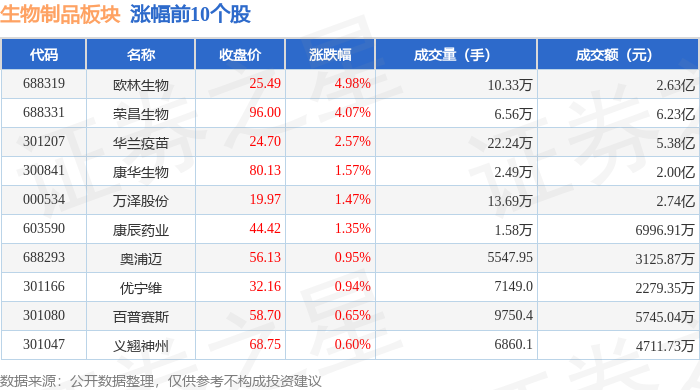
Market Overview - The biopharmaceutical sector experienced a decline of 0.52% on November 27, with Sangfor Biopharma leading the drop [1] - The Shanghai Composite Index closed at 3875.26, up 0.29%, while the Shenzhen Component Index closed at 12875.19, down 0.25% [1] Stock Performance - Notable gainers in the biopharmaceutical sector included: - Olin Biotech (688319) with a closing price of 25.49, up 4.98% and a trading volume of 103,300 shares, totaling 263 million yuan [1] - Rongchang Biopharma (688331) closed at 96.00, up 4.07% with a trading volume of 65,600 shares, totaling 623 million yuan [1] - Hualan Biological (301207) closed at 24.70, up 2.57% with a trading volume of 222,400 shares, totaling 538 million yuan [1] - Conversely, significant decliners included: - Sangfor Biopharma (688336) closed at 64.70, down 5.40% with a trading volume of 60,400 shares, totaling 400 million yuan [2] - Jindike (688670) closed at 29.32, down 5.11% with a trading volume of 155,900 shares, totaling 453 million yuan [2] - WanTai Biotech (603392) closed at 49.09, down 2.89% with a trading volume of 52,600 shares, totaling 260 million yuan [2] Capital Flow - The biopharmaceutical sector saw a net outflow of 251 million yuan from institutional investors, while retail investors experienced a net inflow of 229 million yuan [2] - Notable capital flows included: - Rongchang Biopharma had a net inflow of 64.13 million yuan from institutional investors, while retail investors saw a net outflow of 39.11 million yuan [3] - Olin Biotech experienced a net inflow of 7.37 million yuan from institutional investors, with retail investors facing a net outflow of 24.86 million yuan [3]


三生国健股价跌5.04%,交银施罗德基金旗下1只基金重仓,持有179.45万股浮亏损失619.12万元
Xin Lang Cai Jing· 2025-11-27 06:44
截至发稿,楼慧源累计任职时间7年79天,现任基金资产总规模43.33亿元,任职期间最佳基金回报 143.65%, 任职期间最差基金回报-21.86%。 数据显示,交银施罗德基金旗下1只基金重仓三生国健。交银医药创新股票A(004075)三季度增持 21.03万股,持有股数179.45万股,占基金净值比例为3.74%,位居第八大重仓股。根据测算,今日浮亏 损失约619.12万元。 交银医药创新股票A(004075)成立日期2017年3月23日,最新规模26.51亿。今年以来收益32.13%,同 类排名1165/4206;近一年收益29.31%,同类排名1461/4006;成立以来收益183.1%。 交银医药创新股票A(004075)基金经理为楼慧源。 11月27日,三生国健跌5.04%,截至发稿,报64.94元/股,成交3.50亿元,换手率0.85%,总市值400.54 亿元。 资料显示,三生国健药业(上海)股份有限公司位于中国(上海)自由贸易试验区李冰路399号,成立日期 2002年1月25日,上市日期2020年7月22日,公司主营业务涉及抗体药物的研发、生产及销售业务。主营 业务收入构成为:销售商品75.2 ...
左手创新药、右手生发剂,“药二代”娄竞冲击第三个上市平台
Bei Jing Shang Bao· 2025-11-26 13:35
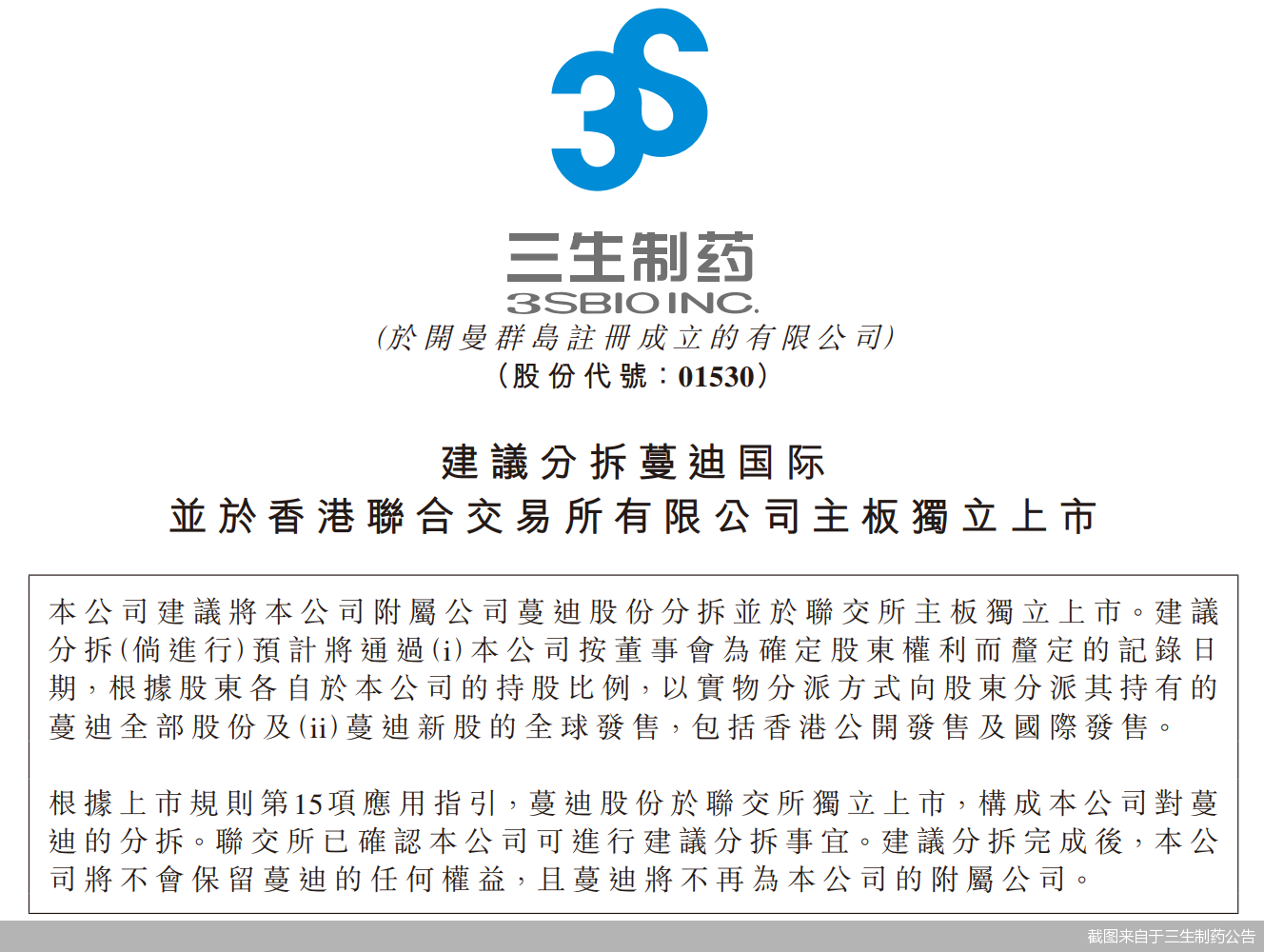
Core Viewpoint - Sanofi Pharmaceutical is set to become a star in the pharmaceutical sector by 2025, following its collaboration with Pfizer and the planned spin-off of its subsidiary, Mandi International, for independent listing, marking the potential emergence of a third listing platform within the "Sanofi System" [1][4]. Group 1: Company Developments - Mandi International, a Cayman Islands-registered company, focuses on consumer pharmaceuticals, particularly in skin health and weight management solutions, and is known for its flagship Minoxidil-based hair loss treatment products [5]. - The valuation of Mandi International has increased over nine times since its acquisition by Sanofi Pharmaceutical in 2015 for 528 million yuan [6][7]. - Mandi International's financial performance shows projected revenues of approximately 982 million yuan, 1.228 billion yuan, 1.455 billion yuan, and 743 million yuan for the years 2022 to 2025, with profit margins consistently above 80% [5]. Group 2: Market Strategy - The spin-off aims to allow for more accurate market valuation of Mandi International, isolating consumer healthcare market risks from Sanofi Pharmaceutical's core focus on innovative drugs and biopharmaceuticals [8]. - The spin-off will utilize a stock distribution and new global share issuance method, allowing existing shareholders to receive shares in Mandi International proportionate to their holdings [8]. Group 3: Historical Context - The "Sanofi System" has a clear capital structure, with Sanofi Pharmaceutical focusing on biopharmaceuticals, Sanofi Guojian on antibody drugs, and Mandi International on consumer healthcare, maximizing capital value across different market segments [11]. - The history of Sanofi Pharmaceutical includes its founding in 1993, its listing on NASDAQ in 2007, and its transition to the Hong Kong Stock Exchange in 2015, alongside strategic acquisitions that expanded its product offerings [9][10]. Group 4: Recent Performance - The stock prices of Sanofi Pharmaceutical and Sanofi Guojian have surged significantly this year, with Sanofi Pharmaceutical's stock increasing nearly fourfold, driven by a lucrative business development deal with Pfizer [13][15]. - The deal with Pfizer involves a $1.25 billion upfront payment for a dual-target antibody product, which has sparked a broader rally in the innovative drug sector [14][15].
11月26日重要资讯一览
Zheng Quan Shi Bao Wang· 2025-11-26 13:24
Group 1 - The Ministry of Industry and Information Technology and five other departments issued a plan to enhance the adaptability of supply and demand for consumer goods, aiming for a significant optimization of the supply structure by 2027, with the formation of three trillion-level consumption fields and ten hundred-billion-level consumption hotspots [2] - The State Council Information Office will hold a press conference on November 27, 2025, to discuss policies related to enhancing the adaptability of supply and demand for consumer goods [2] - The National Development and Reform Commission will hold a news conference on November 27, 2025, to provide updates on relevant policies [2] Group 2 - Guangdong issued a plan to support enterprises in conducting industrial chain integration and mergers, aiming to enhance the competitive advantages of industrial clusters in the Guangdong-Hong Kong-Macao Greater Bay Area by 2027 [3] - The China Insurance Industry Association issued a risk warning regarding "Anwo Stock Insurance," clarifying that it is not an approved insurance institution and that stock investment losses are not covered by insurance [3] Group 3 - Changguang Huaxin has achieved mass production of 100G EML in the optical communication field, and 200G EML has begun sampling [5] - Shida Group noted that it has not engaged in business cooperation with Alibaba Cloud despite market rumors [6] - Jindike will not issue new quadrivalent influenza virus split vaccines this year [7] - Zhongshui Fishery reported no significant changes in its operating conditions and external environment [8] - Maoye Commercial is currently operating normally [9] - Industrial Fulian raised the upper limit for share repurchase to no more than 75 yuan per share [10] - China Iron and Steel's controlling shareholder plans to increase its stake in the company by 65 million to 130 million yuan [11] - Boda Pharmaceutical has not organized the production and sale of related influenza drugs, and it is expected that there will be no impact on the company's operating performance for a considerable period [11] - Muxi Co., Ltd. announced that the subscription date for its issuance is December 5 [11] - Pinming Technology may apply for a trading suspension if its stock continues to experience abnormal fluctuations [12]



生物制品板块11月26日涨0.36%,金迪克领涨,主力资金净流入2093.84万元
Zheng Xing Xing Ye Ri Bao· 2025-11-26 09:05
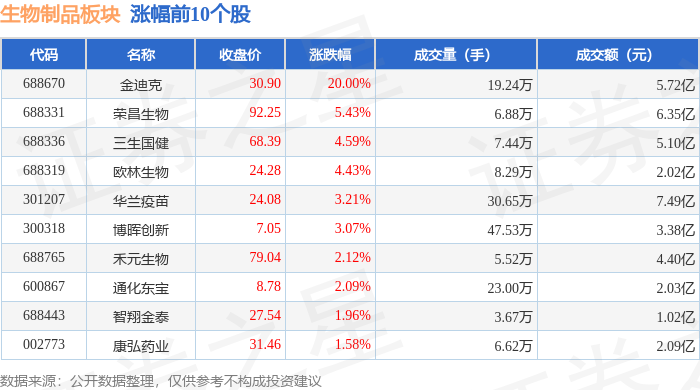
Market Overview - The biopharmaceutical sector increased by 0.36% compared to the previous trading day, with Jindike leading the gains [1] - The Shanghai Composite Index closed at 3864.18, down 0.15%, while the Shenzhen Component Index closed at 12907.83, up 1.02% [1] Stock Performance - Jindike (688670) saw a closing price of 30.90, with a significant increase of 20.00% and a trading volume of 192,400 shares, amounting to a transaction value of 572 million [1] - Rongchang Bio (688331) closed at 92.25, up 5.43%, with a trading volume of 68,800 shares and a transaction value of 635 million [1] - Sanofi (688336) closed at 68.39, up 4.59%, with a trading volume of 74,400 shares and a transaction value of 510 million [1] - Other notable performers include Olin Bio (616889) with a 4.43% increase and Hualan Bio (301207) with a 3.21% increase [1] Fund Flow Analysis - The biopharmaceutical sector experienced a net inflow of 20.94 million from institutional investors, while retail investors saw a net outflow of 57.02 million [2] - Jindike had a net inflow of 57.00 million from institutional investors, despite a net outflow of 19.76 million from retail investors [3] - Rongchang Bio also saw a net inflow of 32.94 million from institutional investors, with retail investors withdrawing 25.48 million [3]



趋势研判!2025年中国ITP药物治疗路径、产业链、市场规模、竞争格局及发展趋势分析:市场规模约28亿元,海曲泊帕探索空间广阔[图]
Chan Ye Xin Xi Wang· 2025-11-26 02:49
Core Insights - The ITP drug treatment market in China is projected to grow, reaching 2.4 billion yuan in 2024, an increase of 200 million yuan from 2023, and is expected to reach approximately 2.8 billion yuan in 2025 [1][3][4] - Eltrombopag, a novel oral small molecule TPO receptor agonist, has shown excellent efficacy in treating ITP, significantly expanding treatment options for patients [1][4][7] - The sales of Eltrombopag in hospitals reached 376 million yuan in 2023, with an estimated 430 million yuan for the entire year of 2024 [1][4] ITP Drug Treatment Industry Pathway - ITP, or Immune Thrombocytopenic Purpura, is primarily treated with corticosteroids as the first-line therapy, while second-line treatments include platelet-stimulating drugs [2][4] - The incidence of ITP in adults in China is estimated at 5 to 10 per 100,000, with a projected 130,400 patients in 2024 [2][3] ITP Drug Treatment Industry Development Status - The ITP drug treatment market has been expanding, with a notable increase in treatment options due to ongoing research into the disease's pathophysiology [4][6] - The market is characterized by a growing number of patients and an increasing demand for effective treatments [2][3] ITP Drug Treatment Industry Chain - The upstream of the ITP drug treatment industry includes active pharmaceutical ingredients (APIs), chemical raw materials, and related equipment, while the midstream focuses on drug manufacturing [4][6] ITP Drug Treatment Competitive Landscape - Major companies in the domestic ITP drug market include Jiangsu Aosaikang Pharmaceutical, Jiangsu Hengrui Medicine, and Shenyang Sanofi Pharmaceutical, among others [2][6] - Several companies have received approval for Eltrombopag, indicating a competitive environment for generic versions of the drug [6][7] ITP Drug Treatment Development Trends - The treatment of ITP is moving towards targeted and precision medicine, with new therapies showing potential in regulating key immune nodes [7] - Future research may explore the combination of Eltrombopag with existing therapies to enhance treatment outcomes and achieve long-term remission for patients [7]


