GRANDJOY(000031)

Search documents
大悦城:2025年预计亏损21亿-27亿元,同比减亏
Xin Lang Cai Jing· 2026-01-30 08:41
Core Viewpoint - The company anticipates a net profit loss attributable to shareholders of 2.1 billion to 2.7 billion yuan for 2025, a decrease from the previous year's loss of 2.977 billion yuan [1] Financial Performance - The expected net profit loss after deducting non-recurring items is projected to be between 2.25 billion and 2.85 billion yuan, compared to a loss of 4.05 billion yuan in the same period last year [1] - The basic earnings per share are expected to be a loss of 0.49 to 0.63 yuan per share, improving from a loss of 0.69 yuan per share in the previous year [1] Reasons for Performance - The anticipated performance decline is primarily due to the company's proactive adjustment of pricing strategies, leading to impairment signs in certain projects and the need to recognize impairment provisions [1] - The company expects a year-on-year reduction in net profit loss, mainly attributed to an increase in gross margin and investment income compared to the previous year [1]

大悦城(000031) - 2025 Q4 - 年度业绩预告
2026-01-30 08:35
Financial Performance Expectations - The company expects a net loss attributable to shareholders of between 210,000 and 270,000 million yuan for the fiscal year 2025, compared to a loss of 297,678.43 million yuan in the previous year[3]. - The net profit after deducting non-recurring gains and losses is projected to be a loss of between 225,000 and 285,000 million yuan, improving from a loss of 404,982.38 million yuan year-on-year[3]. - Basic earnings per share are expected to be a loss of between 0.49 and 0.63 yuan per share, compared to a loss of 0.69 yuan per share in the previous year[3]. Loss Reduction Factors - The company anticipates a reduction in losses year-on-year, primarily due to an increase in gross profit margin and gross profit amount, influenced by settlement resources and cycles[5]. - Investment income from joint ventures and associates is expected to increase year-on-year due to the impact of project settlement development cycles[5]. Strategic Adjustments - The company is actively adjusting its volume and price strategy, leading to impairment indications for certain projects and the need to make impairment provisions for various assets[5]. Financial Reporting and Risks - The financial data in this earnings forecast has not been audited by an accounting firm, but there are no significant discrepancies in communication with the auditors[4]. - The specific financial data will be detailed in the company's 2025 annual report, and investors are advised to pay attention to investment risks[7].
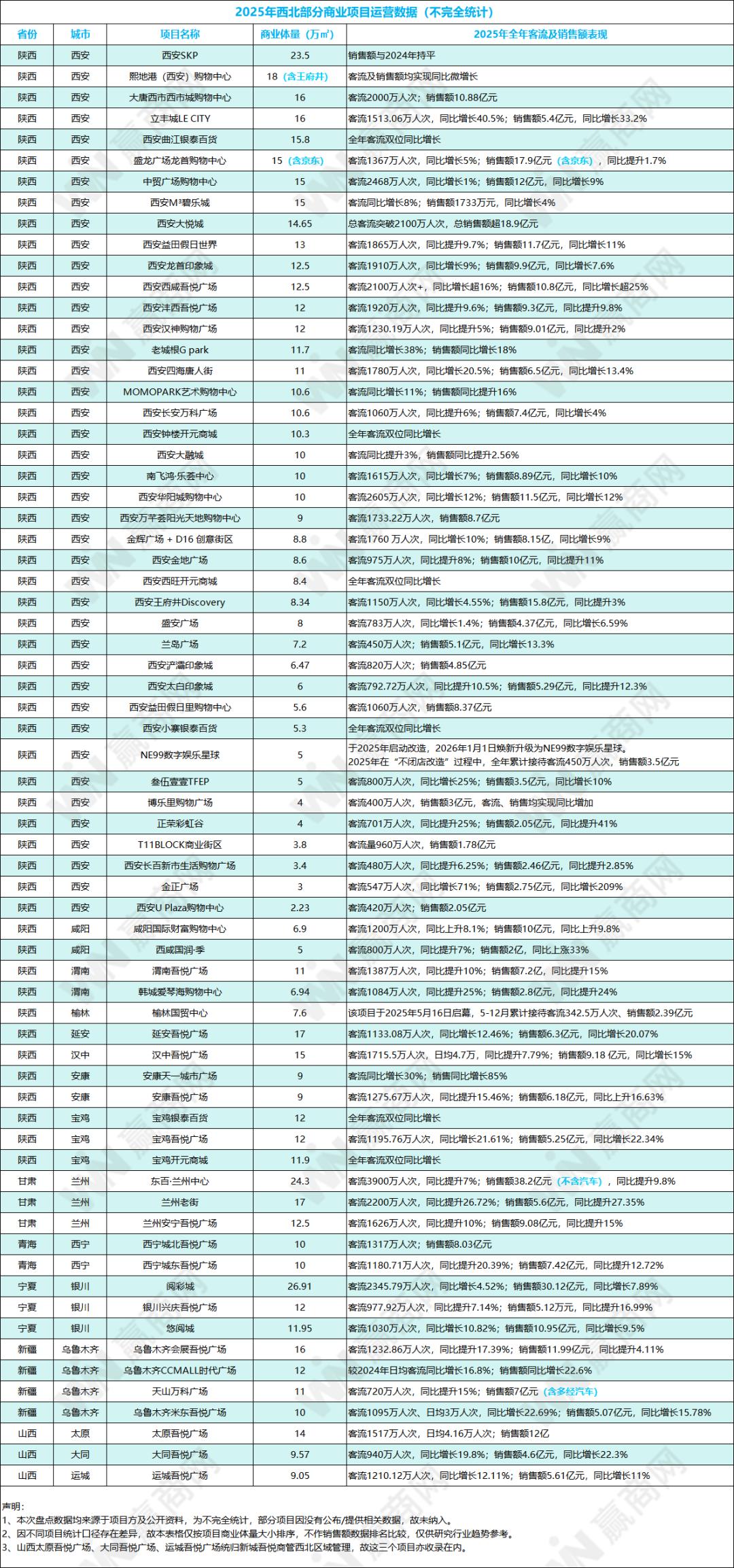
SKP、大悦城、兰州中心...西北68家商场2025年销售额来了!
3 6 Ke· 2026-01-30 01:57
Core Insights - The commercial market in Northwest China shows steady growth in both customer traffic and sales, indicating resilience and a positive outlook for the industry [2][5][12] Group 1: Business Performance and Brand Insights - In 2025, 68 monitored projects in Northwest China reported stable or increasing customer traffic and sales, with 55.9% of projects achieving slight year-on-year growth [2] - Top-performing restaurant brands include Lanxiangzi (31 times in the top five), Haidilao (25 times), and KFC (16 times), which dominate the market through standardized operations [3] - Leading retail brands such as Huawei (34 times), Chow Tai Fook (25 times), and Xiaomi (19 times) are driving revenue growth, particularly in the digital and jewelry sectors [4] Group 2: Market Structure and Trends - The commercial landscape in Northwest China is shifting towards a focus on existing market optimization rather than new developments, aligning with national trends [5][6] - In 2025, only 19 new commercial projects were launched in Northwest China, with a significant increase in the proportion of projects focused on revitalizing existing spaces [7] - The annual brand replacement rate in the region is between 20-26%, indicating a shift towards enhancing existing commercial functions and customer engagement [8] Group 3: First Store Economy - The introduction of new brands is crucial for revitalizing existing commercial spaces, with 376 new stores opened in Xi'an in 2025, including 3 national first stores and 171 regional first stores [9] - This strategy not only injects vitality into existing projects but also directly contributes to increased customer traffic and sales [9] Group 4: Future Outlook - As the focus of commercial transformation shifts from basic adjustments to deep operational enhancements, businesses will better align with customer needs, fostering continuous economic vitality in the region [12]

房企“三道红线”不再要求上报,地产股集体大涨!专家:政策目标已经实现;业内:地产行业调整进入末期
Mei Ri Jing Ji Xin Wen· 2026-01-29 14:52
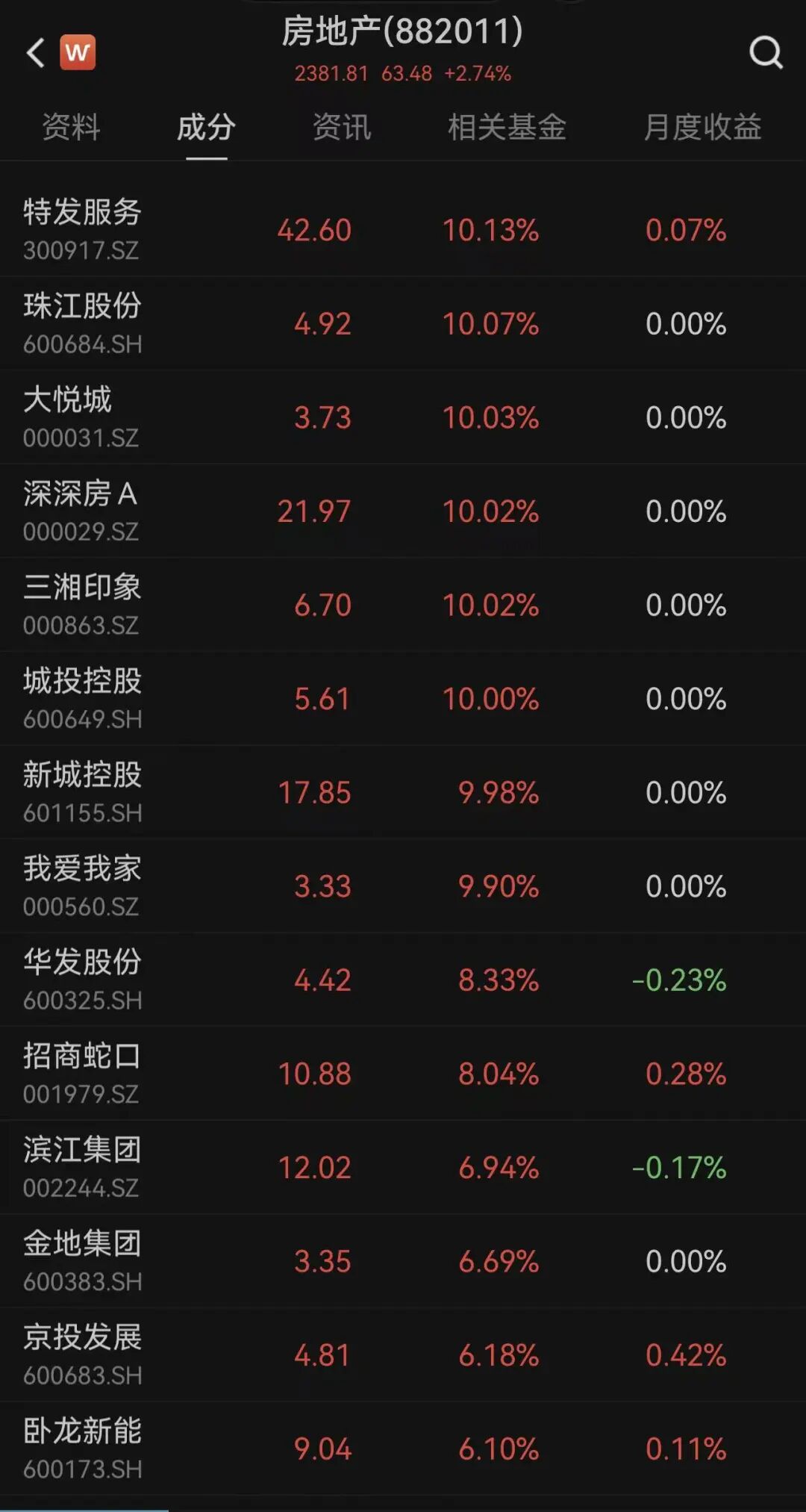
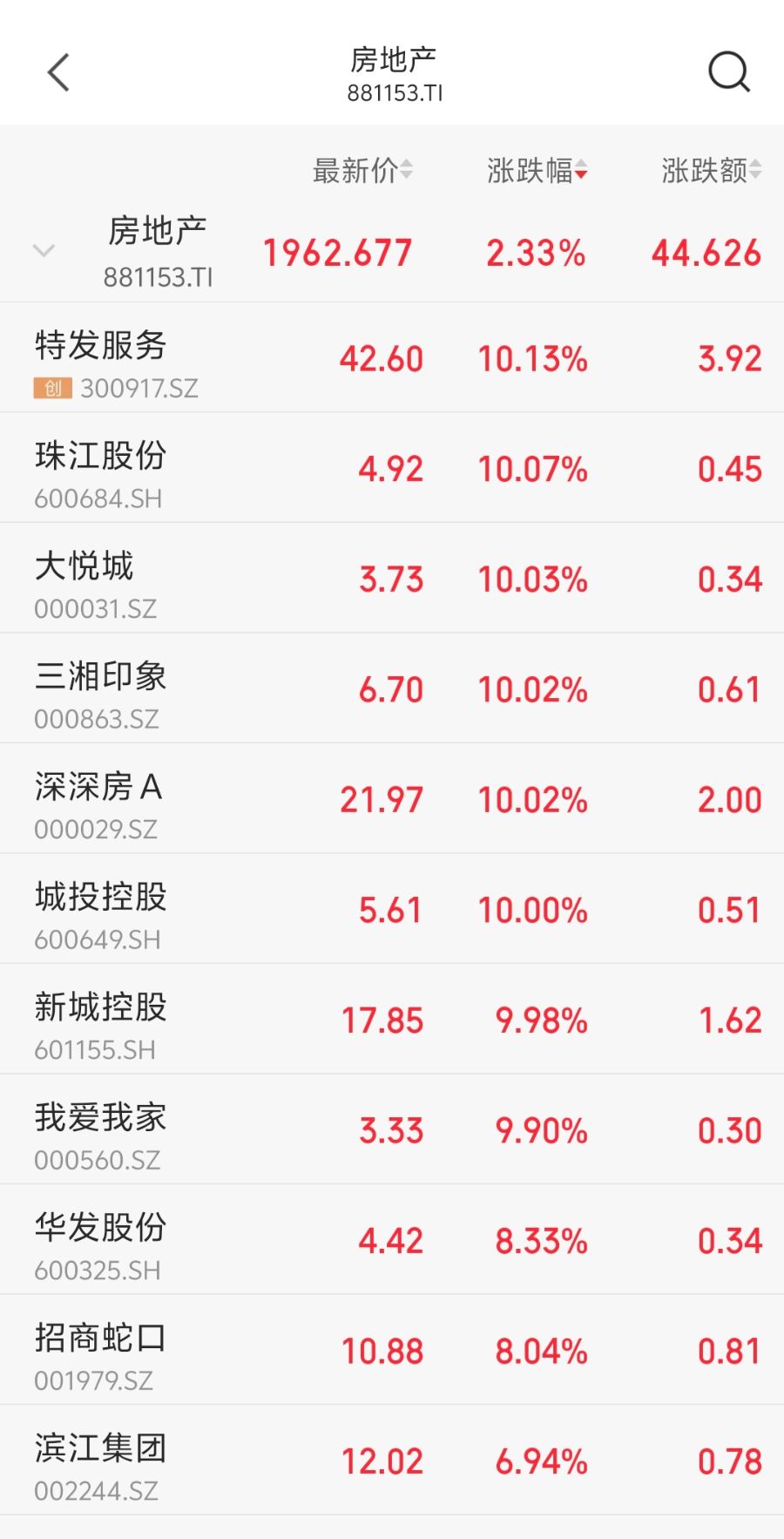
Core Viewpoint - The recent news indicates that real estate companies are no longer required to report the "three red lines" indicators to regulatory authorities on a monthly basis, leading to a significant rebound in the A-share real estate sector, with an increase of over 2.7% [1]. Group 1: Regulatory Changes - The "three red lines" policy, which was a critical assessment standard for real estate financing and operations since its pilot in August 2020, has quietly faded away as the industry undergoes deep adjustments [7][9]. - Many real estate companies have stopped monthly reporting of the "three red lines" indicators since early 2025, with some companies indicating they have not reported for a long time [6][8]. - As of December 2025, 21 distressed real estate companies have completed or received approval for debt restructuring, resolving a total debt scale of 1.2 trillion yuan, involving over 2 trillion yuan in total liabilities [7]. Group 2: Market Reactions - The A-share real estate sector has seen significant gains, with stocks such as Zhujiang Shares, Dayue City, and Shenzhen Housing A reaching their daily limit [1]. - The overall sentiment in the market has shifted positively, with many companies experiencing substantial stock price increases, reflecting renewed investor confidence [2][3]. Group 3: Industry Outlook - The "three red lines" policy aimed to limit the growth of real estate companies' debt and prevent aggressive expansion, a goal that has largely been achieved after four years of deep adjustments in the industry [10]. - The current industry context suggests that the "three red lines" are no longer suitable, as the high-leverage expansion model has ended, and leading companies are shifting towards low-leverage, refined operations [10][11]. - Analysts emphasize the need for financial institutions to support real estate financing to avoid a negative cycle of financial strain and declining sales [11].


“三道红线”悄然落幕 业内:地产行业调整进入末期,应鼓励金融机构支持房地产融资
Mei Ri Jing Ji Xin Wen· 2026-01-29 09:34
Core Viewpoint - The "three red lines" policy, which was a significant regulatory measure for real estate companies in China, is gradually fading away as many firms are no longer required to report related metrics monthly, leading to a recovery in the A-share real estate sector [1][2][3]. Group 1: Policy Changes - Real estate companies are no longer mandated to report "three red lines" indicators monthly, with many firms having ceased such reporting since early 2025 [1][2]. - The "three red lines" policy was introduced in August 2020 to control the debt levels of real estate companies, setting specific financial metrics that firms had to adhere to [2][3]. - As of December 2025, 21 distressed real estate companies have completed or received approval for debt restructuring, resolving a total debt of 1.2 trillion yuan, indicating a significant reduction in industry risk [1]. Group 2: Industry Impact - The A-share real estate sector saw a notable increase of over 2.7%, with stocks like Zhujiang Co., Dayuecheng, and Shenzhen Housing A reaching their daily limit [1]. - The shift away from the "three red lines" reflects a fundamental change in the operational strategies of real estate companies, moving from aggressive expansion to a focus on high-quality development [4][5]. - The current industry context shows a continuous decline in funding for real estate companies over the past four years, with a cautious approach from banks leading to reduced loan demand from firms [4][5]. Group 3: Future Outlook - Experts suggest that financial institutions should be encouraged to support real estate financing to avoid a negative cycle of financial strain and declining sales [5]. - The adjustment phase of the industry is nearing its end, with surviving companies focusing on delivering high-quality properties while managing risks effectively [5].
房地产开发板块1月29日涨2.89%,大悦城领涨,主力资金净流入12.25亿元
Zheng Xing Xing Ye Ri Bao· 2026-01-29 09:03
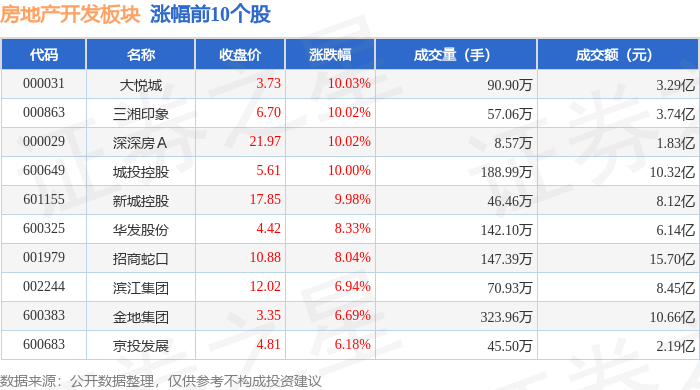
Market Performance - The real estate development sector increased by 2.89% compared to the previous trading day, with Dayuecheng leading the gains [1] - The Shanghai Composite Index closed at 4157.98, up 0.16%, while the Shenzhen Component Index closed at 14300.08, down 0.3% [1] Top Gainers in Real Estate Sector - Dayuecheng (000031) closed at 3.73, up 10.03% with a trading volume of 909,000 shares and a transaction value of 329 million [1] - Sanxiang Impression (000863) closed at 6.70, up 10.02% with a trading volume of 570,600 shares and a transaction value of 374 million [1] - Deep Shenzhen A (000029) closed at 21.97, up 10.02% with a trading volume of 85,700 shares and a transaction value of 183 million [1] - Chengdu Investment Holdings (600649) closed at 5.61, up 10.00% with a trading volume of 1,889,900 shares and a transaction value of 1.032 billion [1] - New Town Holdings (601155) closed at 17.85, up 9.98% with a trading volume of 464,600 shares and a transaction value of 812 million [1] Top Losers in Real Estate Sector - Yuehongyuan A (000573) closed at 4.44, down 8.45% with a trading volume of 1,597,200 shares and a transaction value of 719 million [2] - Hefei Urban Construction (002208) closed at 13.97, down 5.10% with a trading volume of 622,900 shares and a transaction value of 886 million [2] - Shunfa Hengneng (000631) closed at 4.09, down 4.66% with a trading volume of 718,800 shares and a transaction value of 302 million [2] Capital Flow in Real Estate Sector - The real estate development sector saw a net inflow of 1.225 billion in main funds, while retail funds experienced a net outflow of 598 million [2] - Main funds showed significant inflows in major companies such as Vanke A (000002) with a net inflow of 475 million, accounting for 15.58% [3] - Poly Development (600048) had a net inflow of 334 million, representing 10.82% of the total [3]



久违大涨!白酒、地产板块开启“反攻”,机构看好顺周期行情
2 1 Shi Ji Jing Ji Bao Dao· 2026-01-29 08:58
Group 1 - The A-share market saw a significant rally in the liquor and real estate sectors, with the liquor index rising over 9% and several stocks hitting the daily limit, including Guizhou Moutai which increased by over 8% [1] - The liquor index had previously dropped to 2532.899 points, marking a decline of over 24% since early 2025, while the real estate sector had risen over 26% during the same period [1] - Both liquor and real estate are considered cyclical sectors, with their last simultaneous surge occurring during the "924" market rally, where the real estate index rose over 28% and the liquor sector over 36% within five trading days [1] Group 2 - Wanlian Securities indicates that the liquor industry is currently in a bottoming phase, with low valuations and high dividends providing support for stock prices, and anticipates an upward turning point as channel inventories clear [2] - Guojin Securities notes positive changes in the real estate market since the beginning of 2026, with increased transaction volumes and stabilization in second-hand housing prices, marking a departure from previous trends [2] - The current improvement in the real estate market is characterized by a lack of optimization policies and a decrease in the number of second-hand listings in key cities, contrasting with past market recoveries [2]

A股收评 | 白酒突然暴涨!茅台冲击涨停 市场迎三大变局信号
智通财经网· 2026-01-29 07:17
Market Overview - The market showed significant divergence today, with traditional blue-chip sectors like liquor and real estate surging, leading to a substantial rise in the Shanghai Stock Exchange 50 Index, while technology sectors such as semiconductors and chips weakened, resulting in notable declines in the STAR Market and ChiNext Index [1] - The total market turnover reached 3.2 trillion yuan, an increase of over 200 billion yuan compared to the previous trading day, with more than 3,500 stocks declining [1] Key Signals - Three major changes in the market were noted: 1. The simultaneous rise of real estate and liquor stocks indicates potential structural volatility as the market rotates towards these rebound assets [1] 2. The recent surge in commodities, including gold, reflects liquidity trends, while cryptocurrencies have remained relatively subdued, suggesting inflation expectations may significantly impact AI and computing power [1] 3. The unexpected performance of government bonds, particularly the strong showing of 30-year treasury futures, indicates a complex narrative in the market, suggesting that the rotation is not strictly binary [1] Sector Performance - Consumer stocks, particularly liquor and retail, saw a significant afternoon rally, with Kweichow Moutai rising by 8% and several stocks hitting the daily limit [1] - Precious metals and oil and gas stocks experienced volatility but ultimately rallied, with China Gold achieving five consecutive limit-ups and Hunan Gold four consecutive limit-ups [1] - AI application concepts surged, with multiple stocks like Sai Group and Tiandi Online hitting the daily limit [1] - The banking sector also saw gains, with Qingdao Bank hitting the daily limit, while semiconductor, military, and automotive sectors faced the largest declines [1] Fund Flow - Major funds focused on sectors such as advertising, software development, and liquor, with significant net inflows into stocks like BlueFocus, Kweichow Moutai, and iFlytek [3] Future Outlook - Short-term market trends indicate a continued oscillation, with the Shanghai Composite Index expected to maintain an upward trajectory, although space for growth before the Spring Festival appears limited [2][8] - The market sentiment is supported by a weakening US dollar and ongoing monetary easing, which may provide a conducive environment for further capital inflow [7] - The upcoming earnings reports from A-share companies and North American tech giants are anticipated to have a more pronounced impact on market structure [6]




收评:上证50指数涨1.65% 白酒、资源股全线爆发
Mei Ri Jing Ji Xin Wen· 2026-01-29 07:07
Market Overview - The three major indices showed mixed performance, with the Shanghai Composite Index experiencing narrow fluctuations, the SSE 50 Index rising over 1%, while the ChiNext Index fell back after a peak, and the Sci-Tech 50 Index dropped over 3% [1] - The total trading volume in the Shanghai and Shenzhen markets reached 3.23 trillion yuan, an increase of 264.6 billion yuan compared to the previous trading day [1] Sector Performance - The liquor sector saw a significant surge in the afternoon, with stocks such as Luzhou Laojiao (000568), ShuiJingFang (600779), SheDe JiuYe (600702), HuangTai JiuYe (000995), and JiuGui Jiu (000799) hitting the daily limit [1] - The non-ferrous metals sector was actively traded, with copper and precious metals leading the gains. Notable performances included Western Gold (601069) achieving four consecutive daily limits in seven days, China Gold (600916) with five consecutive daily limits, and Northern Copper (000737) hitting a historical high with two consecutive daily limits [1] - Oil and gas stocks continued their strong performance, with Intercontinental Oil and Gas (600759) achieving five daily limits in seven days, Zhun Oil Co. (002207) with two consecutive daily limits, and ZhongMan Petroleum (603619) recording three daily limits in four days [1] - The real estate sector experienced a rebound, with stocks like Dayuecheng (000031), Sanxiang Impression (000863), and Wo Ai Wo Jia (000560) hitting the daily limit [1] Declines - The semiconductor industry chain faced a downturn, with companies such as Meike Technology and Jingyi Equipment dropping over 9% [1] - At market close, the Shanghai Composite Index rose by 0.16%, while the Shenzhen Component Index fell by 0.3%, and the ChiNext Index decreased by 0.57% [1]


多股涨停!地产股集体冲高,房企告别“三道红线”监管
Nan Fang Du Shi Bao· 2026-01-29 06:25
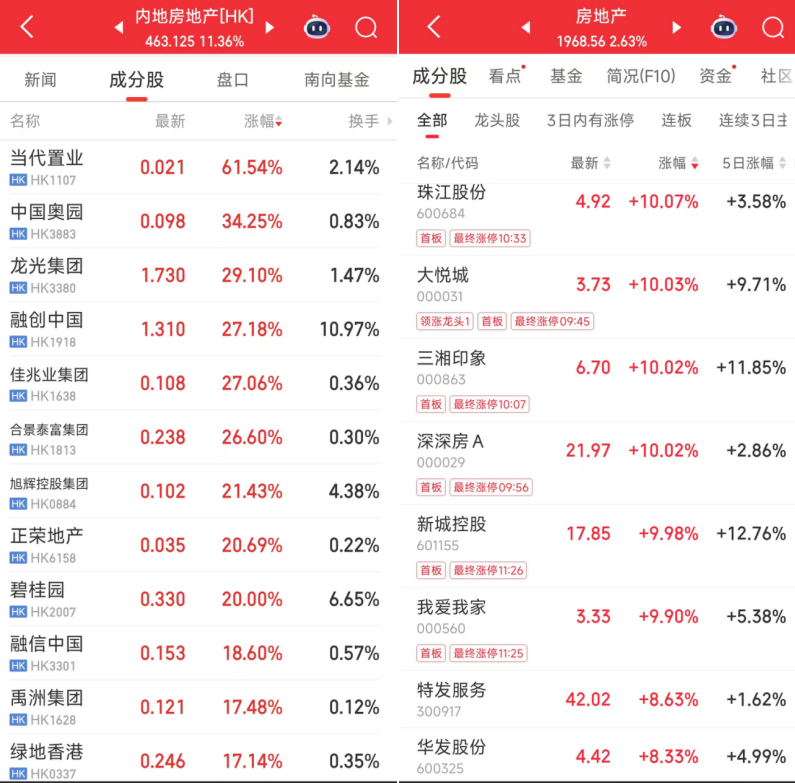
Core Viewpoint - The real estate sector is experiencing a significant rebound in stock prices, with many companies seeing substantial gains, indicating a potential recovery in the market [1][2]. Group 1: Stock Performance - A-share real estate companies such as Zhujiang Holdings, Dayuecheng, Sanxiang Impression, and Shen Shen Fang A have risen over 10% [1]. - In the Hong Kong market, Contemporary Land has surged over 61%, while China Aoyuan and Longguang Group have increased by over 34% and 25%, respectively [1][2]. Group 2: Regulatory Changes - Reports indicate that some real estate companies are no longer required to report the "three red lines" indicators to regulatory authorities, which were previously mandatory since mid-2020 [2][3]. - The "three red lines" policy aimed to control leverage and prevent financial risks in real estate, with key metrics including asset-liability ratios and net debt ratios [3]. Group 3: Market Dynamics - The current market environment has led to a decline in funding for real estate companies, with a four-year average decrease of 17.5% in funds received, surpassing the 15.7% decline in new housing sales [4]. - The shift in the market has resulted in a focus on low-leverage, high-quality asset management by leading real estate firms, moving away from previous high-leverage expansion models [4][5]. Group 4: Future Financing Models - A new financing model is emerging, characterized by the "lead bank system," where a designated bank or syndicate oversees project financing, ensuring that funds are allocated appropriately [6]. - As of December 2025, 21 distressed real estate companies have undergone debt restructuring, with a total debt relief of approximately 1.2 trillion yuan, easing short-term repayment pressures [6].