FINANCIAL STREET(000402)

Search documents
金融街(000402) - 2025 Q3 - 季度财报
2025-10-30 10:10
Financial Performance - The company's operating revenue for Q3 2025 was ¥1,632,081,161.58, a decrease of 19.69% year-on-year, while the revenue for the first nine months was ¥6,286,809,072.60, down 46.21% compared to the same period last year [3]. - The net profit attributable to shareholders for Q3 2025 was -¥341,678,054.02, an improvement of 45.84% year-on-year, and for the first nine months, it was -¥1,349,594,563.86, a reduction in loss of 48.39% compared to the previous year [3]. - The company reported a basic earnings per share of -¥0.11 for Q3 2025, which is a 47.62% improvement year-on-year [3]. - The total operating revenue for the first nine months of 2025 was ¥6,286,809,072.60, a decrease of 46.3% compared to ¥11,686,724,512.75 in the same period last year [35]. - Operating profit for the same period was -¥1,698,111,318.45, improving from -¥2,768,224,589.86 year-over-year [35]. - The company reported a total comprehensive income of -¥1,483,082,020.83, compared to -¥2,748,610,659.98 in the same period last year [36]. - Basic and diluted earnings per share were both -¥0.45, an improvement from -¥0.87 year-over-year [36]. - The total profit (loss) for the period was -¥1,683,002,317.23, compared to -¥2,807,868,755.88 in the previous year [35]. Cash Flow - The net cash flow from operating activities for the first nine months was ¥1,983,512,182.43, a decrease of 22.66% year-on-year [13]. - The company maintained positive net cash flow from operating activities for six consecutive years, emphasizing cash flow safety as a core operational task [21]. - Operating cash flow for the period was ¥1,983,512,182.43, a decrease of 22.6% compared to ¥2,564,627,065.29 in the previous period [43]. - Total cash inflow from operating activities was ¥7,206,091,753.03, down 22.4% from ¥9,288,408,337.40 in the previous period [43]. - Cash outflow from operating activities totaled ¥5,222,579,570.60, a decrease of 22.3% from ¥6,723,781,272.11 in the previous period [43]. - Net cash flow from investment activities was ¥525,138,897.75, an increase of 84.2% compared to ¥285,338,004.33 in the previous period [44]. - Net cash flow from financing activities was -¥5,141,070,756.16, an improvement from -¥6,183,083,452.32 in the previous period [44]. - The ending balance of cash and cash equivalents was ¥9,979,940,970.13, a decrease from ¥10,207,322,722.45 in the previous period [44]. Assets and Liabilities - The total assets at the end of the reporting period were ¥113,752,568,167.68, a decrease of 6.48% from the end of the previous year [3]. - The company's total liabilities decreased by 44.25% for short-term borrowings due within one year, indicating a reduction in financial leverage [9]. - Total liabilities decreased from CNY 94.03 billion to CNY 87.72 billion, a reduction of approximately 6.5% year-over-year [32]. - Current liabilities decreased from CNY 23.94 billion to CNY 18.32 billion, a decline of about 23.5% [32]. - Non-current liabilities slightly decreased from CNY 70.09 billion to CNY 69.40 billion, a decrease of approximately 1% [32]. - Total equity decreased from CNY 27.60 billion to CNY 26.03 billion, a decline of about 5.7% year-over-year [32]. Sales and Market Performance - The total sales contract amount achieved by the company in the first three quarters of 2025 was approximately RMB 5.88 billion, with a sales area of about 404,000 square meters [20]. - Residential products accounted for RMB 5.32 billion in sales contracts (sales area of 317,000 square meters), while commercial products achieved RMB 560 million in sales contracts (sales area of 87,000 square meters) [21]. - In the first three quarters of 2025, the national sales area of commercial housing decreased by 5.5% year-on-year, and the sales amount fell by 7.9% year-on-year, according to the National Bureau of Statistics [19]. - The vacancy rate for Grade A office buildings in Beijing was 16.5%, a year-on-year decrease of 1.7 percentage points, while the rental price was RMB 215.5 per square meter per month, down 19.0% year-on-year [19]. Strategic Initiatives - The company did not report any new strategies or significant developments in product or technology during the reporting period [7]. - The company optimized its sales management model, focusing on result-oriented strategies and market-aligned sales tactics [21]. - The company actively explored financing resources to match its development needs, ensuring adequate funding [21]. - The company implemented refined cash flow management and strict budget control on project expenditures to enhance cost efficiency [21]. - The company is focusing on optimizing its management structure and enhancing operational efficiency through reforms [25]. - The company is committed to improving its organizational structure and performance evaluation systems to achieve strategic goals [25]. - The company is actively enhancing customer experience in its hotel segment and expanding revenue through inter-project collaboration [22]. Investment and Projects - Asset management business (including cultural tourism) achieved revenue of CNY 1.5 billion and EBITDA of CNY 950 million in the first three quarters of 2025 [22]. - The cultural tourism projects, including the Mutianyu Great Wall and Zunhua Ancient Spring Town, saw an increase in visitor numbers and operating income [23]. - The company is exploring a light asset operation model, with the "Jinshu Ru Yuan" apartment project in Beijing entering stable operation and new projects in Chongqing and Suzhou initiated [23]. - The company signed a financial service agreement with Beijing Financial Street Group, with a transaction limit of CNY 8.204 billion, including CNY 4 billion for deposits and CNY 4 billion for loans [29].

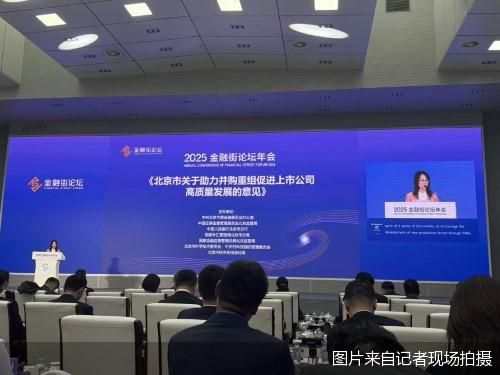
2025金融街论坛|出台“意见19条”!北京市助力并购重组促进上市公司高质量发展
Bei Jing Shang Bao· 2025-10-30 09:29
Core Viewpoint - The recent release of the "Opinions on Supporting Mergers and Acquisitions to Promote High-Quality Development of Listed Companies" aims to enhance the merger and acquisition (M&A) market in Beijing, aligning with national strategies and focusing on key industries for economic transformation and development [1][3]. Group 1: Policy and Market Dynamics - The M&A market has seen significant growth since the introduction of the "Six M&A Guidelines" in 2024, with increased market scale and activity [3]. - The "Opinions" consist of six parts and 19 articles, emphasizing the importance of aligning M&A activities with Beijing's industrial development goals and national strategies [4][5]. - Key considerations in the formulation of the "Opinions" include a focus on market-driven approaches, effective government involvement, and risk prevention measures [3][4]. Group 2: Implementation and Support Mechanisms - The "Opinions" encourage resource allocation towards new productive forces and support cross-industry and cross-regional M&A activities [4]. - A new service platform for M&A and development has been established to connect listed companies, innovative enterprises, and financial institutions, providing comprehensive support for M&A activities [5]. - The platform aims to facilitate information sharing, training, and transaction matching to promote high-quality development in the M&A market [5]. Group 3: Market Activity and Trends - In the first nine months of 2024, 106 M&A transactions were completed by A-share listed companies in Beijing, with a total transaction value of 842 billion yuan, marking a year-on-year increase [6]. - The semiconductor industry is currently a hot target for M&A, with companies like Time Space Technology and Yingxin Development actively pursuing acquisitions in this sector [6][7]. - Following the announcement of M&A plans, both Time Space Technology and Yingxin Development experienced significant stock price increases, reflecting strong investor interest [6][7].

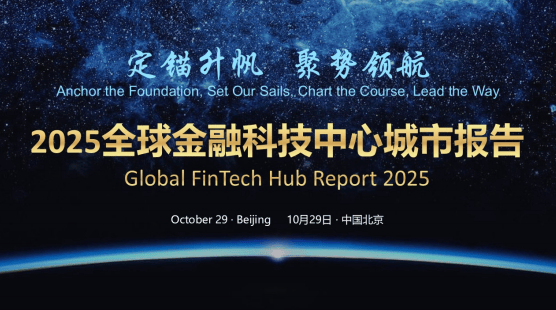
2025全球金融科技中心城市报告发布,中国5城跻身TOP10丨直击金融街论坛
Sou Hu Cai Jing· 2025-10-30 08:42
Core Insights - The report titled "Global FinTech Hub Report 2025" reveals that Beijing retains its position as the top global fintech city, with significant advancements in various Chinese cities [1][3]. Trend Summaries Trend 1: Intensifying Global Competition - The competition in the global fintech sector is intensifying, with the top 10 cities showing a reduced gap in rankings over the past six years. The index gap between the first and tenth ranked cities is now 22.8, down from 29.7 in 2020, indicating a narrowing disparity in fintech capabilities [4]. - Notable movements include Hong Kong rising one position and Paris entering the top 10 for the first time, replacing Sydney [4]. Trend 2: Asia's Leading Position - Asia continues to dominate the global fintech landscape, with 60% of the top 10 cities located in the region. China has five cities in the top 10, contributing to a total of 25 Asian cities in the top 50, significantly outpacing other regions [5][6]. Trend 3: Emergence of New Centers - New fintech centers are rapidly emerging, with 14 cities in the top 50 showing consistent upward movement over the past three years. This growth is driven by "industry/technology-driven" and "ecosystem/regulatory-driven" models [7][8]. Trend 4: Breakthroughs in Ecosystem and Industry Rankings - In the ecosystem rankings, China has made significant strides, with four cities in the top 10. Hong Kong's financial institutions saw a market value increase from $216.9 billion to $363.9 billion, a growth rate of 67.8% [9]. - The industry rankings remain led by China and the U.S., with Chinese cities collectively housing 121 fintech listed companies valued at $375.4 billion [10]. Trend 5: Enhanced Index System - The report introduces an upgraded Financial Development Index (FDI) that evaluates fintech development through over 50 indicators, aiming to foster international collaboration and a robust global fintech ecosystem [11][12].
2025金融街论坛平行论坛举行,聚焦数智时代金融风险防控
Xin Jing Bao· 2025-10-30 08:23
Core Insights - The 2025 Financial Street Forum highlighted the dual nature of digital intelligence in finance, presenting both opportunities for innovation and new risks that require a legal and collaborative governance framework [1][2] Group 1: Governance and Risk Management - The Deputy Mayor of Beijing, Sun Shuo, emphasized the historical intersection of breakthrough digital technology applications and high-level financial openness, which creates new productive forces but also poses challenges such as algorithmic opacity and new fraud risks [1] - The Beijing government is focusing on enhancing regulatory collaboration and establishing a comprehensive risk prevention system while ensuring a stable and transparent financial environment [1][2] Group 2: Recommendations for Financial Risk Governance - Sun Shuo proposed three key recommendations for building a collaborative governance system in the digital era: leading with the rule of law, embracing technology for security, and promoting openness for shared benefits [2] - The Beijing People's Procuratorate is integrating the creation of a financial prosecution brand with the implementation of a digital prosecution strategy, emphasizing legal supervision as a core element of risk prevention and governance [2] Group 3: Initiatives and Publications - A joint initiative to combat financial black and gray industries was launched by the Beijing People's Procuratorate, the Beijing Regulatory Bureau of the National Financial Supervision Administration, and China University of Political Science and Law [2] - The Beijing People's Procuratorate released the "Beijing Procuratorial Financial White Paper (2024-2025)" along with typical case studies [2]
2025金融街论坛年会青年论坛:青年要做中国特色金融发展之路的践行者
Zhong Guo Jin Rong Xin Xi Wang· 2025-10-30 08:16
Group 1 - The 2025 Financial Street Forum Youth Forum was held in Beijing, focusing on the theme of "Building a Financial Power and the Mission of Youth in the New Era" [1] - The First Secretary of the Central Committee of the Communist Youth League emphasized the importance of financial youth in contributing to the construction of a financial power and promoting Chinese financial culture [1] - The Deputy Secretary of the Beijing Municipal Committee highlighted the role of youth as the future of the nation and the importance of finance as a core component of national competitiveness [1] Group 2 - The Chairman of the Industrial and Commercial Bank of China discussed the challenges posed by global trade, monetary systems, and the need for financial work to meet diverse economic demands [2] - Key speakers, including representatives from various sectors, addressed topics related to building a financial power and the role of youth in this process [2] - A roundtable discussion featured young representatives discussing high-quality financial development, technological innovation, and topics of interest such as artificial intelligence and new materials [2][3]

【金融街发布】理想汽车联合多家机构发布《高级别智能辅助驾驶保险创新研究白皮书》
Zhong Guo Jin Rong Xin Xi Wang· 2025-10-30 08:12
Core Viewpoint - The collaboration among Li Auto, PICC Beijing Branch, Yuanbao Technology, and Shanghai Vehicle Inspection aims to innovate insurance solutions for high-level intelligent assisted driving, responding to the strategic deployment of financial technology and the evolving policies in the automotive industry [1][2]. Group 1: Industry Context - Intelligent driving is identified as a core engine for the transformation and upgrading of the automotive industry, significantly contributing to the integration of artificial intelligence and automotive innovation for high-quality development [1]. - Since 2025, China's intelligent assisted driving technology has accelerated, with the government actively promoting the development of the intelligent connected vehicle industry through various policies [1]. Group 2: White Paper Characteristics - The white paper is the first systematic research focusing on high-level intelligent assisted driving insurance, addressing the current immaturity of insurance products and lack of systematic solutions in this field [2]. - It features foresight and originality, filling a research gap in risk protection and product innovation for high-level intelligent assisted driving insurance, and aims to influence the formulation of related standards and policies [2]. - The white paper is comprehensive, covering industry trends, legal regulations, consumer rights, insurance development paths, risk management technologies, and pricing models, establishing a solid foundation for future financial product optimization [2]. Group 3: Practicality and Collaboration - The white paper's compilation involved collaboration among automakers, insurance companies, and third-party technology platforms, integrating practical experiences and expertise from various sectors [3]. - The proposed solutions are based on industry practices and aim to promote cross-industry collaboration, enhancing the operational feasibility and industry guidance value of the insurance products [3]. - The release of the white paper is expected to fill the gap in high-level intelligent assisted driving insurance policies and product development in China, supporting the implementation of industry policies and responding to the requirements of "financial technology" [3].

北京金融监管局等三方金融街论坛联合发布倡议,剑指金融黑灰产
Xin Jing Bao· 2025-10-30 07:37
Core Viewpoint - The financial sector is facing challenges from emerging black and gray industries, prompting a collaborative initiative to combat these issues and enhance financial risk prevention and governance [1][3]. Group 1: Financial Black and Gray Industries - Financial black and gray industries refer to illegal or borderline legal activities in the financial sector that generate improper benefits, including improper debt collection, illegal loan mediation, malicious debt evasion, and fraudulent credit repair [1]. - These industries are expanding rapidly, leveraging media platforms for marketing and exhibiting characteristics such as chain-like operations, cross-regional activities, bulk operations, and concealment [1][3]. Group 2: Challenges in Governance - Current governance efforts face challenges such as a lack of collaborative mechanisms, ambiguous legal standards, and insufficient punitive measures [3]. - The initiative aims to address these challenges by fostering a comprehensive prevention and control system to mitigate systemic financial risks [4]. Group 3: Joint Initiative Proposals - The initiative includes several proposals: 1. **Information Sharing**: Enhance collaboration in financial risk prevention through information sharing for pre-warning, rapid response, and precise post-event actions [4]. 2. **Mechanism Improvement**: Establish a risk monitoring mechanism and encourage financial institutions to report high-risk information proactively [4]. 3. **Rights Protection**: Develop standards for handling complaints and ensure quick resolution of legitimate claims while preventing malicious complaints [4]. 4. **Accountability**: Clarify the responsibilities of platforms regarding the verification of entities, information dissemination, and risk event management [4][5]. 5. **Multi-Party Interaction**: Create regular interaction mechanisms among regulatory bodies, judicial authorities, and academic institutions to conduct joint legal research on emerging black and gray industries [5].

2025金融街论坛|蚂蚁数科余滨:不少城商行正积极拥抱金融大模型与智能体技术,寻求业绩突围
Bei Jing Shang Bao· 2025-10-30 07:14
Core Insights - Ant Group's AI business is actively supporting city commercial banks in adopting financial large models and intelligent agent technologies to enhance performance amidst challenges like narrowing net interest margins and intensified competition [1][2] - The shift from AI being a trial to a necessity is emphasized, with AI transforming from a cost center to a core element of service, marketing, and value creation [1] Group 1: AI Adoption in Banking - Many city commercial banks are leveraging AI as a key strategy for performance improvement, with significant growth in employee efficiency, marketing conversion rates, and revenue scale reported in regions like Jiangsu, Zhejiang, and Shanghai [1] - The implementation of AI applications has expanded from basic functions like intelligent customer service to comprehensive systems covering marketing, risk control, investment advisory, and claims processing [1] Group 2: Case Studies and Results - For instance, Shanghai Bank's AI mobile banking service allows users to perform over ten high-frequency tasks through natural language interaction, resulting in a 10% increase in business conversion rates and higher satisfaction among elderly customers [2] - A leading city commercial bank in Zhejiang has developed a full-stack AI capability with over 30 intelligent agent scenarios, enhancing both customer service and internal operations [2] Group 3: Strategic Approaches to AI Implementation - Different financial institutions are advised to choose AI evolution paths that suit their resources and development stages, with options ranging from starting with application scenarios to upgrading existing mobile apps into AI-driven platforms [2] - Some banks are establishing dedicated teams to create comprehensive knowledge bases and datasets, utilizing Ant Group's financial reasoning models to build autonomous "financial brains" for end-to-end business process reengineering [2] Group 4: Market Coverage - Ant Group's financial digitalization services have reached 100% of state-owned joint-stock banks, over 60% of local commercial banks, and hundreds of financial institutions [2]
观察·2025金融街论坛年会 一批金融领域最新研究与重磅实践成果发布
Yang Shi Wang· 2025-10-30 06:27
Group 1 - The "Financial Street Release" event at the 2025 Financial Street Forum showcased the latest research and significant practical achievements in the financial sector [1] - The "Financial Street Development Report (2025)" provides a multi-dimensional and systematic analysis of the development of Financial Street during the "14th Five-Year Plan" period, highlighting its role as a national financial management center with enhanced international influence [3] - The report indicates that the asset management scale of institutions in Financial Street exceeds 21 trillion yuan, with financial institutions in the area managing assets totaling approximately 156 trillion yuan, accounting for about one-third of the national total [3] Group 2 - The "Application Guide for Large Models in the Financial Industry" released by the National Financial and Development Laboratory outlines the application boundaries, implementation paths, and compliance requirements for large models in the financial sector [3] - The application of artificial intelligence large models in finance is emphasized as a trend, supporting high-quality development and better service to the real economy [3] Group 3 - The "Green Finance White Paper" was officially released at the forum, providing systematic solutions for the development of the green finance industry [4][6] - The white paper reviews international green finance theories and China's green finance policies, showcasing the product system and future development outlook for green finance in China [6] Group 4 - The forum featured multiple discussions on technology innovation and financial cooperation, with various international and domestic financial institutions signing cooperation agreements [8] - The New Development Bank's president highlighted the "Belt and Road" initiative as a key platform for international investment and cooperation, with plans to strengthen collaboration with Chinese banks [10] Group 5 - The China Export-Import Bank reported a loan balance exceeding 2 trillion yuan for the "Belt and Road" initiative and plans to enhance cooperation with countries involved in the initiative [12] - The bank signed cooperation agreements with several international financial institutions and enterprises, focusing on infrastructure construction, foreign trade, and cross-border investment [14] Group 6 - The Beijing Stock Exchange announced plans to support the listing of growth-stage and unprofitable companies, aiming to direct financial resources towards key technology sectors [15][17] - The exchange is working on deepening reforms in the New Third Board and creating a service system for the entire lifecycle of enterprises, while promoting the issuance of government bonds and expanding the credit bond market [17][19]
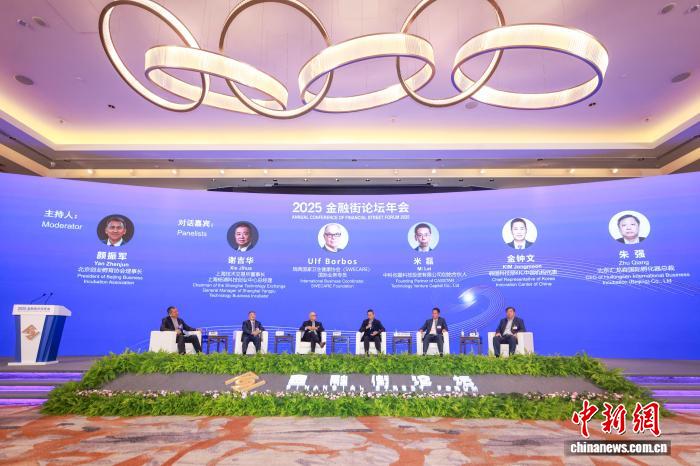
2025金融街论坛年会勾勒开放创新金融新图景
Zhong Guo Xin Wen Wang· 2025-10-30 06:26
Core Insights - The 2025 Financial Street Forum held in Beijing from October 27 to 30 gathered over 400 financial leaders and experts from more than 30 countries, focusing on financial openness, technological integration, and cross-border risk management [1][3][10] - The forum emphasized China's commitment to financial openness and global cooperation, signaling strong support for sustainable development [1][10] Group 1: Financial Policy and Regulation - The People's Bank of China aims to enhance the macro-prudential management system, focusing on monitoring systemic financial risks and improving risk prevention measures [3][5] - The National Financial Regulatory Administration plans to improve economic and financial adaptability to promote sustainable economic development and deepen reforms [4][5] - The China Securities Regulatory Commission is focused on risk prevention, strong regulation, and promoting high-quality development in the capital market [4][5] Group 2: Financial Innovation and Technology - The forum's theme highlighted the importance of innovation in addressing new challenges such as climate change and geopolitical crises, indicating a shift from traditional financial models [7][10] - Financial technology is prioritized, with initiatives aimed at enhancing digital transformation and improving financial services through AI and data utilization [8][9] - The integration of finance and technology is seen as crucial for building a modern industrial system and supporting innovation-driven economic growth [9][10] Group 3: International Cooperation and Global Financial Governance - The forum attracted numerous international participants and established five overseas sub-venues, marking a record number of global engagement [10][12] - Emphasis was placed on enhancing policy coordination and experience sharing among countries to improve macroeconomic governance [12][13] - China is positioned as a core member of international financial governance, contributing to global financial security and advocating for a more inclusive financial system [13][14]