GUJING(000596)

Search documents
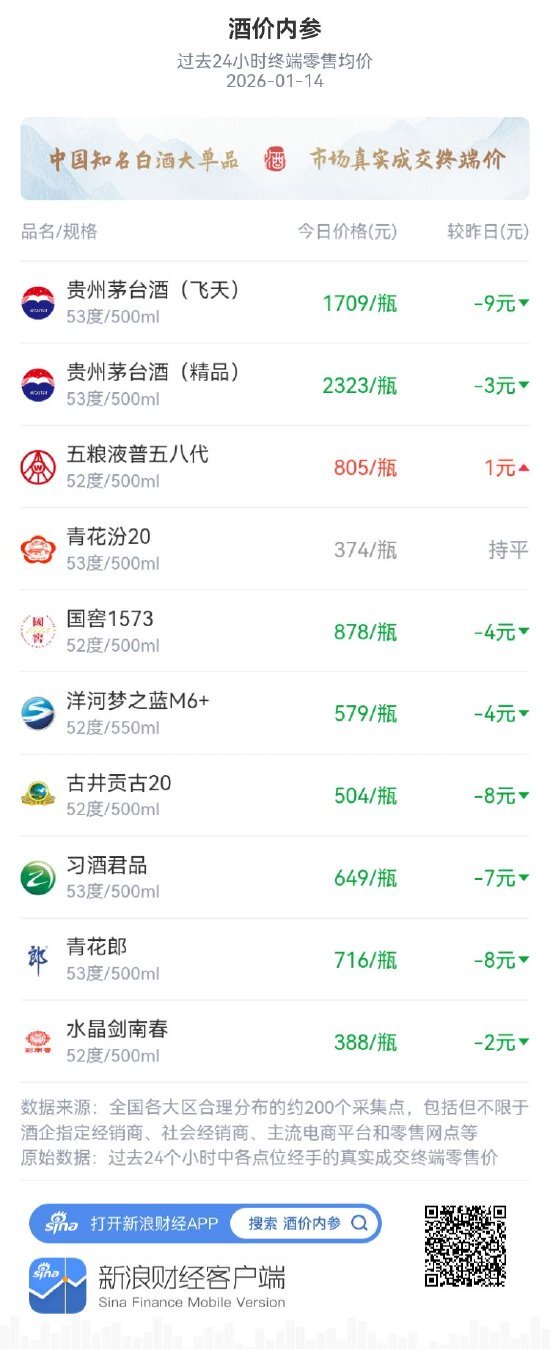
酒价内参1月14日价格发布 洋河梦之蓝M6+下跌4元
Xin Lang Cai Jing· 2026-01-14 01:32
Core Viewpoint - The Chinese liquor market is experiencing a price adjustment, with the average retail price of the top ten liquor products declining, indicating cautious market sentiment [1]. Group 1: Market Price Trends - On January 14, the average retail price of the top ten liquor products decreased by 44 yuan, bringing the total price to 8925 yuan [1]. - Eight out of the ten products saw price declines, with Feitian Moutai leading the drop at 9 yuan per bottle [1]. - Other notable declines include Gujing Gonggu 20 and Qinghua Lang, both down 8 yuan per bottle, while Guojiao 1573 and Yanghe Dream Blue M6+ fell by 4 yuan each [1]. Group 2: Market Dynamics - The market is characterized by a general downward trend, with a narrowing trading volume and a clear differentiation among products [1]. - Only Wuliangye Pu 58th generation saw a slight increase of 1 yuan per bottle, while Qinghua Fen 20 remained unchanged [1]. Group 3: Pricing Mechanism Changes - On January 13, Kweichow Moutai announced a new market-oriented pricing strategy, moving away from fixed factory prices to a dynamic pricing mechanism based on market conditions [3]. - This new pricing system aims to enhance the company's control over retail prices and stabilize the market, allowing for flexible pricing based on product, channel, and operational model differences [3]. - The company is piloting a consignment model for new products, allowing consumers to order online and pick up in-store, aiming for a win-win situation between manufacturers and channels [3].






酒价内参1月14日价格发布 青花郎下跌8元
Xin Lang Cai Jing· 2026-01-14 01:20
Core Insights - The article highlights a recent decline in the retail prices of major Chinese liquor brands, indicating a cautious market sentiment and a general downward trend in prices [1][6]. Price Trends - The average retail price of the top ten Chinese liquor products decreased to 8,925 yuan on January 14, down by 44 yuan from the previous day [1][6]. - Eight out of the ten major products experienced price drops, with Feitian Moutai leading the decline at 9 yuan per bottle [1][6]. - Other notable price decreases include Gujing Gong and Qinghua Lang, both down by 8 yuan per bottle, while Guojiao 1573 and Yanghe Dream Blue M6+ fell by 4 yuan per bottle [1][6]. Market Dynamics - The market is currently characterized by a broad decline in prices, with a notable contraction in trading volume [1][6]. - Only Wuliangye's Pu Wuhai Dai saw a slight increase of 1 yuan per bottle, while Qinghua Fen 20 remained unchanged [1][6]. Data Collection Methodology - The "Wine Price Reference" collects data from approximately 200 sampling points across various regions, including designated distributors, social distributors, e-commerce platforms, and retail outlets [2][7]. - The data aims to provide an objective and traceable representation of the market prices for well-known liquor brands [2][7]. Strategic Changes in Pricing - On January 13, 2026, Kweichow Moutai announced a new market-oriented operational plan, which includes a dynamic pricing mechanism that deviates from the traditional fixed pricing model [3][8]. - This new pricing strategy allows for flexible pricing based on market conditions, enhancing the company's ability to control retail prices and stabilize the market [3][8]. - The company is testing a consignment model where consumers can order online and pick up in-store, aiming for a win-win situation between manufacturers and distributors [3][8].

洋河股份三季度营收规模比古井贡酒高近20亿 双方利润却相差无几?
Xin Lang Cai Jing· 2026-01-13 14:35
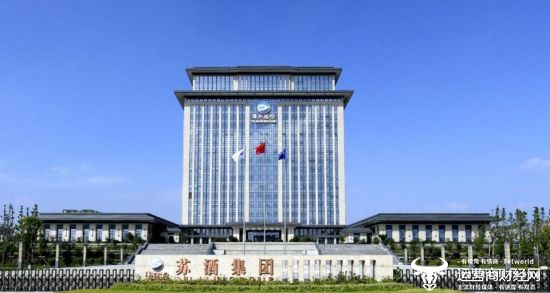
Core Viewpoint - The financial reports for the third quarter of 2025 from leading liquor companies Yanghe Co. and Gujing Gongjiu show significant declines in revenue and profit, highlighting the competitive challenges in the industry [1]. Group 1: Financial Performance - Yanghe Co. reported a revenue of 18.09 billion yuan for the first three quarters, a decrease of 34.26% year-on-year, while Gujing Gongjiu's revenue was 16.43 billion yuan, down 13.87% [3][6]. - Yanghe Co.'s net profit attributable to shareholders was 3.98 billion yuan, a decline of 53.66%, whereas Gujing Gongjiu's net profit was 3.96 billion yuan, down 16.57% [3][6]. - In the third quarter alone, Yanghe Co. experienced a revenue drop of 29.01% to 3.29 billion yuan and a net profit loss of 158.38%, resulting in a loss of 369 million yuan [4][6]. Group 2: Profitability and Market Position - Yanghe Co.'s gross margin decreased by 2.71 percentage points to 71.10%, while Gujing Gongjiu's gross margin slightly increased to 79.87%, indicating stronger profitability [5]. - In the first half of the year, Yanghe Co. had a domestic revenue of 7.26 billion yuan, down 25.61%, with a narrowing revenue gap of about 1 billion yuan with its competitor Jianshe Yuan [6]. - Gujing Gongjiu maintained a strong market position in Anhui province, achieving a revenue of 12.30 billion yuan in the first half, a year-on-year increase of 3.60%, securing approximately 30% market share [7].
年节将至,古井贡酒·年三十【和】让“中国年酒”回归大众餐桌
华尔街见闻· 2026-01-13 11:01
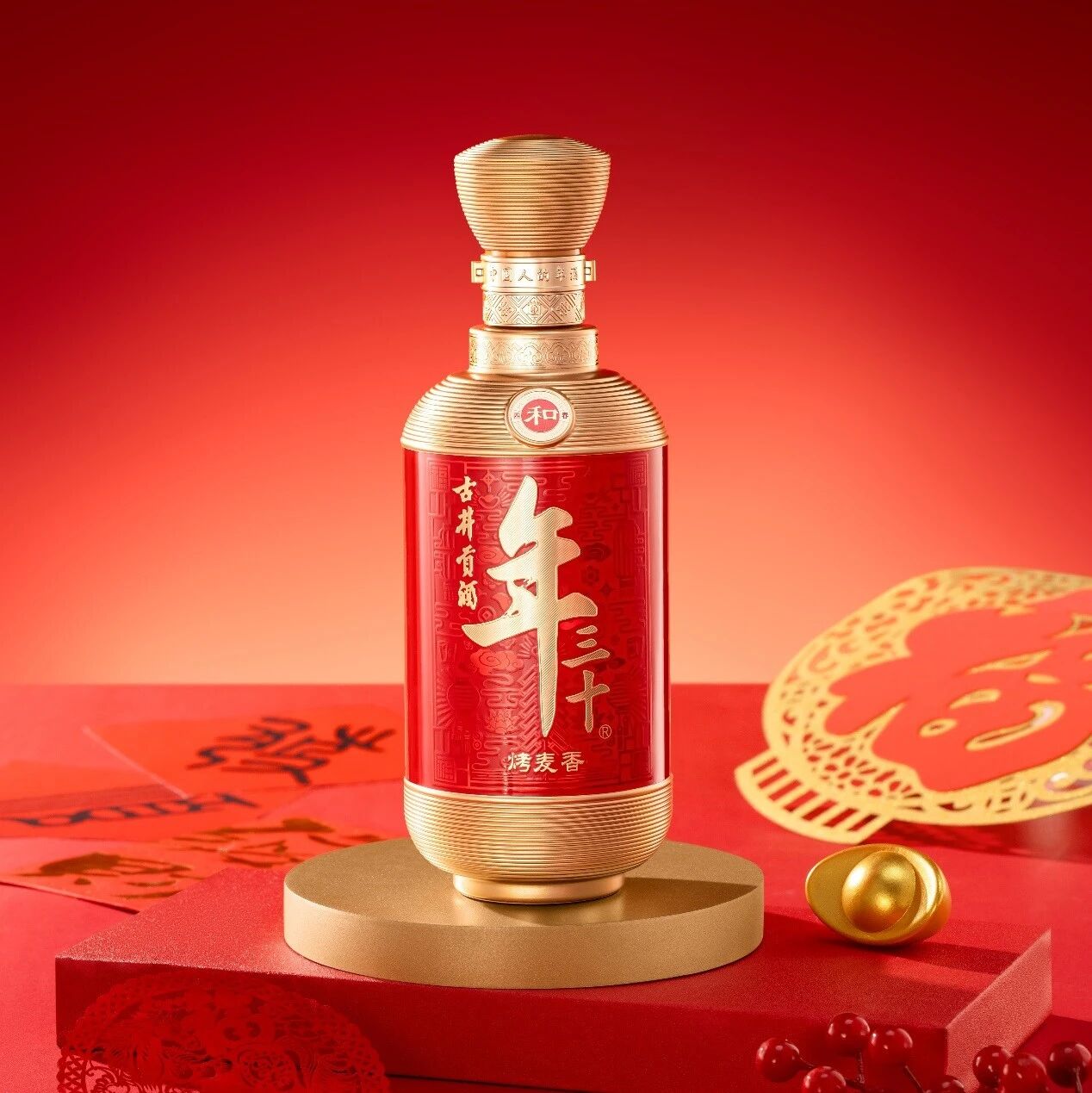
Core Viewpoint - The article emphasizes the strategic positioning and market success of Gujing Gongjiu's "Nian San Shi" series, which has become a popular choice for the upcoming Lunar New Year, highlighting its unique cultural significance and quality craftsmanship [2][12]. Group 1: Product Positioning and Market Strategy - Gujing Gongjiu has successfully established "Nian San Shi" as "China's New Year Wine," gaining widespread market recognition since its launch in 2020 [2]. - The product was launched on Douyin with over 10,000 bottles sold within four days, indicating strong consumer demand [2]. - The design of "Nian San Shi" targets three key festive scenarios, enhancing its emotional and practical appeal during the New Year celebrations [8]. Group 2: Unique Craftsmanship and Quality - The "Ancient Fragrance" white liquor system, developed over decades, is the core differentiator of "Nian San Shi," built on four key traditional brewing techniques [4]. - The "Mud and Stone Cellar" process allows for a fermentation period exceeding 120 days, contributing to its unique flavor profile [5]. - The high-cost traditional craftsmanship enables "Nian San Shi" to offer premium quality at a price point of 220 yuan, making it accessible to a broader audience [6]. Group 3: Emotional and Cultural Resonance - The product embodies emotional value, serving as a tangible representation of family reunion during the New Year, with its design reflecting traditional cultural elements [8][11]. - Gujing Gongjiu's long-term association with major events like the Spring Festival Gala has solidified its brand credibility and connection to the concept of "New Year" [12]. - Positive consumer feedback highlights the product's quality and suitability for gifting, reinforcing its dual attributes of prestige and social connection [13]. Group 4: Market Insights and Consumer Trends - The case of "Nian San Shi" illustrates that in an era of consumption stratification, the opportunity lies in transforming high-quality experiences into accessible offerings for the masses [14]. - The brand strategy effectively responds to core consumer emotions, positioning the product not just as a beverage but as a vessel for cultural transmission and celebration [14].
古井贡酒·年三十【和】上市:一壶“和”酒,浸润中国年味
经济观察报· 2026-01-13 10:17
Core Viewpoint - The article discusses the strategic shift in the Chinese liquor market, particularly focusing on the launch of Gujinggongjiu's "Nian San Shi" as a national-level "New Year liquor" aimed at the mass market, moving from high-end collectibles to more accessible products [2][11]. Group 1: Product Launch and Market Positioning - Gujinggongjiu has introduced the "Nian San Shi" priced at 220 yuan, marking a significant step in its strategy to popularize "Chinese New Year culture" [2][11]. - The product is designed for the core consumption scenarios of family reunions and gift-giving during the Spring Festival, targeting the general public [4][9]. Group 2: Cultural and Emotional Resonance - The design of the bottle incorporates traditional elements such as lanterns and auspicious symbols, emphasizing the cultural significance of family unity during the New Year [4][12]. - The product embodies the "He" culture, aligning with traditional values of harmony and family prosperity, thus enhancing its emotional appeal [4][12]. Group 3: Quality and Production Techniques - The "Nian San Shi" is supported by Gujinggongjiu's unique "Ancient Fragrance" brewing technique, which ensures a high quality-to-price ratio [7][8]. - The brewing process involves a meticulous fermentation method that enhances the flavor profile, making it accessible to a broader audience [7][8]. Group 4: Consumer Insights and Market Trends - The product targets consumers aged 25-55, addressing both practical and emotional needs during the Spring Festival, thus balancing utility and sentiment [9][11]. - The launch has seen significant initial success, with over 10,000 bottles sold on Douyin within four days of its pre-sale [9][11].
质价比拉满!古井贡酒・年三十系列推出入门版【和】,重新定义国民年酒
Mei Ri Jing Ji Xin Wen· 2026-01-13 09:16
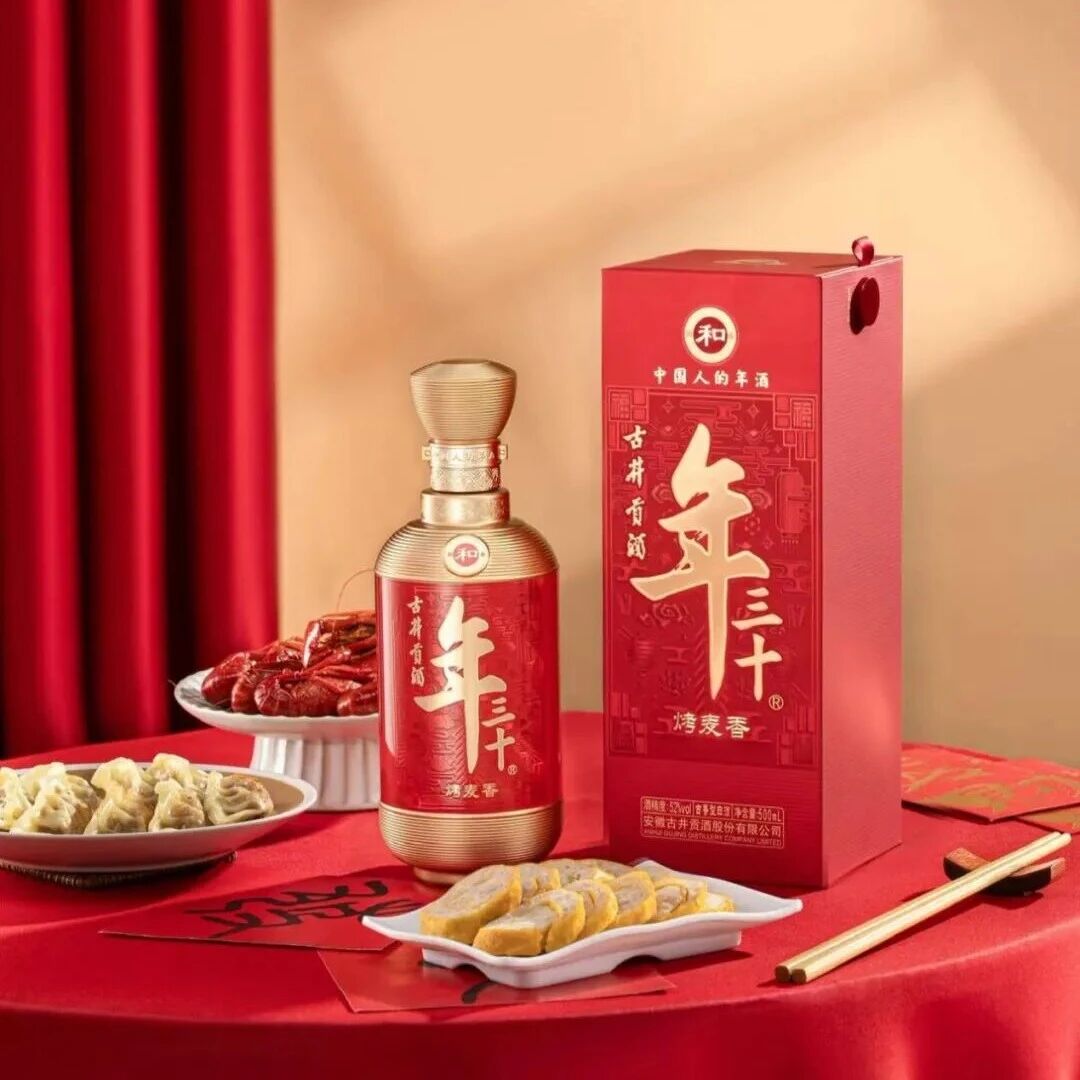
Core Viewpoint - The article emphasizes the cultural significance of the "Gu Jing Gong Jiu · Nian San Shi [He]" as a traditional Chinese New Year wine that embodies the spirit of reunion and celebration, highlighting its unique craftsmanship and symbolic design [1][3][4]. Group 1: Product Description - The bottle design of "Gu Jing Gong Jiu · Nian San Shi [He]" features a lantern shape symbolizing family reunion, with elements of traditional Chinese aesthetics and auspicious motifs like lanterns and firecrackers [3][4]. - The wine is characterized by its unique "Ancient Fragrance" style, developed through decades of experimentation, offering a rich aroma and a smooth, harmonious taste that reflects the essence of the New Year [4][5]. Group 2: Production Process - The production process involves traditional techniques such as "mud and stone cellars" for fermentation, allowing the wine to develop a rich flavor over a period of more than 120 days [5]. - The use of "three types of mash" in the brewing process contributes to the distinctive roasted wheat aroma, showcasing the brand's commitment to quality and craftsmanship [5]. Group 3: Market Positioning - The wine is positioned as an affordable yet high-quality option for consumers, with a price point just above 200, making it accessible for family gatherings and gifting [5]. - The product has seen significant market interest, with over 10,000 bottles sold on the Douyin platform within four days of its pre-sale launch [5]. Group 4: Cultural Significance - The wine serves as a medium for expressing familial bonds and cultural traditions during the New Year celebrations, enhancing the festive atmosphere and symbolizing good wishes for the coming year [6][8]. - It is portrayed as an essential part of the reunion dinner, embodying the warmth and joy of family gatherings during the holiday season [6][8].

白酒板块1月13日跌0.9%,*ST岩石领跌,主力资金净流出8.17亿元
Zheng Xing Xing Ye Ri Bao· 2026-01-13 09:00
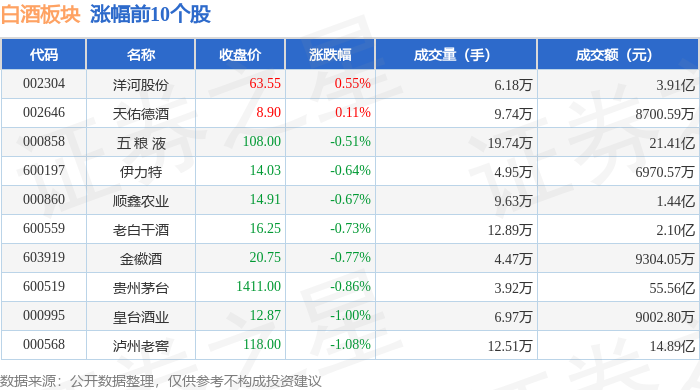
Group 1 - The liquor sector experienced a decline of 0.9% on January 13, with *ST Rock leading the drop [1] - The Shanghai Composite Index closed at 4138.76, down 0.64%, while the Shenzhen Component Index closed at 14169.4, down 1.37% [1] - Major liquor stocks showed mixed performance, with Wuliangye down 0.51% to 108.00 and Moutai down 0.86% to 1411.00 [1] Group 2 - The liquor sector saw a net outflow of 8.17 billion yuan from institutional investors, while retail investors contributed a net inflow of 3.19 billion yuan [2] - The top stocks by net inflow included Wuliangye with a net inflow of 46.20 million yuan from institutional investors, while *ST Rock had a net outflow of 38.73 million yuan [3] - Retail investors showed a preference for stocks like Moutai and Gujing Gongjiu, with net inflows of 15.08 million yuan and 15.08 million yuan respectively [3]

A股白酒股普跌
Ge Long Hui· 2026-01-13 06:12
Group 1 - The core viewpoint of the article highlights a decline in A-share market for liquor stocks, particularly with major brands like Moutai planning to lower the prices of several products [1] - Major liquor stocks such as Shui Jing Fang, Gu Jing Gong Jiu, and others fell over 1%, while Moutai experienced a slight decline of 0.7% [1] - Moutai has reportedly confirmed a price reduction for certain products, including premium Moutai and Moutai 1935, affecting the contract prices for distributors [1]


酒价内参1月13日价格发布 市场普涨反弹整体价格显著回升
Xin Lang Cai Jing· 2026-01-13 01:09
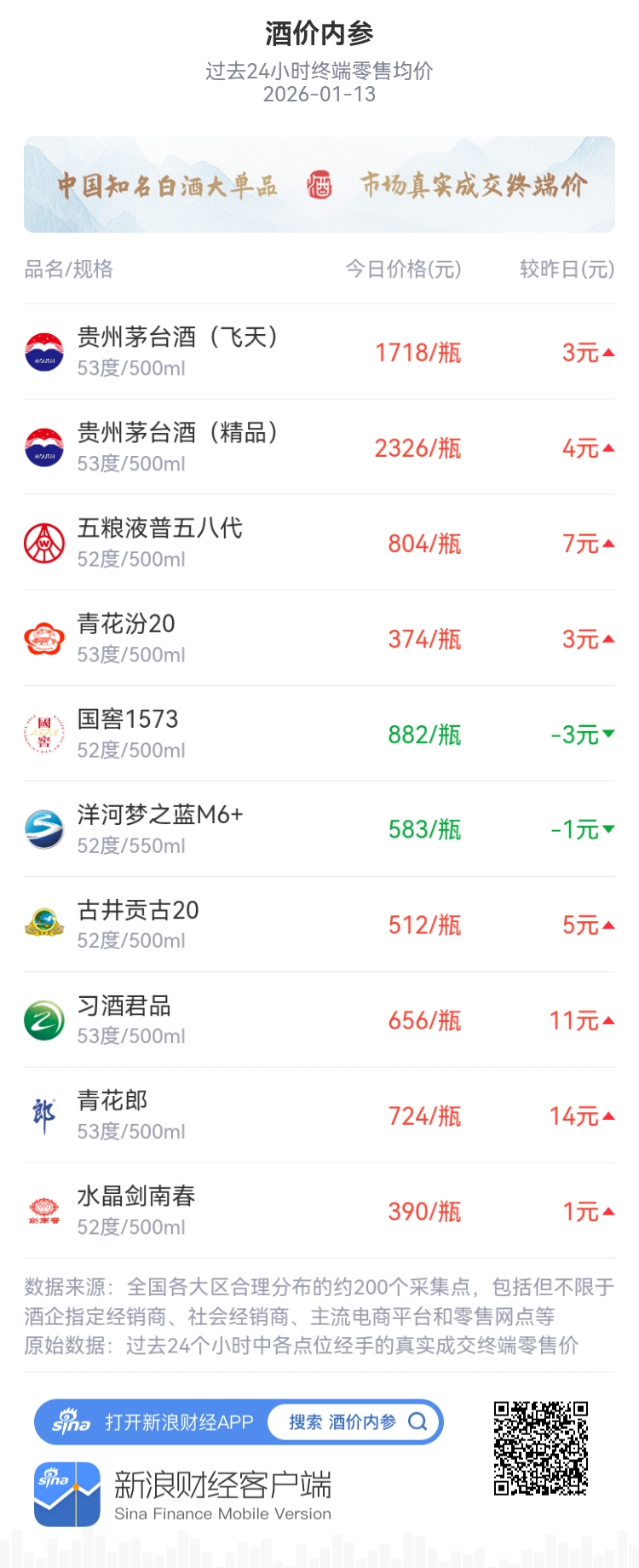
Core Viewpoint - The Chinese liquor market has experienced a significant rebound in retail prices for the top ten products, indicating a recovery in market sentiment after a period of decline [1]. Price Trends - The overall retail price for the top ten liquor products reached 8969 yuan, an increase of 44 yuan from the previous day [1]. - The market showed a broad upward trend, with most core products experiencing price increases, reflecting restored market confidence [1]. Individual Product Performance - Qinghua Lang saw the most substantial increase, rising by 14 yuan per bottle [1]. - Xijiu Junpin increased by 11 yuan per bottle, showing a strong rebound [1]. - Wuliangye Pu 58th generation ended its decline with a price increase of 7 yuan per bottle [1]. - Gujing Gonggu 20 rose by 5 yuan per bottle, while Jingpin Moutai increased by 4 yuan per bottle [1]. - Feitian Moutai and Qinghua Fen 20 both saw a rise of 3 yuan per bottle [1]. - The only products that experienced price declines were Guojiao 1573, which fell by 3 yuan, and Yanghe Dream Blue M6+, which decreased by 1 yuan [1][4]. Market Data Sources - The data was collected from approximately 200 points across major regions, including designated distributors, social distributors, mainstream e-commerce platforms, and retail outlets [4].
酱酒品牌剩者为王,大众品重视春节催化:食品饮料行业周报(20260105-20260111)-20260112
Huachuang Securities· 2026-01-12 11:12
Investment Rating - The report maintains a "Recommendation" rating for the food and beverage industry, indicating an expected increase in the industry index exceeding the benchmark index by more than 5% in the next 3-6 months [26]. Core Insights - The report emphasizes that the remaining brands in the sauce liquor sector will thrive, while mass-market products are expected to benefit from the upcoming Spring Festival [2][8]. - The dairy sector is showing signs of improvement, with a potential rebound in raw milk prices and a narrowing supply-demand gap, which could lead to increased demand for processed dairy products [6]. - The beverage and snack categories are experiencing sustained growth, with specific segments like energy drinks and konjac snacks showing remarkable sales increases despite overall declines in the snack market [6]. - The report highlights a significant shift in the sauce liquor industry, where pricing strategies are becoming more pragmatic, with a new growth level emerging around the 200 yuan price point as lower-tier brands face market exit pressures [6][8]. - The report suggests that leading liquor companies should maintain operational stability during this industry downturn, focusing on balanced investments in base liquor to prepare for future market recovery [8]. Summary by Sections Industry Overview - The food and beverage sector consists of 126 listed companies with a total market capitalization of 44,935.30 billion yuan, representing 3.54% of the market [3]. - The circulating market value stands at 43,859.19 billion yuan, accounting for 4.28% of the total market [3]. Performance Metrics - The absolute performance of the industry over the past month is 1.3%, with a relative performance decline of 2.2% compared to the benchmark [4]. - Over the past 12 months, the industry has seen a relative performance decline of 25.2% [4]. Sector-Specific Insights - Dairy products are expected to benefit from a favorable pricing environment and improved supply dynamics, with major companies actively preparing for the Spring Festival [6]. - The beverage sector is witnessing growth in specific categories, with leading brands launching targeted marketing campaigns for the holiday season [6]. - The sauce liquor market is undergoing a consolidation phase, with a focus on brand strength and market share recovery among leading companies [6][8].