
WLY(000858)

Search documents
行业结构性复苏 五粮液元旦以来动销稳健增长
Zheng Quan Ri Bao· 2026-02-12 08:39
Core Viewpoint - The high-end liquor market is experiencing a significant recovery ahead of the 2026 Spring Festival, with leading brands like Moutai and Wuliangye showing strong sales performance and price increases, supported by a rebound in demand for business banquets and holiday gifting [2][3]. Group 1: Market Performance - Wuliangye has demonstrated a notable improvement in sales due to precise supply chain management and innovative marketing strategies, achieving high-quality growth since the New Year [2][3]. - The overall inventory levels in the liquor industry remain high, but Wuliangye's proactive measures have led to a healthier channel status, with inventory around one month [4][6]. - The core product, the eighth generation of Wuliangye, has seen significant growth compared to the same period last year, indicating strong market demand [4][5]. Group 2: Strategic Initiatives - Wuliangye's marketing strategy for 2026 focuses on "innovative marketing while maintaining core values," aiming to enhance efficiency and empower the terminal market [3][6]. - The company has implemented a "bottle opening scan" initiative to connect with consumers digitally, significantly increasing daily bottle opening rates and enhancing consumer engagement [5][6]. - Wuliangye has also targeted the younger demographic with new product launches and collaborations with popular cultural icons, achieving over 200 million yuan in sales for its new low-alcohol product [5][6]. Group 3: Industry Outlook - The liquor sector is in a "bottoming out" phase, with expectations of a valuation recovery post-Spring Festival as consumer demand begins to rise [6]. - Wuliangye's effective channel management and consumer-focused strategies are likely to enhance its market share during the festive season, while its strong brand positioning in the high-end market offers substantial growth potential [6].


白酒四川区域反馈
Xin Lang Cai Jing· 2026-02-12 06:16
Core Viewpoint - The overall sales of liquor during the Spring Festival period are expected to decline by 8%, which is better than previous pessimistic forecasts, with varying performance across different consumption categories [1]. Group 1: Consumption Environment - The Spring Festival sales have fully commenced, with an overall expected decline of 8% in liquor sales during this period [1]. - Gift consumption (mass premium) is expected to see slight growth, while business consumption is projected to decline by 20% [1]. - Residential consumption is expected to remain flat with slight growth, and government consumption is anticipated to drop by 90% [1]. Group 2: Company Performance - **Kweichow Moutai**: The return of funds for the March flying Moutai is not fully completed, with zero inventory and low channel stocking willingness, focusing more on turnover rates. The post-holiday price is expected to stabilize at 1550 yuan [1]. - **Wuliangye**: Current shipments are up by 30% year-on-year, with sales performance showing a 10% increase compared to the previous year [1]. - **Luzhou Laojiao**: The current return progress for Guojiao 1573 is at 35%, with approximately three months of inventory. However, both shipment and sales are down by over 30% and 25% respectively, despite stable pricing [1]. - **Honghua Lang**: Currently, sales are up by 9% year-on-year [2]. - **Jian Nan Chun**: Sales are flat year-on-year [2]. - **Shede and Shui Jing Fang**: Both brands have seen slight declines despite low base comparisons [2].



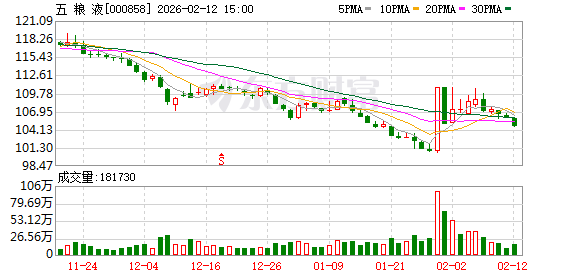
五粮液PE跌破15倍,是黄金坑还是价值陷阱?
Sou Hu Cai Jing· 2026-02-12 04:18
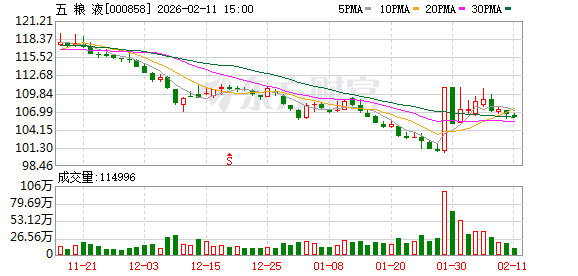
Group 1 - The core viewpoint is that Wuliangye's dynamic price-to-earnings ratio has dropped to 14.5 times, leading to market divergence between pessimistic narratives about high-end liquor and value calls at historical valuation bottoms [2] - Wuliangye's recent price stabilization is attributed to a rebalancing of channel power, with proactive control of supply, a shift from "stocking subsidies" to "opening bottle incentives," and the cleaning of non-compliant distributors [2] - The company is transitioning from a focus on scale to a focus on value, emphasizing that stabilizing prices is more important than increasing sales volume for high-end liquor [2] Group 2 - Current channel inventory for Wuliangye is approximately 30 days, indicating a shift from growth driven by channel stockpiling to growth driven by real consumer demand [3] - The end of the difficult destocking phase suggests that performance will enter a low base recovery phase starting in the second quarter [3] Group 3 - Wuliangye's product structure has evolved to include a core product (Pu Wuliang), two high-end products, two growth drivers (1618/low-alcohol), and a focus on younger consumers, indicating a diversified strategy [6] - The company aims to generate stable cash flow from core products while pursuing growth through a tiered product strategy [6] Group 4 - Factors such as a 14.5 times PE ratio, high dividend commitments, strong operating cash flow, bottomed inventory, and rising prices place Wuliangye in a "low valuation + marginal improvement in fundamentals" observation zone [8] - Wuliangye is characterized as a stable value stock with high barriers, strong cash flow, and high dividends, rather than a high-growth story [9]
基本面120ETF嘉实(159910)开盘涨0.08%
Xin Lang Cai Jing· 2026-02-12 01:44
Group 1 - The core point of the article highlights the performance of the Basic Fundamental 120 ETF managed by Harvest Fund Management, which opened at 2.504 yuan with a slight increase of 0.08% [1] - The ETF's performance benchmark is the Shenzhen Basic Fundamental 120 Index, and it has achieved a return of 150.22% since its inception on August 1, 2011, with a recent one-month return of 1.30% [1] Group 2 - Major holdings in the ETF include companies such as CATL, which increased by 0.54%, and Midea Group, which decreased by 0.29% [1] - Other notable stock performances include Gree Electric Appliances down by 0.21%, BOE Technology Group unchanged, Ping An Bank unchanged, Luxshare Precision up by 0.22%, Vanke A up by 0.82%, TCL Technology down by 0.21%, Wuliangye down by 0.13%, and Weichai Power up by 1.62% [1]





酒价内参2月12日价格发布,飞天茅台小幅上行1元
Xin Lang Cai Jing· 2026-02-12 01:29
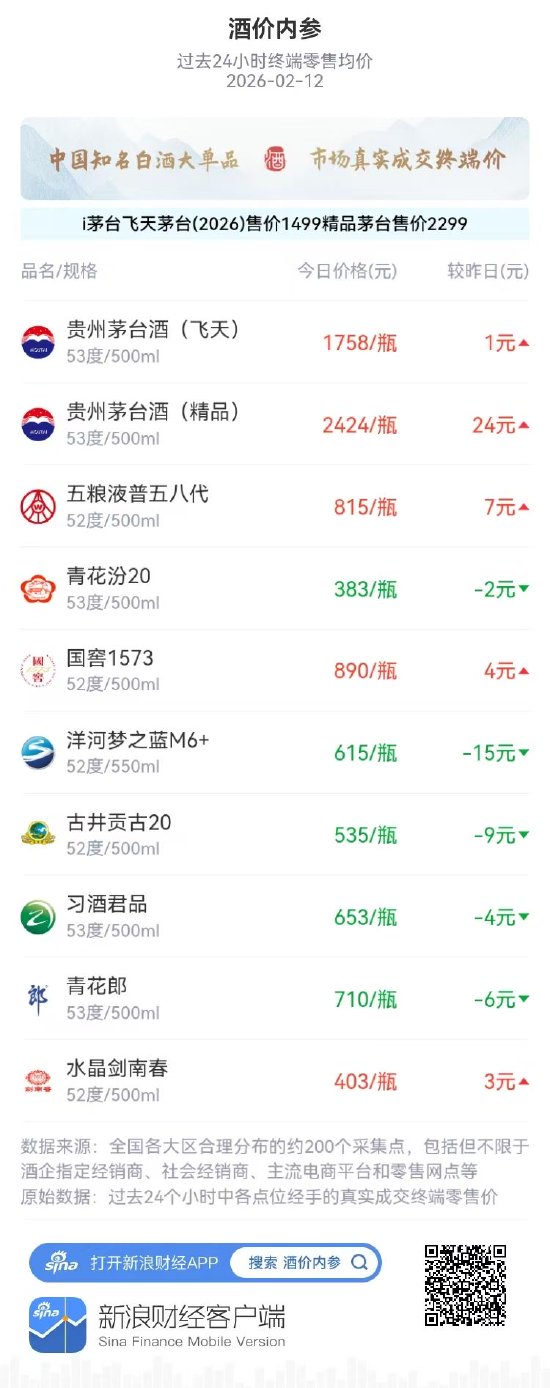
Core Viewpoint - The Chinese liquor market is experiencing a structural differentiation in retail prices, with the average price of the top ten products showing a slight increase, indicating varied performance across different price segments [1][6]. Price Trends - The total retail price for a package of the top ten liquor products is 9,186 yuan, up by 3 yuan from the previous day [1][6]. - The market shows a mixed trend with five products increasing in price and five decreasing [7]. - Notable price increases include: - Guizhou Moutai's premium liquor, which rose by 24 yuan per bottle, reaching a 30-day high [7]. - Wuliangye's 58th generation increased by 7 yuan per bottle, marking a one-month peak [7]. - Other products like Guojiao 1573 and Shuijing Jianshan Chun saw increases of 4 yuan and 3 yuan per bottle, respectively [7]. - Decreases were observed in products such as Yanghe Dream Blue M6+, which fell by 15 yuan per bottle, and Guqing Gong Gu 20, which decreased by 9 yuan [7]. Market Data Collection - The daily data for liquor prices is sourced from approximately 200 collection points across various regions, including designated distributors, social distributors, e-commerce platforms, and retail outlets [2][8]. - The data aims to provide an objective and traceable representation of the market prices for well-known liquor brands [2][8]. Market Analysis - JPMorgan recently reaffirmed a positive outlook on the Chinese stock market, emphasizing the potential for cyclical and growth stocks to outperform defensive stocks [2][8]. - The report highlights Guizhou Moutai as a key representative of high-end liquor, along with Wuliangye, as preferred investment targets [2][8].
酒价内参2月12日价格发布 单品表现分化总价小幅抬升
Xin Lang Cai Jing· 2026-02-12 01:24
Core Viewpoint - The Chinese liquor market is experiencing a structural differentiation in retail prices, with the average price of the top ten products showing a slight increase, indicating varied performance across different price segments [1][6]. Price Trends - The total retail price for a package of the top ten liquor products is 9,186 yuan, up by 3 yuan from the previous day [1][6]. - The market shows a mixed trend with five products increasing in price and five decreasing [7]. - Notable price increases include: - Guizhou Moutai's premium liquor, up 24 yuan per bottle, reaching a 30-day high due to pre-Spring Festival demand [7]. - Wuliangye's 58th generation, up 7 yuan per bottle, marking a one-month high [7]. - Other increases include 4 yuan for Guojiao 1573 and 3 yuan for Shuijingjiu [7]. - Decreases in price include: - Yanghe Dream Blue M6+, down 15 yuan per bottle [7]. - Guqingong 20, down 9 yuan per bottle [7]. - Other declines include 6 yuan for Qinghualang and 4 yuan for Xijiu Junpin [7]. Market Data Collection - The data for liquor prices is sourced from approximately 200 collection points across various regions, including designated distributors, social distributors, e-commerce platforms, and retail outlets [2][8]. - The pricing data aims to provide an objective and traceable overview of the market [2][8]. Market Analysis - JPMorgan recently reaffirmed a positive outlook on the Chinese stock market, suggesting that the appreciation of the RMB against the USD typically boosts stock returns [2][8]. - The report highlights high-end liquor, particularly Guizhou Moutai and Wuliangye, as key investment areas, alongside other sectors like gold, tourism, and education [2][8].
上市公司派发超3000亿“春节红包”,真金白银回报投资者
Sou Hu Cai Jing· 2026-02-11 12:48
Core Viewpoint - The trend of pre-Spring Festival dividends among listed companies is on the rise, with a total amount of 348.8 billion yuan, surpassing the previous year's total of 344.6 billion yuan, indicating improved profitability and a stronger shareholder return awareness among companies [1] Group 1: Dividend Trends - A total of 235 listed companies are expected to distribute dividends before the Spring Festival, with the financial and consumer sectors being the main contributors [1] - The banking sector alone accounted for 243.4 billion yuan in dividends, representing nearly 70% of the total, with notable contributions from China Merchants Bank and Industrial Bank [1] - The overall dividend payout timing has advanced, with 2025 December dividends reaching 264.7 billion yuan, 3.7 times that of December 2024, enhancing investor returns [3] Group 2: Corporate Participation - Major companies like Yangtze Power and Luxshare Precision are leading with dividend amounts exceeding 1 billion yuan, with Yangtze Power's payout exceeding 5.1 billion yuan [2] - Small and medium-sized enterprises are also participating actively, focusing on specialized fields, with three companies from the Beijing Stock Exchange distributing a total of 4.45 million yuan [2] Group 3: Policy Influence - The willingness of private enterprises to distribute dividends has doubled, with a total of 61.6 billion yuan, increasing their share from 8% to 18% of the total pre-Spring Festival dividends [3] - Regulatory bodies have been promoting improvements in the dividend system, transitioning from soft constraints to hard requirements, which has encouraged companies to prioritize shareholder returns [3][4]


五粮液:股票价格受宏观经济、市场情绪等多重因素影响
Zheng Quan Ri Bao· 2026-02-11 12:37
Core Viewpoint - Wuliangye emphasizes that its stock price is influenced by multiple factors, including macroeconomic conditions and market sentiment, while the company remains focused on its core business to create long-term value for shareholders [2]. Group 1 - The company is committed to enhancing operational quality and strengthening its core competitiveness [2]. - Wuliangye aims to provide stable dividends to shareholders as part of its strategy to create long-term value [2].
从春节动销看五粮液,行业回暖的底气何在?
Sou Hu Cai Jing· 2026-02-11 12:22
Core Viewpoint - The Chinese liquor industry is experiencing a structural recovery, with Wuliangye leading the market in sales during the 2026 Spring Festival consumption peak, indicating a positive trend for high-end liquor brands [1][4]. Group 1: Market Performance - Wuliangye ranked first in JD.com's 2025 sales list for strong-flavored liquor, followed by Luzhou Laojiao and Yanghe [1]. - The overall sales of Wuliangye have shown significant growth during the 2026 Spring Festival, with its core product, the eighth generation Wuliangye, performing robustly and achieving substantial year-on-year sales increases [4][6]. - The demand for Wuliangye's products has exceeded expectations, particularly in key markets like Shandong and Jiangsu, where sales volumes have continued to rise [6][8]. Group 2: Product Strategy - Wuliangye's growth is attributed to a diversified product matrix rather than reliance on a single product, enhancing its competitive edge [9]. - The eighth generation Wuliangye serves as the core product, maintaining its status as a benchmark in the high-end liquor market, with strong performance during the Spring Festival [13]. - Wuliangye aims to develop its product lineup into a structured system, including high-end offerings and new products targeting younger consumers, such as the "Wuliangye Yijian Qingxin," which has achieved over 200 million yuan in sales within five months of its launch [10][11][15]. Group 3: Channel and Inventory Management - Wuliangye's channel reforms have led to improved inventory health, with average inventory levels for distributors dropping to a healthy range of 30-45 days [18][22]. - The company has implemented a "three stores in one" strategy, optimizing its retail presence and enhancing online and offline integration through partnerships with major e-commerce platforms [20]. - The focus on genuine consumption, as evidenced by the doubling of daily opening bottle counts since the launch of the opening bottle scanning initiative, reflects a shift from channel inventory to consumer demand [6][20].
春潮启市白酒春节旺季价格带“分化而行”
Bei Jing Shang Bao· 2026-02-11 12:21
Core Viewpoint - The Chinese liquor market is experiencing a shift in consumer preferences, with a notable increase in demand for products priced around 300 yuan, contrasting with previous years where high-end products priced at 1,000 yuan were more popular. This indicates a transition from scale expansion to competition within existing market shares as the industry adapts to changing consumer behavior [1][2][7]. Market Trends - Consumers are increasingly opting for mid-range liquor products, with many shifting from high-end options to those around 300 yuan due to better cost-performance ratios [2][3]. - The sales of products priced at 300 yuan have become the main focus in retail markets, while products priced above 800 yuan have also seen slight growth during the festive season [2][3]. - The overall market is witnessing a bifurcation, with both low-end (under 100 yuan) and high-end (over 800 yuan) segments gaining market share, while mid-range products face pressure [3][7]. Marketing Strategies - Major liquor companies are implementing various promotional activities to stimulate market activity, including gift card promotions and cash rewards for consumers [4][5]. - The focus has shifted from merely increasing cash flow to enhancing actual sales and reducing inventory through innovative marketing strategies [5][6]. Consumer Behavior - The upcoming Spring Festival is anticipated to boost liquor sales, with expectations of increased consumer gatherings and spending due to an extended holiday period [6][7]. - There is a notable trend of consumers prioritizing value for money, leading to a preference for products that meet both family and business gathering needs [2][6]. Industry Outlook - The liquor industry is undergoing a transformation, moving towards a dual competition model involving both channel-owned and manufacturer-owned products, which is expected to diversify the competitive landscape [7][8]. - The integration of new technologies and innovative retail channels is becoming crucial for liquor companies to adapt to evolving consumer demands and enhance sales effectiveness [8].


