Goldman Sachs(GS)

Search documents
日本市场近期发生了什么?
Hua Er Jie Jian Wen· 2026-02-14 13:01
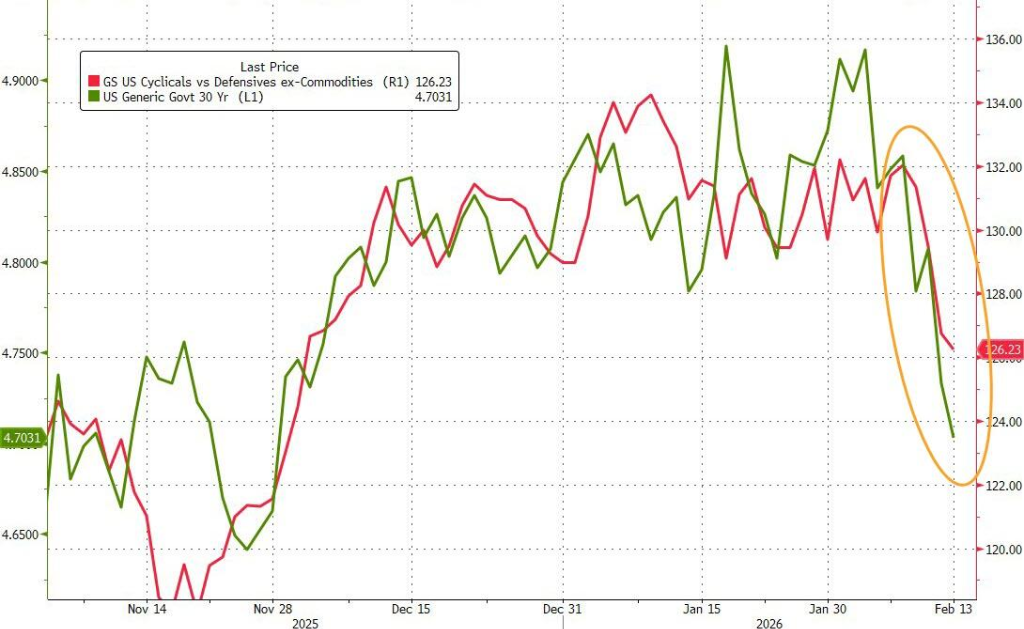
日本市场正在经历一场重要的转折,市场定价逻辑出现根本性转变。日本自由民主党在众议院选举中取 得压倒性胜利后,日元收益率曲线趋于平坦化,通胀预期稳定,日元汇率走强——呈现出发达市场面对 更高实际利率预期时的典型反应。 2月14日,据追风交易台消息,高盛在最新研报中指出,市场开始定价日本退出超低实际利率体制的可 能性,而不再仅仅将其视为通胀冲击。这一变化的核心驱动因素在于投资者将资产回流预期和退出超低 实际利率体制纳入更高的概率权重。 但这一转变能否持续存在重大不确定性。高盛警告,如果日本央行未能兑现市场预期的更鹰派路径,此 前的市场动态可能会重新回归,导致日元再度走弱、长端利率波动性上升。 研报特别指出,关键风险集中在日本央行的政策路径上。如果日本央行在加快加息步伐方面表现出任何 鸽派迹象——特别是考虑到日元近期的强势——很可能会催化选举前交易动态的回归。 研报表示,部分投资者将财务大臣最近的言论解读为支持外国资产回流的信号。 鉴于日本强劲的净国际投资头寸,利用海外资产为新的财政扩张提供资金,或私人部门投资 组合流动和外汇对冲的转变,都可能稳定日元并提振其他国内资产价格。 值得注意的是,最近的市场走势已大幅缩小 ...

高盛推出“抗AI冲击”主题投资组合,看好甲骨文和微软等
Ge Long Hui A P P· 2026-02-14 12:05
Group 1 - Goldman Sachs has launched a new "anti-AI impact" thematic investment portfolio, betting on companies less likely to be affected by AI disruptions [1] - The portfolio includes a long position in companies that require physical execution, are heavily regulated, or must be accountable by humans, which are difficult to replace with AI [1] - On the short side, the strategy targets companies with workflows that could be gradually automated by AI, such as Duolingo and Semrush [1] Group 2 - Goldman Sachs is optimistic about AI infrastructure-related companies, covering areas like computing power, cloud services, data facilities, development tools, and cybersecurity, with Oracle and Microsoft as representative firms [1]
“我们正在目睹一场AI创造性破坏席卷全球各行各业”!高盛合伙人:本质上,这是一次“护城河检查”
硬AI· 2026-02-14 11:37
01 高盛合伙人Rich Privorotsky认为,市场陷入"先卖出、后提问"恐慌,本质是对企业护城河的全面检验,建议关注拥有真 正护城河的公司、实物资产和工业股,看好航空航天板块,但需警惕银行股风险。高盛预计CTA将抛售15-20亿美元美 股,标普若跌破中期阈值6723点,将加速抛售幅度。 硬·AI 作者 | 鲍亦龙 编辑 | 硬 AI 高盛合伙人Rich Privorotsky警告称,一场由人工智能驱动的"创造性破坏"正实时席卷全球各行业,本质上 这是一次对企业护城河的全面检验。 从上周软件行业遭遇冲击,到本周初先是保险和财富管理类股,下半周则轮到房地产服务类和物流板块。 AI最初被视为对股市的利好因素,但现在正在激进地检验哪些企业真正具有可防御的竞争优势。 "先卖出、后提问"的情绪在市场扩散,抛售速度加快,但除了AI担忧外并无明确催化剂。高盛合伙人Rich Privorotsky认为这是一次护城河检查: 企业的业务是否能抵御技术冲击?如果有一支机器人大军,能否颠覆现有企业?企业是否必须竞相 投入或收购,否则就会被取代? Privorotsky进一步强调,需警惕美国各大股指中的CTA(商品交易顾问)触发 ...


中概股全线走低、美股全线大跌,有色金属、半导体芯片、苹果重挫
Sou Hu Cai Jing· 2026-02-14 04:30
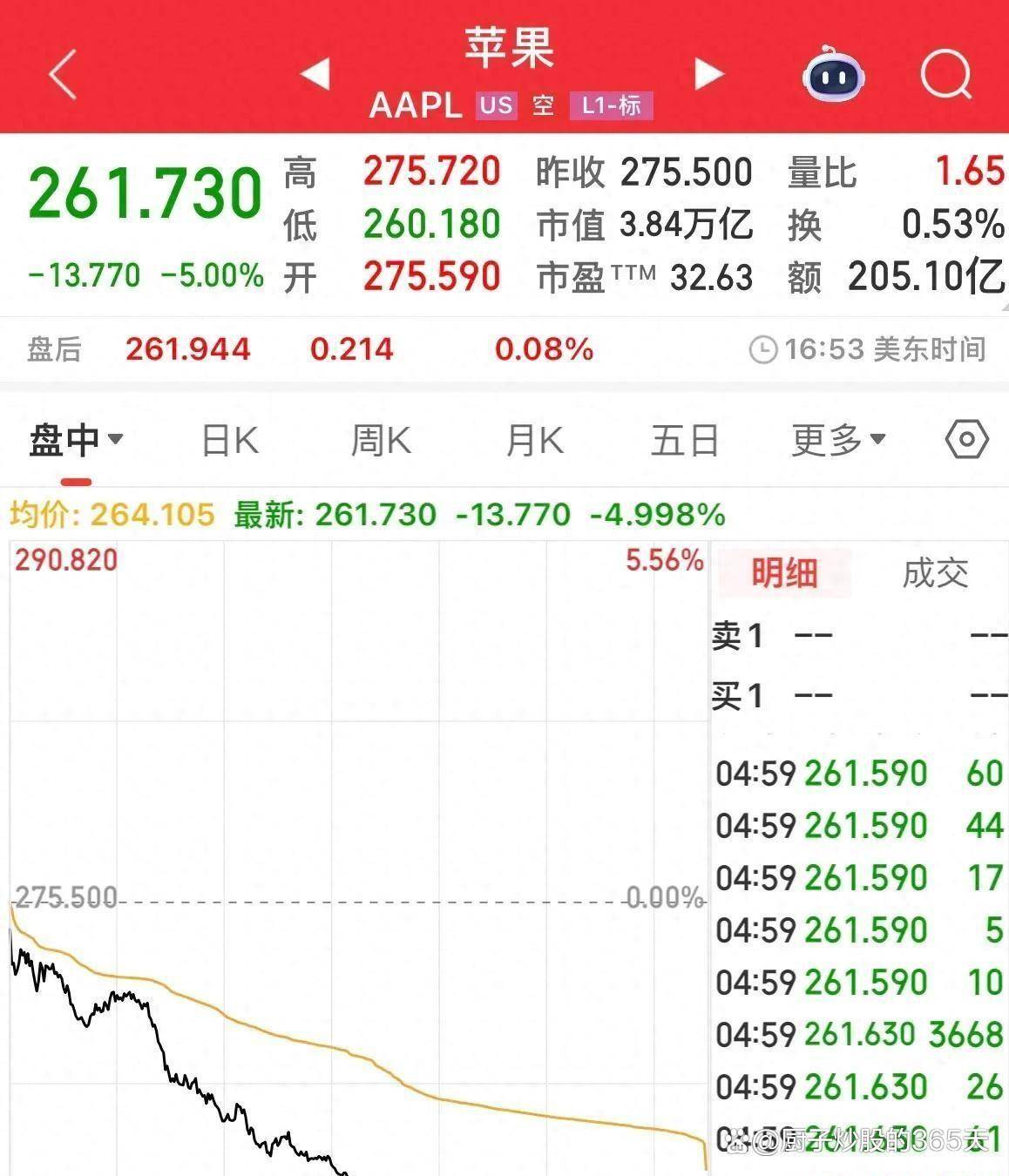
Market Overview - The US stock market experienced a significant decline, with the Dow Jones Industrial Average dropping 669.42 points (1.34%) to close at 49,451.98 points, the Nasdaq Composite falling 469.32 points (2.03%) to 22,597.15 points, and the S&P 500 decreasing by 108.71 points (1.57%) to 6,832.76 points [1][2][3] Market Sentiment - Over 4,100 stocks declined, indicating widespread market panic as investors rushed to sell assets, particularly in the tech and growth sectors. The VIX index surged, reflecting heightened risk aversion [2][3] Sector Performance - The sell-off affected nearly all sectors, with notable declines in precious metals and semiconductor stocks. The precious metals sector saw significant drops, with gold futures down 3.08% and silver futures plummeting 10.62% [4][5][6][8] - The Philadelphia Semiconductor Index fell by 2.5%, with individual stocks like AEHR Test Systems down 17.58% and Intel down over 3% [8][10] Major Companies - Apple Inc. experienced a substantial drop of 5.00%, resulting in a market cap loss of over $120 billion, attributed partly to regulatory concerns [12] - Other major tech companies also faced declines, with Tesla down 1.62%, Amazon down 2.20%, and Meta Platforms down nearly 3% [12] Financial Sector - Bank stocks fell across the board, with JPMorgan Chase down over 2%, Goldman Sachs down over 4%, and Citigroup down over 5%, driven by concerns over AI disrupting traditional wealth management [13][14] Economic Indicators - Recent economic data, including a drop in initial jobless claims and lower-than-expected existing home sales, contributed to market anxiety about potential economic overheating and prolonged high interest rates [24][25][26] Global Market Impact - The sell-off in the US markets had a ripple effect on global markets, with European indices also closing lower after initially opening higher, indicating a widespread sentiment of fear [18][19][20] AI Concerns - The market's decline was exacerbated by fears regarding the disruptive impact of AI technologies on various industries, leading to significant stock price drops in sectors perceived to be at risk [21][22][30] Storage Chip Sector - In contrast to the overall market trend, storage chip stocks saw gains, with companies like SanDisk and Seagate Technology rising significantly, reflecting a belief that AI's growth will increase demand for data storage [29]


高盛推出“抗AI冲击”主题投资组合:做多算力与安全,做空可被替代的软件股35/64
美股IPO· 2026-02-14 04:12
高盛推出一项新的软件股多空组合,做多那些业务难以被人工智能取代、或直接受益于AI需求增长的公司,同时做空可能被自动化或被企业内部替代的 软件企业。此前随着Anthropic等公司推出面向法务和税务的AI工具,引发相关软件股大幅下跌,市场对生成式AI冲击商业模式的担忧正在加剧。 随后,这轮抛售继续扩大。一家知名度不高的初创公司Altruist推出了一款税务策略工具,在过去一周内导致Charles Schwab、LPL Financial等公司股 价下跌超过10%。 媒体称,华尔街对软件股的怀疑情绪已经积累了数月,但最近的市场态度已从谨慎转向明显防御。随着市场担心生成式AI可能侵蚀传统商业模式并压缩利 润率,投资者纷纷抛售整个行业的股票。 这轮抛售也重置了估值水平。一年前,软件股的市盈率大约为51倍,是股票市场中估值最高的行业。而如今,该行业的市盈率约为27倍。 在做多一侧,高盛看好那些将直接受益于AI采用率上升的企业,包括算力提供商、数据基础设施公司、可观测性工具、安全网络公司、超大规模云服务商 以及AI开发平台等。该组合纳入的公司包括Cloudflare、CrowdStrike、Palo Alto Netwo ...

“我们正在目睹一场AI创造性破坏席卷全球各行各业”!高盛合伙人:本质上,这是一次“护城河检查”
Hua Er Jie Jian Wen· 2026-02-14 03:24
高盛合伙人Rich Privorotsky警告称,一场由人工智能驱动的"创造性破坏"正实时席卷全球各行业,本质上这是一次对企业护城河的全面检验。 从上周软件行业遭遇冲击,到本周初先是保险和财富管理类股,下半周则轮到房地产服务类和物流板块。AI最初被视为对股市的利好因素,但现 在正在激进地检验哪些企业真正具有可防御的竞争优势。 "先卖出、后提问"的情绪在市场扩散,抛售速度加快,但除了AI担忧外并无明确催化剂。高盛合伙人Rich Privorotsky认为这是一次护城河检查: 企业的业务是否能抵御技术冲击?如果有一支机器人大军,能否颠覆现有企业?企业是否必须竞相投入或收购,否则就会被取代? Privorotsky进一步强调,需警惕美国各大股指中的CTA(商品交易顾问)触发信号。高盛目前估计,CTA将在未来一周内抛售价值15亿至20亿美 元的美国股票。 软件板块估值承压 Rich Privorotsky认为,AI不仅没让大家躺赢,反而正在让那些想在经济里"躺平吃利息"的人无处遁形。 在许多曾被认为存在护城河的领域,技术进步正迅速瓦解那些建立在经验和知识工作之上的堡垒,新进入者对现有企业构成快速挑战。 而一旦AI担忧 ...
Goldman Sachs resets PCE inflation target after CPI bombshell
Yahoo Finance· 2026-02-14 02:03
Goldman Sachs just sent a sobering warning to the Federal Reserve. After analyzing a "noisy" January CPI report, the firm’s economists, led by Jan Hatzius, officially reset their forecast for the Fed's favorite inflation gauge. The new target? A 3.05% year-over-year jump in core PCE. This isn't just a routine revision—it’s a brutal reality check for investors betting on a pivot. If Goldman is right, the "last mile" of the inflation fight is getting longer, and the window for interest rate cuts in the fir ...
Goldman Sachs' CEO Says Young Workers Will Remain 'Core' to the Bank in the AI Era
Investopedia· 2026-02-14 01:00
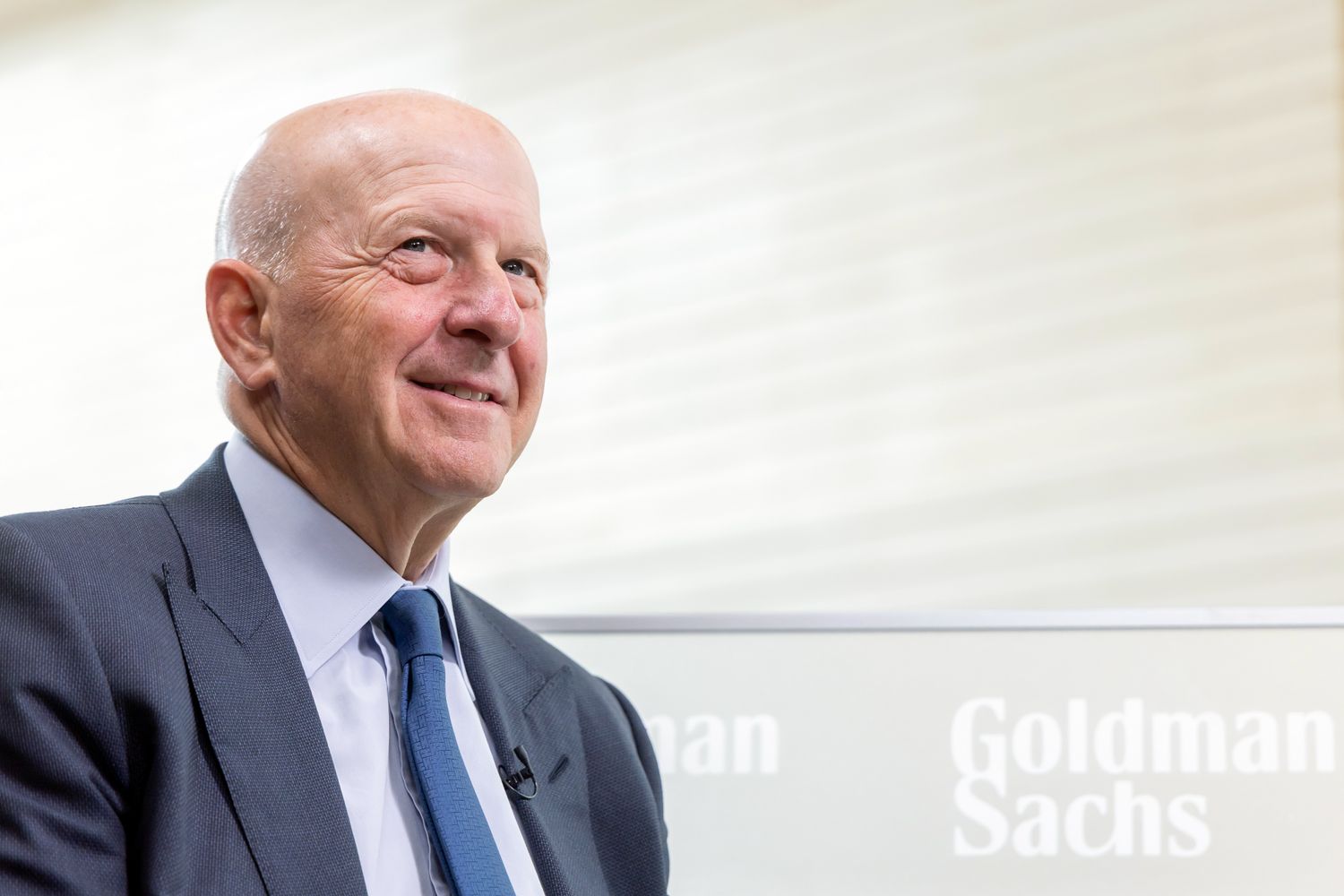
Core Insights - Goldman Sachs CEO David Solomon emphasizes that young talent will remain a "huge core part" of the bank, despite the rise of AI in the financial services industry [1][1][1] - The unemployment rate for college graduates aged 22 to 27 is currently 5.6%, significantly higher than the general unemployment rate of about 3.1% for college graduates as of December [1][1][1] - Economists attribute the struggles of young graduates to workforce reductions by companies that previously hired them, rather than AI being the primary cause [1][1][1] Company Perspective - Solomon acknowledges that while AI may change the nature of work and reduce the number of workers needed, it will not eliminate the need for talented individuals in professional services [1][1][1] - The company is adapting to AI advancements similarly to how it adapted to previous technological changes, indicating a belief in the continued necessity of human workers [1][1][1] Industry Context - The financial services industry is experiencing a shift as businesses explore AI's potential to streamline operations, but the demand for motivated professionals remains [1][1][1] - Solomon reflects on the evolution of the industry, suggesting that technological advancements have historically not diminished the need for human involvement [1][1][1]
新浪财经隔夜要闻大事汇总:2026年2月14日
Xin Lang Cai Jing· 2026-02-13 22:41
Market - US stock market closed mixed on February 14, with all three major indices recording weekly declines. The Dow Jones, Nasdaq, and S&P 500 fell by 1.23%, 2.1%, and 1.39% respectively, as investors weighed the impact of artificial intelligence across various industries and noted that the core CPI for January hit a nearly five-year low [2][4]. - In the top 20 stocks by trading volume, Applied Materials surged by 8.08% after providing a strong revenue forecast, while Nvidia dropped by 2.23% due to procurement issues from Samsung and SK Hynix [3][46]. - Popular Chinese stocks showed mixed performance, with Alibaba down by 2.05% and Tencent Music up by 4.52%. The Nasdaq Golden Dragon China Index fell by 0.1% [4][47]. Company - SpaceX is considering a dual-class share structure for its upcoming IPO to maintain Elon Musk's control, similar to a previous strategy used for Tesla. The company, which recently acquired AI startup xAI, is expected to have a valuation exceeding $1.5 trillion [19][43]. - OpenAI has been selected to participate in a US military challenge to develop voice-controlled drone swarm software, collaborating with two defense tech firms. This initiative is part of a $100 million challenge announced by the Department of Defense [20][43]. - Goldman Sachs launched a new stock basket aimed at companies that are less likely to be replaced by AI, betting on firms that require physical execution or are protected by regulatory barriers [22][43]. - Castle Investment's three flagship funds saw a 22% decline in net profits, attributed to high employee compensation costs amid a competitive talent market, despite a 4% increase in operational costs [23][43]. - The US has eased energy sanctions on Venezuela, allowing companies like Chevron and BP to operate in the oil and gas sector, which could lead to new investments [24][43]. - Meta plans to add facial recognition technology to its smart glasses, allowing users to identify people through an AI assistant, despite previous concerns over privacy and ethical implications [27][43].



GS Stock Up 37.5% in a Year: Smart Entry Point or Wait for Pullback?
ZACKS· 2026-02-13 17:21
Core Insights - Goldman Sachs Group, Inc. (GS) shares have increased by 37.5% over the past year, outperforming the industry growth of 19.1% and peers JPMorgan (9.6%) and Morgan Stanley (21.3%) [1][8] Growth Catalysts - The investment banking (IB) business is experiencing a resurgence, with global mergers and acquisitions (M&As) rising 41% year-over-year to $4.81 trillion in 2025, driven by easing regulations and inflation pressures [6][7][9] - Goldman Sachs has advised on over $1.6 trillion in announced M&A volumes in 2025, leading to a 21% year-over-year growth in IB revenues [9][10] - Management anticipates a stronger M&A environment in 2026, supported by stable macroeconomic conditions and high client engagement [10] Strategic Streamlining - The company is strategically exiting underperforming consumer banking ventures to focus on higher-margin businesses [11][14] - Recent divestitures include the transition of the Apple Card program to JPMorgan and the sale of its Polish asset management firm [12][13] - The Global Banking and Markets segment's net revenues rose 18% year-over-year in 2025, reflecting the benefits of restructuring [14] Private Equity and Alternatives - Goldman is expanding its private equity and alternatives business, targeting a $300 billion private credit portfolio by 2029 [15][19] - The acquisition of Industry Ventures and partnerships with T. Rowe Price are part of this strategy to enhance access to high-growth technology companies [16][17] AI Transformation - The firm is implementing a comprehensive AI transformation across various divisions to enhance fee income and operational efficiency [20][21] - The "One Goldman Sachs 3.0" initiative aims to embed AI into core operations, improving productivity and scalability [21][23] - AI is expected to drive long-term growth, shifting revenue towards higher-fee, data-driven businesses [24][33] Financial Strength and Capital Distribution - Goldman maintains a strong balance sheet with a Tier 1 capital ratio well above regulatory requirements, allowing for aggressive capital returns through buybacks and dividends [24][26] - The company increased its quarterly dividend by 12.5% to $4.50 per share and has a robust share repurchase program in place [26][27] Earnings Prospects and Valuation - Analysts have revised earnings estimates upward for 2026 and 2027, projecting growth of 10.3% and 10.6% respectively [28] - GS stock is trading at a forward price/book ratio of 2.17, below the industry average of 2.44, indicating it is undervalued compared to peers [30] Conclusion - Goldman Sachs is well-positioned for future growth with a streamlined business model, strong fundamentals, and a focus on private credit and AI [33][34] - The company offers strong earnings visibility and capital returns, making it an attractive investment opportunity [35]