Goldman Sachs(GS)

Search documents
高盛:全球市场“巨变”:“实体”回归,“科技”分化
美股IPO· 2026-02-13 03:27
Core Viewpoint - Goldman Sachs indicates that the global bull market is not over, but the driving forces have shifted from crowded US tech stocks to emerging markets, commodities, and value stocks [1][3] Group 1: Market Dynamics - Funds are moving from over-congested US tech stocks to emerging markets (EM), commodities, and "old economy" value stocks [3] - The MSCI Emerging Markets Index has risen from 100 to nearly 120 relative to developed markets since the beginning of 2025, indicating a significant revaluation [7] - Despite geopolitical uncertainties, the stock market shows resilience, largely due to strong fundamentals and improved macro and micro drivers [9][8] Group 2: AI and Technology Sector - AI capital expenditure is projected to reach $659 billion, but concerns over return on investment (ROI) are rising, leading to significant differentiation among the "Magnificent Seven" tech stocks [4][14] - The software sector is experiencing a crisis as AI innovations threaten traditional SaaS models, resulting in a sharp decline in software valuations [5][16] - The correlation among the "Magnificent Seven" has sharply decreased, with varying returns; for instance, Google's return is around 66%, while others like Apple and Amazon lag behind [14][16] Group 3: Value Stocks and Old Economy - There is a revival of interest in value stocks, which were previously seen as "value traps," as some are successfully transforming into "value creators" by generating higher cash flows [18][19] - Capital expenditures in traditional sectors like utilities and telecommunications are increasing, driven by the need for infrastructure to support tech growth [17] - The performance of financial assets has reversed, with gold, emerging markets, and value stocks outperforming tech stocks, marking a significant shift in market dynamics [20] Group 4: Diversification and Future Outlook - The era of diversification is emerging, as the sources of growth are expanding beyond large tech stocks, with strong earnings growth across various sectors [22][23] - Analysts have raised earnings forecasts for 2026 unusually early, particularly for emerging markets, indicating a shift in investment opportunities [12][23] - Investors are encouraged to reassess long-standing allocation habits and diversify across regions, sectors, and styles to capitalize on the changing market landscape [23]



亚洲聚焦:中国房价下跌与负资产问题-Asia in Focus_ Home Price Declines and Negative Equity in China
2026-02-13 02:18
Summary of Key Points from the Conference Call Industry Overview - The report focuses on the **real estate market in China**, specifically analyzing **negative equity** and home price declines in six major cities: **Beijing, Shanghai, Guangzhou, Shenzhen, Tianjin, and Chengdu**. These cities represent about **13% of China's urban population** and approximately **30% of the country's urban housing wealth** [2][8]. Core Insights - **Negative Equity Definition**: Negative equity occurs when home values fall below outstanding mortgage balances, posing significant risks to the economy and financial system, especially when combined with job loss [2][3]. - **Historical Context**: In the US, **25% of mortgage borrowers** faced negative equity during the peak of the housing crisis in 2010, highlighting the potential severity of such situations [2][4]. - **Current Situation in China**: - Borrowers who purchased homes before **2021** generally retain considerable home equity despite a **30% peak-to-current price correction** due to high down payment ratios historically [2][20]. - Those who bought homes during **2021-2023** have seen significant erosion of their down payments due to recent price declines [2][20]. Future Projections - If home prices decline by less than **10% in 2026**, the negative equity issue is expected to remain manageable. However, a decline greater than **10%** could significantly increase the share of borrowers facing negative equity, indicating a **nonlinear threshold effect** [2][29][26]. City-Specific Analysis - **Tianjin**: Home prices peaked early and have dropped nearly **50%**, leading to negative equity for average borrowers from the **2017-2019 cohorts** [20]. - **Chengdu**: Despite price declines, all cohorts still maintain at least **15% equity** relative to their purchase price on average due to higher down payments and milder price drops [20]. - **Price-to-Income Ratios**: Tier-1 cities like Beijing and Shenzhen have high price-to-income ratios above **15**, while Tianjin and Chengdu are more affordable [11]. Key Findings 1. **Down Payment Impact**: Due to substantial down payment requirements (at least **30%** in all six cities during **2017-2023**), negative equity remains relatively rare as of **2025**, despite significant home price declines [20]. 2. **Home Equity Variability**: Home equity levels vary significantly by purchase year. Buyers before **2021** retained at least **20% equity**, while those who bought during **2021-2023** lost about **two-thirds** of their down payment value [20]. 3. **Cross-City Differences**: Significant differences exist across cities regarding home price trajectories and equity positions, with Tianjin facing more severe declines compared to Chengdu [20][12]. Additional Considerations - **Mortgage Behavior**: Many Chinese households pay down mortgages ahead of schedule, which reduces the risk of negative equity. This behavior may mitigate systemic risks to banking and financial stability, although local stresses could still arise [30]. - **Nonlinear Relationship**: The relationship between home prices and negative equity is nonlinear, with significant implications for borrower behavior and financial stability [29][26]. Conclusion - The analysis indicates that while the current situation regarding negative equity in China is manageable, future declines in property prices could lead to increased risks. The high down payment ratios historically have provided a buffer against widespread negative equity issues [29].
最新爱泼斯坦相关文件曝光后 高盛首席法律顾问即将卸任
Xin Lang Cai Jing· 2026-02-13 02:09
过去几个月里,美国国会和司法部公布的多批文件为这段关系增添了更多细节,加深了高盛内部一些人 对她任职的担忧。文件显示,爱泼斯坦曾在一版遗嘱中将鲁姆勒列为后备执行人,并在2019年被捕当晚 给她打了电话。文件还详述了两人之间大量闲聊式的电子邮件以及爱泼斯坦送给她的奢侈礼物。 鲁姆勒坚称,自己与爱泼斯坦是职业关系,和对方有共同的客户。她说,她并未担任爱泼斯坦的代理 人,也未曾为其游说,爱泼斯坦仅偶尔向她寻求建议。她说,她后悔认识爱泼斯坦,并且对爱泼斯坦任 何新的或持续的不法活动毫不知情。 责任编辑:王永生 高盛首席法律顾问凯瑟琳.鲁姆勒(Kathryn Ruemmler)将卸任,此前杰弗里.爱泼斯坦相关文件显 示,鲁姆勒一直是这位被定罪的性犯罪者的亲密盟友,直到爱泼斯坦于2019年被捕。 高盛首席法律顾问凯瑟琳.鲁姆勒(Kathryn Ruemmler)将卸任,此前杰弗里.爱泼斯坦相关文件显 示,鲁姆勒一直是这位被定罪的性犯罪者的亲密盟友,直到爱泼斯坦于2019年被捕。 高盛表示,54岁的鲁姆勒已决定辞职。 在经历了辉煌的法律生涯后,鲁姆勒跻身华尔街高层,并成为高盛首席执行官苏德巍(David Solomon)的 ...
Epstein files: Goldman Sachs top lawyer Kathy Ruemmler to step down after email fallout
CNBC· 2026-02-13 01:33
Core Viewpoint - Goldman Sachs' Chief Legal Officer Kathy Ruemmler announced her resignation effective June 30, 2026, following scrutiny over her past communications with Jeffrey Epstein, a convicted sex offender [1][3][6]. Company Summary - Ruemmler has been with Goldman Sachs for six years, overseeing legal, reputational, and regulatory matters, and enhancing risk management processes [2][6]. - The firm had previously defended Ruemmler amid the release of emails and documents related to her interactions with Epstein, asserting her exceptional capabilities as general counsel [9]. - Ruemmler expressed her commitment to prioritizing Goldman Sachs' interests in her resignation announcement [3]. Industry Context - Ruemmler's resignation is part of a broader trend where individuals with past associations to Epstein are losing high-profile positions, as seen with Morgan Sweeney and Brad Karp [6][7]. - The Department of Justice released new documents, including emails from Ruemmler to Epstein, which have contributed to the scrutiny surrounding her [10][12]. - Ruemmler's prior role as White House counsel under President Obama adds to the high-profile nature of her position and the implications of her resignation [5][6].

Participation notifications by The Goldman Sachs Group
Globenewswire· 2026-02-12 16:45
Core Viewpoint - The Goldman Sachs Group, Inc has increased its stake in Solvay, surpassing the 5% threshold, with a current holding of 8.16% as of January 30, 2026, indicating a significant investment interest in the company [1][4]. Group 1: Transparency Notifications - Goldman Sachs was above the 5% threshold since June 2025, holding 5.54% at that time, with 5.51% being equivalent financial instruments [1]. - The notifications detail incremental increases in voting rights, with notable increases on January 28 (0.19%), January 29 (0.05%), and January 30 (0.15%) of 2026, leading to a total of 8.16% [1]. - The latest notification dated February 5, 2026, indicates the reason for the notification as the acquisition or disposal of financial instruments treated as voting securities [1]. Group 2: Company Overview - Solvay is a leading chemical company with a history dating back to 1863, focusing on sustainable solutions across various sectors, including air and water purification, food preservation, and eco-friendly materials [3]. - The company reported net sales of €4.7 billion in 2024 and is committed to achieving a carbon-neutral future by 2050 [3]. - Solvay employs approximately 9,000 people and emphasizes its dedication to sustainability and innovation in addressing global needs [3].

深夜,美股风云突变,大型中概股普跌,存储概念股冲高回落!大量散户涌入股市,高盛:对冲基金正大举卖出
Mei Ri Jing Ji Xin Wen· 2026-02-12 16:08
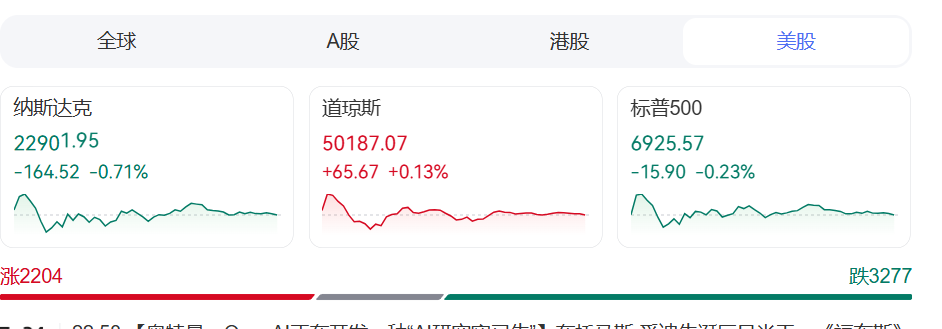
Market Overview - The U.S. stock market opened higher but then retreated, with the Nasdaq down 0.71%, the Dow Jones up 0.13%, and the S&P 500 also turning negative, with over 3,200 stocks declining [1] - Last week, initial jobless claims in the U.S. were reported at 227,000, higher than the forecast of 224,000 and the previous value of 231,000 [3] Technology Sector Performance - The performance of the "Magnificent Seven" tech stocks was mixed, with Nvidia and Google slightly up by 0.1%, while Tesla, Microsoft, Meta, Amazon, and Apple saw declines, with Apple nearing a 2% drop and its market cap falling below $4 trillion [3] - Semiconductor stocks experienced volatility, with SanDisk rising over 5% and Micron Technology up over 2% [3] Chinese Stocks - Chinese stocks listed in the U.S. faced widespread declines, with the Nasdaq Golden Dragon China Index dropping nearly 2%. Notable declines included Huya down over 7%, Tencent Music down over 6%, and Beike down over 4% [5] Trading Volume and Market Dynamics - The average daily trading volume in the U.S. stock market reached a record $1.03 trillion in January, a 50% increase compared to the same period in 2025, with over 19 billion shares traded daily, marking the second-highest in history [8] - The rise in trading volume is attributed to increased retail participation, the popularity of "zero-day-to-expiration" options, and a significant shift in investor focus from tech giants to underperforming sectors like energy and industrials [8] Hedge Fund Activity - Hedge funds have significantly increased their short positions in U.S. stocks, with the nominal short selling of individual stocks reaching the highest level since 2016. Short positions are now double the long positions [9] - Concerns over the disruptive impact of artificial intelligence on business models have led to a tumultuous week on Wall Street, with a total market value loss of $611 billion across 164 stocks in software, financial services, and asset management [9] Sector Rotation - The semiconductor and IT services sectors were among the few to see net buying last week, with semiconductor stocks rising, highlighting a divergence between chip stocks and software stocks [10] - Hedge funds are rotating into defensive sectors, with healthcare becoming the most favored sector for fund inflows, surpassing industrials [10]




What Makes The Goldman Sachs Group (GS) a Strong Investment?
Yahoo Finance· 2026-02-12 14:45
Group 1: Market Overview - The equity market experienced a positive period in Q4 2025, with the S&P 500 Index returning 2.7% for the quarter and finishing the year up 17.9% [1] - The year began with potential disruptions and heightened volatility but ended with optimism driven by strong AI investment, clarity in policies, and U.S. Federal Reserve interest rate cuts [1] - Market performance was significantly influenced by the communication services and technology sectors, with earnings growth being a key driver of market expansion [1] Group 2: Fund Performance - Carillon Eagle Growth & Income Fund holds net assets of $493.06 million across 48 holdings [1] - The Fund is optimistic about achieving another year of strong equity returns as it approaches 2026 [1] Group 3: Goldman Sachs Group, Inc. (NYSE:GS) Insights - The Goldman Sachs Group, Inc. was highlighted as a leading contributor to the Fund's performance, with its stock closing at $944.59 per share on February 11, 2026 [2] - Over the past twelve months, Goldman Sachs shares increased by 45.56%, although the one-month return was -3.20% [2] - Goldman Sachs has a market capitalization of $285.947 billion and is recognized for its strong global merger and acquisition advisory and trading activities, which have seen increased activity in M&A, IPOs, and debt issuance [3] Group 4: Hedge Fund Interest - Goldman Sachs is not among the 30 most popular stocks among hedge funds, with 75 hedge fund portfolios holding its stock at the end of Q3, up from 73 in the previous quarter [5] - While Goldman Sachs is acknowledged as a potential investment, certain AI stocks are believed to offer greater upside potential and carry less downside risk [5]
高盛戳破“保险式”囤货时代:各国抢的,早就不止黄金了
Xin Lang Cai Jing· 2026-02-12 04:51
Core Viewpoint - Central banks' gold purchases have driven up gold prices as governments seek to hedge geopolitical and financial risks, and similar "insurance" strategies are emerging in other commodity markets [3][9] Group 1: Market Dynamics - Recent supply shocks have led to a shift in commodity markets from a single global balance to a more regionally segmented structure, increasing volatility risks [3][10] - Policymakers are focusing on securing access to critical materials through tariffs, export controls, support for domestic production, and establishing government strategic reserves [11] - These measures are reshaping the commodity market landscape, making prices more sensitive to shocks [12] Group 2: Commodity Examples - Copper is highlighted as an early example where, despite a projected global supply surplus by 2025, U.S. stockpiling has removed inventory from international markets, causing copper prices to surge [12] - The demand for "insurance" in various commodities, including industrial metals like copper, is spreading from the public sector to private investors seeking diversification in an uncertain global policy environment [13] Group 3: Price and Supply Implications - Increased inflows into metals are supporting prices and amplifying market volatility [4][14] - While rising prices typically stimulate supply adjustments, policies aimed at enhancing supply security may lead to overproduction, potentially lowering prices and concentrating supply, which could heighten future supply disruption risks [14] - Gold remains structurally different, with nearly all mined gold still above ground, resulting in a stable annual supply that reacts slowly to price changes, allowing demand driven by risk concerns to sustain higher gold prices over a longer period [15]

高盛:MSCI指数调整后中国股市有望吸引14亿美元被动资金流入
Jin Rong Jie· 2026-02-12 02:38
Core Viewpoint - Goldman Sachs indicates that following the MSCI index adjustment in February, the Chinese stock market is expected to see an influx of approximately $1.4 billion in passive fund flows [1] Group 1: Market Impact - The Asia-Pacific region is projected to experience the largest passive fund inflows [1] - In contrast, South Korea, Indonesia, and Thailand are expected to face outflows of $200 million, $120 million, and $65 million respectively [1] Group 2: MSCI Index Adjustment - The MSCI index adjustment will take effect after the close of U.S. markets on February 27 [1]
从高盛到黑石,华尔街巨头都来站台:软件不会垮
美股IPO· 2026-02-12 00:54
Core Viewpoint - Concerns about AI leading to the demise of the software industry are significantly exaggerated, according to executives from Goldman Sachs, Blackstone, Apollo, and KKR. They acknowledge that while AI will bring about a "dramatic technological cycle" and disruption, established software companies are likely to be protected and may even benefit from these changes [1][3][10]. Group 1: Market Reaction and Software Industry Outlook - The recent sell-off in the software sector was triggered by fears that AI could replace traditional software functions, leading to significant declines in stock prices for major companies like Salesforce and Adobe, resulting in the evaporation of hundreds of billions in market value [3][6][8]. - Executives from major financial institutions argue that the market's reaction is an "indiscriminate" sell-off, and the belief that all software companies will become obsolete is overly broad and unfounded [3][9][10]. - Apollo's John Zito stated that while the software industry will not disappear, its business logic will change, emphasizing that the usage of software is expected to increase significantly [4][5]. Group 2: Investment Risks and Diversification - KKR's CFO Robert Lewin indicated that approximately 15% of their private equity investments are exposed to software companies, which represents about 7% of their total assets, suggesting a manageable risk exposure [11]. - Goldman Sachs' CEO David Solomon downplayed the risk exposure in software investments, stating it is "insignificant" relative to the overall scale of their platform [13]. - The executives emphasized the importance of diversification in their investment portfolios to mitigate the impact of potential disruptions in the software sector [11][12].